Continually Updated Clinical Reference
 
 
  All Sources     eMedicine     Medscape     Drug Reference     MEDLINE
 
eMedicine - Atrial Flutter : Article by

Atrial Fibrillation and Anticoagulation Resource Center

View all Atrial Fibrillation and Anticoagulation Articles

Atrial Fibrillation and Anticoagulation Multimedia Library


Quick Find
Authors & Editors
Introduction
Clinical
Differentials
Workup
Treatment
Medication
Follow-up
Miscellaneous
Acknowledgments
Multimedia
References

Related Articles
Atrial Fibrillation


Patient Education
Heart Center

Atrial Flutter Overview

Atrial Flutter Causes

Atrial Flutter Symptoms

Atrial Flutter Treatment

Palpitations Overview


Author: Jeffrey Lazar, MD, MPH, Chief Resident, Section of Emergency Medicine, Yale New Haven Hospital

Coauthor(s): Vivek Parwani, MD, Assistant Professor, Section of Emergency Medicine, Department of Surgery, Yale University School of Medicine; Consulting Staff, Yale University Medical Center

Editors: Edward Bessman, MD, Chairman, Department of Emergency Medicine, John Hopkins Bayview Medical Center; Assistant Professor, Department of Emergency Medicine, Johns Hopkins University; Francisco Talavera, PharmD, PhD, Senior Pharmacy Editor, eMedicine; Gary Setnik, MD, Chair, Department of Emergency Medicine, Mount Auburn Hospital; Assistant Professor, Division of Emergency Medicine, Harvard Medical School; John D Halamka, MD, MS, Associate Professor of Medicine, Harvard Medical School, Beth Israel Deaconess Medical Center; Chief Information Officer, CareGroup Healthcare System and Harvard Medical School; Attending Physician, Division of Emergency Medicine, Beth Israel Deaconess Medical Center; Jonathan Adler, MD, Attending Physician, Department of Emergency Medicine, Massachusetts General Hospital; Division of Emergency Medicine, Harvard Medical School

Author and Editor Disclosure

Synonyms and related keywords: auricular flutter, atrial fibrillation, bradyarrhythmia, tachyarrhythmia, arrhythmia, heart disease, acute myocardial infarction, AMI, congestive heart disease, CHD, coronary artery disease, CAD, cardiovascular disease, heart attack, rhythm disturbance, palpitations, fatigue, poor exercise tolerance, dyspnea, angina, syncope, rhythm disturbance of the atria, congestive heart failure, CHF, peripheral embolization, left ventricle dysfunction, long-standing hypertension, valvular heart disease, rheumatic heart disease, left ventricular hypertrophy, diabetes, depressed left ventricularfunction,myotonicdystrophy, postoperative revascularization, digitalis toxicity, pulmonary embolism

Background

Atrial flutter is a relatively common atrial tachyarrhythmia. After atrial fibrillation, atrial flutter is the most significant of the atrial tachyarrhythmias.

Atrial flutter has traditionally been characterized as a macroreentrant arrhythmia with atrial rates between 240-400 beats per minute.

Atrial flutter is defined by the presence of stable, uniform atrial activation (flutter waves).

Atrial flutter, depending on the ventricular rate, can impede cardiac output and lead to atrial thrombus formation, with risk of systemic embolization.

Atrial flutter commonly includes some form of A-V block. Most commonly atrial depolarization is conducted at a 2:1 ratio, though it can also be conducted at a 4:1 ratio, and less commonly at a 3:1 or 5:1 ratio.

Pathophysiology

Multiple re-entrant or primarily generated (ectopic) atrial waveforms bombard the atrioventricular (AV) node.

The two forms of atrial flutter are known as type I and type II. Type I is the most common form.

Atrial flutter, type I, is also referred to as typical, common, or counter-clockwise isthmus-dependent atrial flutter and involves a re-entrant circuit that encircles the tricuspid annulus of the right atrium, with a depolarizing stimulus traveling up the atrial septum, experiencing epicardial break-through superiorly, and traveling back down the atrial free wall. (A clockwise variant of this circuit also exists.)

Type II atrial flutter, also known as atypical aflutter, is still poorly characterized, but may result from an intraatrial reentrant circuit operating at a faster rate.

Type I has traditionally been distinguished by a rate of 240-340 beats, and the ability to be entrained by atrial pacing. Type II has a rate greater than 340 beats.

Atrial flutter is associated in patients with heart failure, valvular disease, chronic obstructive pulmonary disease, hyperthyroidism, pericarditis, pulmonary embolism, and a history of open heart surgery.

Frequency

United States

Atrial flutter affects approximately 88 out of 100,000 new patients each year. In the United States, this represents approximately 200,000 patients presenting with atrial flutter annually.

Mortality/Morbidity

For the most part, morbidity and mortality are due to complications of rate (ie, syncope, congestive heart failure [CHF]). In patients who suffer from atrial flutter, the risk of embolic occurrences approaches that of atrial fibrillation.

Sex

Men are affected more often than women, with a 2:1 male-to-female ratio.

Age

The prevalence of atrial fibrillation increases with age and varies from 1 case out of 200 persons for people younger than 60 years, to almost 9 cases out of 100 persons for people over 80 years.

  • Aged 25-35 years: 2-3/1000 people
  • Aged 55-64 years: 30-90/1000 people
  • Aged 65-90 years: 50-90/1000 people


History

Symptomatic atrial flutter is typically a manifestation of the rapid ventricular rate that decreases cardiac output.

  • Palpitations
  • Fatigue or poor exercise tolerance
  • Mild dyspnea
  • Presyncope
  • Less common symptoms include angina, profound dyspnea, or syncope. Symptomatic embolic events are rare, but must be considered.

Physical

Pertinent physical findings are limited to cardiovascular system. If embolization has occurred from intermittent AF, findings are related to brain and/or peripheral vascular involvement.

  • Tachycardia may or may not be present, depending on the degree of AV block associated with the atrial flutter activity.
    • Cardiac rate, often approximately 150 beats per minute because of a 2:1 AV block (This is dependent on the atrial firing rate, which may be influenced by medications as well as intrinsic cardiac factors.)
    • Regular or slightly irregular heartbeat
  • Hypotension is possible, but normal blood pressure is observed more commonly.
  • Peripheral embolization may occur, if associated with AF.
  • CHF may be found, usually caused by left ventricle dysfunction.

Causes

  • Patients at highest risk include those with long-standing hypertension, valvular heart disease (rheumatic), left ventricular hypertrophy, coronary artery disease with or without depressed left ventricular function, pericarditis, pulmonary embolism, hyperthyroidism, and diabetes. Additionally, CHF for any reason is a noted contributor to this disorder.
  • Additional causes include the following:
    • Postoperative revascularization
    • Digitalis toxicity
    • Rare causes
      • Myotonic dystrophy in childhood (case report by Suda K, Matsumura M, Hayashi Y)


Atrial Fibrillation

Other Problems to be Considered

Narrow complex tachyarrhythmias


Wide complex tachyarrhythmias


Imaging Studies

  • Chest radiographic findings are usually normal. Look for radiographic evidence of pulmonary edema in subacute cases.
  • Obtain thyroid function studies.
  • Obtain serum electrolyte and digoxin levels if appropriate.
  • Obtain CBCs if anemia is suspected or a history of recent or current blood loss is associated with presenting symptoms.
  • Consider obtaining blood gases in patients with hypoxia, or carbon monoxide intoxication. Also, seek a history of stimulant drug usage (eg, ginseng, cocaine, ephedra, methamphetamine).

Other Tests

  • Electrocardiography (ECG)
    • Atrial rate during typical (ie, type I) atrial flutter is usually 250-350 beats per minute, although class IA and IC antiarrhythmic drugs and amiodarone can reduce the rate to approximately 200 beats per minute. If this occurs, the ventricles can respond in a 1:1 fashion to the slower atrial rate.
    • Atrial rate ordinarily is about 300 beats per minute. In untreated patients, the ventricular rate is half the atrial rate (ie, 150 beats per minute). A significantly slower ventricular rate in the absence of drugs suggests abnormal AV conduction.
    • Atrial flutter can conduct to the ventricle in a 1:1 fashion, producing a ventricular rate of 300 beats per minute in children, in patients with the pre-excitation syndrome, in those whose AV nodes conduct rapidly, and occasionally in patients with hyperthyroidism.
    • Rate in atypical (ie, type II) flutter is 350-450 beats per minute. Re-entry within the right atrial (tricuspid annulus) is responsible for most cases of atrial flutter.
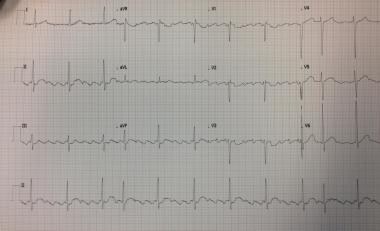
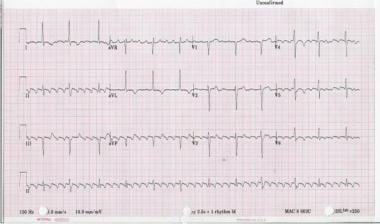
    • In cases of typical atrial flutter, ECG reveals identically recurring regular sawtooth flutter waves (see Image 1) and evidence of continual electrical activity.
    • Flutter waves are often visualized best in leads II, III, aVF, or V1. The flutter waves for typical (type I) atrial flutter are inverted (negative) in these leads because of a counterclockwise re-entrant pathway. Sometimes they are upright (positive) when the re-entrant loop is clockwise. Flutter waves (particularly 2:1) can deform the ST complex in such a manner as to mimic an ischemic injury pattern on the 12-lead ECG.
    • Flutter and fibrillation often coexist with alternating patterns (ie, fib-flutter, flitter) in the same tracing.
  • Transthoracic Echocardiogram
    • A transthoracic echocardiogram can be performed to evaluate right and left atrial size, as well as the size and function of the right and left ventricles, which assists in diagnosing valvular heart disease, LVH, and pericardial disease.

      Transthoracic echocardiogram has low sensitivity for intra-atrial thrombi, and is the preferred modality for testing atrial flutter.

  • Exercise Testing
    • Exercise testing can be utilized to identify exercise-induced atrial fibrillation and to evaluate ischemic heart disease.
  • Holter Monitoring
    • A Holter monitor can be used to help identify arrhythmias in patients with non-specific symptoms, identify triggers, and detect associated atrial arrhythmias.


Prehospital Care

In general, avoiding class I and III agents (eg, procainamide) in the prehospital setting is safest because of possible induction of 1:1 conduction. Generally, the rate can be slowed safely with calcium channel blockers or beta-adrenergic blockers.

Emergency Department Care

  • Assess airway, breathing, and circulation. Hemodynamic concerns will dictate initial treatment.
  • Blood pressure can be supported and rate controlled with medication.
  • Look for underlying causes. At times, treatment of the underlying disorder (eg, thyroid disease, valvular heart disease) is necessary to effect conversion to sinus rhythm.

Consultations

  • Most cases will require internal medicine or cardiology consultation.
  • A cardiologist may become involved, primarily if the patient presents with complicating factors or an obvious ongoing cardiac ischemia (or infarction) not treatable with rate reduction measures and standard chest pain protocols.


If the patient is unstable (eg, hypotension, poor perfusion), synchronous direct-current (DC) cardioversion is commonly the initial treatment of choice. Cardioversion often requires low energies (<50 J). If the electrical shock results in AF, a second shock at a higher energy level is used to restore normal sinus rhythm (NSR).

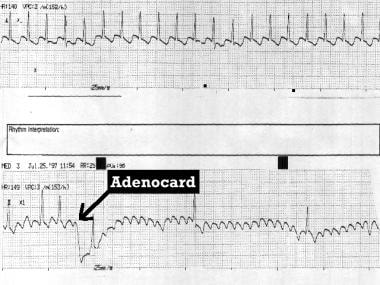
To slow the ventricular response, verapamil or diltiazem may be the appropriate initial treatment. Adenosine produces transient AV block and can be used to reveal flutter waves (see Image 1). These drugs generally do not convert atrial flutter to NSR.

If the flutter cannot be cardioverted, terminated by pacing, or slowed by the drugs mentioned above, digoxin can be administered alone or with either a calcium antagonist or beta-blocker. IV amiodarone has been shown to slow the ventricular rate and is considered as effective as digoxin.

Digoxin toxicity is very rarely a cause of flutter; however, ascertaining that flutter is not caused by digoxin toxicity is important. Another caveat is to beware of the vagolytic action of quinidine, procainamide, and disopyramide if used to slow the flutter rate. These drugs can effect AV conduction, resulting in a 1:1 ventricular response to the atrial flutter. Before administration of these drugs, be sure to slow the conduction rate with digoxin or calcium channel blockers.

Rate control is the goal of medication in atrial flutter or AF (see Atrial Fibrillation).

Beta-adrenergic blockers are especially effective in the presence of thyrotoxicosis and increased sympathetic tone.

Other antiarrhythmic drugs that can terminate atrial flutter/fibrillation include procainamide, disopyramide, propafenone, sotalol, flecainide, amiodarone, and ibutilide.

A newer agent is dofetilide, a recently approved class III antiarrhythmic. Another drug, azimilide, has been studied in the recent Azimilide Postinfarct Survival Evaluation (ALIVE) trial, a post-heart attack survival study. Additional data from ALIVE further support the ongoing development of azimilide as a treatment for supraventricular arrhythmias. Fewer patients in sinus rhythm at baseline developed atrial fibrillation/flutter during the trial on azimilide compared to placebo.

Another drug on the horizon is dronedarone, a deiodinated derivative of amiodarone that has no organ toxicity. Its use will extend to both atrial and ventricular arrhythmias. At present, dronedarone is an experimental agent that has multiple actions (all 4 Von Williams class effects). Unlike amiodarone, it does not have the iodine moiety. The lack of iodination may offer a better side-effect profile. Dronedarone has been shown to (1) have antiadrenergic effects, (2) prolong atrial and ventricular refractory periods, and (3) prolong atrioventricular node conduction as well as the paced QRS complex. In animal models, dronedarone has been shown to decrease ischemia-induced ventricular arrhythmias. The clinical effects of dronedarone are currently being examined in patients with atrial fibrillation and in patients with ICDs.

Antiarrhythmic drugs alone control atrial flutter in only 50-60% of patients. Since the early 1990s, radiofrequency catheter ablation has been used to interrupt the re-entrant circuit in the right atrium and prevent recurrences of atrial flutter. Radiofrequency ablation is immediately successful in more than 90% of cases and avoids the long-term toxicity observed with antiarrhythmic drugs.

When considering drug therapy for atrial flutter/fibrillation, remember the treatment caveat "electrical cardioversion is the preferred modality in the patient whose condition is unstable."

Drug Category: Calcium channel blockers

Reduce the rate of AV nodal conduction and control ventricular response. Formulations administered IV are discussed only as they relate to the control of severe symptoms (eg, rapid ventricular rate in emergent situations).

Drug NameDiltiazem (Cardizem)
DescriptionDOC during depolarization. Inhibits calcium ion from entering slow channels or voltage-sensitive areas of vascular smooth muscle and myocardium.
Adult DoseInitial dose: 0.25 mg/kg IV over 2 min as bolus; repeat at 0.35 mg/kg if inadequate rate reduction after 15 min
Maintenance dose: 5-10 mg/h (up to 15 mg/h) IV can be infused for up to 24 h
Pediatric DoseNot established
ContraindicationsDocumented hypersensitivity, severe CHF, sick sinus syndrome, second- or third-degree AV block, hypotension (<90 mm Hg systolic)
InteractionsMay increase carbamazepine, digoxin, cyclosporine, and theophylline levels; when administered with amiodarone, may cause bradycardia and decrease in cardiac output; when given with beta-blockers, may increase cardiac depression; cimetidine may increase levels
PregnancyC - Safety for use during pregnancy has not been established.
PrecautionsCaution in impaired renal or hepatic function; may increase LFT levels, and hepatic injury may occur

Drug NameVerapamil (Calan, Isoptin, Verelan)
DescriptionSecond DOC, can diminish PVCs associated with perfusion therapy and decrease risk of ventricular fibrillation and ventricular tachycardia. By interrupting re-entry at AV node, can restore NSR in patients with paroxysmal supraventricular tachycardias (PSVT).
During depolarization, inhibits calcium ion from entering slow channels or voltage-sensitive areas of vascular smooth muscle and myocardium.
Adult Dose2.5-5 mg IV bolus initially reduces ventricular rate within 5 min; can be repeated to total of 15 mg IV, follow by maintenance infusion of 0.05-0.2 mg/min
Pediatric Dose0-1 years: 0.1-0.2 mg/kg IV bolus over at least 2 min under continuous ECG monitoring; usual single-dose range 0.75-2 mg
1-15 years: 0.1-0.3 mg/kg IV bolus over at least 2 min; usual single-dose range 2-5 mg; not to exceed 5 mg
ContraindicationsDocumented hypersensitivity, severe CHF, sick sinus syndrome, second- or third-degree AV block, hypotension (<90 mm Hg systolic)
InteractionsMay increase carbamazepine, digoxin, cyclosporine, and theophylline levels; coadministration with amiodarone can cause bradycardia and decrease in cardiac output; when administered concurrently with beta-blockers, may increase cardiac depression; cimetidine may increase levels
PregnancyC - Safety for use during pregnancy has not been established.
PrecautionsHepatocellular injury may occur; transient elevations of transaminases with and without concomitant elevations in alkaline phosphatase and bilirubin have occurred (elevations have been transient and may disappear with continued verapamil treatment); monitor liver functions periodically

Drug Category: Beta-blockers

Slow the sinus rate and decrease AV nodal conduction. Now have more of a secondary role in rate control in atrial flutter/fibrillation. Be sure to monitor blood pressure carefully.

Drug NameMetoprolol (Lopressor)
DescriptionSelective beta 1-adrenergic receptor blocker that decreases automaticity of contractions.
Adult Dose5-15 mg IV over 5-15 min in 5 mg increments
Pediatric DoseNot established
ContraindicationsDocumented hypersensitivity, uncompensated CHF, bradycardia, asthma, cardiogenic shock, AV conduction abnormalities
InteractionsAluminum salts, barbiturates, NSAIDs, penicillins, calcium salts, cholestyramine, and rifampin may decrease bioavailability and plasma levels, possibly decreasing pharmacologic effects; toxicity may increase with coadministration of sparfloxacin, phenothiazines, astemizole (recalled from US market), calcium channel blockers, quinidine, flecainide, and contraceptives; may increase toxicity of digoxin, flecainide, clonidine, epinephrine, nifedipine, prazosin, verapamil, and lidocaine
PregnancyC - Safety for use during pregnancy has not been established.
PrecautionsBeta-adrenergic blockade may reduce signs and symptoms of acute hypoglycemia or hyperthyroidism; abrupt withdrawal may exacerbate symptoms of hyperthyroidism, including thyroid storm; monitor patient closely and withdraw drug slowly; during IV administration, carefully monitor blood pressure, heart rate, and ECG

Drug NameEsmolol (Brevibloc)
DescriptionIdeal for use in patients at risk of complications from beta-blockade, especially patients with mild-moderate LV dysfunction or peripheral vascular disease. Has short half-life of 8 min; thus, easily titratable to desired effect and may be stopped quickly if necessary.
Adult DoseInitial: 500 mcg/kg/min (0.5 mg/kg/min) IV infusion over 1 min, followed immediately by maintenance dose of 50 mcg/kg/min (0.05 mg/kg/min) IV over 4 min; if adequate therapeutic effect observed over 5 min of drug administration, maintain maintenance infusion dosage with periodic adjustments prn; if adequate therapeutic effect not observed, repeat same loading dosage over 1 min followed by an increased maintenance infusion rate of 100 mcg/kg/min (0.1 mg/kg/min)
A quick calculation method is to take patient's body weight in kg, divide by 2 (eg, 70 kg/2 = 35 mg); this is loading dose over 1 min; multiply this dose by 0.1 (0.1 x 35 = 3.5 mg) to obtain mg/kg/min drip rate
Pediatric DoseNot established
ContraindicationsDocumented hypersensitivity, uncompensated CHF, bradycardia, cardiogenic shock, AV conduction abnormalities
InteractionsAluminum salts, barbiturates, NSAIDs, penicillins, calcium salts, cholestyramine, and rifampin may decrease bioavailability and plasma levels, possibly decreasing pharmacologic effect; cardiotoxicity may increase when administered concurrently with sparfloxacin, astemizole (recalled from US market), calcium channel blockers, quinidine, flecainide, or contraceptives; toxicity increases when administered concurrently with digoxin, flecainide, acetaminophen, clonidine, epinephrine, nifedipine, prazosin, haloperidol, phenothiazines, or catecholamine-depleting agents
PregnancyC - Safety for use during pregnancy has not been established.
PrecautionsMay mask signs and symptoms of acute hypoglycemia or hyperthyroidism; symptoms of hyperthyroidism, including thyroid storm, may worsen when medication withdrawn abruptly; withdraw drug slowly and monitor patient closely

Drug Category: Class I antiarrhythmics

Used for chemical conversion into sinus rhythm. Alter the electrophysiologic mechanisms responsible for arrhythmia.

Drug NameProcainamide (Pronestyl, Procanbid)
DescriptionClass IA antiarrhythmic used for PVCs. Increases refractory period of atria and ventricles. Myocardial excitability reduced by an increase in threshold for excitation and inhibition of ectopic pacemaker activity.
Adult Dose17 mg/kg IV at rate of 20-30 mg/min under continuous cardiac monitoring
Stop infusion if QRS widening or hypotension occurs
Control heart rate ( <100 bpm) with IV digoxin or calcium channel blockers first to avoid 1:1 AV conduction
Pediatric DoseNot established
ContraindicationsDocumented hypersensitivity, complete heart block or second- or third-degree heart block if pacemaker not in place, torsade de pointes, systemic lupus erythematosus
InteractionsCan expect increased levels of procainamide metabolite NAPA in patients taking cimetidine, ranitidine, beta-blockers, amiodarone, trimethoprim, or quinidine; may increase effects of skeletal muscle relaxants, quinidine, lidocaine, and neuromuscular blockers; ofloxacin inhibits tubular secretion of procainamide and may increase bioavailability; when taken concurrently with sparfloxacin, may increase risk of cardiotoxicity
PregnancyC - Safety for use during pregnancy has not been established.
PrecautionsMonitor for hypotension; plasma concentrations of procainamide and active metabolite, NAPA, may increase in renal failure; high or toxic concentrations may induce AV block or abnormal automaticity; caution in complete AV block, digitalis intoxication, organic heart disease, renal disease, or hepatic insufficiency

Drug NameQuinidine (Cardioquin, Quinora)
DescriptionProlongs effective refractory period and increases conduction time. Also has indirect anticholinergic effects, decreases vagal tone, and facilitates conduction in conversion of AF.
Adult Dose200 mg PO q2-3h for 5-8 doses with subsequent daily increases until sinus rhythm restored or side effects occur; not to exceed 3-4 g/d in any regimen
Prior to administration, control ventricular rate and CHF (if present) with digoxin or calcium channel blockers
Pediatric Dose30 mg/kg/d PO in 5 divided doses
ContraindicationsDocumented hypersensitivity, complete AV block, intraventricular conduction defects, concurrent ritonavir or sparfloxacin
InteractionsPhenytoin, rifampin, and phenobarbital may decrease concentrations; toxicity increased when taken with ritonavir, sparfloxacin, beta-blockers, amiodarone, verapamil, cimetidine, alkalinizing agents, or nondepolarizing or depolarizing muscle relaxants; may enhance effect of anticoagulants
PregnancyC - Safety for use during pregnancy has not been established.
PrecautionsCaution in G-6-PD deficiency and patients with a tendency to develop granulocytopenia; avoid use in myocardial depression, hepatic or renal insufficiency, and myasthenia gravis

Drug Category: Class III antiarrhythmics

Establish a chemical conversion to sinus rhythm.

Drug NameAmiodarone (Cordarone)
DescriptionProlongs action potential and refractory period in myocardium, inhibits adrenergic stimulation, and may inhibit AV conduction and sinus node performance. Blocks sodium channels with high affinity for inactive channels. Blocks potassium channels and weakly blocks calcium channels. In addition, noncompetitively blocks alpha- and beta-adrenergic receptors.
Prior to administration, control ventricular rate and CHF (if present) with digoxin or calcium channel blockers.
Adult Dose5 mg/kg IV over 30 min followed by 1200 mg/d
Pediatric Dose6.3 mg/kg (average loading dose) IV
ContraindicationsDocumented hypersensitivity, complete AV block, intraventricular conduction defects, concurrent ritonavir or sparfloxacin
InteractionsIncreases blood levels and effects of theophylline, quinidine, procainamide, phenytoin, methotrexate, flecainide, digoxin, cyclosporine, beta-blockers, and anticoagulants; cardiotoxicity increased by ritonavir, sparfloxacin, and disopyramide; coadministration with calcium channel blockers may cause additive effect and decrease myocardial contractility further; cimetidine may increase levels
PregnancyD - Unsafe in pregnancy
PrecautionsAdverse effects include pulmonary toxicity and fibrosis, which can be life threatening
Caution in thyroid or liver disease

Drug NameDofetilide (Tikosyn)
DescriptionPrototype of "pure" class III agent. Blocks delayed rectifier current (IKr) and prolongs action potential duration; indeed, even at higher magnitudes, has no effect upon other depolarizing potassium currents (IKs and IKl). Terminates induced re-entrant tachyarrhythmias (atrial fibrillation/flutter and ventricular tachycardia) and prevents their re-induction. At clinically prescribed concentrations, has no effect on sodium channels, which are associated with class I effects. Furthermore, no effect noted on alpha- or beta-adrenergic receptors.
Indicated for maintenance of NSR in patients with atrial fibrillation/atrial flutter lasting > 1 wk who have been converted to NSR. Also indicated for conversion of AF and atrial flutter to NSR. Has not been effective for patients with paroxysmal AF. Torsade de pointes is only arrhythmia showing dose-response relationship. Prevalence with supraventricular arrhythmia is 0.8%. Majority of torsade de pointes episodes occur within first 3 d of therapy.
If patients do not convert to NSR within 24 h of initiation of therapy, electrical cardioversion should be considered.
Has no effect on cardiac output, cardiac index, stroke volume index, or systemic vascular resistance. Does not affect blood pressure.
Must be initiated with continuous ECG monitoring and monitoring continued for >12 h after conversion. Dose must be individualized according to CrCl and QTc (use QT interval if heart rate <60/min). No information on use of this drug for heart rates <50/min. Patients with AF should receive anticoagulant therapy according to established practice. Anticoagulation should be continued after cardioversion as per usual practice.
Adult DoseStep 1. Determine QTc using average of 5-10 beats; if QTc > 440 ms (500 ms in those with ventricular conduction abnormalities), dofetilide is contraindicated
Step 2. Calculate CrCl prior to administration, using formulas:
CrCl (male) = (140-age) X body weight (kg)/72 X serum creatinine (mg/dL)
CrCl (female) = (140-age) X body weight (kg) X 0.85/72 X serum creatinine (mg/dL)
Step 3. Determine starting dose as follows:
CrCl >60 mL/min: 500 mcg PO bid
CrCl 40-60 mL/min: 250 mcg PO bid
CrCl 20-40 mL/min: 125 mcg PO bid
CrCl <20 mL/min: Contraindicated
Step 4. Administer dofetilide and begin continuous ECG monitoring
Step 5. 2-3 h after administration of first dose, determine QTc; if QTc has increased by >15% compared to baseline or if QTc is >500 ms (550 ms in those with ventricular conduction abnormalities), adjust subsequent doses as follows:
Starting dose 500 mcg bid: 250 mcg bid
Starting dose 250 mcg bid: 125 mcg bid
Starting dose 125 mcg bid: 125 mcg qd
Step 6. Continuously monitor for minimum of 3 d or for a minimum of 12 h after conversion to NSR, whichever is greater
Pediatric Dose<18 years: Not established
ContraindicationsCongenital or acquired long QT syndromes; baseline QT interval or QTc >440 ms (500 ms in patients with ventricular conduction abnormalities); severe renal impairment (CrCl <20 mL/min); concomitant use of verapamil, cimetidine, trimethoprim, ketoconazole, or any drug that increases plasma levels of dofetilide, inhibits renal cation transport, or prolongs QT interval
InteractionsDrugs known to increase plasma levels of dofetilide include verapamil, cimetidine, trimethoprim, and ketoconazole; known inhibitors of renal cation transport include prochlorperazine and megestrol; drugs that prolong QT interval include, but are not limited to, phenothiazines, cisapride, bepridil, tricyclic antidepressants, and certain oral macrolide antibiotics
Class I or class III antiarrhythmic agents should be held for at least 3 half-lives prior to dosing (terminal half-life is 10 h)
Does not affect pharmacokinetics of digoxin, but concomitant use of these 2 drugs has been associated with higher incidence of torsade de pointes; warfarin pharmacodynamics not altered by this medication
PregnancyC - Safety for use during pregnancy has not been established.
PrecautionsUse caution in renal impairment (CrCl guides dosing), hepatic impairment (dofetilide has not been studied in patients with severe hepatic impairment), or cardiac conduction problems (drug has no effect on AV node conduction in patients with first-degree heart block, but effects in second- and third-degree block not studied); has been used safely in conjunction with pacemakers

Drug NameIbutilide (Corvert)
DescriptionNewer class III antiarrhythmic agent that may work by increasing action potential duration and thereby changing atrial cycle length variability. Mean time to conversion is 30 min. Two thirds of patients who converted were in sinus rhythm at 24 h. Ventricular arrhythmias occurred in 9.6% of patients and mostly were PVCs. The incidence of torsades de pointes was <2%.
Adult Dose<60 kg: 0.01 mg/kg IV over 10 min
>60 kg: 1 mg IV over 10 min; a second infusion of equal strength can be given 10 min after first prn
Pediatric DoseNot established
ContraindicationsDocumented hypersensitivity
InteractionsIbutilide increases toxicity of quinidine and procainamide; concurrent administration of ibutilide with tricyclic antidepressants and phenothiazines may prolong Q-T interval (one report noted an 8.3% incidence of torsades de pointes); toxicity of digoxin increases when administered concurrently with ibutilide
PregnancyC - Safety for use during pregnancy has not been established.
PrecautionsCaution in renal or hepatic impairment

Drug Category: Cardiac glycosides

Decrease AV nodal conduction primarily by increasing vagal tone. Used mainly in the context of AF and atrial flutter with CHF.

Drug NameDigitalis, Digoxin (Lanoxin)
DescriptionHas direct inotropic effects in addition to indirect effects on cardiovascular system. Effects on myocardium involve both direct action on cardiac muscle that increases myocardial systolic contractions and indirect actions that result in increased carotid sinus nerve activity and enhanced sympathetic withdrawal for any given increase in mean arterial pressure.
Adult DoseIn previously undigitalized patients: 400-600 mcg (0.4-0.6 mg) IV initial single dose usually produces detectable effect in 5-30 min, which becomes maximal in 1-4 h
Pediatric Dose<2 years: Not established
2-5 years: 25-35 mcg/kg IV
5-10 years: 15-20 mcg/kg IV
>10 years: 8-12 mcg/kg IV
ContraindicationsDocumented hypersensitivity, beriberi heart disease, idiopathic hypertrophic subaortic stenosis, constrictive pericarditis, carotid sinus syndrome
InteractionsMedications that may increase levels include alprazolam, benzodiazepines, bepridil, captopril, cyclosporine, propafenone, propantheline, quinidine, diltiazem, aminoglycosides, oral amiodarone, anticholinergics, diphenoxylate, erythromycin, felodipine, flecainide, hydroxychloroquine, itraconazole, nifedipine, omeprazole, quinine, ibuprofen, indomethacin, esmolol, tetracycline, tolbutamide, and verapamil
Medications that may decrease serum levels include aminoglutethimide, antihistamines, cholestyramine, neomycin, penicillamine, aminoglycosides, oral colestipol, hydantoins, hypoglycemic agents, antineoplastic treatment combinations (including carmustine, bleomycin, methotrexate, cytarabine, doxorubicin, cyclophosphamide, vincristine, procarbazine), aluminum or magnesium antacids, rifampin, sucralfate, sulfasalazine, barbiturates, kaolin/pectin, and aminosalicylic acid
PregnancyC - Safety for use during pregnancy has not been established.
PrecautionsHypokalemia may reduce positive inotropic effect; IV calcium may produce arrhythmias in digitalized patients; hypercalcemia predisposes patient to digitalis toxicity, and hypocalcemia can make digoxin ineffective until serum calcium levels are normal; magnesium replacement therapy must be instituted in patients with hypomagnesemia to prevent digitalis toxicity; patients diagnosed with incomplete AV block may progress to complete block when treated with digoxin; exercise caution in hypothyroidism, hypoxia, and acute myocarditis


Further Inpatient Care

  • The issue of stroke risk and anticoagulation in patients with atrial flutter is controversial; however, Seidl et al recently studied 191 consecutive patients admitted to the hospital with atrial flutter and found that the risk of thromboembolism may be higher than previously thought.
  • Since atrial contractility should remain intact in patients with flutter, suggestions have been made that thrombus formation is unlikely. However, patterns were noted in this study, including the following:
    • Eleven patients (6%) had a history of an embolic event at presentation.
    • Within the first 48 hours after cardioversion, 2% experienced a cerebral embolism.
    • One additional patient in the study had a transient ischemic event despite anticoagulation.
    • Whether these embolic events were due to atrial flutter per se or if they were caused by intermittent AF, which is known to occur in patients with atrial flutter, is unknown.
    • Preliminary results from this study support anticoagulation for patients with atrial flutter.
    • Vidaillet et al (2002) studied the overall mortality rate in a group of patients with atrial flutter and AF and compared it to the mortality rate in a control group. They found that the mortality rates were similar for patients in all arrhythmia subgroups - 41% in atrial flutter, 45% in AF, and 47% in patients with both conditions. The mortality rate in population matched control subjects was found to be 22%. The mortality rate among patients with AF was determined to be somewhat higher than that among patients with atrial flutter alone.
  • Catheter Ablation Treatment
    • Given the recognized difficulty in achieving permanent suppression of atrial flutter with chemical treatment, catheter ablation is increasingly the treatment of choice in clinically significant atrial flutter.

      Advances in electrophysiologic mapping and catheter ablation techniques have improved the efficacy of this treatment modality to greater than 90%.

Transfer

  • Transfer to a referral center may be indicated for patients who present to the emergency department (ED) with complications of atrial flutter, including the following:
    • Bradycardia (eg, from sick sinus syndrome) requiring pacemaker therapy
    • Unresponsive rate despite adequate medical therapy; after electrical cardioversion, referral for electrophysiologic ablation may be appropriate. These patients generally are transferred from one inpatient facility to another.
    • Embolic complications requiring surgical therapy (ie, arterial embolization), cerebrovascular accident (CVA), AF, or atrial flutter requiring neurointensive care

Complications

  • Stroke
  • Embolization (arterial)
  • CHF
  • Severe bradycardia
  • Myocardial rate-related ischemia

Prognosis

  • With AF and atrial flutter, the relative risk for development of stroke is 4.1% compared with control subjects.

Patient Education


Medical/Legal Pitfalls

  • Watch for development of severe bradycardia during treatment. This may cause severe hypotension and death if not carefully monitored.
  • Rarely, AF or atrial flutter may be due to pericardial disease or effusion or carbon monoxide intoxication. Keep these rare events in mind when dealing with the unusual case of a patient who does not respond to standard therapy.
  • While radiofrequency (RF) ablation is beyond the domain of the ED physician, complications of this procedure are reported in the literature. The physician must be knowledgeable of these complications when treatment options are proposed to the patient and family members. Of interest is a report by Sassone et al of thermal-related right coronary artery damage secondary to RF therapy in a patient with resultant myocardial infarction.


The authors and editors of eMedicine gratefully acknowledge the contributions of previous author, Alan D Clark, MD , to the development and writing of this article.


Media file 1:  Type I atrial flutter unmasked by adenosine (Adenocard).
Click to see larger pictureClick to see detailView Full Size Image
Media type:  Rhythm Strip


  • Braunwald E. Heart disease: A Textbook of Cardiovascular Medicine. 5th ed. Philadelphia: WB Saunders Co;1997:641-656.
  • Galve E, Rius T, Ballester R, et al. Intravenous amiodarone in treatment of recent-onset atrial fibrillation: results of a randomized, controlled study. J Am Coll Cardiol. Apr 1996;27(5):1079-82. [Medline].
  • Goodacre S, Irons R. ABC of clinical electrocardiography: Atrial arrhythmias. BMJ. Apr 27 2002;324(7337):594-597. [Medline].
  • Niebauer MJ, Chung MK. Management of atrial flutter. Cardiol Rev. Sep-Oct 2001;9(5):253-8. [Medline].
  • Perry JC, Fenrich AL, Hulse JE, et al. Pediatric use of intravenous amiodarone: efficacy and safety in critically ill patients from a multicenter protocol. J Am Coll Cardiol. Apr 1996;27(5):1246-50. [Medline].
  • Pritchett EL. Management of atrial fibrillation. N Engl J Med. May 7 1992;326(19):1264-71. [Medline].
  • Prystowsky EN, Benson DW Jr, Fuster V, et al. Management of patients with atrial fibrillation. A Statement for Healthcare Professionals. From the Subcommittee on Electrocardiography and Electrophysiology, American Heart Association. Circulation. Mar 15 1996;93(6):1262-77. [Medline][Full Text].
  • Sassone B, Leone O, Martinelli GN, Di Pasquale G. Acute myocardial infarction after radiofrequency catheter ablation of typical atrial flutter: histopathological findings and etiopathogenetic hypothesis. Ital Heart J. May 2004;5(5):403-7. [Medline].
  • Seidl K, Rameken M, Siemon G. Atrial flutter and thromboembolism risk. Cardiol Rev. 1999;16(12):25-28.
  • Suda K, Matsumura M, Hayashi Y. Myotonic dystrophy presenting as atrial flutter in childhood. Cardiol Young. Feb 2004;14(1):89-92. [Medline].
  • Vidailett H, Granada J, Massen K. A population-based study of mortality among patients with atrial fibrillation or flutter. Am J Med. Oct 1 2002;113(5):365-70. [Medline].
  • Waldo A. Treatment of atrial flutter. Heart. Aug 2000;84(2):227-32. [Medline].

Atrial Flutter excerpt

Article Last Updated: Oct 11, 2006