Continually Updated Clinical Reference
 
 
  All Sources     eMedicine     Medscape     Drug Reference     MEDLINE
 
eMedicine - CBRNE - Plague : Article by

Quick Find
Authors & Editors
Introduction
Clinical
Differentials
Workup
Treatment
Medication
Follow-up
Miscellaneous
Acknowledgments
Multimedia
References

Related Articles
Acute Respiratory Distress Syndrome

Catscratch Disease

Cellulitis

Disseminated Intravascular Coagulation

Gas Gangrene

Necrotizing Fasciitis

Pediatrics, Pneumonia

Pediatrics, Respiratory Distress Syndrome

Pediatrics, Scarlet Fever

Pneumonia, Aspiration

Pneumonia, Bacterial

Pneumonia, Empyema and Abscess

Pneumonia, Immunocompromised

Pneumonia, Mycoplasma

Respiratory Distress Syndrome, Adult

Scarlet Fever

Shock, Septic

Tick-Borne Diseases, Rocky Mountain Spotted Fever


Patient Education
Bioterrorism and Warfare Center

Plague Introduction

Plague Causes

Plague Signs and Symptoms

Plague Treatment

Biological Warfare

Personal Protective Equipment

Ticks Overview


Author: Demetres G Velendzas, MD, Attending Staff, Department of Emergency Medicine, Manchester Memorial Hospital, Eastern Connecticut Health Network

Demetres G Velendzas is a member of the following medical societies: American College of Emergency Physicians, Emergency Medicine Residents Association, and Society for Academic Emergency Medicine

Coauthor(s): Susan Dufel, MD, FACEP, Program Director, Associate Professor, Department of Traumatology and Emergency Medicine, Division of Emergency Medicine, University of Connecticut School of Medicine

Editors: Dan Danzl, MD, Chair, Department of Emergency Medicine, Professor, University of Louisville Hospital; Francisco Talavera, PharmD, PhD, Senior Pharmacy Editor, eMedicine; Eric L Weiss, MD, DTM&H, Director of Stanford Travel Medicine, Medical Director of Stanford Lifeflight, Assistant Professor, Departments of Emergency Medicine and Infectious Diseases, Stanford University School of Medicine; John D Halamka, MD, MS, Associate Professor of Medicine, Harvard Medical School, Beth Israel Deaconess Medical Center; Chief Information Officer, CareGroup Healthcare System and Harvard Medical School; Attending Physician, Division of Emergency Medicine, Beth Israel Deaconess Medical Center; Robert G Darling, MD, FACEP, Clinical Assistant Professor of Military and Emergency Medicine, Uniformed Services University of the Health Sciences, F Edward Hebert School of Medicine; Director, Center for Disaster and Humanitarian Assistance Medicine

Author and Editor Disclosure

Synonyms and related keywords: plague, bubonic plague, bubo, pneumonic plague, septicemic plague, fleabite, flea bite, black death, plague bacillus, Yersinia pestis, Y pestis, rat flea, Xenopsylla cheopis, X cheopis, bacteremia, septicemia, gangrene, cyanosis, ecchymosis, petechiae, hematochezia, hematemesis, hemoptysis, septic shock, disseminated intravascular coagulation, DIC

Background

The plague has caused more fear and terror than perhaps any other infectious disease in the history of humankind. It has laid claim to nearly 200 million lives and has brought about monumental changes, such as the end of the Dark Ages and the advancement of clinical research in medicine.

Although still debated by historians, the plague has been responsible for at least 3 great pandemics and multiple epidemics in history. The first spread occurred from the Middle East to the Mediterranean basin during the fifth and sixth centuries AD, killing approximately 50% of the population in these areas. The second pandemic afflicted Europe between the 8th and 14th centuries, destroying nearly 40% of the population. The third pandemic started in approximately 1855 in China, and, although it has been mostly controlled, it is still ongoing.

Alexandre Yersin isolated the plague bacillus, developed an antiserum to combat the disease, and postulated its connection with fleas and rats during the epidemic of 1894. The plague bacillus was named Yersinia pestis in his memory.

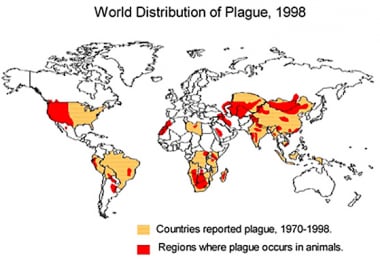
Pandemics have succeeded in entrenching the plague in every major continent, with the possible exception of Australia. Unlike smallpox, the plague never will be eradicated. It lives in millions of animals and on billions of fleas that reside on them. It is a disease of the desert, the steppes, the mountains, and the forest.

Although, the plague has been considered a disease of the Middle Ages, recent interest has been spurred by concerns over its use as a potential biological weapon. Aerosolized Y pestis, causing primary pneumonic plague, has been recognized by bioterrorism experts as having one of the highest potentials for adverse public health impacts.

In addition to the concern over its use in acts of terrorism, there are further reasons that may cause a dramatic increase in the number of plague cases worldwide in the years to come. One reason may be the climatic change brought about by global warming. This change is ideal for increasing the prevalence of Y pestis in the host population. A recent study has estimated a more than 50% increase in the plague host prevalence with an increase of 1 degree centigrade of the temperature in spring.1 Another reason may be the increasing population explosion worldwide, which is bringing humans into ever-increasing contact with wildlife. Lastly, the dramatic population increase will contribute to conditions of overcrowding and poor sanitation—conditions ripe for plague hosts and vectors to flourish in.

Pathophysiology

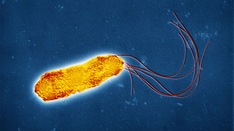
The etiologic agent of the plague is Y pestis, a facultative anaerobic, intracellular, gram-negative bacillus.

The organism can be transmitted from a host to a human via the bite of a vector, via close contact with infected tissue or body fluids, and via direct inhalation of the bacterium. Currently, the most common form of transmission involves the bite of a vector infected by a host. Infection through an inhalational route would be of concern if the bacillus was aerosolized.

More than 200 different rodents and species can serve as hosts. These include domestic cats and dogs, squirrels, chipmunks, marmots, deer mice, rabbits, hares, rock squirrels, camels, and sheep.

The vector is usually the rat flea, Xenopsylla cheopis. Thirty different flea species have been identified as able to carry the plague bacillus. Other carriers of plague include ticks and human lice.

Rodents resistant to the infection form an enzootic stage that ensures the long-term survival of the bacillus. Occasionally, the infected animals are not resistant to the disease and die. This is known as an epizootic stage and ensures the spread of the organism to new territory. A sylvatic stage occurs when humans are infected from wild animals.

Three forms of the plague exist: bubonic plague, pneumonic plague, and septicemic plague. The bubonic form of the plague involves the pathognomonic "bubo" and is caused by deposition of the bacillus in the skin by the bite of an infected vector. If the vector is a flea, bacillus proliferates in the flea's esophagus, preventing food entry into the stomach. To overcome starvation, the flea begins a blood-sucking rampage. Between its attempts to swallow, the distended bacillus-packed esophagus recoils, depositing the bacillus into the victim's skin.

The bacillus invades nearby lymphoid tissue, producing the famous bubo, an inflamed, necrotic, and hemorrhagic lymph node. Spread occurs along the lymphatic channels toward the thoracic duct, with eventual seeding of the vasculature. Bacteremia and septicemia ensue. The bacillus potentially seeds every organ, including the lungs, liver, spleen, kidneys, and rarely even the meninges.

The most virulent form, pneumonic plague, results from direct inhalation of the bacillus, which occurs from close contact of infected hosts or from aerosolized bacteria such as may occur if used as a biological weapon. A severe and rapidly progressive multilobar bronchopneumonia ensues with subsequent bacteremia and septicemia. Secondary pneumonic plague is caused when an infected patient seeds his or her lungs and airways.

The third type of plague is a primary septicemic plague. This is hypothesized to occur when the bacillus is deposited in the vasculature, bypassing the lymphatics. Early dissemination with sepsis occurs but without the formation of a bubo. This usually is observed in bites to the oral, tonsillar, and pharyngeal area and is believed to occur because of the vascularity of the tissue and short lymphatic distance to the thoracic duct.

Frequency

United States

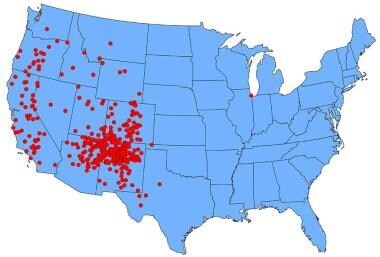
An average of 10-15 cases per year have been reported during the last few decades. One of the largest animal foci of the plague worldwide is found west of the 100th parallel, in states such as New Mexico, Arizona, Colorado, Utah, and California. Only one case of imported plague has been reported since 1926. Most cases occur during the warmer months of the year. In 2006, 13 human plague cases were reported in the United States, the most since 1994.

International

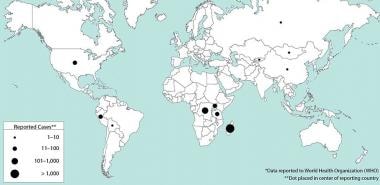
From 1967-1993, the World Health Organization has reported an annual average of 1666 cases of the plague. The number of actual cases is probably much higher, given the failure of many countries to diagnose and report the plague. Most cases occur in the developing countries of Africa and Asia. Recent outbreaks of the plague have occurred in Vietnam, in India, and in 2006 from the northeastern part of the Democratic Republic of the Congo.

Mortality/Morbidity

  • Bubonic plague has a 1-15% mortality rate in treated cases and a 40-60% mortality rate in untreated cases.
  • Septicemic plague (primary or secondary) has a 40% mortality rate in treated cases and 100% mortality rate in untreated cases.
  • Pneumonic plague (primary or secondary) has 100% mortality rate if not treated within the first 24 hours of infection.

Sex

More than 50% of cases occur in males.

Age

Approximately 50% of cases occur in persons younger than 20 years.


History

In general, after an incubation period of 1-6 days, the history suggests a severe and rapidly progressive sepsis.

  • Recent travel in the Southwestern and Pacific Coast regions of the United States, particularly in New Mexico, Arizona, California, and Utah, should raise suspicion of a fleabite. Although imported plague is rare, similar suspicion should exist for any recent travel to endemic areas outside the United States. Fewer than 10% of patients recall a prior fleabite.
  • Close contact with any potentially infected host or rural environment should raise suspicion for the plague. Historically, the rat has been believed to be the main plague host; however, currently in the United States, the ground and rock squirrels are the most common hosts. In recent years, the domestic cat has emerged as a prominent host that transmits the plague to veterinarians.
  • A sudden increase in the incidence of severe pneumonia in previously healthy individuals should raise concern for pneumonic plague.
  • Symptoms

    • Fever
    • Chills
    • Myalgias
    • Sore throat
    • Headache
    • Weakness
    • Malaise
    • Enlarged, painful, swollen lymph node
    • Abdominal pain - Only presenting symptom more common in a patient presenting with septicemic plague (primary blood-borne plague) versus one presenting with bubonic plague
    • Nausea, vomiting (bloody at times)
    • Constipation, diarrhea, and black or tarry stools
    • Gastrointestinal complaints (may precede a bubo)
    • Cough, which may be productive of bloody sputum
    • Shortness of breath
    • Stiff neck (if meningitic infiltration by plague bacillus has occurred)

Physical

In general, after an incubation period of 1-6 days, the plague presents with the physical findings of severe and rapidly progressive sepsis with or without features of pneumonia. Multiple organ involvement occurs. Pneumonic plague may present only as a severe pneumonia.

  • Temperature of 37-40.9°C, tachycardia, tachypnea, and hypotension, if in late septic shock
  • Inguinal bubo (60%), axillary (30%), cervical (10%), or epitrochlear (10%) (Bubo is usually no greater than 5 cm, extremely tender, erythematous, and surrounded by a boggy hemorrhagic area; patient often flexes, abducts, and externally rotates the hip near an involved inguinal node to reduce pain at the site.)
  • Dermatologic findings
    • A maculopapular lesion may be found at the site of the fleabite; however, such lesions commonly are found at autopsy implying that, in the United States, the diagnosis often is not determined until it is too late.
    • Acral cyanosis, ecchymosis, petechiae, and digital gangrene are seen with Y pestis septicemia (from disseminated intravascular coagulation [DIC]).
    • The medieval epithet "Black Death" is thought to have originated from the deeply cyanotic skin, ecchymoses, and/or acral necrosis associated with terminal septicemic and pneumonic plague.
    • The initially rose-colored purpuric lesions most likely gave rise to the child's nursery rhyme "Ring Around the Rosy."
      • "Ring around the rosy" - Rose-colored purpuric macules (may be caused by the Y pestis enzyme that acts alternately as a plasminogen activator or coagulase at various temperatures or may be due to DIC)
      • "Pocket full of posies" - Sweet-smelling flowers that those tending the sick would carry to ward off the stench of disease
      • "Ashes, ashes" - Impending mortality or "A-choo, a-choo" - The sneezing and coughing of pneumonic plague
      • "All fall down" - Death
    • Rare cases of ecthyma gangrenosum–like lesions and carbuncles due to blood-borne Y pestis have been described.
  • Diffuse crackles, diffuse areas of dullness to percussion (secondary to patchy consolidation of pneumonic plague), and hemoptysis
  • Diffuse abdominal tenderness, with or without guarding, splenomegaly, hematochezia, or heme-positive stools
  • Nuchal rigidity and diffuse muscle and joint tenderness
  • Various degrees of mental status changes, ranging from mild confusion or agitation to delirium and coma
  • Seizures
  • Bleeding from any body site or cavity (eg, hematemesis, hematochezia, hemoptysis)
  • Gangrene and necrosis of areas such as the digits, penis, and nares (ascribed to peripheral thrombosis secondary to DIC)
  • Pharyngitis culture positive for Y pestis has been seen in endemic areas in household contacts of those with bubonic plague. These patients also have associated cervical lymphadenopathy.

Causes

The etiologic agent is Y pestis, a facultative anaerobic, intracellular, gram-negative bacillus. The following are some epidemiologic factors that suggest an increased likelihood of infection with the plague:

  • Rural or nonurban residency, especially in geographic areas with known plague foci
  • Contact with sick animals, small rodents, or other possible hosts
  • Wilderness activities (eg, camping, hiking, sleeping on ground, hunting)
  • Fleabite
  • Recent plague in the community
  • Occupation as a veterinarian
  • Summer months
  • Sudden influx of previously healthy patients with severe pneumonia, especially if geographically clustered


Acute Respiratory Distress Syndrome
Catscratch Disease
Cellulitis
Disseminated Intravascular Coagulation
Gas Gangrene
Necrotizing Fasciitis
Pediatrics, Pneumonia
Pediatrics, Respiratory Distress Syndrome
Pediatrics, Scarlet Fever
Pneumonia, Aspiration
Pneumonia, Bacterial
Pneumonia, Empyema and Abscess
Pneumonia, Immunocompromised
Pneumonia, Mycoplasma
Respiratory Distress Syndrome, Adult
Scarlet Fever
Shock, Septic
Tick-Borne Diseases, Rocky Mountain Spotted Fever


Lab Studies

  • Complete blood count
    • WBC count may be markedly elevated to levels of 20,000 or greater.
    • Usually, a shift to the left is noted. In late septic shock, the WBC count may be low.
  • Urinalysis: Urinalysis may demonstrate gross hematuria, RBC casts, and proteinuria. Rapid urine dipstick tests have been developed to screen for Y pestis antigen and can be used in the field for rapid identification during outbreak situations.
  • Arterial blood gas: Arterial blood gas level may reveal hypoxia and/or acidosis.
  • Y pestis coccobacillus identified in peripheral smear (in up to 20% of patients according to some studies)
  • Gram stain
    • Gram stain may identify the gram-negative, pleomorphic coccobacillus.
    • Gram stain can be performed on bubo aspirate, sputum, and blood.
    • In 70% of patients, the gram-negative, bipolar-stained coccobacillus is visualized if present. When stained with Wayson or Giemsa stain, a bipolar safety pin structure may be identified.
  • Cultures of blood, sputum and bubo aspirate
    • The plague bacillus grows readily on most culture media.
    • Growth is slow and may require more than 48 hours before identification of colonies is possible.
    • Optimal growth occurs at 28°C.
    • Blood culture results are positive in 85-96% of patients.
    • Bubo aspirate culture results are positive in 80-85% of patients.
    • Sputum culture results are positive only if lung involvement is present.

Imaging Studies

  • Chest radiography
    • Pneumonic plague should produce alveolar infiltrates with or without hilar lymphadenopathy.
    • Bilateral consolidation may be evidenced.

Other Tests

  • Specialized diagnostic testing is available at some laboratories, such as state health departments or the Centers for Disease Control and Prevention (CDC).
  • A new F1 antigen rapid diagnostic test using monoclonal antibodies has recently shown promise in the early detection of the plague.
  • Y pestis fluorescent antibody stain
    • This stain is performed on blood, sputum, or bubo aspirate samples.
    • It may provide rapid diagnosis if available.
    • If unavailable, send specimens to the CDC, Plague Branch, PO Box 2087, Fort Collins, CO 80522.
  • Y pestis fluorescent antibody titer
    • Acute and convalescent passive hemagglutination (PHA) titers should be taken 10 days apart.
    • A 4-fold difference or a single convalescent PHA titer of 1:16 is evidence of infection.

Procedures

  • Needle aspiration of a bubo
    • The diagnosis may be made by Gram stain and culture of the aspirate.
    • One may attempt aspiration even if the lymph node is hard and nonfluctuant.
    • Infusion of 1-3 cm3 of normal saline in the aspiration site prior to aspiration may prove beneficial.
    • Strict contact and respiratory precautions must be practiced to avoid spreading this highly contagious agent.


Prehospital Care

  • Provide supportive care.
    • Crystalloid infusion to maintain normal vital signs and clinical hydration state may be necessary.
    • Administer oxygen via nasal cannula, nonrebreather mask, or intubation as determined by the respiratory distress of the patient. Use pulse oximetry to monitor the degree of respiratory compromise.
  • Assume universal precautions, including goggles, gloves, and gown, when dealing with any patient with an infectious disease presentation. Masks should be worn if respiratory involvement is possible.

Emergency Department Care

  • Depending on the stage of presentation, supportive care varies. Early presentation may require only crystalloid administration with monitoring of vital signs, clinical state, and urine output.
  • Septic shock requires invasive hemodynamic monitoring with crystalloid and vasopressor agents. Airway management may require intubation and mechanical ventilation with positive end-expiratory pressure (PEEP).
  • Empiric antibiotic coverage is discussed in Medication.
  • Use strict isolation precautions.

    • If respiratory symptoms are present, institute universal precautions with strict respiratory isolation for the first 96 hours of therapy.
    • If no respiratory symptoms are present, only 48 hours of isolation or isolation until purulent drainage from the bubo ceases is required.
    • Incinerate or autoclave all contaminated material.
    • Inform the laboratory of the possibility of handling plague infected material. Cases of laboratory-acquired plague have occurred.

Consultations

  • Consult an infectious disease specialist.
  • Early notification of the CDC allows samples to be sent to the headquarters in Colorado for diagnosis by fluorescent antibody testing. The CDC, in conjunction with the Department of Health, will attempt to identify the source of the plague and implement early epidemiologic measures to control a potential epidemic.
  • Consult a medical intensivist as indicated.
    • In most patients with plague, some degree of septic shock is present.
    • Invasive hemodynamic monitoring and close observation of fluid and cardiac status requires admission to a medical intensive care unit.


Medical management of plague can involve a myriad of supportive medications, including crystalloids, colloids, medications used for intubation, vasopressor agents, and antiulcer and antipyretic agents. This section only describes antibiotic management of plague. Early administration of antibiotics is essential after samples for diagnostic purposes have been obtained.

Drug Category: Antibiotics

Drugs that cover Y pestis should be empirically given to any patient with predisposing risk factors and signs and symptoms of the plague. Antibiotic treatment duration should be 10 days. In severe cases, a 2-drug regimen should be used. Antibiotic regimens for postexposure prophylaxis should be considered for close contacts of infected patients. Dosages and antibiotics are covered below.

Drug NameGentamicin (Garamycin, Jenamicin)
DescriptionAminoglycoside antibiotic for gram-negative coverage. DOC with consideration of use as secondary agent.
Adult Dose5 mg/kg IV/IM qd or 2 mg/kg loading dose followed by 1.7 mg/kg IV/IM tid
Pediatric Dose2.5 mg/kg IV/IM tid (neonates and premature infants require varying dosages)
ContraindicationsDocumented hypersensitivity to aminoglycosides; non–dialysis-dependent renal insufficiency; use of concomitant live bacterial vaccines
InteractionsCoadministration with other aminoglycosides, cephalosporins, penicillins, and amphotericin B may increase nephrotoxicity; because aminoglycosides enhance effects of neuromuscular blocking agents, prolonged respiratory depression may occur; coadministration with loop diuretics may increase auditory toxicity of aminoglycosides; possible irreversible hearing loss of varying degrees may occur (monitor regularly)
PregnancyD - Unsafe in pregnancy
PrecautionsNarrow therapeutic index (not intended for long-term therapy); caution in renal failure (not on dialysis), myasthenia gravis, hypocalcemia, and conditions that depress neuromuscular transmission; adjust dose in renal impairment; caution in neutropenic or ICU patients; may cause vestibular, renal, and auditory damage

Drug NameStreptomycin sulfate
DescriptionAlternative DOC in combination with consideration of use with a secondary agent. Drug often not commercially available. Treatment usually limited to 5 d due to toxicity concerns. Continuation of secondary agent for full 10 d recommended.
Adult Dose30 mg/kg/d IM divided bid/qid; not to exceed 2 g/d
Pediatric Dose20-30 mg/kg/d IM divided bid/qid
Newborn infants with transplacental infection by plague should receive gentamicin instead
ContraindicationsDocumented hypersensitivity; those with non–dialysis-dependent renal insufficiency
InteractionsNephrotoxicity may be increased with aminoglycosides, cephalosporins, penicillins, amphotericin B, and loop diuretics
PregnancyD - Unsafe in pregnancy
PrecautionsBecause of narrow therapeutic index and toxic hazards associated with extended administration, not intended for long-term therapy; adjust dose in patients with renal impairment; caution in myasthenia gravis, renal failure (not on dialysis), hypocalcemia, and conditions that depress neuromuscular transmission

Drug NameChloramphenicol (Chloromycetin)
DescriptionDOC to be used as secondary agent in plague meningitis (better CNS penetration), profound hypotension, and pleural and/or pericardial involvement. May be considered as secondary agent. DOC for pregnant patients. Binds to 50S bacterial ribosomal subunits and inhibits bacterial growth. Effective against gram-negative and gram-positive bacteria.
Adult Dose50-100 mg/kg/d IV divided q6h
30 mg/kg/d PO divided q6h may be substituted for IV in last 5 d of therapy
Pediatric Dose<7 days: 25 mg/kg PO/IV qd
>7 days: 50 mg/kg/d PO/IV divided q12h
ContraindicationsDocumented hypersensitivity
InteractionsConcurrently with barbiturates, chloramphenicol serum levels may decrease while barbiturate levels may increase, causing toxicity; manifestations of hypoglycemia may occur with sulfonylureas; rifampin may reduce serum chloramphenicol levels, presumably through hepatic enzyme induction; may increase effects of anticoagulants; may increase serum hydantoin levels, possibly resulting in toxicity; chloramphenicol levels may be increased or decreased
PregnancyC - Safety for use during pregnancy has not been established.
PrecautionsUse only for indicated infections or as prophylaxis for bacterial infections; serious and fatal blood dyscrasias (aplastic anemia, hypoplastic anemia, thrombocytopenia, granulocytopenia) can occur; evaluate baseline and perform periodic blood studies approximately every 2 d while in therapy; discontinue upon appearance of reticulocytopenia, leukopenia, thrombocytopenia, anemia, or findings attributable to chloramphenicol; adjust dose in liver or kidney dysfunction; caution in pregnancy at term or during labor because of potential toxic effects on fetus (gray syndrome)

Drug NameDoxycycline (Doryx, Vibramycin, Bio-Tab)
DescriptionInhibits protein synthesis and thus bacterial growth by binding to 30S and possibly 50S ribosomal subunits of susceptible bacteria.
May be considered as secondary agent or for postexposure prophylaxis.
Adult DoseLoading dose 200 mg IV; thereafter, 100 mg IV bid for 10 d
Pediatric Dose<45 kg: 2.2 mg/kg IV bid (maximum daily dose of 200 mg)
>45 kg: Administer as in adults
ContraindicationsDocumented hypersensitivity; severe hepatic dysfunction; breastfeeding; children <8 y; live bacterial vaccines
InteractionsBioavailability decreases with antacids containing aluminum, calcium, magnesium, iron, or bismuth subsalicylate; tetracyclines can increase hypoprothrombinemic effects of anticoagulants; tetracyclines can decrease effects of oral contraceptives, causing breakthrough bleeding and increased risk of pregnancy
PregnancyD - Unsafe in pregnancy
PrecautionsPhotosensitivity may occur with prolonged exposure to sunlight or tanning equipment; reduce dose in renal impairment; consider drug serum level determinations in prolonged therapy; tetracycline use during tooth development (last one half of pregnancy through age 8 y) can cause permanent discoloration of teeth; Fanconilike syndrome may occur with outdated tetracyclines

Drug NameCiprofloxacin (Cipro)
DescriptionFluoroquinolone that inhibits bacterial DNA synthesis and, consequently, growth, by inhibiting DNA gyrase and topoisomerases, which are required for replication, transcription, and translation of genetic material. Quinolones have broad activity against gram-positive and gram-negative aerobic organisms. Has no activity against anaerobes.
Animal studies have shown effectiveness against the plague. Can be considered as a secondary agent or as an agent for postexposure prophylaxis.
Adult Dose400 mg IV bid or 500 mg PO bid
Pediatric Dose15 mg/kg IV bid or 20 mg/kg PO bid
ContraindicationsDocumented hypersensitivity; use of live vaccines
InteractionsAntacids, iron salts, and zinc salts may reduce serum levels; administer antacids 2-4 h before or after taking fluoroquinolones; cimetidine may interfere with metabolism of fluoroquinolones; ciprofloxacin reduces therapeutic effects of phenytoin; probenecid may increase ciprofloxacin serum concentrations; may increase toxicity of theophylline, caffeine, cyclosporine, and digoxin (monitor digoxin levels); may increase effects of anticoagulants (monitor PT)
PregnancyC - Safety for use during pregnancy has not been established.
PrecautionsDosage adjustments (adult adjustments)
CrCl (mL/min) <10: 50% of PO or IV dose q12h
HD: 0.25-0.5 g PO or 0.2-0.4 g IV q12h
During peritoneal dialysis: 0.25-0.5 g PO or 0.2-0.4 g IV q8h
In prolonged therapy, perform periodic evaluations of organ system functions (eg, renal, hepatic, hematopoietic); adjust dose in renal function impairment; superinfections may occur with prolonged or repeated antibiotic therapy
Not drug of first choice in pediatric patients because of increased incidence of adverse events compared with controls, including arthropathy; no data exist for dose for pediatric patients with renal impairment (ie, CrCl <50 mL/min)

Drug NameTetracycline (Sumycin, Tetracyn IV)
DescriptionTreats susceptible bacterial infections of both gram-positive and gram-negative organisms as well as mycoplasmal, chlamydial, and rickettsial infections; inhibits bacterial protein synthesis by binding with 30S and possibly 50S ribosomal subunits of susceptible bacteria; use with either streptomycin or gentamicin. Consider as a secondary agent or for postexposure prophylaxis.
Adult DoseLoading dose: 15 mg/kg PO; not to exceed 1 g
Day 1: 40-50 mg/kg PO q4h
Thereafter: 30 mg/kg PO q6h for 10-14 d
Loading dose: 5 mg/kg IV
Day 1: 15 mg/kg IV q4h
Thereafter: 5 mg/kg IV q6h; may switch to PO at any time if patient can tolerate
Prophylactic dosing: 25-50 mg/kg/d PO divided qid
Pediatric DoseIf suspicion of plague is high, some authors recommend similar dosages and regimens for all pediatric patients, even children <8 y
Prophylactic dosing >8 years: 25-50 mg/kg/d PO divided qid
ContraindicationsDocumented hypersensitivity; severe hepatic dysfunction
InteractionsBioavailability decreases with antacids containing aluminum, calcium, magnesium, iron, or bismuth subsalicylate; can decrease effects of oral contraceptives, causing breakthrough bleeding and increased risk of pregnancy; can increase hypoprothrombinemic effects of anticoagulants
PregnancyD - Unsafe in pregnancy
PrecautionsPhotosensitivity may occur with prolonged exposure to sunlight or tanning equipment; reduce dose in renal impairment; consider drug serum level determinations in prolonged therapy; use during tooth development (last one half of pregnancy through age 8 y) can cause permanent discoloration of teeth; Fanconilike syndrome may occur with outdated tetracyclines

Drug NameCo-trimoxazole (Bactrim, Septra)
DescriptionDOC for prophylaxis of pregnant women and children <8 y; inhibits bacterial synthesis of dihydrofolic acid by competing with PABA, inhibiting folic acid synthesis and resulting in the inhibition of bacterial growth.
Adult Dose1 DS tab PO bid for 5-10 d
Pediatric Dose<2 months: Do not administer
>2 months: 8 mg/kg/d trimethoprim and 40 mg/kg/d sulfamethoxazole PO divided bid for 5-10 d
ContraindicationsDocumented hypersensitivity; megaloblastic anemia due to folate deficiency
InteractionsMay increase PT when used with warfarin (perform coagulation tests and adjust dose accordingly); coadministration with dapsone may increase blood levels of both drugs; coadministration of diuretics increases incidence of thrombocytopenia purpura in elderly patients; phenytoin levels may increase with coadministration; may potentiate effects of methotrexate in bone marrow depression; hypoglycemic response to sulfonylureas may increase with coadministration; may increase levels of zidovudine
PregnancyC - Safety for use during pregnancy has not been established.
PrecautionsDiscontinue at first appearance of rash or sign of adverse reaction; obtain CBCs frequently; discontinue therapy if significant hematologic changes occur; goiter, diuresis, and hypoglycemia may occur with sulfonamides; prolonged IV infusions or high doses may cause bone marrow depression (if signs occur, give 5-15 mg/d leucovorin); caution in folate deficiency (eg, chronic alcoholics, elderly patients, those receiving anticonvulsant therapy, or those with malabsorption syndrome); hemolysis may occur in individuals with G-6-PD deficiency; patients with AIDS may not tolerate or respond to TMP-SMZ; caution in renal or hepatic impairment (perform urinalyses and renal function tests during therapy); give fluids to prevent crystalluria and stone formation


Further Inpatient Care

  • Take care to isolate all infected individuals.

Transfer

  • Whenever possible, patients suspected of having plague should not be transferred.
  • All transfers must comply with Consolidated Omnibus Budget Reconciliation Act (COBRA) regulations.
  • Transfers must be performed with the patient in strict isolation.

Deterrence/Prevention

  • Actions to limit the risk of acquiring the plague should be considered and include but are not limited to the following:

    • Limit contact with rodents.
    • Treat domesticated animals for fleas.
    • Consider use of insect repellants, insecticides, and/or rodenticides, especially if in an endemic area.
    • Improve environmental sanitation, such as proper disposal of trash, which may serve to attract rodents.
       
  • Use prophylactic antibiotics in close contacts (within 2-5 ft) of patients who are infected. In those who refuse treatment, close observation and isolation is mandated for 7 days. 
  • A plague vaccine exists.

    • It is not currently commercially available in the United States.
    • Its use is recommended only for health personnel who may come into contact with Y pestis.
    • The vaccine may be useful for specialized care and for agricultural personnel who work in areas with endemic plague and are unable to minimize contact with wild animals. 
    • The amount of protection the vaccine provides is poor, especially for pneumonic plague. As such, it is not currently recommended in outbreak-type situations.

Complications

  • Meningitis
  • Septic shock
  • DIC
  • Skin necrosis
  • Pericarditis
  • Death

Prognosis

  • In those treated for bubonic plague, the mortality rate is 1-15%.
  • Primary or secondary septicemic plague has a 40% mortality rate, even in treated patients.
  • Pneumonic plague has 100% mortality if not treated within the first 24 hours.

Patient Education


Medical/Legal Pitfalls

  • Failure to consider plague in cases of severe pneumonia and sepsis
  • Failure to institute early antibiotic therapy or empiric therapy as diagnostic studies proceed
  • Failure to ensure strict isolation of infected individuals and prophylactic antibiotics for the contacts
  • Failure to obtain proper consultation from an infectious disease specialist, medical intensivist, the CDC, and the Department of Health


The authors and editors of eMedicine gratefully acknowledge the contributions of previous author, Thomas W McGovern, MD, to the development and writing of this article.


Media file 1:  Wright stain peripheral blood smear of patient with septicemic plague demonstrating bipolar, safety pin staining of Yersinia pestis. While Wright stain often demonstrates this characteristic appearance, Giemsa and Wayson stains most consistently highlight this pattern. Courtesy of Jack Poland, PhD, CDC, Fort Collins, CO.
Click to see larger pictureClick to see detailView Full Size Image
Media type:  Photo

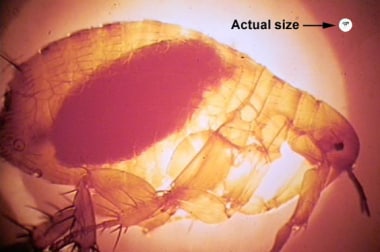
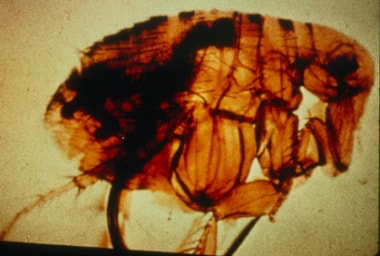
Media file 2:  Here a flea is shown with a blocked proventriculus, equivalent to the gastroesophageal region in man. In nature, this flea would develop a ravenous hunger because of its inability to digest the fibrinoid mass of blood and bacteria. Ensuing a biting of the nearest mammal results in clearing of the proventriculus through regurgitation of thousands of bacteria into the bite wound. Courtesy of United States Army Environmental Hygiene Agency.
Click to see larger pictureClick to see detailView Full Size Image
Media type:  Photo

Media file 3:  A suppurative, bubo of the femoral lymph node (shown here), the most common site of the erythematous, tender, swollen, nodes in a plague victim. The next most common lymph node regions involved are the inguinal, axillary, and cervical areas. The child in (Media file 4) has an erythematous, eroded, crusting, necrotic ulcer at the presumed primary inoculation site on the left upper quadrant. This type of lesion is uncommonly found in patients with plague. Bubo location is primarily a function of the region of the body in which an infected flea inoculates plague bacilli. Courtesy of Jack Poland, PhD, CDC, Fort Collins, CO.
Click to see larger pictureClick to see detailView Full Size Image
Media type:  Photo

Media file 4:  A suppurative, bubo of the femoral lymph node (Media file 3), the most common site of the erythematous, tender, swollen, nodes in a plague victim. The next most common lymph node regions involved are the inguinal, axillary (shown here), and cervical areas. The child in this photo has an erythematous, eroded, crusting, necrotic ulcer at the presumed primary inoculation site on the left upper quadrant. This type of lesion is uncommonly found in patients with plague. Bubo location is primarily a function of the region of the body in which an infected flea inoculates plague bacilli. Courtesy of Jack Poland, PhD, CDC, Fort Collins, CO.
Click to see larger pictureClick to see detailView Full Size Image
Media type:  Photo

Media file 5:  Ecchymoses at the neck base of a girl with plague. Bandage is over the site of a prior bubo aspirate. These lesions probably gave rise to the title line of the children's nursery rhyme "Ring around the rosy." Courtesy of Jack Poland, PhD, CDC, Fort Collins, CO.
Click to see larger pictureClick to see detailView Full Size Image
Media type:  Photo

Media file 6:  Right-side middle and lower lobe involvement in a patient with plague pneumonia. No chest radiograph pattern is characteristic of plague, but bilateral interstitial infiltrates are most commonly seen. Courtesy of Jack Poland, PhD, CDC, Fort Collins, CO.
Click to see larger pictureClick to see detailView Full Size Image
Media type:  Photo

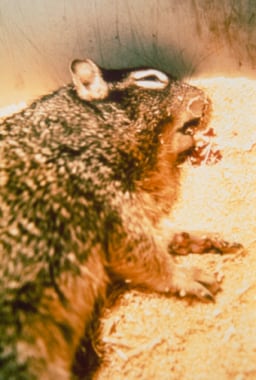
Media file 7:  Rock squirrel in extremis coughing of blood-streaked sputum of pneumonic plague. Courtesy of Ken Gage, PhD, CDC, Fort Collins, CO.
Click to see larger pictureClick to see detailView Full Size Image
Media type:  Photo

Media file 8:  Acral necrosis of nose, lips, fingers (shown here) and toes (Media file 9) and residual ecchymoses over both forearms in a patient recovering from bubonic plague that disseminated to blood and lungs. At one time, the patient's entire body was ecchymotic. Reprinted from McGovern TW, Friedlander AM. Plague. In: Sidell FR, Takafuji ET, Franz DR, eds. Medical Aspects of Chemical and Biological Warfare. Chapter 23 in: Zajtchuk R, Bellamy RF, eds. Textbook of Military Medicine. Washington, DC: US Department of the Army, Office of the Surgeon General, and Borden Institute; 1997: 493. Government publication, no copyright on photos.
Click to see larger pictureClick to see detailView Full Size Image
Media type:  Photo

Media file 9:  Acral necrosis of nose, lips, fingers (Media file 8) and toes (shown here) and residual ecchymoses over both forearms in a patient recovering from bubonic plague that disseminated to blood and lungs. At one time, the patient's entire body was ecchymotic. Reprinted from McGovern TW, Friedlander AM. Plague. In: Sidell FR, Takafuji ET, Franz DR, eds. Medical Aspects of Chemical and Biological Warfare. Chapter 23 in: Zajtchuk R, Bellamy RF, eds. Textbook of Military Medicine. Washington, DC: US Department of the Army, Office of the Surgeon General, and Borden Institute; 1997: 493. Government publication, no copyright on photos.
Click to see larger pictureClick to see detailView Full Size Image
Media type:  Photo

Media file 10:  Bioterrorist Agents. Signs and symptoms. Chart courtesy of North Carolina Statewide Program for Infection Control and Epidemiology (SPICE), copyright University of North Carolina at Chapel Hill, www.unc.edu/depts/spice/bioterrorism.html.
Click to see larger pictureClick to see detailView Full Size Image
 
Media type:  Chart


  1. Stenseth NC, Samia NI, Viljugrein H, Kausrud KL, Begon M, Davis S. Plague dynamics are driven by climate variation. Proc Natl Acad Sci U S A. Aug 29 2006;103(35):13110-5. [Medline].
  2. Barnes AM, Quam TJ. Plague. In: Gorbach SL, Bartlett JG, Balacklow NR, eds. Infectious Diseases. 1992:1285-91.
  3. Branda JA, Ruoff K. Bioterrorism. Clinical recognition and primary management. Am J Clin Pathol. Jun 2002;117 Suppl:S116-23. [Medline].
  4. Burmeister RW, Tigertt WD, Overholt EL. Laboratory-acquired pneumonic plague. Report of a case and review of previous cases. Ann Intern Med. May 1962;56:789-800. [Medline].
  5. Butler T. Yersinia species (including plagues). In: Mandell GL, Douglas RG Jr, Bennett JE, eds. Principles and Practice of Infectious Diseases. 3rd ed. 1990. [Medline].
  6. Butler T, Bell WR, Nguyen-Ngoc-Linh, Nguyen-Dinh-Tiep, Arnold K. Yersinia pestis infection in Vietnam. I. Clinical and hematologic aspects. J Infect Dis. May 1974;129:Suppl:S78-84. [Medline].
  7. CDC. Human plague--United States, 1993-1994. MMWR Morb Mortal Wkly Rep. Apr 8 1994;43(13):242-6. [Medline].
  8. Chanteau S, Rahalison L, Ralafiarisoa L, Foulon J, Ratsitorahina M, Ratsifasoamanana L. Development and testing of a rapid diagnostic test for bubonic and pneumonic plague. Lancet. Jan 18 2003;361(9353):211-6. [Medline].
  9. Christie AB, Corbel MS. Topley and Wilson, eds. Principles of Bacteriology, Virology and Immunity. 3rd-8th ed. 1990:400-9.
  10. Conner C. Plague. In: Pathology of Infectious Diseases. 1997:729-38.
  11. Connor JD, Williams RA, Thompson MA, et al. Plague in San Diego [clinical conference]. West J Med. Nov 1978;129(5):394-406. [Medline].
  12. Craven RB, Maupin GO, Beard ML, et al. Reported cases of human plague infections in the United States, 1970- 1991. J Med Entomol. Jul 1993;30(4):758-61. [Medline].
  13. Crook LD, Tempest B. Plague. A clinical review of 27 cases. Arch Intern Med. Jun 1992;152(6):1253-6. [Medline].
  14. Hoffman SL. Plague in the United States: the "black death" is still alive. Ann Emerg Med. Jun 1980;9(6):319-22. [Medline].
  15. Hull HF, Montes JM, Mann JM. Septicemic plague in New Mexico. J Infect Dis. Jan 1987;155(1):113-8. [Medline].
  16. Human plague--four states, 2006. MMWR Morb Mortal Wkly Rep. Sep 1 2006;55(34):940-3. [Medline].
  17. Humphrey M, McGivney R, Perkins C, Harris R, Rowe J. Yersinia pestis: a case of mistaken identity. Pediatr Infect Dis J. May 1988;7(5):365-6. [Medline].
  18. Koirala J. Plague: disease, management, and recognition of act of terrorism. Infect Dis Clin North Am. Jun 2006;20(2):273-87, viii. [Medline].
  19. Kool JL. Risk of person-to-person transmission of pneumonic plague. Clin Infect Dis. Apr 15 2005;40(8):1166-72. [Medline].
  20. Lazarus AA, Decker CF. Plague. Respir Care Clin N Am. Mar 2004;10(1):83-98. [Medline].
  21. Leopold JC. Septicemic plague in a 14-month-old child. Pediatr Infect Dis. Jan-Feb 1986;5(1):108-10. [Medline].
  22. Mann JM, Hull HF, Schmid GP, Droke WE. Plague and the peripheral smear. JAMA. Feb 17 1984;251(7):953. [Medline].
  23. Marcus LC. Wilderness acquired zoonoses. In: Auerbach PS, Geehr EC, eds. Management of Wilderness and Environmental Emergencies. 1989.
  24. McGovern TW, Christopher GW, Eitzen EM. Cutaneous manifestations of biological warfare and related threat agents. Arch Dermatol. Mar 1999;135(3):311-22. [Medline].
  25. McGovern TW, Friedlander AM. Plague. In: Sidell FR, Takafuji ET, Franz DR, eds. Textbook of Military Medicine: Medical Aspects of Chemical and Biological Warfare. In: Zajtchuk R, Bellamy RF, eds. Textbook of Military Medicine. Office of the Surgeon General of the Army. 1997:479-502.
  26. Mwengee W, Butler T, Mgema S, Mhina G, Almasi Y, Bradley C. Treatment of plague with gentamicin or doxycycline in a randomized clinical trial in Tanzania. Clin Infect Dis. Mar 1 2006;42(5):614-21. [Medline].
  27. Navas E. Problems associated with potential massive use of antimicrobial agents as prophylaxis or therapy of a bioterrorist attack. Clin Microbiol Infect. Aug 2002;8(8):534-9. [Medline].
  28. Outbreak news. Plague, Democratic Republic of the Congo. Wkly Epidemiol Rec. Oct 20 2006;81(42):397-8. [Medline].
  29. Perry RD, Fetherston JD. Yersinia pestis--etiologic agent of plague. Clin Microbiol Rev. Jan 1997;10(1):35-66. [Medline].
  30. Rollins SE, Rollins SM, Ryan ET. Yersinia pestis and the plague. Am J Clin Pathol. Jun 2003;119 Suppl:S78-85. [Medline].
  31. Rotz LD, Khan AS, Lillibridge SR, Ostroff SM, Hughes JM. Public health assessment of potential biological terrorism agents. Emerg Infect Dis. Feb 2002;8(2):225-30. [Medline].
  32. Weir E. Plague: a continuing threat. CMAJ. Jun 7 2005;172(12):1555. [Medline].
  33. Welty TK, Grabman J, Kompare E, et al. Nineteen cases of plague in Arizona. A spectrum including ecthyma gangrenosum due to plague and plague in pregnancy. West J Med. May 1985;142(5):641-6. [Medline].
  34. Werner SB, Weidmer CE, Nelson BC, Nygaard GS, Goethals RM, Poland JD. Primary plague pneumonia contracted from a domestic cat at South Lake Tahoe, Calif. JAMA. Feb 17 1984;251(7):929-31. [Medline].

CBRNE - Plague excerpt

Article Last Updated: May 2, 2007