Continually Updated Clinical Reference
 
 
  All Sources     eMedicine     Medscape     Drug Reference     MEDLINE
 
eMedicine - Appendicitis, Acute : Article by

Quick Find
Authors & Editors
Introduction
Clinical
Differentials
Workup
Treatment
Medication
Follow-up
Miscellaneous
Multimedia
References

Related Articles
Cholecystitis and Biliary Colic

Constipation

Diverticular Disease

Endometriosis

Gastroenteritis

Inflammatory Bowel Disease

Mesenteric Ischemia

Ovarian Cysts

Ovarian Torsion

Pediatrics, Intussusception

Pelvic Inflammatory Disease

Renal Calculi

Spider Envenomations, Widow

Urinary Tract Infection, Female

Urinary Tract Infection, Male


Patient Education
Esophagus, Stomach, and Intestine Center

Appendicitis Overview

Appendicitis Causes

Appendicitis Symptoms

Appendicitis Treatment

Abdominal Pain in Adults Overview


Author: Sandy Craig, MD, Associate Program Director, Adjunct Assistant Professor, Department of Emergency Medicine, University of North Carolina at Chapel Hill, Carolinas Medical Center

Sandy Craig is a member of the following medical societies: Alpha Omega Alpha and Society for Academic Emergency Medicine

Editors: William Lober, MD, Associate Professor, Department of Medical Education, Division of Biomedical and Health Informatics, University of Washington School of Medicine; Francisco Talavera, PharmD, PhD, Senior Pharmacy Editor, eMedicine; Eugene Hardin, FAAEM, FACEP, Former Chair and Associate Professor, Department of Emergency Medicine, Charles R Drew University of Medicine and Science; Former Chair, Department of Emergency Medicine, Martin Luther King, Jr/Drew Medical Center; John D Halamka, MD, MS, Associate Professor of Medicine, Harvard Medical School, Beth Israel Deaconess Medical Center; Chief Information Officer, CareGroup Healthcare System and Harvard Medical School; Attending Physician, Division of Emergency Medicine, Beth Israel Deaconess Medical Center; Jonathan Adler, MD, Attending Physician, Department of Emergency Medicine, Massachusetts General Hospital; Division of Emergency Medicine, Harvard Medical School

Author and Editor Disclosure

Synonyms and related keywords: acute inflammation of the appendix, abdominal pain, fecaliths, appendiceal perforation, appendectomy, right lower quadrant pain, vomiting, periumbilical pain, Rovsing sign, obturator sign, psoas sign, positive cough sign, appendicitis, burst appendix, luminal obstruction, acute appendicitis

Background

Appendicitis is a common and urgent surgical illness with protean manifestations, generous overlap with other clinical syndromes, and significant morbidity, which increases with diagnostic delay. No single sign, symptom, or diagnostic test accurately confirms the diagnosis of appendiceal inflammation in all cases.

The surgeon's goals are to evaluate a relatively small population of patients referred for suspected appendicitis and to minimize the negative appendectomy rate without increasing the incidence of perforation. The emergency department clinician must evaluate the larger group of patients who present to the ED with abdominal pain of all etiologies with the goal of approaching 100% sensitivity for the diagnosis in a time-, cost-, and consultation-efficient manner.

Pathophysiology

Obstruction of the appendiceal lumen is the primary cause of appendicitis. Obstruction of the lumen leads to distension of the appendix due to accumulated intraluminal fluid. Ineffective lymphatic and venous drainage allows bacterial invasion of the appendiceal wall and, in advanced cases, perforation and spillage of pus into the peritoneal cavity.

Frequency

United States

Appendicitis occurs in 7% of the US population, with an incidence of 1.1 cases per 1000 people per year. Some familial predisposition exists.

International

Incidence of appendicitis is lower in cultures with a higher intake of dietary fiber. Dietary fiber is thought to decrease the viscosity of feces, decrease bowel transit time, and discourage formation of fecaliths, which predispose individuals to obstructions of the appendiceal lumen.

Mortality/Morbidity

  • The overall mortality rate of 0.2-0.8% is attributable to complications of the disease rather than to surgical intervention.
  • Mortality rate rises above 20% in patients older than 70 years, primarily because of diagnostic and therapeutic delay.
  • Perforation rate is higher among patients younger than 18 years and patients older than 50 years, possibly because of delays in diagnosis. Appendiceal perforation is associated with an increase in morbidity and mortality rates.

Sex

The incidence of appendicitis is approximately 1.4 times greater in men than in women. The incidence of primary appendectomy is approximately equal in both sexes.

Age

  • Incidence of appendicitis gradually rises from birth, peaks in the late teen years, and gradually declines in the geriatric years.
  • Although rare, neonatal and even prenatal appendicitis have been reported.
  • The emergency department clinician must maintain a high index of suspicion in all age groups.


History

  • Variations in the position of the appendix, age of the patient, and degree of inflammation make the clinical presentation of appendicitis notoriously inconsistent.
  • In addition, patients with many other disorders present with symptoms similar to those of appendicitis. Examples include the following:
    • Pelvic inflammatory disease (PID) or tubo-ovarian abscess
    • Endometriosis
    • Ovarian cyst or torsion
    • Ureterolithiasis and renal colic
    • Degenerating uterine leiomyomata
    • Diverticulitis
    • Crohn disease
    • Colonic carcinoma
    • Rectus sheath hematoma
    • Cholecystitis
    • Bacterial enteritis
    • Mesenteric adenitis
    • Omental torsion
  • The classic history of anorexia and periumbilical pain followed by nausea, right lower quadrant (RLQ) pain, and vomiting occurs in only 50% of cases.
  • Migration of pain from the periumbilical area to the RLQ is the most discriminating feature of the patient's history. This finding has a sensitivity and specificity of approximately 80%.
  • When vomiting occurs, it nearly always follows the onset of pain. Vomiting that precedes pain is suggestive of intestinal obstruction, and the diagnosis of appendicitis should be reconsidered.
  • Nausea is present in 61-92% of patients; anorexia is present in 74-78% of patients. Neither finding is statistically different from findings in ED patients with other etiologies of abdominal pain.
  • Diarrhea or constipation is noted in as many as 18% of patients and should not be used to discard the possibility of appendicitis.
  • Duration of symptoms is less than 48 hours in approximately 80% of adults but tends to be longer in elderly persons and in those with perforation. Approximately 2% of patients report duration of pain in excess of 2 weeks.
  • A history of similar pain is reported in as many as 23% of cases. A history of similar pain, in and of itself, should not be used to rule out the possibility of appendicitis.
  • An inflamed appendix near the urinary bladder or ureter can cause irritative voiding symptoms and hematuria or pyuria. Cystitis in male patients is rare in the absence of instrumentation. Consider the possibility of an inflamed pelvic appendix in male patients with apparent cystitis.

Physical

  • Male infants and children occasionally present with an inflamed hemiscrotum due to migration of an inflamed appendix or pus through a patent processus vaginalis. This is often initially misdiagnosed as acute testicular torsion.
  • RLQ tenderness is present in 96% of patients, but this is a nonspecific finding. Rarely, left lower quadrant (LLQ) tenderness has been the major manifestation in patients with situs inversus or in patients with a lengthy appendix that extends into the LLQ.
  • The most specific physical findings are rebound tenderness, pain on percussion, rigidity, and guarding.
  • The Rovsing sign (RLQ pain with palpation of the LLQ), the obturator sign (RLQ pain with internal rotation of the flexed right hip), and the psoas sign (RLQ pain with hyperextension of the right hip) are present in a minority of patients with acute appendicitis. Their absence never should be used to rule out appendiceal inflammation.
  • A positive cough sign (sharp pain in the RLQ elicited by a voluntary cough) may be helpful in making the clinical diagnosis of localized peritonitis. Similarly, RLQ pain in response to percussion of a remote quadrant of the abdomen, or to firm percussion of the patient's heel, suggests peritoneal inflammation. The Markle sign, pain elicited in a certain area of the abdomen when the standing patient drops from standing on toes to the heels with a jarring landing, is stated in DeGowin's Diagnostic Examination to be very sensitive for localizing true peritonitis.
  • The literature is inconsistent as to whether rectal examination is helpful in making the diagnosis; however, failure to perform a rectal examination is frequently cited in successful malpractice claims.

Causes

  • Obstruction of the appendiceal lumen usually precipitates appendicitis.
  • The most common causes of luminal obstruction are fecaliths and lymphoid follicle hyperplasia.
    • Fecaliths form when calcium salts and fecal debris become layered around a nidus of inspissated fecal material located within the appendix.
    • Lymphoid hyperplasia is associated with a variety of inflammatory and infectious disorders including Crohn disease, gastroenteritis, amebiasis, respiratory infections, measles, and mononucleosis.
    • Obstruction of the appendiceal lumen has less commonly been associated with parasites (eg, Schistosomes species, Strongyloides species), foreign material (eg, shotgun pellet, intrauterine device, tongue stud, activated charcoal), tuberculosis, and tumors.


Cholecystitis and Biliary Colic
Constipation
Diverticular Disease
Endometriosis
Gastroenteritis
Inflammatory Bowel Disease
Mesenteric Ischemia
Ovarian Cysts
Ovarian Torsion
Pediatrics, Intussusception
Pelvic Inflammatory Disease
Renal Calculi
Spider Envenomations, Widow
Urinary Tract Infection, Female
Urinary Tract Infection, Male

Other Problems to be Considered

Appendiceal stump appendicitis
Typhilitis
Epiploic appendagitis
Mesenteric adenitis
Omental torsion
Psoas abscess


Lab Studies

  • Complete blood cell count
    • Studies consistently show that 80-85% of adults with appendicitis have a WBC count greater than 10,000 cells/mm3. Neutrophilia greater than 75% occurs in 78% of patients. Fewer than 4% of patients with appendicitis have a WBC count less than 10,000 cells/mm3 and neutrophilia less than 75%.
    • CBC tests are inexpensive, rapid, and widely available; however, the findings are nonspecific, and 4% of cases are missed.
    • The literature is inconsistent with regard to WBC counts in children and elderly patients with appendicitis.
  • C-reactive protein test
    • C-reactive protein (CRP) is an acute-phase reactant synthesized by the liver in response to bacterial infection. Serum levels begin to rise within 6-12 hours of acute tissue inflammation. A rapid assay is widely available.
    • Several prospective studies have shown that in adults who have had symptoms for longer than 24 hours, a normal CRP level has a negative predictive value of approximately 100% for appendicitis.
    • Specificity is 50-87% in several series.
    • Three studies in adults showed that the combination of a WBC count of less than 10,500 cells/mm3, neutrophilia less than 75%, and a normal CRP level had 99-100% negative predictive value for acute appendicitis (Yang, 2006). One retrospective study of 77 patients older than 60 years found that only 2 had a normal "triple screen" (Yang, 2005).
    • In 1989, Thimsen et al noted that a normal CRP level after 12 hours of symptoms was 100% predictive of benign, self-limited illness.
    • CRP results do not distinguish between various types of bacterial infection.
  • Urinalysis: One study of 500 patients with acute appendicitis revealed that approximately one third reported urinary symptoms, most commonly dysuria or right flank pain. One in 7 patients had pyuria greater than 10 WBC per high power field, and 1 in 6 patients had greater than 3 RBC per high power field. Thus, the diagnosis of appendicitis should not be dismissed due to the presence of urologic symptoms or abnormal urinalysis (Tundidor, 2005).

Imaging Studies

  • Computed tomography
    • Abdominal CT has become the most important imaging study in the evaluation of patients with atypical presentations of appendicitis. Studies have found a decrease in negative laparotomy rate and appendiceal perforation rate when pelvic CT was used in selected patients with suspected appendicitis (Rao, 1999; McGory, 2005; Harswick, 2006).
    • Note that one study of asymptomatic volunteers undergoing pelvic CT found that 42% had an "abnormal" appendiceal diameter of greater than 6 mm and 78% of appendices did not fill after oral contrast. Thus, findings on CT must be correlated with the clinical scenario (Tamburrini, 2005).
    • Advantages of CT scanning include its superior sensitivity and accuracy compared with those of other imaging techniques, ready availability, noninvasiveness, and potential to reveal alternative diagnoses. Disadvantages include radiation exposure, potential for anaphylactic reaction if intravenous contrast agent is used, lengthy acquisition time if oral contrast is used, and patient discomfort if rectal contrast is used.
    • Initial studies evaluated sequential (nonhelical) CT in the diagnosis of appendicitis. In 1993, Malone evaluated nonenhanced, sequential CT in 211 patients and reported a sensitivity of 87% and a specificity of 97%. The addition of intravenous and oral contrast agent increased sensitivity to 96-98%. Thus, sequential CT with oral and intravenous contrast enhancement is highly accurate but time consuming and expensive; it is best used for equivocal presentations when helical CT is not available.
    • In 1997, Lane et al evaluated helical CT without contrast enhancement and found a sensitivity of 90% and specificity of 97%. More recent studies of noncontrast helical CT in adults with suspected appendicitis showed a sensitivity of 91-96% and a specificity of 92-100% (Lane, 1999; Ege, 2002; Hof, 2004; Yuksekkaya, 2004; Ashraf, 2006).
    • In a 2004 study of pediatric patients, Kaiser et al found that nonenhanced CT was 66% sensitive. Sensitivity increased to 90% with the use of intravenous contrast material. In a 2005 study of 112 pediatric patients, Hoecker and Bilman found that unenhanced CT achieved a sensitivity of 87.5%, specificity of 98.7%, positive predictive value of 91.3%, and negative predictive value of 90.8%.
    • In 1997, Rao et al found that focused (lower abdominal and upper pelvic) helical CT with 3% Gastrografin instilled into the colon (without intravenous contrast agent) had a superior sensitivity of 98% and specificity of 98%. Focused helical scanning without intravenous contrast agent eliminates the risk of anaphylaxis and reduces the cost to about $230. Acquisition time is less than 15 minutes. Radiation exposure is less than that of a standard obstruction series. Alternative diagnoses are revealed in up to 62% of patients and include diverticulitis, nephrolithiasis, adnexal pathology, RLQ tumor, small-bowel hernias, and ischemia.
    • The literature suggests that limited helical CT with rectal contrast enhancement is a highly accurate, time-efficient, cost-effective way to evaluate adults with equivocal presentations for appendicitis. Two studies of focused helical CT with rectal contrast in children suggest a sensitivity of 95-97%. This is an excellent diagnostic approach in patients with equivocal presentations who are poor candidates for intravenous contrast.
    • One recent retrospective study of 173 adults found that helical CT with intravenous contrast only has a sensitivity of 100%, specificity of 97%, positive predictive value of 97%, and negative predictive value of 100% (Mun, 2006). An earlier study of 78 patients with appendicitis found sensitivity of 91.9%, specificity of 87.5%, and accuracy of 91% (Iwahasi, 2005). In a 2005 retrospective review of 23 published reports, Anderson et al found that CT without oral contrast was at least as accurate as CT with oral contrast, achieving sensitivity of 95%, specificity of 97%, positive predictive value of 97%, and negative predictive value of 96%. Elimination of oral contrast reduces emergency department length of stay and delay to operative intervention.
    • Continued improvements in helical CT technology may allow nonenhanced helical CT to be the imaging test of choice for adults with suspected appendicitis. Additional studies are needed to identify subgroups that derive the most benefit from diagnostic imaging.
  • Ultrasonography
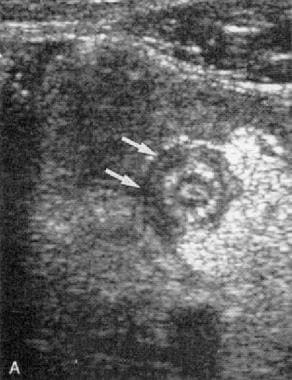
    • In 1986, Puylaert described a graded compression technique for evaluating the appendix with transabdominal sonography. A 5-MHz transducer is used. Gentle but firm pressure is applied on the RLQ to displace intervening bowel gas and to decrease the distance between the transducer and the appendix, improving image quality. An outer diameter of greater than 6 mm, noncompressibility, lack of peristalsis, or periappendiceal fluid collection characterizes an inflamed appendix. The normal appendix is not visualized in most cases. A posterolateral approach is suggested to evaluate the retrocecal area. Scattered case reports endorse transvaginal sonography in women with low pelvic tenderness if the appendix is not visualized on transabdominal scans.
    • Numerous studies have documented a sensitivity of 85-90% and a specificity of 92-96%. Five studies of graded compression ultrasonography in children showed overall sensitivities of 85-95% and specificities ranging from 47-96%. One study found sensitivity of 35% and specificity of 98% in pediatric patients with perforated appendicitis. The cost is approximately $225.
    • Advantages of sonography include its noninvasiveness, short acquisition time, lack of radiation exposure, and potential for diagnosis of other causes of abdominal pain, particularly in the subset of women of childbearing age. Many authorities believe that ultrasonography should be the initial imaging test in pregnant women and in pediatric patients because radiation exposure is particularly undesirable in these groups.
    • The principal disadvantage is that ultrasonography is operator dependent. Because nonvisualization is interpreted as a noninflamed appendix, technical expertise and commitment to a thorough examination are essential in obtaining maximum sensitivity.
    • If graded compression sonogram of the RLQ is positive for appendicitis, appendectomy should be performed. If negative, this finding is not sufficiently sensitive to rule out the possibility of appendicitis. Consideration should be given to further observation and focused helical CT with rectal contrast enhancement.
  • Abdominal radiography
    • The kidneys-ureters-bladder (KUB) view is typically used. Visualization of an appendicolith in a patient with symptoms consistent with appendicitis is highly suggestive of appendicitis, but this occurs in fewer than 10% of cases.
    • The consensus in the literature is that plain radiographs are insensitive, nonspecific, and not cost-effective.
  • Barium enema study
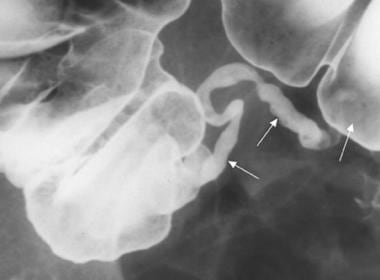
    • A single-contrast study can be performed on an unprepared bowel. Absent or incomplete filling of the appendix coupled with pressure effect or spasm in the cecum suggests appendicitis. The cost is approximately $420.
    • Multiple studies have found that the sensitivity of a barium enema study is in the range of 80-100%. However, as many as 16% of studies in adults (22-39% in children) were technically unsuitable for interpretation and excluded from data analysis.
    • Advantages of barium enema study are its wide availability, use of simple equipment, and potential for diagnosis of other diseases (eg, Crohn disease, colon cancer, ischemic colitis) that may mimic appendicitis.
    • Disadvantages include its high incidence of nondiagnostic results, radiation exposure, insufficient sensitivity, and invasiveness. These disadvantages make barium enema study a poor screening examination for use by emergency departments.
    • Barium enema study has essentially no role in the diagnosis of acute appendicitis in the era of ultrasonography and CT.
  • Radionuclide scanning
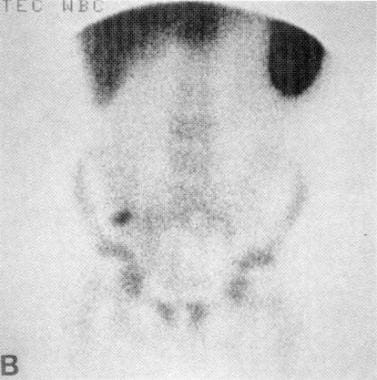
    • Whole blood is withdrawn for radionuclide scanning. Neutrophils and macrophages are labeled with technetium-99m albumin and administered intravenously. Images of the abdomen and pelvis are obtained serially over 4 hours. Localized uptake of tracer in the RLQ suggests appendiceal inflammation.
    • Four early studies in adults with suspected appendicitis showed a sensitivity of 80-90% and specificity of 92-100% (Navarro, 1987; Henneman, 1988; DeLaney, 1989; Foley 1992). Two studies of newer labeling techniques achieved sensitivities of 98% for the presence of appendicitis (Kipper, 1999; Rypins, 1997).
    • Although future studies may confirm sensitivity as high as 98%, the acquisition time of 5 hours and the lack of availability are disadvantages to its use as a high-sensitivity ED screening test for appendicitis.
  • MRI: A single retrospective study assessed the accuracy of MRI in 51 pregnant patients with suspected appendicitis in whom ultrasonography was nondiagnostic. Sensitivity, specificity, positive and negative predictive values, and accuracy for MRI was 100%, 93.6%, 91.4%, 100%, and 94.0%, respectively (Pedrosa, 2006).

Other Tests

  • Clinical diagnostic scores
    • Several investigators have created diagnostic scoring systems in which a finite number of clinical variables is elicited from the patient and each is given a numerical value. The sum of these values is used to predict the likelihood of acute appendicitis.
    • The best known of these is the MANTRELS score, which tabulates migration of pain, anorexia, nausea and/or vomiting, tenderness in the RLQ, rebound tenderness, elevated temperature, leukocytosis, and shift to the left (Table).

      MANTRELS score

      CharacteristicScore
      M = Migration of pain to the RLQ1
      A = Anorexia1
      N = Nausea and vomiting1
      T = Tenderness in RLQ2
      R = Rebound pain1
      E = Elevated temperature1
      L = Leukocytosis2
      S = Shift of WBC to the left1
      Total10
      Source.—Alvarado, 1986.
    • Clinical scoring systems are attractive because of their simplicity; however, none has been shown prospectively to improve on the clinician's judgment in the subset of patients evaluated in the ED for abdominal pain suggestive of appendicitis. The MANTRELS score, in fact, was based on a population of patients hospitalized for suspected appendicitis, which differs markedly from the population seen in the ED.
    • More recently, Tzanakis and others proposed a clinical scoring system that assigns 6 points if appendiceal ultrasonogram is positive, 4 points for RLQ tenderness, 3 points for rebound tenderness, and 2 points for WBC count greater than 12,000. In their prospective study of 303 adults using a total score cut-off of 8 points or greater, they found sensitivity, specificity, and accuracy of 95.4%, 97.4%, and 96.5%, respectively. These findings should be confirmed by additional studies before routine clinical use.
  • Computer-aided diagnosis
    • A retrospective database of clinical features of patients with appendicitis and other causes of abdominal pain is entered into a computer. It is then used in prospectively assessing the risk of appendicitis.
    • Computer-aided diagnosis can achieve a sensitivity greater than 90% while reducing rates of perforation and negative laparotomy by as much as 50%.
    • The principle disadvantages are that each institution must generate its own database to reflect characteristics of its local population. Specialized equipment and significant initiation time are required.
    • Computer-aided diagnosis is not widely available in US EDs.


Emergency Department Care

  • Treatment guidelines for patients with suspected acute appendicitis
    • Establish intravenous access and administer aggressive crystalloid therapy to patients with clinical signs of dehydration or septicemia.
    • Patients with suspected appendicitis should not receive anything by mouth.
    • Administer parenteral analgesic and antiemetic as needed for patient comfort.
    • At least 8 randomized controlled studies show that administering opioid analgesic medications to adult and pediatric patients with acute undifferentiated abdominal pain is safe; no study has shown that analgesics adversely affect the accuracy of physical examination. Formerly, the administration of analgesics to patients with acute undifferentiated abdominal pain has historically been discouraged and criticized because of concerns that they render the physical findings less reliable.
    • Consider ectopic pregnancy in women of childbearing age and obtain a qualitative beta–human chorionic gonadotropin (beta-hCG) measurement in all cases.
    • Administer intravenous antibiotics to those with signs of septicemia and to those who are to proceed to laparotomy.
  • Nonsurgical treatment of appendicitis
    • Anecdotal reports describe the success of intravenous antibiotics in treating acute appendicitis in patients without access to surgical intervention (eg, submariners, individuals on ships at sea).
    • In one prospective study of 20 patients with sonography-proven appendicitis, symptoms resolved in 95% of patients receiving antibiotics alone, but 37% of these patients had recurrent appendicitis within 14 months (Eriksson, 1995).
    • Nonsurgical treatment may be useful when appendectomy is not accessible or when it is temporarily a high-risk procedure.
  • Preoperative antibiotics
    • Preoperative antibiotics have demonstrated efficacy in decreasing postoperative wound infection rates in numerous prospective controlled studies.
    • Broad-spectrum gram-negative and anaerobic coverage is indicated.
    • Preoperative antibiotics should be given in conjunction with the surgical consultant.

Consultations

  • Consult a general surgeon.


The goals of therapy are to eradicate the infection and to prevent complications.

Drug Category: Antibiotics

These agents are effective in decreasing the rate of postoperative wound infection and in improving outcome in patients with appendiceal abscess or septicemia. The Surgical Infection Society recommends starting prophylactic antibiotics before surgery, using appropriate spectrum agents for less than 24 hours for nonperforated appendicitis and for less than 5 days for perforated appendicitis. Regimens are of approximately equal efficacy, so consideration should be given to features such as toxicity and cost.

Drug NameMetronidazole (Flagyl)
DescriptionUsed in combination with aminoglycoside (eg, gentamicin); broad gram-negative and anaerobic coverage. Appears to be absorbed into cells; intermediate metabolized compounds bind DNA and inhibit protein synthesis, causing cell death.
Adult Dose7.5 mg/kg IV before surgery
Pediatric Dose15-30 mg/kg/d IV divided bid/tid for 7 d, or 40 mg/kg PO once; not to exceed 2 g/d
ContraindicationsDocumented hypersensitivity
InteractionsMay increase toxicity of anticoagulants, lithium, and phenytoin; cimetidine may increase toxicity; disulfiram reaction may occur with orally ingested ethanol
PregnancyB - Usually safe but benefits must outweigh the risks.
PrecautionsAdjust dose in hepatic disease; monitor for seizures and peripheral neuropathy

Drug NameGentamicin (Gentacidin, Garamycin)
DescriptionAminoglycoside antibiotic for gram-negative coverage. Used in combination with agent against gram-positive organisms and one against anaerobes. Not DOC. Consider if penicillins or other less toxic drugs contraindicated, when clinically indicated, and in mixed infections caused by susceptible staphylococci and gram-negative organisms. Numerous regimens; adjust dose for CrCl and changes in volume of distribution. May be given IV/IM.
Adult Dose2 mg/kg IV loading dose before surgery; 3-5 mg/kg/d divided tid/qid thereafter
Pediatric DoseInfants/neonates: 7.5 mg/kg/d IV divided tid
Children: 6-7.5 mg/kg/d IV divided tid
ContraindicationsDocumented hypersensitivity; non–dialysis-dependent renal insufficiency
InteractionsCoadministration with other aminoglycosides, cephalosporins, penicillins, and amphotericin B may increase nephrotoxicity; aminoglycosides enhance effects of neuromuscular blocking agents; prolonged respiratory depression may occur; coadministration with loop diuretics may increase ototoxicity of aminoglycosides, which may cause irreversible hearing loss of varying degrees (monitor regularly)
PregnancyC - Safety for use during pregnancy has not been established.
PrecautionsNarrow therapeutic index (not intended for long-term therapy); caution in renal failure (not on dialysis), myasthenia gravis, hypocalcemia, and conditions that depress neuromuscular transmission; adjust dose in renal impairment

Drug NameCefotetan (Cefotan)
DescriptionSecond-generation cephalosporin used as single-drug therapy for broad gram-negative and anaerobic coverage. Half-life is 3.5 h. Give with cefoxitin to achieve effectiveness of single dose.
Adult Dose2 g IV once before surgery
Pediatric Dose20-40 mg/kg IV/IM once before surgery
ContraindicationsDocumented hypersensitivity
InteractionsConsumption of alcohol within 72 h may produce disulfiramlike reactions; may increase hypoprothrombinemic effects of anticoagulants; coadministration with potent diuretics (eg, loop diuretics) or aminoglycosides may increase nephrotoxicity
PregnancyB - Usually safe but benefits must outweigh the risks.
PrecautionsReduce dose by half if CrCl 10-30 mL/min and by three quarters if <10 mL/min; bacterial or fungal overgrowth of nonsusceptible organisms may occur with prolonged or repeated therapy

Drug NameCefoxitin (Mefoxin)
DescriptionSecond-generation cephalosporin indicated as single agent for management of infections caused by susceptible gram-positive cocci and gram-negative rods. Half-life is 0.8 h.
Adult Dose2 g IV before surgery, followed by 3 doses of 2 g q4-6h for 24 h
Pediatric Dose<3 months: Not established
>3 months: 30-40 mg/kg IV before surgery, followed by 3 doses of 2 g q4-6h for 24 h
ContraindicationsDocumented hypersensitivity
InteractionsProbenecid may increase effects; coadministration with aminoglycosides or furosemide may increase nephrotoxicity (closely monitor renal function)
PregnancyB - Usually safe but benefits must outweigh the risks.
PrecautionsBacterial or fungal overgrowth of nonsusceptible organisms may occur with prolonged use or repeated treatment; caution in patients with previously diagnosed colitis

Drug NameMeropenem (Merrem)
DescriptionBactericidal broad-spectrum carbapenem antibiotic that inhibits cell wall synthesis. Used as a single agent, effective against most gram-positive and gram-negative bacteria.
Adult Dose1 g IV q8h
Pediatric Dose40 mg/kg IV q8h
ContraindicationsDocumented hypersensitivity
InteractionsProbenecid may inhibit renal excretion, increasing levels
PregnancyB - Usually safe but benefits must outweigh the risks.
PrecautionsPseudomembranous colitis and thrombocytopenia may occur (immediate discontinue)

Drug NamePiperacillin and tazobactam sodium (Zosyn)
DescriptionDrug combination of beta-lactamase inhibitor with piperacillin. Activity against some gram-positive organisms, gram-negative organisms, and anaerobic bacteria. Used as a single agent, inhibits biosynthesis of cell wall mucopeptide and is effective during stage of active multiplication.
Adult Dose3.375 g IV q6h
Pediatric Dose300-400 mg piperacillin/kg/d IV divided q6-8h
ContraindicationsDocumented hypersensitivity; severe pneumonia, bacteremia, pericarditis, emphysema, meningitis, and purulent or septic arthritis should not be treated with an oral penicillin during the acute stage
InteractionsTetracyclines may decrease effects of piperacillin; high concentrations of piperacillin may physically inactivate aminoglycosides if administered in same IV line; effects when administered concurrently with aminoglycosides are synergistic; probenecid may increase penicillin levels; high dose parenteral penicillins may result in increased risk of bleeding
PregnancyC - Safety for use during pregnancy has not been established.
PrecautionsPerform CBCs prior to initiation of therapy and at least weekly during therapy; monitor for liver function abnormalities by measuring AST and ALT during therapy; exercise caution in patients diagnosed with hepatic insufficiencies; perform urinalysis, and BUN and creatinine determinations during therapy and adjust dose if values become elevated; monitor blood levels to avoid possible neurotoxic reactions

Drug NameAmpicillin and sulbactam (Unasyn)
DescriptionDrug combination of beta-lactamase inhibitor with ampicillin. Interferes with bacterial cell wall synthesis during active replication, causing bactericidal activity against susceptible organisms. Used as a single agent.
Activity against some gram-positive organisms, gram-negative organisms (nonpseudomonal species), and anaerobic bacteria.
Adult Dose1.5 (1 g ampicillin + 0.5 g sulbactam) to 3 g (2 g ampicillin + 1 g sulbactam) IV/IM q6-8h; not to exceed 4 g/d sulbactam or 8 g/d ampicillin
Pediatric Dose<3 months: Not established
3 months to 12 years: 100-200 mg ampicillin/kg/d (150-300 mg Unasyn) IV divided q6h
>12 years: Administer as in adults; not to exceed 4 g/d sulbactam or 8 g/d ampicillin
ContraindicationsDocumented hypersensitivity
InteractionsProbenecid and disulfiram elevate ampicillin levels; allopurinol decreases ampicillin effects and has additive effects on ampicillin rash; may decrease effects of oral contraceptives
Pregnancy
PrecautionsAdjust dose in renal failure; evaluate rash and differentiate from hypersensitivity reaction

Drug Category: Analgesics

These agents can be used to relieve acute undifferentiated abdominal pain in patients presenting to the ED.

Drug NameMorphine sulfate (Astramorph, Duramorph, MS Contin, MSIR, Oramorph)
DescriptionDOC for analgesia because of reliable and predictable effects, safety profile, and ease of reversibility with naloxone. Various IV doses are used; commonly titrated to desired effect.
Adult DoseStarting dose: 0.1 mg/kg IV/IM/SC
Maintenance dose: 5-20 mg/70 kg IV/IM/SC q4h
Relative hypovolemia: Start with 2 mg IV/IM/SC; reassess hemodynamic effects of dose
Pediatric DoseInfants and children: 0.1-0.2 mg/kg dose IV/IM/SC q2-4h prn; not to exceed 15 mg/dose; may start at 0.05 mg/kg/dose
ContraindicationsDocumented hypersensitivity; hypotension; potentially compromised airway in which rapid airway control may be difficult
InteractionsPhenothiazines may antagonize analgesic effects of opiate agonists; tricyclic antidepressants, MAOIs, and other CNS depressants may potentiate adverse effects of morphine
PregnancyC - Safety for use during pregnancy has not been established.
PrecautionsCaution in hypotension, respiratory depression, nausea, emesis, constipation, urinary retention, atrial flutter, and other supraventricular tachycardias; has vagolytic action and may increase ventricular response rate


Further Inpatient Care

  • Open versus laparoscopic appendectomy
    • Initially performed in 1987, laparoscopic appendectomy has been performed in thousands of patients and is successful in 90-94% of attempts. Recent experience has also demonstrated that laparoscopic appendectomy is successful in approximately 90% of cases of perforated appendicitis.
    • Advantages of laparoscopic appendectomy include increased cosmetic satisfaction and a decrease in the postoperative wound-infection rate. Some studies show that laparoscopic appendectomy shortens the hospital stay and convalescent period compared with open appendectomy.
    • Disadvantages of laparoscopic appendectomy are increased cost and an operating time approximately 20 minutes longer than that of open appendectomy. The latter may resolve with increasing experience with laparoscopic technique.
    • Laparoscopic appendectomy is contraindicated in patients with significant intra-abdominal adhesions.
  • Emergent versus urgent appendectomy
    • One retrospective study suggests that the risk of appendiceal rupture is minimal in patients with less than 24-36 hours of untreated symptoms (Bickell, 2006). Another recent retrospective study suggests that appendectomy within 12-24 hours of presentation is not associated with an increase in hospital length of stay, operative time, advanced stages of appendicitis, or complications compared to appendectomy within 12 hours of presentation (Abou-Nukta, 2006).
    • Additional studies are needed to demonstrate whether initiation of antibiotic therapy followed by urgent appendectomy is as effective as emergent appendectomy for patients with unperforated appendicitis.
  • Immediate versus interval appendectomy for appendicitis with perforation
    • Historically, immediate (emergent) appendectomy was recommended for all patients with appendicitis, whether perforated or unperforated.
    • Recent clinical experience suggests that patients with perforated appendicitis with mild symptoms and localized abscess or phlegmon on abdominopelvic CT scans can be initially treated with intravenous antibiotics and percutaneous or transrectal drainage of any localized abscess. If the patient's symptoms, WBC count, and fever satisfactorily resolve, therapy can be changed to oral antibiotics and the patient can be discharged home. Delayed (interval) appendectomy can then be performed 4-8 weeks later. This approach is successful in the vast majority of patients with perforated appendicitis and localized symptoms. Some have suggested that interval appendectomy is not necessary unless the patient presents with recurrent symptoms. Further studies are needed to clarify whether routine interval appendectomy is indicated.
    • Further studies are necessary to identify the optimal treatment strategy in patients with perforated appendicitis.

Complications

  • Wound infection
  • Dehiscence
  • Bowel obstruction
  • Abdominal/pelvic abscess
  • Stump appendicitis - Although rare, approximately 36 reported cases of appendicitis in the surgical stump after prior appendectomy exist (Liang, 2006).
  • Death (rare)

Prognosis

  • The prognosis is excellent.

Patient Education


Medical/Legal Pitfalls

  • For approximately 10% of adults with appendicitis, the condition is not diagnosed correctly on their first visit to the health care provider.
  • Failure to diagnose appendicitis is the leading cause of successful malpractice claims and the fifth most expensive source of claims against emergency physicians.

Special Concerns

  • Pregnant women
    • The incidence of appendicitis is unchanged in pregnancy, but the clinical presentation is more variable than at other times.
    • During pregnancy, the appendix migrates in a counterclockwise direction toward the right kidney, rising above the iliac crest at about 4.5 months' gestation.
    • RLQ pain and tenderness dominate in the first trimester, but in the latter half of pregnancy, right upper quadrant (RUQ) or right flank pain must be considered a possible sign of appendiceal inflammation.
    • Nausea, vomiting, and anorexia are common in uncomplicated first trimester pregnancies, but their reappearance later in gestation should be viewed with suspicion.
    • Physiologic leukocytosis during pregnancy makes the WBC count less useful in the diagnosis than at other times, and no reliable distinguishing WBC parameters are cited in the literature.
    • One study of 22 pregnant women in the first and second trimesters showed that graded compression ultrasonography had a sensitivity of 66% and specificity of 95% (Barloon, 1995).
    • Diagnostic laparoscopy has also been suggested for pregnant patients in the first trimester with suspected appendicitis.
    • Although negative appendectomy does not appear to adversely affect maternal or fetal health, diagnostic delay with perforation does increase fetal and maternal morbidity. Therefore, aggressive evaluation of the appendix is warranted in this group.
  • Nonpregnant women of childbearing age
    • Appendicitis is misdiagnosed in 33% of nonpregnant women of childbearing age. The most frequent misdiagnoses are PID, followed by gastroenteritis and urinary tract infection.
    • In distinguishing appendiceal pain from that of PID, anorexia and onset of pain more than 14 days after menses suggests appendicitis. Previous PID, vaginal discharge, or urinary symptoms indicates PID.
    • On physical examination, tenderness outside the RLQ, cervical motion tenderness, vaginal discharge, and positive urinalysis support the diagnosis of PID.
  • Children
    • Appendicitis is misdiagnosed in 25-30% of children, and the rate of initial misdiagnosis is inversely related to the age of the patient.
    • The most common misdiagnosis is gastroenteritis, followed by upper respiratory infection and lower respiratory infection.
    • Children with misdiagnosed appendicitis are more likely than their counterparts to have vomiting before pain onset, diarrhea, constipation, dysuria, signs and symptoms of upper respiratory infection, and lethargy or irritability.
    • Physical findings less likely to be documented in children with a misdiagnosis than in others include bowel sounds; peritoneal signs; rectal findings; and ear, nose, and throat findings.
  • Elderly patients
    • Appendicitis in patients older than 60 years accounts for 10% of all appendectomies.
    • The incidence of misdiagnosis is increased in elderly patients.
    • In patients with comorbid conditions, diagnostic delay is correlated with increased morbidity and mortality.
    • Older patients tend to seek medical attention later in the course of illness; therefore, a duration of symptoms in excess of 24-48 hours should not dissuade the clinician from the diagnosis.


Media file 1:  CT scan reveals an enlarged appendix with thickened walls, which do not fill with colonic contrast agent, lying adjacent to the right psoas muscle.
Click to see larger pictureClick to see detailView Full Size Image
Media type:  CT

Media file 2:  Sagittal graded compression transabdominal sonogram shows an acutely inflamed appendix. The tubular structure is noncompressible, lacks peristalsis, and measures greater than 6 mm in diameter. A thin rim of periappendiceal fluid is present.
Click to see larger pictureClick to see detailView Full Size Image
Media type:  Photo

Media file 3:  Transverse graded compression transabdominal sonogram of an acutely inflamed appendix. Note the targetlike appearance due to thickened wall and surrounding loculated fluid collection.
Click to see larger pictureClick to see detailView Full Size Image
Media type:  Photo

Media file 4:  Kidneys-ureters-bladder (KUB) radiograph shows an appendicolith in the right lower quadrant. An appendicolith is seen in fewer than 10% of patients with appendicitis, but, when present, it is essentially pathognomonic.
Click to see larger pictureClick to see detailView Full Size Image
Media type:  X-RAY

Media file 5:  Technetium-99m radionuclide scan of the abdomen shows focal uptake of labeled WBCs in the right lower quadrant consistent with acute appendicitis.
Click to see larger pictureClick to see detailView Full Size Image
Media type:  Photo


  • Abou-Nukta F, Bakhos C, Arroyo K, et al. Effects of delaying appendectomy for acute appendicitis for 12 to 24 hours. Arch Surg. May 2006;141(5):504-6; discussioin 506-7. [Medline].
  • Albu E, Miller BM, Choi Y, et al. Diagnostic value of C-reactive protein in acute appendicitis. Dis Colon Rectum. Jan 1994;37(1):49-51. [Medline].
  • Alvarado A. A practical score for the early diagnosis of acute appendicitis. Ann Emerg Med. May 1986;15(5):557-64. [Medline].
  • Anderson BA, Salem L, Flum DR. A systematic review of whether oral contrast is necessary for the computed tomography diagnosis of appendicitis in adults. Am J Surg. Sep 2005;190(3):474-8. [Medline].
  • Ashraf K, Ashraf O, Bari V, et al. Role of focused appendiceal computed tomography in clinically equivocal acute appendicitis. J Pak Med Assoc. May 2006;56(5):200-3. [Medline].
  • Balthazar EJ, Birnbaum BA, Yee J, et al. Acute appendicitis: CT and US correlation in 100 patients. Radiology. Jan 1994;190(1):31-5. [Medline].
  • Barloon TJ, Brown BP, Abu-Yousef MM, et al. Sonography of acute appendicitis in pregnancy. Abdom Imaging. Mar-Apr 1995;20(2):149-51. [Medline].
  • Bickell NA, Aufses AH, Rojas M. How time affects the risk of rupture in appendicitis. J Am Coll Surg. Mar 2006;202(3):401-6. [Medline].
  • Bresciani C, Perez RO, Habr-Gama A, et al. Laparoscopic versus standard appendectomy outcomes and cost comparisons in the private sector. J Gastrointest Surg. Nov 2005;9(8):1174-80; discussion 1180-1. [Medline].
  • Campbell MR, Johnston SL, Marshburn T, et al. Nonoperative treatment of suspected appendicitis in remote medical care environments: implications for future spaceflight medical care. J Am Coll Surg. May 2004;198(5):822-30. [Medline].
  • DeLaney AR, Raviola CA, Weber PN, et al. Improving diagnosis of appendicitis. Early autologous leukocyte scanning. Arch Surg. Oct 1989;124(10):1146-51; discussion 1151-2. [Medline].
  • Ege G, Akman H, Sahin A, et al. Diagnostic value of unenhanced helical CT in adult patients with suspected acute appendicitis. Br J Radiol. Sep 2002;75(897):721-5. [Medline].
  • Eriksson S, Granstrom L. Randomized controlled trial of appendicectomy versus antibiotic therapy for acute appendicitis. Br J Surg. Feb 1995;82(2):166-9. [Medline].
  • Eriksson S, Granstrom L, Olander B et al. Sensitivity of interleukin-6 and C-reactive protein concentrations in the diagnosis of acute appendicitis. Eur J Surg. Jan 1995;161(1):41-5. [Medline].
  • Ferrer J, Fondevila C, Bombuy E, et al. [Controlled, open, parallel-group study of the clinical and microbiological efficacy of piperacillin-tazobactam versus metronidazole + gentamicin in urgent colorectal surgery]. Cir Esp. Jun 2006;79(6):365-9. [Medline].
  • Foley CR, Latimer RG, Rimkus DS. Detection of acute appendicitis by technetium 99 HMPAO scanning. Am Surg. Dec 1992;58(12):761-5. [Medline].
  • Fuchs JR, Schlamberg JS, Shortsleeve MJ, Schuler JG. Impact of abdominal CT imaging on the management of appendicitis: an update. J Surg Res. Jul 2002;106(1):131-6. [Medline].
  • Funaki B, Grosskreutz SR, Funaki CN. Using unenhanced helical CT with enteric contrast material for suspected appendicitis in patients treated at a community hospital. AJR Am J Roentgenol. Oct 1998;171(4):997-1001. [Medline].
  • Garcia Pena BM, Mandl KD, Kraus SJ, et al. Ultrasonography and limited computed tomography in the diagnosis and management of appendicitis in children. JAMA. Sep 15 1999;282(11):1041-6. [Medline].
  • Gronroos JM, Gronroos P. Leucocyte count and C-reactive protein in the diagnosis of acute appendicitis. Br J Surg. Apr 1999;86(4):501-4. [Medline].
  • Gurleyik E, Gurleyik G, Unalmiser S. Accuracy of serum C-reactive protein measurements in diagnosis of acute appendicitis compared with surgeon''s clinical impression. Dis Colon Rectum. Dec 1995;38(12):1270-4. [Medline].
  • Harswick C, Uyenishi AA, Kordick MF, Chan SB. Clinical guidelines, computed tomography scan, and negative appendectomies: a case series. Am J Emerg Med. Jan 2006;24(1):68-72. [Medline].
  • Henneman PL, Marcus CS, Butler JA, et al. Appendicitis: evaluation by Tc-99m leukocyte scan. Ann Emerg Med. Feb 1988;17(2):111-6. [Medline].
  • Hoecker CC, Billman GF. The utility of unenhanced computed tomography in appendicitis in children. J Emerg Med. May 2005;28(4):415-21. [Medline].
  • Iwahashi N, Kitagawa Y, Mayumi T, Kohno H. Intravenous contrast-enhanced computed tomography in the diagnosis of acute appendicitis. World J Surg. Jan 2005;29(1):83-7. [Medline].
  • Kaiser S, Finnbogason T, Jorulf HK, et al. Suspected appendicitis in children: diagnosis with contrast-enhanced versus nonenhanced Helical CT. Radiology. May 2004;231(2):427-33. [Medline].
  • Kanegaye JT, Vance CW, Parisi M, et al. Failure of technetium-99m hexamethylpropylene amine oxime leukocyte scintigraphy in the evaluation of children with suspected appendicitis. Pediatr Emerg Care. Oct 1995;11(5):285-90. [Medline].
  • Kim MK, Strait RT, Sato TT, Hennes HM. A randomized clinical trial of analgesia in children with acute abdominal pain. Acad Emerg Med. Apr 2002;9(4):281-7. [Medline].
  • Kipper SL. The role of radiolabeled leukocyte imaging in the management of patients with acute appendicitis. Q J Nucl Med. Mar 1999;43(1):83-92. [Medline].
  • Lane MJ, Liu DM, Huynh MD. Suspected acute appendicitis: nonenhanced helical CT in 300 consecutive patients. Radiology. Nov 1999;213(2):341-6. [Medline].
  • LeBlond RF, DeGowin RL, Brown DD. DeGowin's Diagnostic Examination. 8th ed. McGraw-Hill;2004:1040.
  • Lee JH, Jeong YK, Park KB. Operator-dependent techniques for graded compression sonography to detect the appendix and diagnose acute appendicitis. AJR Am J Roentgenol. Jan 2005;184(1):91-7. [Medline].
  • Liberman MA, Greason KL, Frame S, et al. Single-dose cefotetan or cefoxitin versus multiple-dose cefoxitin as prophylaxis in patients undergoing appendectomy for acute nonperforated appendicitis. J Am Coll Surg. Jan 1995;180(1):77-80. [Medline].
  • Lin HF, Wu JM, Tseng LM, et al. Laparoscopic versus open appendectomy for perforated appendicitis. J Gastrointest Surg. Jun 2006;10(6):906-10. [Medline].
  • Malone AJ. Diagnosis of acute appendicitis: Value of un-enhanced CT. Am J Roentgenol. 1993;160:763-766.
  • Mullins ME, Kircher MF, Ryan DP, et al. Evaluation of suspected appendicitis in children using limited helical CT and colonic contrast material. AJR Am J Roentgenol. Jan 2001;176(1):37-41. [Medline].
  • Mun S, Ernst RD, Chen K, et al. Rapid CT diagnosis of acute appendicitis with IV contrast material. Emerg Radiol. Mar 2006;12(3):99-102. [Medline].
  • Navarro DA, Weber PM, Kang IY, et al. Indium-111 leukocyte imaging in appendicitis. AJR Am J Roentgenol. Apr 1987;148(4):733-6. [Medline].
  • Ohmann C, Yang Q, Franke C. Diagnostic scores for acute appendicitis. Abdominal Pain Study Group. Eur J Surg. Apr 1995;161(4):273-81. [Medline].
  • Orr RK, Porter D, Hartman D. Ultrasonography to evaluate adults for appendicitis: decision making based on meta-analysis and probabilistic reasoning. Acad Emerg Med. Jul 1995;2(7):644-50. [Medline].
  • Pedrosa I, Levine D, Eyvazzadeh AD, et al. MR imaging evaluation of acute appendicitis in pregnancy. Radiology. Mar 2006;238(3):891-9.
  • Pickuth D, Heywang-Kobrunner SH, Spielmann RP. Suspected acute appendicitis: is ultrasonography or computed tomography the preferred imaging technique?. Eur J Surg. Apr 2000;166(4):315-9. [Medline].
  • Puylaert JB. Imaging and intervention in patients with acute right lower quadrant disease. Baillieres Clin Gastroenterol. Mar 1995;9(1):37-51. [Medline].
  • Puylaert JB. Acute appendicitis: US evaluation using graded compression. Radiology. Feb 1986;158(2):355-60. [Medline].
  • Rao PM, Rhea JT, Rao JA, et al. Plain abdominal radiography in clinically suspected appendicitis: diagnostic yield, resource use, and comparison with CT. Am J Emerg Med. Jul 1999;17(4):325-8. [Medline].
  • Rao PM, Rhea JT, Novelline RA, et al. Effect of computed tomography of the appendix on treatment of patients and use of hospital resources. N Engl J Med. Jan 15 1998;338(3):141-6. [Medline].
  • Rao PM, Rhea JT, Novelline RA, et al. Helical CT combined with contrast material administered only through the colon for imaging of suspected appendicitis. AJR Am J Roentgenol. Nov 1997;169(5):1275-80. [Medline].
  • Rao PM, Rhea JT, Rattner DW, et al. Introduction of appendiceal CT: impact on negative appendectomy and appendiceal perforation rates. Ann Surg. Mar 1999;229(3):344-9. [Medline].
  • Rice HE, Arbesman M, Martin DJ, et al. Does early ultrasonography affect management of pediatric appendicitis? A prospective analysis. J Pediatr Surg. May 1999;34(5):754-8; discussion 758-9. [Medline].
  • Rothrock SG, Skeoch G, Rush JJ, et al. Clinical features of misdiagnosed appendicitis in children. Ann Emerg Med. Jan 1991;20(1):45-50. [Medline].
  • Rypins EB, Evans DG, Hinrichs W, et al. Tc-99m-HMPAO white blood cell scan for diagnosis of acute appendicitis in patients with equivocal clinical presentation. Ann Surg. Jul 1997;226(1):58-65. [Medline].
  • Schulte B, Beyer D, Kaiser C, et al. Ultrasonography in suspected acute appendicitis in childhood-report of 1285 cases. Eur J Ultrasound. Dec 1998;8(3):177-82. [Medline].
  • Schwerk WB, Wichtrup B, Rothmund M, et al. Ultrasonography in the diagnosis of acute appendicitis: a prospective study. Gastroenterology. Sep 1989;97(3):630-9. [Medline].
  • Sivit CJ, Newman KD, Boenning DA, et al. Appendicitis: usefulness of US in diagnosis in a pediatric population. Radiology. Nov 1992;185(2):549-52. [Medline].
  • Sivit CJ, Dudgeon DL, Applegate KE, et al. Evaluation of suspected appendicitis in children and young adults: helical CT. Radiology. Aug 2000;216(2):430-3. [Medline].
  • Skaane P, Amland PF, Nordshus T, et al. Ultrasonography in patients with suspected acute appendicitis: a prospective study. Br J Radiol. Oct 1990;63(754):787-93. [Medline].
  • Tamburrini S, Brunetti A, Brown M, et al. CT appearance of the normal appendix in adults. Eur Radiol. Oct 2005;15(10):2096-103. [Medline].
  • Thimsen DA, Tong GK, Gruenberg JC. Prospective evaluation of C-reactive protein in patients suspected to have acute appendicitis. Am Surg. Jul 1989;55(7):466-8. [Medline].
  • Thomas SH, Silen W. Effect on diagnostic efficiency of analgesia for undifferentiated abdominal pain. Br J Surg. Jan 2003;90(1):5-9. [Medline].
  • Thomas SH, Silen W, Cheema F, et al. Effects of morphine analgesia on diagnostic accuracy in Emergency Department patients with abdominal pain: a prospective, randomized trial. J Am Coll Surg. Jan 2003;196(1):18-31. [Medline].
  • Tundidor Bermudez AM, Amado Dieguez JA, Montes de Oca Mastrapa JL. [Urological manifestations of acute appendicitis]. Arch Esp Urol. Apr 2005;58(3):207-12. [Medline].
  • Tzanakis NE, Efstathiou SP, Danulidis K, et al. A new approach to accurate diagnosis of acute appendicitis. World J Surg. Sep 2005;29(9):1151-6, discussion 1157. [Medline].
  • Webster DP, Schneider CN, Cheche S, et al. Differentiating acute appendicitis from pelvic inflammatory disease in women of childbearing age. Am J Emerg Med. Nov 1993;11(6):569-72. [Medline].
  • Yang HR, Wang YC, Chung PK, et al. Role of leukocyte count, neutrophil percentage, and C-reactive protein in the diagnosis of acute appendicitis in the elderly. Am Surg. Apr 2005;71(4):344-7. [Medline].
  • Yuksekkaya R, Akgul E, Inal M, et al. [Unenhanced spiral CT in the diagnosis of acute appendicitis]. Tani Girisim Radyol. Jun 2004;10(2):131-9. [Medline].
  • in't Hof KH, van Lankeren W, Krestin GP, et al. Surgical validation of unenhanced helical computed tomography in acute appendicitis. Br J Surg. Dec 2004;91(12):1641-5. [Medline].

Appendicitis, Acute excerpt

Article Last Updated: Oct 24, 2006