You are in: eMedicine Specialties > Emergency Medicine > Pediatric
|
Pediatrics, Appendicitis Last Updated: November 15, 2006 |
|
| Synonyms and related keywords: appendicitis in children, acute inflammation of the appendix, abdominal pain, appendix, acute appendicitis, appendiceal inflammation
|
|   |
AUTHOR INFORMATION
| Section 1 of 10  |
|
| Author: Jerome FX Naradzay, MD, FACEP, Emergency Services Medical Director, Department of Emergency Medicine, Maria Parham Medical Center Coauthor(s): Jeffrey Tucker, MD, Assistant Professor, Department of Pediatrics, Division of Emergency Medicine, University of Connecticut and Connecticut Children's Medical Center |
| Jerome FX Naradzay, MD, FACEP, is a member of the following medical societies:
American College of Emergency Physicians, and
Society for Academic Emergency Medicine |
| Editor(s): Kirsten Bechtel, MD, Assistant Professor, Department of Pediatrics, Division of Pediatric Emergency Medicine, Yale-New Haven Children's Hospital; Mary L Windle, PharmD, Adjunct Assistant Professor, University of Nebraska Medical Center College of Pharmacy, Pharmacy Editor, eMedicine.com, Inc;
Wayne Wolfram, MD, MPH, Clinical Associate Professor, Departments of Pediatrics, Children's Hospital and University of Cincinnati;
John Halamka, MD, Chief Information Officer, CareGroup Healthcare System, Assistant Professor of Medicine, Department of Emergency Medicine, Beth Israel Deaconess Medical Center; Assistant Professor of Medicine, Harvard Medical School;
and Richard G Bachur, MD, Assistant Professor of Pediatrics, Harvard Medical School; Associate Chief and Fellowship Director, Division of Emergency Medicine, Children's Hospital of Boston |
Disclosure
|   |
INTRODUCTION
| Section 2 of 10  |
|
Background: A very common and widely known disease is appendicitis, a condition whereby the appendix becomes inflamed and swollen. Symptoms of appendicitis include abdominal pain, fever, and vomiting. It is one of the top three conditions leading to pediatric abdominal surgery.
The appendix looks like a hollow, fleshy stalk arising from the cecum near the ileocecal junction.
To help understand what happens during appendicitis, the appendix can be described as a blind pouch, hollow stalk, or diverticulum that becomes swollen, inflamed, infected, or ruptured.
While the base of the appendix is fixed to the cecum, the tip of the appendix can be located retrocecally, pelvically, or extraperitoneally. The appendix is usually 1-3 inches in length. The longest appendix documented was more than 9 inches in length. Commonly, the appendix is located at the lower right quadrant of the abdomen, approximately a hand's width above the inguinal crease. In people with situs inversus, the appendix may be located in the lower left side.
Although it may not have a function, for many years, investigators have proffered several appendiceal activities: lymphatic, exocrine, endocrine, and neuromuscular functions.
An operation to remove the appendix is an appendectomy or an appendicectomy.
Appendicitis and carcinoid are two common diseases that afflict the appendix.
Pathophysiology: Appendicitis begins when the lumen, or hollow center, becomes blocked. Conditions or items that have been associated with blockage include stool, barium, food, or parasites. Sometimes, the lumen becomes blocked because surrounding appendiceal tissue, which is rich in lymph glands, becomes swollen with hyperplastic lymphoid tissue.
Once the appendiceal lumen is blocked, the appendiceal mucosal becomes edematous. A vicious cycle begins where intraluminal pressure increases, inflammation ensues, and exudate drains from the appendix. Wherever the exudate touches the parietal peritoneum, the patient experiences pain. Fecal bacteria grow within the obstructing material, thereby enhancing the inflammatory response and further increasing the intraluminal pressure.
If the diagnosis of appendicitis is not made early, the obstruction progresses, the wall of the appendix stretches due to the further rise in intraluminal pressure, and perforation occurs. When the inflammatory fluid and bacterial contents are released into the abdominal cavity, peritonitis develops. Concomitantly, the patient complains of more intense and generalized abdominal pain.
In adults and adolescents, the omentum can wall off the inflamed or perforated appendix, causing a focal abscess. In the younger child, the omentum is less well developed and less likely to wall off a perforation, making peritonitis more likely.
Children and adults have also developed appendicitis following severe blunt abdominal trauma.
Two types of appendicitis may exist. In one type, Th2 immunity, appendiceal inflammation may resolve spontaneously. In contrast, individuals with Th1 immunity, advances to gangrene and perforation. Individuals with a history of gangrenous appendicitis demonstrated ability to increased interleukin 10 (IL-10) and interferon-gamma (IFN-gamma) production. The increased IFN-gamma may reflect an uncontrolled Th1-mediated inflammatory response leading to gangrene. Increased IL-10 may indicate the role of cytotoxic cells leading progression to perforation. Frequency:
Mortality/Morbidity:
- At the time of diagnosis, the rate of perforation varies from 17-40%, with a higher frequency occurring in younger age groups.
- The mortality rate for children with appendicitis ranges from 0.1-1%.
- Perforation increases the complication rate.
Race: The role of race, ethnicity, health insurance, education, access to healthcare, and economic status on the development and treatment of appendicitis are widely debated. Cogent arguments have been made on both sides for and against the significance of each socioeconomic or racial condition.
Sex: The male-to-female ratio is approximately 2:1.
Age: Appendicitis occurs in all age groups. However, children younger than 6 years typically present for treatment with more advanced appendicitis. It can be stated that the younger the child, the more advanced the appendicitis. Almost universally, a child who is younger than 1-2 years is likely to have a perforated appendix by the time the diagnosis is made.
- The mean age in the pediatric population is 6-10 years.
- Appendicitis is rare in the neonate, and the diagnosis in this age group is typically made after perforation.
- Younger children have a higher rate of perforation, with reported rates of 50-85%.
|   |
CLINICAL
| Section 3 of 10  |
|
History: Understanding the typical clinical manifestations of appendicitis is important in order to make an early and accurate diagnosis prior to perforation. The classic history of anorexia and periumbilical pain, followed by right lower quadrant (RLQ) pain and vomiting, is observed in fewer than 60% of patients. The clinician is more likely to make the diagnosis by maintaining a high degree of suspicion, a broad differential diagnosis, and looking for the atypical case rather than the classic appendicitis (1-2 d of fever, vomiting, right lower quadrant pain, anorexia).
Vomiting, RLQ pain, tenderness, and guarding are significantly (all P less than 0.001) associated with appendicitis. - The initial symptom is poorly defined periumbilical pain, often associated with anorexia.
- Acute onset of severe pain is typically present with acute ischemic conditions, such as volvulus, testicular torsion, ovarian torsion, or intussusception.
- In appendicitis, nausea and vomiting develop shortly after onset of pain.
- In most cases of appendicitis, abdominal pain precedes vomiting.
- After a few hours, the pain shifts to the RLQ due to inflammation of the parietal peritoneum.
- This pain is more intense, continuous, and more localized than the initial pain.
- This shift of pain rarely occurs in other abdominal conditions.
- Most children with appendicitis either are afebrile or have a low-grade fever.
- High fever is not a common presenting feature unless perforation has occurred.
- Vomiting and fever are more frequent in children with appendicitis than in children with other causes of abdominal pain.
- A careful family history should be obtained for every child in whom acute appendicitis is suspected.
- Multiple studies have demonstrated that children who have appendicitis are more than likely to have a positive family history.
- To date, not enough evidence exists to support a major gene for appendicitis. Nonetheless, a positive family history of appendicitis must be appreciated and respected when evaluating a child with abdominal pain.
- Evaluation rules and algorithms have been proposed to help the clinician make the correct diagnosis and treatment plan. Nothing in emergency medicine is guaranteed, but decision rules can predict which children are at low risk for appendicitis.
- One such numerically based system is based on a 6-part scoring system: nausea (2 points), history of focal RLQ pain (2 points), migration of pain (1 point), difficulty walking (1 point), rebound tenderness/pain with percussion (2 points), and absolute neutrophil count of >6.75 X 10³/mL (6 points).
- A score < 5 had a sensitivity of 96.3% (95% confidence interval [CI], 87.5-99.0), a negative predictive value of 95.6% (95% CI, 90.8-99.0), and a negative likelihood ratio of 0.102 (95% CI, 0.026-0.405) in the validation set.
- The keys to any evaluation and treatment plan that involve equivocal history, physical examination findings, and inconclusive supporting test results include relieving the patient's pain and discomfort early and often, communicating with the patient and family about the plans, discovering and addressing concerns, repeating the examination often, adjusting the differential diagnosis, and keeping the patient for observation if a firm diagnosis is not made or for follow-up. Algorithms, scoring systems, imaging studies, and consultation reports are part of the clinician's armamentarium. Always document what actions were taken or why actions were not taken in a particular way. Let the record reflect the thought process and support for the thought process with reports such as algorithms and scoring systems.
Physical: Children vary in their ability to cooperate with the physical examination. It is important to tailor the physical examination with respect to the child's age and developmental stage. It is important to exclude extra-abdominal causes of abdominal pain. - Observation of the child's interaction and gait prior to the examination can be extremely helpful.
- A child with appendicitis typically prefers to lie still due to peritoneal irritation.
- Observing the child's facial expression during palpation of the abdomen can be helpful in eliciting the location and intensity of any abdominal pain.
- Localization of the pain depends on the position of the appendix.
- Typically, maximal tenderness can be found at McBurney point in the right lower quadrant.
- Rovsing sign is pain in the RLQ in response to left-sided palpation and strongly suggests peritoneal irritation
- The psoas sign is determined by placing the child on the left side and hyperextending the right leg.
- The obturator sign is determined by internal rotation of the flexed right thigh. Pain on movement may be caused by an inflammatory mass overlying the psoas muscle.
- The cough sign (sharp pain in the RLQ after a voluntary cough) is suggestive of peritoneal irritation.
- A rectal examination should be performed last and may reveal impacted stool, right-sided tenderness, or a mass. Be sure to perform a rectal examination (inspection, palpation, and digital examination) in children who have any abdominal tenderness, a history of constipation, a history of rectal bleeding, trauma, or suspected physical abuse.
Causes: Most causes of appendiceal inflammation, infection, and perforation begin with something obstructing the appendiceal lumen. Items such as stool, barium, food, and parasites can block the lumen. Malignant tissue such as that caused by carcinoid, leukemia, and lymphoma can cause tissue swelling and lumen obstruction.
Blunt abdominal trauma has been identified as a cause for appendicitis.
|   |
DIFFERENTIALS
| Section 4 of 10  |
|
Ovarian Cysts Ovarian Torsion Pancreatitis Pediatrics, Diabetic Ketoacidosis Pediatrics, Gastroenteritis Pediatrics, Henoch-Schönlein Purpura Pediatrics, Intussusception Pediatrics, Pneumonia Pediatrics, Sickle Cell Disease
Pediatrics, Urinary Tract Infections and Pyelonephritis Pelvic Inflammatory Disease Pregnancy, Ectopic Renal Calculi Testicular Torsion
Other Problems to be Considered:
Lymphoma
Leukemia
Neurogenic appendicopathy
Paratubal cysts
Intentional injury
Sexual abuse
Typhilitis |
|
|   |
WORKUP
| Section 5 of 10  |
|
Lab Studies:
- Laboratory findings may increase the suspicion for appendicitis but are not diagnostic.
- A minimum laboratory evaluation for patients with possible appendicitis includes a CBC with differential and urinalysis.
- The WBC count is elevated in approximately 70-90% of patients with acute appendicitis but also is elevated in many other abdominal conditions.
- The predictive value of the WBC count is limited. Because at least 10% of patients with appendicitis have a WBC count within the reference range, appendicitis cannot be excluded based on a WBC count within the reference range. It is important to interpret the WBC count with respect to the clinical presentation.
- If the WBC count exceeds 15,000 cells/mm3, the patient is more likely to have a perforation. However, one study found no difference in the WBC count between children with simple appendicitis and those with a perforated appendicitis.
- Urinalysis is useful for detecting urinary tract disease, such as infection or renal stones.
- Irritation of the bladder or ureter by an inflamed appendix may result in a few WBCs in the urine, but the presence of over 20 WBCs/hpf suggests a urinary tract infection.
- Causes of hematuria include renal stones, urinary tract infection, Henoch-Schönlein purpura (HSP), or hemolytic uremic syndrome (HUS).
- Normal findings on urinalysis are of limited diagnostic value for appendicitis. Grossly abnormal urinalysis findings may suggest another cause of abdominal pain.
- Electrolytes and renal function tests are more helpful in the management than in the diagnosis of appendicitis. Indications for assessing electrolytes include a significant history of vomiting or clinical suspicion of dehydration.
- Triple test - C-reactive protein (CRP), total white blood cell count (WBC), and neutrophil percentage
- Positive triple test - CRP values of more than (8 mcg/mL), and total WBC count of more than (11,000/mL), and neutrophil percentage of more than 75%.
- The sensitivity, specificity, positive predictive value, and negative predictive values of the 3 tests in combination were 86%, 90.7%, 93%, 81.2%, respectively.
- Liver function tests, serum amylase, and serum lipase may be helpful when the etiology of the abdominal pain is unclear.
- Urinary levels of human chorionic gonadotropin-beta subunit (hCG-beta) are useful in sexually active adolescent females to exclude ectopic pregnancy.
Imaging Studies:
- Plain radiographs rarely add to the diagnosis.
- Abdominal radiograph findings are normal in many cases of acute appendicitis and should not be obtained routinely.
- The presence of a calcified appendiceal fecalith occurs in fewer than 10% of cases.
- Radiographic signs suggesting appendicitis include convex lumbar scoliosis, obliteration of right psoas margin, right lower quadrant air-fluid levels, air in the appendix, or localized ileus.
- In rare cases, a perforated appendix may produce pneumoperitoneum.
- Possible indications for abdominal radiographs include suspected free air, diffuse peritonitis, or small bowel obstruction.
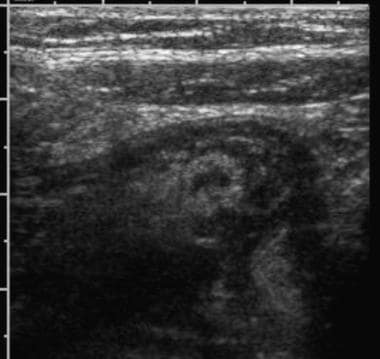
- Ultrasonography is the preferred imaging modality in the evaluation of acute appendicitis in pediatrics.
- The advantages of ultrasonography include its noninvasiveness, lack of radiation, no contrast medium, and minimal pain.
- One disadvantage is that the examination in operator-dependent.
- Ultrasonography has had an overall sensitivity of 85% and specificity of 94% in pediatric patients in experienced hands.
- Specific findings can support the diagnosis.
- The finding of a noncompressible dilated appendix is a strong indicator of nonperforated appendicitis.
- After perforation, ultrasonography can identify a periappendiceal phlegmon or abscess formation.
- Additional findings that can support the diagnosis of appendicitis include the presence of appendicoliths, fluid in the appendiceal lumen, focal tenderness over the inflamed appendix, and a transverse diameter of 6 mm or more.
- Ultrasonography also is useful in diagnosing alternate pathology, such as a tubo-ovarian abscess, ovarian torsion, ovarian cyst, or mesenteric adenitis.
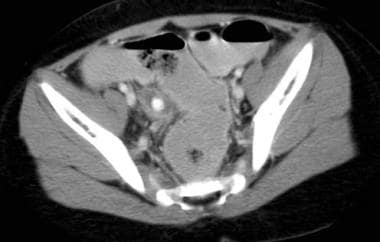
- In adults, a CT scan is used widely to diagnose appendicitis.
- In children, numerous studies have investigated the use of CT in the evaluation of pediatric appendicitis. CT scanning appears to have its greatest value among patients with large BMI for which ultrasonography is difficult or when ultrasonography is inconclusive. No exact CT protocol is best; some centers use intravenous contrast alone and others use intravenous contrast plus enteral contrast.
- CT scans are useful for patients in whom the ultrasonographic findings are equivocal.
- A CT scan may be beneficial in complicated cases with abscess formation and bowel-wall thickening. For such cases, oral contrast is most helpful for defining the abscess.
|   |
TREATMENT
| Section 6 of 10  |
|
Prehospital Care: Emergency medical service (EMS) personnel are well-trained and cognizant of how to assess and begin treatment of the febrile, vomiting, child with abdominal pain.
Intravenous fluid administration, pain management, and antiemetic medication should be administered based on local EMS protocols.
The EMS provider must gather accurate "QRST" data including estimated fluid intake and loss, the child's weight gain or loss, and home remedies and interventions. Emergency Department Care: One of the difficult challenges in evaluating children with abdominal pain is making a timely diagnosis prior to appendiceal perforation. In the ED, classifying patients with abdominal pain into the following 3 categories may be helpful: - Diagnosis not consistent with appendicitis
- This group includes patients whose history and physical examination are not consistent with appendicitis or any significant abdominal process.
- Importantly, a complete physical examination, including rectal palpation and urinalysis, should be completed before discharge from the ED.
- Classic history for appendicitis
- Patients with a classic history for appendicitis require prompt surgical consultation but may not require emergency surgery. In fact, emergency appendectomy (operation within 6 h) in children has no advantages over urgent appendectomy (operation with 12 h) with respect to gangrene and perforation rates, readmissions, postoperative complications, hospital stay, or hospital charges. This does not mean the emergency physician who has made the diagnosis of appendicitis will not contact the surgeon right away, but the hospital admission and course must be discussed with the surgeon, patient, and family.
- Antibiotic therapy is an important aspect of the treatment of ruptured appendicitis. Antibiotic therapy should be directed against gram-negative and anaerobic organisms such as Escherichia coli and Bacteroides species. The administration of antibiotics, nasogastric tubes, intravenous lines, urethral catheters, antiemetic medicine, antipyretic medicine, and analgesia should ideally be part of the ED protocol for managing the preoperative child. Proponents of preoperative antibiotic recommend that all children with appendicitis receive gentamicin and clindamycin.
- In these children, the history may be consistent with appendicitis, while the examination is not, or the examination may be suggestive of appendicitis in the face of an unremarkable history. In the latter group, obtaining laboratory studies and radiographs and reevaluating the patient over a few hours to determine the need for surgical consultation is helpful.
- Serial examinations of the patient in the ED along with results of the studies may help to clarify the diagnosis.
- If uncertainty persists after a period of observation, surgical consultation should be obtained.
- Ultrasonography may be useful when the diagnosis is equivocal.
- Appendectomy is the definitive treatment for appendicitis.
- Pediatric patients with appendicitis can undergo laparoscopic appendectomy (versus open appendectomy) without incurring a greater risk for complications.
- Fifteen to 20% of appendectomies are performed in cases for which test results are later determined to be falsely positive, as appendicitis is difficult to diagnose in infants and toddlers.
- Nontoxic patients with a localized walled-off abscess may be candidates for initial medical management with antibiotics, followed by an elective appendectomy.
Consultations: Consult a pediatric or general surgeon.
|   |
MEDICATION
| Section 7 of 10  |
|
Preoperative antibiotics are given to children with suspected appendicitis and stopped after surgery if no perforation exists. Patients presenting with perforated appendicitis may be volume depleted and require aggressive fluid resuscitation. The combination of ampicillin, clindamycin, and gentamicin is administered to treat infection from aerobic and anaerobic organisms. Alternative regimens include ampicillin and sulbactam, cefoxitin, cefotetan, piperacillin and tazobactam, ticarcillin and clavulanate, and imipenem and cilastatin.
Drug Category: Antibiotics -- Regimens should cover the most commonly encountered organisms, such as E coli, Bacteroides, Klebsiella, Enterococci, and Pseudomonas species. Drug Name
| Ampicillin (Omnipen, Principen) -- Bactericidal activity against susceptible organisms. Alternative to amoxicillin when unable to take medication orally. | | Adult Dose | 1-2 g IV/IM q4-8h |
|---|
| Pediatric Dose | 100-200 mg/kg/d IV/IM divided q4-6h |
|---|
| Contraindications | Documented hypersensitivity |
|---|
| Interactions | Probenecid and disulfiram elevate ampicillin levels; allopurinol decreases ampicillin effects and has additive effects on ampicillin rash; may decrease effects of oral contraceptives |
|---|
| Pregnancy |
B - Usually safe but benefits must outweigh the risks.
|
|---|
| Precautions | Adjust dose in renal failure; evaluate rash and differentiate from hypersensitivity reaction |
|---|
Drug Name
| Gentamicin (Garamycin) -- Aminoglycoside with activity against gram-negative bacteria including Pseudomonas species. Also produces a synergistic effect when used in conjunction with a beta-lactam against Enterococci. Interferes with bacterial protein synthesis by binding to the 30S and 50S ribosomal subunits. Not the DOC. Consider if penicillins or other less toxic drugs are contraindicated, when clinically indicated, and in mixed infections caused by susceptible staphylococci and gram-negative organisms. Dosing regimens are numerous. Adjust dose based on CrCl and changes in volume of distribution. May be given IV/IM. |
|---|
| Adult Dose | 1-1.5 mg/kg/dose IV/IM q8-24h |
|---|
| Pediatric Dose | 1.5-2.5 mg/kg/dose IV/IM q8h |
|---|
| Contraindications | Documented hypersensitivity; non–dialysis-dependent renal insufficiency |
|---|
| Interactions | Coadministration with other aminoglycosides, cephalosporins, penicillins, and amphotericin B may increase nephrotoxicity; aminoglycosides enhance effects of neuromuscular blocking agents thus prolonged respiratory depression may occur; coadministration with loop diuretics may increase auditory toxicity of aminoglycosides; possible irreversible hearing loss of varying degrees may occur (monitor regularly) |
|---|
| Pregnancy |
D - Unsafe in pregnancy
|
|---|
| Precautions | Narrow therapeutic index (not intended for long-term therapy); caution in renal failure (not on dialysis), myasthenia gravis, hypocalcemia, and conditions that depress neuromuscular transmission; adjust dose in renal impairment |
|---|
Drug Name
| Clindamycin (Cleocin) -- Lincosamide for treatment of serious skin and soft tissue staphylococcal infections. Also effective against aerobic and anaerobic streptococci (except enterococci). Inhibits bacterial growth, possibly by blocking dissociation of peptidyl tRNA from ribosomes causing RNA-dependent protein synthesis to arrest. |
|---|
| Adult Dose | 1.2-1.8 g/d IV/IM divided tid/qid |
|---|
| Pediatric Dose | 20-40 mg/kg/d IV/IM divided tid/qid |
|---|
| Contraindications | Documented hypersensitivity; regional enteritis, ulcerative colitis, hepatic impairment, antibiotic-associated colitis |
|---|
| Interactions | Increases duration of neuromuscular blockade induced by tubocurarine and pancuronium; erythromycin may antagonize effects of clindamycin; antidiarrheals may delay absorption of clindamycin |
|---|
| Pregnancy |
B - Usually safe but benefits must outweigh the risks.
|
|---|
| Precautions | Adjust dose in severe hepatic dysfunction; no adjustment necessary in renal insufficiency; associated with severe and possibly fatal colitis |
|---|
Drug Name
| Ampicillin and sulbactam (Unasyn) -- Drug combination of beta-lactamase inhibitor with ampicillin. Covers skin, enteric flora, and anaerobes (not Pseudomonas species). Not ideal for nosocomial pathogens. Ampicillin inhibits bacterial cell wall synthesis during active multiplication. Sulbactam inhibits the beta-lactamase released by certain organisms. |
|---|
| Adult Dose | 1.5 (1 g ampicillin + 0.5 g sulbactam) to 3 g (2 g ampicillin + 1 g sulbactam) IV/IM q6-8h |
|---|
| Pediatric Dose | 100-200 mg ampicillin/kg/d (150-300 mg Unasyn) IV divided q6h |
|---|
| Contraindications | Documented hypersensitivity |
|---|
| Interactions | Probenecid and disulfiram elevate ampicillin levels; allopurinol decreases ampicillin effects and has additive effects on ampicillin rash; may decrease effects of oral contraceptives |
|---|
| Pregnancy |
B - Usually safe but benefits must outweigh the risks.
|
|---|
| Precautions | Adjust dose in renal failure; evaluate rash and differentiate from hypersensitivity reaction; cross-sensitivity with cephalosporins noted |
|---|
Drug Name
| Piperacillin and tazobactam (Zosyn) -- Antipseudomonal penicillin plus beta-lactamase inhibitor. Inhibits biosynthesis of cell wall mucopeptide and is effective during stage of active multiplication. |
|---|
| Adult Dose | 4 g piperacillin with 0.5 g tazobactam IV q8h |
|---|
| Pediatric Dose | <12 years: Not established
>12 years: 300-400 mg/kg/d (based on piperacillin component) IV divided q6-8h| Contraindications | Documented hypersensitivity; severe pneumonia, bacteremia, pericarditis, emphysema, meningitis, and purulent or septic arthritis should not be treated with an oral penicillin during the acute stage |
|---|
| Interactions | Tetracyclines may decrease effects of ticarcillin; high concentrations of ticarcillin may physically inactivate aminoglycosides if administered in same IV line; effects when administered concurrently with aminoglycosides are synergistic; probenecid may increase penicillin levels |
|---|
| Pregnancy |
B - Usually safe but benefits must outweigh the risks.
|
|---|
| Precautions | Perform CBC prior to initiation of therapy and at least weekly during therapy; monitor for liver function abnormalities by measuring AST and ALT during therapy; caution in patients with hepatic insufficiencies; perform urinalysis, BUN, and creatinine determinations during therapy and adjust dose if values become elevated; monitor blood levels to avoid possible neurotoxic reactions |
|---|
|
|---|
Drug Name
| Cefoxitin (Mefoxin) -- Second-generation cephalosporin indicated for gram-positive cocci and gram-negative rod infections. Infections caused by cephalosporin-resistant or penicillin-resistant gram-negative bacteria may respond to cefoxitin. Inhibits bacterial cell wall synthesis during active multiplication by binding one or more penicillin-binding proteins. |
|---|
| Adult Dose | 1-2 g IV q6-8h |
|---|
| Pediatric Dose | 80-100 mg/kg/d IV divided q6-8h |
|---|
| Contraindications | Documented hypersensitivity |
|---|
| Interactions | Probenecid may increase effects; coadministration with aminoglycosides or furosemide may increase nephrotoxicity (closely monitor renal function) |
|---|
| Pregnancy |
B - Usually safe but benefits must outweigh the risks.
|
|---|
| Precautions | Dosage adjustment may be necessary in patients with renal impairment; bacterial or fungal overgrowth of nonsusceptible organisms may occur with prolonged use or repeated treatment; caution in patients with previously diagnosed colitis |
|---|
Drug Name
| Cefotetan (Cefotan) -- Second-generation cephalosporin used as single-drug therapy to provide broad gram-negative coverage and anaerobic coverage. Also provides some coverage of gram-positive bacteria. Half-life is 3.5 h. Inhibits bacterial cell wall synthesis by binding to one or more of the penicillin-binding proteins; inhibits final transpeptidation step of peptidoglycan synthesis, resulting in cell wall death.
Dosage and route of administration depends on condition of patient, severity of infection, and susceptibility of causative organism.| Adult Dose | 1-2 g IV/IM q12h for 5-10 d; not to exceed 6 g/d |
|---|
| Pediatric Dose | 20-40 mg/kg/dose IV/IM q12h for 5-10 d |
|---|
| Contraindications | Documented hypersensitivity |
|---|
| Interactions | Consumption of alcohol within 72 h of cefotetan may produce disulfiramlike reactions; cefotetan may increase hypoprothrombinemic effects of anticoagulants; coadministration with potent diuretics (eg, loop diuretics) or aminoglycosides may increase nephrotoxicity |
|---|
| Pregnancy |
B - Usually safe but benefits must outweigh the risks.
|
|---|
| Precautions | Reduce dosage by 1/2 if <10-30 mL/min creatinine clearance and by 1/4 if <10 mL/min; (high doses may cause CNS toxicity); bacterial or fungal overgrowth of nonsusceptible organisms may occur with prolonged or repeated therapy |
|---|
|
|---|
Drug Name
| Ticarcillin and clavulanate potassium (Timentin) -- Inhibits biosynthesis of cell wall mucopeptide and is effective during stage of active growth. Antipseudomonal penicillin plus beta-lactamase inhibitor that provides coverage against most gram-positives, most gram-negatives, and most anaerobes. |
|---|
| Adult Dose | 3 g (based on ticarcillin component) IV q4-6h; not to exceed 18-24 g/d |
|---|
| Pediatric Dose | 300 mg/kg/d (based on ticarcillin component) IV divided q4-6h |
|---|
| Contraindications | Documented hypersensitivity; severe pneumonia, bacteremia, pericarditis, emphysema, meningitis, and purulent or septic arthritis should not be treated with oral penicillin during acute stage |
|---|
| Interactions | Tetracyclines may decrease effects of ticarcillin; high concentrations of ticarcillin may physically inactivate aminoglycosides if administered in same IV line; effects when administered concurrently with aminoglycosides are synergistic; probenecid may increase penicillin levels |
|---|
| Pregnancy |
B - Usually safe but benefits must outweigh the risks.
|
|---|
| Precautions | Perform CBCs prior to initiation of therapy and at least weekly during therapy; monitor for liver function abnormalities by measuring AST and ALT during therapy; exercise caution in patients with hepatic insufficiencies; perform urinalysis, and BUN and creatinine determinations during therapy and adjust dose if values become elevated; monitor blood levels to avoid possible neurotoxic reactions |
|---|
Drug Name
| Imipenem and cilastatin (Primaxin) -- For treatment of multiple organism infections in which other agents do not have wide spectrum coverage or are contraindicated due to potential for toxicity. |
|---|
| Adult Dose | Base initial dose on severity of infection, and administer in equally divided doses; dose may range from 250-500 mg (based on imipenem component) q6h IV; not to exceed 3-4 g/d |
|---|
| Pediatric Dose | Note: Dose is based on imipenem component
Neonates: 40-50 mg/kg/d IV divided q12h
Infants and children:
1-3 months: 100 mg/kg/d IV divided q6h
>3 months: 60-100 mg/kg/d IV divided q6h| Contraindications | Documented hypersensitivity; known hypersensitivity to amide local anesthetics; children with CNS infections (increased seizure risk); children <30 kg with renal impairment (lack of data) |
|---|
| Interactions | Coadministration with cyclosporine may increase CNS side effects of both agents; coadministration with ganciclovir may result in generalized seizures |
|---|
| Pregnancy |
C - Safety for use during pregnancy has not been established.
|
|---|
| Precautions | Adjust dose in renal insufficiency (adult adjustments)
CrCl (mL/min) 80-50: 0.5 g q6-8h
CrCl 50-10: 0.5 g q8-12h
Hemodialysis (HD): 0.25-0.5 g after HD, then q12h
Adjust dose in renal insufficiency; avoid use in children <12 y with CNS infections
Caution with history of seizures, hypersensitivity to penicillins, cephalosporins, or other beta-lactam antibiotics |
|---|
|
|---|
Drug Category: Analgesics -- Pain management is a contentious topic for some emergency physicians and surgeons. Several classes of analgesic medications have proven safe and efficacious in the preoperative pediatric patient.
It is ethical and prudent for emergency physicians, surgeons, anesthesiologists, pediatricians, and pharmacists to agree on a plan for providing pain relief to the pediatric patient. Topics to be agreed upon include type, route, dose, and frequency of administering analgesic, antiemetic, and antipyretic agents.Drug Name
| Ketorolac (Toradol) -- Inhibits prostaglandin synthesis by decreasing the activity of the enzyme, cyclooxygenase, which results in decreased formation of prostaglandin precursors.
With proper dosing, does not cause a significant decrease in hematocrit, increase in creatinine, or overall complications. It does have the ability to decrease hospital stay and narcotic requirements in postoperative children.| Adult Dose | 30-60 mg IM initially followed by 15-30 mg q6h prn; not to exceed 5 d of treatment |
|---|
| Pediatric Dose | Not established, data limited: 0.4-1 mg/kg IM once |
|---|
| Contraindications | Documented hypersensitivity; peptic ulcer disease; recent GI bleeding or perforation; renal insufficiency; high risk of bleeding; do not administer into CNS |
|---|
| Interactions | Coadministration with aspirin increases risk of inducing serious NSAID-related adverse effects; probenecid may increase concentrations and, possibly, toxicity of NSAIDs; may decrease effect of hydralazine, captopril, and beta-blockers; may decrease diuretic effects of furosemide and thiazides; may increase PT when taking anticoagulants (instruct patients to watch for signs of bleeding); may increase risk of methotrexate toxicity; phenytoin levels may be increased when administered concurrently |
|---|
| Pregnancy |
C - Safety for use during pregnancy has not been established.
|
|---|
| Precautions | Acute renal insufficiency, hyperkalemia, hyponatremia, interstitial nephritis, and renal papillary necrosis may occur; increases risk of acute renal failure in patients with preexisting renal disease or compromised renal perfusion; low WBC counts (rare) usually return to normal during ongoing therapy; discontinue therapy if leukopenia, granulocytopenia, or thrombocytopenia persists |
|---|
|
|---|
Drug Name
| Fentanyl citrate (Sublimaze) -- A synthetic opioid that is 75-200 times more potent and much shorter half-life than morphine sulfate. Has less hypotensive effects and is safer in patients with hyperactive airway disease than morphine because of minimal-to-no associated histamine release. By itself, it causes little cardiovascular compromise, although addition of benzodiazepines or other sedatives may result in decreased cardiac output and blood pressure.
Highly lipophilic and protein-bound. Prolonged exposure leads to accumulation in fat and delays weaning process.
Consider continuous infusion because of the short half-life of fentanyl. Parenteral form is DOC for conscious sedation analgesia. Ideal for analgesic action of short duration during anesthesia and immediate postoperative period.
Excellent choice for pain management and sedation with short duration (30-60 min) and easy to titrate. Easily and quickly reversed by naloxone.
After initial parenteral dose, subsequent parenteral doses should not be titrated more frequently than q3h or q6h thereafter.| Adult Dose | Emergency: 0.5-2 mcg/kg/dose IM/IV
Analgesia: 0.5-1 mcg/kg/dose IM/IV q30-60min| Pediatric Dose | <2 years: 2-3 mcg/kg/dose IM/IV q30-60min
2-12 years: 1-2 mcg/kg/dose IM/IV q60min
>12 years: Administer as in adults| Contraindications | Documented hypersensitivity; hypotension or potentially compromised airway where it would be difficult to establish rapid airway control |
|---|
| Interactions | Phenothiazines may antagonize analgesic effects of opiate agonists; tricyclic antidepressants may potentiate adverse effects of fentanyl when both drugs are used concurrently |
|---|
| Pregnancy |
B - Usually safe but benefits must outweigh the risks.
|
|---|
| Precautions | Caution in hypotension, respiratory depression, constipation, nausea, emesis, and urinary retention; idiosyncratic reaction, known as chest wall rigidity syndrome, may require neuromuscular blockade in order to increase ventilation |
|---|
|
|---|
|
|---|
|
|---|
Drug Name
| Morphine sulfate -- Reliable and predictable effects, safety profile, and ease of reversibility with naloxone. Various IV doses are used; commonly titrated until desired effect obtained.
Remember to write legibly and clearly: morphine sulfate. JCAHO has placed the abbreviation on the banned abbreviation list. Therefore, do not abbreviate morphine as MSO4.| Adult Dose | Starting dose: 0.1 mg/kg IV/IM/SC
Maintenance dose: 5-20 mg/70 kg IV/IM/SC q4h Relatively hypovolemic patients: 2 mg IV/IM/SC initially; reassess hemodynamic effects of dose| Pediatric Dose | Infants and children: 0.1-0.2 mg/kg dose IV/IM/SC q2-4h prn; not to exceed 15 mg/dose; may initiate at 0.05 mg/kg/dose |
|---|
| Contraindications | Documented hypersensitivity; hypotension; potentially compromised airway where establishing rapid airway control would be difficult |
|---|
| Interactions | Phenothiazines may antagonize analgesic effects of opiate agonists; tricyclic antidepressants, MAO inhibitors, and other CNS depressants may potentiate adverse effects of morphine |
|---|
| Pregnancy |
C - Safety for use during pregnancy has not been established.
|
|---|
| Precautions | Caution in hypotension, respiratory depression, nausea, emesis, constipation, urinary retention, atrial flutter, and other supraventricular tachycardias; has vagolytic action and may increase ventricular response rate |
|---|
|
|---|
|
|---|
|   |
FOLLOW-UP
| Section 8 of 10  |
|
Further Inpatient Care:
- Laparoscopic appendectomy seems to be a safe alternative for the treatment of complicated appendicitis in children.
- Potential advantages of laparoscopic appendectomy include reduced postoperative pain and lower wound infection rate.
- Pediatric laparoscopic patients have fewer wound problems and shorter duration of oral pain and medication usage.
- In addition to advantages for the patient, their parents returned to work quicker than parents of children who had open appendectomy.
- Laparoscopy can be diagnostic for alternative diagnosis in the adolescent female.
Complications:
Prognosis:
- The prognosis is generally excellent.
Patient Education:
|   |
MISCELLANEOUS
| Section 9 of 10  |
|
Medical/Legal Pitfalls:
- Performing a complete examination including examination of the genitals is important. Symptoms and signs of testicular torsion and ectopic pregnancy overlap with appendicitis and have serious morbidity if not quickly diagnosed.
- Patients should not be diagnosed with the gastroenteritis unless they have nausea, vomiting, and diarrhea. Patients with nonspecific abdominal complaints should be diagnosed with abdominal pain of unknown etiology. Patients should be instructed to be reevaluated in 8-12 hours by their primary care physician or return to the ED.
- Patients with an equivocal examination should be kept for observation and followed-up by serial abdominal examinations. Avoid treating patients with vague abdominal pain with parenteral opiates and then discharging them.
- Misdiagnosed patients were younger and more likely to have vomiting before pain onset, constipation, diarrhea, dysuria, and signs and symptoms of upper respiratory infections.
- Misdiagnosed patients were more likely to have pain duration of more than 2 days, to have a temperature of more than 38.3°C, and to appear lethargic and irritable.
Special Concerns:
- The emergency physician must include the patient (with age appropriate communication) and family in all discussions about the evaluation and treatment plan.
- Heed the parent's warnings about whether they think the child has appendicitis or other special concerns.
- Keep the patient and family informed about the patient's progress "through the system".
- Relieve the patient's pain and discomfort early and often. Do not allow the pediatric patient with appendicitis to be underdosed with analgesia.
- Discuss with the surgeons how they would like pediatric patients evaluated and treated; for example, if imaging study should be performed before consultation, or should consultation occur before analgesia. Truly include them, and other consultants, in the emergency department's protocols.
|   |
BIBLIOGRAPHY
| Section 10 of 10 |
|
-
Allen ED, Pfaff JK, Taussig LM: The clinical spectrum of chronic appendiceal abscess in cystic fibrosis. Am J Dis Child 1992 Oct; 146(10): 1190-3[Medline].
-
Andersson N, Griffiths H, Murphy J: Is appendicitis familial?. Br Med J 1979 Sep 22; 2(6192): 697-8[Medline].
-
Basta M, Morton NE, Mulvihill JJ: Inheritance of acute appendicitis: familial aggregation and evidence of polygenic transmission. Am J Hum Genet 1990 Feb; 46(2): 377-82[Medline].
-
Brender JD, Marcuse EK, Koepsell TD, et al: Childhood appendicitis: factors associated with perforation. Pediatrics 1985 Aug; 76(2): 301-6[Medline].
-
Brender JD, Marcuse EK, Weiss NS: Is childhood appendicitis familial?. Am J Dis Child 1985 Apr; 139(4): 338-40[Medline].
-
Brook I: Clinical review: bacteremia caused by anaerobic bacteria in children. Crit Care 2002 Jun; 6(3): 205-11[Medline].
-
Buck ML: Clinical experience with ketorolac in children. Ann Pharmacother 1994 Sep; 28(9): 1009-13[Medline].
-
Cardall T, Glasser J, Guss DA: Clinical value of the total white blood cell count and temperature in the evaluation of patients with suspected appendicitis. Acad Emerg Med 2004 Oct; 11(10): 1021-7[Medline].
-
Chande VT, Kinnane JM: Role of the primary care provider in expediting care of children with acute appendicitis. Arch Pediatr Adolesc Med 1996 Jul; 150(7): 703-6[Medline].
-
Chauhan RD, Idom CB, Noe HN: Safety of ketorolac in the pediatric population after ureteroneocystostomy. J Urol 2001 Nov; 166(5): 1873-5[Medline].
-
Chauhan S, Blacker C: Paratubal cyst: a case report. W V Med J 2005 Jul-Aug; 101(4): 176[Medline].
-
Chung RS, Rowland DY, Li P, et al: A meta-analysis of randomized controlled trials of laparoscopic versus conventional appendectomy. Am J Surg 1999 Mar; 177(3): 250-6[Medline].
-
Crady SK, Jones JS, Wyn T, et al: Clinical validity of ultrasound in children with suspected appendicitis. Ann Emerg Med 1993 Jul; 22(7): 1125-9[Medline].
-
Doherty GM, Lewis FR Jr: Appendicitis: continuing diagnostic challenge. Emerg Med Clin North Am 1989 Aug; 7(3): 537-53[Medline].
-
Eldar S, Nash E, Sabo E, et al: Delay of surgery in acute appendicitis. Am J Surg 1997 Mar; 173(3): 194-8[Medline].
-
Emil S, Laberge JM, Mikhail P: Appendicitis in children: a ten-year update of therapeutic recommendations. J Pediatr Surg 2003 Feb; 38(2): 236-42[Medline].
-
Etensel B, Yazici M, Gursoy H: The effect of blunt abdominal trauma on appendix vermiformis. Emerg Med J 2005 Dec; 22(12): 874-7[Medline].
-
Franke C, Gerharz CD, Bohner H: Neurogenic appendicopathy in children. Eur J Pediatr Surg 2002 Feb; 12(1): 28-31[Medline].
-
Gardikis S, Touloupidis S, Dimitriadis G: Urological symptoms of acute appendicitis in childhood and early adolescence. Int Urol Nephrol 2002; 34(2): 189-92[Medline].
-
Gauderer MW, Crane MM, Green JA: Acute appendicitis in children: the importance of family history. J Pediatr Surg 2001 Aug; 36(8): 1214-7[Medline].
-
Goldman RD, Crum D, Bromberg R: Analgesia administration for acute abdominal pain in the pediatric emergency department. Pediatr Emerg Care 2006 Jan; 22(1): 18-21[Medline].
-
Guagliardo MF, Teach SJ, Huang ZJ: Racial and ethnic disparities in pediatric appendicitis rupture rate. Acad Emerg Med 2003 Nov; 10(11): 1218-27[Medline].
-
Gupta A, Daggett C, Ludwick J: Ketorolac after congenital heart surgery: does it increase the risk of significant bleeding complications?. Paediatr Anaesth 2005 Feb; 15(2): 139-42[Medline].
-
Guthery SL, Hutchings C, Dean JM: National estimates of hospital utilization by children with gastrointestinal disorders: analysis of the 1997 kids' inpatient database. J Pediatr 2004 May; 144(5): 589-94[Medline].
-
Hennington MH, Tinsley EA, Proctor HJ: Acute appendicitis following blunt abdominal trauma. Incidence or coincidence?. Ann Surg 1991 Jul; 214(1): 61-3[Medline].
-
Henry MC, Moss RL: Primary versus delayed wound closure in complicated appendicitis: an international systematic review and meta-analysis. Pediatr Surg Int 2005 Aug; 21(8): 625-30[Medline].
-
Hobson MJ, Carney DE, Molik KA: Appendicitis in childhood hematologic malignancies: analysis and comparison with typhilitis. J Pediatr Surg 2005 Jan; 40(1): 214-9; discussion 219-20[Medline].
-
Houry D, Colwell C, Ott C: Abdominal pain in a child after blunt abdominal trauma: an unusual injury. J Emerg Med 2001 Oct; 21(3): 239-41[Medline].
-
Jabra AA, Shalaby-Rana EI, Fishman EK: CT of appendicitis in children. J Comput Assist Tomogr 1997 Jul-Aug; 21(4): 661-6[Medline].
-
Kharbanda AB, Taylor GA, Fishman SJ: A clinical decision rule to identify children at low risk for appendicitis. Pediatrics 2005 Sep; 116(3): 709-16[Medline].
-
Kim MK, Strait RT, Sato TT: A randomized clinical trial of analgesia in children with acute abdominal pain. Acad Emerg Med 2002 Apr; 9(4): 281-7[Medline].
-
Kosloske AM, Love CL, Rohrer JE: The diagnosis of appendicitis in children: outcomes of a strategy based on pediatric surgical evaluation. Pediatrics 2004 Jan; 113(1 Pt 1): 29-34[Medline].
-
Kwok MY, Kim MK, Gorelick MH: Evidence-based approach to the diagnosis of appendicitis in children. Pediatr Emerg Care 2004 Oct; 20(10): 690-8; quiz 699-701[Medline].
-
Mohammed AA, Daghman NA, Aboud SM: The diagnostic value of C-reactive protein, white blood cell count and neutrophil percentage in childhood appendicitis. Saudi Med J 2004 Sep; 25(9): 1212-5[Medline].
-
Moraitis D, Kini SU, Annamaneni RK: Laparoscopy in complicated pediatric appendicitis. JSLS 2004 Oct-Dec; 8(4): 310-3[Medline].
-
Musemeche CA, Baker JL: Acute appendicitis: a cause of recurrent abdominal pain in pediatric trauma. Pediatr Emerg Care 1995 Feb; 11(1): 30-1[Medline].
-
Nance ML, Adamson WT, Hedrick HL: Appendicitis in the young child: a continuing diagnostic challenge. Pediatr Emerg Care 2000 Jun; 16(3): 160-2[Medline].
-
Nikolaidis P, Hwang CM, Miller FH: The nonvisualized appendix: incidence of acute appendicitis when secondary inflammatory changes are absent. AJR Am J Roentgenol 2004 Oct; 183(4): 889-92[Medline].
-
Nwomeh BC, Chisolm DJ, Caniano DA: Racial and socioeconomic disparity in perforated appendicitis among children: where is the problem?. Pediatrics 2006 Mar; 117(3): 870-5[Medline].
-
O'Shea J, Bishop M, Alario A, et al: Diagnosing appendicitis in children with acute abdominal pain. Pediatr Emerg Care 1988; 4: 172-1176[Medline].
-
O'Shea JS, Bishop ME, Alario AJ: Diagnosing appendicitis in children with acute abdominal pain. Pediatr Emerg Care 1988 Sep; 4(3): 172-6[Medline].
-
Oka T, Kurkchubasche AG, Bussey JG: Open and laparoscopic appendectomy are equally safe and acceptable in children. Surg Endosc 2004 Feb; 18(2): 242-5[Medline].
-
Partrick DA, Janik JE, Janik JS: Increased CT scan utilization does not improve the diagnostic accuracy of appendicitis in children. J Pediatr Surg 2003 May; 38(5): 659-62[Medline].
-
Pearl RH, Hale DA, Molloy M, et al: Pediatric appendectomy. J Pediatr Surg 1995 Feb; 30(2): 173-8; discussion 178-81[Medline].
-
Pelizzo G, La Riccia A, Bouvier R: Carcinoid tumors of the appendix in children. Pediatr Surg Int 2001 Jul; 17(5-6): 399-402[Medline].
-
Ponsky TA, Huang ZJ, Kittle K: Hospital- and patient-level characteristics and the risk of appendiceal rupture and negative appendectomy in children. JAMA 2004 Oct 27; 292(16): 1977-82[Medline].
-
Rakhit A, Nurko S, Gauvreau K: Gastrointestinal complications after pediatric cardiac transplantation. J Heart Lung Transplant 2002 Jul; 21(7): 751-9[Medline].
-
Reynolds SL: Missed appendicitis in a pediatric emergency department. Pediatr Emerg Care 1993 Feb; 9(1): 1-3[Medline].
-
Reynolds SL, Jaffe DM: Diagnosing abdominal pain in a pediatric emergency department. Pediatr Emerg Care 1992 Jun; 8(3): 126-8[Medline].
-
Rhea JT, Halpern EF, Ptak T: The status of appendiceal CT in an urban medical center 5 years after its introduction: experience with 753 patients. AJR Am J Roentgenol 2005 Jun; 184(6): 1802-8[Medline].
-
Rothrock SG, Skeoch G, Rush JJ: Clinical features of misdiagnosed appendicitis in children. Ann Emerg Med 1991 Jan; 20(1): 45-50[Medline].
-
Rowe M, O'Neil J, Grosfeld J: Appendicitis. In: Essentials of Pediatric Surgery. 1995:579-85.
-
Ruber M, Berg A, Ekerfelt C: Different cytokine profiles in patients with a history of gangrenous or phlegmonous appendicitis. Clin Exp Immunol 2006 Jan; 143(1): 117-24[Medline].
-
Rusnak RA, Borer JM, Fastow JS: Misdiagnosis of acute appendicitis: common features discovered in cases after litigation. Am J Emerg Med 1994 Jul; 12(4): 397-402[Medline].
-
Scholer SJ, Pituch K, Orr DP: Use of the rectal examination on children with acute abdominal pain. Clin Pediatr (Phila) 1998 May; 37(5): 311-6[Medline].
-
Schwartz MZ, Bulas D: Acute abdomen. Laboratory evaluation and imaging. Semin Pediatr Surg 1997 May; 6(2): 65-73[Medline].
-
Schweitzer J, Fairman N, Schreyer K: Appendicitis, 2002: relationship between payors and outcome. Am Surg 2003 Oct; 69(10): 902-8[Medline].
-
Selbst SM, Friedman MJ, Singh SB: Epidemiology and etiology of malpractice lawsuits involving children in US emergency departments and urgent care centers. Pediatr Emerg Care 2005 Mar; 21(3): 165-9[Medline].
-
Serour F, Efrati Y, Klin B: Acute appendicitis following abdominal trauma. Arch Surg 1996 Jul; 131(7): 785-6[Medline].
-
Siegel MJ, Carel C, Surratt S: Ultrasonography of acute abdominal pain in children. JAMA 1991 Oct 9; 266(14): 1987-9[Medline].
-
Smink DS, Fishman SJ, Kleinman K: Effects of race, insurance status, and hospital volume on perforated appendicitis in children. Pediatrics 2005 Apr; 115(4): 920-5[Medline].
-
Stephen AE, Segev DL, Ryan DP: The diagnosis of acute appendicitis in a pediatric population: to CT or not to CT. J Pediatr Surg 2003 Mar; 38(3): 367-71; dissussion 367-71[Medline].
-
Stringel G: Appendicitis in children: a systematic approach for a low incidence of complications. Am J Surg 1987 Dec; 154(6): 631-5[Medline].
-
Strouse PJ, DiPietro MA, Saez F: Transient small-bowel intussusception in children on CT. Pediatr Radiol 2003 May; 33(5): 316-20[Medline].
-
Tantoco JG, Levitt MA, Hollands CM: Reduced social morbidity of laparoscopic appendectomy in children. Am Surg 2004 Sep; 70(9): 779-82[Medline].
-
Taylor GA, Callahan MJ, Rodriguez D: CT for suspected appendicitis in children: an analysis of diagnostic errors. Pediatr Radiol 2006 Apr; 36(4): 331-337[Medline].
-
Taylor M, Emil S, Nguyen N: Emergent vs urgent appendectomy in children: a study of outcomes. J Pediatr Surg 2005 Dec; 40(12): 1912-5[Medline].
-
van den Broek WT, van der Ende ED, Bijnen AB: Which children could benefit from additional diagnostic tools in case of suspected appendicitis?. J Pediatr Surg 2004 Apr; 39(4): 570-4[Medline].
-
Yacoe ME, Jeffrey RB Jr: Sonography of appendicitis and diverticulitis. Radiol Clin North Am 1994 Sep; 32(5): 899-912[Medline].
-
Yardeni D, Hirschl RB, Drongowski RA: Delayed versus immediate surgery in acute appendicitis: do we need to operate during the night?. J Pediatr Surg 2004 Mar; 39(3): 464-9; discussion 464-9[Medline].
-
Zhou H, Chen YC, Zhang JZ: Abdominal pain among children re-evaluation of a diagnostic algorithm. World J Gastroenterol 2002 Oct; 8(5): 947-51[Medline].
Pediatrics, Appendicitis excerpt |