Continually Updated Clinical Reference
 
 
  All Sources     eMedicine     Medscape     Drug Reference     MEDLINE
 
eMedicine - Herpes Simplex : Article by

Quick Find
Authors & Editors
Introduction
Clinical
Differentials
Workup
Treatment
Medication
Follow-up
Miscellaneous
Multimedia
References

Related Articles
Chancroid

Erythema Multiforme

Herpes Zoster

Pediatrics, Hand-Foot-and-Mouth Disease

Pediatrics, Meningitis and Encephalitis

Pediatrics, Pharyngitis

Pharyngitis

Proctitis

Syphilis

Urethritis, Male


Patient Education
Sexually Transmitted Diseases Center

Teeth and Mouth Center

Genital Herpes Overview

Genital Herpes Causes

Genital Herpes Symptoms

Genital Herpes Treatment

Oral Herpes Overview


Author: Rahul Sharma, MD, MBA, Instructor in Medicine, Weill Medical College of Cornell University; Consulting Staff, Department of Emergency Medicine, New York Presbyterian Hospital-Weill Cornell Medical Center

Rahul Sharma is a member of the following medical societies: American College of Emergency Physicians

Coauthor(s): Lawrence C Brilliant, MD, Clinical Assistant Professor, Department of Primary Care and Community Services, Hahnemann University; Attending Physician, Department of Emergency Medicine, Doylestown Hospital

Editors: Robin R Hemphill, MD, MPH, Associate Professor, Director, Disaster Preparedness, Department of Emergency Medicine, Vanderbilt University Medical Center; Francisco Talavera, PharmD, PhD, Senior Pharmacy Editor, eMedicine; Eric L Weiss, MD, DTM&H, Director of Stanford Travel Medicine, Medical Director of Stanford Lifeflight, Assistant Professor, Departments of Emergency Medicine and Infectious Diseases, Stanford University School of Medicine; John D Halamka, MD, MS, Associate Professor of Medicine, Harvard Medical School, Beth Israel Deaconess Medical Center; Chief Information Officer, CareGroup Healthcare System and Harvard Medical School; Attending Physician, Division of Emergency Medicine, Beth Israel Deaconess Medical Center; Steven C Dronen, MD, FAAEM, Director of Emergency Services, Director of Chest Pain Center, Department of Emergency Medicine, Ft Sanders Sevier Medical Center

Author and Editor Disclosure

Synonyms and related keywords: herpes simplex, herpes virus, HSV-1, HSV-2, oral lesions, genital lesions, gingivostomatitis, herpes labialis, keratoconjunctivitis, corneal ulcer, corneal blindness,encephalitis, genital disease, newborn infection, neonatal HSV, trigeminal ganglia, sacral ganglia, sexually transmitted disease, STD, herpetic whitlow, herpes gladiatorum, herpetic diseases, Bell palsy, inguinal adenopathy, maternal-fetal transmission

Background

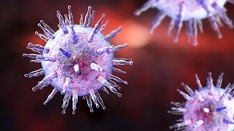
The herpes simplex viruses comprise 2 distinct types of DNA viruses, HSV-1 and HSV-2. HSV-1 causes oral lesions in approximately 80% of cases and genital lesions in 20% of cases. In adolescents, as many as 30-40% of genital herpes is caused by HSV-1, as this proportion is thought to be increasing in the developed world. The reverse is true for HSV-2, which causes genital lesions in 80% and oral lesions in 20%. About 80% of the general adult population has serologic infection with HSV-1 with only about 30% of these individuals having clinically significant outbreaks. Approximately 20% of the adult population in the United States is seropositive for HSV-2. The indirect and direct costs of incident HSV genital infection in the United States are presently approximately $1.8 billion and expected to be greater than $2.7 billion by the year 2015. Herpes viruses cause a wide range of diseases, including the following:

  • Gingivostomatitis
  • Keratoconjunctivitis
  • Encephalitis
  • Genital disease
  • Newborn infection

Primary infection

Primary infections usually are mild and, in many cases, asymptomatic. Patients who are immunocompromised may develop severe infections involving multiple organ systems. Immunocompetent individuals also may have severe primary infections.

Latency and recurrence

After the patient begins to produce antibodies, the infection becomes latent in the sensory ganglia. HSV-1 infection remains latent in the trigeminal ganglia and HSV-2 in the sacral ganglia. The viruses become reactivated secondary to certain stimuli, including fever, physical or emotional stress, ultraviolet light exposure, and axonal injury.

Recurrent infections tend to be less severe because of existing cellular and humoral immunity from prior exposures. Infection by HSV requires a break in the skin's barrier; intact skin is resistant to the virus.

For a related CME/CE activity, see Management of Herpes Simplex Infections Reviewed.

Pathophysiology

HSV-1 infections are spread via respiratory droplets or direct exposure to infected saliva. HSV-2 usually is transmitted via genital contact. The contact must involve mucous membranes or open or damaged skin.

Herpes viruses cause cytolytic infections; therefore, pathologic changes are due to cell necrosis as well as inflammatory changes. Fluid accumulates between the dermis and the epidermal skin layers, causing vesicle formation. The fluid then is absorbed, scabs are formed, and healing is completed without evidence of scarring. Shallow ulcers form after the vesicles rupture on mucous membranes.

The virus travels from the site of infection in the skin or mucosa to the sensory dorsal root and remains latent until a recurrent outbreak. Outbreaks are usually due to some sort of stress including ultraviolet radiation, trauma, emotional or psychological stress, or immunosuppression.

Frequency

United States

Approximately 80% of adults have antibodies to HSV-1, whereas antibodies to HSV-2 are found in approximately 20% of the population.

  • The incidence of genital herpes has been estimated to be 500,000-1,000,000 cases per year with a prevalence of 40-60 million affected individuals.
  • In sexually transmitted disease (STD) clinics, HSV-2 seropositivity approaches 40-50%.
  • Encephalitis develops in 1 per 250,000-500,000 patients per year.
  • Neonatal HSV develops in 1 per 2,000-10,000 live births per year. Approximately 70% of cases of neonatal HSV occur when the mother is asymptomatically shedding virus near time of delivery. The risk of neonatal transmission is increased if vaginal delivery occurs during acute maternal infection.
  • Approximately 90% of HIV-positive individuals are seropositive for HSV-1, and about 77% of HIV-positive individuals are seropositive for HSV-2.

International

Greater than one third the world's population has recurrent clinical HSV infections. Reportedly, 13-40% of the world's population is seropositive for HSV-2 and 56-85% is seropositive for HSV-1, varying by country.

Mortality/Morbidity

Most patients with herpetic infection experience short-term local pain and irritation, with mild constitutional symptoms.

  • Infection occasionally may become life threatening.
  • Immunocompromised patients are at increased risk of developing severe HSV infections.
  • HSV-1 is a common cause of fatal encephalitis in the US, with a mortality rate  60-80%. Fewer than 10% of patients are left without significant neurologic sequelae.
  • Keratoconjunctivitis may be caused by HSV-1. It is second only to trauma as a cause of corneal blindness in the US.

Race

HSV-2 antibodies are present in approximately 20% of Caucasian adults and 65% of African American adults. Some experts consider nonwhite race as a risk factor to contract genital HSV-2.

Sex

Men are 20% more likely to develop recurrences of HSV-2 than are women.

Age

  • Highest incidence of HSV-1 occurs in children aged 6 months to 3 years.
  • HSV-2 most commonly occurs in those aged 18-25 years.


History

The typical incubation period from exposure to development of symptoms is 4 days but can range from 1-26 days. Prodromal symptoms of local pain, tingling, itching, and burning often precede development of the rash. Constitutional symptoms of fever, fatigue, myalgias, and headache often accompany the primary HSV infection.

Herpetic lesions usually begin as clusters of small bumps, then blisters, followed by open sores or ulcers. Lesions coalesce and usually heal over several weeks.

Local pain is a prominent and common complaint. Patients with genital herpes may also complain of pain in the groin area secondary to local adenopathy. Women often present with complaints of genital swelling, discharge, and dysuria.

  • Many primary infections are asymptomatic. Up to 80% of women with HSV-2 antibodies have no clinical history of infection. However, when primary infections are symptomatic, they are usually more severe than recurrent infections.
  • Recurrent lesions are common.
  • Patients may give a history that includes the following:
    • Occupational exposure
      • Herpetic whitlow, found in health care workers (especially medical or dental)
      • Herpes gladiatorum on bodies of wrestlers
    • Previous history of herpetic diseases
    • Apparently undiagnosed episodes
  • Immune status
    • HIV
    • Malnourishment
    • Hematological malignancies
    • Bone marrow
    • Renal transplant
    • Cardiac transplant
  • Neurologic symptoms
    • Headache
    • Confusion
    • Fever
  • Lesions
    • Location varies
    • May be very painful
    • Tenesmus, itching with anal/perianal lesions
    • Dysuria with genital lesions
    • Sore throat with oral lesions
  • Constitutional symptoms (usually present with development of herpes lesions)
    • Anorexia
    • General malaise
    • Fever
    • Headache
    • Myalgias
  • Prodromal symptoms (present in advance of herpes lesions)
    • Burning
    • Itching
    • Tingling
    • Pain

Physical

Physical examination findings of HSV vary depending on location of the lesions.

  • General findings
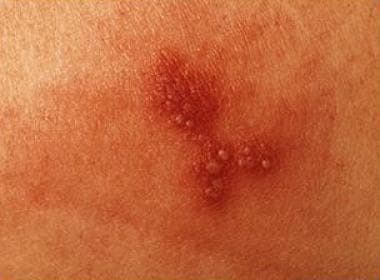
    • Lesions usually are vesicular or ulcerative on an erythematous base (see Media file 1).
    • Lesions coalesce and then heal over the next several weeks.
    • Tender bilateral lymphadenopathy occurs with genital lesions.
  • Skin infections (HSV-1 or HSV-2)
    • Herpetic whitlow or paronychia on the fingers of health care workers (not to be confused with abscess). This is usually is due to infection with HSV-1, but HSV-2 infections may be seen with digital-genital contact.
    • Herpes gladiatorum on the bodies of wrestlers and other sports that involve close physical contact. It has been estimated that in Division I National Collegiate Athletic Association (NCAA) wrestling, the incidence of herpes gladiatorum can be as high as 20-40%.
  • Oropharyngeal disease
    • Gingivostomatitis (herpes labialis on the lips; see Media file 2)
    • Submandibular lymphadenopathy
    • Fever
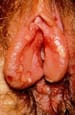
  • Genital herpes
    • Painful vesicular or ulcerative lesions may appear similar to chancroid or syphilis (see Media file 3)
    • Inguinal lymphadenopathy
    • Genital lesions, especially urethral lesions, may cause transient urinary retention in women
  • Keratoconjunctivitis
    • Dendritic keratitis found with slit lamp (see Media file 5)
    • Corneal ulcers
    • Vesicles on eyelids
  • Neurologic
    • New psychiatric symptoms (indicative of encephalitis)
      • Confusion
      • Seizures
      • Meningeal signs - Recurrent lymphocytic meningitis (benign form of meningitis/encephalitis that may occur during primary HSV-2 infection)
    • Bell palsy (possible relationship with HSV-1)
  • Anal/perianal involvement
    • Discharge
    • Vesicles
    • Ulcerations
    • Inguinal adenopathy

Causes

  • HSV-1 - Transmitted through direct contact with infected saliva or direct contact with contaminated utensils
  • HSV-2 - Usually acquired as an STD
  • Maternal-fetal transmission
  • Recurrent disease (reactivation) due to certain stimuli
    • Fever
    • Physical or emotional stress
    • Ultraviolet light exposure
    • Axonal injury


Chancroid
Erythema Multiforme
Herpes Zoster
Pediatrics, Hand-Foot-and-Mouth Disease
Pediatrics, Meningitis and Encephalitis
Pediatrics, Pharyngitis
Pharyngitis
Proctitis
Syphilis
Urethritis, Male

Other Problems to be Considered

Aphthous stomatitis


Lab Studies

  • Scrapings from suspected lesions of herpes simplex (Tzanck smear). This is not a reliable screening test, with a reported sensitivity of 65%. It also does not identify the type of HSV present.
    • Multinucleated giant cells (see Media file 4)
    • Intranuclear inclusions
  • Viral culture from skin vesicles (more sensitive that Tzanck smear but dependent on duration of viral shedding)
  • Monoclonal antibody testing
  • Serology
  • Cerebrospinal fluid (CSF) analysis for lymphocytic pleocytosis
    • Bloody CSF
    • Polymerase chain reaction (PCR) detects HSV DNA

Imaging Studies

  • CT scan and MRI for differentiation of encephalitis from other entities

Procedures

  • Slit-lamp examination for dendritic keratitis with ocular involvement
  • Lumbar puncture, if concerned about encephalitis
  • Brain biopsy, if encephalitis is considered


Emergency Department Care

ED care consists of diagnosis and appropriate treatment. Most patients may be treated in the outpatient setting. Identification of patients that need inpatient treatment (ie, encephalitis) and initiation of antiviral and supportive therapy is imperative.

Consultations

  • Ophthalmologist for keratoconjunctivitis
  • Obstetrician for active genital herpes in a near-term pregnancy
  • Outpatient dermatologist for differentiation of skin infections
  • Infectious disease specialist for disseminated disease and encephalitis


Antiviral drugs with activity against viral DNA synthesis have been effective against HSV infections. These drugs inhibit virus replication and may suppress clinical manifestations but are not a cure for the disease. Since HSV remains latent in sensory ganglia, the rates of relapse are similar in treated and untreated patients.

Acyclovir (Zovirax) provides initial, recurrent, and suppressive therapy for genital HSV. It is effective for mucocutaneous HSV in an immunocompromised host as well as HSV encephalitis. Little evidence supports the routine use of acyclovir for primary oral-labial HSV. Oral acyclovir has been shown to be effective in suppressing herpes labialis in immunocompromised patients with frequent recurrent infections. One study reported that oral acyclovir reduced duration of pain by 36% and time to loss of crust by 27%. Begin use during the prodromal period.

Administer famciclovir (Famvir) or valacyclovir (Valtrex) for recurrent episodes of genital HSV. Herpes simplex keratoconjunctivitis is treated with topical 1% trifluridine (Viroptic).

Use pain medication as needed.  Many patients may require narcotics for the relief of severe pain from the lesions.

Drug Category: Antiviral agents

The goals in use of antivirals are to (1) shorten the clinical course, (2) prevent complications, (3) prevent the development of latency and/or subsequent recurrences, (4) decrease transmission, and (5) eliminate established latency.

Drug NameAcyclovir (Zovirax)
DescriptionDOC; reduces duration of symptomatic lesions. Indicated for patients presenting within 48 h of rash onset. Patients on acyclovir experience less pain and faster resolution of cutaneous lesions.
Adult DoseGenital HSV
First episode: 200 mg PO 5 times/d for 10 d or 400 mg PO tid for 7-10 d (equally effective)
Recurrent episodes: 400 mg PO tid for 5 d
Suppressive therapy: 400 mg PO bid
Mucocutaneous HSV in immunocompromised host
Mild: 200-400 mg 5 times/d for 10 d
Severe: 5 mg/kg IV q8h for 7-10 d or 400 mg PO 5 times/d for 14-21 d
Encephalitis: 10 mg/kg IV q8h for 14-21 d
Herpetic whitlow: 400 mg PO tid for 10 d
Frequently recurrent herpes labialis: 400 mg PO bid for 4 mo
Pediatric DoseImmunocompromised: 250-600 mg/m2/dose PO 4-5 times/d for 7-10 d
HSV encephalitis: 10 mg/kg/dose IV or 500 mg/m2/dose q8h
ContraindicationsDocumented hypersensitivity
InteractionsProbenecid or zidovudine prolongs half-life and increases CNS toxicity
PregnancyC - Fetal risk revealed in studies in animals but not established or not studied in humans; may use if benefits outweigh risk to fetus
PrecautionsCaution in renal failure or with coadministration of other nephrotoxic drugs; some adverse effects include nausea, vomiting, rash, deposition in renal tubules, and CNS symptoms

Drug NameFamciclovir (Famvir)
DescriptionProdrug that, when biotransformed into active metabolite penciclovir, may inhibit viral DNA synthesis/replication. Useful for recurrent episodes of genital HSV.
Adult Dose125-250 mg PO bid/tid for 5 d
Pediatric DoseNot established
ContraindicationsDocumented hypersensitivity
InteractionsProbenecid or cimetidine prolongs half-life (may increase toxicity); increases bioavailability of digoxin
PregnancyB - Fetal risk not confirmed in studies in humans but has been shown in some studies in animals
PrecautionsCaution in renal failure or coadministration of nephrotoxic drugs

Drug NameValacyclovir (Valtrex)
DescriptionProdrug that is rapidly converted to acyclovir before exerting its antiviral activity. Valacyclovir is more expensive but has more convenient dosing regimen than acyclovir. Useful for recurrent episodes of genital HSV.
Adult Dose500-1000 mg PO bid for 5-10 d
Pediatric DoseNot established
ContraindicationsDocumented hypersensitivity
InteractionsProbenecid, zidovudine, or cimetidine prolongs half-life and increases CNS toxicity
PregnancyB - Fetal risk not confirmed in studies in humans but has been shown in some studies in animals
PrecautionsCaution in renal failure and coadministration of nephrotoxic drugs; associated with onset of hemolytic uremic syndrome

Drug Name1% Trifluridine (Viroptic)
DescriptionReplaces thymidine in viral DNA, resulting in production of defective proteins and thus inhibiting viral replication. Useful in treatment of keratoconjunctivitis.
Adult Dose1 gtt q2h until corneal ulcer has re-epithelialized completely; not to exceed 9 gtt/d
Pediatric DoseNot established
ContraindicationsDocumented hypersensitivity
InteractionsNone reported
PregnancyC - Fetal risk revealed in studies in animals but not established or not studied in humans; may use if benefits outweigh risk to fetus
PrecautionsMay cause mild local transient irritation of conjunctivae and cornea upon instillation

Drug NameDocosanol cream (Abreva)
DescriptionPrevents viral entry and replication at cellular level. Use at first sign of cold sore or fever blister.
Adult DoseApply 5 times/d to affected area on lips or face and continue application until healed
Pediatric Dose<12 years: Not established
>12 years: Apply as in adults
ContraindicationsDocumented hypersensitivity
InteractionsNone reported
PregnancyC - Fetal risk revealed in studies in animals but not established or not studied in humans; may use if benefits outweigh risk to fetus
PrecautionsFor external use only; not to be used for inside of mouth or near eyes; may cause headaches


Further Inpatient Care

  • Admission for patients with herpes simplex is necessary in the following instances:
    • Encephalitis
    • Severe gingivostomatitis causing decreased ability to tolerate oral fluids
    • Immunocompromised patients with severe or disseminated disease

Further Outpatient Care

  • Oral medication (see Medication): Topical acyclovir is only minimally helpful in patients with primary disease and is probably ineffective in recurrent episodes.
  • Burroughs Wellcome Co maintains a registry for monitoring outcome in pregnant women exposed to acyclovir; physicians should register patients at (800) 722-9292, extension 58465.

Deterrence/Prevention

  • HSV-2 is an STD. Patients and all sexual contacts should be tested and treated for accompanying STDs.
  • Practice abstinence when lesions are present.
  • Always use condoms because of the potential for asymptomatic viral shedding.
  • Health care personnel (especially medical, dental) should use universal precautions (eg, gloves) to prevent herpetic whitlow.
  • Experimental vaccines are currently in clinical trials.
  • Use sunscreen to decrease herpes labialis recurrences.

Complications

  • Encephalitis
    • Rare complication of herpetic infection
    • Commonly HSV-1 (hypothesized to spread to the brain via neural routes after primary or recurrent infection)
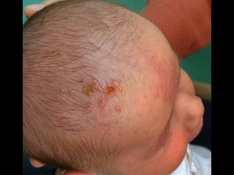
  • Neonatal infections
    • Range from mild localized infection to a fatal disseminated disease
    • HSV-2 usually spread via the maternal genital tract
    • Congenital infections possible
  • Compromised host - Progressive and disseminated disease possible
  • Genital infection - Acute urinary retention

Prognosis

  • High recurrence rate for genital HSV-2 infection
    • More than 85% of patients with one symptomatic episode will experience another.
    • Recurrences may be frequent; 38% of the population with genital herpes have more than 6 recurrences per year; 20% have more than 10 recurrences per year.

Patient Education

  • Antiviral therapy may decrease the clinical manifestations of the disease but does not cure it.
  • Initiate antiviral therapy as soon as possible after the patient notes symptoms.
  • Consider prophylaxis for patients who have more than 6 recurrences per year.
  • Educate patient that HSV-2 is an STD. Follow deterrence measures.
  • Referral to support groups: The American Social Health Association (ASHA) operates the National Herpes Hotline (919-361-8488), which provides educational materials and counseling for patients.
  • For excellent patient education resources, visit eMedicine's Sexually Transmitted Diseases Center and Teeth and Mouth Center. Also, see eMedicine's patient education articles Genital Herpes and Oral Herpes.


Medical/Legal Pitfalls

  • Failure to identify active lesions at the time of labor and to perform cesarean section to decrease risk of transmission to the neonate
  • Failure to refer all contacts of patients with genital HSV-2 for follow-up
  • Failure to test, treat, and arrange counseling for associated STDs
  • Failure to treat disseminated disease aggressively in immunocompromised patients
  • Failure to diagnose herpetic keratoconjunctivitis in a patient who presents with a red eye
  • Failure to suspect and diagnose meningitis or encephalitis
  • Do not incise and drain herpetic whitlow

Special Concerns

  • Pregnancy and HSV disease
  • Neonate and HSV disease
  • Patients who are immunocompromised with HSV disease


Media file 1:  Cutaneous vesicles characteristic of herpes simples virus infection
Click to see larger pictureClick to see detailView Full Size Image
Media type:  Photo

Media file 2:  Herpes labialis
Click to see larger pictureClick to see detailView Full Size Image
Media type:  Photo

Media file 3:  Penile infection with herpes simplex virus type 2
Click to see larger pictureClick to see detailView Full Size Image
Media type:  Photo

Media file 4:  Tzanck smear showing a multinucleated giant cell
Click to see larger pictureClick to see detailView Full Size Image
Media type:  Photo

Media file 5:  Herpes simplex virus dendritic ulcer with fluorescein staining.
Click to see larger pictureClick to see detailView Full Size Image
Media type:  Photo

Media file 6:  Genital herpes infection
Click to see larger pictureClick to see detailView Full Size Image
Media type:  Image


  • Benedetti J, Corey L, Ashley R. Recurrence rates in genital herpes after symptomatic first-episode infection. Ann Intern Med. Dec 1 1994;121(11):847-54. [Medline].
  • Clark JL, Tatum NO, Noble SL. Management of genital herpes. Am Fam Physician. Jan 1995;51(1):175-82, 187-8. [Medline].
  • Cockerell C. Diagnosis and treatment of cutaneous herpes simplex virus infections. West J Med. Jun 1996;164(6):518-20. [Medline].
  • Frenkl TL, Potts J. Sexually transmitted infections. Urol Clin North Am. Feb 2008;35(1):33-46; vi. [Medline].
  • Hill J, Roberts S. Herpes simplex virus in pregnancy: new concepts in prevention and management. Clin Perinatol. Sep 2005;32(3):657-70. [Medline].
  • Hirsch MS. Herpes simplex virus. In: Mandell GL, ed. Mandell, Douglas, and Bennet's Principles and Practice of Infectious Diseases. 4th ed. Churchill Livingstone; 1995:1336-45.
  • Holland-Hall C. Sexually transmitted infections: screening, syndromes, and symptoms. Prim Care. Jun 2006;33(2):433-54. [Medline].
  • Johnson R. Herpes gladiatorum and other skin diseases. Clin Sports Med. Jul 2004;23(3):473-84, x. [Medline].
  • Patel R, Rompalo A. Managing patients with genital herpes and their sexual partners. Infect Dis Clin North Am. Jun 2005;19(2):427-38, x. [Medline].
  • Rooney JF, Straus SE, Mannix ML. Oral acyclovir to suppress frequently recurrent herpes labialis. A double-blind, placebo-controlled trial. Ann Intern Med. Feb 15 1993;118(4):268-72. [Medline].
  • Whitley RJ, Gnann JW Jr. Acyclovir: a decade later. N Engl J Med. Sep 10 1992;327(11):782-9. [Medline].
  • Wu JJ, Pang KR, Huang DB. Advances in antiviral therapy. Dermatol Clin. Apr 2005;23(2):313-22. [Medline].

Herpes Simplex excerpt

Article Last Updated: Sep 4, 2008