Continually Updated Clinical Reference
 
 
  All Sources     eMedicine     Medscape     Drug Reference     MEDLINE
 
eMedicine - Erysipelas : Article by

Quick Find
Authors & Editors
Introduction
Clinical
Differentials
Workup
Treatment
Medication
Follow-up
Miscellaneous
References

Related Articles
Angioedema

Cellulitis

Dermatitis, Contact

Herpes Zoster

Necrotizing Fasciitis

Systemic Lupus Erythematosus

Urticaria


Patient Education
Click here for patient education.


Author: Geofrey Nochimson, MD, Consulting Staff, Department of Emergency Medicine, Sentara Careplex Hospital

Geofrey Nochimson is a member of the following medical societies: American College of Emergency Physicians

Editors: Francis Counselman, MD, Program Director, Chair, Professor, Department of Emergency Medicine, Eastern Virginia Medical School; Francisco Talavera, PharmD, PhD, Senior Pharmacy Editor, eMedicine; Eddy Lang, MDCM, CCFP (EM), CSPQ, Assistant Professor, Department of Family Medicine, McGill University; Consulting Staff, Department of Emergency Medicine, The Sir Mortimer B Davis-Jewish General Hospital; John D Halamka, MD, MS, Associate Professor of Medicine, Harvard Medical School, Beth Israel Deaconess Medical Center; Chief Information Officer, CareGroup Healthcare System and Harvard Medical School; Attending Physician, Division of Emergency Medicine, Beth Israel Deaconess Medical Center; Jonathan Adler, MD, Attending Physician, Department of Emergency Medicine, Massachusetts General Hospital; Division of Emergency Medicine, Harvard Medical School

Author and Editor Disclosure

Synonyms and related keywords: erysipelas, group A beta-hemolytic streptococci, hemolytic streptococcus, skin infection, painful rash, erythematous rash, edematous rash, abrasions, skin ulcers, insect bites, eczema, psoriatic lesions, lymphatic obstruction, lymphatic edema, saphenous vein grafting in lower extremities, postradical mastectomy, immunocompromised patients, diabetes, alcoholism, arteriovenous insufficiency, paretic limbs

Background

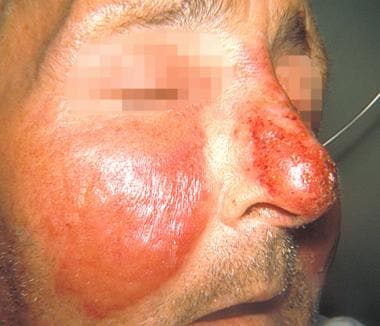
Erysipelas is a skin infection typically caused by group A beta-hemolytic streptococci, although other streptococcal groups are occasionally causative agents. Infection involves the dermis and lymphatics and is a more superficial subcutaneous infection of the skin than cellulitis. Erysipelas is characterized by intense erythema, induration, and a sharply demarcated border, which differentiates it from other skin infections.

Pathophysiology

The skin is the primary organ system affected.

Frequency

United States

Increasing incidence has been noted since the late 1980s.

Mortality/Morbidity

Erysipelas generally is benign; however, it can be fatal when associated with bacteremia in very young, elderly, or immunocompromised patients. The mortality rate is less than 1% in treated cases.

Sex

Slight female predominance is observed.

Age

Infection occurs at extremes of age, but erysipelas is primarily a disease of adults.


History

  • Erysipelas is a febrile illness with dermatological findings, characterized by an abrupt onset of illness with initial fever and chills followed by a painful rash occurring 1-2 days later.
  • Muscle and joint pain may accompany illness.
  • Nausea may be present.
  • Headache and other systemic manifestations of an infectious process may occur.
  • Skin discomfort is noted.

Physical

  • The patient may appear healthy or toxic depending on the extent of infection.
  • Fever is common.
  • Dermatologic signs
    • Painful, erythematous, and edematous rash
    • Sharply-raised border with abrupt demarcation from healthy adjacent skin
    • Condition found in lower extremities in 70-80% of patients; face affected in 5-20% of patients
  • Erythema is irregular with extensions that may follow lymphatic channels (lymphangitis).
    • Desquamation
    • Vesicles
    • Lymphadenopathy

Causes

  • Group A streptococci are the most common cause. Less common etiologies include group G, C, and B streptococci and, rarely, staphylococci.
  • A defect in skin barrier allows the infection to occur. Infection may occur after trauma, abrasions, skin ulcers, insect bites, eczema, and psoriatic lesions.
  • Other predisposing factors
    • Lymphatic obstruction or edema
    • Saphenous vein grafting in lower extremities
    • Status postradical mastectomy
    • Immunocompromised patients, including patients who are diabetic or alcoholic
    • Arteriovenous insufficiency
    • Paretic limbs


Angioedema
Cellulitis
Dermatitis, Contact
Herpes Zoster
Necrotizing Fasciitis
Systemic Lupus Erythematosus
Urticaria

Other Problems to be Considered

Angioneurotic edema
Dermatophytid
Erysipeloid
Polychondritis
Scarlet fever
Tuberculoid leprosy


Lab Studies

  • In general, diagnosis of erysipelas is made clinically. Few laboratory tests are of help in the ED.
  • Complete blood count (CBC): Increased WBC with a leftward shift may be observed but is not specific for the diagnosis.
  • Blood cultures
    • Positive in only 5% of cases
    • May be helpful when a question of the diagnosis or concern about bacteremia with metastatic infection exists
    • May be of some benefit in patients with prosthetic heart valves or other intravascular devices, artificial joints, or in the immunocompromised or toxic-appearing patient
    • Gram stain and culture of rash generally not helpful
  • Antistreptolysin (ASO), streptozyme, and anti-DNAase titers may be helpful.


Emergency Department Care

  • Prompt treatment in ED is crucial because of potentially rapid progression.
    • Symptomatic treatment of aches and fever
    • Hydration (oral intake if possible)
    • Cold compresses

Consultations

Primary care physician or infectious disease consultation may be appropriate in complex cases with serious underlying disease or in cases requiring admission. Dermatology consultation may be helpful if diagnosis is unclear.


Antibiotics should be started as soon as possible. In addition, antipyretic and analgesics may help alleviate symptoms.

Drug Category: Antibiotics

Therapy must cover all likely pathogens in the context of the clinical setting.

Drug NamePenicillin G (Pfizerpen)
DescriptionInterferes with synthesis of cell wall mucopeptides during active multiplication, resulting in bactericidal activity against susceptible microorganisms, including streptococci. DOC as streptococcal resistance very rarely has been reported in those strains likely to cause erysipelas. Resistance not yet observed in group A strains.
Adult Dose600,000-2,000,000 U/kg IV divided q6h
Pediatric Dose50,000-250,000 U/kg IV divided q4h
ContraindicationsDocumented hypersensitivity
InteractionsProbenecid may increase penicillin effectiveness by decreasing its clearance; coadministration of tetracyclines may decrease penicillin effectiveness
PregnancyB - Usually safe but benefits must outweigh the risks.
PrecautionsCaution with impaired renal function

Drug NameErythromycin (EES, E-Mycin, Ery-Tab)
DescriptionInhibits RNA-dependent protein synthesis, possibly by stimulating the dissociation of peptidyl t-RNA from ribosomes; arrests bacterial growth.
Indicated to treat infections caused by streptococci in penicillin-allergic patients.
Adult DoseMild cases: 250-500 mg PO qid
Severe cases: 500 mg IV q4-6h
Pediatric DoseMild cases: 30-50 mg/kg/d PO qid
Severe cases: 50 mg/kg/d IV q6h
ContraindicationsDocumented hypersensitivity; hepatic impairment
InteractionsTheophylline, digoxin, carbamazepine, and cyclosporine toxicity may increase when coadministered with erythromycin; also may potentiate the anticoagulant effects of warfarin; coadministration with lovastatin and simvastatin increases risk of rhabdomyolysis
PregnancyB - Usually safe but benefits must outweigh the risks.
PrecautionsUse with caution in patients with liver disease; estolate preparation of erythromycin may cause cholestatic jaundice; GI adverse effects are common, thus doses should be given after meals; discontinue use if nausea, vomiting, malaise, abdominal colic, or fever occur; consider clarithromycin or azithromycin for less GI upset, and for easier dosing

Drug NamePenicillin VK (Veetids)
DescriptionUsed in mild cases. It inhibits biosynthesis of cell wall mucopeptides and is effective during the stage of active multiplication. Inadequate concentrations may produce only bacteriostatic effects.
Adult Dose250-500 mg PO qid
Pediatric Dose25-50 mg/kg/d PO divided qid
ContraindicationsDocumented hypersensitivity
InteractionsProbenecid may increase penicillin effectiveness by decreasing its clearance; coadministration of tetracyclines may decrease the effect of penicillin
PregnancyC - Safety for use during pregnancy has not been established.
PrecautionsCaution with impaired renal function

Drug NameCephalexin (Keflex, Biocef)
DescriptionFirst-generation cephalosporin that inhibits bacterial growth by inhibiting bacterial cell wall synthesis. Bactericidal and effective against rapidly growing organisms forming cell walls.
Acceptable alternative to penicillin and may be useful in patients with minor penicillin allergies.
Adult Dose250-500 mg PO qid
Pediatric Dose25-50 mg/kg/d PO divided q6h
ContraindicationsDocumented hypersensitivity
InteractionsAminoglycosides increase nephrotoxic potential of cephalexin
PregnancyB - Usually safe but benefits must outweigh the risks.
PrecautionsAdjust dose in renal impairment

Drug Category: Analgesics-antipyretics

Pain control is essential to quality patient care. These drugs ensure patient comfort, promote pulmonary toilet, and have sedating properties beneficial to patients who have sustained trauma or who experience pain.

Drug NameAcetaminophen (Tylenol, Panadol, Aspirin Free Anacin)
DescriptionDOC for treating pain in patients with documented hypersensitivity to aspirin or other NSAIDs, who are diagnosed with upper GI disease, or who take oral anticoagulants.
Adult Dose325-650 mg PO q4-6h or 1000 mg tid/qid; not to exceed 4 g/d
Pediatric Dose<12 years: 10-15 mg/kg PO q4-6h prn; not to exceed 2.6 g/d
>12 years: 325-650 mg PO q4h; not to exceed 5 doses q24h
ContraindicationsDocumented hypersensitivity; G-6-PD deficiency
InteractionsRifampin may interact to reduce the analgesic effects of APAP; conversely, barbiturates, carbamazepine, hydantoins, and isoniazid may increase APAP hepatotoxicity
PregnancyB - Usually safe but benefits must outweigh the risks.
PrecautionsHepatotoxicity possible in persons with chronic alcoholism following various dose levels of acetaminophen

Drug NameAcetaminophen and codeine (Tylenol 3)
DescriptionFor treatment of mild to moderate pain.
Adult Dose30-60 mg (based on codeine content) PO q4-6h or 1-2 tab PO q4h; not to exceed 12 tab q24h
Pediatric DoseBased on codeine: 0.5-1 mg/kg/dose PO q4-6h prn; not to exceed 5 doses q24h
ContraindicationsDocumented hypersensitivity
InteractionsIncreased toxicity with coadministration of CNS depressants or tricyclic antidepressants
PregnancyC - Safety for use during pregnancy has not been established.
PrecautionsAdminister with caution in opiate-dependent patients because this substitution may result in acute opiate withdrawal symptoms; exercise caution when patients have severe renal or hepatic dysfunction

Drug NameHydrocodone bitartrate and acetaminophen (Vicodin ES)
DescriptionFor relief of moderate to severe pain.
Adult Dose1-2 tab/cap PO q4-6h prn pain
Pediatric Dose<12 years: 10-15 mg/kg/dose acetaminophen PO q4-6h prn; not to exceed 2.6 g/d acetaminophen or 5 mg of hydrocodone bitartrate/dose
>12 years: 750 mg acetaminophen PO q4h; not to exceed 5 doses/d acetaminophen or 10 mg of hydrocodone bitartrate/dose
ContraindicationsDocumented hypersensitivity; elevated intracranial pressure
InteractionsPhenothiazines may decrease its analgesic effects; toxicity increases with coadministration of CNS depressants or tricyclic antidepressants
PregnancyC - Safety for use during pregnancy has not been established.
PrecautionsTablets contain metabisulfite, which may cause allergic reactions; administer with caution in opiate-dependent patients because this substitution may result in acute opiate withdrawal symptoms; exercise caution in severe renal or hepatic dysfunction

Drug NameOxycodone and acetaminophen (Percocet)
DescriptionFor relief of moderate to severe pain. DOC for aspirin-hypersensitive patients.
Adult Dose1-2 tab or cap PO q4-6h prn pain
Pediatric Dose0.05-0.15 mg/kg PO oxycodone; not to exceed 5 mg of oxycodone q4-6h prn
ContraindicationsDocumented hypersensitivity
InteractionsPhenothiazines may decrease analgesic effects; toxicity increases with coadministration of either CNS depressants or tricyclic antidepressants
PregnancyC - Safety for use during pregnancy has not been established.
PrecautionsDuration of action may increase in elderly patients; be aware of total daily dose of acetaminophen; the maximum dose of acetaminophen is 4000 mg/d; higher doses may cause liver toxicity

Drug NameAspirin (Anacin, Ascriptin, Bayer Aspirin)
DescriptionBlocks prostaglandin synthetase action, which in turn inhibits prostaglandin synthesis and prevents formation of platelet-aggregating thromboxane A2; acts on hypothalamic heat-regulating center to reduce fever.
Adult Dose325-650 mg PO q4-6h; not to exceed 4 g/d
Pediatric Dose10-15 mg/kg PO q4-6h; not to exceed 60-80 mg/kg/d
ContraindicationsDocumented hypersensitivity; liver damage, hypoprothrombinemia, vitamin K deficiency, bleeding disorders, asthma; due to association of aspirin with Reye syndrome, do not use in children ( <16 y) with flu
InteractionsEffects may decrease with antacids and urinary alkalinizers; corticosteroids decrease salicylate serum levels; additive hypoprothrombinemic effects and increased bleeding time may occur with coadministration of anticoagulants; may antagonize uricosuric effects of probenecid and increase toxicity of phenytoin and valproic acid; doses > 2 g/d may potentiate glucose lowering effect of sulfonylurea drugs
PregnancyD - Unsafe in pregnancy
PrecautionsMay cause transient decrease in renal function and aggravate chronic kidney disease; avoid use in patients with severe anemia, with history of blood coagulation defects, or taking anticoagulants

Drug NameIbuprofen (Ibuprin, Advil, Motrin)
DescriptionUsually the DOC for treating mild to moderate pain, if no contraindications exist. One of the few NSAIDs indicated for reduction of fever.
Adult Dose200-400 mg PO q4-6h while symptoms persist; not to exceed 3.2 g/d
Pediatric Dose6 months to 12 years: 20-40 mg/kg/d PO divided tid/qid
>12 years: Administer as in adults
ContraindicationsDocumented hypersensitivity; peptic ulcer disease, recent GI bleeding or perforation, renal insufficiency, high risk of bleeding
InteractionsCoadministration with aspirin increases risk of inducing serious NSAID-related adverse effects; probenecid may increase concentrations and, possibly, toxicity of NSAIDs; may decrease effect of hydralazine, captopril, and beta-blockers; may decrease diuretic effects of furosemide and thiazides; monitor PT closely (instruct patients to watch for signs of bleeding); may increase risk of methotrexate toxicity; phenytoin levels may be increased when administered concurrently
PregnancyB - Usually safe but benefits must outweigh the risks.
PrecautionsCategory D in third trimester of pregnancy; caution in congestive heart failure, hypertension, and decreased renal and hepatic function; caution in anticoagulation abnormalities or during anticoagulant therapy


Further Outpatient Care

  • Patients should have a follow-up visit with primary care 24-48 hours after ED visit, unless symptoms are clearly improving and other problems have not developed.

In/Out Patient Meds

  • Antibiotics
  • Analgesics
  • Antipyretics

Complications

  • Gangrene/amputation
  • Bacteremia sepsis
  • Scarlet fever
  • Pneumonia
  • Abscess
  • Embolism
  • Meningitis
  • Death

Prognosis

  • Excellent, if treated properly in patients with intact immune systems
  • Chronic edema
  • Scarring
  • Elephantiasis from chronic, recurrent cases (rare)
  • May resolve spontaneously, even when untreated

Patient Education

  • Instruct patients to rest, elevate affected area, and use warm compresses 4 times a day for 48 hours. Patients should return or see primary care physician if experiencing an increase in pain, fever and chills, redness, or other new symptoms.


Medical/Legal Pitfalls

  • Erysipelas may lead to serious morbidity and even mortality; therefore, for the clinician to recognize this illness and begin timely, appropriate treatment, and ensure necessary follow-up is critical.
  • Appropriate antibiotics should be initiated as soon as possible; ensure patient has means to obtain antibiotics once discharged from ED.

Special Concerns

  • Hospitalization recommended in patients who are toxic, have severe disease with immunocompromise, or are unlikely to complete course of treatment for psychosocial or economic reasons
  • Significant underlying diseases
  • Extremes of age


  • Bisno AL, Stevens DL. Streptococcal infections of skin and soft tissues. N Engl J Med. Jan 25 1996;334(4):240-5. [Medline].
  • Bonnetblanc JM, Bedane C. Erysipelas: recognition and management. Am J Clin Dermatol. 2003;4(3):157-63. [Medline].
  • Bratten RL, Nesse RE. St. Anthony's Fire: Diagnosis and Management of Erysipelas. In: American Family Physician. Vol 51. 1995;401-04.
  • Chartier C, Grosshans E. Erysipelas. Int J Dermatol. Sep 1990;29(7):459-67. [Medline].
  • Elston DM. Epidemiology and prevention of skin and soft tissue infections. Cutis. May 2004;73(5 Suppl):3-7. [Medline].
  • Jorup-Ronstrom C, Britton S. Recurrent erysipelas: predisposing factors and costs of prophylaxis. Infection. Mar-Apr 1987;15(2):105-6. [Medline].
  • Krasagakis K, Samonis G, Maniatakis P. Bullous erysipelas: clinical presentation, staphylococcal involvement and methicillin resistance. Dermatology. 2006;212(1):31-5. [Medline].
  • Swartz MN. Erysipelas. In: Mandell GL, et al. Principles and Practice of Infectious Diseases. 4th ed. Churchill Livingstone; 1995:913-14.
  • Torok L. Uncommon manifestations of erysipelas. Clin Dermatol. Sep-Oct 2005;23(5):515-8. [Medline].

Erysipelas excerpt

Article Last Updated: Jun 13, 2006