Continually Updated Clinical Reference
 
 
  All Sources     eMedicine     Medscape     Drug Reference     MEDLINE
 
eMedicine - Dermatitis, Exfoliative : Article by

Quick Find
Authors & Editors
Introduction
Clinical
Differentials
Workup
Treatment
Medication
Follow-up
Miscellaneous
Acknowledgments
References

Related Articles
Erythema Multiforme

Pediatrics, Kawasaki Disease

Staphylococcal Scalded Skin Syndrome

Toxic Epidermal Necrolysis

Toxic Shock Syndrome


Patient Education
Click here for patient education.


Author: Therese I McBride, DO, Assistant Professor, Department of Emergency Medicine, University of Arkansas for Medical Sciences

Therese I McBride is a member of the following medical societies: American Academy of Emergency Medicine, American College of Emergency Physicians, and American Medical Association

Coauthor(s): Barry E Brenner, MD, PhD, FACEP, Program Director, Department of Emergency Medicine, University Hospitals, Case Medical Center

Editors: Mark Louden, MD, FACEP, Assistant Medical Director, Emergency Department, Duke Raleigh Hospital; Francisco Talavera, PharmD, PhD, Senior Pharmacy Editor, eMedicine; Mark W Fourre, MD, Program Director, Department of Emergency Medicine, Maine Medical Center; Associate Clinical Professor, Department of Surgery, University of Vermont School of Medicine; John D Halamka, MD, MS, Associate Professor of Medicine, Harvard Medical School, Beth Israel Deaconess Medical Center; Chief Information Officer, CareGroup Healthcare System and Harvard Medical School; Attending Physician, Division of Emergency Medicine, Beth Israel Deaconess Medical Center; Barry E Brenner, MD, PhD, FACEP, Program Director, Department of Emergency Medicine, University Hospitals, Case Medical Center

Author and Editor Disclosure

Synonyms and related keywords: exfoliative dermatitis, erythroderma, epidermis, epithelial layer, epithelial cells, scaling eruption, scaly dermatitis


Background

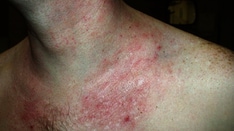
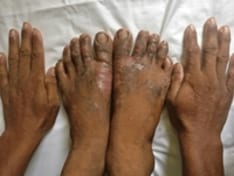
Exfoliative dermatitis, or erythroderma, is an erythematous, scaly dermatitis involving most, if not all, of the skin. This generalized scaling eruption of the skin is drug induced, idiopathic, or secondary to underlying cutaneous or systemic disease.

Appreciation for this condition requires an understanding of the skin's normal epithelial layer. Normal epidermis has a continual turnover of epithelial cells. Cell division occurs near the basal layer. As cells move toward the periphery, they become well keratinized. This process requires approximately 10-12 days. Cells subsequently remain in the stratum corneum for another 12-14 days prior to being sloughed off.

In exfoliative dermatitis, the mitotic rate in the basal layer increases and overall transit time decreases; therefore, more cells are lost from the surface. The mechanism responsible for this is not known, although an immunologic basis has been suggested.

Pathophysiology

Exfoliative dermatitis may occur in response to drug therapy, systemic disease, or an idiopathic entity. As many as 40% of cases involve preexisting cutaneous disease. Approximately 10% of cases are the result of drug reactions. As many as 40% are caused by underlying systemic disease. The remaining cases are idiopathic.

Histopathologic patterns observed for drug-induced and idiopathic causes of exfoliative dermatitis are nonspecific. Biopsy findings in individuals with preexisting cutaneous or systemic disease during an exfoliative stage may reveal, inconsistently, the underlying skin lesion or pathology. Through multiple-biopsy histologic analysis, the diagnosis may be confirmed in as many as 45% of patients.

Frequency

United States

An estimated 1% of hospitalizations are for skin disease.

International

The ratio of hospitalized patients experiencing adverse drug reactions is 3 in 1000. According to one large Finnish study, approximately 1% of these instances involve exfoliative dermatitis.

Mortality/Morbidity

The mortality rate approaches 30%. In a report of 108 patients with exfoliative dermatitis who were autopsied, 87 died from the underlying disease. No cause other than exfoliation was found for the remaining 17 patients.

Race

Exfoliative dermatitis occurs in all races. In the young black male population, research suggests exfoliative dermatitis may be a marker for HIV infection.

Sex

The male-to-female ratio is 2:1.

Age

Individuals older than 40 years are affected most frequently.


History

  • Prior dermatologic illnesses
  • Treatment with new medications
  • Underlying systemic diseases
    • Swelling or adenopathy
    • Recurrent infections
    • Cough or change in bowel or urinary habits
  • Constitutional symptoms of low-grade fever, chills, and malaise (more commonly, patients complain of skin erythema, tightness, and scaling)

Physical

  • Gynecomastia is a common finding in almost all patients with exfoliative dermatitis of several weeks' duration; it is believed to be secondary to hyperestrogenism, but the precise mechanism is unknown.
  • Additional findings include alopecia, dystrophic nails, and hypopigmentation and/or hyperpigmentation.
  • More than 40% of patients were febrile, with temperatures higher than 38°C; a relative tachycardia also was noted.
  • Firm, rubbery lymphadenopathy, referred to as dermatopathic lymphadenitis, is a common finding.
  • Hepatomegaly was noted in more than 50% of patients in one series, and splenomegaly was noted in approximately 30% of patients, all of whom had lymphoma.
  • Steatorrhea may develop and tends to resolve when exfoliative dermatitis clears.
  • Patients with exfoliative dermatitis have increased cutaneous blood flow, transcutaneous fluid losses, and radiation and convective heat losses.
    • A number of cases of hypothermia have been reported.
    • Fluid shifts increase cardiac output, causing dyspnea, dependent edema, and cardiac failure (possibly) in some patients.
  • Prostate or thyroid glands may be enlarged or nodular.

Causes

  • Systemic diseases (10-40%)
    • Lymphoma - Primarily cutaneous T-cell lymphoma (CTCL)
    • Leukemia
    • Multiple myeloma
    • Carcinoma of the lung, prostate, colon, and thyroid
    • Graft versus host disease
    • Immunodeficiency, including HIV
    • Hodgkin disease
  • Cutaneous diseases (10-40%)
    • Psoriasis
    • Seborrheic dermatitis
    • Atopic dermatitis
    • Stasis dermatitis
    • Contact dermatitis
    • Pityriasis rubra pilaris
    • Pemphigus foliaceus
    • Mycosis fungoides
    • Dermatophytosis
    • Lichen planus
  • Drugs (3-10%)
    • Dimercaprol (British antilewisite [BAL])
    • Codeine
    • Captopril
    • Diphenylhydantoin
    • Gold
    • Iodine
    • Antimicrobials - Sulfas, penicillin (PCN), cephalosporins, minocycline, isoniazid
    • Granulocyte colony-stimulating factor (GCSF)
    • Phenytoin
    • Allopurinol
    • Mercury
    • Arsenic
    • Quinidine
    • Barbiturates
    • Trimethadione
    • Aspirin
    • Carbamazepine
  • Idiopathic (15-45%)


Erythema Multiforme
Pediatrics, Kawasaki Disease
Staphylococcal Scalded Skin Syndrome
Toxic Epidermal Necrolysis
Toxic Shock Syndrome


Lab Studies

  • Perform laboratory studies based on clinical suspicion or history that may help to establish the primary cause of exfoliative dermatitis. Other laboratory studies include the following:
    • Evaluation for cardiac failure and renal and intestinal dysfunction
    • CBC with differential, liver enzymes level, creatinine level, and urinalysis
    • Serum albumin level
    • Erythrocyte sedimentation rate (ESR)
  • The most common laboratory abnormalities are anemia, hypoalbuminemia, eosinophilia, and an elevated sedimentation rate.

Imaging Studies

  • Obtain imaging studies based on suspicion of underlying systemic disease or when other causes are excluded.

Procedures

  • Biopsy
    • Perform skin biopsy and lymph node biopsy if significant lymphadenopathy is noted.
    • Histologic findings generally are nonspecific and include hyperkeratosis, parakeratosis, acanthosis of the epidermis, and perivascular infiltrate consisting of histocytes, lymphocytes, and some eosinophils.


Emergency Department Care

Hospitalize most patients with acute exfoliative dermatitis in the intensive care unit or burn center for supportive care, fluid replacement, laboratory studies, and contact isolation for protection against secondary bacterial and fungal infections. No studies have suggested a better outcome for patients treated in burn centers.

  • General measures
    • Withdraw implicated medications or treatment of identified underlying infection, disease, or both.
    • Protect patient from development of hypothermia.
    • Prescribe cool oatmeal baths.
    • Advise local moisturizing ointments, lotions, or both.
    • Advise a high-protein diet with folic acid supplementation, since protein losses may be increased as much as 30% above normal.

Consultations

Urgent consultation with a dermatologist is recommended.


Treatment of the underlying illness is key since exfoliative dermatitis resists treatment until the basic disease is treated. Frequent tub baths with emollients are indicated to provide symptomatic relief.

Drug Category: Corticosteroids

These agents have anti-inflammatory properties and cause profound and varied metabolic effects. They modify the body's immune response to diverse stimuli. Also used to treat idiopathic and acquired autoimmune disorders.

Drug NamePrednisone (Deltasone, Orasone, Meticorten)
DescriptionGlucocorticoid that readily is absorbed from GI tract. Used primarily for anti-inflammatory effects in disorders of many organ systems.
Adult Dose40-60 mg PO qd; daily dose may be increased by 20 mg if no improvement observed in 3-4 d; taper over 2 wk as symptoms resolve
Pediatric Dose1-2 mg/kg PO; taper over 2 wk as symptoms resolve
ContraindicationsDocumented hypersensitivity; viral, connective tissue, fungal, or tubercular skin infection; PUD; hepatic dysfunction; GI disease
InteractionsCoadministration with estrogens may decrease prednisone clearance; concurrent use with digoxin may cause digitalis toxicity secondary to hypokalemia; phenobarbital, phenytoin, and rifampin may increase metabolism of glucocorticoids (consider increasing maintenance dose); monitor for hypokalemia with coadministration of diuretics
PregnancyB - Fetal risk not confirmed in studies in humans but has been shown in some studies in animals
PrecautionsAbrupt discontinuation of glucocorticoids may cause adrenal crisis; hyperglycemia, edema, osteonecrosis, myopathy, PUD, hypokalemia, osteoporosis, euphoria, psychosis, myasthenia gravis, growth suppression, and infections may occur with glucocorticoid use

Drug Category: Antihistamines

These agents are used to treat minor allergic reactions and anaphylaxis. They are used for relief of pruritus.

Drug NameDiphenhydramine (Benadryl, Benylin)
DescriptionFor symptomatic relief of symptoms caused by release of histamine in allergic reactions.
May control itching by blocking effects of endogenously released histamine.
Adult Dose25-50 mg PO q6-8h prn; not to exceed 400 mg/d
10-50 mg IV/IM q6-8h prn; not to exceed 400 mg/d
Pediatric Dose12.5-25 mg PO tid/qid, or 5 mg/kg/d, or 150 mg/m2/d divided tid/qid; not to exceed 300 mg/d
5 mg/kg/d IV/IM or 150 mg/m2/d, divided qid; not to exceed 300 mg/d
ContraindicationsDocumented hypersensitivity; MAOIs
InteractionsPotentiates effects of CNS depressants; because of alcohol content, do not administer syr dosage form to patients taking medications that can cause disulfiramlike reactions
PregnancyC - Fetal risk revealed in studies in animals but not established or not studied in humans; may use if benefits outweigh risk to fetus
PrecautionsMay exacerbate angle-closure glaucoma, hyperthyroidism, peptic ulcer, or urinary tract obstruction; xerostomia may occur

Drug Category: Immunosuppressives

These agents interfere in the immune processes that promote inflammation. They are used to relieve chronic severe dermatitis.

Drug NameCyclosporine (Neoral, Sandimmune)
DescriptionDemonstrated to cause remission in some patients. Has improved overall prognosis of exfoliative dermatitis.
Adult Dose2.5-5 mg/kg/d PO in divided doses; specialized dosing
Pediatric DoseAdminister as in adults
ContraindicationsDocumented hypersensitivity; uncontrolled hypertension or malignancies; do not administer concomitantly with PUVA or UV-B radiation in psoriasis since it may increase risk of cancer
InteractionsCarbamazepine, phenytoin, isoniazid, rifampin, and phenobarbital may decrease cyclosporine concentrations; azithromycin, itraconazole, nicardipine, ketoconazole, fluconazole, erythromycin, verapamil, grapefruit juice, diltiazem, aminoglycosides, acyclovir, amphotericin B, and clarithromycin may increase cyclosporine toxicity; acute renal failure, rhabdomyolysis, myositis, and myalgias increase when taken concurrently with lovastatin
PregnancyC - Fetal risk revealed in studies in animals but not established or not studied in humans; may use if benefits outweigh risk to fetus
PrecautionsEvaluate renal and liver functions often by measuring BUN, serum creatinine, serum bilirubin, and liver enzyme levels; may increase risk of infection and lymphoma; reserve IV use only for those who cannot take PO

Drug Category: Antirheumatic, Disease Modifying

These agents modulate inflammatory and immune responses.

Drug NameEtanercept (Enbrel)
DescriptionSoluble p75 TNF receptor fusion protein (sTNFR-Ig). Inhibits TNF binding to cell surface receptors, which, in turn, decreases inflammatory and immune responses.
Has been reported to be effective. No current FDA approval/indication for the use of this drug with exfoliative dermatitis.
Adult Dose25 mg SC 2 times/wk
Pediatric Dose0.4 mg/kg SC; maximum single dose 25 mg
ContraindicationsDocumented hypersensitivity; sepsis; concurrent live vaccination
InteractionsNone reported
PregnancyB - Fetal risk not confirmed in studies in humans but has been shown in some studies in animals
PrecautionsEmpiric case reports for effectiveness; no current FDA approval/indication for use with exfoliative dermatitis
Serious infections may develop, and the therapy should be discontinued if they occur; possible adverse effects include pain, redness, and swelling at injection site and headaches; rare cases of lupuslike symptoms and heart failure have been reported (discontinue treatment if symptoms develop)


Complications

  • Bacterial or fungal superinfection
  • Hypothermia
  • Dehydration, electrolyte imbalance, or both
  • Heart failure

Prognosis

  • In general, long-term prognosis is good for patients with drug-induced disease after the offending agent is withdrawn and proper supportive measures are undertaken.
  • For patients with idiopathic exfoliative dermatitis, the prognosis is poor. Frequent recurrences or chronic symptoms require long-term steroid therapy and its attendant sequelae.
  • For patients with underlying disease or malignancy, prognosis rests on the outcome and course of the disease process.

Patient Education

  • Avoid known etiologic agents.
  • Educate patients with underlying disease about symptomatic treatment and advise that many cases spontaneously remit.
  • Advise patients on protection from hypothermia.
  • Advise patients to follow a high-protein diet as symptoms persist.
  • Encourage patients to be diligent in watching for signs of infection.


Special Concerns

  • In neonates, thoroughly investigate severe immunodeficiency as a possibility.
  • Elderly patients are at risk of cardiac complications. Fluid losses and shifts often are significant, and decreased compensatory mechanisms in members of the elderly population make them particularly vulnerable.
  • Use corticosteroids with caution. This syndrome has a clinically similar appearance to that of toxic epidermal necrolysis for which steroids have shown no benefit or increased morbidity or mortality.


The authors and editors of eMedicine gratefully acknowledge the contributions of previous authors, Jonathan R Pilcher, MD, and Selwyn Waterton, MD, to the development and writing of this article.


  • Abrahams I, McCarthy JT, Sanders SL. 101 cases of exfoliative dermatitis. Arch Dermatol. Jan 1963;87:96-101. [Medline].
  • Adams JE, Mali JW, Karger AG, eds. Exfoliative dermatitis (erythroderma). Curr Probl Dermatol. 1972;4.
  • Bolognia JL, Braverman IM. Skin manifestations of internal disease. In: Harrison's Principles of Internal Medicine. 14th ed. 1998:310-312.
  • Brady WJ, DeBehnke DJ. Generalized skin disorders. In: Emergency Medicine A Comprehensive Study Guide. 5th ed. 2000:1594-1603.
  • Freedberg I, Baden H. Dermatology in general medicine. In: Textbook and Atlas. Vol 1. 1987:502.
  • Karakayli G, Beckham G, Orengo I, Rosen T. Exfoliative dermatitis. Am Fam Physician. Feb 1 1999;59(3):625-30. [Medline].
  • McKenna JK, Leiferman KM. Dermatologic drug reactions. Immunol Allergy Clin North Am. Aug 2004;24(3):399-423, vi. [Medline].
  • Morar N, Dlova N, Gupta AK, Naidoo DK, Aboobaker J, Ramdial PK. Erythroderma: a comparison between HIV positive and negative patients. Int J Dermatol. Dec 1999;38(12):895-900. [Medline].
  • Moschella S, Hurley H. Dermatology. 2nd ed. 1985:543.
  • Nicolis GD, Helwig EB. Exfoliative dermatitis. A clinicopathologic study of 135 cases. Arch Dermatol. Dec 1973;108(6):788-97. [Medline].
  • Pruszkowski A, Bodemer C, Fraitag S, Teillac-Hamel D, Amoric JC, de Prost Y. Neonatal and infantile erythrodermas: a retrospective study of 51 patients. Arch Dermatol. Jul 2000;136(7):875-80. [Medline].
  • Querfeld C, Guitart J, Kuzel TM, Rosen S. Successful treatment of recalcitrant, erythroderma-associated pruritus with etanercept. Arch Dermatol. Dec 2004;140(12):1539-40. [Medline].
  • Quiceno GA, Cush JJ. Iatrogenic rheumatic syndromes in the elderly. Clin Geriatr Med. Aug 2005;21(3):577-88, vii. [Medline].
  • Rothe MJ, Bialy TL, Grant-Kels JM. Erythroderma. Dermatol Clin. Jul 2000;18(3):405-15. [Medline].
  • Shuster S, Brown JB. Gynaecomastia and urinary oestrogens in patients with generalised skin disease. Lancet. Dec 29 1962;2:1358. [Medline].
  • Sommer S, Henderson CA. Papuloerythroderma of Ofuji responding to treatment with cyclosporin. Clin Exp Dermatol. Jun 2000;25(4):293-5. [Medline].
  • Voigt GC, Kronthal HL, Crounse RG. Cardiac output in erythrodermic skin disease. Am Heart J. Nov 1966;72(5):615-20. [Medline].
  • Volcheck GW. Clinical evaluation and management of drug hypersensitivity. Immunol Allergy Clin North Am. Aug 2004;24(3):357-71, v. [Medline].
  • Wilson HT. Exfoliative dermatitis; its etiology and prognosis. AMA Arch Derm Syphilol. May 1954;69(5):577-88. [Medline].

Dermatitis, Exfoliative excerpt

Article Last Updated: Jan 15, 2008