You are in: eMedicine Specialties >
Dermatology > ENVIRONMENTAL
Burns, Electrical
Article Last Updated: Jun 25, 2008
AUTHOR AND EDITOR INFORMATION
Section 1 of 12
Author: Erika Kis, MD, Assistant Professor, Burn and Plastic Surgery Unit, Department of Dermatology and Allergology, University of Szeged, Hungary
Coauthor(s):
Lajos Kemeny, MD, PhD, DSc, Professor and Head, Department of Dermatology and Allergology, Albert Szent-Gyorgyi Medical Center, University of Szeged, Hungary
Editors: Mark A Crowe, MD, Assistant Clinical Instructor, Department of Medicine, Division of Dermatology, University of Washington School of Medicine; David F Butler, MD, Professor of Dermatology, Texas A&M University College of Medicine; Chair, Department of Dermatology, Scott and White Clinic; Director Dermatology Residency Training Program, Scott and White Clinic; Rosalie Elenitsas, MD, Associate Professor of Dermatology, University of Pennsylvania School of Medicine; Director, Penn Cutaneous Pathology Services, Department of Dermatology, University of Pennsylvania Health System; Catherine Quirk, MD, Clinical Assistant Professor, Department of Dermatology, Brown University; Dirk M Elston, MD, Director, Department of Dermatology, Geisinger Medical Center
Author and Editor Disclosure
Synonyms and related keywords:
electrical burns, electric burn, burn, high-voltage burn, low-voltage burn, electrical injury, lightning injury, lightning burn, bathtub electrocution, lightning standstill, low-tension electrical burn, high-tension electrical burn, flashover, flash burn, sideflash, flash discharge, splash burn, step voltage, arc burn, Lichtenberg figure, tiptoe sign, mummification, thermal burn
Background
The term electrical burn is used widely to describe the variety of injuries created by supraphysiologic electrical energy interacting with living tissue. Although thermal burns remain some of the most common results of such an interaction, this term does not adequately describe the range of effects they have in the human body. The term burn also does not encompass the special considerations required in the diagnosis and treatment of patients with these injuries. Usually, electrical injuries are arbitrarily categorized into 1 of 3 groups: low-voltage injuries, high-voltage injuries, and lightning injuries (see Causes). Each has its own special concerns. The following additional eMedicine articles on electrical burns may be of interest: Additionally, the following Medscape resources may be helpful:
Pathophysiology
Certain properties of electricity and tissue illustrate the mechanisms of electrical injury and the ability to predict patients' outcomes. These properties include voltage, current, resistance, and conductance. Voltage is the electromotive force or the difference in the electrical potential. The current is the flow of electricity. The resistance of a material is its opposition to the passage of an electric current through it, and its conductance is its ability to transmit a current. In addition, electricity can also form arcs and result in the creation of plasma. Factors that determine the extent of tissue damage, morbidity, and mortality include the voltage, the type (alternating current [AC] or direct current [DC]) and path of the current, and the resistance or conductance of the tissue (especially the type and quantity of the tissue affected and its degree of hydration, orientation, contact surface area, and duration of exposure).
Voltage and current
The larger the voltage for a given conducting body of relatively fixed resistance, the larger the amount of current that can pass through it. Because voltages of generated electricity are usually known (and measured in volts) and because the resistance of the body is not, the current must be calculated. Alternating current and direct current AC is electrical energy that oscillates in each of 2 directions at a set rate, ie, the direction of flow through the conductor reverses. The standard frequency of alternation in the United States and Canada is 50-60 cycles per second (cps), or hertz. DC is electrical energy that flows in only 1 direction. The inherent safety or injury consideration with low-frequency energy is that it is also within the range of physiologic stimulation of the neuromuscular action potential. As low as 1.1 mA may produce a tingling sensation. Put simply, with a current stronger than 15 mA, the muscles of a portion of the body that is involuntarily transmitting impulses can contract, also called tetany, as long as the current is applied. (The threshold of involuntary spasm is called the let-go threshold.) In practical terms, when a person touches his or her hand or forearm to a source of current, the extremity contracts and the person cannot release his or her hand or forearm from the source. This contact prolongs the exposure and thus the damage is more severe. At levels above 30-40 mA (ventricular fibrillation may be induced at 1-5 A), the heart goes into a continuous contraction and reverts back to sinus rhythm when the voltage has been released.1 Increasing the duration of contact generally increases the tissue damage, at least until the conducting tissue carbonizes and becomes more resistant to further flow of the current. When the body becomes a part of an electrical circuit, the current frequently becomes more concentrated at the entry and exit points (with some exceptions). At these points, greater tissue damage can occur, especially in terms of thermal burns. This muscular contraction effect, coupled with the increased ability of AC to penetrate the epidermal resistance barrier (see below), explains why lower AC voltages are as dangerous as the higher DC voltages and currents. AC is 3 times more dangerous than DC at the same voltage. Effects on tissue When an electrical current is transmitted by means of direct contact with a conducting material or an arc that reaches the tissue surface, the electrons begin to flow, as ions flow in a solution. Electrolysis and other exothermic electrochemical reactions occur, with the alteration of pH and oxygen levels and the release of toxic by-products into the surrounding tissue.2 In comparison, the phenomenon of electroporation is the more rapid effect of current passing through cellular tissue. This is strictly a cellular (or lipid bilayer) phenomenon resulting from the denaturing effects of the current on the negatively charged proteins in the cell membrane, especially those around the cell pores and gates. The proteins in the cell membrane can lose their 3-dimensional structure and distort or create intramembrane pores or gates. Consequently, intracellular contents can admix with the extracellular components. If not reversed in time, this phenomenon leads to cell death, which is not the effect of joule heating (which takes much longer to occur). In addition to its aftereffects, the manner in which electrical current flows greatly determines how much injury is sustained. The most important factor governing the pathway of the current is the fact that electricity tends to flow through the conductor of least resistance. Flow can be divided into direct and indirect types. Direct flow occurs when a person touches a conductor. Indirect flow can be separated into arc, flash, thermal, and blunt injuries. Arc occurs when a spark occurs between 2 objects not in contact with each other. The arc injury occurs when the victim becomes part of the arc. The arc may then cause burns after igniting clothing. Flash burns occur when the flow of current proceeds along the external surface of the body and are enhanced by wet skin or clothing. Flash injury may cause partial-thickness burns.3 Flash (also called sideflash, flash discharge, splash, or spray) occurs when current begins down one path, such as a tree, then jumps to a grounded nearby person, following the path of least resistance. This mechanism is believed to be the most common in lightning strike injuries.4 In addition to lightning, step voltage is another high-voltage discharge phenomenon. When an electrical discharge (especially lightning) strikes a grounded surface, the current rapidly dissipates outward in a radial pattern along the surface. The resultant difference in the electrical potential between 2 points, even those separated by a relatively short distance (eg, length of a walking stride between the feet), may be tremendous. The dissipating current can often find a pathway of lower resistance. For example, the current may travel from one leg through the body to the other leg instead of passing along the ground, even though the legs are separated by only a few inches. The result can be devastating when large voltages are involved, as in lightning strikes. Because farm animals have longer strides, this kind of injury is more likely to occur in animals than in people.
Resistance and conductance
The passage of a given current generates more heat in a more-resistant conductor (eg, tissue) than in a less-resistant conductor. The direct dissipation of energy as heat is called joule heating, and this is the major cause of thermal burns to tissue. Therefore, tissues that are less conductive tend to heat up more as current passes through them. The order of tissues, from the most conductive (ie, least resistant) to the least conductive (ie, most resistant) is as follows: nerves, blood vessels, muscles, skin, fat, and bone. Nerves, blood vessels, muscles, and bone Nerves and blood vessels carry relatively more current with less heat generation, whereas bone tends to convert more of the electrical energy into heat. The difference in conductance is why high-voltage thermal damage has a significant deep component. In addition, because of its large volume, muscle carries the largest amount of current, which also heats the surrounding tissues. Bone, which also dissipates heat more slowly than other tissues, heats the surrounding tissues even after current ceases to flow. For this reason, the thermal damage caused by a current passing up through an upper extremity is concentrated at the wrist and elbow, the places with less tissue cross-sectional area and more resistive structures (bone and tendon). Skin The epidermis, being relatively drier, initially offers greater resistance to DC flow. Skin resistance varies according to different factors such as the thickness of the keratin layer of the epidermis and the moisture of the skin. The resistance is generally decreased by sweat and moisture or in areas where follicles pierce the epidermis and is increased where the epidermis is thicker (eg, on the acral surfaces of the skin). When a DC potential of more than 10 V is established across the skin, the epidermis begins to lose its structural integrity and its resistance further decreases. In a corollary to this property, an electrical current that passes through an initially resistant barrier (eg, epidermis) causes a thermal burn at the area of increased resistance. The epidermal barrier is effectively removed when the skin is immersed in a fluid-conducting medium such as water. With a fluid conductor, the flow of current is spread over a broader contact surface, and the water and its attendant ions can more effectively reach portions of the epidermis that are better conductors. For this reason, burns are not seen on the surface of skin immersed in water; in addition, more current flows through the body as a whole because the body becomes a whole-volume conductor. The classic example of this phenomenon is bathtub electrocution, which has a high mortality rate because the current can cross the myocardial and diaphragmatic muscles, often without leaving a surface burn of any kind. When electrodes are applied to the skin, as in cardioversion, a perimeter effect can be seen.3 Usually, only a first-degree burn occurs at the perimeter, as demonstrated at histologic examination. In this peculiar phenomenon, the applied current passes through the center of the interface between the skin and the conducting pad or gel without causing significant thermal burn. However, the current arcs through the surrounding skin on which little or no conductive gel is placed and where the conducting pad has an abrupt edge. The result is a thermal burn through the less conductive epidermis. This effect has been largely eliminated with the use of electrode pads with a high-impedance perimeter. AC energy does not meet the same initial resistance in the epidermis because the direction changes in the current act like alternating magnetic fields that induce an electrical field in the tissue. These magnetic fields (similar to those used in MRI) readily penetrate the body.2 Compared with current conduction, current induction does not depend on surface skin resistance. Arcs and plasma
An arc is one of the forms of electrical flow that produce the greatest amounts of current and heat. An arc results when a stream of plasma (a good conductor) is generated from the atoms in the conducting material. The electrical field strength of the material undergoes a huge change as it nears a high-potential pathway. The formation of an arc depends on the voltage and the dielectric properties of the insulating medium, usually air. In most people with a high-voltage injury, an arc is actually formed before they make physical contact with the electrical source. The dielectric breakdown strength of air is approximately 2 million V/m. This value is lessened by increased humidity or precipitation. At voltages below 300 V, physical contact must be made. An arc does not form in the air.2 Arc faults give off thermal radiation and bright, intense light that can cause burns to the body, especially to the skin and eyes. Next to the laser, the electric arc is the hottest event on earth, with recorded temperatures as high as 35,000°F (19,427°C).5 High-voltage arcs can also produce a considerable pressure wave by rapidly heating the air and producing a blast that may exceed 200 lb/ft2 (978 kg/m2).This pressure burst can send molten metal droplets from melted copper and aluminum components in electrical equipment great distances at extremely high velocities. In addition to direct personal injury from these hot metals, arc blasts can throw a worker against nearby objects or walls, causing secondary injuries such as blunt force trauma, cuts, and abrasions. The impulse sound wave near the unprotected ear can also result in temporary or permanent traumatic hearing loss.6 The temperature of an arc is 4532-18,032°F (2,500-10,000°C). This resultant temperature can create such a shearing force that the tissue layers frequently separate. The large temperature gradient often results in full- or partial-thickness burns of the skin and deeper tissues. Additionally, the temperature of an arc (eg, lightning strike) can ignite clothing and even melt metal objects (eg, a coin in the pocket), which can then cause secondary thermal injuries. In addition, when large amounts of heat are generated (as in a lightning arc), superheating of the surrounding air can generate a thermoacoustic blast (thunder) that can cause blunt injuries. Plasma, a highly ionized gaseous conductor, can be generated as a result of contact with metal power lines. The result is the formation of a peculiar coating of metal on the skin, or effectively, electroplating of the skin. Plasma can also be generated from within the body at the point at which an arc eventually contacts the body.
Frequency
United States
The number of patients with any type of electrical injury who present for treatment is estimated to be 5,000-52,000 per year.7 Most authors agree that hospital admissions resulting from an electrical injury represent 3-7% of all injuries primarily classified as burns. Approximately 3,000 patients who survive electrical shock are admitted to specialized burn units annually.8
The effect of electrical injuries on the US economy is staggering. For occupational injuries alone, the National Institute for Occupational Safety and Health estimated an impact of more than $1 billion on the economy.2 Electrical burns are the fifth leading cause of occupational fatalities.9 See Media File 1. As a separate category, lightning injuries cause 300-600 deaths annually in the United States, more than any other weather phenomenon (excluding hurricane Andrew).4 In fact, more deaths have been attributed to lightning than to any other natural disaster, and the rates do not take into account the fact that the annual frequency of nonfatal lightning injuries is 3-5 times that of fatal injuries.10 Furthermore, many injuries are unreported. As a natural phenomenon, lightning is geographic and seasonal. Typically, lightning strikes affect individuals who participate in outdoor recreation or work outside, and 70% of fatalities occur in June, July, or August. More lightning injuries occur in the Southeast; the Rocky Mountains; and along the Mississippi, Hudson, and Ohio River valleys than anywhere else. The afternoon and evening are the most likely times for an injury to occur.10 In general, intentional electrical injuries (eg, those due to Taser devices) are not addressed in incidence and prevalence studies.
International
The increasing worldwide incidence of electrical injuries is the result of several factors. The population is growing, as is the percentage of people who use or have access to electricity. Developing nations are particularly affected; for example, one physician in the Dominican Republic noted that as many as 39% of admissions to the local hospital for burns were due to electrical injuries.11 Increased reporting of these injuries also plays a role. In China, the number of patients severely injured by electrical current, historically 3-4% of all burn unit admissions, has progressively increased as the amount of electricity generated has increased. In this decade, an additional large disproportional increase in the incidence of high-voltage burns has occurred in men fishing near electrical wires. When the fishing rod contacts with overhead high-voltage electrical lines, the fisherman sustains severe burns with true injuries, flash injuries, or both together.12
In a 2007 Iranian study, the most common cause of high-voltage injuries was climbing power poles to trap pigeons or access bird’s nests (both in adults and children).13 See Media Files 2-3.
Mortality/Morbidity
Electrical injury occurs in approximately 1000 deaths annually. Most of these occur in victims aged 15-40 years. Most electrical injuries are due to low-voltage energy, which also accounts for half of all deaths.3 Patients with low-voltage injuries have a disproportionately high mortality rate compared with those who sustain high-voltage injuries or lightning injuries.
- High-voltage injuries may cause relatively few deaths and relatively more morbidity because the energy involved can cause the individual to be thrown back from the point of contact or because it can cause a violent and sudden single muscle contraction, which also propels the individual away from the electrical source. In addition, in patients with high-voltage injuries, the high rate of limb amputations (45-71%) accounts for much of the resultant morbidity.
- In a 2007 Iranian study, the incidence of amputation in the high-voltage group was significantly higher than that reported in the low-voltage group (11.1% vs 3.5%, P = .05).13
- Patients with lightning injuries have a mortality rate of less than 30%. Factors that influence this rate can include the flash mechanism of injury (see Pathophysiology) and the lightning standstill phenomenon (see Physical).
- Bathtub electrocution has a high mortality rate because the current can cross the myocardial and diaphragmatic muscles, often without leaving a surface burn of any kind.
Sex
Nonlightning electrical injury has a male predilection approaching 93%, which reflects the preponderance of men in construction and electrical occupations. High-voltage injuries are most common in men.14
Age
Nonlightning electrical injury has a bimodal distribution with respect to age. In a 2006 Turkish epidemiological study of patients in an emergency department, the mean age was 21.1 years. The age range was 2.5-62 years. Most of these patients (57.6%) were adolescents and adults; the smallest percentage of patients (6%) was elderly persons.15
- The first peak, which represents approximately one third of the injuries, occurs in children younger than 6 years, in whom most injuries are the low-voltage type. Usually, low-voltage burns occur in toddlers who bite electrical cords or in slightly older children who place metal objects into electrical outlets.
- In young people aged 11-18 years, some accidents occur as a result of their touching high-voltage power lines.
- The second large peak occurs in persons aged 15-40 years as they enter or re-enter the workforce.
History
Although the history of an electrical injury is well known in most patients, some patients are found unconscious and others may be unable to recall the history. If an electrical burn is suggested, certain clues to the type of injury (predominantly findings on the skin surface) may become evident during the secondary physical survey. If the history or extent of injury is unknown, a thorough physical assessment of the electrical injury is critical.
Physical
Specific surface-injury patterns may be of great importance in the diagnosis and treatment of patients with electrical burns. If the features of the history suggest an electrical burn, certain clues to the type of injury (predominantly findings on the skin surface) may become evident during the secondary physical survey. Frequently, an electrical injury of significance, especially one to the extremities, seems more like a crush injury than a burn because the external signs of the injury often overlie a more serious and deeper injury.9 - High-voltage electrical injuries
- The entrance and exit wounds caused by the current may be small and otherwise overlooked, especially if they are on the scalp, on the soles of the feet, and in locations that are not typically examined. The tissue destruction results from the energy's conversion to heat as it meets resistance. Smaller body parts are likely to be completely destroyed. The trunk allows for enough dissipation of the heat to protect vital visceral organs.1
- Although small, the wounds typically extend deep into the underlying tissue, and they tend to be well circumscribed.14
- The burn is commonly third degree, and, as such, it can have a central blown-out appearance with a leathery texture, a white-to-yellow coloration, and a hyperemic border.
- Patients might also have injuries as a result of being thrown back from the point of contact.
- Thermal burns
- A flash-type thermal burn is often superficial and covers broad areas of exposed surfaces. These findings provide clues not only to the amount of current involved in the exposure but also to the other types of injury that may be present.
- Thermal burns can be typical first-, second-, or third-degree burns, and the skin can appear punctate, belying the underlying tissue damage.
- Burns in the flexor creases, such as at the axillae, elbows, wrists, popliteal fossae, and those between the fingers (most common), are a result of current flowing through the path of least resistance. When the current encounters a relatively resistant joint (ie, one with a small cross-sectional area or highly resistant tissue), the current seeks a surface pathway of less resistance, ie, it jumps across the joint and courses along the skin surface.
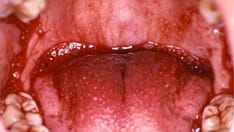
- The oral commissure burn is a common thermal burn that occurs in young persons exposed to low-voltage household AC. This injury most often occurs when children suck on the end of an extension cord or chew on it. Severe oral mucosal, lip, and tongue injuries can occur. A common delayed complication of such an injury is staining of the teeth. Postinjury bleeding of the labial artery often occurs 2-3 days after this type of injury. The health care provider must be alert to this late complication and reassess the patient to detect it. The labial artery is most commonly involved in burns of the oral commissure and mouth because it is the conduit of least resistance and disperses the most amount of current or electrical energy. The bleeding occurs as a delayed manifestation of arterial injury as the scab matures and prematurely dislodges in the wet environment of the mouth.
- Lightning injuries
- These injuries may cause any of the skin manifestations seen with other electrical injuries, but they may also appear as linear burns in areas in which sweat was present on the skin surface at the time of the lightning strike.16
- A peculiar and pathognomonic skin manifestation of lightning injury is the Lichtenberg figure. This sign is described as a fernlike, arborescent, or Christmas tree–like pattern. The feathery marking appears on the skin within hours after injury and usually disappears within 24 hours. It most likely represents an electron shower and not a true burn. As such, it requires no specific treatment.
- An additional peculiar and perhaps pathognomonic sign of lightning injury is the tiptoe sign.17 In the case report describing this manifestation, all 10 patients with a simultaneous flash-type lightning injury had multiple, small, circular, full-thickness burns on the soles of their feet and on the tips of their toes. These signs were theorized to result from their wearing partially insulated, thick-soled shoes that prevented the current from exiting directly through the bottom of their shoes. Instead, the current exited the body through the sides of the shoe where the foot was closest to the ground.
- Lightning can also superheat the surrounding air and create a resultant thermoacoustic blast (thunder) that can cause blunt injuries.
- The large temperature gradient often results in full- or partial-thickness burns of the skin and deeper tissues. Additionally, the temperature of a lightning strike can ignite clothing and even melt metal objects (eg, a coin in the pocket), which can then cause secondary thermal injuries.
- Some high-voltage injuries, especially lightning injures, are known to cause such localized and complete vasospasm of an extremity that the limb can appear cold and lifeless for hours; however, it eventually recovers completely.
- Lightning standstill is likened to a state of suspended animation in which cell death does not occur immediately after apparent clinical death (see Medical Care).
- Low-voltage injuries (see Media Files 4-7)
- With low-voltage injuries, an edematous area surrounded by shriveled, depressed skin may be the most common finding.18
- In contrast, after a high-voltage injury, the skin may appear dry and shriveled, and it is more likely to be charred.18
Causes
Specific causes of electrical injuries are described below.
- Low-voltage injuries
- Also called low-tension injuries, low-voltage burns are caused by voltages less than 1000 V.
- This group includes most injuries caused by household current, as well as occupational injuries resulting from the use of small power tools.
- High-voltage injuries
- These burns are also known as high-tension injuries, and they are a result of exposure to 1000 V or more.
- These injuries are often the result of occupational or incidental exposure to outside power lines.
- Lightning injuries involve voltages higher than those of the other injuries and are usually categorized separately.
- The typical lightning injury involves energy with high voltage and high amperage but extremely short duration.
- Lightning is usually a unidirectional massive current impulse and is best understood as a current rather than a voltage phenomenon.
- The largest flow of current tends to jump to the ground before much of it passes through the body.
- Lightning injuries tend to be seasonal.
- Other electrical injuries
- Intentional injuries include those due to the use of high-voltage Taser devices for rapid incapacitation, child and/or spouse abuse, and torture.19
- The use of skin electrodes, as in cardioversion, can cause a perimeter effect (see Pathophysiology).3 Most electrode burns are related to the presence of high-frequency electric fields created either by an electrosurgical unit or an MRI scanner. A smaller number of lesions are produced by low-current, long-duration DC stimulation and during high-current stimulation such as defibrillation. Practitioners should pay special attention with patients in the presence of radiofrequency energy being generated by an electrosurgical unit or MRI scanner. The electrodes attached to a patient may act as an "antenna" bringing this energy to the electrode-skin interface and create a burn.20
Burns, Chemical
Thermal Burns
Other Problems to be Considered
Torture Child or spousal abuse Other forensic concerns
Lab Studies
If a significant electrical injury is suspected, order the appropriate studies to evaluate possible complications, including the following: - Cardiac electrical abnormalities
- Cerebral edema
- Extent of deep tissue injury (despite an otherwise minor-appearing surface burn)
- Rhabdomyolysis-induced acute tubular necrosis
Histologic Findings
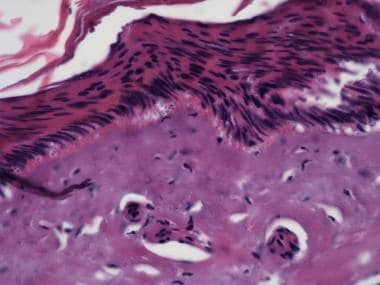
See Media File 8. Distinct histologic changes may be evident upon microscopic examination. Vertical stretching of the basal cells of the epidermis, and sometimes the overlying epidermal cells, can be demonstrated. Dermoepidermal separation may be evident. Elongated, degenerated, cytoplasmic processes may extrude from the basal cell layer into this separation; this finding is sometimes called feathering.21 This extrusion may be the histologic correlate of thermoacoustic forces acting between the layers of the epidermis and dermis, because the current is able first to breach the drier epidermis, which produces more heat, before reaching the underlying dermis, which has more conductive properties. Because blood vessels are one of the best tissue conductors of electrical current, vascular histologic damage is commonly observed. Although this damage appears to be greatest in the medial layer, intimal injury due to immediate or delayed thrombosis, edema, and coagulation necrosis is also observed. These effects may be mediated by electromechanical disruption of the endothelial membrane, with exposure and eventual cellular disintegration of the medial cellular layer of the involved vessel.
Medical Care
The type of electrical injury (ie, high-voltage, low-voltage, lightning injury) may be an important consideration in the treatment and prognosis. In an injury or possible injury of significance, addressing the ABCs first is of paramount importance. Care should be taken not to miss an exit wound or a smaller pathognomonic sign of electrical injury. A secondary survey is critical and must be appropriately thorough. Emergency service responders may treat the patient at the scene of the injury. After the safety of the responders is ensured, they should attend to the basics of supportive care, and appropriate advanced cardiac life-support measures should be administered. Life-saving measures should be continued at a medical center at which patients with multiple trauma can be most appropriately treated. Optimally, the center should have an adequate burn unit or the ability to treat patients with burns. Secondary assessments are also performed here. No class I evidence exists to support standardized management of electrical burns. Available guidelines recommend 24-hour telemetry monitoring for all patients with high-voltage injuries and for patients with low-voltage injuries who have abnormal initial ECG tracings.22 The aforementioned recommendations correlate with an Australian-New-Zealand guideline released in 2007: Following electrical injuries, people should undergo a resting 12-lead ECG. If this initial ECG tracing is normal in people with low-voltage injuries, neither a repeat ECG nor continuous monitoring is necessary.23 - With at least 2 large-bore intravenous lines and a Foley catheter in place, parenteral fluid therapy should be administered to maintain a urine output of at least 0.5-1 mL/kg/h. However, if heme is present in the urine, urine output of 1-1.5 mL/kg/h should be maintained.
- The rule of 9s for fluid resuscitation generally causes underestimation of the fluid requirements in patients with electrical burns (as opposed to those with only typical thermal burns). The reason is because of the higher likelihood of a significant or deep injury with electrical burns.9
- Deep electrical injuries generate rhabdomyolysis and myoglobinuria. In this setting, fluid resuscitation should be titrated to maintain a urine output of 100 mL/h until the urine clinically appears clear.24
- Two caveats to this fluid-management regimen bear consideration. The first, in patients with head injuries, parenteral fluids may need to be relatively restricted, or adjunctive therapy may be required to prevent cerebral edema. Second, in preadolescents, fluid requirements may need to be adjusted on the basis of their body surface area or an age-specific diagram.25
- All patients presenting with an electrical injury of more than a minor nature should be treated as if they had multiple trauma. Frequently, an electrical injury of significance, especially one to the extremities, seems more like a crush injury than a burn because the external signs of the injury often overlie a more serious and deeper injury.9
- With electrical burns, serial examinations performed on an inpatient basis best delineate the extent of necrosis, because progressive necrosis of otherwise normal-appearing (but nonetheless irreversibly damaged) tissue is common.
- In a reversal of the usual triage practice, the initiation of earlier and more prolonged resuscitation in persons struck by lightning who become unconscious has saved many lives. Because of improved understanding of the phenomenon of lightning standstill, health care workers are realizing that individuals struck by lightning can be successfully resuscitated much later than previously believed. Standstill is likened to a state of suspended animation, in which cell death does not occur immediately after apparent clinical death. In fact, complete resuscitation is likely even after the patient has been in this state for several minutes.
Surgical Care
Limb-saving measures, such as escharotomy and fasciotomy, may be needed to restore tissue perfusion or to control respiratory expansion of the thorax.
Indications for surgical decompression include progressive neurologic dysfunction, vascular compromise, increased compartment pressure, and systemic clinical deterioration from suspected ongoing myonecrosis. Decompression includes fasciotomy and assessment of the muscle compartments.22 The surgical management of high-voltage burns is characterized by repetitive debridements and necrectomies. Despite an aggressive approach to remove necrotic tissue, the mortality in this type of injury is considerably high. Limb salvage may be achieved with the use of free microvascular flaps. However, an amputation of necrotic extremities must be considered in the presence of septic complications.26
Some high-voltage injuries (especially lightning injuries) are known to cause such localized and complete vasospasm of an extremity that the limb can appear cold and lifeless for hours; however, it eventually recovers completely. Early amputation of such a limb would be disastrous. - Perfusion to the extremities is paramount.
- Perfusion may not be ensured adequately by the demonstration of perfusion in a larger vessel (eg, presence of radial or pedal pulses) by means of Doppler perfusion monitoring. Rather, the confirmation of distal flow by assessing the capillary return or the low-pressure distal vasculature may be required.
- Lightning injury may cause vasospasm so severe that the entire extremity can appear cyanotic, cold, and pulseless. The urge to amputate early in such patients should be tempered by the fact that such anomalies most often spontaneously and completely resolve within hours.17
- If nonviable skin is excised, delaying definitive closure until 1-2 weeks after the procedure or until base viability is ensured is reasonable.
- Closure with a split-thickness skin graft remains the most cost-effective means of covering an open site if sufficient donor sites exist. Alternatives include the use of cryopreserved human allografts, porcine xenografts, various synthetic bilayer membranes, or cultured autografts of fibroblasts.11, 25
- The face, hands, and genitals are treated somewhat differently because of their inherent healing properties. Cosmesis and function are long-term goals that may require surgical intervention.
- The data of German authors demonstrate that complex microvascular reconstructive procedures are worthwhile for limb salvage. In secondary reconstruction, they have become the methods of first choice.27
Consultations
Depending on the type of electrical injury and the collateral or secondary injuries, consultation with the following specialists may be needed once definitive treatment is begun: - Plastic surgeon: While physicians and practitioners of many specialties play integral roles during specific phases of the care of patients with electrical injuries, the plastic surgeon is essential to all phases of the treatment of these patients. Their involvement spans from performing prophylactic procedures early through maximizing functional outcomes after primary reconstruction and maximal occupational and physical therapy.28
- Neurosurgeon
- Pulmonologist
- Cardiologist
- Other specialists
Diet
In seriously injured patients, as with burn patients, dietary therapy must be commensurate with their grossly increased anabolic needs. Dietary therapy may include parenteral nutrition.
Activity
Because of the possibility of significant deep-tissue injury, eventual therapy (eg, occupational or physical therapy) may become necessary to fully rehabilitate a patient.
The goals of pharmacotherapy are to reduce morbidity and prevent complications.
Drug Category: Topical anti-infective agents
Used for the treatment of significant partial- or full-thickness electrical burns, these topical agents are frequently administered to prevent infection when the normal barrier and immunologic properties of the skin are compromised. Secondarily, these agents may help prevent desiccation.
| Drug Name | Mafenide (Sulfamylon) |
| Description | Topical sulfonamide. Freely diffuses into the eschar. Highly effective against gram-negative organisms, including Pseudomonas species. Application to eschars noted to be painful. Application depth of 1/16th inch preferred; no external dressing required. May be used indefinitely until wound is ready for skin grafting or healing is complete, if no complications result. |
| Adult Dose | Apply to entire debrided surface of second- or third-degree burn qd/bid; use sterile technique |
| Pediatric Dose | Apply as in adults |
| Contraindications | Documented hypersensitivity; renal impairment |
| Interactions | None reported; absorption through skin and eschar into systemic circulation results in rapid metabolism to bacterially inactive metabolite, excreted through the kidneys (metabolite retains properties of carbonic anhydrase inhibition) |
| Pregnancy | C - Fetal risk revealed in studies in animals but not established or not studied in humans; may use if benefits outweigh risk to fetus
|
| Precautions | For external use only; avoid contact with eyes; pain or burning may occur on application; metabolizes to carbonic anhydrase inhibitor p-carboxybenzenesulfonamide, which may result in metabolic acidosis (monitor acid-base balance, especially in renal impairment; temporary discontinuation for 1-2 d may suffice until metabolic acidosis corrected); superinfection with nonsusceptible organisms (especially fungi) can occur, although colonization occurs more frequently |
| Drug Name | Silver nitrate |
| Description | Coagulates cellular protein and removes granulation tissue. Strong caustic and escharotic agent with antiseptic and astringent properties. May have some local epithelial stimulant activity. Because the silver moiety of the 0.5% preparation readily attaches to proteins and causes them to precipitate, may help form a protective film on the wound surface. Eschar penetration somewhat poorer than with mafenide but associated with less burning or pain. Similar activity against pathogenic proteins may be the reason for its broad spectrum of action against microbes, including bacteria, some viruses, and many fungi. |
| Adult Dose | Apply wet dressing or ointment to affected surface of second- or third-degree burn 2-3 times/wk for 2-3 wk |
| Pediatric Dose | Apply as in adults |
| Contraindications | Documented hypersensitivity; broken skin or cuts |
| Interactions | Decreases effects of sulfacetamide preparations |
| Pregnancy | B - Fetal risk not confirmed in studies in humans but has been shown in some studies in animals
|
| Precautions | Higher concentrations more caustic; close electrolyte monitoring needed in pediatric patients; for external use only; avoid contact with eyes; application on large areas may increase systemic absorption or cause leaching of systemic sodium and chloride into dressings; excess nitrate may cause methemoglobinemia (frequently monitor electrolyte levels); may stain skin or clothes |
| Drug Name | Silver sulfadiazine (SSD Cream, Silvadene, Thermazene) |
| Description | Useful in prevention of infections due to second- or third-degree burns. Has bactericidal activity against many yeasts and gram-positive and gram-negative bacteria. |
| Adult Dose | Apply to a thickness of 1/16th in qd/bid; burned area should be covered with medication continuously |
| Pediatric Dose | <2 months: Not recommended because of risk of kernicterus >2 months: Apply as in adults |
| Contraindications | Documented hypersensitivity |
| Interactions | Concomitant use reduces effect of proteolytic enzymes; propylene glycol (vehicle) absorption may affect serum osmolality |
| Pregnancy | B - Fetal risk not confirmed in studies in humans but has been shown in some studies in animals
|
| Precautions | For external use only; avoid contact with eyes; caution in G-6-PD deficiency (hemolysis may occur); hepatic or renal impairment may increase serum levels of absorbed sulfonamide (may need to monitor serum sulfa concentrations in patients requiring coverage of large surface area); fungal colonization and, rarely, superinfection may occur |
Further Inpatient Care
- With electrical burns, serial examinations performed on an inpatient basis best delineate the extent of necrosis, because progressive necrosis of otherwise normal-appearing (but nonetheless irreversibly damaged) tissue is common.
Further Outpatient Care
- Outpatient care such as occupational and/or physical therapy may be required, in addition to continuing burn wound care (eg, dressing changes, whirlpool treatments, administration of anti-infective agents).
- As in patients with thermal burns, patients with contractures may require extended outpatient care.
Deterrence/Prevention
- Previously, low-voltage injuries accounted for a disproportionately high mortality rate.
- Bathtub or other water-related injuries contributed to higher mortality rates, and the inherent characteristics of AC contribute to this type of injury. The institution of ground-fault circuit interrupters in more danger-prone areas such as bathrooms and kitchens has decreased the number of serious low-voltage injuries.11
- Thicker insulation and the manufacture of biting-resistant cords may further prevent household problems.
- Regarding accidents related to outdoor high-voltage power lines, the newer practice of burying power lines will probably decrease the rate of incidental contact with them. Most occupational accidents are preventable with adequate training and precautionary measures.
- If the current technical problems of superconductors are overcome, higher voltages may become available in work and home settings, and they may pose new attendant risks absent with the current small-caliber wiring.
- Used more judiciously, lightning detectors of the type usually available only to weather services may help in preventing some lightning strikes. Avoiding high ground, avoiding proximity to trees and bodies of water, and staying in an insulated environment (eg, house, car) are helpful in reducing the risk of a lightning injury.
Complications
- Contractures, infection, graft-recipient and donor-site issues, amputation, or escharotomy are possible long-term complications.
- Short-term and life-threatening complications include cerebral edema, acute tubular necrosis, rhabdomyolysis, and electrolyte imbalances, as well as the usual ABC and perfusion concerns in extensive or circumferential electrical burns.
- Complications may result from electrical burns of the oral commissure. Labial artery bleeding is a late complication of oral commissure burns. Staining of the teeth is a common delayed effect.
- A Canadian prospective multicenter study reported that the effect of electricity can cause late neurologic and neuropsychological manifestations. Symptoms mentioned at the 1-year telephone follow-up session were muscular weakness, extremity numbness, pain, general weakness, depression, extremity tingling, memory loss, psychological symptoms, and dizziness. The researchers noted that all emergency department physicians should be aware of these late neuropsychological and neurologic manifestations.29
Patient Education
- Baby-proofing houses and educating older children regarding the dangers of playing with electrical outlets and equipment are parental responsibilities that might be addressed in community forums or community service facilities.
- Primary care providers can also discuss with parents the appropriate preventive measures for low-voltage household-type electrical injuries.
- In lightning-prone areas, the avoidance of tall structures or uninsulated surroundings are topics that are generally understressed in community forums.
- The rapid evacuation of an area (eg, lake, golf course) when thunderstorms approach may decrease the incidence of lightning injury; however, people should remember that a storm or other ominous signs may not precede a lightning strike.
- Lightning-prone areas of the country and seasons or times during which lightning activity is increased should be published on a regular basis, as a community service.
- For excellent patient education resources, visit eMedicine's Environmental Exposures and Injuries Center and Burns Center. Also, see eMedicine's patient education articles Lightning Strike and Thermal (Heat or Fire) Burns.
Medical/Legal Pitfalls
- The failure to address the ABCs first in an injury or possible injury of significance is a pitfall.
- The failure to perform an appropriately thorough secondary survey may cause exit wounds or small pathognomonic signs of electrical injury to be missed.
- The failure to anticipate labial artery bleeding in an oral commissure burn, a late complication, is a pitfall.
- The failure to teach emergency medical services and emergency department personnel how to recognize the lightning standstill phenomenon is a pitfall.
- The failure to perform serial inpatient examinations may cause the extent of necrosis to be underestimated because progressive necrosis of otherwise normal-appearing (but nonetheless irreversibly damaged) tissue is common in electrical burns.
- The early, unnecessary amputation of a limb is a disastrous pitfall. Some high-voltage injuries, especially lightning injuries, are known to cause such localized and complete vasospasm of an extremity that the limb can appear cold and lifeless for hours; however, it eventually recovers completely.
The authors and editors of eMedicine gratefully acknowledge the contributions of previous authors, Dr. Elizabeth Liotta and Dr. Dana Borgeson, to the development and writing of this article. The authors and editors of eMedicine would also like to gratefully acknowledge the contributions of previous Chief Editor, William D. James, MD, to the development and writing of this article.
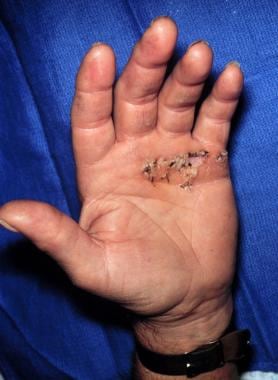
| Media file 1:
Entrance site of low-voltage electrical burn in a 50-year-old electrician. |
 | View Full Size Image | |
Media type: Photo
|
| Media file 2:
Exit sites of high-voltage injury on the chest of a 16-year-old boy who climbed up an electric pole. |
 | View Full Size Image | |
Media type: Photo
|
| Media file 3:
Entrance site of the high-voltage injury depicted in Media File 2 (16-year-old boy who climbed up an electric pole). |
 | View Full Size Image | |
Media type: Photo
|
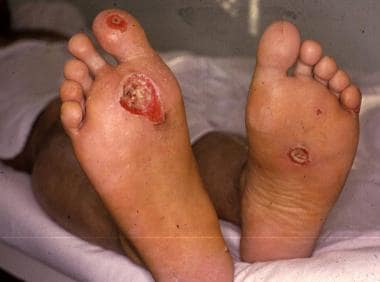
| Media file 5:
Exit sites of a low-voltage injury in a 33-year-old male suicide patient. |
 | View Full Size Image | |
Media type: Photo
|
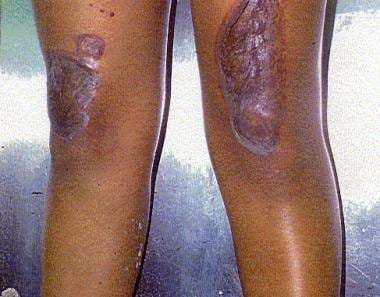
| Media file 6:
Exit site of a low-voltage injury in the same 33-year-old male patient depicted in Media File 5. |
 | View Full Size Image | |
Media type: Photo
|
| Media file 8:
A histologic picture of an electrical burn showing elongated pyknotic keratinocyte nuclei with vertical streaming and homogenization of the dermal collagen (40X). Courtesy of Elizabeth Satter, MD. |
 | View Full Size Image | |
Media type: Photo
|
- Heimbach D, Gibran N. Miscellaneous Burns and Cold Injuries. In: ACS Surgery: Principles & Practice. Danbury, Conn: WebMD Professional Publishing; 2004.
- Lee RC. Injury by electrical forces: pathophysiology, manifestations, and therapy. Curr Probl Surg. Sep 1997;34(9):677-764. [Medline].
- Martinez JA, Nguyen T. Electrical injuries. South Med J. Dec 2000;93(12):1165-8. [Medline].
- Epperly TD, Stewart JR. The physical effects of lightning injury. J Fam Pract. Sep 1989;29(3):267-72. [Medline].
- McCabe K. IEEE P1584 Guide for Performing Arc Flash Calculations. New York, NY: IEEE Standards Association; 2005.
- Kowalski-Trakofler K, Barrett E. Reducing non-contact electric arc injuries: an investigation of behavioral and organizational issues. J Safety Res. 2007;38(5):597-608. [Medline].
- Winfree J, Barillo DJ. Burn management. Nonthermal injuries. Nurs Clin North Am. Jun 1997;32(2):275-96. [Medline].
- Spies C, Trohman RG. Narrative review: Electrocution and life-threatening electrical injuries. Ann Intern Med. Oct 3 2006;145(7):531-7. [Medline].
- Kennedy C. Mechanical and Thermal Injury. In: Champion R, Burton J, et al, eds. Rook/Wilkinson/Ebling Textbook of Dermatology. 6th ed. London, England: Blackwell Science; 1998:951-3.
- Cooper MA. Electrical and Lightning Injuries. In: Rosen P, Barkin R, Danzl DF, Hockberger RS, et al, eds. Emergency Medicine: Concepts and Clinical Practice. 4th ed. St. Louis, Mo: Mosby-Year Book; 1997.
- Browne BJ, Gaasch WR. Electrical injuries and lightning. Emerg Med Clin North Am. May 1992;10(2):211-29. [Medline].
- Wang F, Chen XL, Wang YJ, Chen XY, Guo F, Sun YX. Electrical burns in Chinese fishermen using graphite rods under high-voltage cables. J Burn Care Res. Nov-Dec 2007;28(6):897-904. [Medline].
- Maghsoudi H, Adyani Y, Ahmadian N. Electrical and lightning injuries. J Burn Care Res. Mar-Apr 2007;28(2):255-61. [Medline].
- Rasmussen OV. Medical aspects of torture. Dan Med Bull. Jan 1990;37 Suppl 1:1-88. [Medline].
- Al B, Aldemir M, Güloglu C, Kara IH, Girgin S. [Epidemiological characteristics of electrical injuries of patients applied to the emergency department]. Ulus Travma Acil Cerrahi Derg. Apr 2006;12(2):135-42. [Medline].
- Garcia LA, Pagan-Carlo LA, Stone MS, Kerber RE. High perimeter impedance defibrillation electrodes reduce skin burns in transthoracic cardioversion. Am J Cardiol. Nov 1 1998;82(9):1125-7, A9. [Medline].
- Cooper MA. Lightning injuries: prognostic signs for death. Ann Emerg Med. Mar 1980;9(3):134-8. [Medline].
- Odom R, James W, Berger T, eds. Dermatoses Resulting From Physical Factors: Electrical Burns. In: Andrews' Diseases of the Skin: Clinical Dermatology. 9th ed. Philadelphia, Pa: WB Saunders; 2000:22.
- Fahmy FS, Brinsden MD, Smith J, Frame JD. Lightning: the multisystem group injuries. J Trauma. May 1999;46(5):937-40. [Medline].
- Patterson T, Stecker MM, Netherton BL. Mechanisms of electrode induced injury. Part 2: Clinical experience. Am J Electroneurodiagnostic Technol. Jun 2007;47(2):93-113. [Medline].
- Bush A. What to look for when the patient suffers an electrical injury. RN. Sep 1987;50(9):39-43. [Medline].
- Arnoldo B, Klein M, Gibran NS. Practice guidelines for the management of electrical injuries. J Burn Care Res. Jul-Aug 2006;27(4):439-47. [Medline].
- Mills S, et al. Management of Burns and Scalds in Primary Care. Wellington, New Zealand: New Zealand Guidelines Group; June 2007. 63-6. [Full Text].
- Pham TN, Gibran NS. Thermal and electrical injuries. Surg Clin North Am. Feb 2007;87(1):185-206, vii-viii. [Medline].
- Sheridan R, Tompkins R. Evaluation and Management of the Thermally Injured Patient. In: Freedberg I, Eisen A, et al, eds. Fitzpatrick's Dermatology in General Medicine. New York, NY: McGraw-Hill; 2001:1505-14.
- Handschin AE, Jung FJ, Guggenheim M, Moser V, Wedler V, Contaldo C, et al. [Surgical treatment of high-voltage electrical injuries]. Handchir Mikrochir Plast Chir. Oct 2007;39(5):345-9. [Medline].
- Ofer N, Baumeister S, Megerle K, Germann G, Sauerbier M. Current concepts of microvascular reconstruction for limb salvage in electrical burn injuries. J Plast Reconstr Aesthet Surg. 2007;60(7):724-30. [Medline].
- Kidd M, Hultman CS, Van Aalst J, Calvert C, Peck MD, Cairns BA. The contemporary management of electrical injuries: resuscitation, reconstruction, rehabilitation. Ann Plast Surg. Mar 2007;58(3):273-8. [Medline].
- Bailey B, Gaudreault P, Thivierge RL. Neurologic and neuropsychological symptoms during the first year after an electric shock: results of a prospective multicenter study. Am J Emerg Med. May 2008;26(4):413-8. [Medline].
- Hussmann J, Kucan JO, Russell RC, Bradley T, Zamboni WA. Electrical injuries--morbidity, outcome and treatment rationale. Burns. Nov 1995;21(7):530-5. [Medline].
- Kastrup EK. Drug Facts and Comparisons. St. Louis, Mo: Facts and Comparisons; 1998:1625, 1630-1.
- Kennedy PJ, Young WM, Deva AK, Haertsch PA. Burns and amputations: a 24-year experience. J Burn Care Res. Mar-Apr 2006;27(2):183-8. [Medline].
- Kokturk A, Kaya TI, Baz K, Yazici AC, Apa DD, Ikizoglu G. Bullous erythema ab igne. Dermatol Online J. Aug 2003;9(3):18. [Medline].
- Rai J, Jeschke MG, Barrow RE, Herndon DN. Electrical injuries: a 30-year review. J Trauma. May 1999;46(5):933-6. [Medline].
Burns, Electrical excerpt Article Last Updated: Jun 25, 2008
|