Continually Updated Clinical Reference
 
 
  All Sources     eMedicine     Medscape     Drug Reference     MEDLINE
 
eMedicine - Peyronie Disease : Article by

Quick Find
Authors & Editors
Introduction
Clinical
Differentials
Workup
Treatment
Medication
Follow-up
Miscellaneous
Multimedia
References

Related Articles
Systemic Sclerosis

Thrombophlebitis


Patient Education
Click here for patient education.


Author: Jay W Zimmerman, MD, Chief Resident, Division of Dermatology, University of California at Los Angeles Medical Center

Jay W Zimmerman is a member of the following medical societies: American Medical Association

Coauthor(s): Anne Laumann, MBChB, MRCP(UK), FAAD, Associate Professor, Department of Dermatology, Feinberg School of Medicine, Northwestern University; Gregory Bales, MD, Assistant Professor, Department of Surgery, Section of Urologic Surgery, University of Chicago

Editors: Terry L Barrett, MD, Director, Associate Professor, Department of Dermatology, Division of Dermatopathology and Oral Pathology, Johns Hopkins University School of Medicine; David F Butler, MD, Professor of Dermatology, Texas A&M University College of Medicine; Director, Division of Dermatology, Scott and White Clinic; Director Dermatology Residency Training Program, Scott and White Clinic; Jeffrey P Callen, MD, Professor of Medicine, Chief, Division of Dermatology, University of Louisville School of Medicine; Catherine Quirk, MD, Clinical Assistant Professor, Department of Dermatology, Brown University; Dirk M Elston, MD, Director, Department of Dermatology, Geisinger Medical Center

Author and Editor Disclosure

Synonyms and related keywords: PD, Peyronie's disease, plastic induration of the penis, penile fibromatosis, fibrous sclerosis of the penis, penile shaft thickening, painful erection, penile curvature, curved penis

Background

In 1587, Guilio Cesare Aranzi was the first to formally describe Peyronie disease (PD) in his book Tumores praeter naturam. He called PD "a rare affection of the genitals in people with excessive sexual intercourse: a little penile tumor palpable like a bean in the flaccid penis causing a deformity similar to a ram horn during erection." The disease was not given its current name until 1743, when Francoise de La Peyronie described the cases of 3 men with fibrous thickening of the penile shaft, painful erections, and penile curvature.

Pathophysiology

Although the exact etiology of PD is not clear, trauma may cause perivascular inflammation. In ordinary tissue, the rupture of blood vessels leads to coagulation and fibrin deposition. Fibrinolysis of the deposited fibrin occurs as tissue cells proliferate to close the site of injury. In PD, the tunica albuginea may initially undergo microvascular trauma during sexual intercourse. Adequate postinjury fibrinolysis is prevented because the tunica albuginea is hypovascular.

After multiple microvascular trauma, large quantities of fibrin accumulate in the form of a plaque, generally along the dorsal and ventral midline aspects of the penile shaft. This deposition appears to be immune mediated. Some people may be genetically predisposed to this reaction. The plaque prevents the adequate expansion of the tissue during erection, leading to penile curvature and pain. The relationship of this condition to other fibromatoses suggests a predisposition to fibrous proliferation. Although these microtraumatic events are implicated in the current theory of the pathogenesis of PD, no etiology is proven.

Results of animal studies indicate that transforming growth factor-beta (TGF-beta) may be involved in the formation of the plaques via early inflammatory reactions. When TGF-beta analogs are injected into rat tunica albuginea, they form collagen bundles that are morphologically similar to those in PD.

PD starts in 1 of 2 ways. Most patients report the acute onset of pain accompanied by a lump in the shaft of the penis, followed by gradually increasing curvature with or without pain. Alternatively, a minority of the patients report curvature of the penile shaft that occurs suddenly, seemingly overnight, and remains stable once it occurs.

In the progressive form, the cycle of trauma, fibrin deposition, and attempts at fibrinolysis continue to escalate. Remodeling of the fibrin deposits can take as long as 2 years in the absence of further traumatic events.

Frequency

United States

The rate is 0.3-4% among white men.

International

This disease is less common in men of African or Asian heritage.

Mortality/Morbidity

  • The disease spectrum ranges from asymptomatic plaques to mild penile curvature or severe curvature that results in a complete inability to have sexual intercourse.
  • Erectile pain can range from none to severe, depending on the site and amount of plaque deposition.

Race

  • PD is well documented in whites.
  • PD may occur in black men, often in the presence of preexisting diabetes mellitus and erectile dysfunction.
  • To our knowledge, no cases in Asians have been documented.

Sex

This disease occurs in males only.

Age

  • PD predominantly occurs in men aged 40-60 years.
  • The age range of affected persons is 30-80 years.


History

  • Usually, the penis hurts only during an erection. This pain occurs in one third of patients and is pathognomonic for PD.
  • Penile curvature of varying degrees may be observed, only during an erection.
  • No history of a congenital malformation of the penis or a metastatic cancer is present.

Physical

  • On palpation, a fibrotic plaque, usually greater than 1.5 cm in diameter, is felt over the midline of the penile shaft, either ventrally or dorsally.
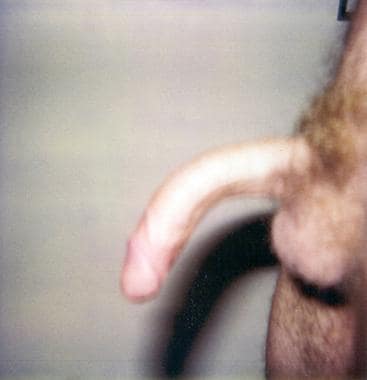
  • The erect penis may be curved, or it may have an hourglass deformity with flaccidity of the distal penis.
    • The patient can obtain Polaroid photographs of the erect penis in private to demonstrate the increased curvature.
    • Self-taken photographs can be used to establish a reference point for subsequent observation or treatment.
  • Evidence suggests that pain tends to improve with time, but fibrosis and/or deformity tend to worsen or persist. Waiting 12-24 months for the plaque to stabilize before surgical intervention is typical.

Causes

Although microtraumatic events are implicated is the current theory of the pathogenesis of PD, no etiology is proven. No risk factors are known, but associations do exist.

  • PD occurs in men, particularly in older men with weak erections, who engage in frequent and vigorous intercourse (>4 times per wk).
  • Whenever a familial predisposition has been found, it always had an autosomal dominant trait.
  • In some studies, HLA-B7 and HLA-DQ5 appear to be correlated with the incidence of PD. Results of recent studies have not confirmed this finding.
  • PD may be associated with erectile dysfunction, diabetes mellitus, and hypertension. Resultant partial erections may lead to buckling during intercourse.
  • PD is associated with Dupuytren contracture. Among patients with PD, 10% have Dupuytren contracture, and 3% of patients with Dupuytren contracture have PD.
  • Aponeurotic plantar fibrosis (ie, Ledderhose disease) may be found.
  • PD is associated with sporadic and familial knuckle pads, which are circumscribed fibromatous thickenings overlying the finger joints.
  • Systemic sclerosis has been seen with PD.
  • Occasionally, PD is associated with fibromatous degeneration of the external ear cartilage.
  • Antielastin antibodies, anti-DNA antibodies, and elevated antinuclear antibody (ANA) levels have been found in association with PD.
  • PD itself is not associated with penile fracture.


Systemic Sclerosis
Thrombophlebitis

Other Problems to be Considered

Congenital penile curvature
Artificial penile nodules (eg, tancho nodules, bulleetus)
Fracture of the penis
Penile dorsal vein thrombosis
Leukemic infiltrate of the penis
Late syphilitic lesions
Lymphogranuloma venereum infiltration of the penis


Imaging Studies

  • The diagnosis is based on the features of the history and the physical examination findings.
  • Radiographs depict plaque calcifications in 20% of patients.
    • The presence of calcifications indicates advanced disease that is unlikely to regress spontaneously.
    • Calcifications on radiographs are an indication for surgical intervention.
  • Doppler studies and dynamic-infusion pharmacocavernosometry can be performed on an artificially erect penis (see Procedures) to further identify lesions and any secondary filling defects.
  • High-resolution ultrasonography is the definitive imaging study, although it is not frequently required to confirm the diagnosis. Ultrasonography may be helpful before definitive surgical intervention is planned.
  • MRI of the plaques is experimental and unnecessary. It can be used to delineate inflamed plaques that are too soft or not dense enough to be detected with ultrasonography or radiography.
  • The results from scintigraphy with technetium Tc 99m human immunoglobulin G were found in a recent study to correlate with unstable plaques that may respond to medical treatment. The lack of 99mTc human immunoglobulin G positivity correlated with stable plaques, which are usually considered resistant to medical therapy and better suited for surgical intervention.

Procedures

  • Diagnostic intracorporeal injection may be used if the history is not clear or if a comorbid disease is present.
    • An intracorporeal injection of a vasodilator can be used to determine the patient's erectile capability and the extent of penile distortion.
    • Alprostadil (prostaglandin E1) or various combinations of alprostadil, phentolamine, and/or papaverine can be used to induce this artificial erection.

Histologic Findings

In early PD, an inflammatory reaction occurs, with thickening of the tunica albuginea, the deposition of fibrin, and the loss of elastic fibers. Soon, nodular and/or diffuse bands of fibroblasts and myofibroblasts are surrounded by dense masses of collagen. These changes may extend into the underlying corpora cavernosa. Late-stage calcification or ossification may be seen.


Medical Care

Medical care is focused on patient education and anecdotally effective medical therapies. See Patient Education.

  • Medical therapies are mostly of marginal and anecdotal benefit. Their effects are hard to evaluate because of the variable natural history of PD. Although many remedies exist, no one medical therapy is clearly superior to any other. Treatments range from oral vitamin E administration to low-dose radiation to intralesional injections of calcium channel blockers. A few interventions, such as collagenase, acetyl-L-carnitine, propionyl-L-carnitine, verapamil, and interferon alfa-2b, are considered active in the treatment of PD. These interventions have good data, often in the form of placebo-controlled studies, to support their use.
  • If erectile dysfunction is present, the condition is unlikely to improve with treatment of the Peyronie plaque alone. The use of sildenafil with an intracavernous injection treatment or a vacuum device is indicated. Intracavernous injections may worsen penile scarring, and the treatments must be monitored carefully. Intralesional injections of interferon alfa-2a may be effective.
  • Iontophoresis is the use of an electric current to pull medications through the skin to specific sites. This electromotive drug administration has been used to treat PD with various combinations of orgotein, dexamethasone, lidocaine, and verapamil. The technique is experimental. Since 2003, several studies have reported some success with a combination of verapamil, lidocaine, and iontophoresis.
  • Therapies to avoid include intralesional steroid injections, which may induce more inflammation and oral procarbazine administration, which is not effective and may cause blood dyscrasias. Steroid injections (eg, triamcinolone injections) may be contraindicated in the treatment of PD. Conflicting reports demonstrating some efficacy to intralesional steroid injections may, in fact, represent the mechanical destruction of the plaques with the volume of fluid injected and not the actual compound itself.
  • Another technique called extracorporeal shockwave therapy, similar to what is commonly used to destroy kidney and salivary gland stones, has been reported as another treatment modality. Conflicting reports and concerns over causing increased inflammation and damage limit the usefulness of this therapy.

Surgical Care

Surgical care is focused only on those with significant morbidity and PD that is resistant to medical treatment. Surgery may be indicated after a 12- to 18-month observational period during which the PD is shown to be stable.

  • For the best results, the PD plaques and the angulation of the penis should be stable for several months prior to surgery. Unless the initial inflammatory phase of PD resolves, it continues after surgery and increases the likelihood of recurrence.
  • Common surgical correction methods include the following:
    • The Nesbit tuck procedure: Unaffected tunica albuginea is removed from the side of the penile shaft immediately opposite the PD plaque to straighten and shorten the penis. For this procedure to work, potency should be normal, and the penile curvature should be less than 60°.
    • Tunica plication procedure: The tunica albuginea is plicated (not excised) to straighten the penis. This technique also causes penile shortening.
    • Plaque excision and grafting: This procedure may be performed to preserve penile length when the curvature is greater than 60°.
    • Plaque excision and penile prosthesis insertion: This method is useful when comorbid severe erectile dysfunction is present.
  • New surgical techniques include the thinning of the plaque with carbon dioxide lasers.

Consultations

  • Consultation with a urologist is mandatory for surgical management. Surgical management is indicated when medical management fails or when significant pain and/or a complete inability to have intercourse is present.
  • A sex therapist may provide useful adjunct care, both to underscore the realistic expectations and to evaluate comorbid sexual dysfunction.


The following treatments are only temporizing.

Drug Category: Vitamins

The antioxidant properties of vitamin E may limit the extent of inflammation. Vitamin E is inexpensive, has few adverse effects, and has anecdotal usefulness.

Drug NameVitamin E (Amino-Opti-E, Aquasol, E-Vitamin)
DescriptionProtects polyunsaturated fatty acids in membranes from attack by free radicals and protects red blood cells against hemolysis.
Adult Dose400-1000 IU/d PO
Pediatric DoseNot established
ContraindicationsDocumented hypersensitivity
InteractionsNone reported
PregnancyC - Safety for use during pregnancy has not been established.
PrecautionsNecrotizing enterocolitis associated with large doses (>200 mg U/d) of hyperosmolar preparation in low-birth-weight infants; may induce vitamin K deficiency

Drug Category: Nutrients and nutritional agents

These agents may improve pain and lessening of penile curvature. Their efficacy is not clearly established.

Drug NamePotassium p-aminobenzoate (Potaba)
DescriptionPotassium p-aminobenzoate may enhance monoamine oxidase activity and thereby lower the local level of serotonin that is thought to be a stimulant for fibrosis.
Adult Dose12 g/d PO
Pediatric DoseNot established
ContraindicationsDocumented hypersensitivity
InteractionsToxicity may increase with concurrent sulfonamides
PregnancyC - Safety for use during pregnancy has not been established.
PrecautionsMay cause anorexia or nausea; caution with impaired renal function

Drug Category: Antihistamines

The initial stage of a PD plaque involves histamine-mediated inflammation. Anecdotal evidence suggests that an antihistamine may limit this inflammation.

Drug NameFexofenadine (Allegra)
DescriptionCompetes with histamine for H1 receptors in GI tract, blood vessels, and respiratory tract, reducing hypersensitivity reactions. Does not cause sedation.
Adult Dose60 mg PO bid
Pediatric DoseNot established
ContraindicationsDocumented hypersensitivity
InteractionsToxicity increases with coadministration of erythromycin and ketoconazole
PregnancyC - Safety for use during pregnancy has not been established.
PrecautionsNo data available on use while breastfeeding; caution in impaired renal function

Drug Category: Anti-inflammatory agents

These agents may help patients with PD by reducing inflammation.

Drug NameColchicine
DescriptionDecreases leukocyte motility and phagocytosis in inflammatory responses.
Adult Dose0.6 mg PO bid for 3 wk initially with complete blood count for bone marrow suppression at 3 wk; if count is normal, 1.8-2.4 mg for 3 mo if tolerated
Pediatric DoseNot established
ContraindicationsDocumented hypersensitivity; severe renal, hepatic, GI, or cardiac disorders; blood dyscrasias or collagen vascular disease
InteractionsSignificantly increases sympathomimetic agent toxicity and effect of CNS depressants
PregnancyC - Safety for use during pregnancy has not been established.
PrecautionsRisk of renal failure, hepatic failure, permanent hair loss, bone marrow suppression, numbness or tingling in hands and feet, disseminated intravascular coagulopathy, and decreased sperm count; dose-dependent GI upset is common

Drug Category: Estrogen receptor antagonists

These agents inhibit TGF-beta actions and inflammatory reactions. TGF-beta and inflammatory mediators are involved in the production of PD plaques in animal studies. Only anecdotal evidence for use of these agents exists.

Drug NameTamoxifen (Nolvadex)
DescriptionCompetitively binds to estrogen receptor, producing a nuclear complex that decreases DNA synthesis and inhibits estrogen effects.
Adult Dose20 mg PO bid for 3 mo
Pediatric DoseNot established
ContraindicationsDocumented hypersensitivity
InteractionsMay exacerbate hepatotoxic effects of allopurinol; may increase cyclosporine serum levels; increases anticoagulant effects of warfarin; aminoglutethimide reduces serum concentration; cyclophosphamide, methotrexate, and 5-FU increase thrombotic risk
PregnancyD - Unsafe in pregnancy
PrecautionsCaution in leukopenia, thrombocytopenia, and hyperlipidemia; decreased visual acuity, corneal changes and/or retinopathy may occur with use > 1 y; may induce ovulation

Drug Category: Calcium channel blockers

Anecdotal evidence shows some lessening of the scarring process after intralesional injections. The theory is based on the known action of verapamil in decreasing the production and secretion of extracellular matrix macromolecules by fibroblasts while increasing collagenase production in the same area.

Drug NameVerapamil (Calan, Covera-HS, Verelan)
DescriptionRelaxes smooth muscles and increases oxygen delivery during vasospasms.
Adult Dose10 mg/10 mL distributed intralesionally q2wk for a total of 12 injections
Pediatric DoseNot established
ContraindicationsDocumented hypersensitivity; LV dysfunction; second- or third-degree heart block; atrial fibrillation or flutter with bypass tract; sick sinus syndrome; severe hepatic dysfunction; severe hypotension
InteractionsMay increase carbamazepine, digoxin, and cyclosporine levels; coadministration with amiodarone can cause bradycardia and decreased cardiac output; with concurrent beta-blockers, may increase cardiac depression; cimetidine may increase levels; may increase theophylline levels
PregnancyB - Usually safe but benefits must outweigh the risks.
PrecautionsHepatocellular injury may occur; transient elevations of transaminase levels with and without concomitant elevations in alkaline phosphatase and bilirubin levels have occurred (elevations transient and may disappear with continued treatment); periodically monitor liver function

Drug Category: Nonsteroidal anti-inflammatory agents (NSAIDs)

These agents have analgesic, anti-inflammatory, and antipyretic activities. Their mechanism of action is not known, but they may inhibit cyclo-oxygenase activity and prostaglandin synthesis. Other mechanisms may exist as well; these include the inhibition of the following: leukotriene synthesis, lysosomal enzyme release, lipoxygenase activity, neutrophil aggregation, and various cell membrane functions.

Drug NameAspirin (Anacin, Ascriptin, Bayer Aspirin, Bayer Buffered Aspirin)
DescriptionUsed to treat mild to moderate pain. Inhibits prostaglandin synthesis, which prevents formation of platelet-aggregating thromboxane A2.
Adult Dose325-650 mg PO q4-6h; not to exceed 4 g/d
Pediatric DoseNot established
ContraindicationsDocumented hypersensitivity; liver damage; hypoprothrombinemia; vitamin K deficiency; bleeding disorders; asthma; because of association of aspirin with Reye syndrome, do not use in children ( <16 y) with virus-induced fever
InteractionsEffects may decrease with antacids and urinary alkalinizers; corticosteroids decrease salicylate serum levels; additive hypoprothrombinemic effects and increased bleeding time may occur with coadministration of anticoagulants; may antagonize uricosuric effects of probenecid and increase toxicity of phenytoin and valproic acid; doses > 2 g/d may potentiate glucose-lowering effect of sulfonylurea drugs
PregnancyD - Unsafe in pregnancy
PrecautionsMay cause transient decrease in renal function and aggravate chronic kidney disease; avoid use in patients with severe anemia, those with a history of blood coagulation defects, and those who are taking anticoagulants

Drug NameAcetaminophen (Tylenol, Feverall, Tempra, Aspirin Free Anacin)
DescriptionDOC for treatment of pain in patients with documented hypersensitivity to aspirin or NSAIDs or upper GI disease and who are taking oral anticoagulants.
Adult Dose325-650 mg PO q4-6h or 1000 mg tid/qid; not to exceed 4 g/d
Pediatric DoseNot established
ContraindicationsDocumented hypersensitivity; known G-6-PD deficiency
InteractionsRifampin can reduce analgesic effects; coadministration with barbiturates, carbamazepine, hydantoins, and isoniazid may increase hepatotoxicity
PregnancyB - Usually safe but benefits must outweigh the risks.
PrecautionsHepatotoxicity possible in long-term alcoholism, at various dose levels; severe or recurrent pain or high or continued fever may indicate serious illness; many OTC products contain acetaminophen, and combined use may result in cumulative doses exceeding recommended maximum dose

Drug NameIbuprofen (Motrin, Ibuprin)
DescriptionDOC for patients with mild to moderate pain. Inhibits inflammatory reactions and pain by decreasing prostaglandin synthesis.
Adult Dose200-400 mg PO q4-6h while symptoms persist; not to exceed 3.2 g/d
Pediatric DoseNot established
ContraindicationsDocumented hypersensitivity; peptic ulcer disease; recent GI bleeding or perforation; renal insufficiency; high risk of bleeding
InteractionsCoadministration with aspirin increases risk of inducing serious NSAID-related adverse effects; probenecid may increase concentrations and toxicity of NSAIDs; may decrease effect of hydralazine, captopril, and beta-blockers; may decrease diuretic effects of furosemide and thiazides; may increase PT with anticoagulants (instruct patients to watch for signs of bleeding); may increase risk of methotrexate toxicity; may increase phenytoin levels when administered concurrently
PregnancyB - Usually safe but benefits must outweigh the risks.
PrecautionsCategory D in third trimester of pregnancy; caution in congestive heart failure, hypertension, and decreased renal and hepatic function; caution in coagulation abnormalities or during anticoagulant therapy

Drug NameNaproxen (Aleve, Naprelan, Naprosyn, Anaprox)
DescriptionFor relief of mild to moderate pain; inhibits inflammatory reactions and pain by decreasing activity of cyclo-oxygenase, which decreases prostaglandin synthesis.
Adult Dose500 mg PO followed by 250 mg q6-8h; not to exceed 1.25 g/d
Pediatric DoseNot established
ContraindicationsDocumented hypersensitivity; peptic ulcer disease; recent GI bleeding or perforation; renal insufficiency
InteractionsCoadministration with aspirin increases risk of inducing serious NSAID-related adverse effects; probenecid may increase concentrations and toxicity of NSAIDs; may decrease effect of hydralazine, captopril, and beta-blockers; may decrease diuretic effects of furosemide and thiazides; may increase PT with anticoagulants (instruct patients to watch for signs of bleeding); may increase risk of methotrexate toxicity; may increase phenytoin levels when administered concurrently
PregnancyB - Usually safe but benefits must outweigh the risks.
PrecautionsCategory D in third trimester of pregnancy; acute renal insufficiency, interstitial nephritis, hyperkalemia, hyponatremia, and renal papillary necrosis may occur; patients with preexisting renal disease or compromised renal perfusion are at risk for acute renal failure; leukopenia occurs rarely, is transient, and usually returns to normal during therapy; persistent leukopenia, granulocytopenia, or thrombocytopenia warrants further evaluation and may require discontinuation of drug

Drug NameEtodolac (Lodine)
DescriptionInhibits prostaglandin synthesis by decreasing activity of the enzyme, cyclo-oxygenase, which results in decreased formation of prostaglandin precursors, which in turn results in reduced inflammation.
Adult Dose200-400 mg q6-8h prn; not to exceed 1200 mg/d
Pediatric DoseNot established
ContraindicationsDocumented hypersensitivity; do not administer into CNS; peptic ulcer disease, recent GI bleeding or perforation, renal insufficiency, and high risk of bleeding
InteractionsCoadministration with aspirin increases risk of inducing serious NSAID-related adverse effects; probenecid may increase concentrations and toxicity of NSAIDs; may decrease effect of hydralazine, captopril, and beta-blockers; may decrease diuretic effects of furosemide and thiazides; may increase PT with anticoagulants (instruct patients to watch for signs of bleeding); may increase risk of methotrexate toxicity; may increase phenytoin levels when administered concurrently
PregnancyC - Safety for use during pregnancy has not been established.
PrecautionsCategory D in third trimester of pregnancy; acute renal insufficiency, hyperkalemia, hyponatremia, interstitial nephritis, and renal papillary necrosis may occur; increases risk of acute renal failure in patients with preexisting renal disease or compromised renal perfusion; low white blood cell counts are rare and usually return to normal in ongoing therapy; discontinuation of therapy may be necessary if leukopenia, granulocytopenia, or thrombocytopenia persists

Drug NameFlurbiprofen (Ansaid)
DescriptionMay inhibit cyclo-oxygenase enzyme, which, in turn, inhibits prostaglandin biosynthesis. These activities may result in analgesic, antipyretic, and anti-inflammatory effects.
Adult Dose200-300 mg/d PO divided bid/qid
Pediatric DoseNot established
ContraindicationsDocumented hypersensitivity
InteractionsCoadministration with aspirin increases risk of inducing serious NSAID-related adverse effects; probenecid may increase concentrations and toxicity of NSAIDs; may decrease effect of hydralazine, captopril, and beta-blockers; may decrease diuretic effects of furosemide and thiazides; may increase PT with anticoagulants (instruct patients to watch for signs of bleeding); may increase risk of methotrexate toxicity; may increase phenytoin levels when administered concurrently
PregnancyC - Safety for use during pregnancy has not been established.
PrecautionsCategory D in third trimester of pregnancy; acute renal insufficiency, interstitial nephritis, hyperkalemia, hyponatremia, and renal papillary necrosis may occur; patients with preexisting renal disease or compromised renal perfusion are at risk for acute renal failure; leukopenia occurs rarely, is transient, and usually returns to normal during therapy; persistent leukopenia, granulocytopenia, or thrombocytopenia warrants further evaluation and may require discontinuation of drug

Drug NameKetoprofen (Actron, Orudis, Oruvail)
DescriptionFor relief of mild to moderate pain and inflammation. Small doses initially indicated in small or elderly patients or those with renal or liver disease. Doses >75 mg do not increase therapeutic effects. Administer high doses with caution, and closely observe patient for response.
Adult Dose25-50 mg PO q6-8h prn; not to exceed 300 mg/d
Pediatric DoseNot established
ContraindicationsDocumented hypersensitivity
InteractionsCoadministration with aspirin increases risk of inducing serious NSAID-related adverse effects; probenecid may increase concentrations and toxicity of NSAIDs; may decrease effect of hydralazine, captopril, and beta-blockers; may decrease diuretic effects of furosemide and thiazides; may increase PT with anticoagulants (instruct patients to watch for signs of bleeding); may increase risk of methotrexate toxicity; may increase phenytoin levels when administered concurrently
PregnancyB - Usually safe but benefits must outweigh the risks.
PrecautionsCategory D in third trimester of pregnancy; caution in congestive heart failure, hypertension, and decreased renal and hepatic function; caution in coagulation abnormalities or during anticoagulant therapy

Drug NamePiroxicam (Feldene)
DescriptionDecreases activity of cyclo-oxygenase, which, in turn, inhibits prostaglandin synthesis. These effects decrease formation of inflammatory mediators.
Adult Dose10-20 mg/d PO qd
Pediatric DoseNot established
ContraindicationsDocumented hypersensitivity; active GI bleeding
InteractionsCoadministration with aspirin increases risk of inducing serious NSAID-related adverse effects; probenecid may increase concentrations and toxicity of NSAIDs; may decrease effect of hydralazine, captopril, and beta-blockers; may decrease diuretic effects of furosemide and thiazides; may increase PT with anticoagulants (instruct patients to watch for signs of bleeding); may increase risk of methotrexate toxicity; may increase phenytoin levels when administered concurrently
PregnancyB - Usually safe but benefits must outweigh the risks.
PrecautionsCategory D in third trimester of pregnancy; acute renal insufficiency, hyperkalemia, hyponatremia, interstitial nephritis, and renal papillary necrosis may occur; increases risk of acute renal failure in preexisting renal disease or compromised renal perfusion; reversible leukopenia may occur, (discontinue if leukopenia, granulocytopenia, or thrombocytopenia persists)

Drug Category: Interferon intralesional injections

Interferon slows fibrogenesis, inhibits RNA synthesis, and inhibits oxidative stress

Drug NameInterferon alfa-2b (Intron A)
Description
Adult DoseOne study showed biweekly intralesional injections into PD plaques (20 X 106U) showed significant improvement in plaque thickness and reduction in pain. Another placebo-controlled study confirmed this first study.
Pediatric DoseNot established
ContraindicationsDocumented hypersensitivity; patients who have anaphylactic sensitivity to mouse immunoglobulin (IgG), egg protein, or neomycin; autoimmune hepatitis
InteractionsPotential risk of renal failure when administered concurrently with interleukin 2; theophylline may increase toxicity by reducing clearance; cimetidine may increase antitumor effects of interferon alfa; zidovudine and vinblastine may increase toxicity
PregnancyC - Safety for use during pregnancy has not been established.
PrecautionsDepression and suicidal ideation may be adverse effects of treatment; infrequently, severe or fatal GI hemorrhage reported in association with therapy; prior to initiation of therapy, perform tests to quantitate peripheral blood hemoglobin, platelets, granulocytes, hairy cells, and bone marrow hairy cells; monitor periodically (qmo) to determine response to treatment; if patient does not respond within 6 mo, discontinue treatment; if response occurs, continue treatment until no further improvement observed; not known whether continued treatment after that time is beneficial


Further Outpatient Care

  • Radiation treatment may be recommended for early, especially painful situations.
    • Radiation from a beta-beam linear accelerator is used to reduce inflammation.
    • This treatment does not change or remove late-stage postinflammatory plaques.
  • Extracorporeal shock-wave therapy may help in treating the curvature. This treatment does not help the pain and is still experimental.

Deterrence/Prevention

  • Theoretically, the patient should avoid vigorous intercourse with a weak erection.
  • If the patient has diabetes, it should be controlled.
  • No method for absolute prevention is known.

Complications

  • Complications include the complete inability to maintain sexual performance.

Prognosis

  • PD only occasionally, if ever, disappears completely.
    • The pain may diminish or resolve after the early inflammatory phase, and as many as 13% of patients claim to have some improvement with time.
    • Approximately one half of the remaining individuals have progressive disease, whereas the other half have static disease.
  • Variable degrees of morbidity may occur. Conditions range from a static painless plaque without penile angulation to painful erections with a curvature significant enough to prevent sexual activity.
  • Recent data suggest a combination approach to therapy, such as the use of partially effective oral therapies with minimally invasive mechanical or intralesional treatments, may be more successful than the individual therapies on their own.

Patient Education

  • Patient education includes the following:
    • Reassurance that lesions are not cancerous or fatal
    • An explanation that the condition is not curable but that it is treatable and possibly self-resolving
    • An open discussion about the problems with intercourse, the possibility of the resumption of satisfactory sexual activity, and the reduction of pain


Medical/Legal Pitfalls

  • Performing surgery too soon, before the PD plaque is stable, before medical management is tried, or before an observation time of 12-18 months is complete may result in ongoing fibrosis around the surgical site.
  • Failure to educate patients concerning the likely prognosis and reasonable expectations is a pitfall.


Media file 1:  Lateral view demonstrates vertical curvature.
Click to see larger pictureClick to see detailView Full Size Image
Media type:  Photo

Media file 2:  Superior view shows a full erection.
Click to see larger pictureClick to see detailView Full Size Image
Media type:  Photo

Media file 3:  Postoperative picture after surgical repair demonstrates a straight erection.
Click to see larger pictureClick to see detailView Full Size Image
Media type:  Photo

Media file 4:  Intraoperative picture of an artificial erection demonstrating lateral curvature.
Click to see larger pictureClick to see detailView Full Size Image
Media type:  Photo

Media file 5:  Intraoperative picture after penile plication demonstrating a straight erection.
Click to see larger pictureClick to see detailView Full Size Image
Media type:  Photo


  • Ahuja S, Bivalacqua TJ, Case J, et al. A pilot study demonstrating clinical benefit from intralesional interferon alpha 2B in the treatment of Peyronie''s disease. J Androl. Jul-Aug 1999;20(4):444-8. [Medline].
  • Akkus E, Carrier S, Rehman J, et al. Is colchicine effective in Peyronie''s disease? A pilot study. Urology. Aug 1994;44(2):291-5. [Medline].
  • Biagiotti G, Cavallini G. Acetyl-L-carnitine vs tamoxifen in the oral therapy of Peyronie''s disease: a preliminary report. BJU Int. Jul 2001;88(1):63-7. [Medline].
  • Bruschini H, Mitre AI. Peyronie disease: surgical treatment with muscular aponeurosis. Urology. May 1979;13(5):505-6. [Medline].
  • Bruskewitz R, Raz S. Surgical considerations in treatment of Peyronie disease. Urology. Feb 1980;15(2):134-6. [Medline].
  • Bystrom J, Alfthan O, Johansson B, Korlof B. Induratio penis plastica (Peyronie''s disease). Results after excision and dermo-fat grafting. Scand J Plast Reconstr Surg. 1973;7(2):137-40. [Medline].
  • Campbell MF, Retik AB, Vaughan E, Walsh PC, eds. Campbell's Urology. 7th ed. Philadelphia, Pa: WB Saunders; 1997.
  • Cavallini G. Towards an evidence-based understanding of Peyronie's disease. Int J STD AIDS. Mar 2005;16(3):187-94; quiz 94-5. [Medline].
  • Colletta AA, Wakefield LM, Howell FV, et al. Anti-oestrogens induce the secretion of active transforming growth factor beta from human fetal fibroblasts. Br J Cancer. Sep 1990;62(3):405-9. [Medline].
  • Cotran RS, Collins T, Robbins SL, eds. Robbins' Pathologic Basis of Disease. 6th ed. Philadelphia, Pa: WB Saunders; 1998.
  • Dang G, Matern R, Bivalacqua TJ, et al. Intralesional interferon-alpha-2B injections for the treatment of Peyronie''s disease. South Med J. Jan 2004;97(1):42-6. [Medline].
  • Das S. Peyronie''s disease: excision and autografting with tunica vaginalis. J Urol. Dec 1980;124(6):818-9. [Medline].
  • Devine CJ, Jordan GH, Somers JD. Peyronie's disease: Cause and surgical treatment. AUA Today. 1989;2.
  • Devine CJ Jr, Somers KD, Wright GL. A working model for the genesis of Peyronie's disease derived from its pathobiology. J Urol. 1998;19:495.
  • Devine CJ Jr, Somers KD, Jordan SG, Schlossberg SM. Proposal: trauma as the cause of the Peyronie''s lesion. J Urol. Jan 1997;157(1):285-90. [Medline].
  • Devine CJ Jr, Horton CE. Surgical treatment of Peyronie''s disease with a dermal graff. J Urol. Jan 1974;111(1):44-9. [Medline].
  • Di Stasi SM, Giannantoni A, Stephen RL, et al. A prospective, randomized study using transdermal electromotive administration of verapamil and dexamethasone for Peyronie's disease. J Urol. Apr 2004;171(4):1605-8. [Medline].
  • Erdogru T, Boz A, Koksal T, et al. Penile scintigraphy with 99mTc-human immunoglobulin G: a novel method for distinguishing the unstable and stable phases of Peyronie's disease. BJU Int. Nov 2002;90(7):703-6. [Medline].
  • Fitkin J, Ho GT. Peyronie''s disease: current management. Am Fam Physician. Aug 1999;60(2):549-52, 554. [Medline].
  • Fournier GR Jr, Lue TF, Tanagho EA. Peyronie''s plaque: surgical treatment with the carbon dioxide laser and a deep dorsal vein patch graft. J Urol. May 1993;149(5 Pt 2):1321-5. [Medline].
  • Frank IN, Scott WW. The ultrasonic treatment of Peyronie''s disease. J Urol. Dec 1971;106(6):83-7. [Medline].
  • Furlow WL, Swenson HE Jr, Lee RE. Peyronie''s disease: a study of its natural history and treatment with orthovoltage radiotherapy. J Urol. Jul 1975;114(1):69-71. [Medline].
  • Gangai MP, Rivera LR, Spence CR. Peyronie''s plaque: excision and graft versus incision and stent. J Urol. Jan 1982;127(1):55-6. [Medline].
  • Geertsen UA, Brok KE, Andersen B, Nielsen HV. Peyronie curvature treated by plication of the penile fasciae. Br J Urol. May 1996;77(5):733-5. [Medline].
  • Gelbard MK, Lindner A, Kaufman JJ. The use of collagenase in the treatment of Peyronie''s disease. J Urol. Aug 1985;134(2):280-3. [Medline].
  • Gelbard MK, Dorey F, James K. The natural history of Peyronie''s disease. J Urol. Dec 1990;144(6):1376-9. [Medline].
  • Gelbard MK, James K, Riach P, Dorey F. Collagenase versus placebo in the treatment of Peyronie''s disease: a double-blind study. J Urol. Jan 1993;149(1):56-8. [Medline].
  • Gholami SS, Lue TF. Peyronie''s disease. Urol Clin North Am. May 2001;28(2):377-90. [Medline].
  • Goodwin RA Jr, Shapiro JL, Thurman GH, et al. Disseminated histoplasmosis: clinical and pathologic correlations. Medicine (Baltimore). Jan 1980;59(1):1-33. [Medline].
  • Gualdieri L, Valentini G, Lupoli S, Giordano M. Peyronie''s disease in systemic sclerosis. Report of two cases. J Rheumatol. Feb 1988;15(2):380-1. [Medline].
  • Hauck EW, Weidner W. Francois de la Peyronie and the disease named after him. Lancet. Jun 23 2001;357(9273):2049-51. [Medline].
  • Hauck EW, Altinkilic BM, Ludwig M, et al. Extracorporal shock wave therapy in the treatment of Peyronie''s disease. First results of a case-controlled approach. Eur Urol. Dec 2000;38(6):663-9;discussion 670. [Medline].
  • Horrax TM. Peyronie's disease, scientific exhibit. Presented at: American Urological Association's Annual Meeting. 1965;New Orleans, La.
  • Hricak H, Marotti M, Gilbert TJ, et al. Normal penile anatomy and abnormal penile conditions: evaluation with MR imaging. Radiology. Dec 1988;169(3):683-90. [Medline].
  • Husain J, Lynn NN, Jones DK, et al. Extracorporeal shock wave therapy in the management of Peyronie's disease: initial experience. BJU Int. Sep 2000;86(4):466-8. [Medline].
  • Kelami A. Treatment of morbus Peyronie--how I do it? Twenty years of experience. Int Urol Nephrol. 1991;23(6):589-93. [Medline].
  • Knoll LD, Furlow WL, Benson RC Jr. Management of Peyronie disease by implantation of inflatable penile prosthesis. Urology. Nov 1990;36(5):406-9. [Medline].
  • Levine LA, Lenting EL. A surgical algorithm for the treatment of Peyronie''s disease. J Urol. Dec 1997;158(6):2149-52. [Medline].
  • Levine LA, Merrick PF, Lee RC. Intralesional verapamil injection for the treatment of Peyronie''s disease. J Urol. Jun 1994;151(6):1522-4. [Medline].
  • Levine LA, Goldman KE, Greenfield JM. Experience with intraplaque injection of verapamil for Peyronie''s disease. J Urol. Aug 2002;168(2):621-5; discussion 625-6. [Medline].
  • Lindsay MB, Schain DM, Grambsch P, et al. The incidence of Peyronie''s disease in Rochester, Minnesota, 1950 through 1984. J Urol. Oct 1991;146(4):1007-9. [Medline].
  • Melman A, Holland TF. Evaluation of the dermal graft inlay technique for the surgical treatment of Peyronie''s disease. J Urol. Oct 1978;120(4):421-2. [Medline].
  • Montorsi F, Salonia A, Guazzoni G, et al. Transdermal electromotive multi-drug administration for Peyronie''s disease: preliminary results. J Androl. Jan-Feb 2000;21(1):85-90. [Medline].
  • Morgan RJ, Pryor JP. Procarbazine (Natulan) in the treatment of Peyronie''s disease. Br J Urol. Apr 1978;50(2):111-3. [Medline].
  • Mosby's Drug Consult. 2001 Mosby's GenRx: A Comprehensive Reference for Generic and Brand Name Prescription Drugs. 2000;Available at: http://www.genrx.com/Mosby/PhyGenRx/index.html. [Full Text].
  • Nachtsheim DA, Rearden A. Peyronie''s disease is associated with an HLA class II antigen, HLA-DQ5, implying an autoimmune etiology. J Urol. Oct 1996;156(4):1330-4. [Medline].
  • Nelson PF. Peyronie's disease. Dermis. 1982;1:13.
  • Nesbit RM. Congenital curvature of the phallus: Report of three cases with description of corrective operation. J Urol. Feb 1965;93:230-2. [Medline].
  • Norton SA. Fijian penis marbles: an example of artificial penile nodules. Cutis. Apr 1993;51(4):295-7. [Medline].
  • Nyberg LM Jr, Bias WB, Hochberg MC, Walsh PC. Identification of an inherited form of Peyronie''s disease with autosomal dominant inheritance and association with Dupuytren''s contracture and histocompatibility B7 cross-reacting antigens. J Urol. Jul 1982;128(1):48-51. [Medline].
  • Oosterlinck W, Renders G. Treatment of Peyronie''s disease with procarbazine. Br J Urol. Apr 1975;47(2):219-20. [Medline].
  • Parker JD, Sarosi GA, Tosh FE. Treatment of extracutaneous sporotrichosis. Arch Intern Med. May 1970;125(5):858-63. [Medline].
  • Polat O, Gul O, Ozbey I, et al. Peyronie''s disease: intralesional treatment with interferon alpha-2A and evaluation of the results by magnetic resonance imaging. Int Urol Nephrol. 1997;29(4):465-71. [Medline].
  • Ralph DJ, Brooks MD, Bottazzo GF, Pryor JP. The treatment of Peyronie''s disease with tamoxifen. Br J Urol. Dec 1992;70(6):648-51. [Medline].
  • Ralph DJ, Mirakian R, Pryor JP, Bottazzo GF. The immunological features of Peyronie''s disease. J Urol. Jan 1996;155(1):159-62. [Medline].
  • Raz S, Dekernion JB, Kaufman JJ. Surgical treatment of Peyronie''s disease: a new approach. J Urol. May 1977;117(5):598-601. [Medline].
  • Schiavino D, Sasso F, Nucera E, et al. Immunologic findings in Peyronie''s disease: a controlled study. Urology. Nov 1997;50(5):764-8. [Medline].
  • Scott WW, Scardino PL. A new concept in the treatment of Peyronie's disease. South Med J. 1948;41:173.
  • Stewart S, Malto M, Sandberg L, Colburn KK. Increased serum levels of anti-elastin antibodies in patients with Peyronie''s disease. J Urol. Jul 1994;152(1):105-6. [Medline].
  • Tosh FE, Balhuizen J, Yates JL, Brasher CA. Primary cutaneous histoplasmosis. Report of a case. Arch Intern Med. Jul 1964;114:118-9. [Medline].
  • Waldhauser M, Schramek P. Efficiency and side effects of prostaglandin E1 in the treatment of erectile dysfunction. J Urol. Sep 1988;140(3):525-7. [Medline].
  • Walsh PC, Stamey TA, Perlmutter AD, eds. Campbell's Urology. 5th ed. Philadelphia, Pa: WB Saunders; 1986.
  • Weidner W, Schroeder-Printzen I, Weiske WH, et al. Sexual dysfunction in Peyronie''s disease: an analysis of 222 patients without previous local plaque therapy. J Urol. Jan 1997;157(1):325-8. [Medline].
  • Wild RM, Devine CJ Jr, Horton CE. Dermal graft repair of Peyronie''s disease: survey of 50 patients. J Urol. Jan 1979;121(1):47-50. [Medline].
  • Williams JL, Thomas GG. The natural history of Peyronie''s disease. J Urol. Jan 1970;103(1):75-6. [Medline].
  • Wooldridge WE. Four related fibrosing diseases. When you find one, look for another. Postgrad Med. Aug 1988;84(2):269-71, 274. [Medline].
  • Zarafonetis CJ. Treatment of scleroderma. Ann Intern Med. Feb 1959;50(2):343-65. [Medline].
  • Zarafonetis CJ, Horrax TM. Treatment of Peyronie''s disease with potassium para-aminobenzoate (potaba). J Urol. Jun 1959;81(6):770-2. [Medline].

Peyronie Disease excerpt

Article Last Updated: Dec 4, 2006