You are in: eMedicine Specialties > Dermatology > Fungal Infections
|
Actinomycosis Last Updated: June 21, 2006 |
|
| Synonyms and related keywords: Actinomyces israelii, A israelii, inflammatory disease, bacterial infection, Actinomyces naeslundii, A naeslundii, Actinomyces viscosus, A viscosus, Actinomyces odontolyticus, A odontolyticus
|
|   |
AUTHOR INFORMATION
| Section 1 of 11  |
|
| Author: Talib Najjar, DMD, MDS, PhD, Professor, Department of Oral and Maxillofacial Surgery, University of Medicine and Dentistry of New Jersey |
| |
| Editor(s): Janet Fairley, MD, Professor, Program Director, Section Chief, Department of Dermatology, Medical College of Wisconsin; Michael J Wells, MD, Associate Professor, Department of Dermatology, Texas Tech University Health Sciences Center;
Drore Eisen, MD, DDS, Consulting Staff, Department of Dermatology, Dermatology Research Associates of Cincinnati;
Catherine Quirk, MD, Clinical Assistant Professor, Department of Dermatology, Brown University;
and Dirk M Elston, MD, Director, Department of Dermatology, Geisinger Medical Center |
Disclosure
|   |
INTRODUCTION
| Section 2 of 11  |
|
Background: Many infectious and inflammatory diseases affect the skin and the oral mucosa. Actinomycosis is one such characteristic and persistent infection. It is a subacute, chronic, cellulitic invasion of the soft tissues that causes the formation of external sinus tracts that discharge sulfur granules. This process spreads unimpeded by traditional anatomic barriers after the endogenous oral commensal organisms invade the tissues of the face and neck. The infection may spread to the pulmonary and GI systems as well (Schaal, 1984).
Actinomycosis is caused by various bacterial species of the actinomycete group. Usually, the disease is caused by Actinomyces israelii, an anaerobic gram-positive organisms that enters the tissue through a break in the mucosa (Eastridge, 1972). The Actinomyces genus of bacteria includes other species that normally inhabit the oral cavity but are seldom pathogenic. The infection begins as an inflammatory soft tissue mass, which can enlarge into an abscesslike swelling, with penetration of the overlying skin and the development of recognizable draining fistulae.
The term actinomycosis is misleading. Because of the derivative term mycosis (from the Greek mykes), some believe that actinomycosis is a fungal infection, although it is not a fungal infection. Aktino referred to the radiating organism in the sulfur granule as ray fungus. Human actinomycosis was first described in the medical literature in 1857, although a similar disease in cattle had been described in 1826. In 1877, Bollinger found Actinomyces bovis in granules from cattle with a condition called lumpy jaw. In 1878, Israel discovered granules in human autopsy material and described actinomycosis in humans in 1885 (Richtsmeier, 1979). Israel further discovered that Actinomyces species do not survive outside mammalian hosts and that they are not found exogenously in plants or soil.
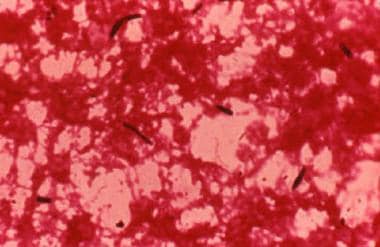
Prior to the antibiotic era, actinomycosis was a common illness and easily recognized at clinical examination. However, the microbiologic features of the etiologic organisms were not fully clarified until the 1940s (Erikson, 1940). The therapeutic outcome of surgical management was variable, and even if healing occurred, sequelae and complications were common (Waksman, 1943; Georg, 1974). The disease often became lifelong, and death was not unusual. At the dawn of the antibiotic era, morbidity resulting from actinomycosis decreased, and a general lack of familiarity with the disease process resulted (Brock, 1973). Subsequently, diagnoses of actinomycosis were often delayed because of a lack of microbiologic techniques. Pathophysiology: The pathogen is a filamentous bacterium (see Image 1 and Causes). Historically, actinomycosis has been confused with a fungal disease because of its appearance and the slowly progressive nature of the lesions, which mimics mycotic illness. Confusion was so great that, for many years, some investigators placed Actinomyces species in an intermediate status between fungi and bacteria (Eastridge, 1972). The unique nature of the organism is the absence of a nuclear membrane, which places Actinomyces species among the higher prokaryotic bacteria. The lack of chitin and gluten, coupled with the presence of muramic acid in the cell walls and the absence of mitochondria, is another distinct feature (Behbehani, 1983).
All species of Actinomyces are normal commensal inhabitants of the oral and buccal cavities in humans and certain other mammals. They cannot be classified as symbiotic organisms because they do not have a mutually beneficial relationship with their host. They are not true parasites because they usually do not cause harm to the host; however, they definitely assume a parasitic role when they result in an infection with an inflammatory tissue response. Similar to Mycobacterium tuberculosis, actinomycetes survive phagocytosis by host cells, and they may be characterized as facultative intracellular parasites.
Actinomycosis does not appear to be an opportunistic infection because it is not common in patients who are immunosuppressed or in patients with AIDS. One of the authors has experience in producing a bone infection in animals that leads to osteomyelitis; however, actinomycosis could not be induced in the tibias and mandibles of rabbits. This outcome may have been the result of the avirulent nature of the organisms. Perhaps the presence of other infectious bacteria is required in addition to the Actinomyces species to initiate the infection in experimental models (Najjar, 1980). Frequency:
- In the US: The incidence of human actinomycosis has been decreasing in the United States. Weese and Smith reported prevalences of 1 case per 12,000 admissions in the 1930s and 1 case per 21,000 admissions in the 1950s. Bennhoff reported a prevalence of only 1 case per 63,000 admissions in the 1970s. Actinomycosis can still be found in inner-city populations of the United States.
- Internationally: Actinomycosis remains a problem in underdeveloped countries (Coleman, 1969).
Mortality/Morbidity: No evidence of long-term morbidity is observed in patients treated with antibiotics and surgical excision of the necrotic tissue.
Race: Actinomycosis affects persons of all socioeconomic levels and all races, and the disease is not limited to any single segment of the population.
Sex: A male-to-female predominance in a ratio of approximately 3:1 has been observed (Eng, 1981). This predominance is postulated to reflect the greater likelihood for facial and oral trauma and the lack of oral hygiene in males compared with females.
Age: The incidence of actinomycosis is higher in persons aged 30-60 years than in others, and the disease is rare in children. This difference may reflect the increased incidence of periodontal disease in elderly individuals.
|   |
CLINICAL
| Section 3 of 11  |
|
History: Constitutional symptoms may include nonspecific complaints such as weight loss, coughing, chest pain, and fever. Physical: Consider actinomycosis infection in the differential diagnosis of any acute, subacute, or chronic cutaneous or soft tissue swelling of the head, face, or neck. - The cervicofacial form of actinomycetes infection is the most common presentation of actinomycosis, occurring in 55% of patients.
- GI ingestion of the organism leads to the abdominopelvic form, which affects approximately 20% of patients.
- Tracheobronchial aspiration of the organism from the oral cavity leads to the pulmonothoracic presentation, which occurs in 15% of patients. Thoracic infection may involve the lungs, pleurae, mediastinum, or chest wall. The classic, chronic, chest wall sinus that discharges granules is uncommon today because antibiotics tend to limit infection to the lung (Pine, 1963).
- Other manifestations include a pelvic form of actinomycosis that is associated with the use of intrauterine contraceptive devices (Bennhoff, 1984).
- Acute or chronic signs of systemic infection may be absent. The patient's temperature may be in the reference range.
- Hemoptysis is unusual, but it can occur with a lung abscess.
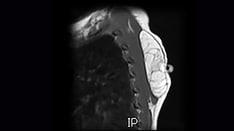
- Actinomycosis may present as a simple phlegmon; a draining sinus; or an abscess in the cheek, in the angle of the jaw, or in the submandibular region (see Image 3).
- The most common feature of actinomycosis infection is the presence of acute pyogenic infection in the submandibular or paramandibular area, in the angle of the mandible, in the parotid region, or in the neck.
- Primary infection in the skin of the face may spread to adjacent structures such as the scalp, orbit, ears, and other areas.
- Oral infection may spread to the tongue, hypopharynx, larynx, trachea, salivary glands, and paranasal sinuses (Brown, 1973).
- Unlike other bacterial infections, actinomycosis spreads without regard for facial tissue planes and without adenopathy.
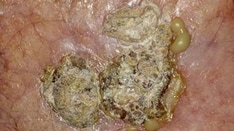
- Actinomycosis infection begins as a chronic tissue induration with trismus; ultimately, a draining cutaneous or oral fistula develops (see Image 4). The fistula progresses to an acute suppurative infection with abscess formation beneath the skin and trismus, and the edema of the surrounding tissues is out of proportion to the degree of inflammation (Behbehani, 1983).
- Infection inside the oral cavity can present as an acute abscess, a subacute inflammatory nodule, an infiltrating mass, or a pseudotumor.
- Infection in the periapical area of the tooth, especially in the premolar and molar region, may harbor actinomycetes, which can lead to the development of an oral or skin sinus fistula (see Image 5).
- Primary bone infection is rare. Osseous involvement is derived from adjacent soft tissue infection, provoking a painful periostitis that results in new bone formation at the site of infection, which can be seen at radiography (see Imaging Studies). The mandible is 4 times more commonly involved than the maxilla (Lewis, 1978).
Causes: The pathogen is a filamentous bacterium in the genus Actinomyces. Usually, actinomycosis is caused by A israelii, an anaerobic gram-positive organism that enters the tissue through a break in the mucosa (Eastridge, 1972). All are oral facultative or anaerobic gram-positive commensal organisms, equally capable of producing lesions consistent with actinomycosis.
Actinomyces species are prevalent in the oral cavity. The bacteria are readily isolated from the interdental sulci, periodontal membranes, tonsillar crypts, and saliva (Coleman, 1969). Poor oral hygiene and dental caries appear to be primary predisposing conditions for the development of the illness. In addition, the presence of associated bacteria appears to be fundamental to the development of clinical infection (see Lab Studies).
Currently, 4 species are recognized. In order of importance, they are A israelii, Actinomyces naeslundii, Actinomyces viscosus, and Actinomyces odontolyticus (Schaal, 1984). - A israelii grows best in anaerobic conditions; many strains are microaerophilic, and some grow after prolonged anaerobic incubation in carbon dioxide (Pine, 1963).
- Another characteristic feature of the bacteria is the formation of mature colonies (within 5-10 d), which are large, white, opaque, rough looking, and heaped up or lobulated (molar-tooth appearance).
- In early or acute infection, the organisms may appear as free gram-positive filaments.
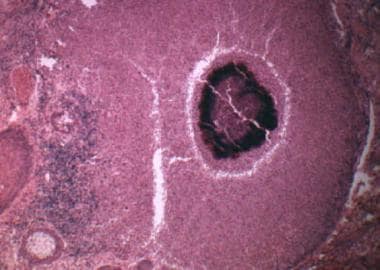
- In advanced lesions, characteristic sulfur granules are usually found (see Image 2).
- Other characteristic features of this organism are the production of leukotoxin and the presence of a bone resorption endotoxin, a polymorphonuclear neutrophil chemotaxis inhibitor, and a lipopolysaccharide endotoxin.
- A naeslundii is most commonly found in blood, brain tissue, and other abscesses.
- These organisms have also been found in cervicofacial infections, gallbladder empyema, suppurative thyroiditis, pleural empyema, pelvic infection related to intrauterine devices, and mycotic aneurysms in the splenic artery.
- The pathogen grows well in aerobic and anaerobic conditions, but it is considered facultative only in the presence of carbon dioxide (Coleman, 1969).
- A viscosus specifically produces catalase and grows well in aerobic conditions, with or without added carbon dioxide.
- This is a common organism in dental plaque (Eng, 1981).
- It is probably an agent of periodontal disease (Eng, 1981).
- This organism may cause various pulmonary and cervicofacial infections, as well as bacteremia and endocarditis (Eng, 1981).
- A odontolyticus has been associated with all major forms of actinomycosis, including septicemia and disseminated liver abscesses (Peloux, 1985).
|   |
DIFFERENTIALS
| Section 4 of 11  |
|
Aspergillosis Erysipelas Leishmaniasis Nocardiosis
Other Problems to be Considered:
Brucellosis
Botryomycosis
Blastomycosis
Histoplasmosis
Toxoplasmosis
Osteomyelitis
Multiple myeloma
Central giant cell granuloma
Osteosarcoma
Fibrous dysplasia
Hodgkin lymphoma
Burkitt lymphoma
Consider actinomycosis infection in the differential diagnosis of any acute, subacute, or chronic cutaneous or soft tissue swelling of the head, face, or neck. |
|
Patient Education
|
|
Click here for patient education.
|
|
|
|
|
|   |
WORKUP
| Section 5 of 11  |
|
Lab Studies:
- Cultures from the lesions of actinomycosis typically reveal a variety of accompanying bacteria.
- The most common bacterium found in association with actinomycosis is appropriately called Actinobacillus actinomycetemcomitans, which is an oral commensal organism that is common in the cervicofacial form of the disease.
- Other bacteria include anaerobic streptococci, fusiform bacilli, Haemophilus species, and gram-negative bacilli, which appear to interact synergistically with Actinomyces species.
- The associated bacteria may help to establish an anaerobic medium that enhances the growth and propagation of the Actinomyces species.
- To culture the specimen, flush the sulfur granules with sodium chloride solution to remove accompanying bacteria.
- Incubate in a brain-heart agar plate in a 5% carbon dioxide atmosphere at 37°C for 4-6 days.
- After approximately 2 days of incubation, the characteristic loose branching filaments of actinomycosis appear.
- The colonies develop into an opaque mass within 4-6 days.
- A israelii may be subcultured in a thioglycollate broth, in which it subsequently develops into hard granules with irregular borders.
- Hematologic study results
- White blood cell counts are increased in approximately one half of patients; however, the white blood cell count can also be in the reference range.
- Anemia may not be present, but superinfection is associated with normocytic and normochromic anemia.
- An elevated erythrocyte sedimentation rate may be an associated finding.
Imaging Studies:
- Radiographic studies are useful in analyzing osseous involvement because osteolysis is a common feature in patients with actinomycosis.
- The radiographic appearance can range from that of a minor subperiosteal reaction and minimal rarefaction to that of classic osteomyelitis, with total lytic destruction or thickening and sclerosis that may be confused findings of a bone tumor.
- Bone is actively invaded by the infection, which results in localized areas of lytic bone destruction surrounded by areas of increased bone density.
- The sinus tracts may interconnect bony foci.
|   |
TREATMENT
| Section 6 of 11  |
|
Medical Care: The presence of associated bacteria appears to be fundamental to the development of clinical infection (see Lab Studies). Therefore, antibiotic coverage should be aimed at all associated organisms in patients with actinomycosis. An aerobic environment is an unfavorable condition for the growth of Actinomyces species and thus halts the infection (Schaal, 1983; Lewis, 1978; Hennrikus, 1987; Lerner, 1974; Deshpande, 1985).
With the combined use of penicillin and surgery, cure has become the rule rather than the exception. - The treatment of choice includes large doses of antibiotics and prolonged therapy coupled with drainage of the abscesses or radical excision of the sinus tracts. High penicillin concentrations are necessary to penetrate areas of fibrosis and suppuration and possibly the granules themselves. Occasionally, extensive disease may respond to intravenous penicillin alone, rendering surgery unnecessary.
- If recognized early, cervicofacial infection has an excellent prognosis with the use of antibiotics alone. In the treatment of this infection, tetracyclines are as effective as penicillin. Intravenous penicillin G (10-20 million U/d for 2-6 wk) followed by oral penicillin (2-4 g/d for an additional 3-12 mo) is the typical therapy for the most deep-seated infections (Holmberg, 1977).
- Actinomyces organisms are also susceptible to chloramphenicol, erythromycin, tetracyclines, and clindamycin but not to metronidazole or aminoglycosides.
- When tuberculosis is suspected, the effects of rifampin therapy can mask the signs of undiagnosed pulmonary actinomycosis.
- Because the bacterial species do not vary in terms of their susceptibility to first-line drugs (eg, penicillin, tetracyclines, erythromycin, first-generation parenteral cephalosporins, clindamycin), infection with strains other than A israelii should also respond to adequate courses of treatment with penicillin G or any of its alternatives. Serum concentrations of sulfonamides (4-8 mg/dL) inhibit some strains of A israelii; therefore, proven cases of actinomycosis (that are not mistaken instances of nocardiosis) may occasionally respond to sulfonamides. Oral cephalosporins and semisynthetic penicillins (eg, oxacillin, dicloxacillin) are less active in vitro and are best avoided (Boand, 1949).
- The acquired resistance of Actinomyces species to antimicrobials, particularly to penicillin G, has not been confirmed in vivo. When the response to penicillin is poor, consider an undrained abscess or an associated infection with a resistant bacterium. European investigators favor the use of ampicillin for initial therapy because associated bacteria are less susceptible to penicillin G in vitro, and they use metronidazole or clindamycin as a secondary agent when Bacteroides fragilis or Bacteroides thetaiotaomicron is present. Imipenem produces an impressive response in extensive, complicated, and relapsing abdominothoracic infections that fail to respond to several surgical procedures and trials of penicillin G (Edelmann, 1987).
Surgical Care: Surgical management has consisted of various treatment modalities, including excision of sinus tracts, drainage of the abscess cavities, removal of the bulky infected masses, and irrigation and curettage of the osteomyelitic bony lesions.
The abscesses should be drained, or sinus tracts should be radically excised. With the combined use of penicillin and surgery, cure has become the rule rather than the exception. Consultations: An oral and maxillofacial surgeon should be consulted because the jaws are involved.
|   |
MEDICATION
| Section 7 of 11  |
|
The goals of pharmacotherapy in the treatment of actinomycosis are to eradicate the infection, reduce morbidity, and prevent complications.
Drug Category: Antibiotics -- Therapy must cover all likely pathogens in the context of this clinical setting. Antibiotic selection should be guided by blood culture sensitivity whenever feasible. Drug Name
| Penicillin G (Pfizerpen) -- Interferes with synthesis of cell wall mucopeptide during active multiplication, resulting in bactericidal activity against susceptible microorganisms.
Prolonged therapy, including >1 year, may be necessary.| Adult Dose | Cervicofacial: 1-6 million U/d IV for 2-6 wk
Thoracic and abdominal: 10-20 million U/d IV (administer slowly) for 2-6 wk; administer penicillin VK thereafter| Pediatric Dose | <1 week or <1.2 kg: 25,000 U IV q12h
1-4 weeks: 25,000 U q8h IV (1.2-2 kg) or q6h (>2 kg)
<12 year but >1 month: for mild/mod disease use 25,000-50,000 U/kg/d IV divided qid; for severe disease use 250,000-400,000 U/kg/d IV in 4-6 divided doses
>12 years: Administer as in adults| Contraindications | Documented hypersensitivity |
|---|
| Interactions | Effects are increased by coadministration with probenecid and decreased by coadministration with tetracyclines and other bacteriostatic antibiotics |
|---|
| Pregnancy |
B - Usually safe but benefits must outweigh the risks.
|
|---|
| Precautions | Caution in impaired renal function and newborns; rash; anaphylaxis; opportunistic infections with prolonged use; electrolyte imbalances with high doses (above 10 million U/d) if not administered slowly, frequently check electrolytes, renal function, and hematopoietic function (risk of positive Coombs' hemolytic anemia); black hairy tongue; Warner Chillcott's penicillin VK powder contains aspartame (if patient has PKU) |
|---|
|
|---|
|
|---|
|
|---|
Drug Name
| Penicillin VK (Beepen-VK, Betapen-VK, Pen-Vee K, Robicillin VK, Veetids) -- Interferes with synthesis of cell wall mucopeptide during active multiplication, resulting in bactericidal activity against susceptible microorganisms. Has better GI absorption than penicillin G |
|---|
| Adult Dose | 2-4 g/d PO in 4-6 divided doses (best if 1 h before or 2 h after meals) for 6-12 mo |
|---|
| Pediatric Dose | <1 month: Not established
>1 month: 15-62.5 mg/kg/d PO in 3-6 divided doses for 6-12 mo; not to exceed adult doses| Contraindications | Documented hypersensitivity |
|---|
| Interactions | Probenecid may increase effectiveness by decreasing clearance; tetracyclines are bacteriostatic, causing a decrease in the effectiveness of penicillins when administered concurrently |
|---|
| Pregnancy |
C - Safety for use during pregnancy has not been established.
|
|---|
| Precautions | Caution in renal impairment |
|---|
|
|---|
|   |
FOLLOW-UP
| Section 8 of 11  |
|
Complications:
- Long-standing bony involvement caused by actinomycosis may lead to osteomyelitis and bone necrosis.
Prognosis:
- Antibiotics modify the natural course of this disease, reduce complications, and improve survival.
- With the combined use of penicillin and surgery, cure has become the rule rather than the exception.
- Cervicofacial infection, if recognized early, has an excellent prognosis with the use of antibiotics alone.
|   |
MISCELLANEOUS
| Section 9 of 11  |
|
Medical/Legal Pitfalls:
- The failure to correctly and promptly diagnose actinomycosis may prolong the patient's pain or discomfort.
|   |
PICTURES
| Section 10 of 11  |
|
|   |
BIBLIOGRAPHY
| Section 11 of 11 |
|
-
Abdalla J, Myers J, Moorman J: Actinomycotic infection of the oesophagus. J Infect 2005 Aug; 51(2): E39-43[Medline].
-
Aydin A, Erkiliç S, Bayazit YA, et al: Relation between actinomycosis and histopathological and clinical features of the palatine tonsils: a comparative study between adult and pediatric patients. Rev Laryngol Otol Rhinol (Bord) 2005; 126(2): 95-8[Medline].
-
Behbehani MJ, Heeley JD, Jordan HV: Comparative histopathology of lesions produced by Actinomyces israelii, Actinomyces naeslundii, and Actinomyces viscosus in mice. Am J Pathol 1983 Mar; 110(3): 267-74[Medline].
-
Bennhoff DF: Actinomycosis: diagnostic and therapeutic considerations and a review of 32 cases. Laryngoscope 1984 Sep; 94(9): 1198-217[Medline].
-
Boand A, Novak M: Sensitivity changes of Actinomyces bovis to penicillin and streptomycin. J Bacteriol 1949; 57: 501.
-
Brock DW, Georg LK, Brown JM, Hicklin MD: Actinomycosis caused by Arachnia propionica: report of 11 cases. Am J Clin Pathol 1973 Jan; 59(1): 66-77[Medline].
-
Brown JR: Human actinomycosis. A study of 181 subjects. Hum Pathol 1973 Sep; 4(3): 319-30[Medline].
-
Coleman RM, Georg LK, Rozzell AR: Actinomyces naeslundii as an agent of human actinomycosis. Appl Microbiol 1969 Sep; 18(3): 420-6[Medline].
-
Deshpande RB, Rao AA: Cervicofacial actinomycosis with upper cervical vertebral involvement and fatal meningitis (a case report). J Postgrad Med 1985 Oct; 31(4): 223-5[Medline].
-
Eastridge CE, Prather JR, Hughes FA Jr, et al: Actinomycosis: a 24 year experience. South Med J 1972 Jul; 65(7): 839-43[Medline].
-
Edelmann M, Cullmann W, Nowak KH, Kozuschek W: Treatment of abdominothoracic actinomycosis with imipenem. Eur J Clin Microbiol 1987 Apr; 6(2): 194-5[Medline].
-
Eng RH, Corrado ML, Cleri D, et al: Infections caused by Actinomyces viscosus. Am J Clin Pathol 1981 Jan; 75(1): 113-6[Medline].
-
Erikson D: Pathogenic anaerobic organisms of the Actinomyces group. Br Med Res Council Special Report Series 1940; 240: 1.
-
Georg LK: The agents of human actinomycosis. In: Balows A, Dehau RM, Dowell VR, eds. Anaerobic Bacteria: Role in Disease. Springfield, Ill: Charles C Thomas Pub; 1974:237-56.
-
Hennrikus EF, Pederson L: Disseminated actinomycosis. West J Med 1987 Aug; 147(2): 201-4[Medline].
-
Holmberg K, Nord CE, Dornbusch K: Antimicrobial in vitro susceptibility of actinomyces israelii and arachnia propionica. Scand J Infect Dis 1977; 9(1): 40-5[Medline].
-
Kim TS, Han J, Koh WJ, et al: Thoracic Actinomycosis: CT Features with Histopathologic Correlation. AJR Am J Roentgenol 2006 Jan; 186(1): 225-31[Medline].
-
Lahoz Zamarro MT, Laguía Pérez M, Muniesa Soriano JA, Martinez Sanz G: [Base tongue actinomycosis]. Acta Otorrinolaringol Esp 2005 May; 56(5): 222-5[Medline].
-
Lerner PI: Susceptibility of pathogenic actinomycetes to antimicrobial compounds. Antimicrob Agents Chemother 1974 Mar; 5(3): 302-9[Medline].
-
Lewis RP, Sutter VL, Finegold SM: Bone infections involving anaerobic bacteria. Medicine (Baltimore) 1978 Jul; 57(4): 279-305[Medline].
-
Najjar TA, McKeon J, Smith L, Parson R: Septic arthritis of TMJ secondary to experimental osteosynthesis. J Dent Res 1980; 59A: 306.
-
Ozcan C, Talas D, Görür K, et al: Actinomycosis of the middle turbinate: an unusual cause of nasal obstruction. Eur Arch Otorhinolaryngol 2005 May; 262(5): 412-5[Medline].
-
Peloux Y, Raoult D, Chardon H, Escarguel JP: Actinomyces odontolyticus infections: review of six patients. J Infect 1985 Sep; 11(2): 125-9[Medline].
-
Pine L, Overman JR: Determination of the structure and composition of the "sulphur granules" of Actinomyces bovis. J Gen Microbiol 1963 Aug; 32: 209-23[Medline].
-
Richtsmeier WJ, Johns ME: Actinomycosis of the head and neck. CRC Crit Rev Clin Lab Sci 1979 Nov; 11(2): 175-202[Medline].
-
Rothschild B, Naples V, Barbian L: Bone manifestations of actinomycosis. Ann Diagn Pathol 2006 Feb; 10(1): 24-27[Medline].
-
Schaal KP, Schofield GM: Classification and identification of clinically significant Actinomycetaceae. In: Ortiz-Ortiz L, Bojalil LF, Yakoleff V, eds. Biological, Biochemical, and Biomedical Aspects of Actinomycetes. Orlando, Fla: Academic Press; 1984:505-20.
-
Schaal KP, Beaman BL: Clinical significance of actinomycetes. In: Goodfellow M, Mordarski M, Williams S, eds. The Biology of the Actinomycetes. New York: Academic Press; 1983:389-424.
-
Vesely J, Hyza P, Koncena J, et al: Unusual case of resistant actinomycosis following facial trauma. Acta Chir Plast 2005; 47(4): 119-23[Medline].
-
Waksman SA, Henrici AT: The nomenclature and classification of the actinomycetes. J Bacteriol 1943; 46: 337.
-
Weese WC, Smith IM: A study of 57 cases of actinomycosis over a 36-year period. A diagnostic 'failure' with good prognosis after treatment. Arch Intern Med 1975 Dec; 135(12): 1562-8[Medline].
Actinomycosis excerpt |