Continually Updated Clinical Reference
 
 
  All Sources     eMedicine     Medscape     Drug Reference     MEDLINE
 
eMedicine - Vogt-Koyanagi-Harada Syndrome : Article by

Quick Find
Authors & Editors
Introduction
Clinical
Differentials
Workup
Treatment
Medication
Follow-up
Miscellaneous
References

Related Articles
Alezzandrini Syndrome

Alopecia Areata

Piebaldism

Vitiligo


Patient Education
Click here for patient education.


Author: Anna Choczaj-Kukula, MD, PhD, Lecturer, Department of Dermatology, Medical University of Lodz, Poland

Coauthor(s): Camila K Janniger, MD, Clinical Professor of Dermatology, Clinical Associate Professor of Pediatrics, Chief of Pediatric Dermatology, New Jersey Medical School

Editors: Janet Fairley, MD, Professor, Program Director, Section Chief, Department of Dermatology, Medical College of Wisconsin; David F Butler, MD, Professor of Dermatology, Texas A&M University College of Medicine; Director, Division of Dermatology, Scott and White Clinic; Director Dermatology Residency Training Program, Scott and White Clinic; Robert A Schwartz, MD, MPH, Professor and Head of Dermatology, Professor of Medicine, Professor of Pediatrics, Professor of Pathology, Professor of Preventive Medicine and Community Health, UMDNJ-New Jersey Medical School; Glen H Crawford, MD, Assistant Clinical Professor, Department of Dermatology, University of Pennsylvania School of Medicine; Chief, Division of Dermatology, The Pennsylvania Hospital; Dirk M Elston, MD, Director, Department of Dermatology, Geisinger Medical Center

Author and Editor Disclosure

Synonyms and related keywords: VKH syndrome, oculocutaneous syndrome, uveocutaneous syndrome, uveoencephalitis, posterior uveitis, bilateral iridocyclitis, iritis, glaucoma, alopecia, vitiligo, dysacusia, CSF pleocytosis, Harada syndrome, poliosis, vitiligo, halo nevi, alopecia, HLA-DR4 antigen

Background

Vogt-Koyanagi-Harada (VKH) syndrome is a rare systemic disease involving various melanocyte-containing organs. Bilateral uveitis associated with cutaneous, neurologic, and auditory abnormalities characterizes this syndrome. As first described by Vogt in 1906 and Koyanagi in 1929, predominantly anterior uveitis associated with poliosis, vitiligo, and auditory disturbances characterizes Vogt-Koyanagi syndrome. In 1926, Harada reported a patient with idiopathic uveitis affecting the posterior segment with retinal detachment and meningeal irritation. At present, these 2 disorders are considered variations of a single entity referred to as Vogt-Koyanagi-Harada syndrome or uveoencephalitis.

Pathophysiology

The etiologic and pathogenic factors in VKH syndrome remain unclear. The clinical course of VKH syndrome with an influenzalike episode suggests a viral or postinfectious origin. Some studies invoke a possible role of Epstein-Barr virus reactivation in this disease (Sunakawa, 1985). Although a viral cause has been proposed, no virus has been isolated or cultured from patients with VKH syndrome. Morris and Schlaegel found viruslike inclusion bodies in the subretinal fluid of a patient with VKH syndrome.

Clinical and experimental data continue to support an immunologic etiology. An autoimmune reaction seems to be directed against an antigenic component shared by uveal, dermal, and meningeal melanocytes, possibly tyrosinase or a tyrosinase-related protein.

Single reports of patients developing VKH syndrome after cutaneous injury have been noted, as well as 2 cases of this condition occurring after BCG therapy for melanoma and 1 case following surgery of metastatic malignant melanoma. Recently, a case of this syndrome was reported to be linked to malignant lymphoma.

Immunologic analysis of cerebrospinal fluid (CSF) lymphocytes in VKH syndrome and studies of human uveal melanocytes show that uveal pigment can stimulate lymphocyte cultures from patients with VKH syndrome. Lymphocytes of peripheral blood and CSF from these patients may reveal in vitro cytotoxicity against allogenic melanoma cells.

Circulating antibodies against a retinal photoreceptor region have been detected in patients with this disorder.

The possibility that VKH syndrome has an autoimmune pathogenesis is supported by the statistically significant frequency of HLA-DR4, an antigen commonly associated with other autoimmune diseases. VKH syndrome has been closely associated with HLA-B54, HLA-DR4, and HLA-DR53 in Japanese patients; with HLA-DR4, HLA-DRw53, and HLA-DQw3 in subjects of Native American ancestry; with HLA-DR1 and HLA-DR4 in Hispanic patients living in southern California; and with HLA-DR4 and HLA-DQw7 in Chinese patients. HLA-DR4 also was found to be significantly related to VKH syndrome in white Europeans, specifically in Italian patients. These findings confirm the possibility of immunogenic predisposition and the decisive role of HLA-DR4 antigen in the development of the disease.

Recent data indicate that patients with VKH syndrome are sensitized to melanocyte epitopes and display a peptide-specific Th1 cytokine response. Patients bearing HLA-DRB1*0405 recognize a broader melanocyte-derived peptide repertoire, so the presence of this allele increases susceptibility to the development of VKH disease.

Frequency

United States

VKH syndrome is rare. No precise data are available regarding frequency of the disease.

International

VKH syndrome is rare but widely distributed.

Mortality/Morbidity

VKH syndrome is not associated with mortality. Acute disturbances in hearing and vision may occur, and the cutaneous changes may be permanent.

Race

VKH syndrome occurs more frequently in individuals with darker pigmentation (eg, persons of Asian, Native American, Latin American, or black heritage). The manifestations of VKH syndrome in whites resembles those in the Japanese population. However, cutaneous signs are much more rare.

Sex

Women appear to be affected more frequently than men.

Age

The onset of VKH syndrome has been reported to range from 10-52 years, with a maximum frequency in the thirties. Although often unrecognized, VKH syndrome may affect children.


History

VKH syndrome is usually preceded by a prodromal stage of nonspecific symptoms including headache, vertigo, nausea, nuchal rigidity, vomiting, and low-grade fever that may last a few days. Patients usually initially present to an ophthalmologist for ocular problems, including sudden loss of vision, ocular pain, and photophobia. Hearing disturbances and dizziness may be present. After weeks or months, most patients notice cutaneous signs (eg, hair loss, poliosis, vitiligo).

Physical

  • The American Uveitis Society has recommended that, in addition to an absence of prior trauma or surgery, at least 3 of the following 4 criteria be met to confirm the diagnosis of VKH syndrome:
    • Bilateral iridocyclitis
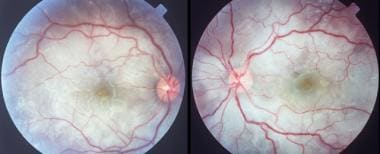
    • Posterior uveitis, which may include exudative retinal detachment, optic nerve swelling, or atrophy of the retinal pigment epithelium
    • CSF pleocytosis or evidence of tinnitus, dysacusis, headache or meningismus, or cranial nerve involvement
    • Cutaneous findings of vitiligo, alopecia, or poliosis
  • The classic course of VKH syndrome consists of the following 3 phases:
    • In the meningoencephalitis phase, the degree of neurologic symptoms may vary. Generalized muscle weakness, hemiparesis, hemiplegia, dysarthria, and aphasia have been reported. Most of the neurologic symptoms have been directly attributed to changes in CSF (eg, pleocytosis, increased pressure, protein levels), inflammatory arachnoiditis, or resulting subarachnoidal adhesions. Mental changes ranging from mild confusion to psychosis may occur.
    • The ophthalmic-auditory phase is characterized by common features such as decreased visual acuity, eye pain, eye irritation, and loss of vision. Dysacusis (usually bilateral) and tinnitus develop in 50% of patients.
    • The convalescent phase is characterized by cutaneous signs developing after uveitis begins to subside, usually within 3 months from the onset of the disease. Although cutaneous signs typically occur several weeks to months after the onset of ocular inflammation, skin changes have sometimes been observed many years before uveitis appeared. Pigmentary changes tend to be permanent.
      • Poliosis, which occurs in 90% of patients, involves the eyebrows and eyelashes and, occasionally, the scalp and body hair. Poliosis affects 50% of patients and usually appears after the onset of alopecia, which may be patchy or diffuse.
      • Vitiligo manifests in 63% of patients and is often symmetric. Most patients have perilimbal vitiligo (Sugiura sign). Atypical variants of vitiligo with inflammatory raised borders and plaque-type inflammatory erythema have also been reported.
      • Halo nevi may be present.

Causes

The cause of VKH syndrome is unknown, but a viral factor has been suggested in the pathogenesis. An autoimmune reaction to melanocytes with the involvement of T-cell–mediated cytotoxicity and apoptosis is postulated. Although almost all instances of VKH syndrome are sporadic, and familial cases are rare, some authors suggest that the condition may be inherited, probably as an autosomal recessive trait. Numerous data demonstrate the association of HLA-DR4 antigen and VKH syndrome in different racial groups. According to recent studies, the major factor contributing to susceptibility for the disease is presence of the DRB*0405 allele (Goldberg, 1998).


Alezzandrini Syndrome
Alopecia Areata
Piebaldism
Vitiligo

Other Problems to be Considered

Vitiligo with poliosis


Lab Studies

  • For quick diagnosis and early treatment, VKH syndrome requires a multidisciplinary management strategy involving dermatologists and ophthalmologists.
  • Perform neurologic examination with lumbar puncture to detect associated abnormalities.
  • Detailed CSF cell analysis is necessary. Changes in the CSF include pleocytosis with the presence of melanin-laden macrophages (specific for the syndrome and helpful in confirming the diagnosis), increased protein levels, and increased pressure.

Imaging Studies

  • Standardized A-scan and contact B-scan echography, performed by ophthalmologist

Procedures

  • Perform fluorescein angiography, which shows multiple hypofluorescent areas in the retina at the level of the retinal pigment epithelium.
  • Perform indocyanine green choroidal angiography.
  • Audiometry may reveal sensorineural hearing loss.

Histologic Findings

A skin biopsy specimen taken a month after the onset of ocular symptoms will likely reveal a mononuclear infiltrate concentrated in the area of hair follicles and sweat glands, consisting mostly of T lymphocytes with a small number of B cells. In depigmented skin, the absence of melanin, as anticipated in vitiligo, can be noted. Vasodilatation in the dermis, pigment-laden macrophages, and a lymphocytic infiltrate have also been described.


Medical Care

  • For pigmentary changes, treatment options mirror those for vitiligo.
  • For eye inflammatory changes, treatment includes systemic corticosteroids, with an average initial dose of 80-100 mg of oral prednisone per day. Early, aggressive use of systemic corticosteroids and a gradual tapering of drug dosage for 6 months after presentation are recommended to prevent progression and development of complications. Some authors recommend pulse corticosteroid therapy.
  • In patients whose conditions fail to respond to high-dose corticosteroid (oral or intravenous) therapy or who develop significant adverse effects, immunosuppression with cyclosporine or other antimetabolites (eg, azathioprine, cyclophosphamide, methotrexate [MTX]) may be required.
  • Topical and periocular corticosteroids are used. Cycloplegic-mydriatic eye drops are used symptomatically.

Surgical Care

  • Surgical therapy for glaucoma is necessary in some patients. Surgical intervention includes laser iridotomy, surgical iridectomy, and trabeculectomy.

Consultations

Ophthalmologists and neurologists must be consulted.


The goals of pharmacotherapy are to reduce morbidity and to prevent complications.

Drug Category: Corticosteroids

Have anti-inflammatory properties and cause profound and varied metabolic effects. Modify the body's immune response to diverse stimuli.

Drug NamePrednisone (Deltasone, Orasone)
DescriptionSynthetic adrenocortical steroid with predominantly glucocorticoid properties. Immunosuppressant for treatment of autoimmune disorders; may decrease inflammation by reversing increased capillary permeability and suppressing PMN activity. Stabilizes lysosomal membranes and suppresses lymphocytes and antibody production.
Adult Dose60-100 mg PO every am or more often prn
Pediatric DoseInitial: 0.14-2 mg/kg/d PO divided tid/qid (4-60 mg/m2/d)
ContraindicationsDocumented hypersensitivity; viral infection; peptic ulcer disease; hepatic dysfunction; connective-tissue infections; fungal or tubercular skin infections; GI tract disease
InteractionsCoadministration with estrogens may decrease clearance; concurrent use with digoxin may cause digitalis toxicity secondary to hypokalemia; phenobarbital, phenytoin, and rifampin may increase metabolism of glucocorticoids (consider increasing maintenance dose); monitor for hypokalemia with coadministration of diuretics
PregnancyC - Safety for use during pregnancy has not been established.
PrecautionsAbrupt discontinuation of glucocorticoids may cause adrenal crisis; hyperglycemia, edema, osteonecrosis, myopathy, peptic ulcer disease, hypokalemia, osteoporosis, euphoria, psychosis, myasthenia gravis, growth suppression, and infections may occur with glucocorticoid use

Drug Category: Immunosuppressive agents

Have antiproliferative and immunosuppressive effects.

Drug NameAzathioprine (Imuran)
DescriptionMay be used alone or as steroid-sparing agent. Antagonizes purine metabolism and inhibits synthesis of DNA, RNA, and proteins. May decrease proliferation of immune cells, resulting in lower autoimmune activity.
Adult Dose100-200 mg PO qd in combination with prednisone
Pediatric DoseNot established
ContraindicationsDocumented hypersensitivity; deficiency of thiopurine methyltransferase
InteractionsToxicity increases with allopurinol; concurrent use with ACE inhibitors may induce severe leukopenia; may increase levels of MTX metabolites and decrease effects of anticoagulants, neuromuscular blockers, and cyclosporine
PregnancyD - Unsafe in pregnancy
PrecautionsAdverse effects include teratogenicity, hepatitis, bone marrow suppression, and increased risk of cancer; before initiating therapy and regularly thereafter, monitor urinalysis, CBC count, renal and LFTs, and serum electrolyte levels; increases risk of neoplasia; caution with liver disease and renal impairment; hematologic toxicities may occur, check thiopurine methyltransferase prior to treatment

Drug NameCyclophosphamide (Cytoxan, Neosar)
DescriptionMay be used as monotherapy or as a steroid-sparing agent. Chemically related to nitrogen mustards. As an alkylating agent, the mechanism of action of the active metabolites may involve cross-linking of DNA, which may interfere with growth of normal and neoplastic cells.
Adult Dose50-100 mg IV qd in combination with prednisone
Pediatric DoseNot established
ContraindicationsDocumented hypersensitivity; severely depressed bone marrow function; renal insufficiency; cystitis
InteractionsAllopurinol may increase risk of bleeding or infection and enhance myelosuppressive effects; may potentiate doxorubicin-induced cardiotoxicity; may reduce digoxin serum levels and antimicrobial effects of quinolones; chloramphenicol may increase half-life while decreasing metabolite concentrations; may increase effect of anticoagulants; coadministration with high doses of phenobarbital may increase rate of metabolism and leukopenic activity; thiazide diuretics may prolong cyclophosphamide-induced leukopenia and neuromuscular blockade by inhibiting cholinesterase activity
PregnancyD - Unsafe in pregnancy
PrecautionsRegularly examine hematologic profile (particularly neutrophils and platelets) to monitor for hematopoietic suppression; regularly examine urine for RBCs, which may precede hemorrhagic cystitis; agent is teratogenic and may cause nausea, vomiting, alopecia, sterility, hemorrhagic cystitis, bone marrow suppression, and increased risk of cancer

Drug NameMethotrexate (Folex PFS, Rheumatrex)
DescriptionUnknown mechanism of action in treatment of inflammatory reactions; may affect immune function. Ameliorates symptoms of inflammation (eg, pain, swelling, stiffness). Gradually adjust dose to attain satisfactory response.
Adult Dose7.5 mg/wk or 2.5 mg PO/IM bid for 3 doses qwk
Pediatric Dose5-15 mg/m2/wk PO/IM as single dose or 3 divided doses administered 12 h apart
ContraindicationsDocumented hypersensitivity; alcoholism; hepatic insufficiency; documented immunodeficiency syndromes; preexisting blood dyscrasias (eg, bone marrow hypoplasia, leukopenia, thrombocytopenia, significant anemia); renal insufficiency
InteractionsOral aminoglycosides may decrease absorption and blood levels of concurrent oral MTX; charcoal lowers levels; coadministration with etretinate may increase hepatotoxicity; folic acid or its derivatives contained in some vitamins may decrease response; coadministration with NSAIDs may cause death; indomethacin and phenylbutazone can increase plasma levels; may decrease phenytoin serum levels; probenecid, salicylates, procarbazine, and sulfonamides, including TMP-SMZ, may increase effects and toxicity; may increase plasma levels of thiopurines
PregnancyD - Unsafe in pregnancy
PrecautionsInitially monitor CBC count weekly for 1 month and liver function pretreatment; then, monitor CBC counts monthly, and liver and renal function q1-3mo during therapy (monitor more frequently during initial dosing, dose adjustments, or when risk of elevated MTX levels, eg, dehydration); has toxic effects on hematologic, renal, GI, pulmonary, and neurologic systems; discontinue if significant drop in blood cell counts; aspirin, NSAIDs, or low-dose steroids may be administered concomitantly (possibility of increased toxicity with NSAIDs, including salicylates, has not been tested)


Further Outpatient Care

  • Follow routine outpatient care guidelines.

Complications

  • Long-term complications include reversible and irreversible vision loss, intraocular pressure elevation, glaucoma, and cataracts.
  • Ocular complications are more severe in children than in adults, leading to rapid deterioration in vision.

Prognosis

  • Pigmentary changes are usually permanent.
  • Final visual outcome depends on the rapidity and appropriateness of treatment.
  • Hearing is restored completely in most patients.


Medical/Legal Pitfalls

  • Delayed or missed diagnosis
  • Failure to provide rapid and appropriate treatment for the best visual outcome
  • Failure to monitor patients on systemic therapy for adverse effects, toxicity, and response


  • Alaez C, del Pilar Mora M, Arellanes L, et al. Strong association of HLA class II sequences in Mexicans with Vogt-Koyanagi-Harada''s disease. Hum Immunol. Sep 1999;60(9):875-82. [Medline].
  • Andreoli CM, Foster CS. Vogt-Koyanagi-Harada disease. Int Ophthalmol Clin. 2006;46(2):111-22. [Medline].
  • Ashkenazi I, Gutman I, Melamed S, et al. Vogt-Koyanagi-Harada syndrome in two siblings. Metab Pediatr Syst Ophthalmol. 1991;14(3-4):64-7. [Medline].
  • Beniz J, Forster DJ, Lean JS, et al. Variations in clinical features of the Vogt-Koyanagi-Harada syndrome. Retina. 1991;11(3):275-80. [Medline].
  • Bykhovskaya I, Thorne JE, Kempen JH, et al. Vogt-Koyanagi-Harada disease: clinical outcomes. Am J Ophthalmol. Oct 2005;140(4):674-8. [Medline].
  • Chan CC, Palestine AG, Nussenblatt RB, et al. Anti-retinal auto-antibodies in Vogt-Koyanagi-Harada syndrome, Behcet''s disease, and sympathetic ophthalmia. Ophthalmology. Aug 1985;92(8):1025-8. [Medline].
  • Damico FM, Cunha-Neto E, Goldberg AC, et al. T-cell recognition and cytokine profile induced by melanocyte epitopes in patients with HLA-DRB1*0405-positive and -negative Vogt-Koyanagi-Harada uveitis. Invest Ophthalmol Vis Sci. Jul 2005;46(7):2465-71. [Medline].
  • Damico FM, Kiss S, Young LH. Vogt-Koyanagi-Harada disease. Semin Ophthalmol. Jul-Sep 2005;20(3):183-90. [Medline].
  • Denoyer A, Le Lez ML, Arsène S, Pisella PJ. [Repeated pulse corticosteroid therapy in Vogt-Koyanagi-Harada disease. A case report]. J Fr Ophtalmol. Apr 2004;27(4):404-8. [Medline].
  • Goldberg AC, Yamamoto JH, Chiarella JM, et al. HLA-DRB1*0405 is the predominant allele in Brazilian patients with Vogt-Koyanagi-Harada disease. Hum Immunol. Mar 1998;59(3):183-8. [Medline].
  • González-Delgado M, González C, Blázquez JI, et al. [Intravenous immunoglobulin therapy in Vogt-Koyanagi-Harada syndrome]. Neurologia. Sep 2004;19(7):401-3. [Medline].
  • Gupta V, Gupta A, Bambery P, et al. Vogt-Koyanagi-Harada syndrome following injury-induced progressive vitiligo. Indian J Ophthalmol. Mar 2001;49(1):53-5. [Medline].
  • Hashida N, Kanayama S, Kawasaki A, Ogawa K. A case of Vogt-Koyanagi-Harada disease associated with malignant lymphoma. Jpn J Ophthalmol. May-Jun 2005;49(3):253-6. [Medline].
  • Hayasaka Y, Hayasaka S. Almost simultaneous onset of Vogt-Koyanagi-Harada syndrome in co-workers, friends, and neighbors. Graefes Arch Clin Exp Ophthalmol. Jul 2004;242(7):611-3. [Medline].
  • Huggins RH, Janusz CA, Schwartz RA. Vitiligo: a sign of systemic disease. Indian J Dermatol Venereol Leprol. Jan-Feb 2006;72(1):68-71. [Medline].
  • Igawa K, Endo H, Yokozeki H, et al. Alopecia in Vogt-Koyanagi-Harada syndrome. J Eur Acad Dermatol Venereol. Feb 2006;20(2):236-8. [Medline].
  • Ikeda N, Hayasaka S, Kadoi C, Nagaki Y. Vogt-Koyanagi-Harada syndrome in an 11-year-old Boy. Ophthalmologica. 1999;213(3):197-9. [Medline].
  • Itho S, Kurimoto S, Kouno T. Vogt-Koyanagi-Harada disease in monozygotic twins. Int Ophthalmol. Jan 1992;16(1):49-54. [Medline].
  • Khoury T, Gonzalez-Fernandez F, Munschauer FE, Ostrow P. A 47-year-old man with sudden onset of blindness, pleocytosis, and temporary hearing loss. Vogt-Koyanagi-Harada syndrome (Uveomeningoencephalitic syndrome). Arch Pathol Lab Med. Jul 2006;130(7):1070-2. [Medline].
  • Kobayashi H, Kokubo T, Takahashi M, et al. Tyrosinase epitope recognized by an HLA-DR-restricted T-cell line from a Vogt-Koyanagi-Harada disease patient. Immunogenetics. Apr 1998;47(5):398-403. [Medline].
  • Lubin JR, Loewenstein JI, Frederick AR Jr. Vogt-Koyanagi-Harada syndrome with focal neurologic signs. Am J Ophthalmol. Mar 1981;91(3):332-41. [Medline].
  • Mondkar SV, Biswas J, Ganesh SK. Analysis of 87 cases with Vogt-Koyanagi-Harada disease. Jpn J Ophthalmol. May-Jun 2000;44(3):296-301. [Medline].
  • Nakamura H, Tsukamoto H, Shibahara R, et al. Ultrasound biomicroscopy in the management of Vogt-Koyanagi-Harada disease. Acta Ophthalmol Scand. Dec 2000;78(6):718-9. [Medline].
  • Nakamura S, Nakazawa M, Yoshioka M, et al. Melanin-laden macrophages in cerebrospinal fluid in Vogt-Koyanagi-Harada syndrome. Arch Ophthalmol. Oct 1996;114(10):1184-8. [Medline].
  • Nordlund JJ, Albert D, Forget B, Lerner AB. Halo nevi and the Vogt-Koyanagi-Harada syndrome. Manifestations of vitiligo. Arch Dermatol. Jun 1980;116(6):690-2. [Medline].
  • Ondrey FG, Moldestad E, Mastroianni MA, et al. Sensorineural hearing loss in Vogt-Koyanagi-Harada syndrome. Laryngoscope. Oct 2006;116(10):1873-6. [Medline].
  • Ozdirim E, Renda Y, Baytok V. Vogt-Koyanagi-Harada syndrome in siblings (with a brief review of the literature). Eur J Pediatr. Dec 1980;135(2):217-9. [Medline].
  • Park S, Albert DM, Bolognia JL. Ocular manifestations of pigmentary disorders. Dermatol Clin. Jul 1992;10(3):609-22. [Medline].
  • Perry HD, Font RL. Clinical and histopathologic observations in severe Vogt-Koyanagi- Harada syndrome. Am J Ophthalmol. Feb 1977;83(2):242-54. [Medline].
  • Pezzi PP, Paroli MP, Priori R, et al. Vogt-Koyanagi-Harada syndrome and keratoconjunctivitis sicca. Am J Ophthalmol. Apr 2004;137(4):769-70. [Medline].
  • Pivetti-Pezzi P, Accorinti M, Colabelli-Gisoldi RA, Pirraglia MP. Vogt-Koyanagi-Harada disease and HLA type in Italian patients. Am J Ophthalmol. Dec 1996;122(6):889-91. [Medline].
  • Pras E, Neumann R, Zandman-Goddard G, et al. Intraocular inflammation in autoimmune diseases. Semin Arthritis Rheum. Dec 2004;34(3):602-9. [Medline].
  • Rajendram R, Evans M, Rao NA. Vogt-Koyanagi-Harada disease. Int Ophthalmol Clin. 2005;45(2):115-34. [Medline].
  • Rao NA. Treatment of Vogt-Koyanagi-Harada disease by corticosteroids and immunosuppressive agents. Ocul Immunol Inflamm. Apr 2006;14(2):71-2. [Medline].
  • Rathinam SR, Vijayalakshmi P, Namperumalsamy P, et al. Vogt-Koyanagi-Harada syndrome in children. Ocul Immunol Inflamm. Sep 1998;6(3):155-61. [Medline].
  • Rathinam SR, Namperumalsamy P, Nozik RA, Cunningham ET Jr. Vogt-Koyanagi-Harada syndrome after cutaneous injury. Ophthalmology. Mar 1999;106(3):635-8. [Medline].
  • Ravikumar BC, Balachandran C, Sabita L, Acharya S. Vogt-Koyanagi-Harada syndrome: the useful role of punch grafting. Int J Dermatol. Jun 2000;39(6):460-2. [Medline].
  • Read RW, Rao NA, Cunningham ET. Vogt-Koyanagi-Harada disease. Curr Opin Ophthalmol. Dec 2000;11(6):437-42. [Medline].
  • Read RW, Holland GN, Rao NA, et al. Revised diagnostic criteria for Vogt-Koyanagi-Harada disease: report of an international committee on nomenclature. Am J Ophthalmol. May 2001;131(5):647-52. [Medline].
  • Rubsamen PE, Gass JD. Vogt-Koyanagi-Harada syndrome. Clinical course, therapy, and long-term visual outcome. Arch Ophthalmol. May 1991;109(5):682-7. [Medline].
  • Saari JM, Nummelin K. Iris atrophy, serous detachment of the ciliary body, and ocular hypotony in chronic phase of Vogt-Koyanagi-Harada disease. Eur J Ophthalmol. Mar-Apr 2005;15(2):277-83. [Medline].
  • Sakuta T, Morita Y, Sakai J, et al. A case of Vogt-Koyanagi-Harada disease that developed relapsing polychondritis. Mod Rheumatol. Jun 2005;15(3):204-6. [Medline].
  • Sheu SJ. Update on uveomeningoencephalitides. Curr Opin Neurol. Jun 2005;18(3):323-9. [Medline].
  • Sheu SJ, Kou HK, Chen JF. Significant prognostic factors for Vogt-Koyanagi-Harada disease in the early stage. Kaohsiung J Med Sci. Mar 2004;20(3):97-105. [Medline].
  • Snyder DA, Tessler HH. Vogt-Koyanagi-Harada syndrome. Am J Ophthalmol. Jul 1980;90(1):69-75. [Medline].
  • Sober AJ, Haynes HA. Uveitis, poliosis, hypomelanosis, and alopecia in a patient with malignant melanoma. Arch Dermatol. Mar 1978;114(3):439-41. [Medline].
  • Sunakawa M, Okinami S. Epstein-Barr virus-related antibody pattern in uveitis. Jpn J Ophthalmol. 1985;29(4):423-8. [Medline].
  • Sylvestre DL, Disston AR, Bui DP. Vogt-Koyanagi-Harada disease associated with interferon alpha-2b/ribavirin combination therapy. J Viral Hepat. Nov 2003;10(6):467-70. [Medline].
  • Tabbara KF, Chavis PS, Freeman WR. Vogt-Koyanagi-Harada syndrome in children compared to adults. Acta Ophthalmol Scand. Dec 1998;76(6):723-6. [Medline].
  • Touitou V, Bodaghi B, Cassoux N, et al. Vogt-Koyanagi-Harada disease in patients with chronic hepatitis C. Am J Ophthalmol. Nov 2005;140(5):949-52. [Medline].
  • Tsujikawa A, Yamashiro K, Yamamoto K, et al. Retinal cystoid spaces in acute Vogt-Koyanagi-Harada syndrome. Am J Ophthalmol. Apr 2005;139(4):670-7. [Medline].
  • Tsuruta D, Hamada T, Teramae H, et al. Inflammatory vitiligo in Vogt-Koyanagi-Harada disease. J Am Acad Dermatol. Jan 2001;44(1):129-31. [Medline].
  • Vaphiades MS, Read RW. Magnetic resonance imaging of choroidal inflammation in Vogt-Koyanagi-Harada disease. J Neuroophthalmol. Dec 2004;24(4):295-6. [Medline].
  • Weber SW, Kazdan JJ. The Vogt--Koyanagi--Harada syndrome in children. J Pediatr Ophthalmol. Mar-Apr 1977;14(2):96-9. [Medline].
  • Yamaki K, Hara K, Sakuragi S. Application of revised diagnostic criteria for Vogt-Koyanagi-Harada disease in Japanese patients. Jpn J Ophthalmol. Mar-Apr 2005;49(2):143-8. [Medline].
  • Yokota K, Shimizu H. Psoriasis vulgaris associated with Vogt-Koyanagi-Harada syndrome. Clin Exp Dermatol. May 2001;26(3):308-9. [Medline].
  • Zalts R, Hayek T, Baruch Y, et al. Vogt-Koyanagi-Harada syndrome associated with renal failure: a case report. J Nephrol. Mar-Apr 2006;19(2):225-8. [Medline].

Vogt-Koyanagi-Harada Syndrome excerpt

Article Last Updated: Dec 6, 2006