Continually Updated Clinical Reference
 
 
  All Sources     eMedicine     Medscape     Drug Reference     MEDLINE
 
eMedicine - Refsum Disease : Article by

Quick Find
Authors & Editors
Introduction
Clinical
Differentials
Workup
Treatment
Medication
Follow-up
Miscellaneous
References

Related Articles
Ichthyosis Fetalis

Ichthyosis Vulgaris, Hereditary and Acquired

Ichthyosis, Lamellar

Ichthyosis, X-Linked

Sjogren-Larsson Syndrome


Patient Education
Click here for patient education.


Author: Anna Zalewska, MD, PhD, Assistant Professor, Adjunct Professor, Department of Dermatology and Venereology, Medical University of Lodz, Poland

Coauthor(s): Robert A Schwartz, MD, MPH, Professor and Head of Dermatology, Professor of Medicine, Professor of Pediatrics, Professor of Pathology, Professor of Preventive Medicine and Community Health, UMDNJ-New Jersey Medical School

Editors: Jacek C Szepietowski, MD, PhD, Professor and Vice-Head, Department of Dermatology, Venereology and Allergology, Wroclaw Medical University, Poland; Michael J Wells, MD, Associate Professor, Department of Dermatology, Texas Tech University Health Sciences Center; Jeffrey P Callen, MD, Professor of Medicine, Chief, Division of Dermatology, University of Louisville School of Medicine; Catherine Quirk, MD, Clinical Assistant Professor, Department of Dermatology, Brown University; William D James, MD, Paul R Gross Professor of Dermatology, University of Pennsylvania School of Medicine; Vice-Chair, Program Director, Department of Dermatology, University of Pennsylvania Health System

Author and Editor Disclosure

Synonyms and related keywords: heredopathia atactica polyneuritiformis, RD, neurocutaneous syndromes, peripheral polyneuropathy, cerebellar ataxia, retinitis pigmentosa, ichthyosis

Background

Refsum disease (RD) is a neurocutaneous syndrome that is characterized biochemically by the accumulation of phytanic acid in plasma and tissues. Patients with RD are unable to degrade phytanic acid because of a deficient activity of phytanoyl-CoA hydroxylase (PhyH), a peroxisomal enzyme catalyzing the first step of phytanic acid alpha-oxidation.

Refsum first described this disease in 1946. Peripheral polyneuropathy, cerebellar ataxia, retinitis pigmentosa, and ichthyosis are the major clinical components. The symptoms evolve slowly and insidiously from childhood through adolescence and early adulthood.

Pathophysiology

RD is a recessive disorder characterized by defective peroxisomal alpha-oxidation of phytanic acid. Consequently, this unusual, exogenous C20-branched-chain (3,7,11,15-tetramethylhexadecanoic acid) fatty acid accumulates in blood and tissues. It is almost exclusively of exogenous origin and is delivered mainly from dietary plant chlorophyll and, to a lesser extent, from animal sources. Blood levels of phytanic acid are increased in patients with RD. These levels are 10-50 mg/dL, whereas normal values are less than or equal to 0.2 mg/dL, and account for 5-30% of serum lipids.

Phytanic acid replaces other fatty acids, including such essential ones as linoleic and arachidonic acids in lipid moieties of various tissues. This situation leads to an essential fatty acid deficiency, which is associated with the development of ichthyosis. A RD gene, phytanoyl-CoA hydroxylase, has been localized to band 10p13 between the markers D10S226 and D10S223. RD is genetically heterogeneous, with up to 55% of cases not being linked to the PAHX gene locus at D10S547 to D10S223. Thus, RD, like other peroxisomal diseases, is a heterogeneous syndrome.

An infantile form of RD also exists that is an autosomal recessive disorder of peroxisomal biogenesis, leading to many biochemical abnormalities, including raised plasma concentration of phytanic acid, pristanic acid, very long chain fatty acids, and C27 bile acids. The disease presents in the first year of life and manifests by developmental delay, visual and hearing disturbances, and dysmorphic features. Ichthyosis is an unusual symptom.

Frequency

International

RD is rare, with just 60 cases published worldwide.

Mortality/Morbidity

In patients who are untreated or diagnosed late, severe neurological impairment, wasting, and depression develop, subsequently leading to a high mortality rate. Attenuation of neurologic, ophthalmologic, and cardiac symptoms requires constant adherence to a suitable diet and plasmapheresis.

Race

No racial predominance is reported.

Sex

Only male cases were reported initially; however, now, neither sex predominates.

Age

Classic RD manifests in children aged 2-7 years; however, diagnosis usually is delayed until early adulthood. Infantile RD makes its appearance in early infancy.


History

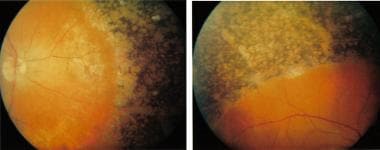
  • Symptoms develop progressively and slowly with neurologic (eg, mild peripheral intermittent neuropathy, tinnitus, anosmia) and ophthalmic (eg, failing vision, night blindness as a result of progressive retinitis pigmentosa) manifestations.
  • Ichthyosis may accompany, but most often follows, the occurrence of the above symptoms.

Physical

Pertinent physical findings include neurologic, ophthalmic, cardiac, and skin defects.

  • Neurologic/ophthalmologic signs
    • Partial intermittent sensorimotor polyneuropathy
    • Cataract
    • Nystagmus
    • Concentric constriction of the visual fields
    • Sensorineural deafness
  • Signs resulting from cerebellar ataxia
    • Progressive weakness
    • Foot drop
    • Loss of balance
  • Cardiomyopathy with a serious conduction defect is a life-threatening sign.
  • Hepatic/renal symptoms are clinically silent despite fatty degeneration.
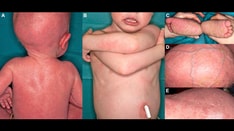
  • An ichthyosiform desquamation occurs, resembling a mild acquired ichthyosis vulgaris with a fine, white scaling that is noticeable over the lower trunk but also affects the limbs. Ichthyotic symptoms may range from mild hyperkeratosis of the palms and soles to severe scaling of lamellar ichthyosis type observed on the trunk.
  • Skeletal defects (noticed in some patients) are not related directly to phytanic acid levels.
    • These defects occur in 35-75% of cases.
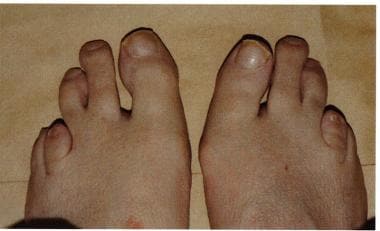
    • The knees, elbows, and short tubular bones of the hands and feet are affected; in particular, the terminal phalanx of the thumb also is affected.

Causes

RD is caused by mutations in the phytanoyl-CoA hydroxylase (PHYH) and the PTS2 receptor (PEX7) genes. This disorder is inherited in an autosomal recessive mode. A single peroxisomal enzyme defect that causes deficiency of alpha-oxidation leads to accumulation of phytanic acid in blood and tissues of patients with RD. The cytotoxic effect of phytanic acid seems to be due to a combined action of Ca2+ regulation, mitochondrial depolarization, and increased reactive oxygen species generation in brain cells.


Ichthyosis Fetalis
Ichthyosis Vulgaris, Hereditary and Acquired
Ichthyosis, Lamellar
Ichthyosis, X-Linked
Sjogren-Larsson Syndrome

Other Problems to be Considered

Chronic and intermittent polyneuritis (eg, alpha-lipoprotein deficiency)
Relapsing infectious polyneuritis
Mitochondrial myopathies
Acute intermittent porphyria
Recurrent exposure to toxins (eg, alcohol, lead)
Various hereditary motor neuropathies
Acquired hyperkeratoses and ichthyosiform dermatoses (when evaluating skin scaling in patients with RD)


Lab Studies

  • Phytanic acid level in the blood is increased. The normal range is equal to or less than 0.2 mg/dL; however, phytanic acid levels are 10-50 mg/dL or even higher in patients with RD.
  • Cerebrospinal fluid (CSF) shows an albuminocytologic dissociation with a protein level of 100-600 mg/dL.
  • Low-density lipoprotein (LDL) and high-density lipoprotein (HDL) cholesterol levels are decreased.
  • Routine laboratory investigations of blood and urine do not reveal any consistent diagnostic abnormalities.

Imaging Studies

  • Skeletal radiography is required to estimate bone changes.
  • MRI findings could reveal symmetrical signal changes involving the corticospinal tracts, cerebellar dentate nuclei, and corpus callosum.

Other Tests

  • Phytanic oxidase activity estimation in skin fibroblast cultures is important.
  • Electrocardiogram (ECG) is helpful to rule out cardiac conduction defect.
  • UPSIT (University of Pennsylvania Smell Identification Test) reveals anosmia or grossly impaired smell function.

Histologic Findings

Skin biopsy shows features of ichthyosis vulgaris, such as moderate hyperkeratosis and acanthosis with thin granular layer. Variably sized vacuoles are visible in basal and suprabasal keratinocytes. The lipid stains performed on cryostat cut sections revealed presence of lipid accumulation in vacuoles. Nerve biopsy examination shows nerve demyelination with marked Schwann cell proliferation and onion bulb formation.

Ultrastructural skin examination reveals many intracellular non–membrane-bound vacuoles in the basal layer and less numerous in keratinocytes of suprabasal epidermis. Transmission electron microscopy does not reveal changes of keratohyalin observed in dominant ichthyosis vulgaris.


Medical Care

Three forms of medical care are used.

  • Diet (see Diet)
  • Plasmapheresis
    • The main indication for plasmapheresis in patients with RD is a severe or rapidly worsening clinical condition.
    • A minor indication is failure of dietary management to reduce a high plasma phytanic acid level.
    • Cascade filtration may be an alternative for plasmapheresis. It is as efficient as plasmapheresis and eliminates the need for albumin replacement.
  • Local dermatologic drugs to soften the skin (see Medication)

Consultations

Because of the variety of different symptoms, these patients require consultation from different specialists.

  • Neurologist to estimate neurologic defects
  • Ophthalmologist to exclude ophthalmic impairments
  • Generalist (internal medicine specialist) to exclude abnormalities in the internal organs (especially cardiac ones)
  • Dermatologist to assess skin changes

Diet

Diet is 1 of 3 types of regimens used to treat patients with RD.

  • Eliminate all sources of chlorophyll from the diet.
    • The major dietary exclusions are green vegetables (source of phytanic acid) and animal fat (phytol).
    • The aim of such dietary treatment is to reduce daily intake of phytanic acid from the usual level of 50 mg/d to less than 5 mg/d.
    • This change is accompanied by increased nerve conduction velocities, return of reflexes, and improvement in sensation and objective coordination.
  • Ichthyosis clears, and its recurrence may be a marker of rising phytanic acid level in blood.
  • Improvement in clinical status as a result of diet is due to the presence of alternative pathway oxidation omega-oxidation that is able to metabolize small amounts of phytanic acid.
  • Lifelong strict adherence to the diet is mandatory. A high carbohydrate intake should be provided to avoid a rapid weight loss as it metabolizes tissue phytanic acid.


Appropriate medications consist of skin care products (eg, keratolytics, emollients). Recent research has shown that enzymes responsible for the omega-hydroxylation of phytanic acid could be useful in RD treatment. Elevation of CYP4 enzymes could have a favorable role in the elimination of phytanic acid in persons with RD.

Drug Category: Keratolytics

Used to soften and exfoliate the skin.

Drug NameUrea (Carmol, Ureacin-40, Aquacare)
DescriptionIndicated for hyperkeratosis. Promotes hydration and removal of excess keratin in conditions of hyperkeratosis. Available in 10-40% concentrations.
Adult DoseApply to affected area prn
Pediatric DoseAdminister as in adults
ContraindicationsDocumented hypersensitivity; severely impaired renal function; active intracranial bleeding; marked dehydration; frank liver failure; infusion into veins of lower extremities in elderly patients may cause phlebitis and thrombosis
InteractionsMay decrease effects of lithium
PregnancyC - Safety for use during pregnancy has not been established.
PrecautionsDo not use near eyes; caution if applied to broken or swollen skin

Drug NameAmmonium lactate (Lac Hydrin)
DescriptionContains lactic acid, an alpha hydroxy acid that has keratolytic action, thus facilitating release of comedones. Comes in 12% and 5% strength. The 12% strength may cause irritation on the face. Causes disadhesion of corneocytes.
Adult DoseApply to affected areas prn
Pediatric DoseAdminister as in adults
ContraindicationsDocumented hypersensitivity
InteractionsNone reported
PregnancyB - Usually safe but benefits must outweigh the risks.
PrecautionsAvoid use near eyes, mucosal surfaces, and irritated skin or open lesions; may sting or cause pain if applied on broken skin; may cause irritation with erythema, burning, and peeling if applied to face in 12% concentrations

Drug NameMineral oil (Kondremul, Zymenol)
DescriptionProvides relief of minor skin irritations, and promotes the removal of excess keratin in conditions of hyperkeratosis. Found in a variety of topical lotions.
Adult DoseApply to affected area prn
Pediatric DoseAdminister as in adults
ContraindicationsDocumented hypersensitivity
InteractionsNone reported
PregnancyA - Safe in pregnancy
PrecautionsObserve for hypersensitivity reactions


In/Out Patient Meds

Local drugs should be used for long-term skin care.

Deterrence/Prevention

Theoretically, prenatal diagnosis supported by testing of cultured amniocytes is possible. Screen all members of a family, including a person with RD, to reveal other presymptomatic cases.

Prognosis

Prognosis in untreated patients generally is poor. Dysfunction of myelinated nerve fibers and the cardiac conduction system leads to central and peripheral neuropathic symptoms, impaired vision, and cardiac arrhythmias. The latter frequently are the cause of death.

In early diagnosed and treated cases, phytanic acid decreases slowly, followed by improvement of the skin scaling and, to a variable degree, reversal of recent neurological signs. Retention of vision and hearing are reported.


Medical/Legal Pitfalls

  • Increased levels of phytanic acid are observed not only in RD but also in peroxisomal biogenesis disorders, such as Zellweger syndrome, an infantile form of RD and rhizomelic type of chondrodysplasia punctata.
  • In contrast to classical adult RD, ichthyosis in infantile RD is an unusual manifestation.

Special Concerns

  • The recommended diet should be maintained strictly throughout life.
  • Children with neurologic and ophthalmologic disturbances should be screened for phytanic acid in plasma in order not to miss RD.


  • Bader PI, Dougherty S, Cangany N, et al. Infantile Refsum disease in four Amish sibs. Am J Med Genet. Jan 17 2000;90(2):110-4. [Medline].
  • Cakirer S, Savas MR. Infantile Refsum disease: serial evaluation with MRI. Pediatr Radiol. Feb 2005;35(2):212-5. [Medline].
  • Choksi V, Hoeffner E, Karaarslan E, et al. Infantile refsum disease: case report. AJNR Am J Neuroradiol. Nov-Dec 2003;24(10):2082-4. [Medline].
  • Davies MG, Marks R, Dykes PJ, Reynolds D. Epidermal abnormalities in Refsum''s disease. Br J Dermatol. Oct 1977;97(4):401-6. [Medline].
  • Dykes PJ, Marks R, Davies MG, Reynolds DJ. Epidermal metabolism in heredopathia atactica polyneuritiformis (Refsum''s disease). J Invest Dermatol. Mar 1978;70(3):126-9. [Medline].
  • Foulon V, Asselberghs S, Geens W, et al. Further studies on the substrate spectrum of phytanoyl-CoA hydroxylase: implications for Refsum disease?. J Lipid Res. Dec 2003;44(12):2349-55. [Medline].
  • Gibberd FB, Feher MD, Sidey MC, Wierzbicki AS. Smell testing: an additional tool for identification of adult Refsum's disease. J Neurol Neurosurg Psychiatry. Sep 2004;75(9):1334-6. [Medline].
  • Griffiths WAD, Judge MR. Refsum's disease. In: Champion RH, Burton JL, Burns, eds. Rook/Wilkinson/Ebling Textbook of Dermatology. Oxford:. Blackwell Science;1998:1516-17.
  • Gutsche HU, Siegmund JB, Hoppmann I. Lipapheresis: an immunoglobulin-sparing treatment for Refsum''s disease. Acta Neurol Scand. Sep 1996;94(3):190-3. [Medline].
  • Harari D, Gibberd FB, Dick JP, Sidey MC. Plasma exchange in the treatment of Refsum''s disease (heredopathia atactica polyneuritiformis). J Neurol Neurosurg Psychiatry. Jul 1991;54(7):614-7. [Medline].
  • Jansen GA, Hogenhout EM, Ferdinandusse S, et al. Human phytanoyl-CoA hydroxylase: resolution of the gene structure and the molecular basis of Refsum''s disease. Hum Mol Genet. May 1 2000;9(8):1195-200. [Medline].
  • Jansen GA, Ferdinandusse S, Hogenhout EM, et al. Phytanoyl-CoA hydroxylase deficiency. Enzymological and molecular basis of classical Refsum disease. Adv Exp Med Biol. 1999;466:371-6. [Medline].
  • Jansen GA, Ofman R, Ferdinandusse S, et al. Refsum disease is caused by mutations in the phytanoyl-CoA hydroxylase gene. Nat Genet. Oct 1997;17(2):190-3. [Medline].
  • Jansen GA, Waterham HR, Wanders RJ. Molecular basis of Refsum disease: sequence variations in phytanoyl-CoA hydroxylase (PHYH) and the PTS2 receptor (PEX7). Hum Mutat. Mar 2004;23(3):209-18. [Medline].
  • Kahlert S, Schönfeld P, Reiser G. The Refsum disease marker phytanic acid, a branched chain fatty acid, affects Ca2+ homeostasis and mitochondria, and reduces cell viability in rat hippocampal astrocytes. Neurobiol Dis. Feb 2005;18(1):110-8. [Medline].
  • Koh JT, Jeong BC, Kim JH, et al. Changes underlying arrhythmia in the transgenic heart overexpressing Refsum disease gene-associated protein. Biochem Biophys Res Commun. Jan 2 2004;313(1):156-62. [Medline].
  • Leys D, Petit H, Bonte-Adnet C, et al. Refsum''s disease revealed by cardiac disorders. Lancet. Mar 18 1989;1(8638):621. [Medline].
  • Singh I, Pahan K, Singh AK, Barbosa E. Refsum disease: a defect in the alpha-oxidation of phytanic acid in peroxisomes. J Lipid Res. Oct 1993;34(10):1755-64. [Medline].
  • Weinstein R. Phytanic acid storage disease (Refsum''s disease): clinical characteristics, pathophysiology and the role of therapeutic apheresis in its management. J Clin Apheresis. 1999;14(4):181-4. [Medline].
  • Wierzbicki AS, Mitchell J, Lambert-Hammill M, et al. Identification of genetic heterogeneity in Refsum''s disease. Eur J Hum Genet. Aug 2000;8(8):649-51. [Medline].
  • Xu F, Ng VY, Kroetz DL, de Montellano PR. CYP4 isoform specificity in the omega-hydroxylation of phytanic acid, a potential route to elimination of the causative agent of Refsum's disease. J Pharmacol Exp Ther. Aug 2006;318(2):835-9. [Medline].
  • van den Brink DM, van Miert JN, Dacremont G, et al. Characterization of the final step in the conversion of phytol into phytanic acid. J Biol Chem. May 2 2005;[Medline].

Refsum Disease excerpt

Article Last Updated: Jan 16, 2007