Continually Updated Clinical Reference
 
 
  All Sources     eMedicine     Medscape     Drug Reference     MEDLINE
 
eMedicine - Contact Stomatitis : Article by

Quick Find
Authors & Editors
Introduction
Clinical
Differentials
Workup
Treatment
Medication
Follow-up
Miscellaneous
Multimedia
References

Related Articles
Aphthous Stomatitis

Atopic Dermatitis

Behcet Disease

Candidiasis, Mucosal

Denture Stomatitis

Leukoplakia, Oral

Oral Lichen Planus

Oral Manifestations of Autoimmune Blistering Diseases

Oral Manifestations of Drug Reactions

Urticaria, Contact Syndrome

Viral Infections of the Mouth


Patient Education
Click here for patient education.


Author: Antonella Tosti, MD, Professor, Department of Dermatology, Director, Center of Allergology at the Institute of Clinical Dermatology, S Orsola Hospital, University of Bologna, Italy

Antonella Tosti is a member of the following medical societies: American Academy of Dermatology

Coauthor(s): Bianca Maria Piraccini, MD, Director of Laboratory of Mycology and Parasitology, Researcher, Department of Dermatology, University of Bologna, Italy; Massimiliano Pazzaglia, MD, Fellow, PhD, Department of Dermatology, University of Bologna, Italy

Editors: Craig A Elmets, MD, Director of Dermatology, Departments of Dermatology, Pathology, and Environmental Health Sciences; Professor, The Kirklin Clinic, University of Alabama at Birmingham; Michael J Wells, MD, Associate Professor, Department of Dermatology, Texas Tech University Health Sciences Center; Drore Eisen, MD, DDS, Consulting Staff, Department of Dermatology, Dermatology Research Associates of Cincinnati; Glen H Crawford, MD, Assistant Clinical Professor, Department of Dermatology, University of Pennsylvania School of Medicine; Chief, Division of Dermatology, The Pennsylvania Hospital; William D James, MD, Paul R Gross Professor of Dermatology, University of Pennsylvania School of Medicine; Vice-Chair, Program Director, Department of Dermatology, University of Pennsylvania Health System

Author and Editor Disclosure

Synonyms and related keywords: irritant reactions, allergic reactions, erythematous lesions, erosions/ulcerations, leukoplakialike lesions, leukoplakia-like lesions, lichen planus–like, lichen planus-like lesions, contact urticaria, burning mouth syndrome, oral lichenoid lesions, oral lichenoid reactions, oral lichenoid tissue reactions, lichenoid contact stomatitis

Background

Contact stomatitis describes an inflammatory reaction of the oral mucosa by contact with irritants or allergens. Contact stomatitis is classified by its clinical features, pattern of distribution, or etiologic factors. Contact stomatitis frequently goes undetected because of the scarcity of clinical signs that are often less pronounced than subjective symptoms.

Pathophysiology

The oral mucosa is relatively resistant to irritants and allergens due to the following anatomical and physiological factors:

  • High vascularization that favors absorption and prevents prolonged contact with allergens
  • Low density of Langerhans cells and T lymphocytes
  • Dilution of irritants and allergens by saliva that also buffers alkaline compounds

Frequency

United States

The exact incidence of contact stomatitis is unknown; however, numerous well-documented series of patients with this disorder are described in the literature. Irritant reactions appear to be more common than allergic reactions.

International

In Europe, an estimated 0.01% of the population has oral symptoms related to dental materials. Patch testing identifies a contact allergy in no more than 10% of these patients. Allergic reactions are usually intraoral (68%), and responsible materials are more commonly latex, metals, resins, and hygiene products. Patients with oral mucosal diseases are significantly more likely to have demonstrable hypersensitivity to food additives, especially benzoic acid, and perfumes and flavorings, especially cinnamaldehyde, compared with controls.

Mortality/Morbidity

Contact stomatitis usually resolves without sequelae.

Sex

No sexual predilection is known, except for the burning mouth syndrome that almost exclusively affects women.

Age

Contact stomatitis may occur in persons of any age, but it is much more common in elderly individuals. A recent study evaluating oral lesions among elderly people revealed denture-induced stomatitis in 17.2% of patients aged 65-99 years. Allergic contact stomatitis to nickel seems to be more frequent in young females with a clinical history of allergies; it is not associated with how long the patients are exposed to fixed orthodontic appliances.


History

Acute contact stomatitis is easily correlated to the causative agent; however, contact stomatitis most frequently presents as a chronic condition. Tracing its relation to causative factors is difficult. The presence of lip and perioral eczema aids in making the diagnosis.

  • Symptoms of contact stomatitis include the following:
    • Burning sensation
    • Pain
    • Paresthesia
    • Numbness
    • Bad taste
    • Excessive salivation
    • Perioral itching

Physical

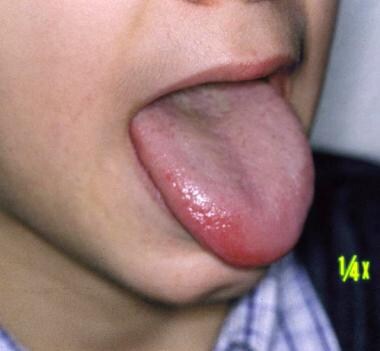
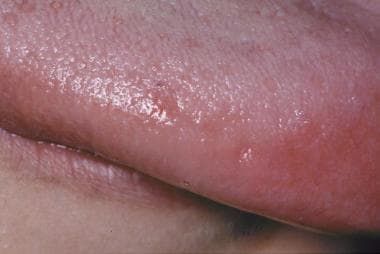
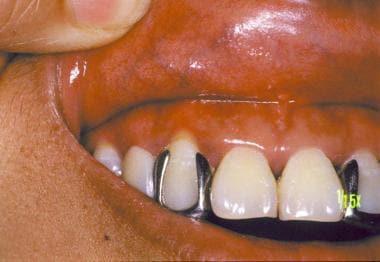
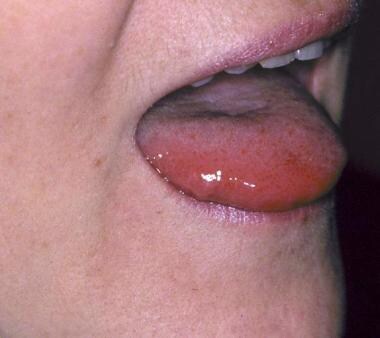
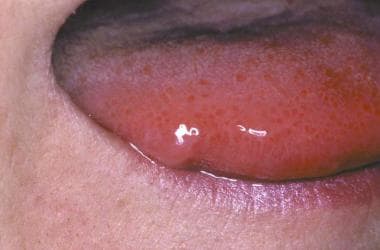
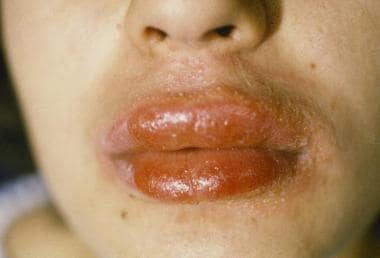
Possible clinical presentations of contact stomatitis include erythematous lesions, erosions/ulcerations, leukoplakialike lesions, oral lichenoid reactions, contact urticaria, burning mouth syndrome, and orofacial granulomatosis.

  • Erythematous lesions
    • These lesions are often associated with swelling.
    • They may be localized or diffuse.
    • Common causes include ingredients of mouthwashes and toothpastes, dental materials, and chewing gum flavorings.
    • A burning sensation is a common complaint.
  • Erosions/ulcerations
    • Erosions/ulcerations are usually painful; they represent the evolution of vesicles and blisters rarely seen in the mouth.
    • Erosions appear as outlined, whitish, rough, macerated areas. Ulcerations are usually covered by a yellow-white exudate and may present with an erythematous halo.
    • Chemical burns are not frequent because the oral mucosa is resistant to heat and acid or alkaline compounds.
    • Possible causes include accidental ingestion of caustic agents, prolonged contact with aspirin or vitamin C tablets, or contact with irritants used for dental care.
    • Allergic contact stomatitis from metal salts or acrylates rarely causes mouth ulcerations.
  • Leukoplakialike lesions
    • Contact sensitization from nickel and other metals occasionally produces whitish hyperkeratotic lesions that clinically resemble leukoplakia.
    • Leukoplakialike lesions are asymptomatic and are commonly localized in the medial part of the cheek.
  • Oral lichenoid reactions
    • Lesions that resemble reticular or erosive lichen planus may occur at the site of mucosal contact with amalgam restorations.
    • These lesions are typically localized.
    • Patients often have a positive patch test result to mercury.
    • Removal of restorations in patients with positive patch test results to mercury usually produces complete regression of the lichenoid lesions, especially when they are in close contact with amalgam fillings. Dental restoration removal occasionally improves the lesions even in patients with negative patch test results, if no cutaneus lichen planus is present.
    • Sensitization to gold, palladium chloride, and copper sulfate has also been associated with oral lichenoid reactions.
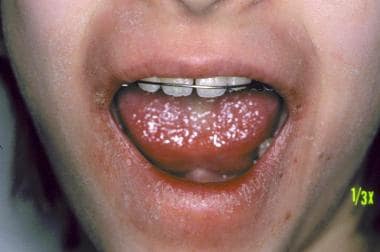
  • Contact urticaria
    • Swelling of the lips, the tongue, the buccal mucosa, and the gingiva develops suddenly with intense itching.
    • Severe cases may be associated with upper airway obstruction.
    • Contact urticaria from latex occurs in patients undergoing dental treatment due to contact with gloves and dental dams.
    • Latex sensitization is more common in patients with atopy and in children who have had multiple operations (eg, patients with spina bifida).
    • Patients with latex sensitization may experience a severe type I immunoglobulin E–mediated allergy after ingestion of some fruits and vegetables, especially chestnuts, banana, avocado, and kiwi fruit (latex-fruit syndrome), due to cross-reactivity between latex allergens and plant-derived food allergens.
    • Contact urticaria is rarely due to allergy to foods.
  • Burning mouth syndrome
    • Burning mouth syndrome is characterized by a burning sensation and dryness of the oral mucosa in the absence of objective signs.
    • Symptoms typically improve during meals.
    • Although contact allergy (especially to mercury) has often been implicated, the disorder most likely has a psychogenic basis.
  • Orofacial granulomatosis
    • Orofacial granulomatosis can be worsened by contact allergy to mercury, gold, or foods.
    • The disease may improve after removal of responsible sensitizers.

Causes

Possible causes of irritant or allergic contact stomatitis include the following:

  • Ingredients of dentifrices, mouthwashes, and dental cleaners (rare)
  • Flavoring agents (eg, cinnamon compounds, eugenol, menthol)
  • Colophony in dental floss and denture adhesives
  • Antimicrobials (eg, chlorhexidine, quaternary ammonium compounds)
  • Ingredients of candies and chewing gums
    • Flavoring agents (rare) (cinnamon compounds, menthol)
    • Propolis (a strong sensitizer often used in the oral cavity because of its antiseptic properties)
  • Cosmetic ingredients (fragrance and preservatives) - Common cause of contact cheilitis
  • Ingredients of dental restorations
    • Amalgam fillings contain mercury compounds (45-60%) and often gold, palladium, and platinum. Metallic and ammoniated mercury are common sensitizers.
    • Dental cement used for sealing pulp canals may contain eugenol, balsam of Peru, and colophony.
    • Acrylic fillings rarely cause problems in dental patients because polymerization of the resin occurs without contact between the sensitizing acrylic monomers and the oral mucosa, and the final polymerized acrylate is relatively free of allergens.
  • Ingredients of dental prosthesis
    • Metal prostheses may release nickel, especially when they are poorly made or corroded.
    • Nickel is also present in dental braces, bridges, and crowns.
    • Stomatitis from acrylates is rare. Acrylate sensitization is a common occupational problem in dentists and dental technicians. It has been reported in 2-3% of dental patients.
  • Topical drugs, such as antibiotics, anesthetics, antiseptics, and steroids, may cause sensitization.
  • Rubber (eg, gloves, dams, orthodontic elastics, bite blocks) may cause sensitization. Latex allergy is not rare.
  • Foods
    • Foods rarely cause contact stomatitis.
    • Children with atopic dermatitis and a food allergy may develop contact urticaria with lip swelling and stomatitis after contact with foods, especially fruits (eg, fruits of the Rosaceae family [eg, apple, peach, pear] in patients with birch pollinosis).
    • Food allergy can worsen granulomatous cheilitis.
  • Ingredients in cosmetics, lipsticks, lip balms, and the sunscreens in these products (eg, propolis, ricinoleic acid, colophony derivatives) may cause contact stomatitis.


Aphthous Stomatitis
Atopic Dermatitis
Behcet Disease
Candidiasis, Mucosal
Denture Stomatitis
Leukoplakia, Oral
Oral Lichen Planus
Oral Manifestations of Autoimmune Blistering Diseases
Oral Manifestations of Drug Reactions
Urticaria, Contact Syndrome
Viral Infections of the Mouth


Lab Studies

  • Serologic testing: In vitro tests, such as a radioallergosorbent test (RAST), for specific immunoglobulin E are available for food and latex allergy. These tests can confirm sensitivity and establish the degree of allergy.

Procedures

  • Patch testing is useful to distinguish irritant reactions from allergic reactions. Patch testing before placement of a prosthesis is not indicated. Reading at 10 days is recommended because reactions to gold, palladium, and mercury salts may be delayed. A patch test series for contact stomatitis should include the following:
    • Nickel sulfate 5% pet
    • Gold sodium thiosulfate 2% pet
    • Metallic mercury 1% pet
    • Ammoniated mercury 1% pet (mercury ammonium chloride)
    • Palladium chloride 1% pet
    • Copper sulfate 2% pet
    • Amalgam without mercury 20% pet (contains silver 13.9%, copper 2.36%, tin 3.54%, and zinc 0.2%)
    • Amalgam with mercury 5% pet (contains mercury 2.5%, silver 1.73%, copper 0.3%, tin 0.44%, and zinc 0.03%)
    • Methacrylates: 2-Hydroxyethylmethacrylate 2% pet
    • 2,2-bis (2-Hydroxy-3-methacryloxy-propoxyl)-phenylpropane (BIS-GMA) 2% pet
    • Balsam of Peru 25% pet
    • Menthol 1% pet
    • Eugenol 1% pet
    • Cinnamic aldehyde 1% pet
    • Propolis 10% pet
    • Fragrance mix 8% pet
    • Colophony 20% pet
    • Benzalkonium chloride 0.1% pet
    • Benzocaine 5% pet
  • Direct testing of oral mucosa: The suspected allergen is placed on the lip mucosa as is, or it is incorporated in Orabase. Reading is performed at 24 hours.
  • Skin prick tests: These tests are routinely used for diagnosing a latex allergy. They are also useful in cases of suspected food allergy.
  • Use test with rubber latex gloves is often positive in patients with a latex allergy.
  • Biopsy may be performed.

Histologic Findings

Histologic study excludes neoplasia in long-standing lesions. A 3- to 4-mm punch biopsy is usually sufficient. Histopathologic examination in contact stomatitis can show changes similar to those in allergic contact dermatitis, with epithelial spongiosis and perivascular lymphohistiocytic infiltration. In addition, lichenoid changes of lymphocytic effacement of the dermoepithelial junction with, at times, vacuolar changes and necrotic epithelial cells may be seen.

Histopathology findings cannot help distinguish between oral lichenoid reactions associated with amalgam and oral lichen planus.


Medical Care

  • Removal of the causative agent is essential.
  • Systemic steroids are rarely required.
  • Intraoral topical steroids are prescribed in severe cases.
  • Sucking on ice cubes provides temporary relief.

Consultations

  • Dermatologist - For evaluation of underlying skin disorders and for patch testing
  • Dentists - For evaluation of dental restorations and teeth occlusion

Diet

  • Advise patients to avoid spicy foods.
  • Instruct patients to avoid soft drinks, candies, and chewing gums in case of allergy to flavoring agents.
  • Recommend that patients avoid the causative food in cases of contact urticaria.


Topical steroids are the first-line therapy. Available vehicles include topical gels, creams, pastes, ointments, sprays, and rinses. General guidelines for administration and usage can be found in standard pharmacology references.

Drug Category: Corticosteroids

These agents have anti-inflammatory properties and cause profound and varied metabolic effects. Corticosteroids modify the body's immune response to diverse stimuli.

Drug NameTriamcinolone (Aristocort)
DescriptionFor inflammatory dermatosis responsive to steroids; decreases inflammation by suppressing migration of polymorphonuclear leukocytes and reversing capillary permeability. Use 0.1% gel.
Adult DoseApply thin film to affected areas up to tid; NPO 30-60 min; drying or wiping mucous membranes prior to application may increase potency
Pediatric DoseNot established
ContraindicationsDocumented hypersensitivity; viral or fungal oral infections
InteractionsNone if not absorbed systemically
PregnancyC - Safety for use during pregnancy has not been established.
PrecautionsDo not use in decreased skin circulation; prolonged use, applying over large areas, and using potent steroids and occlusive dressings may result in systemic absorption; systemic absorption may cause Cushing syndrome, reversible HPA-axis suppression, hyperglycemia, and glycosuria; cutaneous atrophy, telangiectases, striae distensae, hypopigmentation, and acneiform eruption may occur; increased risk of secondary candidal infections

Drug NameFluocinonide (Fluonex, Lidex)
DescriptionHigh-potency topical corticosteroid that inhibits cell proliferation. Immunosuppressive and anti-inflammatory. Use 0.05% gel.
Adult DoseApply thin film to affected areas up to qid; NPO 30-60 min; drying or wiping mucous membranes prior to application may increase potency
Pediatric DoseNot established
ContraindicationsDocumented hypersensitivity; viral or fungal oral infections
InteractionsNone if not absorbed systemically
PregnancyC - Safety for use during pregnancy has not been established.
PrecautionsMay cause adverse systemic effects if used over large areas, on denuded areas, with occlusive dressings, or during prolonged treatment periods; cutaneous atrophy, telangiectases, striae distensae, hypopigmentation, and acneiform eruption may occur; increased risk of secondary candidal infections

Drug NameClobetasol (Temovate)
DescriptionClass I superpotent topical steroid; suppresses mitosis and increases synthesis of proteins that decrease inflammation and cause vasoconstriction. Use 0.05% gel.
Adult DoseApply thin film to affected areas qd/bid; NPO 30-60 min; drying or wiping mucous membranes prior to application may increase potency
Pediatric DoseNot established
ContraindicationsDocumented hypersensitivity; viral or fungal oral infections
InteractionsNone if not absorbed systemically
PregnancyC - Safety for use during pregnancy has not been established.
PrecautionsMay suppress adrenal function in prolonged therapy; cutaneous atrophy, telangiectases, striae distensae, hypopigmentation, and acneiform eruption may occur; increased risk of secondary candidal infections

Drug NamePrednisone (Deltasone)
DescriptionImmunosuppressant for treatment of autoimmune disorders; may decrease inflammation by reversing increased capillary permeability and suppressing PMN activity. Stabilizes lysosomal membranes and also suppresses lymphocyte and antibody production. Useful in severe cases.
Adult Dose40 mg PO qd
Pediatric Dose1-2 mg/kg/d PO
ContraindicationsDocumented hypersensitivity; viral, fungal, tubercular skin, or connective tissue infections; peptic ulcer disease; hepatic dysfunction
InteractionsCoadministration with estrogens may decrease clearance; when used with digoxin, digitalis toxicity secondary to hypokalemia may increase; phenobarbital, phenytoin, and rifampin may increase the metabolism of glucocorticoids (consider increasing maintenance dose); monitor for hypokalemia with coadministration of diuretics; coadministration with ritonavir may significantly increase serum concentrations of prednisone; concomitant therapy with montelukast may result in severe peripheral edema; clarithromycin may increase risk of psychotic symptoms
PregnancyB - Usually safe but benefits must outweigh the risks.
PrecautionsMay unmask hypertension or diabetes or exacerbate peptic ulcer disease and tuberculosis; long-term sequelae associated with long-term steroid use include osteoporosis, cataracts, and pituitary-hypothalamic axis suppression; with high doses, patients may develop a steroid psychosis and are at increased risk of infections, particularly when oral steroids are used in conjunction with other immunosuppressants; frequently monitor patient's blood sugar level, blood pressure, and weight; monitor for Cushing syndrome


Further Outpatient Care

  • Replacement of dental restorations and prostheses may be very expensive and stressful for patients and should not be recommended when their causative role is doubtful.
    • Removal of fillings or restorations does not always produce a complete resolution of symptoms, even in patients with positive patch test results to mercury or other dental compounds.
    • Replacement is advisable when the mucosal lesions are adjacent to dental restorations, especially in cases of localized lichenoid reactions.
    • Titanium may be a satisfactory alternative for patients who are allergic to palladium and other transition metals.
  • Sensitization to nickel is common in the general population. Establish relevance before removal of dental metal. Avoid prosthesis containing transition metals in patients with history of nickel dermatitis.
  • Sensitization to palladium chloride is associated with nickel allergy due to cross-sensitization.
  • Establish relevance before removal of dental restorations in patients with sensitization to mercury derivatives.
  • Gold allergy is often not relevant, and dental gold removal may not prove curative.
  • Sensitization to acrylates is usually relevant. Patch testing with acrylates may cause active sensitization. Active sensitization to metals or acrylates as a consequence of dental procedures is rare.

Deterrence/Prevention

  • Advise patients to avoid known causative agents (see Diet).

Prognosis

  • The prognosis is excellent if the causative agent is detected and removed.

Patient Education

  • Teach avoidance if a causative agent is identified (see Diet).


Medical/Legal Pitfalls

  • Failure to rule out malignant neoplasms in long-standing lesions by not performing a biopsy


Media file 1:  Irritant contact stomatitis of the tongue.
Click to see larger pictureClick to see detailView Full Size Image
Media type:  Photo

Media file 2:  Irritant contact stomatitis of the tongue. Close-up view of Image 1.
Click to see larger pictureClick to see detailView Full Size Image
Media type:  Photo

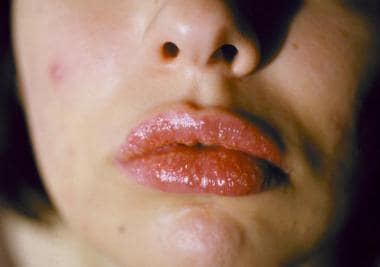
Media file 3:  Acute allergic stomatitis involving the oral mucosa and the lip due to benzocaine.
Click to see larger pictureClick to see detailView Full Size Image
Media type:  Photo

Media file 4:  Allergic contact dermatitis involving the lips and the perioral area due to propolis.
Click to see larger pictureClick to see detailView Full Size Image
Media type:  Photo

Media file 5:  Allergic contact reaction due to nickel in a dental brace.
Click to see larger pictureClick to see detailView Full Size Image
Media type:  Photo

Media file 6:  Allergic contact stomatitis on the gingiva in a patient with a positive patch test result to nickel, palladium, and mercury.
Click to see larger pictureClick to see detailView Full Size Image
Media type:  Photo

Media file 7:  Leukoplakialike lesion in a patient who is allergic to mercury.
Click to see larger pictureClick to see detailView Full Size Image
Media type:  Photo

Media file 8:  Lichen planus–like lesion adjacent to a dental restoration.
Click to see larger pictureClick to see detailView Full Size Image
Media type:  Photo

Media file 9:  Contact urticaria of the lip due to food allergy.
Click to see larger pictureClick to see detailView Full Size Image
Media type:  Photo

Media file 10:  Contact urticaria of the tongue in a patient with latex allergy.
Click to see larger pictureClick to see detailView Full Size Image
Media type:  Photo

Media file 11:  Contact urticaria of the tongue in a patient with latex allergy. Close-up view of Image 10.
Click to see larger pictureClick to see detailView Full Size Image
Media type:  Photo

Media file 12:  Positive patch test result to mercury.
Click to see larger pictureClick to see detailView Full Size Image
Media type:  Photo

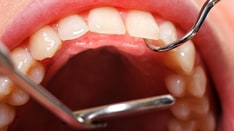
Media file 13:  Positive prick test result to latex.
Click to see larger pictureClick to see detailView Full Size Image
Media type:  Photo


  • Alanko K, Kanerva L, Jolanki R, et al. Oral mucosal diseases investigated by patch testing with a dental screening series. Contact Dermatitis. Apr 1996;34(4):263-7. [Medline].
  • Bircher AJ, von Schulthess A, Henning G. Oral lichenoid lesions and mercury sensitivity. Contact Dermatitis. Nov 1993;29(5):275-6. [Medline].
  • Bruze M, Andersen KE. Gold--a controversial sensitizer. European Environmental and Contact Dermatitis Research Group. Contact Dermatitis. Jun 1999;40(6):295-9. [Medline].
  • Davis CC, Squier CA, Lilly GE. Irritant contact stomatitis: a review of the condition. J Periodontol. Jun 1998;69(6):620-31. [Medline].
  • De Groot AC, Weyland JW, Nater JP. Drugs used on the mucosae. In: Unwanted Effects of Cosmetics and Drugs Used in Dermatology. 3rd ed. Elsevier Science;1994:187-216.
  • Fisher AA. Reactions of the mucous membrane to contactans. In: Novick NL, eds. Clinics in Dermatology. Vol 5. 1987:123-36.
  • Garau V, Masala MG, Cortis MC, Pittau R. Contact stomatitis due to palladium in dental alloys: a clinical report. J Prosthet Dent. Apr 2005;93(4):318-20. [Medline].
  • Garcia-Bravo B, Pons A, Rodriguez-Pichardo A. Oral lichen planus from colophony. Contact Dermatitis. Apr 1992;26(4):279. [Medline].
  • Garhammer P, Schmalz G, Hiller KA, et al. Patients with local adverse effects from dental alloys: frequency, complaints, symptoms, allergy. Clin Oral Investig. Dec 2001;5(4):240-9. [Medline].
  • Gebhart M, Geier J. Evaluation of patch test results with denture material series. Contact Dermatitis. Mar 1996;34(3):191-5. [Medline].
  • Goon AT, Isaksson M, Zimerson E, et al. Contact allergy to (meth)acrylates in the dental series in southern Sweden: simultaneous positive patch test reaction patterns and possible screening allergens. Contact Dermatitis. Oct 2006;55(4):219-26. [Medline].
  • Guerra L, Vincenzi C, Peluso AM. Role of contact sensitizers in the burning mouth syndrome. Am J Contact Dermatitis. 1993;3:154-7.
  • Hamann CP. Natural rubber latex protein sensitivity in review. Am J Contact Dermatitis. 1993;4:4-21.
  • Huang W, Rothe MJ, Grant-Kels JM. The burning mouth syndrome. J Am Acad Dermatol. Jan 1996;34(1):91-8. [Medline].
  • Ibbotson SH, Speight EL, Macleod RI, et al. The relevance and effect of amalgam replacement in subjects with oral lichenoid reactions. Br J Dermatol. Mar 1996;134(3):420-3. [Medline].
  • Jainkittivong A, Langlais RP. Allergic stomatitis. Semin Dermatol. Jun 1994;13(2):91-101. [Medline].
  • James J, Ferguson MM, Forsyth A, et al. Oral lichenoid reactions related to mercury sensitivity. Br J Oral Maxillofac Surg. Dec 1987;25(6):474-80. [Medline].
  • Khamaysi Z, Bergman R, Weltfriend S. Positive patch test reactions to allergens of the dental series and the relation to the clinical presentations. Contact Dermatitis. Oct 2006;55(4):216-8. [Medline].
  • Kobayashi T, Sakuraoka K, Hasegawa Y, et al. Contact dermatitis due to an acrylic dental prosthesis. Contact Dermatitis. Dec 1996;35(6):370-1. [Medline].
  • Koch P, Bahmer FA. Oral lichenoid lesions, mercury hypersensitivity and combined hypersensitivity to mercury and other metals: histologically-proven reproduction of the reaction by patch testing with metal salts. Contact Dermatitis. Nov 1995;33(5):323-8. [Medline].
  • Koch P, Baum HP. Contact stomatitis due to palladium and platinum in dental alloys. Contact Dermatitis. Apr 1996;34(4):253-7. [Medline].
  • Laeijendecker R, van Joost T. Oral manifestations of gold allergy. J Am Acad Dermatol. Feb 1994;30(2 Pt 1):205-9. [Medline].
  • Laeijendecker R, Dekker SK, Burger PM, et al. Oral lichen planus and allergy to dental amalgam restorations. Arch Dermatol. Dec 2004;140(12):1434-8. [Medline].
  • Laine J, Kalimo K, Forssell H, Happonen RP. Resolution of oral lichenoid lesions after replacement of amalgam restorations in patients allergic to mercury compounds. Br J Dermatol. Jan 1992;126(1):10-5. [Medline].
  • Lamey PJ, Lewis MA, Rees TD, et al. Sensitivity reaction to the cinnamonaldehyde component of toothpaste. Br Dent J. Feb 10 1990;168(3):115-8. [Medline].
  • Langlade MA, Milpied-Homsi B, Meynadier J, Litoux P. [Contact eczema of the mouth mucosa]. Ann Dermatol Venereol. 1992;119(8):585-90. [Medline].
  • Lowney ED. Immunologic unresponsiveness to a contact sensitizer in man. J Invest Dermatol. Dec 1968;51(6):411-7. [Medline].
  • Nordlind K, Liden S. Patch test reactions to metal salts in patients with oral mucosal lesions associated with amalgam restorations. Contact Dermatitis. Sep 1992;27(3):157-60. [Medline].
  • Oranje AP, Aarsen RS, Mulder PG, Liefaard G. Immediate contact reactions to cow''s milk and egg in atopic children. Acta Derm Venereol. 1991;71(3):263-6. [Medline].
  • Placucci F, Vincenzi C, Ghedini G, et al. Coexistence of type I and type IV allergy to rubber latex. Contact Dermatitis. Jan 1996;34(1):76. [Medline].
  • Rasanen L, Kalimo K, Laine J, et al. Contact allergy to gold in dental patients. Br J Dermatol. Apr 1996;134(4):673-7. [Medline].
  • Scott A, Egner W, Gawkrodger DJ, et al. The national survey of adverse reactions to dental materials in the UK: a preliminary study by the UK Adverse Reactions Reporting Project. Br Dent J. 2004;196:471-7. [Medline].
  • Strauss JS, Kligman AM. The relationship of atopic allergy and dermatitis. AMA Arch Dermatol. Jun 1957;75(6):806-11. [Medline].
  • Tosti A, Piraccini BM, Peluso AM. Contact and irritant stomatitis. Semin Cutan Med Surg. Dec 1997;16(4):314-9. [Medline].
  • Triantos D. Intra-oral findings and general health conditions among institutionalized and non-institutionalized elderly in Greece. J Oral Pathol Med. 2005;34:577-82. [Medline].
  • Vincenzi C, Tosti A, Guerra L. Contact dermatitis to palladium: a study of 2300 patients. Am J Contact Dermatitis. 1995;6:110-2.
  • Wong L, Freeman S. Oral lichenoid lesions (OLL) and mercury in amalgam fillings. Contact Dermatitis. Feb 2003;48(2):74-9. [Medline].
  • Zoli V, Silvani S, Vincenzi C, Tosti A. Allergic contact cheilitis. Contact Dermatitis. May 2006;54(5):296-7. [Medline].
  • von Mayenburg J, Frosch PJ, Fuchs T. Mercury and amalgam sensitivity. Dermatosen. 1996;44:213-21.

Contact Stomatitis excerpt

Article Last Updated: Mar 7, 2007