Continually Updated Clinical Reference
 
 
  All Sources     eMedicine     Medscape     Drug Reference     MEDLINE
 
eMedicine - Vohwinkel Syndrome : Article by

Quick Find
Authors & Editors
Introduction
Clinical
Differentials
Workup
Treatment
Medication
Follow-up
Miscellaneous
Multimedia
References


Patient Education
Click here for patient education.


Author: Zoltan Trizna, MD, PhD, Private Practice

Zoltan Trizna is a member of the following medical societies: American Academy of Dermatology, American Medical Association, and Texas Medical Association

Coauthor(s): Renée R Snyder, MD, Dermatologist, Private Practice; Dayna Diven, MD, Clinical Professor, Department of Dermatology, University of Texas Medical Branch at Galveston

Editors: Abby S Van Voorhees, MD, Assistant Professor, Director of Psoriasis Services and Phototherapy Units, Department of Dermatology, University of Pennsylvania School of Medicine, Hospital of the University of Pennsylvania; Michael J Wells, MD, Associate Professor, Department of Dermatology, Texas Tech University Health Sciences Center; Mary Farley, MD, Dermatologic Surgeon/Mohs Surgeon, Anne Arundel Surgery Center; Joel M Gelfand, MD, MSCE, Medical Director, Clinical Studies Unit, Assistant Professor, Department of Dermatology, Associate Scholar, Center for Clinical Epidemiology and Biostatistics, University of Pennsylvania; Dirk M Elston, MD, Director, Department of Dermatology, Geisinger Medical Center

Author and Editor Disclosure

Synonyms and related keywords: keratoderma hereditaria mutilans, palmoplantar keratoderma mutilans, autoamputation, palmar keratosis, plantar keratosis, pseudo-ainhum, hearing loss

Background

In 1929, Vohwinkel first described this syndrome in a 24-year-old woman who, since age 2 years, had a diffuse honeycombed palmar and plantar keratosis, in addition to distal interphalangeal creases. The constrictions ultimately led to autoamputation. The daughter of this patient experienced similar clinical lesions.

Pseudo-ainhum is the autoamputation of any digit secondary to keratodermas and other causes. In contrast, ainhum is the posttraumatic or postinfectious development of constricting bands of the digits resulting in autoamputation. Several categories can be distinguished.

  • Ainhum (dactylolysis spontanea): Ainhum is spontaneous autoamputation of the fifth toe, predominantly affecting blacks in tropical climates. This form most likely is posttraumatic or postinfectious in nature and is uncommon in the United States.
  • Congenital annular constricting bands
  • Autoamputation of traumatic origin, including self-mutilation and mechanical factors, frostbite, and burns

Pathophysiology

Vohwinkel syndrome belongs to the group of palmoplantar keratodermas. It is considered to have an autosomal dominant inheritance, although sporadic cases have also been described.

Two mutations of the epidermal differentiation complex have been identified in Vohwinkel syndrome.

One is a missense mutation of the GJB2 gene coding connexin-26, a gap junction protein. This mutation on chromosome 13 is associated with the classic (hearing loss–associated) Vohwinkel syndrome. Connexins are building blocks of gap junctions that are plasma membrane complexes facilitating and regulating the passage of small molecules between cells.

The other mutation is an insertional mutation of the loricrin gene on the epidermal differentiation complex on 1q21. This protein plays a major function in the formation of the cornified cell envelope. Sequential deposition of altered loricrin during terminal differentiation of keratinocytes and other components causes an increase in envelope thickness and rigidity. A phenotype associated with ichthyosis and not deafness is observed.

Frequency

International

The syndrome is rare, with fewer than 30 cases reported.

Mortality/Morbidity

Patients with this syndrome may have a normal life span, persistent keratoderma, potential loss of digits, and hearing loss in the classic variant. Prenatal diagnosis by DNA analysis is possible if the gene defect is known.

Race

No racial predominance is noted.

Sex

No sex predominance is reported.

Age

This syndrome usually manifests between infancy and early childhood.


History

  • The classic skin lesions develop at an early age.
  • Explore the family history for abnormalities suggestive of Vohwinkel syndrome.

Physical

  • Classic triad
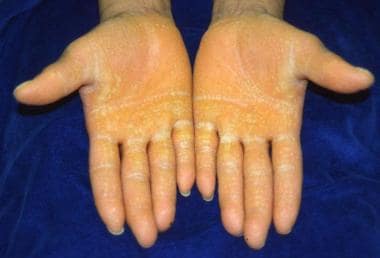
    • Diffuse palmoplantar keratoderma in a honeycombed pattern
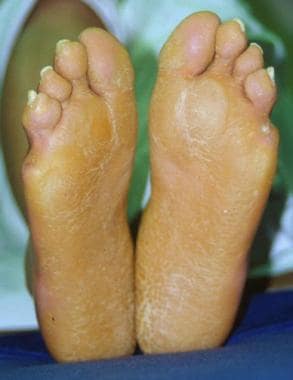
    • Constricting bands of the digits with autoamputation (pseudo-ainhum)
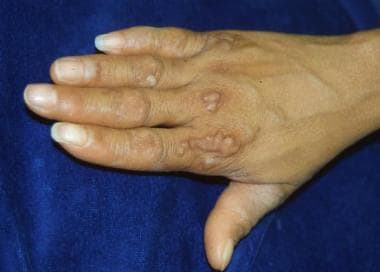
    • Starfish-shaped hyperkeratotic plaques on the dorsum of the hands and feet, elbows, and knees (In addition, linear hyperkeratoses may be observed on the elbows and knees.)
  • Rare associated findings
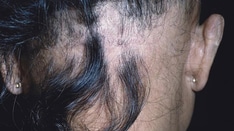
    • Scarring alopecia
    • Nonprogressive sensorineural hearing loss at high frequencies (classic variant)

Causes

  • Ichthyosis-associated type - Insertional mutation of the loricrin gene
  • Hearing loss–associated type - Missense mutation of the connexin-26 gene


Other Problems to be Considered

The following could be considered in the differential diagnosis of palmar and plantar keratodermas:

Acral keratoderma
Pachyonychia congenita
Palmoplantar keratoderma of Sybert
Olmsted syndrome
Palmoplantar keratoderma of Gamborg Nielsen
Scleroderma
Hereditary bullous acrokeratotic poikiloderma of Weary-Kindler
Clouston syndrome
Psoriasis
Other causes of pseudo-ainhum (eg, vascular abnormalities [Raynaud disease, scleroderma, diabetes mellitus], infections [leprosy, tertiary syphilis, yaws], scar formation following ergot poisoning)


Imaging Studies

  • Obtain radiographs of the hands and feet to detect abnormalities of the underlying bones.
  • Use craniofacial imaging studies if clinical findings justify them.

Other Tests

  • Audiometry is suggested to evaluate the nature and extent of hearing loss and for eventual follow-up.

Procedures

  • No invasive diagnostic procedures are routinely indicated.

Histologic Findings

Histologic findings are nonspecific. The constricting bands consist of fibrous connective tissue resembling scars.


Medical Care

Tailor medical care to individual defects or functional impairment of the limbs or hearing.

Surgical Care

Surgical release of constriction bands is used to preserve digits (eg, Z-plasty, other methods for relaxing scars).

Consultations

  • Surgeon - If any deformities of the fingers or craniofacial features are present
  • Audiologist and speech therapist - If hearing loss is noted
  • Other specialists - As indicated by clinical abnormalities

Diet

No dietary interventions are indicated for treatment. Oral bioavailability of retinoids is enhanced with food intake.

Activity

Activity is unrestricted.


Because of the rarity of this syndrome, all treatment options are based on sporadic experience and are off-label uses.

Topical treatment is usually inadequate, although keratolytics (ie, salicylates, urea) and retinoids can alleviate keratoderma.

Systemic retinoids can reverse both the keratoderma and pseudo-ainhum; however, relapse is the rule upon discontinuation of treatment.

Drug Category: Retinoids

Decrease cohesiveness of abnormal hyperproliferative keratinocytes and may reduce potential for malignant degeneration. Modulate keratinocyte differentiation. Have been shown to reduce risk of skin cancer formation in patients who underwent renal transplant.

Drug NameIsotretinoin (Accutane)
DescriptionPO agent that treats serious dermatologic conditions. Synthetic 13-cis isomer of naturally occurring tretinoin (trans-retinoic acid). Both agents are structurally related to vitamin A. Decreases sebaceous gland size and sebum production. May inhibit sebaceous gland differentiation and abnormal keratinization.
Adult Dose0.6 mg/kg/d PO
Pediatric DoseNot recommended
ContraindicationsDocumented hypersensitivity; breastfeeding; psychiatric disorders, especially depression and/or suicidal tendencies
InteractionsToxicity may occur with vitamin A coadministration; pseudotumor cerebri or papilledema may occur when coadministered with tetracyclines; may reduce plasma levels of carbamazepine
Increases toxicity of methotrexate (avoid concomitant use); interferes with effects of microdose progestin minipill; coadministration with alcohol may result in formation of etretinate, which has much longer half-life than acitretin (>120 d); may increase toxicity of phenytoin
PregnancyX - Contraindicated in pregnancy
PrecautionsMay decrease night vision; inflammatory bowel disease may occur; may be associated with development of hepatitis and pancreatitis; diabetes patients may experience problems in controlling blood glucose while on isotretinoin; avoid exposure to UV light or sunlight until tolerance achieved; discontinue treatment if rectal bleeding, abdominal pain, or severe diarrhea occurs; mood swings or depression may occur; caution in history of depression

Drug NameTretinoin (Retin-A)
DescriptionInhibits microcomedo formation and eliminates lesions present. Makes keratinocytes in sebaceous follicles less adherent and easier to remove. Available as 0.025%, 0.05%, and 0.1% creams. Available also as 0.01% and 0.025% gels.
Adult DoseBegin with lowest tretinoin formulation and increase as tolerated; apply hs or qod; lower frequency of application if irritation develops
Pediatric Dose<12 years: Not established
>12 years: Administer as in adults
ContraindicationsDocumented hypersensitivity
InteractionsToxicity increases with coadministration of benzoyl peroxide, salicylic acid, and resorcinol; avoid topical sulfur, resorcinol, salicylic acid, other keratolytics, abrasives, astringents, spices, and lime
PregnancyC - Safety for use during pregnancy has not been established.
PrecautionsPhotosensitivity may occur with excessive sunlight exposure; caution in eczema; do not apply to mucous membranes, mouth, and angles of nose

Drug Category: Keratolytics

Cause cornified epithelium to swell, soften, macerate, and then desquamate.

Drug NameSalicylic acid (Sal-Plant, Salactic film)
DescriptionBy dissolving the intercellular cement substance, salicylic acid produces desquamation of the horny layer of skin, while not affecting the structure of viable epidermis (concentrations of 12-17.6%).
Consider benefit-to-risk ratio in off-label use in Vohwinkel syndrome.
Adult DoseApply topically qd/bid
Pediatric DoseApply as in adults
ContraindicationsDocumented hypersensitivity; prolonged use in infants, patients with diabetes mellitus, and those with impaired circulation; use on moles, birthmarks or warts with hair growing from them, genital or facial warts, warts on mucous membranes, irritated skin, or any area infected or reddened
InteractionsNone reported
PregnancyC - Safety for use during pregnancy has not been established.
PrecautionsAvoid contact with mucous membranes, normal skin surrounding warts, and eyes; immediately flush with water for 15 min if contact with eyes or mucous membranes occurs; avoid inhaling vapors

Drug NameUrea (Ureaphil)
DescriptionPromotes hydration and removal of excess keratin in conditions of hyperkeratosis. Use topical preparations of 10-30%.
Adult DoseApply qd/bid to affected areas
Pediatric DoseApply as in adults
ContraindicationsDocumented hypersensitivity; severely impaired renal function; active intracranial bleeding; marked dehydration; frank liver failure; infusion into veins of lower extremities in elderly patients (may cause phlebitis and thrombosis)
InteractionsMay decrease effects of lithium
PregnancyC - Safety for use during pregnancy has not been established.
PrecautionsDo not use if intracranial bleeding is present, unless prior to surgical intervention to control hemorrhage has been performed (reduction of brain edema by urea may result in reactivation of intracranial bleeding); may increase risk of venous thrombosis and hemoglobinuria in hypothermic patients; caution in renal impairment


Further Inpatient Care

  • Regular follow-up by a dermatologist is recommended.
  • Refer patient to a surgeon if pseudo-ainhum develops.
  • Further care and laboratory testing or radiography depend on the treatment selected, course, and complications.
  • Audiologists and speech therapists may be referred on an individual basis.

Complications

  • Loss of digit(s) with functional impairment of the limb
  • Hearing loss

Prognosis

  • The prognosis is good as long as medications are used.

Patient Education

  • Tailor patient education to the course and complications.


Medical/Legal Pitfalls

  • Medical pitfalls
    • Failure to offer symptomatic treatment
    • Failure to discuss the adverse effects of treatment
    • Failure to offer surgical interventions and evaluation by specialists
    • Failure to detect the potential adverse effects of retinoids
  • Legal pitfalls (No specific legal actions are known.)
    • Failure to discuss adverse effects of treatment options
    • Disregarding contraindications
    • Possibly not offering genetic counseling to affected family members

Special Concerns

  • Pregnancy
    • Genetic counseling is advisable to discuss risk of the offspring being affected by the syndrome
    • If topical retinoids are used in women with childbearing potential, inform patients about teratogenicity and apply current guidelines


Media file 1:  Starfish-shaped plaques.
Click to see larger pictureClick to see detailView Full Size Image
Media type:  Photo

Media file 2:  Palmar hyperkeratosis.
Click to see larger pictureClick to see detailView Full Size Image
Media type:  Photo

Media file 3:  Pseudo-ainhum.
Click to see larger pictureClick to see detailView Full Size Image
Media type:  Photo


  • Bondeson ML, Nystrom AM, Gunnarsson U, Vahlquist A. Connexin 26 (GJB2) Mutations in Two Swedish Patients with Atypical Vohwinkel (Mutilating Keratoderma plus Deafness) and KID Syndrome Both Extensively Treated with Acitretin. Acta Derm Venereol. 2006;86(6):503-8. [Medline].
  • Camisa C, Rossana C. Variant of keratoderma hereditaria mutilans (Vohwinkel's syndrome). Treatment with orally administered isotretinoin. Arch Dermatol. Oct 1984;120(10):1323-8. [Medline].
  • Kelsell DP, Wilgoss AL, Richard G, et al. Connexin mutations associated with palmoplantar keratoderma and profound deafness in a single family. Eur J Hum Genet. Jun 2000;8(6):469-72. [Medline].
  • Lucker GP, Van de Kerkhof PC, Steijlen PM. The hereditary palmoplantar keratoses: an updated review and classification. Br J Dermatol. Jul 1994;131(1):1-14. [Medline].
  • Solis RR, Diven DG, Trizna Z. Vohwinkel's syndrome in three generations. J Am Acad Dermatol. Feb 2001;44(2 Suppl):376-8. [Medline].
  • Spitz JL. Genodermatoses: A Clinical Guide to Genetic Skin Disorders. 2nd ed. Philadelphia, Pa: Lippincott Williams & Wilkins; 2004.
  • White TW. Functional analysis of human Cx26 mutations associated with deafness. Brain Res Brain Res Rev. Apr 2000;32(1):181-3. [Medline].

Vohwinkel Syndrome excerpt

Article Last Updated: Feb 28, 2007