Practice Essentials
Extracorporeal photopheresis (ECP) is a leukapheresis-based therapeutic procedure that has been approved by the US Food and Drug Administration (FDA) for the treatment of advanced cutaneous T-cell lymphoma (CTCL) since 1988. ECP, also known as extracorporeal photochemotherapy and extracorporeal photoimmunotherapy, is performed at over 200 centers worldwide. [1, 2, 3]
In addition to CTCL, ECP has been shown to have efficacy in the treatment of other disorders, including graft versus host disease (GVHD), solid organ transplant rejection, scleroderma, atopic dermatitis, epidermolysis bullosa acquisita, lichen planus, lupus erythematosus, pemphigus vulgaris, Crohn disease, and type 1 diabetes mellitus. [4, 5] Extracorporeal photopheresis may also have some use in the treatment of psoriasis, rheumatoid arthritis, multiple sclerosis, nephrogenic systemic fibrosis/nephrogenic fibrosing dermopathy, and scleromyxedema. [1, 6]

Procedure
Extracorporeal photopheresis (ECP) involves the collection of white blood cells (WBCs) with subsequent exposure to a photosensitizer, 8-methoxypsoralen (8-MOP), and ultraviolet A (UVA) radiation. UVA activates 8-MOP and causes crosslinkage of DNA. [7, 8]
ECP is performed via intravenous access and has 3 stages: (1) leukapheresis, (2) photoactivation, and (3) reinfusion of treated cell product back to the patient.
A number of open and closed systems exist. In the United States, only closed systems have been FDA approved. Closed systems integrate drug photoactivation and reinfusion, thus lowering the risk of infection, contamination, and errors during reinfusion. [1]
Therakos has developed several generations of closed systems. Their CELLEX Photophoresis System is a third-generation system that uses a continuous-flow centrifuge. [6] Compared with the second-generation UVAR XTS system, it requires a lower volume of blood and less time to complete. [9] Depending on which generation of system is used, the process can take between 1.5 and 4 hours to complete.
The procedure for the widely used UVAR XTS system is outlined below:
-
Peripheral intravenous or central venous access is established in the patient. The newer CELLEX system can take advantage of double-needle access. [6]
-
Blood is passed through multiple cycles of leukapheresis. The volume of blood and number of cycles depend on the patient’s hematocrit and body weight (kg). [7] At the end of each leukapheresis cycle, the red blood cells and plasma are returned to the patient. Only a small percentage (5-10%) of the patient’s WBCs are extracted and treated. [7]
-
The collected WBCs are mixed with heparin, saline, and 8-MOP, which intercalates into the DNA of the lymphocytes and makes the cells more susceptible to apoptosis when exposed to UVA radiation. Of note, older procedures involved the use of oral 8-MOP, which resulted in greater gastrointestinal (GI) toxicity and unpredictable drug levels. [7, 8]
-
The treated WBC mixture is returned to the patient.
-
For cutaneous T-cell leukemia (CTCL), this procedure is usually conducted on 2 consecutive days every 2-4 weeks for 6 months, although a variety of treatment intervals, treatment durations, and tapering schedules exist for different indications. Accelerated regimens are typically used in graft versus host disease (GVHD). [7]
Mechanism of Action
There has been much speculation and research performed on the mechanism of action of extracorporeal photopheresis (ECP). It is known that the combination of 8-MOP and UVA radiation causes apoptosis of treated leukocytes and may cause preferential apoptosis of activated or abnormal T cells. [1] However, given that only a small percentage of the body's lymphocytes are treated, this is not likely the only mechanism of action. [1]
It has also been shown that upon reinfusion, ECP-treated apoptotic cells are taken up by antigen-presenting dendritic cells and macrophages. Through their interaction with these antigen-presenting cells and subsequently T and B lymphocytes, it is thought that the apoptotic cells promote immune tolerance, production of antigen-specific regulatory lymphocytes (CD4/8 T, B), and rebalance of an otherwise skewed immune system. [1, 10, 11] Supporting this theory is the down-regulation of inflammatory cytokines evident after ECP, with the subsequent increase in anti-inflammatory cytokine production. [7, 11, 12]
Adverse Reactions
Extracorporeal photopheresis (ECP) is a safe, well-tolerated procedure. However, known adverse effects include the following [1, 8] :
-
Transient hypotension
-
Tachycardia
-
Low-grade anemia
-
Thrombocytopenia
Absolute and relative contraindications to ECP include the following [1] :
-
Sensitivity to psoralen compounds
-
Pregnancy
-
History of heparin-induced thrombocytopenia
-
Unsatisfactory cardiac function
-
Anemia
-
Photosensitive comorbidities
-
Aphakia
Use of ECP in Dermatologic Disease
Cutaneous T-cell lymphoma (CTCL)
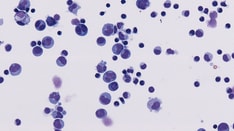
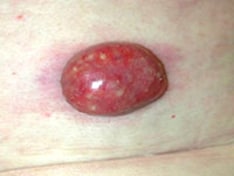
CTCL is a group of lymphoproliferative disorders caused by clonally derived, skin-homing, malignant T cells. The most common of these disorders is mycosis fungoides (60%) and its leukemic variant, Sézary syndrome (5%), which is an aggressive variant that has peripheral blood, lymph node, and sometimes internal organ involvement. [9] Only 5 therapies have been approved by the FDA for the treatment of mycosis fungoides and Sézary syndrome, of which extracorporeal photopheresis (ECP) was the earliest. [9]
As noted by Knobler et al, a number of studies support the use of ECP in mycosis fungoides and Sézary syndrome both as monotherapy and in combination with other treatment modalities such as interferons, granulocyte macrophage colony-stimulating factor (GM-CSF), and systemic retinoids. [1] In addition to the improvement in cutaneous manifestations of CTCL, ECP has been demonstrated to cause a decrease in the burden of peripheral blood disease and lymphadenopathy. [13, 14, 15] While survival benefit has not been prospectively established, data do indicate improvement in survival. [9]
A clinical profile of patients who are more likely to respond to ECP has been developed and was summarized by Knobler et al. [1] The presence of a discrete population of circulating Sézary cells, short duration of disease (< 2 y), preserved number of CD8+ cytotoxic lymphocytes (CD4:CD8 ratio < 10), [8] absence of lymphadenopathy and internal disease, WBC count of less than 20,000/µL, absence of prior chemotherapy, and limited number of skin plaques make response more likely. A normal pretreatment lactate dehydrogenase level has also been associated with a higher response rate. [8] Lastly, as shown by Zic, the strongest predictor of long-term treatment response is a 50% or more reduction in skin lesions by 6 months. [1, 9]
ECP has classically been used in later stage mycosis fungoides and Sézary syndrome. However, because of the efficacy, tolerability, and safety of this treatment modality, strong consideration is being given to use earlier in disease and in other subtypes. [9] In fact, current National Comprehensive Cancer Network (NCCN) guidelines include ECP as a first-line treatment for early, refractory disease. [1]
Graft verus host disease (GVHD)
GVHD complicates the course of a large number of patients undergoing allogeneic hematopoietic stem cell transplantation, thus limiting the use of this potentially lifesaving therapy. [16, 17, 18, 19, 20] GVHD is mediated by mature donor T cells within the infused graft and can affect multiple organ systems. [7] It is divided into an acute and a chronic disease, depending on whether it occurs within the first 100 days post transplantation or beyond.
While corticosteroids remain the standard initial treatment for both acute and chronic GVHD, ECP is a second-line therapy for steroid-refractory chronic GVHD, steroid-dependent chronic GVHD, steroid-refractory acute GVHD, and for patients intolerant of steroid therapy. [1, 7] In chronic GVHD, the use of ECP has been associated with an overall response as high as 83%; greatest response has been evident in skin, mucous membrane, and GI/hepatic manifestations of disease. [1, 7, 21] Similar benefit has been seen in cutaneous, hepatic, and GI manifestations of acute GVHD. [21]
A retrospective study by Malagola et al of 94 patients with acute or chronic GVHD found that second-line therapy with ECP can induce a response rate of over 80%, with 29 of 45 of the study’s patients (64%) with acute GVHD still alive at median 20-month follow-up and 44 of 49 patients (90%) with chronic GVHD still alive at median 27-month follow-up. [22]
Interestingly, a study showed pretransplantation ECP demonstrated a significantly lower incidence of acute GVHD and higher disease-free and overall survival. [21] Further studies are underway exploring preventive use of ECP. [23]
Other uses of ECP
The following conditions have been treated using ECP [1, 24, 25, 26] :
-
Systemic sclerosis/scleroderma
-
Severe atopic dermatitis
-
Epidermolysis bullosa acquisita
-
Erosive oral lichen planus
-
Recalcitrant pemphigus vulgaris
-
Recalcitrant pemphigus foliaceous
-
Psoriasis
-
Scleromyxedema
-
Rheumatoid arthritis
-
Lupus erythematosus
-
Nephrogenic systemic fibrosis/nephrogenic fibrosing dermopathy
Use of ECP in Nondermatologic Disease
Evidence indicates that extracorporeal photopheresis (ECP) is effective for the treatment of persistent acute lung transplant rejection and refractory chronic lung transplant rejection. [1] In a retrospective study, 41 patients with antibody-mediated rejection after lung transplantation received ECP. Levels of donor-specific antibodies significantly decreased during the treatment period, and no adverse events were reported. [27] Similarly, studies have indicated the value of adjunctive ECP in the treatment of heart transplant rejection. [1]
Evidence also exists for the benefit of ECP in the following settings [1, 10, 26] :
-
Kidney transplant rejection
-
Liver transplant rejection
-
Face transplantation
-
Prophylaxis against heart transplant rejection
-
Crohn disease
-
Type 1 diabetes mellitus
-
Multiple sclerosis
Questions & Answers
Overview
What is extracorporeal photopheresis (ECP)?
How is extracorporeal photopheresis (ECP) performed?
What is the mechanism of action of extracorporeal photopheresis (ECP)?
What are the possible adverse effects of extracorporeal photopheresis (ECP)?
Which cutaneous conditions can be treated with extracorporeal photopheresis (ECP)?
What are the nondermatologic indications for extracorporeal photopheresis (ECP)?