| Patient Education |
|
Click here for patient education.
|
|
You are in: eMedicine Specialties >
Dermatology > METABOLIC DISEASES
Variegate Porphyria
Article Last Updated: Feb 7, 2007
AUTHOR AND EDITOR INFORMATION
Section 1 of 10
Author: Maureen B Poh-Fitzpatrick, MD, Professor Emerita of Dermatology and Special Lecturer, Columbia University; Professor of Medicine (Dermatology), University of Tennessee
Maureen B Poh-Fitzpatrick is a member of the following medical societies: Alpha Omega Alpha, American Academy of Dermatology, and New York Academy of Medicine
Editors: David Woodley, MD, Co-Chair, Professor, Department of Medicine, Division of Dermatology, University of Southern California; Richard P Vinson, MD, Assistant Clinical Professor, Department of Dermatology, Texas Tech University School of Medicine; Consulting Staff, Mountain View Dermatology, PA; Julia R Nunley, MD, Professor, Program Director, Dermatology Residency, Department of Dermatology, Virginia Commonwealth University Medical Center; Joel M Gelfand, MD, MSCE, Medical Director, Clinical Studies Unit, Assistant Professor, Department of Dermatology, Associate Scholar, Center for Clinical Epidemiology and Biostatistics, University of Pennsylvania; Dirk M Elston, MD, Director, Department of Dermatology, Geisinger Medical Center
Author and Editor Disclosure
Synonyms and related keywords:
VP, porphyria variegata, South African porphyria, protocoproporphyria, mixed porphyria, porphyria cutanea tarda hereditaria, royal malady, porphyrin-heme metabolism, protoporphyrinogen oxidase, protoporphyrinogen oxidase gene
Background
Variegate porphyria (VP) is an inherited disorder of porphyrin-heme metabolism arising from mutations of the gene encoding the enzyme protoporphyrinogen oxidase. Manifestations of VP in any given individual may include cutaneous photosensitivity, systemic symptoms arising from neurologic dysfunction, or both.
Pathophysiology
Inherited as an autosomal dominant trait, VP is biochemically characterized by accumulations of the photosensitizing porphyrins protoporphyrin and coproporphyrin. In addition, abnormally high levels of the porphyrin precursors porphobilinogen and aminolevulinic acid are found during episodic attacks of systemic symptoms. These episodes are caused by dysfunctions of central, autonomic, and peripheral nervous systems that appear to be effects of deranged heme synthesis on neurons.
Frequency
United States
No porphyria registry exists in the United States; therefore, accurate figures are not available. Unknown numbers of cases may still be unrecognized or misdiagnosed as another porphyria.
International
Incidence is estimated at 1 case in 300 persons in South Africa, where a gene mutation traceable to Dutch immigrants who married there in 1680 has been widely disseminated. In other parts of the world, VP is considered very uncommon or rare.
Mortality/Morbidity
Cutaneous photosensitivity may cause difficulty performing manual labor and may limit many daily activities. Neurovisceral disorders vary from relatively mild symptoms that can remit spontaneously to profound crises that can be fatal or incapacitating for months to years.
Race
No well-established racial predilection is known, although the disease is common among South Africans of Dutch ancestry who inherit a founder gene propagated in that population.
Sex
VP occurs in both men and women.
Age
VP usually presents after puberty. Very rare childhood cases have been ascribed to the presence of 2 mutant protoporphyrinogen oxidase genes in the same individual.
History
- About 60% of individuals harboring a protoporphyrinogen oxidase gene mutation have never been symptomatic but may have a positive family history. In manifested cases, photosensitivity alone is the presenting complaint 3-5 times more often than neuropathic symptoms alone. Both may be present in a minority of cases. Attack episodes can often be linked to history of a new medication.
- A porphyric attack is typically described as abdominal discomfort that may have progressed over several hours to severe pain extending into the back and thighs. Nausea with vomiting, constipation, hypertension, tachycardia, anxiety, and agitation may be reported. Pain and weakness developing in the arms and legs indicates an accelerating attack that may progress to flaccid quadriparesis. Central nerve paralysis, respiratory distress, confusion and bizarre behavior, seizures, and coma may have developed before the patient is initially seen by medical personnel. Historical factors associated with the onset of attacks in other acute porphyrias (hormonal fluctuations due to menses, pregnancy or therapeutic hormones, infections, other stressors) are not clearly responsible for many attacks of VP.
Physical
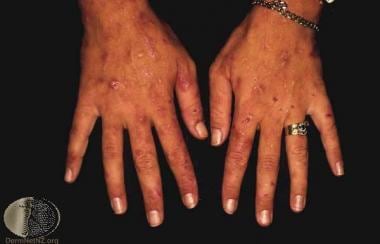
- Photocutaneous lesions are the most common presenting signs of VP. Mechanical fragility, blistering, milia, furrowing, and scarring occur in sun-exposed skin. Hypertrichosis, dyspigmentation, sclerodermoid changes, and a weather-beaten or leathery texture may be present. Children with VP experience photosensitivity of mutilating severity.
- Systemic signs occur less frequently and recur far less often in VP than in acute intermittent porphyria (AIP).
- Pain in VP may become excruciating; uncontrolled vomiting can lead to dehydration. Deteriorating neurological function produces multiple sequelae. Initial limb weakness may progress to areflexic quadriparesis. Respiratory distress may become profound. Heart rate and blood pressure can rise to critical levels. During such crises, dark-orange or reddish urine is excreted and bowel function is disturbed. Tonic-clonic seizures and coma may ensue.
- Whether psychiatric disturbances observed in patients with VP are truly attributable to the disease is contentious. Confusion, disorientation, agitation, mania, depression, and schizophrenialike behavior have all been reported. Psychiatric symptoms were noted in 80% of 18 Finnish patients during attacks, with 25% described as delirious and psychotic. The larger South African experience, however, suggests that neuropsychiatric disturbances should not be attributed to VP, especially in the absence of other signs and symptoms of an attack. Metabolic encephalopathy does occur in VP crises and may contribute to some of these phenomena, and to seizures and coma.
- Hypervolemia and hyponatremia noted in more severe attacks may involve renal salt wasting, inappropriate antidiuretic hormone secretion, or infusion of inappropriate replacement fluids. Hypomagnesemia may also be present.
- Because VP may variably manifest with only neurovisceral symptoms, with only cutaneous photosensitivity, or with both, other diagnoses to be considered include porphyrias that share either type or both types of symptoms and nonporphyric bullous disorders that occur in sun-exposed skin.
Causes
VP arises from autosomal dominant inheritance of a gene mutation encoding a defective protoporphyrinogen oxidase enzyme protein with resultant deficient activity at approximately 50% of normal. The disease in most individuals with such a mutation remains clinically silent, but these persons are at risk of becoming symptomatic if exposed to environmental factors (most often drugs) that can induce overt phenotypical expression.
Drug-Induced Photosensitivity
Epidermolysis Bullosa
Epidermolysis Bullosa Acquisita
Erythropoietic Porphyria
Erythropoietic Protoporphyria
Lupus Erythematosus, Bullous
Porphyria Cutanea Tarda
Pseudoporphyria
Other Problems to be Considered
Hereditary coproporphyria
Acute intermittent porphyria
Lab Studies
- During active phases of VP, urinary porphyrin levels are abnormally high, with the coproporphyrin faction larger than the uroporphyrin faction.
- Urinary aminolevulinic acid and porphobilinogen levels are greatly elevated during attacks but often normalize during quiescent phases.
- Total fecal porphyrin excretion is often high, with protoporphyrin excretion greater than coproporphyrin excretion.
- Erythrocyte porphyrin levels are normal in patients with heterozygosity, but when 2 mutant alleles for the protoporphyrin oxidase gene are present, the zinc protoporphyrin level is elevated.
- Plasma porphyrin levels are always increased in patients who are symptomatic. A fluorescence emission peak maximal at 625-627 nm detected by spectrofluorometry is unique to VP and is a rapid means of confirming this specific diagnosis. Spectrofluorometry identifies such plasma porphyrin peaks in many, but not all, asymptomatic adult carriers of a protoporphyrin oxidase gene mutation, but it detects only some carriers in childhood.
- Porphyrin abnormalities in urine, stool, and plasma may normalize during quiescent phases, or it may remain increased at variable levels.
- Increased biliary porphyrin levels may be the most sensitive biochemical indicator during quiescence.
- Because medical management of an attack is the same for all acute porphyrias, qualitative evidence of elevated porphobilinogen is sufficient to justify initiating therapies in crisis situations while quantitative assays to establish a precise diagnosis are still pending. Protocols for rapid urinary porphobilinogen tests that can be performed at the bedside (modified Watson-Schwartz and Hoesch tests) are discussed in the article by Zaider and Bickers. A test kit is available (Trace PBG Kit, Thermo Trace/DMA; Arlington, Tex) that uses an anion-exchange resin and color chart that permits rapid, specific semiquantitative estimation of porphobilinogen.
- Assays for protoporphyrinogen oxidase enzyme activity are technically difficult and not widely available.
- Analyses for mutations in the protoporphyrinogen oxidase gene are performed in several research centers around the world with particular interest in genetic studies of porphyrias. Because the disease in most individuals carrying a mutation causing VP remains clinically silent, and may also be biochemically silent, family studies aimed at identifying all adults and children at risk for developing VP require mutation analysis for absolute certainty of identifying all carriers.
Histologic Findings
Histologic findings resemble those of porphyria cutanea tarda. Bullae are subepidermal and cell poor; a mild perivascular lymphocytic inflammatory infiltrate may be present. Thickened, hyalinized superficial dermal blood vessel walls contain periodic acid-Schiff stain positive, diastase-resistant glycoprotein deposits. Ultrastructural examination of the dermal vasculature and the dermoepidermal junction reveals replicated basement membranes believed to be elaborated by multiple episodes of damage and repair and fine fibrillar material in the surrounding dermis. Immunoglobulin and complement deposits that are present perivascularly and at the dermoepidermal junction are believed to be due to leakage of these proteins from damaged blood vessels rather than to immunologically mediated events.
Medical Care
Individuals with any acute porphyria must be informed of the risks of encountering the factors that can exacerbate the disease. Patients must avoid hazardous medications, and physicians must avoid administering them to those at risk. Most of these drugs are inducers of hepatic cytochrome P450, formation of which requires heme, thereby accelerating heme synthesis. Protoporphyrinogen oxidase deficiency then leads to accumulation of the porphyrins and porphyrin precursors that cause symptomatic VP. While most attacks of VP appear to be drug-induced, in some cases the inducing factor is uncertain. Therefore, minimizing exposure to factors known to induce attacks in other acute porphyrias is prudent. Thus, avoidance of carbohydrate-restricted diets, moderation of alcohol intake, and smoking cessation is rational advice. Steroid hormonal fluctuations seem generally better tolerated by women with VP than those with AIP but cannot be considered negligible risks. Necessary hormone therapy should be initiated with caution. Prompt treatment of infections and other stressors is recommended. A bracelet or necklace tag identifying the wearer as having VP can prevent inadvertent administration of hazardous drugs in emergency situations in which the patient cannot give a history. Medical management of an acute attack is complex; obtaining advice from experts early in its course is strongly recommended.
- Extensive lists of the drugs and chemicals that are considered risky or believed safe can be obtained from several sources, including current textbooks and journal reviews. Online sources include the American Porphyria Foundation, the University of Cape Town Porphyria Service, and the University of Queensland Porphyria Research Unit.
- These lists should only be considered general guides and can be confusing because some drugs appear on both "safe" or "unsafe" lists. Further, drugs on some unsafe lists are considered usable in patients with porphyrias by some authorities.
- Porphyric patients appear to vary widely in tolerance of specific agents, even those well known to be porphyrinogenic.
- Minimizing any drug usage is wise in porphyric individuals; but, when necessary, choose the safest possible agent after a careful review of lists and recommendations.
- Contentious agents should only be used in circumstances that allow for careful monitoring for adverse events.
- Extreme carbohydrate-restricted dieting or fasting should be avoided. Individuals with VP who sense an impending attack should immediately consume a source of glucose (eg, candy, soft drinks, fruit juices) and seek medical care. Intravenous infusions or high oral consumption (300-400 g/d) of glucose may abort attacks if given early. Glucose reduces the activity of hepatic aminolevulinic acid synthase, the rate-controlling enzyme of hepatic heme synthesis.
- Intravenous infusion of a heme-analogue acts to replete the hepatic free heme pool, thereby repressing aminolevulinic acid synthase. Heme should be given early in attacks, particularly those that are severe or are not responsive to symptomatic management, fluids, and carbohydrates within a day. In the United States, the analogue hemin is available (Panhematin, Ovation Pharmaceuticals; Deerfield, Ill). In other parts of the world, heme arginate is available as Normosang from Leiras Medica, Helsinki, Finland.
- Women with acute porphyrias who experience cyclic attacks in the week prior to menstruation may benefit from suppression of ovulation by exogenous luteinizing hormone– releasing -hormone agonist therapy. Cyclic attacks are more characteristic of AIP than VP.
- Management of fluid and electrolyte imbalances, particularly hyponatremia and hypomagnesemia, is critical during attacks. Intravenous fluid replacement should be with 5% dextrose in saline rather than water. Experience in several porphyria centers with (1) clonazepam, diazepam, magnesium sulfate, or gabapentin to control seizures; (2) with propanolol to effect beta-blockade to control severe tachycardia and hypertension; (3) with morphine or meperidine for severe pain; and (4) with a phenothiazine to reduce nausea and vomiting, agitation, and anxiety supports the safety and efficacy of these agents.
- Mild attacks (those in which pain levels can be adequately addressed by standard doses of acetaminophen, aspirin, or codeine and in which vomiting does not develop) may remit over 1-2 days with conservative management. Any porphyrinogenic drug must be eliminated, and adequate fluid and carbohydrate intake must be ensured. If improvement is not observed within this time frame, administration of a heme analogue is indicated. Obtaining this "orphan drug" may require delivery from a remote source; a supplier should be contacted as soon as an attack is recognized.
Surgical Care
Liver transplantation for alcoholic cirrhosis in a patient with concurrent VP followed by recovery of the porphyria has been reported. Whether VP alone would ever be sufficient indication for liver transplantation would require a stringent risk/benefit analysis.
Consultations
- Consultation with a porphyria expert may be helpful in managing an acute attack. Lists of physicians with expertise in porphyrias and of laboratories for analysis of porphyrins and porphyrin precursors are available through the American Porphyria Foundation. A particularly comprehensive guide to diagnosis and therapy of VP can be found through the University of Cape Town Porphyria Service.
- Consultation with a dermatologist is recommended for sun avoidance/protection measures and treatment of infected skin lesions.
- Consultation with an anesthesiologist is required for the selection of safe anesthetic agents for any needed surgery.
- Consultation with a neurologist for evaluation and treatment of neuropathy is indicated. Rehabilitation medicine services may be needed for recovery of neuromotor deficits over a several month period.
- Consultation with a gynecologist should be sought if hormonal therapies are considered.
- A medical geneticist can assist in counseling patients and families about the heritability and penetrance of VP.
Diet
Carbohydrate restriction should be avoided. Meals should provide adequate sources of complex carbohydrates to maintain blood glucose levels in reference ranges.
The goals of pharmacotherapy are to reduce morbidity and to prevent complications.
Drug Category: Heme analogues
Infusion of hemelike agents rapidly restores the free-heme pool in hepatocytes, thereby exerting negative feedback repression on the rate-limiting enzyme of heme synthesis. Prompt use may prevent an attack from causing neuronal degeneration
| Drug Name | Hemin (Panhematin) |
| Description | Enzyme inhibitor derived from processed red blood cells that is an iron-containing metalloporphyrin. Previously known as hematin, a term used to describe the chemical reaction product of hemin and sodium carbonate solution. Has anticoagulant effect and may cause thrombophlebitis at the infusion site. Must be reconstituted from lyophilized powder. Reconstitute with human serum albumin 25% (132 mL of 25% HSA to 1 vial of hemin [301 mg heme]) and infuse into large vein to reduce risk of thrombophlebitis. |
| Adult Dose | 3-4 mg/kg/d IV for 4 d (up to 14 d prn); 1-4 mg/kg/d IV over 10-15 min for 3-14 d, based on clinical signs; in severe cases, may repeat no earlier than q12h, not to exceed 6 mg/kg/24h |
| Pediatric Dose | Not established |
| Contraindications | Documented hypersensitivity |
| Interactions | May further increase effect of anticoagulants |
| Pregnancy | C - Safety for use during pregnancy has not been established.
|
| Precautions | Attacks of porphyria may progress to neuronal damage; prompt use may prevent attack from causing neuronal degeneration, but not effective in repairing existing neuronal damage; asymptomatic and reversible renal shutdown, oliguria, and increased nitrogen retention have occurred; no worsening of renal function has been seen with recommended dosages; monitor coagulation profile if patients have been on anticoagulation therapy; very large doses can cause hemolysis and transient renal failure |
| Drug Name | Heme arginate |
| Description | Not currently available in the United States. Fewer adverse effects than hemin. |
| Adult Dose | 3 mg/kg/d IV for 3-4 d or longer if needed; alternatively, 250 mg/d IV mixed with 100 mL human serum albumin infused over 20-30 min for 2-4 d |
| Pediatric Dose | Not established |
| Contraindications | Documented hypersensitivity |
| Interactions | May further increase effect of anticoagulants |
| Pregnancy | C - Safety for use during pregnancy has not been established.
|
| Precautions | |
Drug Category: Luteinizing hormone releasing-hormone analogues
These agents decrease endogenous estrogen and progesterone production. The infrequency of menses-related attacks in VP would make this therapy infrequently considered.
| Drug Name | Leuprolide (Lupron) |
| Description | Suppresses ovarian and testicular steroidogenesis by decreasing LH and FSH levels. |
| Adult Dose | 1 mg SC qd; alternatively, Lupron Depot at 7.5 mg qmo |
| Pediatric Dose | Not established |
| Contraindications | Documented hypersensitivity; undiagnosed vaginal bleeding; spinal cord compression; pregnancy |
| Interactions | None reported |
| Pregnancy | X - Contraindicated in pregnancy
|
| Precautions | Long-term use may cause osteoporosis and endometrial atrophy with vaginal bleeding; supplemental oral calcium (1500 mg/d) should be given with long-term use; reduction in bone density can be treated with bisphosphonates; supplemental estrogen therapy may be needed to relieve uterine bleeding; transdermal or oral estradiol is often tolerated and should be cautiously tried if therapy > 6 mo; urinary tract obstruction, tumor flare, and bone pain may occur; monitor patients for weakness and paresthesia |
Drug Category: Beta-adrenergic blocking agents
These agents reduce sympathetic hyperactivity.
| Drug Name | Propranolol (Inderal) |
| Description | Has membrane-stabilizing activity and decreases automaticity of contractions. Not suitable for emergency treatment of hypertension. Do not give IV in hypertensive emergencies. |
| Adult Dose | 40-240 mg PO bid, up to 640 mg/d |
| Pediatric Dose | 2-4 mg/kg/d PO divided bid |
| Contraindications | Documented hypersensitivity; uncompensated congestive heart failure; bradycardia; cardiogenic shock; A-V conduction abnormalities |
| Interactions | Coadministration with aluminum salts, barbiturates, NSAIDs, penicillins, calcium salts, cholestyramine, and rifampin may decrease effects; calcium channel blockers, cimetidine, loop diuretics, and MAOIs may increase toxicity; toxicity of hydralazine, haloperidol, benzodiazepines, and phenothiazines may increase |
| Pregnancy | C - Safety for use during pregnancy has not been established.
|
| Precautions | Beta-adrenergic blockade may decrease signs of acute hypoglycemia and hyperthyroidism; abrupt withdrawal may exacerbate symptoms of hyperthyroidism, including thyroid storm; withdraw drug slowly and monitor closely |
Drug Category: Opiate analgesics
These agents provide relief of severe abdominal and/or other pain. Very large doses may be required over the course of a day.
| Drug Name | Morphine sulfate (Duramorph, Astramorph, MS Contin) |
| Description | DOC for analgesia due to reliable and predictable effects, safety profile, and ease of reversibility with naloxone. Various IV doses are used; commonly titrated until desired effect obtained. |
| Adult Dose | 3-12 mg IV/IM repeat q3-4h prn |
| Pediatric Dose | Infants and children: 0.1-0.2 mg/kg/dose IV/IM/SC q2-4h prn; not to exceed 15 mg/dose; may initiate at 0.05 mg/kg/dose |
| Contraindications | Documented hypersensitivity; hypotension; potentially compromised airway where establishing rapid airway control would be difficult |
| Interactions | Phenothiazines may antagonize analgesic effects of opiate agonists; tricyclic antidepressants, MAOIs, and other CNS depressants may potentiate adverse effects of morphine with coadministration |
| Pregnancy | C - Safety for use during pregnancy has not been established.
|
| Precautions | Caution in hypotension, respiratory depression, nausea, emesis, constipation, and urinary retention; caution in atrial flutter and other supraventricular tachycardias; has vagolytic action and may increase ventricular response rate |
| Drug Name | Meperidine (Demerol) |
| Description | Analgesic with multiple actions similar to those of morphine; may produce less constipation, smooth muscle spasm, and depression of cough reflex than similar analgesic doses of morphine. |
| Adult Dose | 50-200 mg IV/IM q3-4h prn |
| Pediatric Dose | 1-1.8 mg/kg (0.5-0.8 mg/lb) PO/IV/IM/SC q3-4h prn; not to exceed adult dose |
| Contraindications | Documented hypersensitivity; MAOIs; upper airway obstruction or significant respiratory depression; during labor when delivery of premature infant is anticipated |
| Interactions | Monitor for increased respiratory and CNS depression with coadministration of cimetidine; hydantoins may decrease effects; avoid with protease inhibitors |
| Pregnancy | C - Safety for use during pregnancy has not been established.
|
| Precautions | Caution in patients with head injuries because meperidine may increase respiratory depression and CSF pressure (use only if absolutely necessary); caution when using postoperatively and with history of pulmonary disease (suppresses cough reflex); because of tolerance, substantially increased dose levels may aggravate or cause seizures even if no prior history of convulsive disorders; monitor closely for morphine-induced seizure activity if prior history of seizures |
Drug Category: Antiemetics/sedatives
These drugs reduce nausea and vomiting, control anxiety and agitation, and potentiate analgesia.
| Drug Name | Chlorpromazine (Thorazine) |
| Description | Mechanisms responsible for relieving nausea and vomiting include blocking postsynaptic mesolimbic dopamine receptors, anticholinergic effects, and depression of RAS. Blocks alpha-adrenergic receptors and depresses release of hypophyseal and hypothalamic hormones. Slow IV infusion (patient lying flat) when symptoms persist; 25-50 mg with 500-1000 mL of NS; monitor blood pressure. |
| Adult Dose | 10-50 mg IM q4-6h repeat prn |
| Pediatric Dose | Not established |
| Contraindications | Documented hypersensitivity; bone marrow suppression; narrow-angle glaucoma; severe liver or cardiac disease |
| Interactions | Other CNS depressants, anticholinergics, or anticonvulsants; antihypertensives may cause additive effect; coadministration with epinephrine may cause hypotension |
| Pregnancy | C - Safety for use during pregnancy has not been established.
|
| Precautions | May cause pseudoparkinsonism; akathisia is a common extrapyramidal reaction in elderly persons; lowers seizure threshold and increases risk of seizures in patients with history of seizures |
Drug Category: Anticonvulsants
These agents prevent seizure recurrence and terminate clinical and electrical seizure activity.
| Drug Name | Magnesium sulfate |
| Description | Corrects hypomagnesemia and helps control seizures. Nutritional supplement in hyperalimentation; cofactor in enzyme systems involved in neurochemical transmission and muscular excitability. |
| Adult Dose | 3 g in 0.15 M NaCl IV infused over 1 h initially, followed by 1 g/h to achieve a serum Mg level of 4-8 mEq/L |
| Pediatric Dose | 20-100 mg/kg/dose IV q4-6h prn; in severe cases, may use doses as high as 200 mg/kg/dose |
| Contraindications | Documented hypersensitivity; heart block; Addison disease; myocardial damage; severe hepatitis |
| Interactions | Concurrent use with nifedipine may cause hypotension and neuromuscular blockade; may increase neuromuscular blockade seen with aminoglycosides and potentiate neuromuscular blockade produced by tubocurarine, vecuronium, and succinylcholine; may increase CNS effects and toxicity of CNS depressants and betamethasone and cardiotoxicity of ritodrine |
| Pregnancy | B - Usually safe but benefits must outweigh the risks.
|
| Precautions | Magnesium may alter cardiac conduction, leading to heart block in digitalized patients; monitor respiratory rate, deep tendon reflex, and renal function when electrolyte is administered parenterally; caution when administering because may produce significant hypertension or asystole; in overdose, calcium gluconate 10-20 mL IV of 10% solution can be given as antidote for clinically significant hypermagnesemia |
| Drug Name | Gabapentin (Neurontin) |
| Description | Structurally related to GABA but does not interact with GABA receptors; not converted metabolically into GABA or a GABA agonist; not an inhibitor of GABA uptake or degradation. Does not exhibit affinity for other common receptor sites. |
| Adult Dose | 300-600 mg PO q8h |
| Pediatric Dose | <12 years: Not established >12 years: Administer as in adults |
| Contraindications | Documented hypersensitivity |
| Interactions | Antacids may significantly reduce bioavailability (administer at least 2 h following antacids); may significantly increase norethindrone levels |
| Pregnancy | C - Safety for use during pregnancy has not been established.
|
| Precautions | Administer 2 h after antacids |
| Drug Name | Diazepam (Valium) |
| Description | For acute seizure control by intravenous infusion. Depresses all levels of CNS (eg, limbic and reticular formation), possibly by increasing activity of GABA. Individualize dose and increase cautiously to avoid adverse effects. |
| Adult Dose | 5-10 mg IV q10-15 min; not to exceed 30 mg |
| Pediatric Dose | 0.05-0.3 mg/kg/dose IV/IM over 2-3 min q15-30min; repeat in 2-4 h prn; not to exceed 10 mg |
| Contraindications | Documented hypersensitivity; narrow-angle glaucoma; open-angle glaucoma; coma; psychosis (requires clinical judgment); ketoconazole; itraconazole |
| Interactions | Potentiates phenothiazines and narcotic analgesic agents; hepatic elimination of diazepam is reduced by many drugs, including cimetidine, oral contraceptives, disulfiram, fluoxetine, isoniazid, ketoconazole, metoprolol, propoxyphene, propranolol, and valproic acid |
| Pregnancy | D - Unsafe in pregnancy
|
| Precautions | Increased risk of congenital malformations has been associated with use of minor tranquilizers during first trimester of pregnancy; caution with other CNS depressants, low albumin levels, or hepatic disease (may increase toxicity) |
| Drug Name | Clonazepam (Klonopin) |
| Description | Long-acting benzodiazepine that increases presynaptic GABA inhibition and reduces monosynaptic and polysynaptic reflexes. Suppresses muscle contractions by facilitating inhibitory GABA neurotransmission and other inhibitory transmitters. Has multiple indications, including suppression of myoclonic, akinetic, or petit mal seizure activity and focal or generalized dystonias (eg, tardive dystonia). Reaches peak plasma concentration at 2-4 h after oral or rectal administration. Not often used IV in United States. |
| Adult Dose | 1 mg IV for acute seizures 0.5 mg PO bid to prevent recurrent seizures 0.05-0.2 mg/kg/d PO for maintenance |
| Pediatric Dose | Administer as in adults |
| Contraindications | Documented hypersensitivity; severe liver disease, and acute narrow-angle glaucoma |
| Interactions | Phenytoin and barbiturates may reduce effects; coadministration of CNS depressants increase toxicity |
| Pregnancy | D - Unsafe in pregnancy
|
| Precautions | Caution in chronic respiratory disease or impaired renal function; withdrawal symptoms can result from abrupt discontinuation |
Drug Category: Oral photoprotectants
These agents may reduce cutaneous photosensitivity.
| Drug Name | Beta-carotene (Lumitene) |
| Description | Effectiveness is uncertain in VP, but a clinical trial may be warranted in view of its low-risk profile. Exact mechanism of action not completely elucidated. Patient must become carotenemic before effects are observed. More than an internal light screen may be responsible for effects. May provide a limited level of photoprotection. Causes yellowing of skin (carotenoderma). Any photoprotection afforded increases slowly after drug is commenced over a 4- to 6-wk period. When discontinued, skin color and benefit fade over several weeks. |
| Adult Dose | 120-300 mg PO qd; divided doses may be better tolerated and better absorbed. |
| Pediatric Dose | 30-120 mg PO qd; divided doses may be better tolerated and better absorbed; for very small children, cap may be opened and beadlets inside mixed with applesauce or other easily swallowed foods |
| Contraindications | Documented hypersensitivity |
| Interactions | Coadministration with vitamin A may result in additive toxic effects. |
| Pregnancy | C - Safety for use during pregnancy has not been established.
|
| Precautions | Caution in patients with renal or hepatic impairment; may increase risk for lung cancer in heavy smokers; may cause orange stools and diarrhea or loose stools at onset of therapy that tend to resolve with continued use. |
Further Inpatient Care
- Paralyses occurring during acute attacks that do not remit promptly with treatment may persist for long periods or improve incrementally over months. Lengthy rehabilitation therapy programs may be needed.
- Attacks progressing to neuropathic phases are best handled in an intensive care setting until crises are stabilized and recovery ensured.
Further Outpatient Care
- Individuals with a confirmed diagnosis of VP should be instructed that if they sense an impending attack (usually onset of abdominal discomfort that continues over several hours), they should discontinue medication (especially any new drug), consume a source of glucose, and contact their physician immediately. Rapid test results for urinary porphyrins and porphobilinogen should be obtained promptly, and the patient's condition should be monitored. Even if test results confirm a porphyric attack and if symptoms do not worsen, fluids and carbohydrates can be taken orally; and if vomiting does not ensue, conservative management may be continued in an outpatient setting. Otherwise, hospital admission is indicated.
Deterrence/Prevention
- Patients must avoid use of hazardous drugs. Patients should also avoid carbohydrate-restricted diets and limit alcohol intake and smoking. Although steroid hormonal fluctuations, infections, and other stressors may be less problematic in VP than in AIP, the possible association with porphyric attacks should be kept in mind.
- Sun avoidance should be practiced by patients with photocutaneous symptoms of VP.
- Sunblock creams containing physical sunscreen agents (titanium dioxide, zinc oxide) or sunless tanning creams or gels containing dihydroxyacetone that impart pigmentation to the stratum corneum may help, but these agents rarely provide complete relief.
- The application of plastic film filters that exclude some of the offending wavelengths to car windows can be helpful, but this must conform with local motor vehicle safety regulations.
- Avoidance of mechanical trauma to sun-exposed skin reduces the occurrence of blisters and erosions.
Complications
- High levels of protoporphyrin in bile can lead to gallstone formation.
- Surgical cholelithectomies or cholecystectomies must be performed with care to avoid anesthetics that can induce attacks.
Prognosis
- Mild attacks of VP may resolve within a few to several days with conservative management. Those that progress to vomiting or early signs of neuropathy usually respond to the administration of a heme analogue for 4 days. Profound attacks that are either unrecognized or inadequately treated early enough in the course may progress to long-term debility or death.
Patient Education
- Patients need careful instruction about the nature of the disease and its genetic implications for their family members.
- Up-to-date lists of safe and unsafe drugs should be provided to patients and their physicians.
- Dietary instructions for maintaining adequate carbohydrate intake and for consuming a rapidly absorbed form of glucose at the first signs of an attack should be given.
Medical/Legal Pitfalls
- Misdiagnosis of symptomatic VP as porphyria cutanea tarda may lead to inappropriate treatment with phlebotomy or antimalarial therapies that are ineffective. This may also lead to failure to advise patients correctly about avoiding inducers of life-threatening attacks. Establishment of a complete profile of porphyrins and porphyrin precursors present in urine, feces, and blood should enable diagnostic distinction in most cases.
- Anderson KE, Spitz IM, Sassa S, et al. Prevention of cyclical attacks of acute intermittent porphyria with a long-acting agonist of luteinizing hormone-releasing hormone. N Engl J Med. Sep 6 1984;311(10):643-5. [Medline].
- Anderson KE, Bloomer JR, Bonkovsky HL, et al. Recomendations For the Diagnosis and Treatment of the Acute Porphyrias. Ann Int Med. 2005;142:439-450. [Medline].
- Bonkovsky HL. Advances in understanding and treating ''the little imitator,'' acuteporphyria. Gastroenterology. Aug 1993;105(2):590-4. [Medline].
- Bonkovsky HL, Healey JF, Lourie AN, Gerron GG. Intravenous heme-albumin in acute intermittent porphyria: evidence forrepletion of hepatic hemoproteins and regulatory heme pools. Am J Gastroenterol. Aug 1991;86(8):1050-6. [Medline].
- Bonkovsky HL, Barnard GF. The Porphyrias. Curr Treat Options Gastroenterol. Dec 2000;3(6):487-500. [Medline].
- Bonkowsky HL, Schady W. Neurologic manifestations of acute porphyria. Semin Liver Dis. May 1982;2(2):108-24. [Medline].
- Bonkowsky HL, Tschudy DP. Letter: Hazard of propranolol in treatment of acute porphyria. Br Med J. Oct 5 1974;4(5935):47-8. [Medline].
- Brenner DA, Bloomer JR. The enzymatic defect in variegate porphyria. Studies with human cultured skin fibroblasts. N Engl J Med. Apr 3 1980;302(14):765-9. [Medline].
- Eales L, Day RS, Blekkenhorst GH. The clinical and biochemical features of variegate porphyria: an analysis of 300 cases studied at Groote Schuur Hospital, Cape Town. Int J Biochem. 1980;12(5-6):837-53. [Medline].
- Epstein JH, Tuffanelli DL, Epstein WL. Cutaneous changes in the porphyrias. A microscopic study. Arch Dermatol. May 1973;107(5):689-98. [Medline].
- Hift RJ, Meissner D, Meissner PN. A systematic study of the clinical and biochemical expression of variegate porphyria in a large South African family. Br J Dermatol. Aug 2004;151(2):465-71. [Medline].
- Hift RJ, Davidson BP, van der Hooft C, et al. Plasma fluorescence scanning and fecal porphyrin analysis for the diagnosis of variegate porphyria: precise determination of sensitivity and specificity with detection of protoporphyrinogen oxidase mutations as a reference standard. Clin Chem. May 2004;50(5):915-23. [Medline].
- Kalman DR, Bonkovsky HL. Management of acute attacks in the porphyrias. Clin Dermatol. Mar-Apr 1998;16(2):299-306. [Medline].
- Kirsch RE, Meissner PN, Hift RJ. Variegate porphyria. Semin Liver Dis. 1998;18(1):33-41. [Medline].
- Krauss GL, Simmons-O''Brien E, Campbell M. Successful treatment of seizures and porphyria with gabapentin. Neurology. Mar 1995;45(3 Pt 1):594-5. [Medline].
- Logan GM, Weimer MK, Ellefson M, et al. Bile porphyrin analysis in the evaluation of variegate porphyria. N Engl J Med. May 16 1991;324(20):1408-11. [Medline].
- Meissner P, Adams P, Kirsch R. Allosteric inhibition of human lymphoblast and purified porphobilinogen deaminase by protoporphyrinogen and coproporphyrinogen. A possible mechanism for the acute attack of variegate porphyria. J Clin Invest. Apr 1993;91(4):1436-44. [Medline].
- Meissner PN, Day RS, Moore MR, et al. Protoporphyrinogen oxidase and porphobilinogen deaminase in variegate porphyria. Eur J Clin Invest. Jun 1986;16(3):257-61. [Medline].
- Mustajoki P. Variegate porphyria. Twelve years'' experience in Finland. Q J Med. Spring 1980;49(194):191-203. [Medline].
- Mustajoki P, Tenhunen R, Niemi KM, et al. Homozygous variegate porphyria. A severe skin disease of infancy. Clin Genet. Nov 1987;32(5):300-5. [Medline].
- Poh-Fitzpatrick MB. A plasma porphyrin fluorescence marker for variegate porphyria. Arch Dermatol. May 1980;116(5):543-7. [Medline].
- Sadeh M, Blatt I, Martonovits G, et al. Treatment of porphyric convulsions with magnesium sulfate. Epilepsia. Sep-Oct 1991;32(5):712-5. [Medline].
- Stojeba N, Meyer C, Jeanpierre C, et al. Recovery from a variegate porphyria by a liver transplantation. Liver Transpl. 2004;10:935-8. [Medline].
- Whatley SD, Puy H, Morgan RR, et al. Variegate porphyria in Western Europe: identification of PPOX gene mutations in 104 families, extent of allelic heterogeneity, and absence of correlation between phenotype and type of mutation. Am J Hum Genet. Oct 1999;65(4):984-94. [Medline].
- Zaider E, Bickers DR. Clinical laboratory methods for diagnosis of the porphyrias. Clin Dermatol. Mar-Apr 1998;16(2):277-93. [Medline].
Variegate Porphyria excerpt Article Last Updated: Feb 7, 2007
|