Continually Updated Clinical Reference
 
 
  All Sources     eMedicine     Medscape     Drug Reference     MEDLINE
 
eMedicine - Sporotrichosis : Article by

Quick Find
Authors & Editors
Introduction
Clinical
Differentials
Workup
Treatment
Medication
Follow-up
Miscellaneous
Multimedia
References

Related Articles
Leishmaniasis

Mycobacterium Marinum Infection of the Skin

Nocardiosis

Syphilis


Patient Education
Yeast and Fungal Infections Center

Sporotrichosis Overview

Sporotrichosis Causes

Sporotrichosis Symptoms

Sporotrichosis Treatment


Author: Scott D Miller, MD, Dermatologist and Dermatologic Surgeon, Department of Dermatology, Carolinas Dermatology Group, PA

Scott D Miller is a member of the following medical societies: American Academy of Dermatology and American Society for Dermatologic Surgery

Editors: Kathryn Schwarzenberger, MD, Associate Professor of Medicine, Division of Dermatology, University of Vermont College of Medicine; Consulting Staff, Division of Dermatology, Fletcher Allen Health Care; Richard P Vinson, MD, Assistant Clinical Professor, Department of Dermatology, Texas Tech University School of Medicine; Consulting Staff, Mountain View Dermatology, PA; Lester F Libow, MD, Dermatopathologist, South Texas Dermatopathology Laboratory; Catherine Quirk, MD, Clinical Assistant Professor, Department of Dermatology, Brown University; William D James, MD, Paul R Gross Professor of Dermatology, University of Pennsylvania School of Medicine; Vice-Chair, Program Director, Department of Dermatology, University of Pennsylvania Health System

Author and Editor Disclosure

Synonyms and related keywords:

Background

Sporotrichosis is a subcutaneous or systemic infection caused by Sporothrix schenckii, a rapidly growing dimorphic fungus. The organism derives its name from R B Schenck, who first reported the infection in 1898. Sporothrix typically exists as a saprophytic mold on vegetative matter in humid climates worldwide. A dimorphic fungus, the organism exhibits mycelial forms at 25°C and a yeast form at 37°C.

Cutaneous infection often results from a puncture wound involving thorns or other plant matter. Other more unusual reported causes include squirrel bites and trauma induced by liposuction. Any compromise of the skin barrier with subsequent seeding could potentially cause infection. Sporotrichosis usually occurs sporadically as isolated cases. Occasionally, groups of individuals are infected after being exposed to the organism.

Since approximately the beginning of the 21st century, an outbreak of increasing numbers of cases has been occurring in Rio de Janeiro, Brazil. From 1998-2004, 759 culture-proven cases have been identified and treated, predominantly among women at a median age of 39 years and predominantly among those with domiciliary or professional contact with infected cats.

An outbreak in the United States in 1988 affected 84 people who handled sphagnum moss. An unusually large outbreak occurred in Africa in the 1940s in more than 3000 miners who had frequent physical contact with wood timber supports. This contributed significantly to the current understanding of Sporothrix schenckii, its growth patterns, and its mechanisms of dissemination.

Pathophysiology

Sporotrichosis infections can be either cutaneous or extracutaneous. Cutaneous infections are most common and are subclassified into fixed cutaneous and lymphocutaneous. A few authors refer to a rarely included third subclass of cutaneous sporotrichosis in which diffuse cutaneous involvement occurs. Fixed cutaneous infections occur at the site of inoculation and remain confined entirely to the skin. Lymphocutaneous disease results from lymphangitic spread of an infection. Satellite lesions develop along the path of the lymphatic vessels (sporotrichoid spread) and associated lymphadenopathy occurs. Extracutaneous, or disseminated sporotrichosis, can present as pyelonephritis, orchitis, mastitis, synovitis, meningitis, or osseous infection. Sporotrichosis can cause a monoarthritis, typically involving the knee. Many affected individuals are immunosuppressed by alcoholism or HIV infection. Pulmonary involvement is rare.

Frequency

United States

The incidence of sporotrichosis is unknown. As an unreported, sporadic disease, its incidence is difficult to estimate. The mold itself is endemic to the Missouri and the Mississippi River Valleys.

International

Sporotrichosis is the most common subcutaneous mycosis in South America. Most reported cases occur in Mexico, followed by the remaining Americas, Australia, Asia, and Africa. Sporotrichosis is rare in Europe.

Mortality/Morbidity

The morbidity of cutaneous infections is generally low, although therapy can be prolonged and can have potentially serious adverse effects.

  • Scarring can result at ulcerated sites.
  • Systemic infections can be life threatening, especially in the immunocompromised host.

Sex

In the past, males were affected more often than females due to occupational-related risks for puncture wounds. With the 1998 outbreak in Rio de Janeiro, Brazil, women with exposure to infected cats currently account for the predominant number of new cases.

Age

Sporotrichosis may occur in any age, but it typically affects adults, reflecting their more frequent participation in veterinary care, gardening, woodworking, and occupational situations in which puncture wounds may occur.


History

Most patients relate a history of a recent prick injury at the site of infection. Clinical disease usually becomes apparent within 3 weeks of injury; however, the interval from injury to apparent infection may be as long as 6 months. The injuries are attributed to a variety of causes, including rose thorns, hay, sphagnum moss, conifer needles, mine timbers, and infected cats. The characteristic skin lesion is a dermal or subcutaneous nodule that may ulcerate. As the infection spreads along the regional lymphatic chain, satellite nodules develop along with associated regional lymphadenopathy. The infection may disseminate to cause systemic disease.

Physical

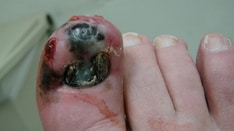
  • Lymphocutaneous sporotrichosis is the most common presentation. Symptoms usually arise within 3 weeks of injury. A subcutaneous nodule develops at the site of inoculation and may ulcerate as the result of central abscess formation. Satellite lesions form along the associated lymphatic chain and lymphadenopathy subsequently develops (Image 1).
  • Fixed cutaneous disease also is known as nonlymphatic sporotrichosis. This appears as a scaly, acneform, verrucous or ulcerative nodule that remains localized. Satellite lesions and lymphadenopathy do not occur in this form of sporotrichosis. Fixed cutaneous lesions may rarely resemble pyoderma, rosacea, pyoderma gangrenosum, and keratoacanthomas.
  • Disseminated disease can result in pyelonephritis, orchitis, mastitis, arthritis, synovitis, meningitis, osseous infection, or, rarely, pulmonary disease. Cutaneous lesions can occur in the setting of disseminated infection.
  • Clinical signs and symptoms may be blunted in the presence of elevated glucocorticoid states or systemic steroid therapy. Sporotrichosis in this setting has resembled erysipeloid cellulitis.

Causes

Sporotrichosis is caused by S schenckii, a dimorphic fungus.


Leishmaniasis
Mycobacterium Marinum Infection of the Skin
Nocardiosis
Syphilis

Other Problems to be Considered

Tuberculosis verrucosa cutis
Nocardia brasiliensis
Tularemia


Lab Studies

  • Fungal cultures: S schenckii readily grows on Sabouraud dextrose agar at 25°C as a lobated, smooth or verrucous, moist, cream-colored colony with occasional aerial mycelium, maturing to a black leathery colony. Yeast growth at 37°C must be demonstrated to confirm Sporothrix. Inform the laboratory that sporotrichosis is clinically suspected. The organisms are characteristically scarce in tissue and may not be detected with tissue stains alone; therefore, cultures are essential.
  • Mycobacterial cultures: Perform cultures to rule out mycobacterial infection. The laboratory should be alerted to the possibility of an atypical mycobacterial infection, particularly if Mycobacterium marinum is suspected, to ensure that appropriate cultures are performed.
  • Tissue Gram stain: Gram stain is performed to rule out other infective or foreign body processes.
  • Acid-fast stain: Staining of tissue or purulent discharge may assist in the evaluation of possible mycobacterial infection. The paucity of organisms in such infections necessitates the use of cultures if infection is clinically suspected; a negative acid-fast bacillus (AFB) stain does not adequately rule out infection.

Imaging Studies

  • Perform chest radiography if pulmonary symptoms are present.

Other Tests

  • Sporotrichin test: Intradermal skin testing using sporotrichin as an antigen to diagnose sporotrichosis is not routinely used because of its high false-positive and false-negative rates.
  • Urine, semen, and cerebral spinal fluid cultures, as well as fine-needle aspirate or tissue biopsy cultures: Obtain studies as clinically indicated for suspicion of systemic disease.

Procedures

  • Tissue biopsy: Obtain appropriate tissue for hematoxylin and eosin, tissue cultures, Gram stain, Fite stain, and fungal stains.

Histologic Findings

A nonspecific granulomatous reaction with pseudoepitheliomatous hyperplasia is typically present. Rarely, periodic acid-Schiff staining reveals the round to oval, cigar-shaped spores within the granuloma. The rare extracellular asteroid bodies of eosinophilic spicules surrounding a central yeast are specific for sporotrichosis, as asteroid bodies seen in other granulomatous reactions are intracellular, filamentous myelin figures that contain lipid.


Medical Care

Systemic antifungal agents are the mainstay of treatment. An increase in cutaneous induration, redness, and local lymphadenopathy may be expected after treatment is started, resulting from an increased immune response to the antigenic challenge of the killed fungus. Thermal adjuvant therapy to systemic antifungals may be beneficial, as S schenckii does not survive above 39°C.

Consultations

  • Infectious disease
  • Consult internal medicine and subspecialists as indicated by organ system involvement.


The goals of pharmacotherapy are to reduce morbidity and prevent complications.

Drug Category: Antifungal agents

Mechanism of action also may involve an alteration of RNA and DNA metabolism or an intracellular accumulation of peroxide that is toxic to the fungal cell. Continue systemic therapy until clinical resolution is achieved, typically 4-6 months.

Drug NameAmphotericin B (AmBisome)
DescriptionProduced by a strain of Streptomyces nodosus; can be fungistatic or fungicidal. Binds to sterols, such as ergosterol, in the fungal cell membrane, causing intracellular components to leak with subsequent fungal cell death. DOC for systemic disease, although more recent literature indicates itraconazole or terbinafine may replace amphotericin B as the DOC for systemic sporotrichosis.
Adult Dose800-2950 mg total dose slow IV infusion; 3-5 mg/kg/d IV of liposomal amphotericin B over approximately 120 min
Pediatric DoseAdminister as in adults
ContraindicationsDocumented hypersensitivity
InteractionsAntineoplastic agents may enhance the potential of amphotericin B for renal toxicity, bronchospasm, and hypotension; corticosteroids, digitalis, and thiazides may potentiate hypokalemia; the risk of renal toxicity is increased with cyclosporine
PregnancyB - Usually safe but benefits must outweigh the risks.
PrecautionsMonitor renal function, serum electrolytes (eg, magnesium and potassium), liver function, CBC, and hemoglobin concentrations; resume the therapy at the lowest level (eg, 0.25 mg/kg) when the therapy is interrupted for > 7 d; hypoxemia, acute dyspnea, and interstitial infiltrates may occur in neutropenic patients receiving leukocyte transfusions (separate time of amphotericin infusion from time of leukocyte transfusion)

Drug NameItraconazole (Sporanox)
DescriptionSynthetic triazole antifungal agent that slows fungal cell growth by inhibiting cytochrome P-450-dependent synthesis of ergosterol, a vital component of fungal cell membranes. DOC for cutaneous disease and second DOC (likely to soon be first DOC) for systemic disease.
Adult Dose100 mg PO bid
Pediatric DoseAdminister as in adults
ContraindicationsDocumented hypersensitivity; coadministration with cisapride may cause adverse cardiovascular effects (possibly death)
InteractionsAntacids may reduce absorption; edema may occur with coadministration of calcium channel blockers (eg, amlodipine, nifedipine); hypoglycemia may occur with sulfonylureas; may increase tacrolimus and cyclosporine plasma concentrations when high doses are used; rhabdomyolysis may occur with coadministration of HMG-CoA reductase inhibitors (eg, lovastatin or simvastatin); coadministration with cisapride can cause cardiac rhythm abnormalities and death
May increase digoxin levels; coadministration may increase plasma levels of midazolam or triazolam; phenytoin and rifampin may reduce itraconazole levels (phenytoin metabolism may be altered)
PregnancyC - Safety for use during pregnancy has not been established.
PrecautionsMonitor hepatic enzyme tests in pre-existing hepatic function abnormalities; absorption is impaired by low stomach acidity and enhanced when administered with an acidic beverage (eg, cola)

Drug NamePotassium iodide (SSKI, Pima)
DescriptionInhibits thyroid hormone secretion. Third DOC for cutaneous disease. Not effective for systemic disease. Contains 8 mg of iodide per drop. May be mixed with juice or water for intake.
Adult DoseSaturated solution containing approximately 142 g potassium iodide in 100 mL water: 5 gtt tid and titrate up to tolerance, not to exceed 30 gtt tid
Pediatric DoseAdminister as in adults
ContraindicationsDocumented hypersensitivity; pulmonary edema, bronchitis, tuberculosis, and hyperkalemia
InteractionsCoadministration with lithium and other antithyroid drugs may potentiate hypothyroid and goitrogenic effects; concurrent use with potassium-containing or potassium-sparing medications and ACE inhibitors may result in hyperkalemia and cardiac arrhythmias or cardiac arrest
PregnancyD - Unsafe in pregnancy
PrecautionsProlonged use of iodides can lead to hypothyroidism; caution in patients with Addison disease, cardiac disease, hyperthyroidism, myotonia congenita, tuberculosis, acute bronchitis, or renal function impairment

Drug NameFluconazole (Diflucan)
DescriptionSynthetic oral antifungal (broad-spectrum bistriazole) that selectively inhibits fungal cytochrome P-450 and sterol C-14 alpha-demethylation. Fourth DOC for systemic disease, modestly effective and thus reserved for itraconazole-intolerant patients.
Adult Dose400 mg PO qd for lymphocutaneous sporotrichosis or disseminated sporotrichosis
Pediatric Dose3-6 mg/kg PO qd for 14-28 d or 6-12 mg/kg qd depending on severity of infection
ContraindicationsDocumented hypersensitivity
InteractionsLevels may increase with hydrochlorothiazide; fluconazole levels may decrease with chronic coadministration of rifampin; coadministration of fluconazole may decrease phenytoin clearance; may increase concentrations of theophylline, tolbutamide, glyburide, and glipizide; effects of anticoagulants may increase with fluconazole coadministration; increases in cyclosporine concentrations may occur when administered concurrently
PregnancyC - Safety for use during pregnancy has not been established.
PrecautionsMonitor closely if rashes develop and discontinue drug if lesions progress; may cause clinical hepatitis, cholestasis, and fulminant hepatic failure (including death) with underlying medical conditions such as AIDS or a malignancy and while taking multiple concomitant medications; not recommended in breastfeeding

Drug NameTerbinafine (Lamisil)
DescriptionSynthetic allylamine hypothesized to act by inhibiting squalene epoxidase, thus blocking synthesis of ergosterol, a vital component of fungal cell membranes. An alternative DOC for cutaneous disease, with promise for systemic disease.
Adult Dose250-500 mg PO bid
Pediatric DoseNot established
ContraindicationsDocumented hypersensitivity
InteractionsInhibitor of CYP450 2D6 isozyme; carefully monitor with coadministration of drugs predominantly metabolized by isozyme (TCAs, SSRIs, beta-blockers, and type B MAOIs); clearance is increased 100% by rifampin and decreased 33% by cimetidine
PregnancyB - Usually safe but benefits must outweigh the risks.
PrecautionsNot recommended for patients with liver disease; hepatotoxicity may occur in patients with and without history of liver disease (pretreatment serum transaminase levels [AST, ALT] recommended); patients should report symptoms of persistent nausea, anorexia, fatigue, vomiting, right upper abdominal pain or jaundice, dark urine, or pale stools; not recommended in patients with renal impairment; may exacerbate or precipitate lupus erythematous; isolated cases of several neutropenia reported


Prognosis

  • Localized disease responds well to treatment. Systemic disease, especially in the immunocompromised host, is life threatening and requires prolonged treatment with potentially toxic systemic therapy.

Patient Education


Special Concerns

  • Rule out significant underlying disease.


Media file 1:  Close-up of an ulcerated nodule reveals the satellite lesions characteristic of lymphangitic (sporotrichoid) spread.

Click to see larger pictureClick to see detailView Full Size Image
Media type:  Photo


  • Anonymous. Systemic antifungal drugs. Med Lett Drugs Ther. Sep 12 1997;39(1009):86-8. [Medline].
  • Barros MB, Schubach Ade O, do Valle AC, et al. Cat-transmitted sporotrichosis epidemic in Rio de Janeiro, Brazil: description of a series of cases. Clin Infect Dis. Feb 15 2004;38(4):529-35. [Medline].
  • Chapman SW, Pappas P, Kauffmann C, et al. Comparative evaluation of the efficacy and safety of two doses of terbinafine (500 and 1000 mg day(-1)) in the treatment of cutaneous or lymphocutaneous sporotrichosis. Mycoses. Feb 2004;47(1-2):62-8. [Medline].
  • Davis BA. Sporotrichosis. Dermatol Clin. Jan 1996;14(1):69-76. [Medline].
  • Dooley DP, Bostic PS, Beckius ML. Spook house sporotrichosis. A point-source outbreak of sporotrichosis associated with hay bale props in a Halloween haunted-house. Arch Intern Med. Sep 8 1997;157(16):1885-7. [Medline].
  • Hajjeh R, McDonnell S, Reef S, et al. Outbreak of sporotrichosis among tree nursery workers. J Infect Dis. Aug 1997;176(2):499-504. [Medline].
  • Howell SJ, Toohey JS. Sporotrichal arthritis in south central Kansas. Clin Orthop Relat Res. Jan 1998;207-14. [Medline].
  • Karakayali G, Lenk N, Alli N, et al. Itraconazole therapy in lymphocutaneous sporotrichosis: a case report and review of the literature. Cutis. Feb 1998;61(2):106-7. [Medline].
  • Kauffman CA, Pappas PG, McKinsey DS, et al. Treatment of lymphocutaneous and visceral sporotrichosis with fluconazole. Clin Infect Dis. Jan 1996;22(1):46-50. [Medline].
  • Kim S, Rusk MH, James WD. Erysipeloid sporotrichosis in a woman with Cushing''s disease. J Am Acad Dermatol. Feb 1999;40(2 Pt 1):272-4. [Medline].
  • Lopes-Bezerra LM, Schubach A, Costa RO. Sporothrix schenckii and sporotrichosis. An Acad Bras Cienc. Jun 2006;78(2):293-308. [Medline].
  • Meffert JJ. Cutaneous sporotrichosis presenting as a keratoacanthoma. Cutis. Jul 1998;62(1):37-9. [Medline].
  • Morgan M, Reves R. Invasive sinusitis due to Sporothrix schenckii in a patient with AIDS. Clin Infect Dis. Dec 1996;23(6):1319-20. [Medline].
  • Rodriguez G, Sarmiento L. The asteroid bodies of sporotrichosis. Am J Dermatopathol. Jun 1998;20(3):246-9. [Medline].
  • Sanz J, Andreu JL, Martinez-Garcia G, et al. Sporotrichial bursitis. Br J Rheumatol. Apr 1998;37(4):461-2. [Medline].
  • Saravanakumar PS, Eslami P, Zar FA. Lymphocutaneous sporotrichosis associated with a squirrel bite: case report and review. Clin Infect Dis. Sep 1996;23(3):647-8. [Medline].
  • Schenck RB. On refractory subcutaneous abscesses caused by a fungus possibly related to the sporotricha. Bull John Hopkins Hospital. 1898;9:286-90.
  • Ticoras CJ, Schroeter AL, Hornbeck KL. Disseminated ulcerated papules and nodules. Cutaneous disseminated sporotrichosis. Arch Dermatol. Aug 1996;132(8):963-4, 966-7. [Medline].
  • Ware AJ, Cockerell CJ, Skiest DJ, Kussman HM. Disseminated sporotrichosis with extensive cutaneous involvement in a patient with AIDS. J Am Acad Dermatol. Feb 1999;40(2 Pt 2):350-5. [Medline].

Sporotrichosis excerpt

Article Last Updated: Feb 7, 2007