Continually Updated Clinical Reference
 
 
  All Sources     eMedicine     Medscape     Drug Reference     MEDLINE
 
eMedicine - Seborrheic Keratosis : Article by

Quick Find
Authors & Editors
Introduction
Clinical
Differentials
Workup
Treatment
Medication
Follow-up
Miscellaneous
Multimedia
References

Related Articles
Acrochordon

Acrokeratosis Verruciformis of Hopf

Actinic Keratosis

Arsenical Keratosis

Basal Cell Carcinoma

Bowen Disease

Bowenoid Papulosis

Confluent and Reticulated Papillomatosis

Cutaneous Horn

Cutaneous Manifestations of HIV Disease

Dermatosis Papulosa Nigra

Epidermal Nevus Syndrome

Epidermodysplasia Verruciformis

Erythroplasia of Queyrat (Bowen Disease of the Glans Penis)

Lentigo

Malignant Melanoma

Nevi, Melanocytic

Nevus Sebaceus

Pemphigus Erythematosus

Premalignant Fibroepithelial Tumor (Pinkus Tumor)

Prurigo Nodularis

Psoriasis, Guttate

Psoriasis, Plaque

Seborrheic Keratosis

Sign of Leser-Trelat

Squamous Cell Carcinoma

Stucco Keratosis

Warts, Genital

Warts, Nongenital

Warty Dyskeratoma


Patient Education
Click here for patient education.


Author: Arthur K Balin, MD, PhD, FACP, Clinical Professor, Lankanau Medical Research Center, Jefferson Health System

Arthur K Balin is a member of the following medical societies: American Academy of Dermatology, American Chemical Society, American College of Mohs Micrographic Surgery and Cutaneous Oncology, American College of Nutrition, American College of Physicians, American College of Physicians-American Society of Internal Medicine, American Geriatrics Society, American Medical Association, American Society for Clinical Nutrition, American Society for Dermatologic Surgery, American Society for Laser Medicine and Surgery, American Society of Dermatopathology, College of American Pathologists, Gerontological Society of America, International Academy of Pathology, International Society for Dermatologic Surgery, Pennsylvania Medical Society, Phi Beta Kappa, Royal Society of Medicine, Sigma Xi, and Society for Investigative Dermatology

Editors: Evan R Farmer, MD, Professor of Dermatology, Johns Hopkins University School of Medicine, Clinical Professor of Pathology, Virginia Commonwealth University School of Medicine; Consulting Staff, Department of Dermatology, Johns Hopkins Hospital, VCU Health Services; David F Butler, MD, Professor of Dermatology, Texas A&M University College of Medicine; Director, Division of Dermatology, Scott and White Clinic; Director Dermatology Residency Training Program, Scott and White Clinic; Warren R Heymann, MD, Head, Division of Dermatology, Professor, Department of Internal Medicine, University of Medicine and Dentistry of New Jersey; Catherine Quirk, MD, Clinical Assistant Professor, Department of Dermatology, Brown University; Dirk M Elston, MD, Director, Department of Dermatology, Geisinger Medical Center

Author and Editor Disclosure

Synonyms and related keywords: reticulated seborrheic keratosis, dermatosis papulosa nigra, stucco keratosis, melanoacanthoma, skin tags

Background

Seborrheic keratoses are the most common benign tumor in older individuals. Seborrheic keratoses have a variety of clinical appearances, and they develop from the proliferation of epidermal cells. Although no specific etiologic factors have been identified, they occur more frequently in sunlight-exposed areas.

Pathophysiology

The etiology of the development of a seborrheic keratosis is not known. Seborrheic keratoses exhibit histologic evidence of proliferation. Increased cell replication has been demonstrated in seborrheic keratoses with bromodeoxyuridine incorporation studies and immunohistochemistry for proliferation-associated antigens. A moderate increase is observed in the rates of apoptosis in all varieties of seborrheic keratoses compared to normal skin.

Reticulated seborrheic keratoses are usually found on sun-exposed skin, and the reticulated type of seborrheic keratoses may develop from solar lentigines.

Epidermal growth factors or their receptors have been implicated in the development of seborrheic keratoses. No difference was observed in the expression of immunoreactive growth hormone receptors in keratinocytes from normal epidermis and keratinocytes from seborrheic keratoses. The expression of BCL2, an apoptosis-suppressing oncogene, is low in seborrheic keratosis in contrast to the high values in basal cell and squamous cell carcinoma. No increase is observed in the sonic hedgehog signal transducers patched (ptc) and smoothened (smo) messenger RNA (mRNA) in seborrheic keratosis over normal skin.

Seborrheic keratoses have a varying degree of pigmentation. In pigmented seborrheic keratoses, the proliferating keratinocytes trigger the activation of neighboring melanocytes by secreting melanocyte-stimulating cytokines. Endothelin-1 has dual stimulatory effects on DNA synthesis and melanization of human melanocytes and has been implicated as playing a part in the hyperpigmentation observed in seborrheic keratoses. Immunohistochemically, the keratinocytes of seborrheic keratoses express low molecular weight keratin but often exhibit a partial lack of the high molecular weight forms of keratin.

Frequency

United States

Seborrheic keratoses are the most common benign tumor in older individuals. The frequency appears to increase with age. In 1963, Tindall and Smith examined a population of individuals older than 64 years in North Carolina and found that 88% of the people had at least one seborrheic keratosis. In this study, 38% of the white women, 54% of the white men, and 61% of the black men and women were found to have 10 or more seborrheic keratoses. In 1965, Young examined 222 residents of the Orthodox Jewish Home for the Aged in New York and found that 29.3% of the men and 37.9% of the women had seborrheic keratosis.

International

In 2000, Memon et al found in a British population younger than 40 years that 8.3% of the males and 16.7% of the females had at least one seborrheic keratosis. In an Australian population, 23.5% of individuals aged 15-30 years were found to have at least one seborrheic keratosis, with no significant differences between the sexes. In another Australian study of 100 people composed of hospital staff and nondermatologic day patients, 12% of people aged 15-25 years (n = 34), 79% of people aged 26-50 years (n = 24), 100% of people aged 51-75 years (n = 25), and 100% of people older than 75 years (n = 17) had seborrheic keratoses. The median number of seborrheic keratoses per person was 6 in the group aged 15-25 years, 5 in the group aged 26-50 years, 23 in the group aged 51-75 years, and 69 in those older than 75 years.

Mortality/Morbidity

Seborrheic keratoses are benign but secondary tumors, and Bowen disease (squamous cell carcinoma in situ) or malignant melanoma may occasionally arise within the lesion. Seborrheic keratoses can also catch on clothing and become irritated. They can itch, grow, and bleed.

  • Scratching seborrheic keratoses or trying to pick them off the skin can result in a secondary infection.
  • People sometimes have many seborrheic keratoses, and they may obscure the detection of a dysplastic nevus or malignant melanoma.

Race

Seborrheic keratoses are less common in populations with dark skin compared to those having white skin; however, black individuals develop a variant of seborrheic keratoses termed dermatosis papulosa nigra. These lesions affect the face, especially the upper cheeks and lateral orbital areas. They are small, pedunculated, and heavily pigmented with a minimal keratotic element. The onset of these lesions generally is earlier than that of ordinary seborrheic keratoses.

Sex

No sex difference is apparent in the frequency of occurrence of seborrheic keratoses.

Age

Seborrheic keratoses are the most common benign tumor in older individuals. They appear to increase with age. Seborrheic keratoses have also been found to occur in younger individuals.


History

  • Seborrheic keratoses usually are asymptomatic, but they can be an annoyance. Lesions can itch and rub or catch on clothing, thereby becoming inflamed.
  • Lesions often are unattractive and serve as negative psychological connotations—daily reminders of aging.
  • Patients are sometimes concerned that these enlarging lesions are malignant.
    • Sometimes a person may have many seborrheic keratoses and not notice a dysplastic nevus or a malignant melanoma that develops among the seborrheic keratoses.
    • A significant danger can arise if a person does not detect a malignant melanoma at an early stage.
  • Although lesions may resolve on occasion, spontaneous resolution does not ordinarily occur.
  • The sign of Lesser-Trélat is the association of multiple eruptive seborrheic keratoses with internal malignancy. Most commonly, the sign is observed with adenocarcinoma, especially of the gastrointestinal tract; however, an eruption of seborrheic keratoses may develop after an inflammatory dermatosis (eg, eczema, severe sunburn).
  • Seborrheic keratoses usually begin with the appearance of one or more sharply defined, light brown, flat macules. The lesions may be sparse or numerous.
  • As they initially grow, they develop a velvety to finely verrucous surface, followed by an uneven warty surface with multiple plugged follicles and a dull or lackluster appearance.
  • They typically have an appearance of being stuck on the skin surface.
  • The color of the lesions can vary from pale brown with pink tones to dark brown or black.
  • Their natural history includes slow enlargement with increasing thickness and the gradual development of new lesions.
  • A familial trait exists for the development of multiple seborrheic keratoses in about half of the patients, with an autosomal dominant mode of inheritance.
  • Seborrheic keratoses can occur on almost any site of the body, with the exception of the palms and soles and mucous membranes.
    • In an Australian study of the site of distribution of 3067 seborrheic keratoses, 54.7% were found on the trunk, 15.2% on the hands, 11.4% on the face and neck, 8.5% on the arms, 2.6% on the upper leg, 6% on the lower leg, and 1.6% on the feet.
    • In this study, seborrheic keratoses were found to be most concentrated on the head and neck and hands, areas with the highest amount of sun exposure.

Physical

Initially one or more sharply defined, light brown, flat lesions develop with a velvety to finely verrucous surface. They arise on normal skin. Their initial size is usually less than 1 cm, but the lesions can grow to several centimeters or more. With time, the lesions become thicker and have an appearance of being stuck on the skin surface.

  • Fully developed seborrheic keratoses often are deeply pigmented and do not reflect light.
  • Many lesions show keratotic plugging of the surface.
  • Some lesions are covered by an adherent greasy-appearing scale and are raised above the surface of the skin. Seborrheic keratoses can feel soft and greasy.
  • The shape is round to oval, and multiple lesions may be aligned in the direction of skin folds.
  • The smallest lesions are placed around follicular orifices, especially on the trunk.
  • Most seborrheic keratoses have fewer hairs than the surrounding skin that they come from.
  • Sometimes the lesions can grow large, with individual seborrheic keratoses reaching up to 35 X 15 cm.
  • Epiluminescent surface microscopic examination of seborrheic keratoses reveals globulelike structures. The globule like structures in seborrheic keratoses are due to intraepidermal horn cysts filled with cornified cells containing melanin. They resemble the brown globules observed in melanocytic neoplasms, which are due to nests of melanocytes at the dermoepidermal junction.
  • Irritation can cause swelling and sometimes bleeding, oozing, and crusting and a deepening of the color due to inflammation.
  • Seborrheic keratoses may become red-brown in color when they become inflamed.
  • Variants include the following:
    • Dermatosis papulosa nigra: These lesions affect the face, especially the upper cheeks and lateral orbital areas. They are small, pedunculated, and heavily pigmented with a minimal keratotic element. The onset of these lesions generally is earlier than that of ordinary seborrheic keratoses. These lesions appear to be caused by a nevoid developmental defect of the pilosebaceous follicles. Histologically, they show irregular acanthosis and hyperkeratosis.
    • Stucco keratosis: Some adults develop large numbers of superficial gray-to-light brown flat keratotic lesions favoring the dorsa of the feet, the ankles, and the dorsa of the hands and forearms. Some investigators think these stucco keratoses are a variant of seborrheic keratosis. Histologically, horn cysts are not observed and a regular spiky papillomatosis with a loose lamellated hyperkeratosis capping the epidermis is prominent.
    • Melanoacanthoma: Melanoacanthoma is a deeply pigmented seborrheic keratosis in which an acanthotic proliferation of large dendritic melanocytes is identified. It probably represents a concomitant proliferation or activation of the dendritic melanocytes and epidermal cells.
    • Differential diagnosis: The clinical differential diagnosis of seborrheic keratoses includes malignant melanoma, melanocytic nevus, verruca vulgaris, condyloma acuminatum, fibroepithelial polyp, epidermal nevus, actinic keratoses, pigmented basal cell carcinomas, and squamous cell carcinomas.
      • Melanoma can clinically resemble seborrheic keratosis. A retrospective review of 9204 consecutive pathology reports from the Massachusetts General Hospital containing a clinical diagnosis of seborrheic keratosis revealed that 61 of these specimens (0.66%) were malignant melanoma. The submitted clinical differential diagnosis was seborrheic keratosis versus melanoma (31 cases, 51%), melanocytic nevus (17 cases, 28%), basal cell carcinoma (7 cases, 12%), squamous proliferation (3 cases, 5%), and no other differential diagnosis (3 cases, 5%).
      • Distinguishing superficial seborrheic keratoses from lentigo maligna and pigmented actinic keratoses may be difficult. The pigmented domed variety of acanthotic seborrheic keratoses may closely resemble a melanocytic nevus, but the surface is less lustrous and the follicular orifices are plugged.
      • Some seborrheic keratoses have a verrucous architecture that can produce a clinical and histologic appearance similar to an aging viral wart. Routine histopathologic examination may not reliably make this distinction, and special studies to look for evidence of papillomavirus DNA may be needed.
      • An inflamed seborrheic keratosis may be confused with a malignant melanoma or a squamous cell carcinoma.
      • Pigmented basal cell carcinomas usually are rather irregular with a rolled edge, a thin shiny epidermis with telangiectases, and a depressed or ulcerated center.
      • Inflammatory eruptions (eg, psoriasis, pemphigus erythematosus) have been confused with seborrheic keratoses.
    • Polypoid lesions: A clinical variant of the typical seborrheic keratosis is small polypoid lesions around the neck, under the breast, or in the axillae. They are commonly called skin tags, but different from smooth skin tags, these lesions have a furrowed rough surface. They have a predilection for points of chronic trauma.

Causes

The cause of seborrheic keratoses is not known (see Pathophysiology). Some cases are inherited through an autosomal dominant mode of inheritance. Sunlight seems to play a role in the development of some seborrheic keratoses. Evidence indicates that at least some seborrheic keratoses have a clonal nature.


Acrochordon
Acrokeratosis Verruciformis of Hopf
Actinic Keratosis
Arsenical Keratosis
Basal Cell Carcinoma
Bowen Disease
Bowenoid Papulosis
Confluent and Reticulated Papillomatosis
Cutaneous Horn
Cutaneous Manifestations of HIV Disease
Dermatosis Papulosa Nigra
Epidermal Nevus Syndrome
Epidermodysplasia Verruciformis
Erythroplasia of Queyrat (Bowen Disease of the Glans Penis)
Lentigo
Malignant Melanoma
Nevi, Melanocytic
Nevus Sebaceus
Pemphigus Erythematosus
Premalignant Fibroepithelial Tumor (Pinkus Tumor)
Prurigo Nodularis
Psoriasis, Guttate
Psoriasis, Plaque
Seborrheic Keratosis
Sign of Leser-Trelat
Squamous Cell Carcinoma
Stucco Keratosis
Warts, Genital
Warts, Nongenital
Warty Dyskeratoma

Other Problems to be Considered

Hidroacanthoma simplex


Lab Studies

  • No laboratory tests are needed unless the sudden appearance of multiple pruritic seborrheic keratoses occurs, which is known as the Leser-Trélat sign. This has been associated with the development of adenocarcinoma of the gastrointestinal tract, lymphoma, Sézary syndrome, and acute leukemia.

Imaging Studies

  • No imaging studies are needed, unless the sudden appearance of multiple pruritic seborrheic keratoses occurs (known as the Leser-Trélat sign).

Procedures

  • The shave biopsy provides histologic material for accurate diagnosis and removes the lesion in a cosmetically acceptable manner at the same time. After a shave biopsy is obtained, a curette can be employed to smooth and remove any remaining keratotic material.

Histologic Findings

These lesions are raised above the skin surface, and they show a papillomatous epithelial proliferation containing horn cysts without any tendency toward malignancy. The proliferating cells are epidermal and have a basaloid appearance. The number of epidermal basal cells is greatly increased. The acanthotic pattern is the most frequent, in which a thick layer of basal cells is observed interspersed with pseudo-horny cysts. Invaginations to form keratin-filled pseudocysts are present. Some of these cells contain melanin. Hyperkeratotic seborrheic keratoses have pronounced hyperkeratosis and papillomatosis with less acanthosis. When papillomatosis is particularly prominent, the histology resembles acrokeratosis verruciformis of Hopf. The epidermis is comprised largely of squamous cells interspersed with aggregates of basaloid cells.

The reticulated or adenoid type of seborrheic keratoses contains numerous thin tracts of basaloid epidermal cells that are branched and interwoven. They have less epidermal thickening, and horn pseudocysts usually are less prominent in reticulated seborrheic keratoses. Marked hyperpigmentation is often present, and they have some histologic similarity to lentigo senilis. An acantholytic type with acantholysis also occurs and is particularly prominent in the squamous eddies of irritated seborrheic keratosis. Irritated seborrheic keratoses show a change from the basaloid keratinocytes observed in the acanthotic type, which are more mature squamous cells, to cells that are sometimes associated with mild nuclear atypia. The keratinocytes are arranged in swirls or whorls known as squamous eddies. Spindling of keratinocytes is common. Inflammatory cells are often observed intermingled with the proliferated epidermal cells.

The clonal seborrheic keratoses show well-demarcated nests of basaloid or larger squamous cells within an acanthotic seborrheic keratoses. Melanoacanthoma is a deeply pigmented seborrheic keratosis in which an acanthotic proliferation of large dendritic melanocytes is identified. It probably represents a concomitant proliferation or activation of the dendritic melanocytes and epidermal cells. Lichenoid seborrheic keratosis is an inflammatory variant. In one study of 108 seborrheic keratoses, 66% were acanthotic, 25% were hyperkeratotic, and 9% had a reticulated (adenoid) pattern. In this study, 5.5% (6/108) of the specimens contained squamous cell carcinoma and 4 of these appeared to develop within the central portion of the lesion. Also, 4 of the 6 malignancies developed in the reticulated type of seborrheic keratoses.

In irritated seborrheic keratoses, pronounced squamous metaplasia can occur, which may be misdiagnosed as basosquamous carcinoma. This phenomenon is not due to human papillomavirus. Human papillomavirus can be identified in the seborrheic keratoses of patients with epidermodysplasia verruciformis and in seborrheic keratosislike lesions exhibiting bowenoid changes. These probably should be considered as condylomata rather than as true seborrheic keratoses.

The histologic differential diagnosis of seborrheic keratoses includes verruca vulgaris, fibroepithelial polyp, condyloma acuminatum, acanthosis nigricans, epidermal nevus, confluent and reticulated papillomatosis of Gougerot and Carteaud, hidroacanthoma simplex, acrokeratosis verruciformis of Hopf, lentigo senilis, and tumor of the follicular infundibulum.

Acanthotic seborrheic keratoses may be confused with eccrine poromas, but no ductular differentiation is observed in seborrheic keratosis. Hidroacanthoma simplex can be distinguished from clonal seborrheic keratosis by the presence of ductal and cystic spaces histologically and by a lower density of Langerhans cells and fewer melanin granules in the intraepidermal nests. Verruca vulgaris can usually be differentiated from seborrheic keratoses because verruca vulgaris usually displays keratohyalin granule clumping, perinuclear vacuolization, and ectatic vessels within the papillary dermal tips.


Medical Care

Ammonium lactate and alpha hydroxy acids have been reported to reduce the height of seborrheic keratoses. Superficial lesions can be treated by carefully applying pure trichloroacetic acid and repeating if the full thickness is not removed on the first treatment.

Surgical Care

A variety of techniques may be employed to treat seborrheic keratoses. They include cryotherapy with carbon dioxide (dry ice) or liquid nitrogen, electrodesiccation, electrodesiccation and curettage, curettage alone, shave biopsy or excision using a scalpel, or a laser or dermabrasion surgery. Some of these techniques destroy the lesion without providing a specimen for histopathologic diagnosis.

  • The shave biopsy provides histologic material for accurate diagnosis and removes the lesion in a cosmetically acceptable manner at the same time. After a shave biopsy is obtained, a curette can be employed to smooth and remove any remaining keratotic material. Generally, this is the author's preferred method of removal.
  • If a biopsy is not desired, light electrodesiccation facilitates a sharp curettage.
  • Freezing seborrheic keratoses with dry ice or liquid nitrogen avoids the need for surgical excision; however, complications of freezing include pigmentary changes and on occasion, scarring.
  • Curettage in conjunction with liquid nitrogen generally gives better results than liquid nitrogen alone.
  • Application of 70% glycolic acid for 3-5 minutes prior to curetting also is effective.

Consultations

No consultations are needed, unless the sudden appearance of multiple pruritic seborrheic keratoses occurs (known as the Leser-Trélat sign).

Activity

No activity restrictions are recommended.


No ongoing medical therapy is needed unless topical therapy has been employed to treat the lesions. Ammonium lactate and alpha hydroxy acids have been reported to reduce the height of seborrheic keratoses.

Drug Category: Keratolytic agents

Cause cornified epithelium to swell, soften, macerate, and then desquamate.

Drug NameAmmonium lactate lotion (AmLactin, Lac Hydrin)
DescriptionContains lactic acid, an alpha hydroxy acid that has keratolytic action, thus facilitating release of corneocytes. Available in 12% and 5% strength; 12% strength may cause irritation on the face. Causes disadhesion of corneocytes. Lactic acid is a racemic mixture of 2-hydroxypropanoic acid and is one of the most effective naturally occurring humectants in the skin.
Adult DoseApply liberally to all affected areas qd/tid for xerosis
Pediatric DoseApply liberally to all affected areas qd/bid
ContraindicationsDocumented hypersensitivity
InteractionsNone reported
PregnancyC - Safety for use during pregnancy has not been established.
PrecautionsMay sting or cause pain if applied on broken skin; may cause irritation with erythema, burning, and peeling if applied to face in 12% concentrations

Drug NameTrichloroacetic acid (Tri-Chlor)
DescriptionCauterizes skin, keratin, and other tissues. Although caustic, it causes less local irritation and systemic toxicity than others in the same class do. Treatment of individual seborrheic keratosis with up to 100% trichloroacetic acid can be employed to destroy the lesions; however, clinical experience and judgment must be used because scarring may result in inexperienced hands. Must be considered as form of surgery.
Adult DosePaint onto lesions, avoiding uninvolved skin; repeat q1-2wk
Pediatric DoseNot established
ContraindicationsDocumented hypersensitivity
InteractionsNone reported
PregnancyC - Safety for use during pregnancy has not been established.
PrecautionsNot for use on premalignant or malignant lesions; very corrosive; only to be used by experienced clinicians; external use only; restrict use to treatment areas only


Further Outpatient Care

  • Follow-up for patients with multiple seborrheic keratoses is important because malignant tumors can develop elsewhere on the body (or rarely within a seborrheic keratosis). New seborrheic keratoses develop as people age. Patients who see a doctor and who are assured that these lesions are benign may not pay attention to newly appearing lesions that continue to develop over time. One of the newly appearing lesions may not be a seborrheic keratosis but, in fact, a malignant tumor.

Complications

  • Seborrheic keratoses are an annoyance. Lesions can itch and rub or catch on clothing, thereby becoming inflamed.
  • Lesions often are unattractive and have negative psychological connotations—daily reminders of aging.
  • Patients are sometimes concerned that these enlarging lesions are malignant.
    • Sometimes a person that has many seborrheic keratoses may not notice a dysplastic nevus or a malignant melanoma that develops among the seborrheic keratoses.
    • A significant danger can arise if a person fails to detect a malignant melanoma at an early stage.

Prognosis

  • Seborrheic keratoses are benign and do not present a danger to an individual's health. The lesions generally do not resolve and usually grow larger and thicker with time.

Patient Education

  • Patients often have heard that they need to have a changing mole examined, and the appearance of seborrheic keratoses prompts them to seek medical care. This provides an excellent opportunity for a complete skin examination to search for skin cancer and a discussion on using sunscreens for both the patient and their family.
  • Patients can generally be reassured that the lesions are benign and do not need to be removed unless they are changing or become irritated.
  • Continued follow-up is important. Patients who see a doctor and who are assured that these lesions are benign may not pay attention to newly appearing lesions that continue to develop over time. One of the newly appearing lesions may not be a seborrheic keratosis but, in fact, a malignant tumor.
  • For excellent patient education resources, visit eMedicine's Skin, Hair, and Nails Center and Cancer and Tumors Center. Also, see eMedicine's patient education article, Skin Cancer.


Medical/Legal Pitfalls

  • Failure to diagnose skin cancer due to destruction of presumed seborrheic keratoses without histologic confirmation
    • In one study of 577 specimens that were clinically diagnosed as seborrheic keratoses and submitted to a dermatopathology laboratory for histologic confirmation, 37 of them (6.4%) were malignant tumors (10 basal cell carcinomas, 18 squamous cell carcinomas, 2 malignant melanomas).
    • Thus, in this study, 1 out of every 16 lesions submitted with a clinical diagnosis of seborrheic keratoses was malignant.


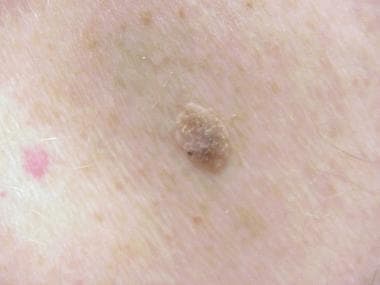
Media file 1:  Sharply circumscribed elevated seborrheic keratoses.
Click to see larger pictureClick to see detailView Full Size Image
Media type:  Photo

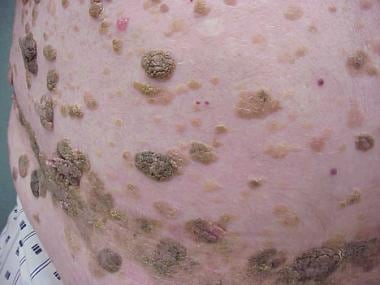
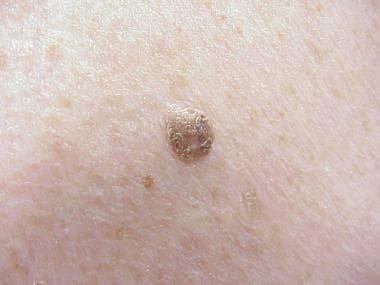
Media file 2:  Closer view of multiple seborrheic keratoses in an autosomally dominant mode of inheritance.
Click to see larger pictureClick to see detailView Full Size Image
Media type:  Photo

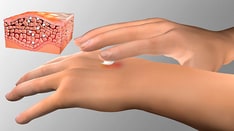
Media file 3:  Seborrheic keratoses projecting above the level of the epidermis. Cysts represent sections of hyperkeratotic follicles.
Click to see larger pictureClick to see detailView Full Size Image
Media type:  Photo

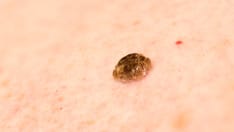
Media file 4:  Seborrheic keratosis showing lackluster surface and appearance of being stuck on the skin surface.
Click to see larger pictureClick to see detailView Full Size Image
Media type:  Photo

Media file 5:  This is an autosomal dominant form of multiple seborrheic keratoses. This man's daughter is developing a similar distribution and quantity of seborrheic keratoses.
Click to see larger pictureClick to see detailView Full Size Image
Media type:  Photo

Media file 6:  The back of this same patient as in Image 5 with multiple seborrheic keratoses. His face had a similar number of seborrheic keratoses.
Click to see larger pictureClick to see detailView Full Size Image
Media type:  Photo

Media file 7:  Acanthotic type of seborrheic keratosis.
Click to see larger pictureClick to see detailView Full Size Image
Media type:  Photo

Media file 8:  Higher-power view of the cells in an acanthotic seborrheic keratosis.
Click to see larger pictureClick to see detailView Full Size Image
Media type:  Photo

Media file 9:  Hyperkeratotic type of seborrheic keratosis.
Click to see larger pictureClick to see detailView Full Size Image
Media type:  Photo

Media file 10:  Reticulated (or adenoid) type of seborrheic keratosis.
Click to see larger pictureClick to see detailView Full Size Image
Media type:  Photo

Media file 11:  This is a reticulated (or adenoid) seborrheic keratosis with abundant pigment.
Click to see larger pictureClick to see detailView Full Size Image
Media type:  Photo

Media file 12:  Seborrheic keratosis with inflammation in the dermis.
Click to see larger pictureClick to see detailView Full Size Image
Media type:  Photo

Media file 13:  This seborrheic keratosis was a pedunculated lesion in an axillary fold. Clinically, it had some resemblance to a skin tag.

Click to see larger pictureClick to see detailView Full Size Image
Media type:  Photo


  • Braun-Falco O, Weissmann I. [Stuccokeratoses. Review and own observations]. Hautarzt. Nov 1978;29(11):573-7. [Medline].
  • Cascajo CD, Reichel M, Sanchez JL. Malignant neoplasms associated with seborrheic keratoses. An analysis of 54 cases. Am J Dermatopathol. Jun 1996;18(3):278-82. [Medline].
  • Di Benedetto G, Pierangeli M, Bertani A. A peculiar case of multiple gigantic seborrheic keratosis. Plastic and Reconstructive Surgery. 1977;99(5):1466-1467. [Medline].
  • Eads TJ, Hood AF, Chuang TY. The diagnostic yield of histologic examination of seborrheic keratoses. Arch Dermatol. Nov 1997;133(11):1417-20. [Medline].
  • Gill D, Dorevitch A, Marks R. The prevalence of seborrheic keratoses in people aged 15 to 30 years: is the term senile keratosis redundant?. Arch Dermatol. Jun 2000;136(6):759-62. [Medline].
  • Ginarte M, Garcia-Caballero T, Fernandez-Redondo V. Expression of growth hormone receptor in benign and malignant cutaneous proliferative entities. J Cutan Pathol. Jul 2000;27(6):276-82. [Medline].
  • Graham-Brown RA, Berth-Jones J, Dure-Smith B. Dermatologic problems for immigrant communities in a Western environment. Int J Dermatol. Mar 1990;29(2):94-101. [Medline].
  • Groves RW, Allen MH, MacDonald DM. Abnormal expression of epidermal growth factor receptor in cutaneous epithelial tumours. J Cutan Pathol. Feb 1992;19(1):66-72. [Medline].
  • Gupta AK, Siegel MT, Noble SC. Keratoses in patients with psoriasis: a prospective study in fifty-two inpatients. J Am Acad Dermatol. Jul 1990;23(1):52-5. [Medline].
  • Hairston MA, Reed RJ, Derbes VJ. Dermatosis papulosa nigra. Arch Dermatol. May 1964;89:655-8. [Medline].
  • Holdiness MR. The sign of Leser-Trelat. Int J Dermatol. Nov 1986;25(9):564-72. [Medline].
  • Izikson L, Sober AJ, Mihm MC, Zembowicz A. Prevalence of melanoma clinically resembling seborrheic keratosis: analysis of 9204 cases. Arch Dermatol. Dec 2002;138(12):1562-6. [Medline].
  • Jacyk WK, Simson IW. Pemphigus erythematosus resembling multiple seborrheic keratoses. Arch Dermatol. Apr 1990;126(4):543-4. [Medline].
  • Klaus MV, Wehr RF, Rogers RS 3d. Evaluation of ammonium lactate in the treatment of seborrheic keratoses. J Am Acad Dermatol. 1990;23(1):67. [Medline].
  • Kwon OS, Hwang EJ, Bae JH. Seborrheic keratosis in the Korean males: causative role of sunlight. Photodermatol Photoimmunol Photomed. Apr 2003;19(2):73-80. [Medline].
  • Lee ES, Whang MR, Kang WH. Absence of human papillomavirus DNA in nongenital seborrheic keratosis. J Korean Med Sci. Oct 2001;16(5):619-22. [Medline].
  • Li J, Ackerman AB. "Seborrheic keratoses" that contain human papillomavirus are condylomata acuminata. Am J Dermatopathol. Aug 1994;16(4):398-405; discussion 406-8. [Medline].
  • Liu HN, Chang YT, Chen CC. Differentiation of hidroacanthoma simplex from clonal seborrheic keratosis--an immunohistochemical study. Am J Dermatopathol. Jun 2004;26(3):188-93. [Medline].
  • Maize JC, Snider RL. Nonmelanoma skin cancers in association with seborrheic keratoses. Clinicopathologic correlations. Dermatol Surg. Nov 1995;21(11):960-2. [Medline].
  • Mehregan AH. Lentigo senilis and its evolutions. J Invest Dermatol. Nov 1975;65(5):429-33. [Medline].
  • Memon AA, Tomenson JA, Bothwell J. Prevalence of solar damage and actinic keratosis in a Merseyside population. Br J Dermatol. Jun 2000;142(6):1154-9. [Medline].
  • Mishima Y, Pinkus H. Benign mixed tumor of melanocytes and malpighian cells. Melanoacanthoma: Its relationship to Bloch's benign non-nevoid melanoepithelioma. Arch Dermatol. Apr 1960;81:539-50. [Medline].
  • Nakagawa K, Yamamura K, Maeda S. bcl-2 expression in epidermal keratinocytic diseases. Cancer. Sep 15 1994;74(6):1720-4. [Medline].
  • Nakamura H, Hirota S, Adachi S. Clonal nature of seborrheic keratosis demonstrated by using the polymorphismof the human androgen receptor locus as a marker. J Invest Dermatol. Apr 2001;116(4):506-10. [Medline].
  • Nanney LB, Ellis DL, Levine J. Epidermal growth factor receptors in idiopathic and virally induced skin diseases. Am J Pathol. Apr 1992;140(4):915-25. [Medline].
  • Nindl M, Nakagawa H, Furue M. Simple epithelial cytokeratin-expression in seborrheic keratosis. J Cutan Pathol. Oct 1992;19(5):415-22. [Medline].
  • Pesce C, Scalora S. Apoptosis in the areas of squamous differentiation of irritated seborrheic keratosis. J Cutan Pathol. Mar 2000;27(3):121-3. [Medline].
  • Provost N, Kopf AW, Rabinovitz HS. Globulelike dermoscopic structures in pigmented seborrheic keratosis. Arch Dermatol. Apr 1997;133(4):540-1. [Medline].
  • Reches A. Seborrheic keratoses: Are they delayed hereditary nevi?. Arch Drmatol Syphilol. 1952;65:596.
  • Roncalli de Oliveira W, Neto CF, Rady PL, Tyring SK. Seborrheic Keratosis-like lesions in patients with epidermodysplasia verruciformis. J Dermatol. Jan 2003;30(1):48-53. [Medline].
  • Shimizu N, Ito M, Tazawa T. Immunohistochemical study on keratin expression in certain cutaneous epithelial neoplasms. Basal cell carcinoma, pilomatricoma, and seborrheic keratosis. Am J Dermatopathol. Dec 1989;11(6):534-40. [Medline].
  • Soini Y, Kamel D, Paakko P, et al. Aberrant accumulation of p53 associates with Ki67 and mitotic count in benign skin lesions. Br J Dermatol. Oct 1994;131(4):514-20. [Medline].
  • Sperry K, Wall J. Adenocarcinoma of the stomach with eruptive seborrheic keratoses: the sign of Leserp-Trélat. Cancer. May 1 1980;45(9):2434-7. [Medline].
  • Teraki E, Tajima S, Manaka I. Role of endothelin-1 in hyperpigmentation in seborrhoeic keratosis. Br J Dermatol. Dec 1996;135(6):918-23. [Medline].
  • Tindall JP, Smith JG. Skin lesions of the aged and their association with internal changes. JAMA. Dec 21 1963;186:1039-42. [Medline].
  • Tojo M, Mori T, Kiyosawa H, et al. Expression of sonic hedgehog signal transducers, patched and smoothened, in human basal cell carcinoma. Pathol Int. Aug 1999;49(8):687-94. [Medline].
  • Tsuji T, Kitajima S, Koashi Y. Expression of proliferating cell nuclear antigen (PCNA) and apoptosis related antigen (LeY) in epithelial skin tumors. Am J Dermatopathol. Apr 1998;20(2):164-9. [Medline].
  • Unal G. Giant seborrheic keratoses. JEADV VII. Sup 2:s177.
  • Van Scott EJ, Yu RJ. Alpha hydroxy acids: procedures for use in clinical practice. Cutis. Mar 1989;43(3):222-8. [Medline].
  • Verhagen AR, Koten JW, Chaddah VK. Skin diseases in Kenya. A clinical and histopathological study of 3,168 patients. Arch Dermatol. Dec 1968;98(6):577-86. [Medline].
  • Williams MG. Acanthomata appearing after eczema. Br J Dermatol. Jul-Aug 1956;68(7):268-71. [Medline].
  • Wrone DA, Yoo S, Chipps L. The expression of p63 in actinic keratoses, seborrheic keratosis, and cutaneous squamous cell carcinomas. Dermatologic Surgery. 2004;30:1299-1302.
  • Yamamoto T, Yokoyama A. Hereditary onset of multiple seborrheic keratoses: a variant of Leser Trelat sign?. J Dermatol. Mar 1996;23(3):191-5. [Medline].
  • Yeatman JM, Kilkenny M, Marks R. The prevalence of seborrhoeic keratoses in an Australian population: does exposure to sunlight play a part in their frequency?. Br J Dermatol. Sep 1997;137(3):411-4. [Medline].
  • Young AM. Dermatogeriatric problems in the chronic disease hospital. NY State J Med. 1965;1748-1752.
  • Zhu WY, Leonardi C, Kinsey W, et al. Irritated seborrheic keratoses and benign verrucous acanthomas do not contain papillomavirus DNA. J Cutan Pathol. Dec 1991;18(6):449-52. [Medline].

Seborrheic Keratosis excerpt

Article Last Updated: Jul 20, 2006