Continually Updated Clinical Reference
 
 
  All Sources     eMedicine     Medscape     Drug Reference     MEDLINE
 
eMedicine - Pseudofolliculitis of the Beard : Article by

Quick Find
Authors & Editors
Introduction
Clinical
Differentials
Workup
Treatment
Medication
Follow-up
Miscellaneous
Multimedia
References

Related Articles
Acne Vulgaris

Folliculitis

Sarcoidosis

Tinea Barbae


Patient Education
Click here for patient education.


Author: Thomas G Greidanus, MD, Medical Director and Chair, Department of Emergency Medicine, Parkview Medical Center

Coauthor(s): Beth Honl, MD, Consulting Staff, Dermatology Associates PC; Consulting Staff, Department of Dermatology, Meritcare Medical System

Editors: Leonard Sperling, MD, Chair, Professor, Department of Dermatology, Uniformed Services University of the Health Sciences; Richard P Vinson, MD, Assistant Clinical Professor, Department of Dermatology, Texas Tech University School of Medicine; Consulting Staff, Mountain View Dermatology, PA; Jeffrey Meffert, MD, Assistant Clinical Professor of Dermatology, University of Texas Health Science Center-San Antonio; Joel M Gelfand, MD, MSCE, Medical Director, Clinical Studies Unit, Assistant Professor, Department of Dermatology, Associate Scholar, Center for Clinical Epidemiology and Biostatistics, University of Pennsylvania; Dirk M Elston, MD, Director, Department of Dermatology, Geisinger Medical Center

Author and Editor Disclosure

Synonyms and related keywords: PFB, pseudofolliculitis barbae, pili incarnati, folliculitis barbae traumatica, chronic scarring pseudofolliculitis of the negro beard, shaving bumps, razor bumps, ingrown hairs, pseudofolliculitis pubis

Background

Pseudofolliculitis barbae (PFB) or shaving bumps is a foreign body inflammatory reaction involving papules and pustules. It primarily affects curly haired males who shave. It can also affect some white men and hirsute black women. Pseudofolliculitis pubis is a similar condition occurring after pubic hair is shaved.

Pathophysiology

Two mechanisms are involved in the pathogenesis of PFB: (1) extrafollicular penetration occurs when a curly hair reenters the skin, and (2) transfollicular penetration occurs when the sharp tip of a growing hair pierces the follicle wall.

Black men who shave are predisposed to this condition because of their tightly curved hair. The sharp pointed hair from a recent shave briefly surfaces from the skin and reenters a short distance away. Several methods of close shaving result in a hair cut below the surface. These methods include pulling the skin taut while shaving, shaving against the grain, plucking hairs with tweezers, removing hairs with electrolysis, and using double- or triple-bladed razors. The close shave results in a sharp tip below the skin surface, which is then more likely to pierce the follicular wall, causing PFB with transfollicular penetration.

Frequency

United States

About 10-80% of adult black men have PFB, particularly those who shave closely on a regular basis. It is a significant problem in black men in the military where regulations require a clean-shaven face.

Mortality/Morbidity

Although usually not regarded as a serious medical problem, PFB can cause cosmetic disfigurement. The papules can lead to scarring, postinflammatory hyperpigmentation, secondary infection, and keloid formation.

Race

PFB is found mostly in black men.

Sex

Men with facial hair comprise most patients, although hirsute women can also develop PFB. Both sexes can develop pseudofolliculitis pubis. Common sites in black women and those of ethnic backgrounds characterized by darker skin include the pubic and axillary areas because these are more frequent sites of hair removal in this population.

Age

PFB affects men with facial hair (postpuberty).


History

  • Patients complain of a painful acneiform eruption that occurs after shaving.
  • The patient's shaving history, including the method and the frequency, may reveal an improper shaving technique.
  • The method for preparation of the beard, the use of medications or depilatories, and the use of hair-releasing procedures should be discussed with the patient.

Physical

  • The primary lesion is a flesh-colored or erythematous papule with a hair shaft in its center. If the hair shaft is gently lifted up, the free end of the hair comes out of the papule.
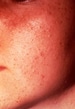
  • These inflammatory papules are seen in shaved areas adjacent to the follicular ostia (see Image 1).
  • Pustules and abscess formation can occur from secondary infection.
  • Postinflammatory hyperpigmentation, scarring, and keloid formation may occur in chronic or improperly treated cases.

Causes

African Americans are genetically predisposed to PFB because of the curvature of their hair follicles. Improper shaving techniques and the desire for a clean-shaven appearance can result in ingrown hairs via extrafollicular or transfollicular penetration.


Acne Vulgaris
Folliculitis
Sarcoidosis
Tinea Barbae

Other Problems to be Considered

Acne keloidalis nuchae (may coexist with PFB)


Lab Studies

  • A clinical diagnosis can usually be made.

Procedures

  • A case of sarcoid infiltrating lesions of PFB has been documented. Biopsy may be performed if sarcoidosis is suspected.
  • See Medical Care and Deterrence/Prevention for a discussion of shaving and hair-release techniques.

Histologic Findings

The penetrating hair causes invagination of the epidermis with inflammation and intraepidermal abscesses. With penetration of the dermis, the epidermis grows down to try to ensheathe the hair, and severe inflammation, abscess formation, and a foreign-body giant cell reaction occur at the tip of the hair.


Medical Care

  • Chemical depilatories work by breaking the disulfide bonds in hair, which results in the hair being broken off bluntly at the follicular opening.
    • Barium sulfide powder depilatories of about 2% strength can be made into a paste with water and applied to the beard area. This paste is removed after 3-5 minutes.
    • Calcium thioglycolate preparations come as powder, lotions, creams, and pastes. The mercaptan odor is often masked with fragrance. In rare cases, this fragrance can cause an allergic reaction. Calcium thioglycolate preparations take longer to work and are left on 10-15 minutes; chemical burns result if left on too long.
    • Chemical depilatories should not be used every day because they cause skin irritation. Every second or third day is an acceptable regimen. Irritation can be countered by using hydrocortisone cream. A lower pH or concentration, or a different brand, may also prove less irritating. Several products are available; therefore, trying a different product is encouraged if one depilatory proves to be unacceptable.
  • Topically applied tretinoin (Retin-A) has shown promise for some patients. When used nightly, it alleviates hyperkeratosis. It may remove the thin covering of epidermis that the hair becomes embedded in upon emerging from the follicle.
  • Topical combination cream (tretinoin 0.05%, fluocinolone acetonide 0.01%, and hydroquinone 4%) (Triluma) has been shown to provide some benefit by targeting the hyperkeratosis (tretinoin), inflammation (fluocinolone), and postinflammatory hyperpigmentation (hydroquinone).
  • Mild topical corticosteroid creams reduce inflammation of papular lesions.
  • For severe cases of PFB with pustules and abscess formation, topical and oral antibiotics may be indicated.
    • Topical antibiotics may successfully reduce skin bacteria and treat secondary infection. These topicals include erythromycin, clindamycin, and combination clindamycin/benzoyl peroxide (Benzaclin, Duac) and erythromycin/benzoyl peroxide (Benzamycin) agents. Applying one of these agents once or twice per day is effective. Benzoyl peroxide applied topically once a day is also effective in reducing bacterial populations. It should be used sparingly and may be irritating to sensitive skin. It is a good first-line topical agent for persons with oily skin. Benzamycin is a combination of erythromycin and benzoyl peroxide. A once daily application has the benefits of both agents.
    • If pustules or abscess formation is evident, an oral antibiotic is indicated. Tetracycline is a common choice for a systemic antibiotic. Similar to a standard acne regimen, a dose of 500 mg twice a day used initially for 1-3 months is often effective.
  • Topical eflornithine HCL 13.9% cream (Vaniqa) has been used for excessive facial hair and in patients with PFB. It is also used as a combination with laser therapy for hirsute women and PFB patients. It decreases the rate of hair growth. In addition, the treated hair may become finer and lighter.
  • Dermoscopy has been used to demonstrate the pathophysiology and improve compliance.

Surgical Care

  • Newer hair removal lasers may have a role in the treatment of PFB. The problem with most laser and high-intensity light source hair removal modalities is that the natural skin pigment may be damaged by the laser because melanin in the hair shaft is the target chromophore. Devices being studied at this time may avoid this depigmenting complication. Diode laser treatments have been proven safe and effective in patients with skin phototypes I-IV.
  • In a 2002 study; the use of long-pulsed Nd:Yag laser in the treatment of PFB demonstrated a decrease in papule formation, miniaturization, and reduction of hair counts in skin types IV, V and VI. Most subjects had a return of normal hair growth after 6 months; however, 2 of 10 individuals had areas of permanent hair loss after 12-month follow-up. Adverse effects of long-standing hypopigmentation in this study were isolated, signifying that this particular laser is an encouraging modality of therapy.

Diet

No dietary therapies for PFB have proven effective, and no dietary triggers of the condition have been identified.


Hydrocortisone cream is effective in reducing inflammation. Topical and oral antibiotics are used when secondary infection is evident. Tretinoin has shown promise in early PFB. Chemical depilatories are preferential to shaving for some patients.

Drug Category: Chemical depilatories

These agents are effective alternatives to shaving for some patients. They work by breaking disulfide bonds in hair follicles.

Drug NameBarium sulfide
DescriptionA fast-acting depilatory powder that is mixed with water to form a paste.
Adult DoseApply thin paste and leave on for 3-5 min
Pediatric DoseApply as in adults
ContraindicationsDocumented hypersensitivity
InteractionsNone reported
PregnancyC - Safety for use during pregnancy has not been established.
PrecautionsPregnancy class is not listed; product is fast acting and can cause a chemical burn if left on too long; has foul odor and is poisonous if ingested

Drug NameCalcium thioglycolate
DescriptionEffective depilatory that is left on for 10-15 min.
Adult DoseApply sparingly to lesions
Pediatric DoseApply as in adults
ContraindicationsDocumented hypersensitivity
InteractionsNone reported
PregnancyC - Safety for use during pregnancy has not been established.
PrecautionsPregnancy class is not listed; chemical burn can result if preparation is left on too long

Drug Category: Antibiotics

Empiric antimicrobial therapy must be comprehensive and should cover all likely pathogens in the context of the clinical setting. Topical preparations reduce bacterial populations and secondary infection.

Drug NameTetracycline (Achromycin V, Sumycin)
DescriptionUsed orally to treat secondary infection. Treats gram-positive and gram-negative organisms as well as mycoplasmal, chlamydial, and rickettsial infections. Inhibits bacterial protein synthesis by binding with 30S and possibly 50S ribosomal subunits.
Adult Dose500 mg PO bid
Pediatric Dose<8 years: Not recommended
>8 years: 25-50 mg/kg/d (10-20 mg/lb) PO qid
ContraindicationsDocumented hypersensitivity; severe hepatic dysfunction; breastfeeding
InteractionsBioavailability decreases with antacids containing aluminum, calcium, magnesium, iron, or bismuth subsalicylate; can decrease effects of oral contraceptives, causing breakthrough bleeding and increased risk of pregnancy; tetracyclines can increase hypoprothrombinemic effects of anticoagulants
PregnancyD - Unsafe in pregnancy
PrecautionsPhotosensitivity may occur with prolonged exposure to sunlight or tanning equipment; reduce dose in renal and/or liver impairment; consider drug serum level determinations in prolonged therapy; tetracycline use during tooth development (last one half of pregnancy through age 8 y) can cause permanent discoloration of teeth; Fanconilike syndrome may occur with outdated tetracyclines

Drug NameErythromycin (T-Stat)
Description2% Topical solution. Inhibits bacterial growth, possibly by blocking dissociation of peptidyl tRNA from ribosomes, causing RNA-dependent protein synthesis to arrest. For treatment of staphylococcal and streptococcal infections.
Adult DoseApply topically qd/bid
Pediatric DoseApply as in adults
ContraindicationsDocumented hypersensitivity
InteractionsAdditive irritation with other topical agents (eg, tretinoin)
PregnancyB - Usually safe but benefits must outweigh the risks.
PrecautionsFor external use only; keep away from eyes and mucous membranes

Drug Category: Retinoids

These agents decrease the cohesiveness of abnormal hyperproliferative keratinocytes, and they may reduce the potential for malignant degeneration. They modulate keratinocyte differentiation. They have been shown to reduce the risk of skin cancer formation in patients who have undergone renal transplantation.

Drug NameTretinoin (Retin-A)
DescriptionInhibits microcomedo formation and eliminates existing lesions. Makes keratinocytes in sebaceous follicles less adherent and easier to remove. Applied topically, reduces outbreaks of mild PFB. Available as 0.025%, 0.05%, and 0.1% creams. Also available as 0.01% and 0.025% gels.
Adult DoseApply topically 2 times/wk to qhs; titrate to effect
Pediatric Dose<12 years: Not established
>12 years: Apply as in adults
ContraindicationsDocumented hypersensitivity; eczema; sunburn
InteractionsToxicity increases with coadministration of benzoyl peroxide, salicylic acid, and resorcinol; avoid topical sulfur, resorcinol, salicylic acid, other keratolytics, abrasives, astringents, spices, and lime
PregnancyC - Safety for use during pregnancy has not been established.
PrecautionsMay take several wk for skin to adapt to irritative effect; by starting application every wk and slowly increasing to qhs noncompliance from warmth and redness is decreased; avoid eyes and mucous membranes; minimize exposure to sun and UV light; do not apply to mucous membranes, mouth, and angles of nose

Drug Category: Corticosteroids

These agents are used to reduce inflammation and irritation. These agents have anti-inflammatory properties and cause profound and varied metabolic effects. They modify the body's immune response to diverse stimuli.

Drug NameHydrocortisone (Cortaid)
Description1% cream. Adrenocorticosteroid derivative suitable for application to skin or external mucous membranes. Has mineralocorticoid and glucocorticoid effects, resulting in anti-inflammatory activity. Effective when used topically on a short-term basis.
Adult DoseApply sparingly to affected areas bid
Pediatric DoseApply as in adults
ContraindicationsDocumented hypersensitivity; viral, fungal, and bacterial skin infections
InteractionsNone reported
PregnancyC - Safety for use during pregnancy has not been established.
PrecautionsProlonged use, applying over large surface areas, applying potent steroids, and using occlusive dressings may increase systemic absorption of corticosteroids and may cause Cushing syndrome, reversible HPA-axis suppression, hyperglycemia, and glycosuria

Drug NameEflornithine HCL 13.9% cream (Vaniqa)
DescriptionOral eflornithine inhibits ornithine decarboxylase, which affects rate of hair growth (anagen phase). Slows hair growth, and some reports indicate miniaturization of hair growth to areas treated. May take 4-8 wk for improvement; however, condition may return to pretreatment levels 8 wk after discontinuance of therapy.
Adult DoseApply thin layer to affected areas bid; do not wash treated area for at least 4 h following application; may continue hair removal techniques but do not apply eflornithine for at least 5 min after another hair removal technique; cosmetic treatments and sunscreens can be applied once cream has dried
Pediatric Dose<12 years: Not recommended
ContraindicationsDocumented hypersensitivity
InteractionsNone reported
PregnancyC - Safety for use during pregnancy has not been established.
PrecautionsTransient stinging or burning may occur if applied to abraded or broken skin; may decrease to once-daily use if persistent


Further Outpatient Care

  • Outpatient evaluation and patient education is effective. With proper techniques, transfollicular and extrafollicular penetration can be minimized.

Deterrence/Prevention

  • Hair-releasing procedures and shaving should be performed after a shower to hydrate and soften both the skin and the hair. Subsequent shaving results in a duller, rounded tip to the hair, which is less likely to reenter the skin.
  • Wash the beard with a face cloth, a wet sponge, or a soft-bristled toothbrush with a mild soap for several minutes using a circular motion. This technique helps to dislodge stubborn tips.
  • Using needles or toothpicks to dislodge stubborn tips is controversial. It usually is not recommended because overly aggressive digging with sharp objects can cause further damage to the skin.
  • Patients with PFB may use razors if single-edged, foil-guarded, safety razors are used. Double- or triple-bladed razors shave too closely and should not be used. Commercially available foil-guarded razors have about 30% of the blade covered by foil, which prevents the blade from shaving the hair too closely.
  • Electric razors have acceptable results if used properly. The recommended technique with a 3-headed rotary electric razor is to keep the heads slightly off the surface of the skin and to shave in a slow, circular motion. Do not press the electric razor close to the skin or pull the skin taut because this results in too close of a shave. Some electric razors have "dial in" settings for the closeness of the shave. These may be effective if kept off of the closest settings.
  • Electric clippers are effective for resistant cases of PFB. With clippers, 1- to 2-mm stubble can be left on the face. The tendency to shave too closely is reduced with this method, making it more effective. The appearance of stubble may be cosmetically unacceptable for some patients.

Complications

  • Although usually not regarded as a serious medical problem, PFB may cause cosmetic disfigurement. The papules may lead to scarring, postinflammatory hyperpigmentation, secondary infection, and keloid formation.

Prognosis

  • No cure exists, but effective treatment is available. If the patient is able to grow a beard, the problem usually disappears (except for any residual scarring).

Patient Education

  • Instruct the patient to stop shaving for 3-4 weeks. This gives adequate time for the hair follicles to grow to a length where ingrown hairs will spring free.


Special Concerns

  • PFB is of particular concern in persons in the military. Enforcement of a clean-shaven face in those with this condition can cause scarring, hyperpigmentation, secondary infection, and keloid formation. The lack of understanding of this disease has created tension and hostility between soldiers and their chain of command. Proper education on shaving methods and treatment of PFB, including judicious breaks from shaving (no shaving profiles), is essential.


Media file 1:  Pseudofolliculitis barbae on the neck of a black man.

Click to see larger pictureClick to see detailView Full Size Image
Media type:  Photo


  • Alexander AM. Evaluation of a foil-guarded shaver in the management of pseudofolliculitis barbae. Cutis. May 1981;27(5):534-7, 540-2. [Medline].
  • Alexander AM, Delph WI. Pseudofolliculitis barbae in the military. A medical, administrative and social problem. J Natl Med Assoc. Nov 1974;66(6):459-64, 479. [Medline].
  • Brauner GJ, Flandermeyer KL. Pseudofolliculitis barbae. Medical consequences of interracial friction in the US Army. Cutis. Jan 1979;23(1):61-6. [Medline].
  • Bridgeman-Shah S. The medical and surgical therapy of pseudofolliculitis barbae. Dermatol Ther. 2004;17(2):158-63. [Medline].
  • Brown LA Jr. Pathogenesis and treatment of pseudofolliculitis barbae. Cutis. Oct 1983;32(4):373-5. [Medline].
  • Callender V, Young CM. Combination Laser and Eflornithine HCL 13.9% Cream: A First-line Therapy for Fitzpatrick Type IV-VI Patients With Excessive Facial Hair. J Am Acad Dermatol. March 2005;52 (3) supplement:P209.
  • Childs ND. Tretinoin, hydrocortisone cream controls PFB. Skin and Allergy News. 1999;30(5):20.
  • Chuh A, Zawar V. Epiluminescence dermatoscopy enhanced patient compliance and achieved treatment success in pseudofolliculitis barbae. Australas J Dermatol. Feb 2006;47(1):60-2. [Medline].
  • Coquilla BH, Lewis CW. Management of pseudofolliculitis barbae. Mil Med. May 1995;160(5):263-9. [Medline].
  • Crutchfield CE 3rd. The causes and treatment of pseudofolliculitis barbae. Cutis. Jun 1998;61(6):351-6. [Medline].
  • Galaznik JG. A Pseudofolliculitis Barbae clinic for the black male who has to shave. J Am Coll Health. Dec 1984;33(3):126-7. [Medline].
  • Garcia-Zuazaga J. Pseudofolliculitis barbae: review and update on new treatment modalities. Mil Med. Jul 2003;168(7):561-4. [Medline].
  • Halder RM. Pseudofolliculitis barbae and related disorders. Dermatol Clin. Jul 1988;6(3):407-12. [Medline].
  • Kauvar AN. Treatment of pseudofolliculitis with a pulsed infrared laser. Arch Dermatol. Nov 2000;136(11):1343-6. [Medline].
  • Kligman AM, Mills OH Jr. Pseudofolliculitis of the beard and topically applied tretinoin. Arch Dermatol. Apr 1973;107(4):551-2. [Medline].
  • Leyden JJ. Topical treatment for the inflamed lesion in acne, rosacea, and pseudofolliculitis barbae. Cutis. Jun 2004;73(6 Suppl):4-5. [Medline].
  • Nidecke A. Saving face: help black men avoid pseudofollicultis barbae. Skin and Allergy News. 1998;29 (10):46.
  • Olsen EA. Methods of hair removal. J Am Acad Dermatol. Feb 1999;40(2 Pt 1):143-55; quiz 156-7. [Medline].
  • Perry PK, Cook-Bolden FE, Rahman Z. Defining pseudofolliculitis barbae in 2001: a review of the literature and current trends. J Am Acad Dermatol. Feb 2002;46(2 Suppl Understanding):S113-9. [Medline].
  • Ross EV, Cooke LM, Timko AL. Treatment of pseudofolliculitis barbae in skin types IV, V, and VI with a long-pulsed neodymium:yttrium aluminum garnet laser. J Am Acad Dermatol. Aug 2002;47(2):263-70. [Medline].
  • Scheinfeld NS. Pseudofolliculitis barbae. Skinmed. May-Jun 2004;3(3):165-6. [Medline].
  • Taylor S. Open-Label Case Study on Triple-Combination Cream in Patients with Pseudofolliculitis Barbae. J Am Acad Dermatol. 2005;52:P169.

Pseudofolliculitis of the Beard excerpt

Article Last Updated: Feb 7, 2007