| Patient Education |
|
Click here for patient education.
|
|
You are in: eMedicine Specialties >
Dermatology > LYMPHOMA AND RELATED PROCESSES
Lymphomatoid Papulosis
Article Last Updated: Mar 20, 2008
AUTHOR AND EDITOR INFORMATION
Section 1 of 11
Author: John A Zic, MD, Director of Cutaneous Lymphoma Clinic, Assistant Professor, Division of Dermatology, Vanderbilt University Medical Center
John A Zic is a member of the following medical societies: Alpha Omega Alpha, American Academy of Dermatology, and Society for Investigative Dermatology
Coauthor(s):
Kristina Collins, MD, Staff Physician, University of Tennessee College of Medicine
Editors: Gregory J Raugi, MD, PhD, Professor, Department of Internal Medicine, Division of Dermatology, University of Washington at Seattle; Chief, Dermatology Section, Primary and Specialty Care Service, Veterans Administration Medical Center of Seattle; Michael J Wells, MD, Associate Professor, Department of Dermatology, Texas Tech University Health Sciences Center; Daniel S Loo, MD, Associate Professor, Residency Program Director, Department of Dermatology, Boston University School of Medicine; Joel M Gelfand, MD, MSCE, Medical Director, Clinical Studies Unit, Assistant Professor, Department of Dermatology, Associate Scholar, Center for Clinical Epidemiology and Biostatistics, University of Pennsylvania; William D James, MD, Paul R Gross Professor of Dermatology, University of Pennsylvania School of Medicine; Vice-Chair, Program Director, Department of Dermatology, University of Pennsylvania Health System
Author and Editor Disclosure
Synonyms and related keywords:
Macaulay disease, Macaulay's disease, LyP, T-cell lymphoma, T cell lymphoma, cutaneous lymphoma, mycosis fungoides, MF, Hodgkin disease, Hodgkin lymphoma, Hodgkin's disease, Hodgkin's lymphoma, HD, lymphoproliferative disease, lymphoproliferative disorder, LPD, anaplastic large cell lymphoma, ALCL, primary cutaneous anaplastic large cell lymphoma, pcALCL
Background
Lymphomatoid papulosis (LyP) is a chronic papulonecrotic or papulonodular skin disease with histologic features suggestive of a malignant lymphoma. The disease is characterized by recurrent crops of pruritic papules at different stages of development that predominantly arise on the trunk and limbs. The papules heal spontaneously over 1-2 months, usually leaving slightly depressed oval scars. The term lymphomatoid papulosis originally was used by Macaulay1 in 1968 to describe "a self-healing rhythmical paradoxical eruption, histologically malignant but clinically benign." Due to the typical waxing and waning clinical course, LyP was previously considered a pseuodolymphomatous inflammatory process. However, the classification system for cutaneous lymphomas has evolved rapidly, and, during consensus meetings in 2003-2004, the World Health Organization—European Organization for Research and Treatment of Cancer (WHO-EORTC) classification grouped LyP among the indolent cutaneous T-cell lymphomas. The rationale for classifying LyP as a cutaneous lymphoma is its association with other malignant lymphoproliferative disorders; however, some experts hesitate to classify this chronic skin disease as a true malignancy because of its spontaneous resolution and benign clinical course.2, 3, 4 LyP is part of a spectrum of CD30 (Ki-1)–positive cutaneous lymphoproliferative diseases (CD30+ LPDs), including LyP, primary cutaneous anaplastic large cell lymphoma (pcALCL), and borderline CD30+ lesions.
The eMedicine articles Malignant Melanoma (dermatology focus), Malignant Melanoma (oncology focus), Cutaneous T-Cell Lymphoma, and Lymphoma, Cutaneous T-Cell also may be of interest.
Additionally, the Medscape CME course Understanding the Evolving Role of Immunotherapy in the Treatment of Malignant Melanoma and Melanoma Resource Center may be helpful.
Pathophysiology
The CD30 antigen is a type 1 transmembrane glycoprotein of the tumor necrosis factor receptor superfamily. In addition to the CD30+ lymphoproliferative diseases, malignant lymphomas such as Hodgkin disease (HD), node-based systemic anaplastic large cell lymphoma (ALCL), and mycosis fungoides (MF) with large cell transformation may express the CD30 antigen. The pathophysiology of CD30+ LPDs, including LyP, is largely unknown. CD30 signaling is known to have an effect on the growth and survival of lymphoid cells, and one hypothesis is that genetic instability and accumulated genetic defects may have a role in the development of LyP and the progression to associated neoplasms. In a recent study, the 30M377 allelic form of the CD30 promoter microsatellite repressive element was associated with the development of LyP, and the 30M362 allelic form was associated with progression to other CD30+ lymphomas in LyP patients.
Genetic instability of tumor cells may lead to altered expression of apoptotic proteins and immune-regulatory molecules, such as transforming growth factor-beta. Other research has found overexpression of JunB,5 part of the AP-1 transcription factor complex involved in cell proliferation and apoptosis, in virtually all CD30+ lymphomas. Consequently, JunB is a potential target for experimental therapy in patients with these tumors. Spontaneous regression of LyP is seen almost universally, whereas regression occurs in approximately 25% of pcALCL cases. Therefore, the higher apoptotic index found in LyP compared with pcALCL is not surprising. The proapoptotic protein Bax is also expressed at high levels in CD30+ cutaneous lymphoproliferative diseases and may play a crucial role in mediating apoptosis of tumor cells. Another recent study suggested that the death-receptor apoptosis pathway mediated by Fas-associating protein with death domain (FADD) may be responsible for the varying biologic behaviors of CD30+ LPDs involving the skin.
Frequency
United States
The prevalence of LyP is estimated to be 1.2-1.9 cases per million population. The CD30+ cutaneous lymphoproliferative disorders account for approximately 25% of cutaneous T-cell lymphoma cases.
Mortality/Morbidity
LyP has a chronic, indolent course in most patients; however, estimates indicate that as many as 10-20% of LyP patients have a history of associated malignant lymphoma (ALCL, HD, or MF) prior to, concurrent with, or subsequent to the diagnosis of LyP. In a recent longitudinal study, no patients with LyP died of the disease.
pcALCL is more likely than MF to manifest as an ulcerated tumor and palpable lymph nodes. MF is the most common variant of cutaneous T-cell lymphoma and is characterized by the development of red patches or plaques in sun-protected areas. MF is more likely to manifest as patches and plaques than tumors. Disease-specific survival at 5 and 10 years for pcALCL was 85% in a recent study.
Associated lymphomas more rarely include immunoblastic lymphoma, lethal midline granuloma (currently considered as natural killer cell lymphoma in many patients), and systemic lymphocytic lymphoma. In most patients, the malignancy develops many years after the diagnosis of LyP.
Race
Black persons may be less affected than other racial groups.
Sex
No consistent sex predominance is found in studies, but some studies have reported a male-to-female ratio of 1.5-2:1.
Age
LyP may develop at any age, but the peak incidence occurs in the fifth decade.
History
- Most patients describe the gradual onset of an asymptomatic to mildly pruritic papular eruption.
- Papules appear in crops and resolve spontaneously within 2-8 weeks.
- Waxing and waning of the crops of papules may continue for decades.
- Unless accompanied by systemic lymphoma, most patients have no constitutional symptoms.
Physical
- Unless accompanied by systemic lymphoma, physical findings are limited to the skin and, very rarely, the oral cavity.6
- The primary skin lesions are described as follows:
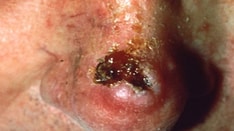
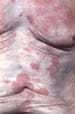
- Each erythematous papule evolves into a red-brown, often hemorrhagic, papulovesicular or papulopustular lesion over days to weeks (see Media File 1 and Media File 4). Some lesions develop a necrotic eschar before healing spontaneously. Occasionally, noduloulcerative lesions may be present (see Media File 2).
- Each papule heals within 2-8 weeks, leaving a hypopigmented or hyperpigmented, depressed, oval, and varioliform scar.
- Large nodules and plaques may take months to resolve. Carefully evaluate solitary ulcerated nodules, plaques, or masses for CD30+ ALCL, MF, or rarely, HD (see Media File 3).
- The skin distribution of lesions, characteristically, is on the trunk and extremities, although the palms and/or soles, face, scalp, and anogenital area also may be involved.
Causes
- The etiology of LyP is unknown. Debate persists over whether (1) LyP is a benign chronic disorder of activated T cells responding to external or internal stimuli or (2) LyP is an indolent T-cell malignancy localized to skin and held in check by the host immune system.
- A few investigators have discovered viruslike particles in LyP lesions examined under electron microscopy.
Cutaneous CD30+ (Ki-1) Anaplastic Large-Cell Lymphoma
Cutaneous T-Cell Lymphoma
Folliculitis
Insect Bites
Langerhans Cell Histiocytosis
Leukemia Cutis
Lymphocytoma Cutis
Milia
Miliaria
Scabies
Other Problems to be Considered
Papular drug eruption
Papular variant of MF
Pityriasis lichenoides et varioliformis acuta (Mucha-Habermann disease)
Primary or secondary cutaneous B-cell lymphoma
Primary or secondary cutaneous HD
Lab Studies
- No WBC count or serum chemistry abnormalities are expected.
Procedures
- Obtain skin biopsy specimens from 2 or more fully developed inflammatory papules without necrosis or excoriation.
- Skin biopsy is indicated to confirm the diagnosis and to exclude primary cutaneous ALCL, if possible. Because histologic distinction may be difficult, consult a dermatopathologist with experience in diagnosing lymphoproliferative skin disorders.
Histologic Findings
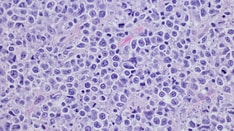
Upon low-power histologic examination, LyP shows a wedge-shaped dense dermal infiltrate of lymphoid cells with numerous eosinophils, neutrophils, and atypical lymphocytes. As much as 50% of the infiltrate shows the atypical lymphocytes. Epidermotropism of lymphoid cells may occur. Dermal vessels may show endothelial swelling, fibrin deposition, and red blood cell extravasation. Histologically, LyP is divided into the following 3 subtypes:
- Type A is characterized by large (25-40 µm) CD30+ atypical cells intermingled with a prominent inflammatory infiltrate. The large tumor cells have polymorphic convoluted nuclei with a minimum of 1 prominent nucleolus and resemble Reed-Sternberg cells when binucleate, as is seen in HD. Type A LyP is the most common histologic variant and accounts for 75% of all LyP specimens.
- Type B is characterized by smaller (8-15 µm) atypical cells with hyperchromatic cerebriform nuclei resembling the atypical lymphocytes in MF. CD30+ large cells are rare, but epidermotropism is more common in this variant. There is some concern that Type B LyP may be better classified as a papular variant of MF.
- Type C (diffuse large cell type) is characterized by sheets of CD30+ anaplastic large cells indistinguishable from ALCL, with the exception of the minimal subcutaneous invasion. These lesions resolve spontaneously and are therefore classified as LyP; however, some authorities view this histologic variant as borderline ALCL or, perhaps, pcALCL.7
Uncommonly, patients may have more than one histologic subtype of LyP or other recently described associated histologic patterns. Immunophenotyping and molecular findings CD 30 (Ki-1) expression is characteristic. The atypical lymphocyte is predominantly a CD4+ helper/inducer T cell with HLA-DR and interleukin 2 receptor (CD25) expression and variable loss of CD5 and/or CD7 antigen expression. CD30+ expression is characteristic, but, paradoxically, the small tumor cells in LyP type B are usually CD30 negative. Tumor cells in LyP may express cytotoxic molecules such as CD56, TIA-1, and granzyme B. CXCR3, a Th1 cell marker, is expressed in up to 85% of LyP cases. Emergence of CCR4 positivity, a Th2 marker common in pcALCL, has been hypothesized as a risk factor for malignant progression. CD8 LyP has been noted in the literature and may represent a distinct clinical entity. Clonality in LyP is controversial, and not all cases of LyP in the literature are clonal as detected by analysis of T-cell antigen receptor genes. However, monoclonal rearrangement of the T-cell antigen receptor has been detected in 40-90% of LyP lesions, and identical clones have been demonstrated in the peripheral blood cells of patients with severe disease. One investigation suggested that the cell infiltrate in LyP comprises a mixture of polyclonal large atypical cells (CD30+) and smaller monoclonal T cells (CD30-negative). The (2;5)(p23;q35) translocation is not detected.
Staging
No staging scheme has been described for LyP.
Medical Care
- In the past, localized mildly pruritic skin lesions were treated with mid- to high-potency topical steroids to hasten resolution. Many authorities currently are more inclined to treat lesions with systemic or more aggressive topical therapies, including phototherapy, to suppress the disease and the possibility of progression to MF, ALCL, or HD.
- Low-dose weekly methotrexate (MTX)8, 9 is a safe and effective treatment for suppressing LyP; however, the disease recurs within 1-2 weeks after discontinuing the medication.
- Oral psoralen plus UVA (PUVA) phototherapy also effectively treats and suppresses the disease.
- A few reports also have found that topical carmustine, topical nitrogen mustard, topical MTX, topical imiquimod cream,10 intralesional interferon, low-dose cyclophosphamide, chlorambucil, medium-dose UVA-1 therapy, excimer laser therapy,11 and dapsone help disease suppression.
Consultations
- Dermatologist: Consultation is recommended for evaluating clinical findings and obtaining skin biopsy specimens of appropriate lesions. Ideally, consult a dermatologist with experience in the management of cutaneous lymphomas.
- Dermatopathologist: Consultation is recommended for histologic evaluation of skin biopsy specimens, with occasional consultation by a hematopathologist for patients with borderline biopsy results.
Activity
LyP requires no activity restrictions.
The goals of pharmacotherapy are to reduce morbidity and to prevent complications.
Drug Category: Antimetabolites
Inhibit cell growth and proliferation by blocking key steps of the cell cycle.
| Drug Name | Methotrexate (Folex, Rheumatrex) |
| Description | Antimetabolite that inhibits DNA synthesis and cell reproduction in malignant cells; may suppress immune system. First-line oral agent for treatment of LyP. Disease usually is sensitive to low, weekly oral doses. Adjust dose gradually to attain satisfactory response. |
| Adult Dose | 5-10 mg PO qwk; may require up to 25 mg/wk to respond |
| Pediatric Dose | Not established; 2.5-5 mg PO qwk suggested |
| Contraindications | Documented hypersensitivity; alcoholism; hepatic insufficiency; immunodeficiency syndromes; preexisting blood dyscrasias (eg, bone marrow hypoplasia, leukopenia, thrombocytopenia, significant anemia); breastfeeding |
| Interactions | Oral aminoglycosides may decrease absorption and blood levels of concurrent oral MTX; charcoal lowers levels; coadministration with etretinate may increase hepatotoxicity; folic acid or derivatives contained in some vitamins may decrease response to MTX; coadministration with NSAIDs may be fatal; indomethacin and phenylbutazone can increase plasma levels; may decrease phenytoin serum levels; probenecid, salicylates, procarbazine, and sulfonamides (including TMP-SMZ) may increase effects and toxicity of MTX; may increase plasma levels of thiopurines |
| Pregnancy | D - Fetal risk shown in humans; use only if benefits outweigh risk to fetus
|
| Precautions | Monitor CBC counts monthly and liver and renal function q1-3mo during therapy (monitor more frequently during initial dosing, dose adjustments, or when risk exists of elevated MTX levels, eg, dehydration); has toxic effects on hematologic, renal, GI, pulmonary, and neurologic systems; discontinue if significant drop in blood cell counts occurs; aspirin, NSAIDs, or low-dose steroids may be administered concomitantly (possibility of increased toxicity with NSAIDs, including salicylates, has not been tested); may cause mucositis or cutaneous ulceration |
Drug Category: Phototherapy
Induce apoptosis in activated T cells. PUVA phototherapy effectively treats and suppresses disease.
| Drug Name | Methoxsalen (8-MOP, Oxsoralen) |
| Description | Inhibits mitosis by binding covalently to pyrimidine bases in DNA when photoactivated by UVA. In Europe, this modality is more popular than MTX for treating LyP. Available in 10-mg cap. |
| Adult Dose | 0.4 mg/kg/dose PO 1.5 h prior to UVA exposure; alternatively, 0.57 mg/kg 1.5-2 h before exposure to UVA, at least 48 h apart |
| Pediatric Dose | Administer as in adults |
| Contraindications | Documented hypersensitivity; squamous cell cancer; cataract; light-sensitive diseases such as lupus or porphyria; ingestion of photosensitizing drugs; hepatitic disease; arsenic therapy; history of melanoma; patients with aphakia |
| Interactions | Toxicity increases with phenothiazines, griseofulvin, nalidixic acid, tetracyclines, thiazides, and sulfanilamide |
| Pregnancy | C - Fetal risk revealed in studies in animals but not established or not studied in humans; may use if benefits outweigh risk to fetus
|
| Precautions | Severe burns may occur from sunlight or UVA if dose or treatment frequency exceeded; use only if response to other forms of therapy is inadequate; long-term use may increase risk of skin cancer; ocular changes may occur |
Further Outpatient Care
- Patients require long-term follow-up, preferably twice yearly, to monitor the disease and evaluate for the development of associated lymphoma.
- Patients on systemic therapy or PUVA phototherapy require closer monitoring for adverse effects.
Prognosis
- The prognosis of LyP is good because most patients have a chronic, indolent course. A recent retrospective cohort analysis found that no patients with LyP died of the disease, and the overall survival rate was 92% at 5 and 10 years.
- Physicians are guardedly optimistic about the prognosis because estimates indicate that as many as 10-20% of patients have a history of associated malignant lymphoma (ALCL, HD, MF) prior to, concurrent with, or subsequent to the diagnosis of LyP. Unfortunately, no clinical or histologic factors analyzed to date are predictive of worse outcomes in persons with LyP. A study suggested that fascin expression is increased in LyP cases associated with a malignant lymphoma.12 Alterations in transforming growth factor-beta signaling are hypothesized to play a role in the progression of LyP to malignant lymphoma. Additionally, data have shown an increased risk of associated lymphomas in LyP cases with CCR3+ atypical cells or the 30M362 allelic form of the CD30 promotor.
Patient Education
- Instruct patients that they are not an infectious risk to others.
- Instruct patients about local wound care of open crusted lesions. Lesions should be cleaned with mild soap and water twice daily, and topical antibiotic ointment should be applied to prevent infection. Crusted lesions should be covered with a loose adhesive bandages until healed.
- Instruct patients to contact their physician if any of the following symptoms or signs develop that may herald the onset of infection or associated malignancy:
- Fever, chills, night sweats, or weight loss
- Persistent skin nodules or patches that do not regress over a 2- to 3-month period
- Enlarged lymph node glands in the groin or axillae
Medical/Legal Pitfalls
- Failure to inform patients of their small increased risk for developing malignancy
- Failure to periodically monitor patients with LyP
Special Concerns
- Patients require long-term follow-up, preferably twice yearly, to monitor the disease and to evaluate for the development of an associated lymphoma.
| Media file 1:
Lymphomatoid papulosis type C on the upper back of a 65-year-old woman with waxing and waning papulonodular eruptions for almost 10 years. The eruption was suppressed completely using methotrexate. |
 | View Full Size Image | |
Media type: Photo
|
| Media file 2:
Crusted ulcerated papule of lymphomatoid papulosis on the left hip of a 47-year-old woman with a longer than 20-year history of recurrent papulonodular eruption with spontaneous resolution. |
 | View Full Size Image | |
Media type: Photo
|
| Media file 3:
Large indurated plaques of anaplastic large cell lymphoma of 2-months' duration on the left lateral thigh of a 57-year-old man with a 5-year history of lymphomatoid papulosis. The lymphomatoid papulosis skin lesions (not pictured) were rarely larger than 6 mm. |
 | View Full Size Image | |
Media type: Photo
|
| Media file 4:
Lymphomatoid papulosis type A showing a cluster of pink papules and 2 crusted papules that resolved spontaneously in the left axilla of a 68-year-old man. The first symptoms developed in the popliteal fossa 8 years before erupting into more widespread papules 10 months before this photograph was taken. |

 | View Full Size Image | |
Media type: Photo
|
- Macaulay WL. Lymphomatoid papulosis. A continuing self-healing eruption, clinically benign--histologically malignant. Arch Dermatol. Jan 1968;97(1):23-30. [Medline].
- Slater D. The new World Health Organization-European Organization for Research and Treatment of Cancer classification for cutaneous lymphomas: a practical marriage of two giants. Br J Dermatol. 2005;153:874-880. [Medline].
- Willemze R, Meijer CJ. Classification of cutaneous T-cell lymphoma: from Alibert to WHO-EORTC. J Cutan Pathol. Feb 2006;33 Suppl 1:18-26. [Medline].
- Willemze R, Jaffe ES, Burg G, Cerroni L, Berti E, Swerdlow SH, et al. WHO-EORTC classification for cutaneous lymphomas. Blood. May 15 2005;105(10):3768-85. [Medline].
- Rassidakis GZ, Thomaides A, Atwell C, Ford R, Jones D, Claret FX, et al. JunB expression is a common feature of CD30+ lymphomas and lymphomatoid papulosis. Mod Pathol. Oct 2005;18(10):1365-70. [Medline].
- Pujol RM, Muret MP, Bergua P, Bordes R, Alomar A. Oral involvement in lymphomatoid papulosis. Report of two cases and review of the literature. Dermatology. 2005;210(1):53-7. [Medline].
- Liu HL, Hoppe RT, Kohler S, Harvell JD, Reddy S, Kim YH. CD30+ cutaneous lymphoproliferative disorders: the Stanford experience in lymphomatoid papulosis and primary cutaneous anaplastic large cell lymphoma. J Am Acad Dermatol. Dec 2003;49(6):1049-58. [Medline].
- Bergstrom JS, Jaworsky C. Topical methotrexate for lymphomatoid papulosis. J Am Acad Dermatol. Nov 2003;49(5):937-9. [Medline].
- Vonderheid EC, Sajjadian A, Kadin ME. Methotrexate is effective therapy for lymphomatoid papulosis and other primary cutaneous CD30-positive lymphoproliferative disorders. J Am Acad Dermatol. Mar 1996;34(3):470-81. [Medline].
- Hughes PS. Treatment of lymphomatoid papulosis with imiquimod 5% cream. J Am Acad Dermatol. Mar 2006;54(3):546-7. [Medline].
- Kontos AP, Kerr HA, Malick F, Fivenson DP, Lim HW, Wong HK. 308-nm excimer laser for the treatment of lymphomatoid papulosis and stage IA mycosis fungoides. Photodermatol Photoimmunol Photomed. Jun 2006;22(3):168-71. [Medline].
- Kempf W, Levi E, Kamarashev J, Kutzner H, Pfeifer W, Petrogiannis-Haliotis T, et al. Fascin expression in CD30-positive cutaneous lymphoproliferative disorders. J Cutan Pathol. May 2002;29(5):295-300. [Medline].
- Beljaards RC, Willemze R. The prognosis of patients with lymphomatoid papulosis associated with malignant lymphomas. Br J Dermatol. Jun 1992;126(6):596-602. [Medline].
- Cabanillas F, Armitage J, Pugh WC, Weisenburger D, Duvic M. Lymphomatoid papulosis: a T-cell dyscrasia with a propensity to transform into malignant lymphoma. Ann Intern Med. Feb 1 1995;122(3):210-7. [Medline].
- Clarke LE, Bayerl MG, Bruggeman RD, Mauger D, Ioffreda MD, Abou-Elella A, et al. Death receptor apoptosis signaling mediated by FADD in CD30-positive lymphoproliferative disorders involving the skin. Am J Surg Pathol. Apr 2005;29(4):452-9. [Medline].
- Demierre MF, Goldberg LJ, Kadin ME, Koh HK. Is it lymphoma or lymphomatoid papulosis?. J Am Acad Dermatol. May 1997;36(5 Pt 1):765-72.
- El Shabrawi-Caelen L, Kerl H, Cerroni L. Lymphomatoid papulosis: reappraisal of clinicopathologic presentation and classification into subtypes A, B, and C. Arch Dermatol. Apr 2004;140(4):441-7. [Medline].
- el-Azhary RA, Gibson LE, Kurtin PJ, Pittelkow MR, Muller SA. Lymphomatoid papulosis: a clinical and histopathologic review of 53 cases with leukocyte immunophenotyping, DNA flow cytometry, and T-cell receptor gene rearrangement studies. J Am Acad Dermatol. Feb 1994;30(2 Pt 1):210-8. [Medline].
- Flann S, Orchard GE, Wain EM, Russell-Jones R. Three cases of lymphomatoid papulosis with a CD56+ immunophenotype. J Am Acad Dermatol. Nov 2006;55(5):903-6. [Medline].
- Franchina M, Kadin ME, Abraham LJ. Polymorphism of the CD30 promoter microsatellite repressive element is associated with development of primary cutaneous lymphoproliferative disorders. Cancer Epidemiol Biomarkers Prev. May 2005;14(5):1322-5. [Medline].
- Gellrich S, Wernicke M, Wilks A, Lukowsky A, Muche JM, Jasch KC, et al. The cell infiltrate in lymphomatoid papulosis comprises a mixture of polyclonal large atypical cells (CD30-positive) and smaller monoclonal T cells (CD30-negative). J Invest Dermatol. Mar 2004;122(3):859-61. [Medline].
- Greisser J, Doebbeling U, Roos M, Mueller B, Schmid M, Burg G, et al. Apoptosis in CD30-positive lymphoproliferative disorders of the skin. Exp Dermatol. May 2005;14(5):380-5. [Medline].
- Gruber R, Sepp NT, Fritsch PO, Schmuth M. Prognosis of lymphomatoid papulosis. Oncologist. Sep 2006;11(8):955-7; author reply 957. [Medline].
- Kadin ME. Pathobiology of CD30+ cutaneous T-cell lymphomas. J Cutan Pathol. Feb 2006;33 Suppl 1:10-7. [Medline].
- Kempf W. CD30+ lymphoproliferative disorders: histopathology, differential diagnosis, new variants, and simulators. J Cutan Pathol. Feb 2006;33 Suppl 1:58-70. [Medline].
- Kim YC, Yang WI, Lee MG. Epstein-Barr virus in CD30 anaplastic large cell lymphoma involving the skin and lymphomatoid papulosis in South Korea. Int J Dermatol. Nov 2006;45(11):1312-6. [Medline].
- Liu HL, Hoppe RT, Kohler S, Harvell JD, Reddy S, Kim YH. CD30+ cutaneous lymphoproliferative disorders: the Stanford experience in lymphomatoid papulosis and primary cutaneous anaplastic large cell lymphoma. J Am Acad Dermatol. Dec 2003;49(6):1049-58. [Medline].
- Magro CM, Crowson AN, Morrison C, Merati K, Porcu P, Wright ED. CD8+ lymphomatoid papulosis and its differential diagnosis. Am J Clin Pathol. Apr 2006;125(4):490-501. [Medline].
- Schultz JC, Granados S, Vonderheid EC, Hwang ST. T-cell clonality of peripheral blood lymphocytes in patients with lymphomatoid papulosis. J Am Acad Dermatol. Jul 2005;53(1):152-5. [Medline].
- Wang HH, Lach L, Kadin ME. Epidemiology of lymphomatoid papulosis. Cancer. Dec 15 1992;70(12):2951-7. [Medline].
- Willemze R, Beljaards RC. Spectrum of primary cutaneous CD30 (Ki-1)-positive lymphoproliferative disorders. A proposal for classification and guidelines for management and treatment. J Am Acad Dermatol. Jun 1993;28(6):973-80. [Medline].
- Wood GS, Crooks CF, Uluer AZ. Lymphomatoid papulosis and associated cutaneous lymphoproliferative disorders exhibit a common clonal origin. J Invest Dermatol. Jul 1995;105(1):51-5. [Medline].
- Yagi H, Seo N, Ohshima A, Itoh T, Itoh N, Horibe T, et al. Chemokine receptor expression in cutaneous T cell and NK/T-cell lymphomas: immunohistochemical staining and in vitro chemotactic assay. Am J Surg Path. Sept 2006;30(9):1111-19. [Medline].
- Yamaguchi T, Ohshima K, Karube K, Kawano R, Nakayama J, Suzumiya J, et al. Expression of chemokines and chemokine receptors in cutaneous CD30+ lymphoproliferative disorders. Br J Dermatol. May 2006;154(5):904-909. [Medline].
Lymphomatoid Papulosis excerpt Article Last Updated: Mar 20, 2008
|