You are in: eMedicine Specialties >
Dermatology > CONNECTIVE TISSUE DISEASES
Lupus Erythematosus, Subacute Cutaneous
Article Last Updated: Mar 23, 2007
AUTHOR AND EDITOR INFORMATION
Section 1 of 11
Author: Jeffrey P Callen, MD, Professor of Medicine, Chief, Division of Dermatology, University of Louisville School of Medicine
Jeffrey P Callen is a member of the following medical societies: Alpha Omega Alpha, American Academy of Dermatology, American College of Physicians, and American College of Rheumatology
Editors: Kathleen David-Bajar, MD, Former Consultant to the Army Surgeon General, Department of Dermatology, Brooke Army Medical Center; Michael J Wells, MD, Associate Professor, Department of Dermatology, Texas Tech University Health Sciences Center; Lester F Libow, MD, Dermatopathologist, South Texas Dermatopathology Laboratory; Joel M Gelfand, MD, MSCE, Medical Director, Clinical Studies Unit, Assistant Professor, Department of Dermatology, Associate Scholar, Center for Clinical Epidemiology and Biostatistics, University of Pennsylvania; William D James, MD, Paul R Gross Professor of Dermatology, University of Pennsylvania School of Medicine; Vice-Chair, Program Director, Department of Dermatology, University of Pennsylvania Health System
Author and Editor Disclosure
Synonyms and related keywords:
subacute cutaneous lupus erythematosus
Background
Subacute cutaneous lupus erythematosus (SCLE) is a nonscarring non–atrophy-producing photosensitive dermatosis. SCLE may occur in patients with systemic lupus erythematosus (SLE), Sjögren syndrome, and deficiency of the second component of complement (C2d), or it may be drug induced. Some patients also have the lesions of discoid lupus erythematosus (DLE), and some may develop small vessel vasculitis.
Patients with SCLE frequently fulfill 4 or more of the criteria used to classify SLE (see Systemic Lupus Erythematosus). Serologic abnormalities are common. Therapy with sunscreens, topical corticosteroids, and antimalarial agents is usually effective.
Pathophysiology
SCLE occurs in genetically predisposed individuals, most often in patients with human leukocyte antigen B8 (HLA-B8), human leukocyte antigen DR3 (HLA-DR3), human leukocyte antigen DRw52 (HLA-DRw52), and human leukocyte antigen DQ1 (HLA-DQ1). A strong association exists with anti-Ro (SS-A) autoantibodies. The reaction is believed to be related to ultraviolet (UV) light modulation of autoantigens, epidermal cytokines, and adhesion molecules, with resultant keratinocyte apoptosis.
Frequency
United States
Worldwide, SLE prevalence ranges from 17-48 cases per 100,000 persons. The highest prevalence of SLE occurs in patients aged 40-60 years. The male-to-female ratio of SLE is approximately 1:10. The male-to-female ratio of cutaneous lupus erythematosus (CLE) is approximately 1:2-3. Of patients with CLE, 10-50% have SCLE.
International
No differences in the prevalence of this disorder are recognized between the United States and other countries.
Mortality/Morbidity
Approximately one half of patients with SCLE have 4 or more of the criteria for classification as SLE, but in these patients, the disease is less severe, although in individual patients the full range of severity and end organ dysfunction is possible. By definition, skin lesions heal without scarring or atrophy but may leave residual dyspigmentation.
Race
SCLE is more common in whites (85%).
Sex
Male-to-female ratio of SCLE is 1:4.
Age
SCLE typically occurs in patients aged 15-70 years. The mean age is approximately 43 years.
History
- SCLE often begins as a papular eruption.
- Papules may show a photosensitive distribution. Many patients notice that sun exposure results in an exacerbation of their disease, and some report worsening each spring and summer.
- Patients may complain of mild pruritus, but most patients are asymptomatic.
- Eventually, lesions develop into annular erythema or become psoriasiform in character.
- SCLE may wax and wane.
- Approximately 50% of SCLE patients have accompanying joint involvement.
- Arthralgias are common, often symmetrical, and usually affect small joints such as hands and wrists.
- Arthritis may occur but is unusual (<2%).
- Patients commonly complain of fatigue.
- Some patients have Sjögren syndrome, while others note dryness of their eyes and mouth.
- Patients may manifest symptoms of SLE; therefore, the history should include an assessment for symptoms of pleuritis, pericarditis, neurologic involvement, and renal impairment.
Physical
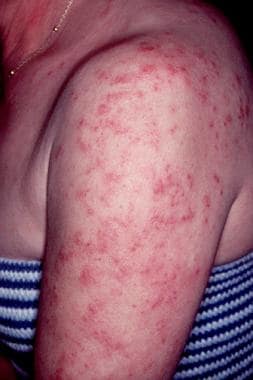
- The primary lesion of SCLE is an erythematous papule or a small plaque with a slight scaling (Media File 1). Primary lesions expand and may merge and eventually form either plaques with scaling (Media File 2) in the papulosquamous variant or annular and/or polycyclic lesions in the annular variant (Media File 3).
- Papulosquamous lesions may mimic psoriasis or lichen planus, while annular lesions may mimic erythema annulare centrifugum. Most patients exhibit one predominant type of lesion, and some also manifest isolated lesions of DLE.
- SCLE lesions primarily are photodistributed. When they occur on the lower extremities, they often are purpuric.
- Early lesions of SCLE may be difficult to distinguish from polymorphous light eruption (PMLE). In this author's opinion, PMLE and SCLE are distinctive disorders, but patients with recurrent photosensitive pruritic eruptions who are anti-Ro (SS-A) positive blur the distinction and might well be better classified as having SCLE rather than believed to have both disorders, as has been suggested by some investigators in Europe.
- Several unusual variants of SLCE have been reported.
- Tumid lupus erythematosus (TLE) involves a deeper more nodular lesion in which little or no scaling is seen (Media File 4). Some authorities have suggested that this variant is better classified as chronic cutaneous lupus erythematosus, while others have pointed out that this variant does not demonstrate an interface dermatitis upon histopathological evaluation and therefore belongs in a separate subset among the skin lesions that are not histopathologically specific.
- Annular erythema of Sjögren syndrome has been reported in Japanese and Polynesian patients. The author believes this is not a distinct entity, but rather SCLE with Sjögren syndrome in a particular ethnic population.
- A variant including erythema multiforme–like lesions in association with DLE and chilblains may exist, but it is not clear whether this is a distinct entity.
- Patients with SCLE may have arthritis and pleuritis or pericarditis that manifest physical findings on joint or cardiopulmonary examination, respectively. Patients also may have nonspecific cutaneous manifestations of lupus erythematosus (LE), such as livedo reticularis, palpable purpura, urticaria, ischemic changes of the distal fingertips (resulting from Raynaud phenomenon), or mucosal leukoplakic or ulcerative lesions.
- Neonatal lupus erythematosus (NLE) most often manifests as a nonscarring form of LE (Media File 5). Skin lesions are worsened by UV light and usually resolve by age 4-6 months. Some patients with NLE have congenital heart block. Patients with complete heart block eventually may require a pacemaker, may die suddenly, or may develop heart failure. NLE also may be manifested by cytopenias, and if thrombocytopenia is present, the neonate may have petechiae. Lastly, hepatosplenomegaly also may occur. Except for congenital heart block, all other manifestations resolve without intervention within 4-6 months.
Causes
- Patients are predisposed genetically to develop SCLE.
- Usually, the disease manifests following UV light exposure, but other triggers or inciting factors also must be implicated.
- Exacerbation of disease or induction of lesions most commonly follows UV-B exposure. Some patients exhibit sensitivity to only UV-A or to both UV-A and UV-B.
- Several drugs may induce SCLE; the most frequently implicated is hydrochlorothiazide. Many pharmaceutical companies combine an antihypertensive agent with hydrochlorothiazide, and this should be assessed carefully. Additionally, implicated agents include calcium channel blockers, angiotensin-converting enzyme inhibitors, terbinafine, and tumor necrosis factor antagonists. Therefore, a careful drug history should be part of the initial evaluation of patients with SCLE.
- Patients with a deficiency of the second component of complement (C2d) often manifest SCLE lesions as part of the SLE-like disease.
Dermatomyositis
Erythema Annulare Centrifugum
Erythema Gyratum Repens
Erythema Multiforme
Granuloma Annulare
Henoch-Schönlein Purpura (Anaphylactoid Purpura)
Hypersensitivity Vasculitis (Leukocytoclastic Vasculitis)
Lichen Planus
Lupus Erythematosus, Acute
Lupus Erythematosus, Discoid
Polymorphous Light Eruption
Psoriasis, Plaque
Sarcoidosis
Tinea Corporis
Lab Studies
- Serologic testing
- Most patients with SCLE manifest a positive antinuclear antibody (ANA) reaction when tested with human substrates. HEp-2 cells are the substrate used most commonly in commercial laboratories.
- Anti-Ro (SS-A) autoantibodies are present in a high proportion of patients as follows:
- Annular SCLE - 90%
- Papulosquamous SCLE - 80-85%
- SCLE with vasculitis, Sjögren syndrome, or C2d deficiency - Greater than 95%
- Mothers of neonates with LE - Greater than 90%
- Anti-La (SS-B) autoantibodies often are present in a lesser percentage.
- Usually, laboratories perform the anti-Ro and anti-La autoantibody assays as a pair. Occasionally, patients have only anti-La (SS-B) autoantibodies.
- Anti-native DNA (double-stranded or nDNA) antibodies usually reflect SLE, but they may occur in some patients with SCLE.
- Other laboratory tests
- Anemia, leukopenia, and/or thrombocytopenia may be present.
- Elevated sedimentation rate may occur in some patients.
- Rheumatoid factor may be positive.
- Complement levels may be depressed.
- Urinalysis should be performed initially and periodically throughout the patient's course.
Other Tests
- Deposition of immunoglobulin and/or complement at the dermal-epidermal junction is a characteristic feature of LE. Examination of tissue may be performed on skin lesions (lesional) or normal skin (nonlesional). Nonlesional biopsies may be performed on sun-exposed or nonexposed surfaces. Testing of nonlesional nonexposed skin is termed the lupus band test (LBT).
- Use and interpretation of these tests vary according to the site of biopsy. Only 60% of patients with SCLE test positive on lesional skin. Some, usually those with SLE, have a positive LBT.
- Older lesions may be more likely to be negative on immunofluorescence microscopy. Lesions of TLE frequently are negative. The frequency of positive tests also is affected by tissue handling techniques. Snap frozen tissue is less likely to be falsely positive than tissue sent to the laboratory in Michel transport media.
Histologic Findings
Characteristic histopathologic alterations observed in SCLE include (1) vacuolar alteration of the basal cell layer and (2) an inflammatory cell infiltrate (usually lymphocytic) around vessels (perivascular), around appendiceal structures (periappendiceal), and in a subepidermal location. Epidermal changes, such as atrophy, are common, but follicular plugging is less frequent than in patients with DLE. An abundance of mucin often is seen within the dermis.
Histopathologic features differ depending upon the type and age of the lesion. For example, papulosquamous lesions of SCLE are much more likely to manifest diagnostic findings than annular lesions of SCLE. TLE lacks epidermal involvement.
Medical Care
- The goals of management are to improve the patient's appearance and to prevent the development of further lesions.
- Counsel patients regarding the risk of serious systemic disease. The frequency and severity of systemic disease in patients with SCLE is controversial. Traditionally, it was suggested that although many patients fulfilled the criteria for SLE, the severity of systemic manifestations was mild, and renal and CNS disease rarely occurred. Cohen and Crosby found no appreciable difference between SCLE and SLE patients seen in a rheumatology practice, whereas Black et al found significant differences between these 2 populations. Inform patients that although they probably will not have serious systemic disease, follow-up evaluation and treatment will be performed for manifestations that may occur.
- Therapy begins with sun-protective measures, including sunscreens, protective clothing, and behavior alteration. One sunscreen has been tested in a randomized placebo-controlled trial and was demonstrated to prevent the development of UV-induced cutaneous lesions among patients who used a sunscreen that contained Mexoryl SX and Mexoryl XL.
- Cosmetic measures are less important in patients with SCLE than in patients with DLE.
- Standard therapy includes corticosteroids (topical, intralesional) and antimalarials. Additional therapies that may be considered in selected patients include auranofin, dapsone, thalidomide, retinoids, interferon, and immunosuppressive agents. Avoid systemic corticosteroids except for acute short-term usage or when the presence of systemic disease warrants use. Patients who smoke appear to respond less well to antimalarial therapy. Note that clofazimine is primarily beneficial for cutaneous, not systemic, disease.
Surgical Care
Surgical approaches rarely are needed in SCLE patients.
Consultations
- Rheumatologist - When joints are involved
- Nephrologist - When renal involvement is present
- Neurologist - When CNS disease is present
- Internal medicine specialist - For systemic involvement
Diet
No special diet is required with SCLE.
Activity
Since SCLE is exacerbated by sunlight or other UV light exposure, advise patients to take precautions. One precaution is to discourage exposure to sunlight between the hours of 10 am and 4 pm. While this helps some patients, many are so exquisitely photosensitive, that this alteration does not help. In addition, advise patients to avoid artificial light sources such as tanning beds.
The basic therapy of skin disease uses sun-protection methods, such as sunscreens, sun-protective clothing, and alteration of exposure by decreasing activities during times of high intensity UV light. Topical corticosteroids are used and selected by the appropriate strength for the area of the body. Intralesional injection of triamcinolone acetonide is useful for individual recalcitrant lesions. Antimalarials are the mainstay of systemic therapy.
Anecdotal reports or small open-label trials, as reported by Callen, suggest that the following agents may be of use in some patients: dapsone, quinacrine, auranofin, thalidomide, isotretinoin, acitretin, azathioprine, methotrexate, mycophenolate mofetil, interferon alfa, chimeric monoclonal antibody, and phenytoin.
Drug Category: Antimalarials
Have immunomodulatory effects that may improve symptoms of the disease. Hydroxychloroquine is DOC for systemic therapy of SCLE. Chloroquine is second line. The lowest possible dose needed to control their disease should be used.
| Drug Name | Hydroxychloroquine (Plaquenil) |
| Description | Inhibits chemotaxis of eosinophils, locomotion of neutrophils, and impairs complement-dependent antigen-antibody reactions. Hydroxychloroquine sulfate 200 mg is equivalent to 155 mg hydroxychloroquine base and 250 mg chloroquine phosphate. |
| Adult Dose | 200-400 mg sulfate/d PO; not to exceed 6.5 mg/kg/d; 310 mg base PO qd/bid for several wk depending on response; 155-310 mg base/d for prolonged maintenance therapy |
| Pediatric Dose | Up to 6.5 mg sulfate/kg/d PO; 3-5 mg base/kg/d PO qd or divided bid; not to exceed 7 mg/kg/d |
| Contraindications | Documented hypersensitivity; psoriasis; retinal and visual field changes attributable to 4-aminoquinolones |
| Interactions | May increase penicillamine levels; serum levels of hydroxychloroquine may increase with cimetidine; magnesium trisilicate may decrease absorption; concurrent use of aurothioglucose and antimalarial agents may induce blood dyscrasias and may also result in additive risk of this effect; concurrent digoxin may result in increased serum digoxin concentrations |
| Pregnancy | C - Safety for use during pregnancy has not been established.
|
| Precautions | Crosses placenta and may cause ocular, CNS, or ototoxicity in fetus; do not use in breast-feeding; limit pediatric use to established safe doses to avoid potential fatality; perform regular ophthalmologic exams (including visual acuity, slit lamp, funduscopic, and visual field tests); caution in patients with G-6-PD deficiency; check blood counts periodically (perhaps biannually); hemolysis, aplastic anemia, agranulocytosis, and leukopenia can occur |
| Drug Name | Chloroquine (Aralen) |
| Description | Inhibits effects of immune cells, impairing complement-dependent antigen-antibody reactions. |
| Adult Dose | 250-500 mg/d PO |
| Pediatric Dose | Up to 3.5 mg base tab/kg/d |
| Contraindications | Documented hypersensitivity; psoriasis; retinal and visual field changes attributable to 4-aminoquinolones |
| Interactions | Cimetidine may increase serum levels (possibly other 4-aminoquinolones); magnesium trisilicate may decrease absorption of 4-aminoquinolones Concurrent use with kaolin may decrease plasma concentrations of chloroquine; concurrent administration with aurothioglucose may result in additive effect inducing blood dyscrasias; concomitant administration of levothyroxine may decrease effect of levothyroxine and increase serum thyrotropin levels |
| Pregnancy | C - Safety for use during pregnancy has not been established.
|
| Precautions | Ocular toxicity is possible for hydroxychloroquine and chloroquine; caution in hepatic disease, G-6-PD deficiency, psoriasis, porphyria; not recommended for long-term use in children; perform periodic ophthalmologic examinations; test for muscle weakness; ECG changes (eg, T-wave inversion, T-wave flattening, QT interval prolongation) can occur following therapeutic doses of chloroquine |
Drug Category: Leprostatic agents
May have immunomodulatory effects.
| Drug Name | Dapsone (Avlosulfon) |
| Description | Mechanism of action is similar to sulfonamides where competitive antagonists of PABA prevent formation of folic acid, inhibiting bacterial growth. |
| Adult Dose | 100-200 mg/d PO |
| Pediatric Dose | Not established |
| Contraindications | Documented hypersensitivity; G-6-PD deficiency |
| Interactions | May inhibit anti-inflammatory effects of clofazimine; hematologic reactions may increase with folic acid antagonists, eg, pyrimethamine (monitor for agranulocytosis during second and third mo of therapy); probenecid increases dapsone toxicity; trimethoprim with dapsone may increase toxicity of both drugs; because of increased renal clearance, dapsone levels may significantly decrease when administered concurrently with rifampin |
| Pregnancy | C - Safety for use during pregnancy has not been established.
|
| Precautions | Perform weekly blood counts (first mo), then perform WBC counts monthly (6 mo), then semiannually; discontinue if significant reduction in platelets, leukocytes, or hematopoiesis is seen; caution in methemoglobin reductase deficiency, G-6-PD deficiency, or hemoglobin M because of high risk for hemolysis and Heinz body formation; caution in patients exposed to other agents or conditions (eg, infection, diabetic ketosis) capable of producing hemolysis; peripheral neuropathy can occur (rare); phototoxicity may occur when exposed to UV light |
| Drug Name | Clofazimine (Lamprene) |
| Description | Lipophilic rhimophenazine dye that inhibits template function of DNA by binding to it. Weakly bactericidal and has anti-inflammatory effects. Originally developed to treat tuberculosis. Although mechanism of action unclear, seems to exert main effect upon neutrophils and monocytes in a variety of ways (eg, stimulating phagocytosis and release of lysosomal enzymes). |
| Adult Dose | 100 mg/d PO qd |
| Pediatric Dose | 1 mg/kg/d PO qd |
| Contraindications | Documented hypersensitivity |
| Interactions | Dapsone may inhibit anti-inflammatory activity, although commonly used together; levels may be increased by simultaneous use with isoniazid Concurrent use with aluminum/magnesium-containing antacids may result in reduced clofazimine bioavailability and should be avoided because of the decreased absorption Fosphenytoin is a prodrug of phenytoin, and the same interactions that occur with phenytoin are expected to occur with fosphenytoin; concurrent use of phenytoin and clofazimine may result in reduced phenytoin efficacy; when clofazimine is added to or withdrawn from therapy, phenytoin dose adjustments may be needed; monitor patients for reduced phenytoin efficacy; also prudent to monitor phenytoin serum concentrations; alterations in fosphenytoin dosing may be required when clofazimine is given concomitantly In healthy, fasted subjects, concurrent administration of small quantities of orange juice with clofazimine resulted in modest reduction of clofazimine relative bioavailability; avoid concurrent administration of clofazimine and orange juice when in a fasted state |
| Pregnancy | C - Safety for use during pregnancy has not been established.
|
| Precautions | Severe abdominal symptoms may require exploratory laparotomies; caution in patients with GI problems (eg, abdominal pain, diarrhea); skin discoloration due to drug may result in depression or suicide; apply oil to skin for dryness and ichthyosis; monitor liver function if dose >100 mg/d |
Drug Category: Immunomodulators
Are effective in the treatment of diseases with autoimmune etiology.
| Drug Name | Azathioprine (Imuran) |
| Description | Antagonizes purine metabolism and inhibits synthesis of DNA, RNA, and proteins. May decrease proliferation of immune cells, which results in lower autoimmune activity. |
| Adult Dose | 1 mg/kg/d PO for 6-8 wk; increase by 0.5 mg/kg q4wk until response is seen or dose reaches 2.5 mg/kg/d |
| Pediatric Dose | Initial dose: 2-5 mg/kg/d PO/IV Maintenance dose: 1-2 mg/kg/d PO/IV |
| Contraindications | Documented hypersensitivity |
| Interactions | Toxicity increases with allopurinol; concurrent use with ACE inhibitors may induce severe leukopenia; may increase levels of methotrexate metabolites and decrease effects of anticoagulants, neuromuscular blockers, and cyclosporine |
| Pregnancy | D - Unsafe in pregnancy
|
| Precautions | Increases risk of neoplasia; caution in liver disease and renal impairment; hematologic toxicities may occur |
| Drug Name | Thalidomide (Thalomid) |
| Description | May suppress excessive production of tumor necrosis factor alpha (TNF-alpha), and may down-regulate selected cell-surface adhesion molecules involved in leukocyte migration. If <50 kg (110 lb), start at low end of dose regimen. Can cause severe, life-threatening birth defects and is contraindicated in pregnant women. Also contraindicated in women of childbearing potential unless using 2 forms of reliable contraception and complying with serial pregnancy testing while on therapy. Also contraindicated in sexually active men not using latex condom as barrier contraception. Drug available only under special restricted distribution program called STEPS (System for Thalidomide Education and Prescribing Safety) Program; only prescribers and pharmacists registered with this program may prescribe and dispense thalidomide. For more information, contact the Celgene Corporation at 1-888-423-5436. |
| Adult Dose | 100-300 mg/d, qd aq, preferably hs and > 1 h pc |
| Pediatric Dose | Not established |
| Contraindications | Documented hypersensitivity |
| Interactions | May increase sedation effects of alcohol, barbiturates, chlorpromazine, and reserpine; increases thromboembolic risk of erythropoietic proteins such as Darbepoetin Alfa in myelodysplastic syndrome (MDS) patients Coadministration with dexamethasone increases risk of developing toxic epidermal necrolysis; risk of renal dysfunction may be increased when zoledronic acid used in combination with thalidomide in multiple myeloma patients |
| Pregnancy | X - Contraindicated in pregnancy
|
| Precautions | Perform pregnancy test within 24 h prior to initiating therapy (weekly during first mo, followed by monthly tests in women with regular menstrual cycles or q2wk with irregular menstrual cycles); bradycardia may occur; use protective measures (eg, sunscreens, protective clothing) against exposure to sunlight or UV light (eg, tanning beds); as result of teratogenic effects, women must use 2 additional methods of contraception or abstain from intercourse |
| Drug Name | Interferon alfa-2a and alfa-2b (Roferon and Intron A) |
| Description | Protein product manufactured by recombinant DNA technology. Mechanism of antitumor activity is not clearly understood; however, direct antiproliferative effects against malignant cells and modulation of host immune response may be important factors. |
| Adult Dose | 2 million U/m2 SC 3 times per wk for 30 d |
| Pediatric Dose | Not established |
| Contraindications | Documented hypersensitivity |
| Interactions | Theophylline may increase interferon alfa toxicity; cimetidine may increase antitumor effects; zidovudine and vinblastine may increase toxicity; concomitant use with theophylline decreases theophylline clearance, resulting in 100% increase in serum theophylline levels |
| Pregnancy | C - Safety for use during pregnancy has not been established.
|
| Precautions | Caution in brain metastases, severe hepatic or renal insufficiencies, seizure disorders, multiple sclerosis, or compromised CNS; may cause or aggravate fatal or life-threatening neuropsychiatric, autoimmune, ischemic, and infectious disorders; chronic hepatitis B patients with evidence of decreasing hepatic synthetic function; coagulation disorders may occur; avoid concurrent use of narcotics, hypnotics, or sedatives; not for use in immunosuppressed transplant recipients; not for use in neonates or infants (injectable product contains benzyl alcohol); not for use in AIDS-related Kaposi sarcoma with rapidly progressive visceral disease |
| Drug Name | Mycophenolate (CellCept) |
| Description | Inhibits inosine monophosphate dehydrogenase (IMPDH) and suppresses de novo purine synthesis by lymphocytes, thereby inhibiting their proliferation. Inhibits antibody production. |
| Adult Dose | 1-1.5 g PO bid |
| Pediatric Dose | Not established; 15-23 mg/kg PO bid suggested |
| Contraindications | Documented hypersensitivity; hypersensitivity to polysorbate 80 (IV formulation) |
| Interactions | May elevate levels of acyclovir and ganciclovir; antacids and cholestyramine decreases absorption, reducing levels (do not administer together); probenecid may increase levels of mycophenolate; salicylates may increase toxicity of mycophenolate |
| Pregnancy | D - Fetal risk shown in humans; use only if benefits outweigh risk to fetus
|
| Precautions | Increases risk for infection; increases toxicity in patients with renal impairment; caution in active peptic ulcer disease Increases risk for infection; increases toxicity in patients with renal impairment; caution in active peptic ulcer disease Bone marrow suppression may occur, including severe neutropenia; due to increased risk of skin cancer, limit exposure to sunlight and UV light; increased risk for developing lymphomas or other malignancies; concomitant use with azathioprine is not recommended; oral susp contains aspartame so should be used with caution in patients with phenylketonuria; use cautiously in elderly patient and with drugs that affect enterohepatic recirculation; live attenuated vaccines should not be used during treatment and other vaccines may be less effective; avoid in patients with hereditary deficiency of hypoxanthine-guanine phosphoribosyl-transferase Avoid in pregnant women unless benefit clearly outweighs risk; negative pregnancy test should be obtained in women of childbearing potential; contraception should be used during treatment and for 6 wk after stopping treatment Serious adverse effects may include confusion, GI hemorrhage, hypertension, increased frequency of cough, infectious disease, myelosuppression, peripheral edema, sepsis, and tremor |
| Drug Name | Methotrexate (Rheumatrex, Trexall) |
| Description | This drug reversibly inhibits dihydrofolate reductase; limits the availability of 1-carbon fragments necessary for synthesis of purines and the conversion of deoxyuridylate to thymidylate in the synthesis of DNA and cell reproduction. Extensively used for cancer treatment, rheumatoid arthritis, psoriasis, and as a steroid-sparing agent in various autoimmune conditions. |
| Adult Dose | In autoimmune conditions: 7.5-25 mg/wk as a single dose PO/SC Folic acid supplementation is usually given concomitantly |
| Pediatric Dose | 5-15 mg/m2/wk as a single dose PO/SC Children receiving 20-30 mg/m2 may have better absorption and fewer adverse GI effects if administered IM or SC Safety and effectiveness in pediatric patients only established for cancer chemotherapy and polyarticular-course juvenile rheumatoid arthritis; when oral methotrexate is indicated for polyarticular-course juvenile rheumatoid arthritis recommended initial dose is 10 mg/m2 once weekly, with gradual dosage adjustments to achieve optimal response |
| Contraindications | Documented hypersensitivity; alcoholism; hepatic insufficiency; documented immunodeficiency syndromes; preexisting blood dyscrasias (eg, bone marrow hypoplasia, leukopenia, thrombocytopenia, significant anemia); renal insufficiency |
| Interactions | Oral aminoglycosides may decrease absorption and blood levels of concurrent oral methotrexate (MTX); charcoal lowers MTX levels; coadministration with etretinate may increase hepatotoxicity of MTX; folic acid or its derivatives contained in some vitamins may decrease response to MTX Probenecid, NSAIDs, salicylates, procarbazine, and sulfonamides, including TMP-SMZ, can increase MTX plasma levels; may decrease phenytoin plasma levels; may increase plasma levels of thiopurines |
| Pregnancy | X - Contraindicated in pregnancy
|
| Precautions | Monitor CBC counts monthly, and liver and renal function q1-3mo during therapy (monitor more frequently during initial dosing, dose adjustments, or when risk of elevated MTX levels, eg, dehydration); MTX has toxic effects on hematologic, renal, GI, pulmonary, and neurologic systems; discontinue if significant drop in blood counts occur; fatal reactions reported when administered concurrently with NSAIDs Increased incidence of serious toxic reactions, especially bone marrow suppression, in adults at doses >20 mg/wk |
Drug Category: Gold compounds
May regulate immune cell function.
| Drug Name | Auranofin (Ridaura) |
| Description | Gold is taken up by macrophages, which in turn inhibit phagocytosis and lysosomal membrane stabilization. Alters immunoglobulins, decreasing prostaglandin synthesis and lysosomal enzyme activity. |
| Adult Dose | 6 mg/d PO qd or divided bid; after 3 mo, may increase to 9 mg/d tid; then, if no response, discontinue drug |
| Pediatric Dose | Initial: 0.1 mg/kg/d PO qd or divided bid Maintenance: 0.15 mg/kg/d PO qd or divided bid |
| Contraindications | Documented hypersensitivity; renal impairment; history of blood dyscrasias, exfoliative dermatitis, congestive heart failure, necrotizing enterocolitis, bone marrow aplasia, pulmonary fibrosis |
| Interactions | Penicillamine, hydroxychloroquine, and antimalarials may increase toxicity of auranofin |
| Pregnancy | C - Safety for use during pregnancy has not been established.
|
| Precautions | Discontinue therapy if platelet counts fall <100,000/µL; WBC <4,000/µL, granulocytes <1,500/µL Adverse effects include gastrointestinal hemorrhage, hepatotoxicity, nephrotoxicity, hematuria, proteinuria, pneumonitis |
Drug Category: Retinoids
Play a role in cell growth and differentiation.
| Drug Name | Acitretin (Soriatane) |
| Description | Retinoic acid analog similar to etretinate and isotretinoin. Etretinate is main metabolite, and acitretin has demonstrated clinical effects close to those seen with etretinate. Mechanism of action is unknown. |
| Adult Dose | Initial dose: 25 or 50 mg/d PO single dose with main meal Maintenance dose: 25-50 mg/d PO after initial response; terminate when lesions have resolved sufficiently |
| Pediatric Dose | Not established |
| Contraindications | Documented hypersensitivity |
| Interactions | Increases toxicity of methotrexate (avoid concomitant use); interferes with effects of microdosed progestin minipill; coadministration with alcohol may enhance synthesis of etretinate, which has much longer half-life than acitretin (>120 d) |
| Pregnancy | X - Contraindicated in pregnancy
|
| Precautions | Do not use in severe obesity; women of childbearing age must be able to comply with effective contraceptive measures, abstain from alcohol, and continue contraceptive measures for a minimum of 3 y following cessation of therapy; perform AST, ALT, and LDH tests prior to initiating acitretin at 1- to 2-wk intervals until stable and thereafter, at intervals as indicated clinically |
| Drug Name | Isotretinoin (Accutane) |
| Description | Decreases sebaceous gland size and sebum production. May inhibit sebaceous gland differentiation and abnormal keratinization. |
| Adult Dose | 40-60 mg/d PO for 4 mo; alternatively, 1-2 mg/kg/d for up to 20 wk |
| Pediatric Dose | Not established |
| Contraindications | Documented hypersensitivity |
| Interactions | Toxicity may occur with vitamin A coadministration; pseudotumor cerebri or papilledema may occur when coadministered with tetracyclines; may reduce plasma levels of carbamazepine |
| Pregnancy | X - Contraindicated in pregnancy
|
| Precautions | May decrease night vision; may be associated with development of hepatitis; occasional exaggerated healing response of acne lesions (excessive granulation with crusting) may occur; patients with diabetes may experience problems in controlling blood sugar; avoid excessive exposure to UV light or sunlight |
Further Inpatient Care
- Inpatient care is rarely needed for patients with skin disease; however, since these patients may have SLE, they may occasionally manifest internal complications that require hospitalization. In these instances, consultation with other physicians may be helpful.
Further Outpatient Care
- Follow patients with SCLE at regular intervals.
- Response to therapy varies, depending on the therapeutic agent prescribed. Avoid changes in therapy until a sufficient period elapses to note a response.
- At least once each year, and perhaps twice, assess stable patients using routine laboratory tests, including CBC count, renal function tests, and urinalysis. Repeat autoantibody testing is of little use in patients with SCLE, unless they have SLE. In patients with SLE, serial anti-nDNA antibody testing may predict the course of the disease.
- Regularly assess historical information concerning additional systemic manifestations.
Complications
- SCLE usually leaves no residual changes on the skin. Occasionally, dyspigmentation may be seen.
- Severe systemic disease is unusual, but when it occurs, the patient may develop life-altering sequelae.
Prognosis
- SCLE uncomplicated by severe SLE has a good prognosis. Some patients may manifest spontaneous remission; however, most have chronically active disease or a course punctuated by intermittent exacerbations.
- Exacerbation in the spring or summer is not uncommon.
Patient Education
Medical/Legal Pitfalls
- Failure to diagnose the disease
- Failure to appreciate serious systemic involvement
- Failure to recognize toxic effects of therapy
| Media file 1:
Early lesions of subacute cutaneous lupus erythematosus may simulate polymorphous light eruption. |
 | View Full Size Image | |
Media type: Photo
|
| Media file 2:
Papulosquamous lesions of subacute cutaneous lupus erythematosus may simulate psoriasis. |
 | View Full Size Image | |
Media type: Photo
|
| Media file 3:
Annular lesions of subacute cutaneous lupus erythematosus. |
 | View Full Size Image | |
Media type: Photo
|
- Bentley DD, Graves JE, Smith DI, Heffernan MP. Efalizumab-induced subacute cutaneous lupus erythematosus. J Am Acad Dermatol. May 2006;54(5 Suppl):S242-3. [Medline].
- Bezerra EL, Vilar MJ, da Trindade Neto PB, Sato EI. Double-blind, randomized, controlled clinical trial of clofazimine compared with chloroquine in patients with systemic lupus erythematosus. Arthritis Rheum. Oct 2005;52(10):3073-8. [Medline].
- Black DR, Hornung CA, Schneider PD, Callen JP. Frequency and severity of systemic disease in patients with subacute cutaneous lupus erythematosus. Arch Dermatol. Sep 2002;138(9):1175-8. [Medline].
- Callen JP, Klein J. Subacute cutaneous lupus erythematosus. Clinical, serologic, immunogenetic, and therapeutic considerations in seventy-two patients. Arthritis Rheum. Aug 1988;31(8):1007-13. [Medline].
- Callen JP. Management of "refractory" skin disease in patients with lupus erythematosus. Best Pract Res Clin Rheumatol. Oct 2005;19(5):767-84. [Medline].
- Callen JP. Cutaneous lupus erythematosus: a personal approach to management. Australas J Dermatol. Feb 2006;47(1):13-27. [Medline].
- Cassis TB, Callen JP. Bupropion-induced subacute cutaneous lupus erythematosus. Australas J Dermatol. Nov 2005;46(4):266-9. [Medline].
- Clayton TH, Ogden S, Goodfield MD. Treatment of refractory subacute cutaneous lupus erythematosus with efalizumab. J Am Acad Dermatol. May 2006;54(5):892-5. [Medline].
- Cohen MR, Crosby D. Systemic disease in subacute cutaneous lupus erythematosus: a controlled comparison with systemic lupus erythematosus. J Rheumatol. Sep 1994;21(9):1665-9. [Medline].
- Farhi D, Viguier M, Cosnes A, et al. Terbinafine-induced subacute cutaneous lupus erythematosus. Dermatology. 2006;212(1):59-65. [Medline].
- Herzinger T, Plewig G, Rocken M. Use of sunscreens to protect against ultraviolet-induced lupus erythematosus. Arthritis Rheum. Sep 2004;50(9):3045-6. [Medline].
- Housman TS, Jorizzo JL, McCarty MA, et al. Low-dose thalidomide therapy for refractory cutaneous lesions of lupus erythematosus. Arch Dermatol. Jan 2003;139(1):50-4. [Medline].
- Huber A, Tuting T, Bauer R, et al. Methotrexate treatment in cutaneous lupus erythematosus: subcutaneous application is as effective as intravenous administration. Br J Dermatol. Oct 2006;155(4):861-2. [Medline].
- Klein LR, Elmets CA, Callen JP. Photoexacerbation of cutaneous lupus erythematosus due to ultraviolet A emissions from a photocopier. Arthritis Rheum. Aug 1995;38(8):1152-6. [Medline].
- Kreuter A, Hyun J, Altmeyer P, Gambichler T. Intravenous immunoglobulin for recalcitrant subacute cutaneous lupus erythematosus. Acta Derm Venereol. 2005;85(6):545-7. [Medline].
- Lee LA, David KM. Cutaneous lupus erythematosus. Curr Probl Dermatol. 1989;1:161-210.
- McCauliffe DP. Cutaneous diseases in adults associated with anti-Ro/SS-A autoantibody production. Lupus. 1997;6(2):158-66. [Medline].
- Reed BR, Huff JC, Jones SK, et al. Subacute cutaneous lupus erythematosus associated with hydrochlorothiazide therapy. Ann Intern Med. Jul 1985;103(1):49-51. [Medline].
- Sontheimer RD, Thomas JR, Gilliam JN. Subacute cutaneous lupus erythematosus: a cutaneous marker for a distinct lupus erythematosus subset. Arch Dermatol. Dec 1979;115(12):1409-15. [Medline].
- Sontheimer RD. The lexicon of cutaneous lupus erythematosus--a review and personal perspective on the nomenclature and classification of the cutaneous manifestations of lupus erythematosus. Lupus. 1997;6(2):84-95. [Medline].
- Srivastava M, Rencic A, Diglio G, et al. Drug-induced, Ro/SSA-positive cutaneous lupus erythematosus. Arch Dermatol. Jan 2003;139(1):45-9. [Medline].
- Stege H, Budde MA, Grether-Beck S, et al. Evaluation of the capacity of sunscreens to photoprotect lupus erythematosus patients by employing the photoprovocation test. Eur J Dermatol. Jul-Aug 2002;12(4):VII-IX. [Medline].
- Wenzel J, Brahler S, Bauer R, et al. Efficacy and safety of methotrexate in recalcitrant cutaneous lupus erythematosus: results of a retrospective study in 43 patients. Br J Dermatol. Jul 2005;153(1):157-62. [Medline].
Lupus Erythematosus, Subacute Cutaneous excerpt Article Last Updated: Mar 23, 2007
|