| Patient Education |
|
Click here for patient education.
|
|
You are in: eMedicine Specialties >
Dermatology > REACTIVE AND INFLAMMATORY DERMATOSES
Lichen Simplex Chronicus
Article Last Updated: May 30, 2006
AUTHOR AND EDITOR INFORMATION
Section 1 of 11
Author: Daniel Hogan, MD, Chief of Dermatology, Professor, Departments of Internal Medicine and Pediatrics, Louisiana State University Medical Center
Daniel Hogan is a member of the following medical societies: American Academy of Dermatology
Coauthor(s):
Stephen H Mason, MD, Assistant Professor of Dermatology, Department of Internal Medicine, University of Kansas Medical Center;
Siobahn Bower, BS, Creighton University School of Medicine
Editors: James J Nordlund, MD, Professor Emeritus, Department of Dermatology, University of Cincinnati College of Medicine; Richard P Vinson, MD, Assistant Clinical Professor, Department of Dermatology, Texas Tech University School of Medicine; Consulting Staff, Mountain View Dermatology, PA; Jeffrey Meffert, MD, Assistant Clinical Professor of Dermatology, Medicine, University of Texas Health Science Center-San Antonio; Joel M Gelfand, MD, MSCE, Medical Director, Clinical Studies Unit, Assistant Professor, Department of Dermatology, Associate Scholar, Center for Clinical Epidemiology and Biostatistics, University of Pennsylvania; Dirk M Elston, MD, Director, Department of Dermatology, Geisinger Medical Center
Author and Editor Disclosure
Synonyms and related keywords:
neurodermatitis circumscripta, circumscribed neurodermatitis, lichen simplex chronicus of Vidal, LSC, lichen amyloidosis, atopic dermatitis, lichen simplex, secondary lichenification, atopic diathesis, lichen simplex, cutaneous horn, lichenification
Background
Lichen simplex chronicus (LSC) is thickening of the skin with variable scaling that arises secondary to repetitive scratching or rubbing. LSC is not a primary process. Rather, a person senses pruritus in a specific area of skin (with or without underlying pathology) and causes mechanical trauma to the point of lichenification. A proposed variant of LSC is lichen amyloidosis. Lichen amyloidosis is described as LSC in which the keratinocytes have necrosed and formed keratinocytic-derived amyloid in the dermis. The initial insult is pruritus with resultant amyloid formation, rather than the reverse.
Pathophysiology
LSC is found on the skin in regions accessible to scratching. Pruritus provokes rubbing that produces clinical lesions, but the underlying pathophysiology is unknown. Some skin types are more prone to lichenification, such as skin that tends toward eczematous conditions (ie, atopic dermatitis, atopic diathesis). A relationship likely exists between central and peripheral neural tissue and inflammatory cell products in the perception of itch and ensuing changes in LSC. The possible interplay among primary lesions, psychic factors, and the intensity of pruritus additively influence the extent and severity of LSC.
A small study looking at LSC and the use of P-phenylenediamine (PPD)–containing hair dye showed clinically relevant improvement in symptoms after discontinuation of PPD exposure, thus providing a basis for the role of sensitization and contact dermatitis in the etiology of LSC.
Frequency
International
Exact frequency in the general population is unknown. In one study, 12% of aging patients with pruritic skin had LSC.
Mortality/Morbidity
No mortality occurs as a result of LSC. Overall, pruritus of LSC is mild to moderate, but paroxysms may occur that are relieved by moderate-to-severe rubbing and scratching. Pruritus is usually described as much worse during periods of inactivity, usually at bedtime and during the night. Touch and emotional stress also may provoke pruritus, which is relieved by moderate-to-severe rubbing and scratching.
- Lesions cause little direct morbidity; however, occasionally patients report decreased or interrupted sleep, which affects motor and mental functioning.
-
- LSC may become secondarily infected after excoriation.
-
- LSC is often visible enough to cause patients to seek treatment.
Race
No differences are reported in frequency among races, although prior authors claimed LSC was more common in Asians and African Americans. The appearance of lesions on darker skin sometimes shows follicular prominence. Secondary pigmentary alterations are also more severe in individuals with darker skin.
Sex
LSC is observed more commonly in females than in males. Lichen nuchae is a form of lichen simplex that occurs on the midposterior neck and is observed almost exclusively in women.
Age
LSC occurs mostly in mid-to-late adulthood, with highest prevalence in persons aged 30-50 years.
History
- Patients with LSC usually describe stable pruritic plaques on one or more areas; however, thickening of the skin occurs on any location that the patient can reach, including the following:
-
- Scalp
-
- Nape of neck
-
- Extensor forearms and elbows
-
- Vulva and scrotum
-
- Upper medial thighs, knees, lower legs, and ankles
-
- Erythema is noted most in early lesions.
-
- Pruritus is described as worse when patients are still or quiet and as much less or nonexistent when patients are active.
-
- Pruritus is usually intermittent; the resultant scratching provides temporary relief.
-
- Patients may have a past medical history of a chronic skin condition or acute trauma. Patients with atopic dermatitis may have LSC in areas of former atopic outbreaks. Sites of irritant or allergic contact dermatitis, insect bites, or other past minor skin trauma sometimes demonstrate pruritus and, subsequently, LSC.
-
- Each palm-sized plaque may have 3 zones. A 2- to 3-cm wide peripheral zone that is barely thickened may have isolated papules. The middle zone has lenticular and hemispheric prurigo papules that may be excoriated. The central zone has the greatest thickening and pigmentary alteration.
-
Physical
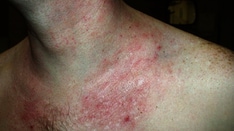
- One or more slightly erythematous, scaly, well-demarcated, lichenified, firm, rough plaques with exaggerated skin lines are noted.
-
- Pigmentary changes (especially hyperpigmentation) are seen variably as in any dermatitic lesion.
-
- Rubbing plays a key role in lesion formation and is visualized variably by white scratch marks, erosion, and ulceration from deeper scratching.
-
- LSC is one of the hyperkeratotic processes from which a cutaneous horn may grow.
-
- Patients may scratch lesions de novo when observed. Some patients may start scratching while discussing the itch or describing the lesions.
-
Causes
- Atopic dermatitis results in a higher probability of developing LSC.
-
- Insect bites, scars (eg, traumatic, postherpetic/zoster), acne keloidalis nuchae, xerosis, venous insufficiency, and asteatotic eczema are common factors.
-
- Psychological factors appear to play a role in the development or exacerbation of LSC.
-
- Anxiety has been reported to be more prevalent in patients with LSC.
-
- Neurodermatitis is a term formerly used interchangeably with LSC, suggesting a role of anxiety or obsession as part of the pathological process of developing lesions.
-
- Lithium has been linked to LSC in one reported case. LSC was dependent on the administration of lithium as evidenced by the observation that the LSC remitted when the medication was discontinued and recurred when it was restarted.
-
- A small study looking at LSC and the use of PPD-containing hair dye showed clinically relevant improvement in symptoms after discontinuation of PPD exposure, thus providing a basis for the role of sensitization and contact dermatitis in the etiology of LSC.
-
- Long-term exposure to street traffic exhaust has been associated with an increase in the frequency of childhood skin diseases, including LSC.
-
- Some reserve the diagnosis of lichen simplex for patients who have no known predisposing skin disorder. The term secondary lichenification has been used if the eruption is initiated by a primary dermatosis.
-
Acanthosis Nigricans
Acne Keloidalis Nuchae
Alopecia Mucinosa
Amyloidosis, Lichen
Amyloidosis, Macular
Atopic Dermatitis
Berloque Dermatitis
Contact Dermatitis, Allergic
Contact Dermatitis, Irritant
Cutaneous T-Cell Lymphoma
Dermatitis Herpetiformis
Dermatologic Manifestations of Gastrointestinal Disease
Dermatologic Manifestations of Hematologic Disease
Dermatologic Manifestations of Neurologic Disease
Dermatologic Manifestations of Renal Disease
Extramammary Paget Disease
Hyperkeratosis of the Nipple and Areola
Lichen Nitidus
Lichen Planus
Lichen Striatus
Nummular Dermatitis
Phytophotodermatitis
Pretibial Myxedema
Psoriasis, Plaque
Riehl Melanosis
Seborrheic Dermatitis
Stasis Dermatitis
Tinea Cruris
Lab Studies
- An elevated serum immunoglobulin E level occasionally supports the diagnosis of an underlying atopic diathesis.
-
- Perform potassium hydroxide examination and fungal cultures to exclude tinea cruris or candidiasis in patients with genital LSC.
-
Other Tests
- Patch testing helps exclude allergic contact dermatitis as an underlying primary dermatosis (eg, allergic contact dermatitis to nickel with secondary LSC) or as a factor in chronicity (eg, allergic contact dermatitis to topical corticosteroids used to treat LSC).
-
Procedures
- Frequently, skin biopsy is performed to exclude other disorders, particularly psoriasis or mycosis fungoides (cutaneous T-cell lymphoma) in elderly patients.
-
Histologic Findings
Histologic examination demonstrates hyperkeratosis, acanthosis, spongiosis, and patches of parakeratosis in the epidermis. Epidermal thickening of all layers is noted, with elongation of rete ridges and with pseudoepitheliomatous hyperplasia. Papillary dermal fibrosis with vertical streaking of collagen bundles is characteristic.
A characteristic finding of LSC that is noted on electron microscopy is frequent collagen fibers attached to and just above the lamina basalis.
Medical Care
Treatment is aimed at reducing pruritus and minimizing existing lesions because rubbing and scratching cause LSC.
- Topical steroids are the current treatment of choice because they decrease inflammation and itch while concurrently softening the hyperkeratosis. Because lesions are by nature chronic, treatment most likely is lifelong. On larger and more active lesions, a midpotency steroid may be used to treat acute inflammation. Occasionally, occlusion is used to increase potency and enhance delivery of the agent. Occlusion also provides a physical barrier to the scratching. Midpotency topical steroids are not recommended for thin skin (eg, vulva, scrotum, axilla, face). Direct long-term therapy more at daily use of low-potency nontrophogenic topical corticosteroids. High-potency topical corticosteroids may be used for 3-week courses on thicker-skinned areas.
-
- Oral antianxiety medications and sedation may be considered in certain patients. According to individual need, treatment can be scheduled throughout the day, at bedtime, or both. Antihistamines such as diphenhydramine (Benadryl) and hydroxyzine (Atarax) are common. Doxepin (Sinequan) and clonazepam (Klonopin) may be considered in appropriate cases.
-
- For infected lesions, a topical or oral antibiotic can be considered.
-
- Other topical medications reported to decrease pruritus include doxepin cream and capsaicin cream.
-
- One study suggests that topical aspirin/dichloromethane is effective in patients with LSC who have not responded to topical corticosteroids.
-
- In the future, both topical and systemic immunomodulators, such as topical tacrolimus, may be used in directing the changes in cellular activity that induce itching and inflammation.
-
Consultations
- Consultation with a dermatologist may be considered for severe cases requiring more than topical treatments or to facilitate patch testing.
-
- Consultation with an allergist may be considered in individuals with multisystemic atopic symptoms.
-
- Consultation with a psychiatrist may be necessary for patients with severe stress or compulsive scratching.
-
The goals of pharmacotherapy are to reduce morbidity and to prevent complications.
Drug Category: Corticosteroids
Have anti-inflammatory properties and cause profound and varied metabolic effects. Modify the body's immune response to diverse stimuli. Decrease pruritus, thin lichenification, and reduce inflammation.
| Drug Name | Clobetasol (Temovate) |
| Description | Class I superpotent topical steroid; suppresses mitosis and increases synthesis of proteins that decrease inflammation and cause vasoconstriction. |
| Adult Dose | Apply bid for up to 2 wk; not to exceed 50 g/wk |
| Pediatric Dose | <12 years: Not recommended >12 years: Administer as in adults |
| Contraindications | Documented hypersensitivity; viral, fungal, or bacterial skin infections |
| Interactions | None reported |
| Pregnancy | C - Safety for use during pregnancy has not been established.
|
| Precautions | May suppress adrenal function in prolonged therapy over large body surface areas; may cause atrophy/striae with prolonged use or in intertriginous (skin fold) areas; in general, not recommended for face |
| Drug Name | Betamethasone (Diprolene, Betatrex) |
| Description | For inflammatory dermatoses responsive to steroids. Decreases inflammation by suppressing migration of polymorphonuclear leukocytes and reversing capillary permeability. Affects production of lymphokines and has inhibitory effect on Langerhans cells. |
| Adult Dose | Apply thin film bid for up to 2 wk |
| Pediatric Dose | Administer as in adults |
| Contraindications | Documented hypersensitivity; viral, fungal, or bacterial skin infections |
| Interactions | None reported |
| Pregnancy | C - Safety for use during pregnancy has not been established.
|
| Precautions | May suppress adrenal function in prolonged therapy over large body surface areas; may cause atrophy/striae with prolonged use or in intertriginous (skin fold) areas; in general, not recommended for face |
| Drug Name | Fluocinolone (Synalar, Synalar HP, Fluonid) |
| Description | High-potency topical corticosteroid that inhibits cell proliferation; also is immunosuppressive, antiproliferative, and anti-inflammatory. Flurandrenolide tape (4 mcg/cm2; Cordran tape) combines this potent topical steroid with the benefits of occlusion. |
| Adult Dose | Apply sparingly bid for up to 2 wk |
| Pediatric Dose | Administer as in adults |
| Contraindications | Documented hypersensitivity; viral, fungal, or bacterial skin infections |
| Interactions | None reported |
| Pregnancy | C - Safety for use during pregnancy has not been established.
|
| Precautions | May suppress adrenal function in prolonged therapy over large body surface areas; may cause atrophy/striae with prolonged use or in intertriginous (skin fold) areas; in general, not recommended for face |
| Drug Name | Triamcinolone (Aristocort) |
| Description | For inflammatory dermatosis responsive to steroids; decreases inflammation by suppressing migration of polymorphonuclear leukocytes and reversing capillary permeability. |
| Adult Dose | Apply thin film bid |
| Pediatric Dose | Administer as in adults |
| Contraindications | Documented hypersensitivity; fungal, viral, and bacterial skin infections |
| Interactions | None reported |
| Pregnancy | C - Safety for use during pregnancy has not been established.
|
| Precautions | May suppress adrenal function in prolonged therapy over large body surface areas; may cause atrophy/striae with prolonged use or in intertriginous (skin fold) areas; in general, not recommended for face |
| Drug Name | Hydrocortisone valerate cream 0.2% |
| Description | An adrenocorticosteroid derivative suitable for application to skin or external mucous membranes. Has mineralocorticoid and glucocorticoid effects, resulting in anti-inflammatory activity. |
| Adult Dose | Apply sparingly to affected areas bid |
| Pediatric Dose | Apply as in adults |
| Contraindications | Documented hypersensitivity; viral, fungal, and bacterial skin infections |
| Interactions | None reported |
| Pregnancy | C - Safety for use during pregnancy has not been established.
|
| Precautions | May suppress adrenal function in prolonged therapy over large body surface areas |
| Drug Name | Fluocinonide (Fluonex, Lidex) |
| Description | High-potency topical corticosteroid that inhibits cell proliferation. Has immunosuppressive and anti-inflammatory properties. |
| Adult Dose | Apply sparingly bid for up to 2 wk |
| Pediatric Dose | Administer as in adults |
| Contraindications | Documented hypersensitivity; viral, fungal, or bacterial skin infections |
| Interactions | None reported |
| Pregnancy | C - Safety for use during pregnancy has not been established.
|
| Precautions | May suppress adrenal function in prolonged therapy over large body surface areas; may cause atrophy/striae with prolonged use or in intertriginous (skin fold) areas; in general, not recommended for face |
Drug Category: Antipruritic agents
Oral agents may control itching by blocking effects of endogenously released histamine. Decrease sense of pruritus, sedate/calm patients, and induce sleep. Topical agents stabilize neuronal membrane and prevent the initiation and transmission of nerve impulses, thereby producing local anesthetic action.
| Drug Name | Diphenhydramine (Benadryl, Benylin, Diphen, AllerMax) |
| Description | For symptomatic relief of pruritus caused by release of histamine. |
| Adult Dose | 25-50 mg PO q6-8h prn; not to exceed 400 mg/d 10-50 mg IV/IM q6-8h prn; not to exceed 400 mg/d |
| Pediatric Dose | 12.5-25 mg PO tid/qid or 5 mg/kg/d or 150 mg/m2/d divided tid/qid; not to exceed 300 mg/d 5 mg/kg/d IV/IM or 150 mg/m2/d divided qid; not to exceed 300 mg/d |
| Contraindications | Documented hypersensitivity; MAOIs |
| Interactions | Potentiates effects of CNS depressants; because of alcohol content, do not administer syr to patients taking medications that can cause disulfiramlike reactions |
| Pregnancy | C - Safety for use during pregnancy has not been established.
|
| Precautions | May exacerbate angle-closure glaucoma, hyperthyroidism, peptic ulcer disease, and urinary tract obstruction; xerostomia may occur |
| Drug Name | Chlorpheniramine (Chlor-Trimeton) |
| Description | Competes with histamine or H1-receptor sites on effector cells in blood vessels and respiratory tract. |
| Adult Dose | 4 mg PO q4-6h or 8-12 mg SR q8-12h; not to exceed 24 mg/d |
| Pediatric Dose | <2 years: Not recommended 2-6 years: 1 mg PO divided q4-6h; not to exceed 6 mg/d 6-12 years: 2 mg PO q4-6h or 8 mg SR PO hs; not to exceed 12 mg/d >12 years: 4 mg q4-6h SR PO hs; not to exceed 24 mg/d |
| Contraindications | Documented hypersensitivity; asthma attacks; narrow-angle glaucoma; symptomatic prostate hypertrophy; bladder-neck obstruction; stenosing peptic ulcer |
| Interactions | CNS toxicity increases with coadministration of other CNS depressants, TCAs, MAOIs, and phenothiazines |
| Pregnancy | B - Usually safe but benefits must outweigh the risks.
|
| Precautions | May cause significant confusional symptoms; not for administration in premature or full-term neonates |
| Drug Name | Hydroxyzine (Atarax, Vistaril) |
| Description | Antagonizes H1 receptors in periphery. May suppress histamine activity in subcortical region of CNS. |
| Adult Dose | 25-100 mg PO qd/qid |
| Pediatric Dose | 0.6 mg/kg/dose PO q6h |
| Contraindications | Documented hypersensitivity |
| Interactions | CNS depression may increase with alcohol or other CNS depressants |
| Pregnancy | C - Safety for use during pregnancy has not been established.
|
| Precautions | Associated with clinical exacerbations of porphyria (may not be safe for patients with porphyria); ECG abnormalities (alterations in T waves) may occur; may cause drowsiness |
| Drug Name | Clonazepam (Klonopin) |
| Description | For anxiety associated with pruritus. Binds receptors at several sites within the CNS, including the limbic system and reticular formation. Effects may be mediated through GABA receptor system. |
| Adult Dose | 0.25-0.75 mg PO bid |
| Pediatric Dose | Not recommended |
| Contraindications | Documented hypersensitivity; severe liver disease; acute narrow-angle glaucoma |
| Interactions | Phenytoin and barbiturates may reduce effects; coadministration of CNS depressants increase toxicity |
| Pregnancy | D - Unsafe in pregnancy
|
| Precautions | Caution in chronic respiratory disease or impaired renal function; withdrawal symptoms can result from abrupt discontinuation |
| Drug Name | Pramoxine (Itch-X) |
| Description | Blocks nerve conduction and impulses by inhibiting depolarization of neurons. Hypoallergenic topical anesthetic. Contains 0.5% menthol and 0.5% camphor, which are nonstaining agents that provide a subjective cooling effect to the skin and are much preferred to rubbing or scratching the skin. |
| Adult Dose | Apply to affected area q3-4h |
| Pediatric Dose | Not established |
| Contraindications | Documented hypersensitivity; do not apply over large areas; avoid contact with eyes and nose |
| Interactions | None reported |
| Pregnancy | C - Safety for use during pregnancy has not been established.
|
| Precautions | Caution in patients with trauma in area to be treated |
| Drug Name | Doxepin (Sinequan, Zonalon) |
| Description | Inhibits histamine and acetylcholine activity. Widespread use produces sedation, as does its use in areas of high percutaneous absorption (eg, genitals). Many individuals develop allergy to topical doxepin. |
| Adult Dose | PO: 25-150 mg qhs Topical: Apply to affected area bid/qid |
| Pediatric Dose | Not recommended |
| Contraindications | Documented hypersensitivity; urinary retention; acute recovery phase following MI; glaucoma |
| Interactions | Decreases antihypertensive effects of clonidine but increases effects of sympathomimetics and benzodiazepines; effects of desipramine increase with phenytoin, carbamazepine, and barbiturates |
| Pregnancy | C - Safety for use during pregnancy has not been established.
|
| Precautions | Caution in cardiovascular disease, conduction disturbances, seizure disorders, urinary retention, hyperthyroidism, and patients receiving thyroid replacement; topical preparation may be associated with drowsiness; oral medicine may cause drowsiness lasting until morning, with difficulty arising, even in low doses and particularly in elderly persons |
Further Outpatient Care
- Periodically examine patients with LSC in an outpatient dermatology clinic to evaluate lesions for changes. Perform follow-up examinations more frequently in patients being treated with potent class I topical corticosteroids or oral agents.
-
Deterrence/Prevention
- Direct patients to stop scratching. LSC is worsened or improved depending on the patient's ability to stop scratching.
-
- Extremes of temperature and/or humidity, psychic stress, and exposure of previously affected or predisposed areas to cutaneous irritants and allergens provoke relapse.
-
- Discussing individual ways to change habitual scratching is helpful.
-
Prognosis
- Lesions may clear completely.
-
- Pruritus may resolve, but some mild scarring and pigmentary changes remain after successful treatment.
-
- Relapse is more likely in periods of psychic stress or if previously affected skin is stressed by extremes of heat or humidity or by skin irritants or allergens.
-
- In patients who do not comply with the treatment regimen and scratching cessation, lesions will not improve.
-
Patient Education
- Direct patients to stop scratching. LSC is worsened or improved depending on the patient's ability to stop scratching.
-
- Discussing individual ways to change habitual scratching is helpful.
-
Medical/Legal Pitfalls
- LSC may complicate occupational irritant contact dermatitis and allergic contact dermatitis.
-
- LSC may interfere with normal wound healing following surgery in an affected area.
-
| Media file 1:
Plaque of lichen simplex chronicus demonstrating accentuated skin markings. Courtesy of San Antonio Uniformed Services Health Education Consortium Dermatology Program. |
 | View Full Size Image | |
Media type: Photo
|
| Media file 2:
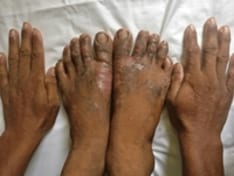
Area of lichen simplex chronicus originally believed to be chronic contact dermatitis. The true nature was revealed when the patient admitted to rubbing this area while watching television. Courtesy of San Antonio Uniformed Services Health Education Consortium Dermatology Program. |
 | View Full Size Image | |
Media type: Photo
|
- Ball SB, Wojnarowska F. Vulvar dermatoses: lichen sclerosus, lichen planus, and vulval dermatitis/lichen simplex chronicus. Semin Cutan Med Surg. Sep 1998;17(3):182-8. [Medline].
- Brunner N, Yawalkar S. A double-blind, multicenter, parallel-group trial with 0.05% halobetasol propionate ointment versus 0.1% diflucortolone valerate ointment in patients with severe, chronic atopic dermatitis or lichen simplex chronicus. J Am Acad Dermatol. Dec 1991;25(6 Pt 2):1160-3. [Medline].
- Burkhart CG, Burkhart CN. Acne keloidalis is lichen simplex chronicus with fibrotic keloidal scarring. J Am Acad Dermatol. Oct 1998;39(4 Pt 1):661. [Medline].
- Chey WY, Kim KL, Yoo TY, Lee AY. Allergic contact dermatitis from hair dye and development of lichen simplex chronicus. Contact Dermatitis. Jul 2004;51(1):5-8. [Medline].
- Datz B, Yawalkar S. A double-blind, multicenter trial of 0.05% halobetasol propionate ointment and 0.05% clobetasol 17-propionate ointment in the treatment of patients with chronic, localized atopic dermatitis or lichen simplex chronicus. J Am Acad Dermatol. Dec 1991;25(6 Pt 2):1157-60. [Medline].
- Drake LA, Millikan LE. The antipruritic effect of 5% doxepin cream in patients with eczematous dermatitis. Doxepin Study Group. Arch Dermatol. Dec 1995;131(12):1403-8. [Medline].
- Ferry AP, Kaltreider SA. Lichen simplex chronicus of the eyelid. Arch Ophthalmol. Jun 1999;117(6):829-31. [Medline].
- Frithz A, Lagerholm B. Lichen simplex chronicus Vidal: comparative submicroscopic aspects of acanthotic disorders. Acta Derm Venereol. 1977;57(2):103-11. [Medline].
- Geraldez MC, Carreon-Gavino M, Hoppe G, Costales A. Diflucortolone valerate ointment with and without occlusion in lichen simplex chronicus. Int J Dermatol. Nov 1989;28(9):603-4. [Medline].
- Gerritsen MJ, Gruintjes FW, Andreissen MA, van der Valk PG, van de Kerkhof PC. Lichen simplex chronicus as a complication of herpes zoster. Br J Dermatol. May 1998;138(5):921-2. [Medline].
- Inoko M, Konishi T, Matsusue S, Kobashi Y. Midmural fibrosis of left ventricle due to selenium deficiency. Circulation. Dec 8 1998;98(23):2638-9. [Medline].
- Ising H, Lange-Asschenfeldt H, Lieber GF, Weinhold H, Eilts M. [Effects of long-term exposure to street traffic exhaust on the development of skin and respiratory tract diseases in children]. Schriftenr Ver Wasser Boden Lufthyg. 2003;(112):81-99. [Medline].
- Jacob CI, Patten SF. Strongyloides stercoralis infection presenting as generalized prurigo nodularis and lichen simplex chronicus. J Am Acad Dermatol. Aug 1999;41(2 Pt 2):357-61. [Medline].
- Kantor GR, Resnik KS. Treatment of lichen simplex chronicus with topical capsaicin cream. Acta Derm Venereol. Mar 1996;76(2):161. [Medline].
- Khaitan BK, Sood A, Singh MK. Lichen simplex chronicus with a cutaneous horn. Acta Derm Venereol. May 1999;79(3):243. [Medline].
- Kinsella LJ, Carney-Godley K, Feldmann E. Lichen simplex chronicus as the initial manifestation of intramedullary neoplasm and syringomyelia. Neurosurgery. Mar 1992;30(3):418-21. [Medline].
- O'Keefe RJ, Scurry JP, Dennerstein G, Sfameni S, Brenan J. Audit of 114 non-neoplastic vulvar biopsies. Br J Obstet Gynaecol. Oct 1995;102(10):780-6. [Medline].
- Shukla S, Mukherjee S. Lichen simplex chronicus during lithium treatment. Am J Psychiatry. Jul 1984;141(7):909-10. [Medline].
- Thaipisuttikul Y. Pruritic skin diseases in the elderly. J Dermatol. Mar 1998;25(3):153-7. [Medline].
- Weyers W, Weyers I, Bonczkowitz M, Diaz-Cascajo C, Schill WB. Lichen amyloidosus: a consequence of scratching. J Am Acad Dermatol. Dec 1997;37(6):923-8. [Medline].
- Weyers W. [Lichen amyloidosus--disease entity or the effect of scratching]. Hautarzt. Mar 1995;46(3):165-72. [Medline].
- Woodruff PW, Higgins EM, du Vivier AW, Wessely S. Psychiatric illness in patients referred to a dermatology-psychiatry clinic. Gen Hosp Psychiatry. Jan 1997;19(1):29-35. [Medline].
- Yosipovitch G, Sugeng MW, Chan YH, Goon A, Ngim S, Goh CL. The effect of topically applied aspirin on localized circumscribed neurodermatitis. J Am Acad Dermatol. Dec 2001;45(6):910-3. [Medline].
Lichen Simplex Chronicus excerpt Article Last Updated: May 30, 2006
|