| Patient Education |
|
Click here for patient education.
|
|
You are in: eMedicine Specialties >
Dermatology > BULLOUS DISEASES
Epidermolysis Bullosa
Article Last Updated: Dec 3, 2007
AUTHOR AND EDITOR INFORMATION
Section 1 of 12
Author: M Peter Marinkovich, MD, Associate Professor, Department of Dermatology and Program in Epithelial Biology, Stanford University Medical Center
M Peter Marinkovich is a member of the following medical societies: American Academy of Dermatology and Society for Investigative Dermatology
Editors: Jean Paul Ortonne, MD, Chair, Department of Dermatology, Professor, Hospital L'Archet, Nice University, France; Michael J Wells, MD, Associate Professor, Department of Dermatology, Texas Tech University Health Sciences Center; Van Perry, MD, Assistant Professor, Department of Medicine, Division of Dermatology, University of Texas Health Science Center; Joel M Gelfand, MD, MSCE, Medical Director, Clinical Studies Unit, Assistant Professor, Department of Dermatology, Associate Scholar, Center for Clinical Epidemiology and Biostatistics, University of Pennsylvania; William D James, MD, Paul R Gross Professor of Dermatology, University of Pennsylvania School of Medicine; Vice-Chair, Program Director, Department of Dermatology, University of Pennsylvania Health System
Author and Editor Disclosure
Synonyms and related keywords:
epidermolysis bullosa, EB, epidermolysis bullosa simplex, EBS, hemidesmosomal epidermolysis bullosa, HEDB, junctional epidermolysis bullosa, JEB, dystrophic epidermolysis bullosa, DEB, dominant dystrophic epidermolysis bullosa, DDEB, recessive dystrophic epidermolysis bullosa, RDEB
Background
Epidermolysis bullosa (EB) is a group of inherited bullous disorders characterized by blister formation in response to mechanical trauma. Historically, EB subtypes have been classified according to skin morphology. Recent discoveries of the molecular basis of EB have resulted in the development of new diagnostic tools, including prenatal and preimplantation testing. Based on a better understanding of the basement membrane zone (BMZ) and the genes responsible for its components, new treatments (eg, gene or protein therapy) may provide solutions to the skin fragility found in patients with EB.
Pathophysiology
EB is classified into 3 major categories, including (1) EB simplex (EBS; intraepidermal skin separation), (2) junctional EB (JEB; skin separation in lamina lucida or central BMZ), and (3) dystrophic EB (DEB; sublamina densa BMZ separation; see Media Files 5-6). Researchers have proposed a new category termed hemidesmosomal EB (HEB), which produces blistering at the hemidesmosomal level in the most superior aspect of the BMZ. EBS usually is associated with little or no extracutaneous involvement, while the more severe hemidesmosomal, junctional, and dystrophic forms of EB may produce significant multiorgan system involvement.1, 2 Significant progress has been achieved in finding specific molecular therapies for EB, including protein and gene therapy. Type VII collagen and laminin-5 gene therapy have been proven effective through in vivo models. Type VII collagen protein therapy has similarly been shown to be effective in an in vivo model. Currently, these therapies are being extensively studied at the preclinical stage, in animal models.
Frequency
United States
Assuming that mild cases of EBS are reported only 10% of the time, the affected population in the United States is approximately 12,500 persons. According to a National Epidermolysis Bullosa Registry report,3 50 EB cases occur per 1 million live births. Of these cases, approximately 92% are EBS, 5% are DEB, 1% are JEB, and 2% are unclassified. Patients with HEB probably constitute much less than 1% of total EB cases.
International
According to the National Epidermolysis Bullosa Registry,3 the number of EB cases in Norway is 54 cases per million live births, in Japan is 7.8 cases per million live births, and in Croatia is 9.6 cases per million live births.
Mortality/Morbidity
Infancy is an especially difficult time for EB patients. Generalized blistering caused by any subtype may be complicated by infection, sepsis, and death. Severe forms of EB increase the mortality risk during infancy. Patients with the Herlitz or letalis form of JEB have the highest risk during infancy with an estimated mortality rate of 87% during the first year of life. In patients with EB that survive childhood, the most common cause of death is metastatic squamous cell carcinoma (SCC) (see Media File 9). This skin cancer occurs specifically in patients with recessively inherited EB (RDEB) who most commonly are aged 15-35 years. In contrast, dominantly inherited EBS and DEB and milder forms of JEB may not affect a patient's life expectancy adversely.
Age
Onset of EB is at birth or shortly after. The exception occurs in mild cases of EBS, which may remain undetected until adulthood or occasionally remain undiagnosed.
History
Important general points include age of onset; size, frequency, and location of blisters; possible inciting factors; prior diagnostic attempts; prior therapies; and extent of pain or pruritus. Review of systems information that can be associated with different EB subtypes includes alteration of growth or development and evidence of mucosal involvement, including oral, nasopharyngeal, ocular, genitourinary, GI, or respiratory symptoms. A family history of blistering disease is an important finding to identify (see Media File 8).
Physical
Perform a complete physical examination with an emphasis on inspection of all skin, as well as conjunctival, oral, and genital mucosae. Evaluate the size, location, and character of blisters. Attempt to assess the general level at which lesions split. Usually, superficial blisters manifest as crusted erosions, intraepidermal blisters are flaccid and may expand under pressure, and intralamina lucida blisters are tense and heal with atrophy but no scarring. Sublamina densa blisters heal with scarring and milia formation. Assess for involvement of nails, hair, or teeth.
- EBS is a collection of keratin disorders characterized by intraepidermal blistering with relatively mild internal involvement. Lesions typically heal without scarring. Most commonly, these diseases are dominantly inherited, but recessively inherited cases have been reported. The more severe EBS subtypes include Koebner, Dowling-Meara, and Weber-Cockayne forms. An EBS variant associated with mottled pigmentation has been described in several families.
- Mild EBS: Weber-Cockayne subtype is the most common form of EBS (see Media File 1). Blisters usually are precipitated by a clearly identified traumatic event. They can be mild to severe and most frequently occur on the palms and soles. Hyperhidrosis can accompany this disorder.
- Severe EBS: Usually, a generalized onset of blisters occurs at or shortly after birth. Hands, feet, and extremities are the most common sites of involvement. Palmoplantar hyperkeratosis and erosions are common, especially in Koebner EBS (see Media Files 2-3). Dowling-Meara EBS involves more oral mucosa and manifests with grouped herpetiform blisters (hence the term EBS herpetiformis).
- HEB includes 2 rare diseases. The first arises from a disorder of the protein plectin (HD1) and is associated with muscular dystrophy. The second arises from a defect of the a6b4 integrin receptor and is associated with pyloric atresia. Each disease shows intraepidermal blistering at the most basal aspect of the lower cell layer.
- EB with muscular dystrophy: This condition is characterized initially by variable blistering activity, followed by onset of muscular dystrophy later in life. The degree of blistering activity does not correlate necessarily with the degree of muscular dystrophy. Some patients can present with dental abnormalities.
- EB with pyloric atresia: This condition always is associated with pyloric atresia at birth and usually is accompanied by severe generalized blistering. In most patients, prognosis is poor despite correction of the pyloric atresia because the internal involvement is extensive. While this subtype typically is fatal during infancy, some patients with a milder case of the disease have survived into childhood.
- JEB is a collection of diseases characterized by intralamina lucida blistering. Primary subtypes include a lethal subtype termed Herlitz or JEB letalis, a nonlethal subtype termed JEB mitis, and a generalized benign type termed generalized atrophic benign EB (GABEB).
- Lethal JEB: The Herlitz or letalis form of JEB is characterized by generalized blistering at birth and arises from an absence or a severe defect in expression of the anchoring filament glycoprotein laminin 5 (see Media File 4). Patients with lethal forms of JEB show characteristic periorificial erosions around the mouth, eyes, and nares, often accompanied by significant hypertrophic granulation tissue. Multisystemic involvement of the corneal, conjunctival, tracheobronchial, oral, pharyngeal, esophageal, rectal, and genitourinary mucosae is present. Internal complications of the disease include a hoarse cry, cough, and other respiratory difficulties. Patients with Herlitz JEB are at increased risk for death from sepsis or other complications secondary to the profound epithelial disadhesion, and usually, they do not survive past infancy.
- Nonlethal JEB: Patients with JEB manifesting generalized blistering who survive infancy and clinically improve with age have JEB mitis. Usually, these patients do not present with the same type of hoarse cry or other significant respiratory symptoms as do patients with the Herlitz form. Instead, scalp, nail, and tooth abnormalities increasingly may become apparent. Periorificial erosions and hypertrophic granulation tissue can be present. Mucous membranes often are affected by erosions, resulting in strictures. Some patients with JEB mitis can present with blistering localized to the intertriginous regions.
- GABEB: This is a relatively mild subtype characterized by generalized cutaneous blistering and presenting at birth. Blistering activity is worsened by increased ambient temperature, and blisters heal with a distinctive atrophic appearance. Extracutaneous involvement is rare, with the exception of teeth. Hypoplastic enamel formation results in significant tooth decay. Nail dystrophies and alopecia are other common clinical manifestations. Individuals with GABEB have the potential to bear children and have a typical life expectancy.
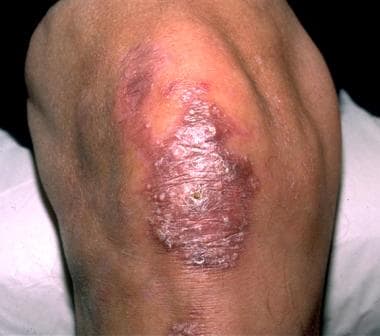
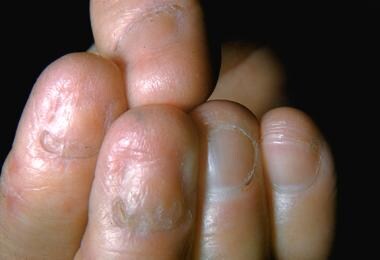
- DEB: This is a group of diseases caused by defects of anchoring fibrils. Blisters heal followed by dystrophic scarring. Formation of milia (1- to 4-mm white papules) results as a consequence of damage to hair follicles.
- Dominantly inherited DEB: The onset of disease usually is at birth or during infancy, with generalized blistering as a common presentation. With increasing age, an evolution to localized blistering is present. A common variant described by Cockayne-Touraine has an acral distribution and minimal oral or tooth involvement. Another variant described by Pasini features more extensive blistering, scarlike papules on the trunk (termed albopapuloid lesions), and involvement of the oral mucosa and teeth. Dystrophic or absent nails are common in both of these dominantly inherited DEB variants.
- RDEB: This group of diseases ranges from mild to severe in presentation.
- A localized form, termed RDEB mitis, often involves acral areas and nails but shows little mucosal involvement. This subtype also demonstrates clinical manifestations similar to the dominantly inherited forms of DEB.
- Severe RDEB, as described by Hallopeau-Siemens, usually shows generalized blistering at birth and subsequent extensive dystrophic scarring that is most prominent on the acral surfaces. This can produce pseudosyndactyly (mitten-hand deformity) of the hands and feet (see Media File 7). Flexion contractures of the extremities are increasingly common with age. Nails and teeth also are affected. Involvement of internal mucosa can result in esophageal strictures and webs, urethral and anal stenosis, phimosis, and corneal scarring. Malabsorption commonly results in a mixed anemia resulting from a lack of iron absorption, and overall malnutrition may cause failure to thrive (see Diet). Patients with severe RDEB who survive to childhood are at significant risk of developing aggressive SCC in areas of chronic erosions.
- Ectodermal dysplasia-skin fragility syndrome: This is a rare disorder characterized by skin erosions, skin fragility and peeling beginning at birth or infancy that may be accompanied by alopecia, palmoplantar keratoderma, painful fissures, and nail dystrophy. Failure to thrive, cheilitis, hypohidrosis, and pruritus are other potential complications. The underlying molecular defect has been shown to be loss of function of the desmosomal protein plakophillin 1. Plakophillin is expressed mainly in suprabasilar keratinocytes and outer root sheath cells. Microscopic findings in this disease usually show intraepidermal acantholysis, located in the areas where plakophillin 1 is normally expressed. The molecular defect involves loss of function mutations in the PKP1 gene coding for plakophillin 1.4
Causes
Many stratified squamous epithelial tissues, such as the skin and oral mucosa, contain a complex BMZ. The BMZ is composed of many specialized components that combine to form anchoring complexes. At the superior aspect of the BMZ, keratin-containing intermediate filaments of the basal cell cytoskeleton insert on basal cell plasma membrane condensations termed hemidesmosomes. Anchoring filaments extend from the basal cell plasma membrane into the extracellular environment and span the lamina lucida, connecting hemidesmosomes with the lamina densa. At the most inferior aspect of the BMZ, type VII collagen-containing anchoring fibrils extend from the lamina densa into the papillary dermis, connecting the lamina densa to anchoring plaques, trapping interstitial collagen fibrils. Thus, the cutaneous BMZ connects the extensive basal cell cytoskeletal network with the abundant network of interstitial collagen fibrils in the dermis. - Keratin filaments: Keratins 5 and 14 combine to form intermediate filaments in basal keratinocytes. Keratins contain a central alpha-helical rod with several nonhelical interruptions, as well as nonhelical carboxyterminal and aminoterminal regions. The regions of highest conservation between the keratins are located on the ends of the keratin rod in the helix boundary motifs. Keratin intermediate filaments insert upon electron-dense structures termed hemidesmosomes.
- Hemidesmosomes: These structures contain intracellular proteins, including plectin and BP230. Plectin (HD1) is a 500-kd protein that binds intermediate filaments. BP230, also termed BPAG1, is a 230-kd protein that has homology to both desmoplakin and plectin. BP230, like plectin, functions in the connection between hemidesmosomes and intermediate filaments. Hemidesmosomes also contain the intracellular portions of the transmembrane proteins collagen XVII (BP180) and a6b4 integrin. The b4 integrin subunit performs a central role in hemidesmosome formation and contains an especially large cytoplasmic domain, which interacts with other proteins of the hemidesmosomal plaque. Collagen XVII is a transmembrane collagenous protein that interacts with b4 integrin and BP230 intracellularly and with laminin 5 extracellularly.
- Anchoring filaments: These structures contain the extracellular portions of collagen XVII (BP180) and a6b4 integrin. In addition, anchoring filaments contain the molecules laminin 5 and laminin 6. Similar to all members of the family of laminin proteins, laminin 5 is a large heterotrimeric molecule, containing a3, b3, and g2 chains. Laminin 5 forms a disulfide-bonded attachment to laminin 6, the other known anchoring filament laminin, which contains a3, b1, and g1 chains. Laminin 5 also forms a strong association with type VII collagen, which serves to connect anchoring filaments with anchoring fibrils.
- Anchoring fibrils: Type VII collagen is the primary component of anchoring fibrils. Type VII collagen contains a large N-terminal globular domain (NC-1), which interacts with laminin 5 in the lamina densa; a long collagenous domain; and a smaller C-terminal globular domain (NC-2), which is cleaved proteolytically during anchoring fibril formation. Type VII collagen chains form a triple helix; then, 2 molecules join together in an antiparallel fashion. Next, anchoring fibrils are formed by lateral associations of antiparallel dimers. Anchoring fibrils wind around the dermal interstitial collagen fibrils and reinsert back upon the lamina densa, attaching the BMZ to the underlying dermis.
- Molecular pathology of EBS
- Most cases of EBS are associated with mutations of the genes coding for keratins 5 and 14. The level of skin separation is at the mid basal cell associated with variable intermediate filament clumping.
- Most EBS keratin gene mutations are inherited dominantly and interfere with keratin filament assembly. A smaller subset of patients with recessively inherited disease of varying severity exists.
- Mutations coding for the most conserved regions of keratins 5 and 14 (helix boundary domains) produce the most severe forms of EBS. Of the severe forms, the Dowling-Meara subtype exhibits intermediate filament clumping. Conversely, milder forms of the disease, such as the Weber-Cockayne subtype, are associated with mutations at the less conserved regions of keratin 5 and keratin 14 genes.
- In patients with EBS, the mutations that code for the amino terminus of keratin 5 are associated with mottled pigmentation. A small group of patients with recessively inherited EBS has been shown to have associated muscular dystrophy caused by mutations of the gene coding for HD1/plectin.
- Molecular pathology of JEB
- JEB has a highly variable molecular etiology and represents a collection of different diseases. These diseases all cause blistering in the lamina lucida and variable hemidesmosomal abnormalities. Mutations in genes coding for laminin 5 subunits (a3 chain, laminin b3 chain, laminin g2 chain), collagen XVII (BP180), a6 integrin, and b4 integrin have been demonstrated.
- More than one half of JEB cases are caused by 1 of 2 recurrent nonsense mutations in the LAMB3 gene, which is helpful for mutation analysis and prenatal testing.
- Herlitz (letalis) JEB is characterized by null mutations of laminin-5 genes, resulting in a lack of laminin-5 expression in the tissues of patients.
- Missense mutations of laminin-5 genes that result in expression of presumably dysfunctional laminin 5 can result in a milder phenotype, such as GABEB. GABEB also can be caused by mutations of the gene coding for collagen XVII (BP180).
- Mutations of the genes coding for b4 and a6 integrin also have been associated with JEB. In this group of diseases, separation of the skin occurs at the level of the hemidesmosome region. The resultant molecular defects contribute to the clinical manifestation of pyloric atresia.
- Molecular pathology of DEB
- DEB thus far has been associated in all cases with mutations of the gene coding for type VII collagen (COL7A1). Anchoring fibrils are affected in patients with DEB, and the degree of involvement ranges from subtle changes to complete absence.
- In all patients, a sublamina lucida plane of blister cleavage is present. In some patients, defects of type VII collagen secretion are present.
- In the recessive forms, COL7A1 mutations usually cause premature termination codons, resulting in an absence of type VII collagen in tissue. COL7A1 mutations, which do not cause premature termination codons, usually produce less severe disease. For example, mutations that produce glycine substitutions of the triple helical region can interfere with triple helical assembly of the type VII collagen molecule. These types of mutations, which exert a dominant-negative type of effect, are present in many patients with milder dominant forms of this disease.
Bullous Pemphigoid
Dyshidrotic Eczema
Epidermolysis Bullosa Acquisita
Friction Blisters
Insect Bites
Linear IgA Dermatosis
Lupus Erythematosus, Bullous
Pemphigus Vulgaris
Thermal Burns
Lab Studies
- Obtain a skin biopsy following a thorough history and physical examination. Routine histologic analysis is useful only for excluding other causes of blistering. When EB is suspected, the best approach is to obtain 2 biopsy specimens. Analyze one specimen using electron microscopy (EM) and the other using immunofluorescent microscopy.
- Evaluate anemia using CBC count with iron studies in patients with severe EB, especially RDEB.
- Evaluate infection using bacterial cultures from poorly healing wounds or wounds that appear infected.
Imaging Studies
- Evaluate GI dysfunction. Esophageal strictures associated with JEB, DEB, or the pyloric atresia associated with a rare form of JEB can be visualized best by an upper GI series or endoscopy.
Other Tests
- Evaluate nutrition using serum albumin, height and weight curves, diet diaries, and other analyses of nutrition and growth in patients with severe EB.
- Evaluate contractures by establishing the range of motion of limbs and digits to monitor contractures and effectiveness of physical therapy.
- Routine light microscopy can be used only to exclude other causes of blistering and cannot be used to make the diagnosis of EB.
Procedures
- Electron microscopy
- Obtain a biopsy specimen from a fresh blister. The best way to obtain a fresh blister is to induce it in the office by gently rotating a pencil eraser back and forth over an area of skin until epidermal separation is appreciated. Perform the biopsy at the edge of the blister, sampling both unblistered and blistered skin. Place the specimen into the appropriate holding medium (check with the laboratory beforehand) and immediately send it for transmission EM. EM biopsy holding medium usually contains glutaraldehyde.
- EM is the criterion standard for determining the level of blistering. EM can provide additional information on BMZ morphology that can be helpful in making the diagnosis. For example, intermediate filament clumping indicates Dowling-Meara EBS. Rudimentary hemidesmosomes often are found in JEB subtypes. Absent or altered anchoring fibrils often occur in DEB subtypes.
- Immunofluorescent microscopy
- This study can provide information on the level of the blistering.
- Obtain a biopsy specimen at the edge of a fresh blister for optimal results. Make arrangements with the laboratory before obtaining the specimen, and promptly send it for analysis. Zeus-holding medium is used widely for immunofluorescent microscopy.
- Immunomapping with antibodies to a hemidesmosomal antigen (eg, BP230 obtained from sera of a patient with bullous pemphigus) and an antibody to a lamina densa protein (eg, type IV collagen) can distinguish EBS, JEB, and DEB. For example, in EBS, both antigens localize to the floor. In JEB, BP230 localizes to the roof of the blister, while type IV collagen localizes to the floor. In DEB, both antigens localize to the roof of the blister.
- In addition to providing information about the level of the skin separation, immunofluorescent microscopy can be useful in providing an important clue regarding the underlying molecular defect. For example, the laboratory at Stanford University routinely examines biopsy specimens with a panel of antibodies against each of the antigens known to be affected in EB (see Media File 10). Often, a specific absence of staining with a particular antibody indicates the specific molecular defect. Often, in milder disease subtypes and in dominant disease subtypes, alterations in expression of affected proteins may be too subtle to appreciate, and further tests are required.
- DNA mutation analysis: Perform mutation analysis after immunofluorescent microscopy. This is the final step in elucidating the underlying molecular defect, and in most cases, it reduces the number of genes to be screened. DNA is extracted from blood of the patient and family members. Initial mutation screening is performed by restriction fragment-length polymorphism analysis, hotspot analysis, and finally, direct DNA sequencing.
- Prenatal diagnosis: Once the mutations are identified in a family, reliable prenatal diagnosis is possible. DNA for prenatal diagnosis can be obtained as a chorionic villi sample as early as the ninth week of gestation. Alternatively, amniotic fluid drawn after the eleventh week can provide the necessary DNA. Schedule the procedure in close conjunction with the diagnostic laboratory that will receive the sample.
Those interested in genetic analysis of EB patients should contact GeneDx.
Medical Care
- Skin involvement is as follows:
- Wound healing: This process is impaired by multiple factors including foreign bodies, bacteria, nutritional deficiencies, tissue anoxia, and aging. Exogenous agents contributing to impairment of wound healing include glucocorticoids and penicillamine. Optimizing wound healing in patients with EB involves controlling all of these factors. Patients with Herlitz JEB heal slowly, which may be because of a defect in laminin 5 (a protein involved intimately in keratinocyte adhesion and migration).
- Infection
- Extensive areas of denuded skin represent loss of the stratum corneum barrier to microbial penetration. Accumulation of serum and moisture on the surface enhances the growth of bacteria.
- Patients with severe EB subtypes may have immunologic abnormalities, including decreased lymphocyte production or a poor nutritional status that lowers resistance to infections. Staphylococcus aureus and Streptococcus pyogenes are the usual causative organisms, but gram-negative infections with bacteria, such as Pseudomonas aeruginosa, also can occur. Patients also have increased susceptibility to developing sepsis.
- Prevention of infection is the preferred strategy. With extensive areas of crusting and denudation, a strict wound care regimen should be followed. Such a regimen entails regular whirlpool therapy followed by application of topical antibiotics. The wound should be covered with semiocclusive nonadherent dressings. Do not apply adhesive tape directly to the skin. Self-adhering gauze or tape is a better choice for keeping dressings in place.
- Tumors: SCC often arises in chronic cutaneous lesions in patients with EB. SCC often occurs at multiple primary sites, which is especially true for patients with RDEB. In the non-EB population, cutaneous SCC arises most frequently in sun-exposed areas and primarily affects individuals with skin types I and II after the fourth decade of life. In contrast, the distribution of cutaneous SCC in patients with RDEB is different. In RDEB, SCC affects all skin types, does not show a predilection for sun-exposed sites, and peak incidence begins to increase dramatically in the second and third decades of life. Recent studies on the pathogenesis of SCC in RDEB patients suggest that it arises from retained expression of the type VII collagen NC1 domain.5 Type VII collagen is required for Ras-driven human epidermal tumorigenesis.
- Careful surveillance of nonhealing areas is important.
- GI management: The most disabling complication is esophageal lesions, which are found in Hallopeau-Siemens and inverse RDEB subtypes, Dowling-Meara, letalis EBS subtypes, and all JEB forms except localized and progressiva/neurotropica. These lesions are managed in several ways. One medical approach is to use phenytoin and oral steroid elixirs to reduce the symptoms of dysphagia. In addition, if oral candidiasis is present, an anticandidal medication is helpful.
- Eye lesions: Patients with EBS, particularly those with the Weber-Cockayne and Dowling-Meara subtypes, can experience recurrent blepharitis in 1 or both eyes along with bullous lesions of the conjunctivae.
- Patients with JEB and Hallopeau-Siemens DEB can experience corneal ulcerations, corneal scarring, obliteration of tear ducts, and eyelid lesions.
- Cicatricial conjunctivitis also can occur in patients with the RDEB Hallopeau-Siemens subtype.
- Corneal erosions are treated supportively with application of antibiotic ointment and use of cycloplegic agents to reduce ciliary spasm and provide comfort. Avoid using tape to patch the eye because of frequent blistering of the skin under the adhesive.
- Chronic blepharitis can result in cicatricial ectropion and exposure keratitis. Moisture chambers and ocular lubricants are used commonly for management. This disorder also has been treated with full-thickness skin grafting to the upper eyelid; however, complete correction is difficult to obtain.
- Oral care: Good dental hygiene is essential for patients with EB, and regular visits to the dentist are recommended. If possible, a dentist familiar with EB should be consulted. Despite their best efforts, many patients with JEB and DEB develop dental caries because of enamel defects. In addition, significant oral mucosal involvement can accompany severe forms of JEB and DEB. Avoid harsh mouthwashes containing alcohol. Normal saline rinses can help gently clean the mucosal surfaces.
- Research therapies: Potential future therapies include protein and gene therapies. Model systems using these approaches show promise for significant advances in future therapies.
- In protein therapy, the missing or defective protein is produced in vitro by recombinant methods and applied directly to blistered skin. Protein therapy may be most useful in EB subtypes involving a defect or deficiency in type VII collagen because this protein appears to have a long half life in the body.6, 7
- In gene therapy, the goal is to deliver genes targeted to restore normal protein production. Gene therapy for one patient with a nonlethal form of JEB has been successful at the 1-year mark. This was accomplished using a retroviral gene transfer system, using ex vivo gene transfer and grafting corrected keratinocytes back onto the patient.8
Surgical Care
- GI management: Esophageal dilation has been helpful in relieving strictures. Removal of esophageal strictures by colonic interposition has proved effective in cases of advanced disease. Gastrostomy tube insertion has been effective in providing nutrition to individuals with esophageal strictures.
- Surgical restoration of the hand: Mitten deformity of the hand occurs frequently in patients with the Hallopeau-Siemens DEB subtype. Repeated episodes of blistering and scarring eventually result in fusion of the web spaces. As a result, fine manipulative skills and digital prehension are lost. Surgical procedures can correct this deformity, but a high rate of recurrence is seen with mitten pseudosyndactyly. Typically, the dominant hand has earlier recurrence. Recurrence appears to be delayed by the prolonged use of splinting in the interphalangeal spaces at night.
- Surgical excision of SCC: Invasive aggressive SCC is a particularly troubling complication of RDEB. When detected, excision of the carcinoma is indicated. Both Mohs and non-Mohs surgical approaches have been used.
- Endotracheal tube placement: Perform this procedure with extra care in patients with EB. Optimally, consult an anesthesiologist experienced in the care of patients with EB.
- Skin equivalents: Human keratinocytes cultured atop dermal equivalents are commercially available; they have been useful in facilitating healing of erosions in persons with EB and in improving the overall quality of life of these patients. These are allografts, in that the cells do not derive from the patient themselves but from another unidentified donor. These allografts are eventually rejected by immunocompetent hosts such as patients with EB. However, before they are rejected, they are believed to produce cytokines that facilitate the wound healing process and stimulate reepithelialization of the patients' wounds. Skin equivalent therapy represents an effective short-term therapy for treating chronic nonhealing wounds associated with EB. Claims that allografts produce a permanent cure for EB are unsubstantiated.
Consultations
Genetic counseling - Genetic information provided by mutation analyses on EB candidate genes provides an immediate benefit to families of patients with EB. Siblings of a patient identified as a proband with recessively inherited EB that are considering children often want to know whether they carry the mutant allele.
- Most importantly, prenatal diagnosis of EB in affected families currently is a genetic-based protocol, providing that the patient identified as the original proband has had mutational analysis or identification of the defective gene. Currently, fetal skin biopsies and fetoscopy, with their increased risk of pregnancy loss, can be avoided by analyzing either a chorionic villus sample as early as 8-10 weeks or amniotic fluid in the second trimester. The development of highly informative intragenic and flanking polymorphic DNA markers in EB candidate genes, together with rapid screening of genetic hotspots, make genetic screening of high-risk pregnancy a viable option. Preimplantation diagnosis has also been performed in EB cases.
Diet
Nutritional management
- Increased needs: Extensive cutaneous injury is associated with marked alterations in both hemodynamic and metabolic responses, requiring increased caloric and protein intake for recovery. The burn patient has been studied extensively from both of these perspectives. Studies confirm that the development of nutritional deficiencies inhibits successful wound healing and the body's return to a normal hemodynamic and metabolic profile.
- Impediments to intake and absorption: Oropharyngeal and GI lesions greatly threaten the nutritional well being of patients with EB. Complications include oral blistering, abnormal esophageal motility, strictures, dysphagia, diarrhea, malabsorption, and dental problems. Nutritional assessment taking these factors into account is essential for replenishing the malnourished patient.
Activity
- Inactivity as a result of pain and scarring can cause contractures to form. Physical therapy can be helpful in reducing limb and hand contractions and in maintaining the range of motion.
EB is a genetic disease and no drugs are known to correct the underlying molecular defects. Prolonged use of steroids is contraindicated in the treatment of inherited forms of EB. Steroid-induced complications further warrant prohibiting their use. No other drugs, including phenytoin and tetracycline, have improved the blistering or epithelial disadhesion in EB significantly or consistently.
Further Inpatient Care
- When a patient with EB is hospitalized for severe blistering, treat the blisters aggressively with wound and nutritional management (see Wound healing in Medical Care; Nutritional management in Diet). Regular whirlpool therapy can help with gentle cleansing and debridement of wounds. Whirlpool therapy is a helpful adjunct available in most hospitals and assists in the care of inpatients with EB.
Further Outpatient Care
- Implementation of proper wound and nutritional care is critical to the outpatient care of EB. Home health care providers familiar with skin care, nutrition, and physical therapy can be helpful. Education of patient and family members is essential.
In/Out Patient Meds
- Patients with severe EB require significant amounts of wound-care supplies, such as plain petroleum gauze, nonadhering gauze such as Adaptic or Telfa, petroleum jelly, antibiotic ointment, and self-adhering gauze. Be sure to prescribe sufficient quantities of these materials. Insurance companies and health maintenance organizations may neglect to cover these essential therapies. Physicians and social workers working together may need to advocate for their patients in this regard.
Transfer
- Take great care to avoid trauma to the skin during transfers or additional blistering will occur, especially in patients with severe EB. Never apply tape to the skin of patients with EB.
Deterrence/Prevention
- Prevention of trauma to the skin reduces blistering.
- Padding of limbs helps reduce unnecessary trauma.
- A soft mechanical diet helps reduce oral and esophageal erosions.
Complications
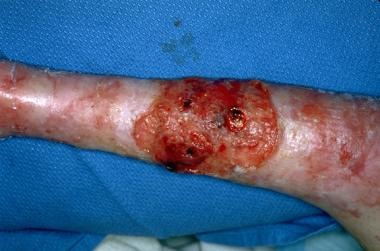
- SCC: Arising in chronic wounds or scars of RDEB, this form of SCC is invasive and has high metastatic potential. Other EB subtypes do not show a tendency to develop SCC.
- Pseudosyndactyly (mitten-hand deformity): This is a frequent complication in patients with RDEB but is rare in other subtypes. In this disorder, skin grows around the digits because of repeated blistering and dystrophic healing. Over time, the digits are encased in a mitten of skin. Therapeutic surgical approaches are available, but the rate of recurrence is high (see Surgical Care).
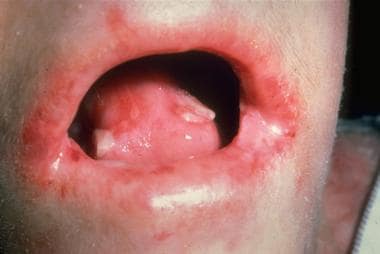
- Mucosal complications: Patients with RDEB often have esophageal manifestations. Esophageal scarring secondary to repeated blistering and healing results in dysphagia from webbing, strictures, or stenosis. These complications are rare in patients with EBS but occur in patients with Herlitz and other nonlethal forms of JEB and dominantly inherited DEB. No cases of esophageal involvement have been reported in the generalized benign atrophic form of JEB (see Surgical Care). While patients with the Herlitz form of JEB have the greatest tendency for tracheolaryngeal involvement, RDEB may involve the tracheolaryngeal mucosa as well.
Prognosis
- EB is a lifelong disease. Some subtypes, especially the milder EB forms, improve with age.
Patient Education
- Education in proper nutrition and wound care is essential for the patient and family.
Medical/Legal Pitfalls
- Failure to diagnose EB or its complications (eg, SCC) correctly can incur litigation.
- Failure to instruct patient and family in wound care and other treatment modalities can incur litigation.
The authors and editors of eMedicine gratefully acknowledge the contributions of previous author, Ngoc Pham, MD, to the development and writing of this article.
| Media file 1:
Epidermolysis bullosa simplex, Weber-Cockayne subtype. This mild bullous disease is characterized by localized blistering at sites of trauma such as the feet. |
 | View Full Size Image | |
Media type: Photo
|
| Media file 2:
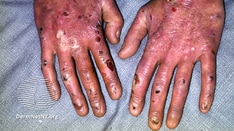
Epidermolysis bullosa simplex, Koebner subtype. Palmoplantar blistering and hyperkeratosis are noted. |
 | View Full Size Image | |
Media type: Photo
|
| Media file 3:
Epidermolysis bullosa simplex, Koebner subtype. Close-up image shows hyperkeratotic papules and plaques on the palm. |
 | View Full Size Image | |
Media type: Photo
|
| Media file 4:
Junctional epidermolysis bullosa, Herlitz subtype. This severe disease is characterized by generalized intralamina lucida blistering at birth, significant internal involvement, and a poor prognosis. |
 | View Full Size Image | |
Media type: Photo
|
| Media file 5:
Dominantly inherited dystrophic epidermolysis bullosa. The blistering in this disease often is localized and is characterized by scarring and milia in healed blister sites. |
 | View Full Size Image | |
Media type: Photo
|
| Media file 6:
Dominantly inherited dystrophic epidermolysis bullosa. This subtype, similar to other dystrophic and junctional epidermolysis bullosa subtypes, can result in nail dystrophy and loss. |
 | View Full Size Image | |
Media type: Photo
|
| Media file 7:
Recessively inherited dystrophic epidermolysis bullosa pseudosyndactyly (mitten-hand deformity) of the hands and feet |
 | View Full Size Image | |
Media type: Photo
|
| Media file 8:
Recessively inherited dystrophic epidermolysis bullosa, oral cavity blistering and scarring |
 | View Full Size Image | |
Media type: Photo
|
| Media file 9:
Recessively inherited dystrophic epidermolysis bullosa, squamous cell carcinoma |
 | View Full Size Image | |
Media type: Photo
|
| Media file 10:
Diagram illustrating the organization of the dermal epidermal basement membrane and level of disruption in epidermolysis bullosa subtypes |
 | View Full Size Image | |
Media type: Image
|
- Fine JD, Eady RA, Bauer EA, Briggaman RA, Bruckner-Tuderman L, Christiano A, et al. Revised classification system for inherited epidermolysis bullosa: Report of the Second International Consensus Meeting on diagnosis and classification of epidermolysis bullosa. J Am Acad Dermatol. Jun 2000;42(6):1051-66. [Medline].
- Fine JD, McGrath J, Eady RA. Inherited epidermolysis bullosa comes into the new millenium: a revised classification system based on current knowledge of pathogenetic mechanisms and the clinical, laboratory, and epidemiologic findings of large, well-defined patient cohorts. J Am Acad Dermatol. Jul 2000;43(1 Pt 1):135-7. [Medline].
- Fine JD, Bauer EA, McGuire J, Moshell A, eds. Epidermolysis Bullosa: Clinical, Epidemiologic, and Laboratory Advances and the Findings of the National Epidermolysis Bullosa Registry. Baltimore, Md: Johns Hopkins University Press; 1999.
- Ersoy-Evans S, Erkin G, Fassihi H, Chan I, Paller AS, Sürücü S, et al. Ectodermal dysplasia-skin fragility syndrome resulting from a new homozygous mutation, 888delC, in the desmosomal protein plakophilin 1. J Am Acad Dermatol. Jul 2006;55(1):157-61. [Medline].
- Ortiz-Urda S, Garcia J, Green CL, Chen L, Lin Q, Veitch DP. Type VII collagen is required for Ras-driven human epidermal tumorigenesis. Science. Mar 18 2005;307(5716):1773-6. [Medline].
- Woodley DT, Keene DR, Atha T, Huang Y, Lipman K, Li W. Injection of recombinant human type VII collagen restores collagen function in dystrophic epidermolysis bullosa. Nat Med. Jul 2004;10(7):693-5. [Medline].
- Woodley DT, Keene DR, Atha T, Huang Y, Ram R, Kasahara N, et al. Intradermal injection of lentiviral vectors corrects regenerated human dystrophic epidermolysis bullosa skin tissue in vivo. Mol Ther. Aug 2004;10(2):318-26. [Medline].
- Mavilio F, Pellegrini G, Ferrari S, Di Nunzio F, Di Iorio E, Recchia A, et al. Correction of junctional epidermolysis bullosa by transplantation of genetically modified epidermal stem cells. Nat Med. Dec 2006;12(12):1397-402. [Medline].
- Allman S, Haynes L, MacKinnon P, Atherton DJ. Nutrition in dystrophic epidermolysis bullosa. Pediatr Dermatol. Sep 1992;9(3):231-8. [Medline].

- Ames WA, Mayou BJ, Williams KN, Williams K. Anaesthetic management of epidermolysis bullosa. Br J Anaesth. May 1999;82(5):746-51. [Medline].
- Bauer EA, Herron GS, Marinkovich MP, Khavari PA, Lane AT. Gene therapy for a lethal genetic blistering disease: a status report. Trans Am Clin Climatol Assoc. 1999;110:86-92. [Medline].
- Cameli N, Picardo M, Pisani A, Ortonne JP, Tosti A. Characterization of the nail matrix basement membrane zone: an immunohistochemical study of normal nails and of the nails in Herlitz junctional epidemolysis bullosa. Br J Dermatol. Jan 1996;134(1):182-4. [Medline].
- Ciccarelli AO, Rothaus KO, Carter DM, Lin AN. Plastic and reconstructive surgery in epidermolysis bullosa: clinical experience with 110 procedures in 25 patients. Ann Plast Surg. Sep 1995;35(3):254-61. [Medline].
- Darling TN, Bauer JW, Hintner H, Yancey KB. Generalized atrophic benign epidermolysis bullosa. Adv Dermatol. 1997;13:87-119; discussion 120. [Medline].
- Falabella AF, Valencia IC, Eaglstein WH, Schachner LA. Tissue-engineered skin (Apligraf) in the healing of patients with epidermolysis bullosa wounds. Arch Dermatol. Oct 2000;136(10):1225-30. [Medline].
- Fassihi H, Eady RA, Mellerio JE, Ashton GH, Dopping-Hepenstal PJ, Denyer JE, et al. Prenatal diagnosis for severe inherited skin disorders: 25 years' experience. Br J Dermatol. Jan 2006;154(1):106-13. [Medline].
- Fine JD, Bauer EA, Briggaman RA, Carter DM, Eady RA, Esterly NB, et al. Revised clinical and laboratory criteria for subtypes of inherited epidermolysis bullosa. A consensus report by the Subcommittee on Diagnosis and Classification of the National Epidermolysis Bullosa Registry. J Am Acad Dermatol. Jan 1991;24(1):119-35. [Medline].
- Haynes L, Atherton D, Clayden G. Constipation in epidermolysis bullosa: successful treatment with a liquid fiber-containing formula. Pediatr Dermatol. Sep-Oct 1997;14(5):393-6. [Medline].
- Heagerty AH, Eady RA, Kennedy AR, Nicolaides KH, Rodeck CH, Hsi BL, et al. Rapid prenatal diagnosis of epidermolysis bullosa letalis using GB3 monoclonal antibody. Br J Dermatol. Sep 1987;117(3):271-5. [Medline].
- Kerns ML, DePianto D, Dinkova-Kostova AT, Talalay P, Coulombe PA. Reprogramming of keratin biosynthesis by sulforaphane restores skin integrity in epidermolysis bullosa simplex. Proc Natl Acad Sci U S A. Sep 4 2007;104(36):14460-5. [Medline].
- Lansdown R, Atherton D, Dale A, Sproston S, Lloyd J. Practical and psychological problems for parents of children with epidermolysis bullosa. Child Care Health Dev. Jul-Aug 1986;12(4):251-6. [Medline].
- Lin AN, Carter DM. Epidermolysis bullosa. Annu Rev Med. 1993;44:189-99. [Medline].
- Marinkovich MP. Update on inherited bullous dermatoses. Dermatol Clin. Jul 1999;17(3):473-85, vii. [Medline].
- Marinkovich MP, Herron GS, Khavari PA, Bauer EA. Inheritied Epidermolysis Bullosa. In: Freedberg IM, Eisen AZ, Wolff K, Austen KF, Goldsmith LA, Katz SI, Fitzpatrick TB, eds. Fitzpatrick's Dermatology in General Medicine. 6th ed. New York, NY: McGraw-Hill; 2003:596-609.
- Marinkovich MP, Meneguzzi G, Burgeson RE, Blanchet-Bardon C, Holbrook KA, Smith LT, et al. Prenatal diagnosis of Herlitz junctional epidermolysis bullosa by amniocentesis. Prenat Diagn. Nov 1995;15(11):1027-34. [Medline].
- Marinkovich MP, Verrando P, Keene DR, Meneguzzi G, Lunstrum GP, Ortonne JP, et al. Basement membrane proteins kalinin and nicein are structurally and immunologically identical. Lab Invest. Sep 1993;69(3):295-9. [Medline].
- McAllister JC, Peter Marinkovich M. Advances in inherited epidermolysis bullosa. Adv Dermatol. 2005;21:303-34. [Medline].
- McGrath JA, Eady RA. Molecular basis of blistering skin diseases. Hosp Med. Jan 1998;59(1):28-32. [Medline].
- McGrath JA, Ishida-Yamamoto A, Tidman MJ, Heagerty AH, Schofield OM, Eady RA. Epidermolysis bullosa simplex (Dowling-Meara). A clinicopathological review. Br J Dermatol. May 1992;126(5):421-30. [Medline].
- McGrath JA, Schofield OM, Mayou BJ, McKee PH, Eady RA. Epidermolysis bullosa complicated by squamous cell carcinoma: report of 10 cases. J Cutan Pathol. Apr 1992;19(2):116-23. [Medline].
- Meneguzzi G, Marinkovich MP, Aberdam D, Pisani A, Burgeson R, Ortonne JP. Kalinin is abnormally expressed in epithelial basement membranes of Herlitz's junctional epidermolysis bullosa patients. Exp Dermatol. Dec 1992;1(5):221-9. [Medline].
- Olivry T, Dunston SM, Marinkovich MP. Reduced anchoring fibril formation and collagen VII immunoreactivity in feline dystrophic epidermolysis bullosa. Vet Pathol. Nov 1999;36(6):616-8. [Medline].
- Ortiz-Urda S, Lin Q, Green CL, Keene DR, Marinkovich MP, Khavari PA. Injection of genetically engineered fibroblasts corrects regenerated human epidermolysis bullosa skin tissue. J Clin Invest. Jan 2003;111(2):251-5. [Medline].
- Pfendner E, Rouan F, Uitto J. Progress in epidermolysis bullosa: the phenotypic spectrum of plectin mutations. Exp Dermatol. Apr 2005;14(4):241-9. [Medline].
- Powell AM, Sakuma-Oyama Y, Oyama N, Black MM. Collagen XVII/BP180: a collagenous transmembrane protein and component of the dermoepidermal anchoring complex. Clin Exp Dermatol. Nov 2005;30(6):682-7. [Medline].
- Pulkkinen L, Uitto J. Mutation analysis and molecular genetics of epidermolysis bullosa. Matrix Biol. Feb 1999;18(1):29-42. [Medline].
- Ryan MC, Christiano AM, Engvall E, Wewer UM, Miner JH, Sanes JR, et al. The functions of laminins: lessons from in vivo studies. Matrix Biol. Dec 1996;15(6):369-81. [Medline].
- Schober-Flores C. Epidermolysis bullosa: a nursing perspective. Dermatol Nurs. Aug 1999;11(4):243-8, 253-6. [Medline].
- Seitz CS, Giudice GJ, Balding SD, Marinkovich MP, Khavari PA. BP180 gene delivery in junctional epidermolysis bullosa. Gene Ther. Jan 1999;6(1):42-7. [Medline].
- Shaw DW, Fine JD, Piacquadio DJ, Greenberg MJ, Wang-Rodriguez J, Eichenfield LF. Gastric outlet obstruction and epidermolysis bullosa. J Am Acad Dermatol. Feb 1997;36(2 Pt 2):304-10. [Medline].
- Tabas M, Gibbons S, Bauer EA. The mechanobullous diseases. Dermatol Clin. Jan 1987;5(1):123-36. [Medline].
- Terrill PJ, Mayou BJ, McKee PH, Eady RA. The surgical management of dystrophic epidermolysis bullosa (excluding the hand). Br J Plast Surg. Aug-Sep 1992;45(6):426-34. [Medline].
- Terrill PJ, Mayou BJ, Pemberton J. Experience in the surgical management of the hand in dystrophic epidermolysis bullosa. Br J Plast Surg. Aug-Sep 1992;45(6):435-42. [Medline].
- Tong L, Hodgkins PR, Denyer J, Brosnahan D, Harper J, Russell-Eggitt I, et al. The eye in epidermolysis bullosa. Br J Ophthalmol. Mar 1999;83(3):323-6. [Medline].
- Uitto J, Eady R, Fine JD, Feder M, Dart J. The DEBRA International Visioning/Consensus Meeting on Epidermolysis Bullosa: summary and recommendations. J Invest Dermatol. Apr 2000;114(4):734-7. [Medline].
- Uitto J, Pulkkinen L, McLean WH. Epidermolysis bullosa: a spectrum of clinical phenotypes explained by molecular heterogeneity. Mol Med Today. Oct 1997;3(10):457-65. [Medline].
- Vailly J, Gagnoux-Palacios L, Dell'Ambra E, Roméro C, Pinola M, Zambruno G, et al. Corrective gene transfer of keratinocytes from patients with junctional epidermolysis bullosa restores assembly of hemidesmosomes in reconstructed epithelia. Gene Ther. Oct 1998;5(10):1322-32. [Medline].
- Väisänen L, Has C, Franzke C, Hurskainen T, Tuomi ML, Bruckner-Tuderman L, et al. Molecular mechanisms of junctional epidermolysis bullosa: Col 15 domain mutations decrease the thermal stability of collagen XVII. J Invest Dermatol. Dec 2005;125(6):1112-8. [Medline].
- Wright JT, Fine JD, Johnson L. Hereditary epidermolysis bullosa: oral manifestations and dental management. Pediatr Dent. Jul-Aug 1993;15(4):242-8. [Medline].
Epidermolysis Bullosa excerpt Article Last Updated: Dec 3, 2007
|