| Patient Education |
|
Click here for patient education.
|
|
You are in: eMedicine Specialties >
Dermatology > PEDIATRIC DISEASES
Ectodermal Dysplasia
Article Last Updated: Nov 8, 2006
AUTHOR AND EDITOR INFORMATION
Section 1 of 11
Author: Kara N Shah, MD, PhD, Attending Physician, Department of Pediatrics, Section of Dermatology, Children's Hospital of Philadelphia
Kara N Shah is a member of the following medical societies: American Academy of Dermatology, American Academy of Pediatrics, and Society for Pediatric Dermatology
Coauthor(s):
Carola Duran-McKinster, MD, Head of the Department, Assistant Professor, Department of Pediatric Dermatology, National Institute of Pediatrics of Mexico
Editors: Jean Paul Ortonne, MD, Chair, Department of Dermatology, Professor, Hospital L'Archet, Nice University, France; Michael J Wells, MD, Associate Professor, Department of Dermatology, Texas Tech University Health Sciences Center; Van Perry, MD, Assistant Professor, Department of Medicine, Division of Dermatology, University of Texas Health Science Center; Catherine Quirk, MD, Clinical Assistant Professor, Department of Dermatology, Brown University; William D James, MD, Paul R Gross Professor of Dermatology, University of Pennsylvania School of Medicine; Vice-Chair, Program Director, Department of Dermatology, University of Pennsylvania Health System
Author and Editor Disclosure
Synonyms and related keywords:
hypohidrotic ectodermal dysplasia, hidrotic ectodermal dysplasia, anhidrotic ectodermal dysplasia, EEC syndrome, AEC syndrome, Rapp-Hodgkin syndrome, Hay-Wells syndrome, Christ-Siemens-Touraine syndrome, Clouston syndrome, Clouston's syndrome, acro-dermato-ungual-lacrimal-tooth syndrome, ADULT syndrome, nail abnormalities, teeth abnormalities, hair anomalies, trichodysplasia, dental abnormalities, onychodysplasia, eccrine gland dysfunction, dyshidrosis
Background
The ectodermal dysplasias (EDs) comprise a large, heterogeneous group of inherited disorders that are defined by primary defects in the development of 2 or more tissues derived from embryonic ectoderm. The tissues primarily involved are the skin, hair, nails, eccrine glands, and teeth. Although Thurman published the first report of a patient with ED in 1848, the term ectodermal dysplasia was not coined until 1929 by Weech.
The EDs are congenital, diffuse, and nonprogressive. To date, more than 192 distinct disorders have been described. The most common EDs are X-linked recessive hypohidrotic ED (Christ-Siemens-Touraine syndrome) and hidrotic ED (Clouston syndrome).
Current classification of EDs is based on clinical features. Pure EDs are manifested by defects in ectodermal structures alone, while ED syndromes are defined by the combination of ectodermal defects in association with other anomalies.
Freire-Maia and Pinheiro proposed the first classification system of the EDs in 1984, with additional updates in 1994 and 2001. Their original classification system stratified the EDs into different subgroups according to the presence or absence of (1) hair anomalies or trichodysplasias, (2) dental abnormalities, (3) nail abnormalities or onychodysplasias, and (4) eccrine gland dysfunction or dyshidrosis.
Overall, the EDs were classified into either group A disorders, which were manifested by defects in at least 2 of the 4 classic ectodermal structures as defined above, with or without other defects, and group B disorders, which were manifested by a defect in one classic ectodermal structure (1-4 from above) in combination with (5) a defect in one other ectodermal structure (ie, ears, lips, dermatoglyphics). Eleven group A subgroups were defined, each with a distinct combination of 2 or more ectodermal defects (eg, 2-4, 1-2-3, 1-2-3-4 from above). The group B disorders were indicated as 1-5, 2-5, 3-5, or 4-5 (from above).
With the recent identification of the causative genetic defect for a number of the EDs, newer classification systems have been devised. In 2003, Lamartine reclassified the EDs into the following 4 functional groups based on the underlying pathophysiologic defect: (1) cell-to-cell communication and signaling, (2) adhesion, (3) development, and (4) other. Similarly, in 2005, Priolo and Laganą reclassified the EDs into 2 main functional groups: (1) defects in developmental regulation/epithelial-mesenchymal interaction and (2) defects in cytoskeleton maintenance and cell stability.
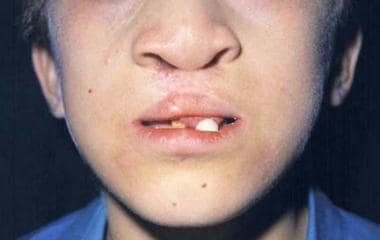
Several ED syndromes may manifest in association with midfacial defects, mainly cleft lip, cleft palate, or both. The 3 most commonly recognized entities are (1) ED, ectrodactyly, and clefting (EEC) syndrome; (2) Hay-Wells syndrome or ankyloblepharon, ED, and cleft lip/palate (AEC) syndrome; and (3) Rapp-Hodgkin syndrome, all of which are caused by mutations in the TP63 gene.
Pathophysiology
ED results from the abnormal morphogenesis of cutaneous or oral embryonal ectoderm (ie, hair, nails, teeth, eccrine glands).
- Hair defects: A reduction in the number of hair follicles in conjunction with structural hair shaft abnormalities may be seen. Structural hair shaft abnormalities may result from aberrations in hair bulb formation and include longitudinal grooving, hair shaft torsion, and cuticle ruffling. Hair bulbs may be distorted, bifid, or small.
- Eccrine defects: Eccrine sweat glands may be absent or sparse and rudimentary, particularly in patients with hypohidrotic ED.
- Other secretory gland defects: Hypoplasia of the salivary and lacrimal glands may occur. In some patients, mucous glands may be absent in the upper respiratory tract and in the bronchi, esophagus, and duodenum.
- Dental defects: Abnormal morphogenesis or absence of teeth may occur.
- Nail dystrophy: Abnormal nail plate formation may result in brittle, thin, ridged, or grossly deformed nails.
Frequency
United States
The frequency of the different EDs in a given population is highly variable. The prevalence of hypohidrotic ED, the most common variant, is estimated to be 1 case per 100,000 births.
International
Collectively, the prevalence of ED is estimated at 7 cases per 10,000 births.
Mortality/Morbidity
Morbidity and mortality is related to the absence or dysfunction of eccrine and mucous glands. Beyond early childhood, life expectancy ranges from normal to slightly reduced.
- Intermittent hyperpyrexia may occur in infants with decreased sweating. The mortality rate approaches 30%. Recurrent high fever may also lead to seizures and neurological sequelae.
- Pharyngitis, rhinitis, cheilitis, and dysphagia may result from reduced numbers of functional mucous glands in the respiratory and gastrointestinal tracts.
- Growth failure is common.
- Severe inflammatory scalp dermatitis with erosions may result in frequent infections and cause scarring alopecia in patients with AEC (Hay-Wells) syndrome and Rapp-Hodgkin syndrome.
- Patients with associated immunodeficiency are at risk for recurrent infections, which may be life threatening.
Race
The EDs have been reported most often in whites, but they have also been observed in persons of other races. Hidrotic ED has been reported in an extensive kindred of French-Canadian origin.
Sex
X-linked recessive hypohidrotic ED has full expression only in males. Female carriers outnumber affected men, but females show little or no signs of the condition. X-linked recessive anhidrotic ED (EDA) with immunodeficiency (EDA-ID) and the X-linked recessive syndrome of osteopetrosis, lymphedema, EDA, and immunodeficiency (OL-EDA-ID) are also seen exclusively in males. The remaining EDs have no sexual predilection.
Age
Clinical recognition of ED varies from birth to childhood depending on the severity of symptoms and the recognition of associated complications. Many patients are not diagnosed until infancy or childhood, when dental anomalies, nail abnormalities, or alopecia become apparent.
- AEC or Hay-Wells syndrome may manifest at birth as ankyloblepharon in association chronic scalp erosions.
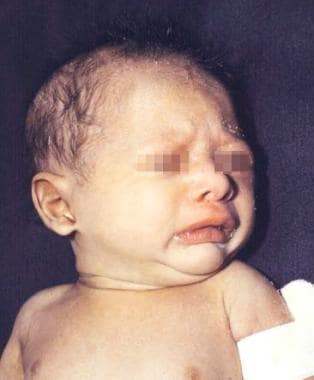
- Hypohidrotic ED may manifest as scaling and erythema at birth.
- EEC syndrome and other related ectrodactyly syndromes (eg, acro-dermato-ungual-lacrimal-tooth [ADULT] syndrome and limb-mammary syndrome) are usually recognized at birth as a result of the characteristic limb deformities.
- Patients with anhidrosis or hypohidrosis may present in early infancy with recurrent episodes of hyperpyrexia.
History
Individuals affected by ED have abnormalities in different ectodermal structures. Some ED types are mild, while others are devastating. Obvious manifestations of the disorders are not clinically apparent in most newborns. Dental, hair, and nail anomalies usually become evident during infancy or childhood. A family history of similar clinical features is helpful.
- Other signs and symptoms
- Hyperthermia with fever and seizures
- Xerophthalmia (decreased tears) and conjunctivitis
- Deficient hearing or vision
- Xerostomia (decreased saliva) and frequent dental caries
- Developmental delay or mental retardation
- Dysphagia
- Growth failure
- Frequent pharyngitis, otitis, and rhinitis
Physical
Clinical appearance depends on the specific anomalies associated with each disorder. General features may include the following:
- Dry, hypopigmented skin is a feature. A chronic eczematous dermatitis may be present.
- Sweating may be absent or reduced.
- Sparse, fair, brittle hair with alopecia is a feature, as are absent or diminished body hair and sparse or absent eyebrows and eyelashes.
- Nail dystrophy is a feature.
- Dental features may include hypodontia or anodontia; malformed, rudimentary, or pegged teeth; and/or enamel defects and frequent dental caries.
- Diminished lacrimation and salivation are reported.
- Dysmorphic facies is a feature.
Following are several of the well-defined EDs:
- X-linked hypohidrotic ED (EDA or Christ-Siemens-Touraine syndrome) is the most common ED. Female carriers may display a blaschkoid distribution of hypohidrosis as a result of lyonization and somatic mosaicism for the abnormal X chromosome. Autosomal recessive and autosomal dominant forms of hypohidrotic ED have been reported but are rare. Intelligence is normal.
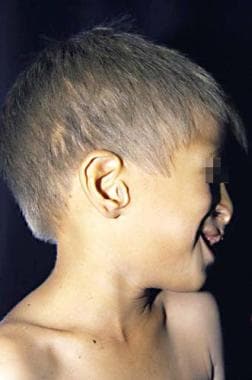
- The typical facies, which is often not recognized until infancy, is characterized by frontal bossing; sunken cheeks; saddle nose; thick, everted lips; wrinkled, hyperpigmented periorbital skin; and large, low-set ears.
- Dental manifestations include conical or pegged teeth, hypodontia or complete anodontia, and delayed eruption of permanent teeth.
- Most patients have fine, sparse, lusterless, fair hair; therefore, little pigmentation in the hair shaft is observed microscopically and the medulla is often discontinuous. When medullation is present, a "bar code" appearance is often seen.
- Onychodystrophy may occur but is not common.
- Extensive scaling of the skin and unexplained pyrexia secondary to anhidrosis may occur in the neonatal period. The development of a chronic eczematous dermatitis is common.
- Other common signs are short stature, eye abnormalities, decreased tearing, and photophobia.
- Hidrotic ED (Clouston syndrome) is inherited in an autosomal dominant manner; the homozygous state may be lethal. It is more common in persons of French-Canadian ancestry.
- Scalp hair is very sparse, fine, and brittle and alopecia is common. Eyebrows are thinned or absent.
- Nail dystrophy is common. Persistent paronychial infections are frequent. Polydactyly, syndactyly, and bulbous fingertips may be present.
- Patients have normal facies, no specific dental defects, and normal sweating.
- Other reported findings include reticulate hyperpigmentation of the knees, elbows, and fingers; palmoplantar keratoderma; and eccrine poromatosis.
- AEC (Hay-Wells) syndrome is inherited as an autosomal dominant trait of variable expressivity.
- Scaling and erythema may be present at birth. The characteristic facies is due to ankyloblepharon (congenital adhesion of the upper and lower eyelid margins by fibrous bands); a broad nasal bridge; and a sunken, hypoplastic maxilla. Cleft palate is common; cleft lip is rare.
- A recalcitrant, crusted, inflammatory scalp dermatitis may cause scarring alopecia. Chronic blepharitis and conjunctivitis may develop. Nails are absent or dystrophic; pegged teeth are common. Mild hypohidrosis is common. Hair may be sparse and coarse.
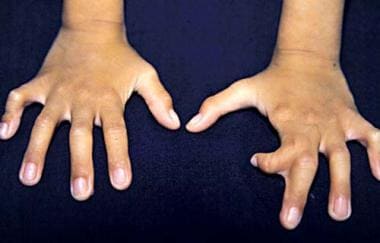
- EEC syndrome is inherited as an autosomal dominant trait of low penetrance and variable expressivity. Many sporadic cases have been reported. Ectrodactyly with tetramelic 3-4 syndactyly results in the characteristic lobster-claw deformity of the hands and feet. Hypoplastic metacarpal or metatarsal bones may be present. Cleft lip and palate create a characteristic nasal contour.
- Other ectodermal anomalies include mild hypohidrosis; coarse, dry hair with hypotrichosis; xerostomia; dystrophic nails; dental enamel hypoplasia; and microdontia.
- Associated defects include blepharophimosis, lacrimal duct anomalies, strabismus, deafness, choanal atresia, and abnormalities of the genitourinary tract.
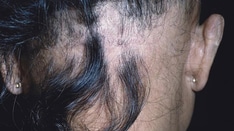
- Rapp-Hodgkin ED is an autosomal dominant syndrome. High forehead, narrow nose, cleft lip or palate, and maxillary hyperplasia produce a distinctive facies. Hypohidrosis is severe enough to result in heat intolerance. Dental defects include conical teeth and hypodontia. Hair is sparse, has a steel-wool texture, and may show pili torti or pili canaliculi. Many patients present with recalcitrant, inflammatory scalp dermatitis followed by scarring alopecia. Nails are narrow and dystrophic. Occasional abnormalities include deafness, eye defects, and hypospadias.
Causes
ED results from the abnormal development of embryonic ectodermal structures. The genetic defects responsible for approximately 30 of the EDs have been identified.
- X-linked recessive hypohidrotic ED (EDA or Christ-Siemens-Touraine syndrome) is caused by mutations in EDA, which encodes the ectodysplasin protein, a soluble ligand that activates the NF-kappaB and JNK/c-fos/c-jun signaling pathways. Ectodysplasin is important in promoting cell survival, growth, and differentiation.
- Autosomal dominant and autosomal recessive hypohidrotic ED are caused by mutations in the DL gene, which encodes the EDA (ectodysplasin) receptor. Autosomal recessive hypohidrotic ED may also result from mutations in the EDARADD gene, which encodes a protein that interacts with the EDA receptor.
- Hidrotic ED (Clouston syndrome), which is an autosomal dominant disorder, is caused by mutations in GJB6, which encodes connexin 30, a component of intercellular gap junctions.
- EDA-ID and OL-EDA-ID are both caused by mutations in the NEMO gene, which encodes the regulatory subunit of the inhibitor-kappa kinase complex that regulates NF-kappaB activity.
- AEC (Hay-Wells) syndrome, Rapp-Hodgkin syndrome, and EEC syndrome are all caused by mutations in the TP63 gene. p63 is a transcription factor that regulates the activity of the tumor suppressor gene TP53.
- The genetic defects underlying several other EDs are also known.
- Palmoplantar keratoderma with deafness is caused by mutations in the GJB26 gene, which encodes connexin 26.
- Margarita Island ED is caused by mutations in the PVRL1 gene, which encodes nectin-1.
- ED with skin fragility is caused by mutations in the PKP1 gene, which encodes plakophilin 1.
- Hypotrichosis with juvenile macular dystrophy is caused by mutations in the CDH3 gene, which encodes p-cadherin.
- ADULT syndrome is caused by mutations in the TP63 gene.
- Split hand-foot malformation syndrome is caused by mutations in the TP63 gene.
- Limb-mammary syndrome is caused by mutations in the TP63 gene.
Alopecia Areata
Aplasia Cutis Congenita
Focal Dermal Hypoplasia Syndrome
Incontinentia Pigmenti
Naegeli-Franceschetti-Jadassohn Syndrome
Pachyonychia Congenita
Other Problems to be Considered
Keratitis-ichthyosis-deafness syndrome
Generalized atrichia with papules
Lab Studies
- In general, laboratory studies are not useful in the diagnosis or management of the EDs.
- Patients with ED associated with immunodeficiency may have hypogammaglobulinemia with impaired lymphocyte proliferation and cell-mediated immunity. An appropriate evaluation, including determination of quantitative immunoglobulin levels and T-cell subset populations, should be performed.
Imaging Studies
- Perform orthopantography at an early age if hypodontia or dental abnormalities are present.
- X-ray films of hands, feet, or both may demonstrate specific skeletal deformities.
- Renal ultrasonography, voiding cystourethrography, and intravenous pyelography may be helpful in evaluating children with ED in association with cleft lip and/or palate for underlying genitourinary tract anomalies.
Other Tests
- Sweat pore counts, pilocarpine iontophoresis, and skin biopsy may document hypohidrosis and a reduction in the number of eccrine glands.
- Sweat pore counts may be performed using yellow starch–iodine powder applied to palmar or dorsal skin. In unaffected persons, sweating turns the yellow starch–iodine powder to deep purple, allowing visualization of sweat pores. Sweat pores are poorly visualized in affected children. Female carriers of X-linked EDA may demonstrate a mosaic pattern of areas of normal numbers of sweat pores alternating with areas of absent pores. Streaky areas of hypohidrosis that follow Blaschko lines are observed upon starch-iodine staining.
- For skin biopsy, the hypothenar eminence is the most reliable biopsy site in order to demonstrate an absence or hypoplasia of sweat glands.
- Fetal skin biopsy may help identify the presence of decreased numbers of eccrine sweat glands for prenatal diagnosis of hypohidrotic ED.
- Prenatal diagnosis using genetic mutation analysis may be performed for those EDs in which the genetic mutation is known.
- Indirect prenatal diagnosis may be performed by linkage analysis applied to chorionic villus samples at the 10th week of gestation for some EDs.
- Genetic testing for hidrotic ED, X-linked recessive and autosomal dominant hypohidrotic ED, EEC syndrome, and AEC syndrome is available through GeneDx.
Histologic Findings
Skin histopathology documents a reduction in the number of sweat glands, hair follicles, and sebaceous glands associated with the different EDs. In EDA, the epidermis is thin and flattened. Eccrine sweat glands are few or poorly developed or are very rudimentary. Beyond the skin, mucous glands in the upper respiratory tract and bronchi are often reduced in number. Salivary glands may show ectasia of ducts and inflammatory changes.
Medical Care
The care of affected patients depends on which ectodermal structures are involved.
- For patients with anhidrosis/hypohidrosis, advise air conditioning for home, school, and work. Encourage frequent consumption of cool liquids to maintain adequate hydration and thermoregulation. Finally, advise patients to wear cool clothing.
- For patients with dental defects, advise early dental evaluation and intervention and encourage routine dental hygiene. Dentures may be indicated as early as age 2 years. Multiple replacements may be needed as the child grows, and dental implants may eventually be required. Advise orthodontic treatment for cosmetic reasons and to ensure adequate nutritional intake.
- Patients with xerosis or eczematous dermatitis may benefit from the use of topical emollients.
- Patients with severe alopecia can wear wigs to improve their appearance.
- Patients with scalp erosions should be treated with topical and systemic antibiotics as needed. General scalp care may involve the use of weekly dilute bleach baths or acetic acid soaks to minimize bacterial colonization of the scalp. Application of special scalp dressings may be helpful.
- Use artificial tears to prevent damage to the cornea in patients with reduced lacrimation.
- Protect nasal mucosa with saline sprays followed by the application of petrolatum.
- Patients with ED with immunodeficiency should be monitored for infection and treated with therapeutic and/or prophylactic antibiotics when appropriate.
- Allogeneic stem cell transplantation has been reportedly successful in facilitating immune reconstitution in a single patient with autosomal dominant ED with immunodeficiency (EDA-ID).
Surgical Care
- Early repair of cleft lip or palate may lessen facial deformities and improve speech.
- Other midfacial defects or hand/foot deformities may be surgically corrected in order to improve function and reduce physical disfigurement.
Consultations
- Dermatologists can assist in the diagnosis of ED and in the management of patients with chronic eczematous dermatitis or scalp erosions.
- General dentists or periodontal dentists can provide regular preventative dental care and restorative service as indicated.
- Plastic surgeons can provide evaluation and management of cleft lip and/or palate defects, other facial defects, and hand and foot defects.
- Speech and physical or occupational therapists can assist patients with cleft lip and/or palate with feeding and speech difficulties and can provide therapy to assist patients with hand and foot defects.
- Genetic counselors can provide patients and families with assistance in diagnosis and genetic analysis.
- Immunologists can help with the evaluation for suspected immunodeficiency.
Diet
- No dietary restrictions are indicated.
Activity
- Instruct patients with hypohidrosis to avoid vigorous physical activities and to maintain adequate hydration.
- Advise on the importance of light clothing, a cool-water spray bottle, and restriction of overexposure to warm temperatures.
- Recommend swimming or sedentary sports (eg, archery).
- Educate parents that antipyretics are not effective in the treatment of hyperpyrexia.
At this time, no pharmacological treatment is available.
Complications
- Patients with severe dental abnormalities or cleft lip and/or palate may develop feeding difficulties, which may result in malnutrition and failure to thrive.
- Patients affected by anodontia may show shrinkage of the bone supporting the denture after long-term denture use.
- Patients with anhidrosis/hypohidrosis are prone to hyperpyrexia and heat exhaustion.
- Patients with chronic scalp dermatitis and erosions often develop recurrent bacterial and fungal skin infections.
- Patients with abnormal mucous gland function may develop secondary infections, especially in the upper respiratory tract.
- Patients with immunodeficiency are at risk for recurrent viral, bacterial, and fungal infections.
Prognosis
- The prognosis for most patients with ED is very good.
- If hypohidrosis is recognized in the neonatal period and managed appropriately, no evidence indicates that the life span for a person diagnosed with one of the common types of ED is shorter than average.
- Life span can be affected in some rare types of ED. For example, patients with ED with immunodeficiency are at risk for significant morbidity and mortality related to recurrent infections and failure to thrive.
Patient Education
- Provide early guidance about temperature regulation, acceptable activities, and the risk of hyperpyrexia from febrile illnesses. Inform patients and families that antipyretics are not effective in treating hyperpyrexia associated with hypohidrosis.
- Instruct caregivers on proper skin care and monitoring for signs of infection in patients with chronic scalp dermatitis and erosions.
- Additional information and support for families is available through the National Foundation for Ectodermal Dysplasias.
Medical/Legal Pitfalls
- Failure to provide adequate education on the prevention and management of hyperpyrexia
- Failure to provide appropriate genetic counseling
- Failure to refer patients with cleft lip and/or palate or limb defects for appropriate surgical evaluation and management
- Failure to provide appropriate preventative and restorative dental care
- Failure to screen for possible associated immunologic deficits
Special Concerns
| Media file 1:
A newborn boy with anhidrotic/hypohidrotic ectodermal dysplasia syndrome showing generalized fine scaling and a history of intermittent fever. |
 | View Full Size Image | |
Media type: Photo
|
| Media file 2:
Wrinkled, hyperpigmented skin around the eyes and everted lips are typical characteristics of anhidrotic/hypohidrotic ectodermal dysplasia syndrome. |
 | View Full Size Image | |
Media type: Photo
|
| Media file 3:
Typical cleft lip/palate and maxillary hyperplasia in a patient with Rapp-Hodgkin syndrome. |
 | View Full Size Image | |
Media type: Photo
|
| Media file 4:
Abnormal hair shaft showing pili torti and a longitudinal groove (pili canaliculi) from a patient with Rapp-Hodgkin syndrome. |
 | View Full Size Image | |
Media type: Photo
|
| Media file 5:
Hands of father and son with Rapp-Hodgkin syndrome. Nails have the same characteristics; they are brittle, thin, and dystrophic. |
 | View Full Size Image | |
Media type: Photo
|
| Media file 6:
Ectodermal dysplasia, ectrodactyly, and clefting syndrome. Light-colored hair and scalp and earlobe defects are observed. Cleft lip and palate results in a characteristic nasal contour. |
 | View Full Size Image | |
Media type: Photo
|
| Media file 7:
Ectrodactyly observed in an individual with ectodermal dysplasia, ectrodactyly, and clefting syndrome. |
 | View Full Size Image | |
Media type: Photo
|
- Berg D, Weingold DH, Abson KG, Olsen EA. Sweating in ectodermal dysplasia syndromes. A review. Arch Dermatol. Aug 1990;126(8):1075-9. [Medline].
- Celli J, Duijf P, Hamel BC, et al. Heterozygous germline mutations in the p53 homolog p63 are the cause of EEC syndrome. Cell. Oct 15 1999;99(2):143-53. [Medline].
- Clouston HR. A hereditary ectodermal dystrophy. Can Med Assoc J. 1929;21:18-31.
- Courtois G, Smahi A, Reichenbach J, et al. A hypermorphic IkappaBalpha mutation is associated with autosomal dominant anhidrotic ectodermal dysplasia and T cell immunodeficiency. J Clin Invest. Oct 2003;112(7):1108-15. [Medline].
- Döffinger R, Smahi A, Bessia C, et al. X-linked anhidrotic ectodermal dysplasia with immunodeficiency is caused by impaired NF-kappaB signaling. Nat Genet. Mar 2001;27(3):277-85. [Medline].
- Daniel E, McCurdy EA, Shashi V, McGuirt WF Jr. Ectodermal dysplasia: otolaryngologic manifestations and management. Laryngoscope. Jun 2002;112(6):962-7. [Medline].
- Dhanrajani PJ, Jiffry AO. Management of ectodermal dysplasia: a literature review. Dent Update. Mar 1998;25(2):73-5. [Medline].
- Dupuis-Girod S, Cancrini C, Le Deist F, et al. Successful allogeneic hemopoietic stem cell transplantation in a child who had anhidrotic ectodermal dysplasia with immunodeficiency. Pediatrics. Jul 2006;118(1):e205-11. [Medline].
- Felding IB, Bjorklund LJ. Rapp-Hodgkin ectodermal dysplasia. Pediatr Dermatol. Jun 1990;7(2):126-31. [Medline].
- Fosko SW, Stenn KS, Bolognia JL. Ectodermal dysplasias associated with clefting: significance of scalp dermatitis. J Am Acad Dermatol. Aug 1992;27(2 Pt 1):249-56. [Medline].
- Freire-Maia N. Ectodermal dysplasias. Hum Hered. 1971;21(4):309-12. [Medline].
- Happle R, Frosch PJ. Manifestation of the lines of Blaschko in women heterozygous for X- linked hypohidrotic ectodermal dysplasia. Clin Genet. May 1985;27(5):468-71. [Medline].
- Hay RJ, Wells RS. The syndrome of ankyloblepharon, ectodermal defects and cleft lip and palate: an autosomal dominant condition. Br J Dermatol. Mar 1976;94(3):277-89. [Medline].
- Hickey AJ, Vergo TJ. Prosthetic treatments for patients with ectodermal dysplasia. J Prosthet Dent. Oct 2001;86(4):364-8. [Medline].
- Imirzalioglu P, Uckan S, Haydar SG. Surgical and prosthodontic treatment alternatives for children and adolescents with ectodermal dysplasia: a clinical report. J Prosthet Dent. Dec 2002;88(6):569-72. [Medline].
- Itin PH, Fistarol SK. Ectodermal dysplasias. Am J Med Genet C Semin Med Genet. Nov 15 2004;131C(1):45-51. [Medline].
- Kere J, Srivastava AK, Montonen O, et al. X-linked anhidrotic (hypohidrotic) ectodermal dysplasia is caused by mutation in a novel transmembrane protein. Nat Genet. Aug 1996;13(4):409-16. [Medline].
- Lamartine J, Munhoz Essenfelder G, Kibar Z, et al. Mutations in GJB6 cause hidrotic ectodermal dysplasia. Nat Genet. Oct 2000;26(2):142-4. [Medline].
- Lamartine J. Towards a new classification of ectodermal dysplasias. Clin Exp Dermatol. Jul 2003;28(4):351-5. [Medline].
- McGrath JA, Duijf PH, Doetsch V, et al. Hay-Wells syndrome is caused by heterozygous missense mutations in the SAM domain of p63. Hum Mol Genet. Feb 1 2001;10(3):221-9. [Medline].
- Monreal AW, Ferguson BM, Headon DJ, et al. Mutations in the human homologue of mouse dl cause autosomal recessive and dominant hypohidrotic ectodermal dysplasia. Nat Genet. Aug 1999;22(4):366-9. [Medline].
- Monreal AW, Zonana J, Ferguson B. Identification of a new splice form of the EDA1 gene permits detection of nearly all X-linked hypohidrotic ectodermal dysplasia mutations [published erratum appears in Am J Hum Genet 1998 Oct;63(4):1253-5]. Am J Hum Genet. Aug 1998;63(2):380-9. [Medline].
- Motil KJ, Fete TJ, Fraley JK, et al. Growth characteristics of children with ectodermal dysplasia syndromes. Pediatrics. Aug 2005;116(2):e229-34. [Medline].
- Nordgarden H, Storhaug K, Lyngstadaas SP, Jensen JL. Salivary gland function in persons with ectodermal dysplasias. Eur J Oral Sci. Oct 2003;111(5):371-6. [Medline].
- Orange JS, Jain A, Ballas ZK, et al. The presentation and natural history of immunodeficiency caused by nuclear factor kappaB essential modulator mutation. J Allergy Clin Immunol. Apr 2004;113(4):725-33. [Medline].
- Pierard GE, Van Neste D, Letot B. Hidrotic ectodermal dysplasia. Dermatologica. 1979;158(3):168-74. [Medline].
- Priolo M, Laganà C. Ectodermal dysplasias: a new clinical-genetic classification. J Med Genet. Sep 2001;38(9):579-85. [Medline].
- Priolo M, Silengo M, Lerone M, Ravazzolo R. Ectodermal dysplasias: not only ''skin'' deep. Clin Genet. Dec 2000;58(6):415-30. [Medline].
- Reynold JM, Gold MB, Scriver CR. The characterization of hereditary abnormalities of keratin: Clouston''s ectodermal dysplasia. Birth Defects Orig Artic Ser. Jun 1971;7(8):91-5. [Medline].
- Rogers M. The "bar code phenomenon": a microscopic artifact seen in patients with hypohidrotic ectodermal dysplasia [letter]. Pediatr Dermatol. Jul-Aug 2000;17(4):329-30. [Medline].
- Rouse C, Siegfried E, Breer W, Nahass G. Hair and sweat glands in families with hypohidrotic ectodermal dysplasia: further characterization. Arch Dermatol. Jul 2004;140(7):850-5. [Medline].
- Shin JJ, Hartnick CJ. Otologic manifestations of ectodermal dysplasia. Arch Otolaryngol Head Neck Surg. Sep 2004;130(9):1104-7. [Medline].
- Solomon LM, Keuer EJ. The ectodermal dysplasias. Problems of classification and some newer syndromes. Arch Dermatol. Nov 1980;116(11):1295-9. [Medline].
- Suzuki K, Hu D, Bustos T, et al. Mutations of PVRL1, encoding a cell-cell adhesion molecule/herpesvirus receptor, in cleft lip/palate-ectodermal dysplasia. Nat Genet. Aug 2000;25(4):427-30. [Medline].
- Taieb A. X-linked hypohidrotic ectodermal dysplasia in the new born: a diagnostic challenge. Eur J Pediatr Dermatol. 1998;8:201-4.
- Tarjan I, Gabris K, Rozsa N. Early prosthetic treatment of patients with ectodermal dysplasia: a clinical report. J Prosthet Dent. May 2005;93(5):419-24. [Medline].
- Thurnam J. Two cases in which the skin, hair and teeth were very imperfectly developed. Proc RM Chir Soc. 1848;31:71-82.
- Weech AA. Hereditary ectodermal dysplasia (congenital ectodermal defect). Am J Dis Child. 1929;37:766-90.
- Wilsch L, Haneke E, Schaidt G. Letters:Structural hair abnormalities in hidrotic ectodermal dysplasia (HED). Arch Dermatol Res. Jul 21 1977;259(1):101-3. [Medline].
- Zonana J, Elder ME, Schneider LC, et al. A novel X-linked disorder of immune deficiency and hypohidrotic ectodermal dysplasia is allelic to incontinentia pigmenti and due to mutations in IKK-gamma (NEMO). Am J Hum Genet. Dec 2000;67(6):1555-62. [Medline].
Ectodermal Dysplasia excerpt Article Last Updated: Nov 8, 2006
|