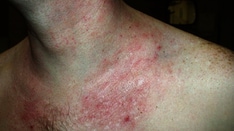
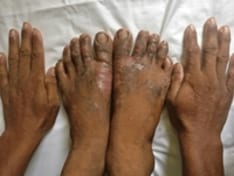
Overview
Background
Botanicals are widely used for medicinal purposes but can also cause dermatitis. [1, 2] Plant-induced contact dermatitis is divided into five major categories. These include allergic sensitization, mechanical irritation, chemical irritation, contact urticaria (immunologic or toxin mediated), and photosensitization. Plant products cause a variety of adverse cutaneous effects, and they are responsible for most cases of allergic contact dermatitis. In the United States, most cases of allergic contact dermatitis are due to Toxicodendron plants.
This article provides a brief introduction to botanical dermatology and highlights the small minority of plants that cause skin reactions. This discussion of clinical manifestations and treatment options is a supplement to the material presented in Allergic Contact Dermatitis.
Classification of plants
Taxonomy refers to the scientific description and organization of plants. Subsequent codification is outlined by the International Code of Botanical Nomenclature (ICBN) and maintained by a body called the International Association of Plant Taxonomy (IAPT).
The botanical binomial classification system provides every entity with 2 names: a generic designation and a specific epithet. The binomial name is traditionally followed by a reference to the person or authority who first reported that specific epithet. For example, the full binomial name of common poison ivy is Toxicodendron radicans (L.) O. Ktze. In this case, (L.) refers to Carl Linnaeus who issued the epithet radicans. O. Ktze is used in recognition of Otto Kuntze, who transferred the epithet radicans from the genus Rhus to the genus Toxicodendron.
Frequency
The risk of acquiring plant-related dermatitis is influenced by host susceptibility and exposure. Impairment in the barrier function of the skin may increase the propensity for sensitization. Chronically immersed hands (eg, florists' hands) may be particularly predisposed to plant-related dermatitis.
Allergic contact dermatitis requires exposure and sensitization to the causative plant products. In patch-testing conditions, more than 70% of the population in the United States reacts to poison ivy and poison oak allergens, whereas roughly 50% of the population has such reactions in nature.
Sex
Sex variations in the prevalence of sensitization to allergens reflect prior exposure and not innate differences in the sexes. [3]
Toxicodendron -related dermatoses occur equally in both sexes. In the United States, ragweed dermatitis almost exclusively affects men. In Europe, dermatitis due to Primula species occurs predominantly in women. In India, Parthenium hysterophorus dermatitis (ie, scourge of India) affects men more often than women or children; the male-to-female ratio is 20:1. [4]
Age
Allergic contact dermatitis due to poison ivy can occur in persons of any age, though infants and elderly individuals are reportedly less susceptible to poison ivy.

Allergic Contact Dermatitis due to Anacardiaceae Plants
Members of the family Anacardiaceae cause more cases of allergic contact dermatitis than those of all other plant families combined. Most allergenic family members belong to the genus Toxicodendron, and they possess a toxic oleoresin called urushiol. Rhus is the largest genus in the family Anacardiaceae, but it does not contain the allergenic plants, most of which belong to the genus Toxicodendron.
Plant identification - Toxicodendron species
The genus Toxicodendron includes common poison ivy (T radicans), western or northern poison ivy (Toxicodendron rydbergii), eastern poison oak (Toxicodendron toxicarium), western poison oak (Toxicodendron diversilobum), and poison sumac (Toxicodendron vernix).
Poison ivy and poison oak are weeds that grow in a variety of habitats, but they prefer shaded areas with rich, wet soil. These plants have 3-5 leaflets per compound leaf, which leads to the adage "Leaves of three, leave them be" (see first image below). The flowers and fruit of the plant grow in an axillary position in the angle between the leaf and the twig (see second image below). The leaf stalk is enlarged at its origin from the supporting twig, resulting in a U- or V-shaped scar when it is fractured. The green fruit turn off-white when they are mature. The winter shape of poison ivy on fence posts resembles medusa heads. One should strongly suspect that any climbing vine with aerial rootlets connected to a tree or log is poison ivy or poison oak.
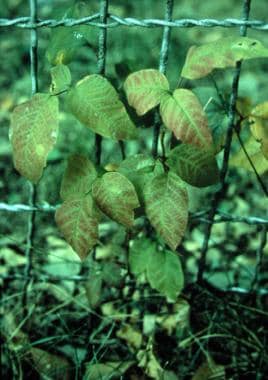 Young poison ivy plant Toxicodendron radicans. The leaves of 3 are easily identified. Reprinted with permission from WB Saunders.
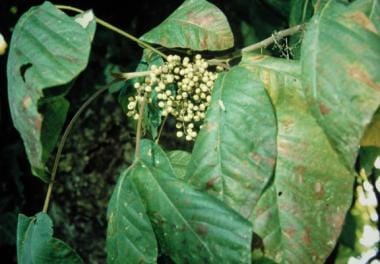 Mature poison ivy Toxicodendron radicans. Fruit arises in an axillary position in the angle between the leaf and the branch.
Poison sumac, which has 7-13 leaflets per leaf, is primarily found in wooded swampy areas. Nonpoisonous sumac species (genus Rhus, family Anacardiaceae) have red fruits. Poison sumac species (genus Toxicodendron, family Anacardiaceae) have white-to-green hanging fruits. The black-spot test helps in identifying toxic urushiols, which are self-melanizing on exposure to oxygen. To perform the black-spot test, use a stone to thoroughly crush the plant sample, especially the leaf stalks, inside a sheet of folded white paper. Urushiol turns dark brown within 20 minutes and black within 24 hours.
Plant identification - Other allergenic species within the family Anacardiaceae
The cashew nut tree (Anacardium occidentale) is a medium-sized tropical tree that grossly resembles the walnut tree. Any part of the tree, except the kidney-shaped nut, can cause dermatitis. The caustic oil contains cardol, a phenol similar to the allergens in Toxicodendron urushiols. This oil has powerful vesicant properties; it has been used in Africa for medicinal purposes and for ritual scarification.
The mango tree (Mangifera indica) is likely the most popular cultivated fruit tree in the world's tropical and subtropical regions. The skin of the fruit and the leaves, bark, and stems of the plant contain sensitizing resorcinols. The pulp of the fruit is nonallergenic. Dermatitis usually involves the hands and the mouth after a person eats unpeeled fruit. [5]
The Brazilian pepper tree (Schinus terebinthifolius), or Florida holly, may be the most common cause of allergic contact dermatitis in southern Florida. The sap and crushed berries possess a variety of sensitizing phenols.
The Japanese lacquer tree (Toxicodendron verniciflua), which grows to a height of 15-20 m, provides a thick, self-melanizing, viscous sap that is used for varnishing wood. Polymerized urushiol persists in the lacquer and can maintain its allergenicity for hundreds of years. Artisans can develop resistance to the allergenic urushiol by chewing raw lacquer.
The black juice of the Indian marking tree nut Semecarpus anacardium is mixed with alum to mark laundry in India and Malaysia. Indian laundry workers, or dhobies, often develop dhobie mark dermatitis. Approximately 15-20% of English soldiers who were stationed in India during World War II had adverse reactions to their marked garments.
Plant identification - Cross-reacting species from other families
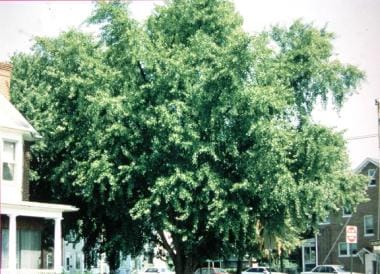
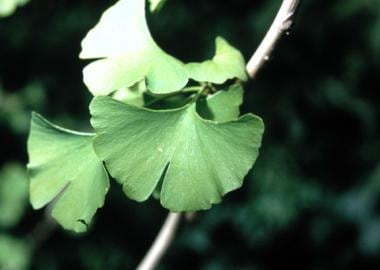
The Ginkgo tree (Ginkgo biloba) is widely grown in suburban areas in North America and Europe because of its beauty, size, and pollution resistance. Allergic reactions are mediated by anacardic acid, which is present in the seed pulp. The unique fan-shaped leaves, shown below, are easily recognizable.
The genus Grevillea in the family Proteaceae includes some 250 plant species that contain pentadecylresorcinol. Grevillea species are common in Australia. The flower of the Hawaiian tree (Grevillea banksii) is a prominent cause of allergic contact dermatitis in Hawaii.
Pathogenesis
Urushiol, the allergenic oleoresin of Toxicodendron plants, derives its name from the Japanese word kiurushi, the sap of the Japanese lacquer tree (Tverniciflua). Urushiols from poison ivy and poison oak contain pentadecylcatechols, which are the primary sensitizers. Catechols are soluble in rubber; consequently, rubber gloves are not protective against these allergens.
Particles suspended in smoke can carry urushiol. Nonleaf portions of the plant can induce dermatitis, even in the winter. Blister fluid does not contain urushiol; the vesicles and bullae of dermatitis due to poison ivy or other Anacardiaceae plants do not contain the allergens. Therefore, breaking these blisters does not cause the rash to spread.
Clinical manifestations
After an individual who is sensitized has contact with urushiol, an erythematous pruritic eruption typically develops within 2 days. If the skin is washed within 30 minutes of contact with the toxin, the eruption may be prevented. The time until eruption can be extremely variable. It is influenced by body site, allergenicity, the concentration and length of exposure, prior sensitization, and other host factors.
Involved areas demonstrate streaks of erythema and edematous papules; later, vesicles and bullae appear. The sequential appearance of lesions over different areas of the body may create the false impression of a spreading or infectious process. Poison ivy dermatitis may seem to spread because different concentrations of allergen contact skin sites of varied thickness. The allergen must travel through variable layers of the stratum corneum to reach the Langerhans cells, the antigen-presenting cells of the epidermis.
In some patients, asymptomatic and persistent black lesions may appear on the skin. These lesions are referred to as black lacquer spots. They occur where a sufficient amount of resin has been deposited to cause a vesicant reaction (the oleoresin is a vesicant at high concentrations). On rare occasions, severe reactions to poison ivy can cause erythema multiforme, [6] erythema scarlatiniform, or urticarial eruptions. Postinflammatory hyperpigmentation is common in dark-skinned individuals following a poison ivy eruption.
Allergic Contact Dermatitis due to Asteraceae Plants and Others
The family Asteraceae (formerly Compositae) is also known as the chrysanthemum family, the sunflower family, or the daisy family. Asteraceae includes many troublesome weeds (eg, dandelions), ornamentals (eg, sunflowers), herbaceous perennials (eg, dahlias, chrysanthemums), and vegetables (eg, lettuce, chicory, artichokes).
Plant identification - Asteraceae family
Immense structural diversity exists in this family of some 20,000 species. Members of this family are easily identified by recognizing the composite flowerlike inflorescence known as the involucrate pseudoanthium. Multiple florets emerge from a common receptacle to form a radiate, discoid, or ligulate head or capitulum (see below). These complicated flower heads are surrounded by 1 or more rows of bracts, which are most often green.
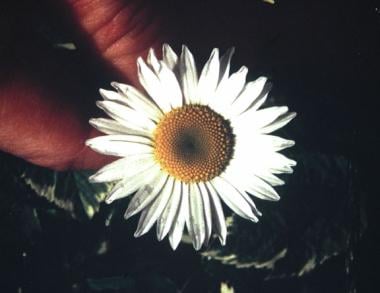 Daisy flower, Leucanthemum species, with characteristic flower heads of the Asteraceae family.
Ragweeds (Ambrosia species)
Ragweeds cause hay fever and asthma only during the airborne pollen season. However, airborne contact dermatitis can occur throughout the full growing season of these plants.
Two allergens are found in ragweed pollen: (1) oleoresin is thought to cause airborne contact dermatitis, and (2) distinct aqueous proteins cause ragweed asthma and hay fever.
The dermatitis caused by ragweed typically occurs in atopic, American, middle-aged, male farmers; the estimated male-to-female ratio is 20:1.
Feverfew and carrot weed (Parthenium hysterophores)
Feverfew, or carrot weed, is an unwelcome plant, which is also known as the scourge of India. This species has developed a wide ecologic niche in India after it was accidentally imported with a consignment of wheat from the United States.
The Indian plant contains large amounts of sesquiterpene lactones (SQLs) and produces a severe widespread dermatitis, which occurs predominantly in men. The dermatitis resembles ragweed dermatitis. [7, 8, 9]
Florist's chrysanthemum (Dendranthema X grandiflorum cv)
Florist's chrysanthemums (ie, chrysanthemums) are the most common Asteraceae plants that cause occupational contact dermatitis. Contact dermatitis frequently occurs in amateur florists who disbud or deadhead plants to promote larger blooms.
Sunflower (Helianthus annuus)
These flowers probably originated in Mexico, but they are now grown worldwide for their seeds and oil.
An occupational allergic contact dermatitis is often found in individuals who harvest this flower. The major allergen is known as 1-0-methyl 1-4,5-dihydroniveusin A. The pollen is said to be a minor allergen. Trichomes, or small hairs, on the surfaces of the leaf secrete the allergens. Windblown trichomes from dry plants can cause airborne contact dermatitis. [10]
Dandelion (Taraxacum officinale)
The dandelion is a weed that probably derives its name from the French term, dent de lion, which describes the immature seeds or notched leaves that resemble a lion's teeth. This troublesome weed flourishes worldwide. The taproot has been used as a coffee substitute, like chicory. The plant also has a strong diuretic effect, which accounts for its alternate name, piss-a-bed.
Airborne allergic contact dermatitis, aided by the plant's parachute-shaped seeds, most commonly occurs after people mow their lawns during long stretches of hot, dry weather. The allergen is taraxinic acid (1-0-b-glucopyranoside), a SQL. Results of patch testing with SQL mix are usually negative.
Pathogenesis
The major sensitizers, SQLs, are found in the leaves, stems, flowers, and some pollen. By themselves, SQLs are not phototoxic or photoallergic. However, 85% of patients with chronic photosensitivity dermatoses may react to Asteraceae plants. The relationship between SQLs and chronic actinic dermatitis is unknown.
Because SQL cross-reactivity follows no apparent rules, results of screening tests for SQL allergy, even with the SQL patch-test mix (ie, alantolactone, dehydrocostus lactone, costunolide), are not reliable. When patch tests are preformed to screen for possible allergy to members of the Asteraceae family, using parts of the particular suspected plant is best.
Clinical manifestations
Asteraceae dermatitis may appear in a diffuse pattern across exposed skin surfaces, mimicking photodermatitis; however, localized hand eczema is more common (see first image below). Unlike photosensitive dermatoses, diffuse Asteraceae dermatitis involves the eyelids, the melolabial folds, the retroauricular sulci, and the antecubital fossae (see second image below).
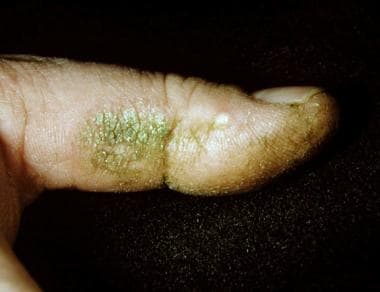 Finger of a florist with an eczematous plaque caused by sensitivity to tulipalin A, the allergen contained in Peruvian lilies (family Alstroemeria).
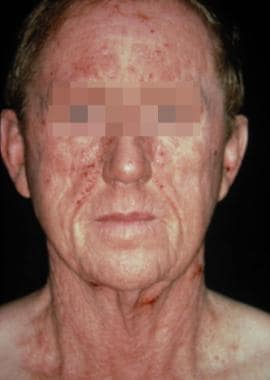 Airborne contact dermatitis in a patient who is allergic to sesquiterpene lactones. The involvement of the anterior part of the neck seen here is typically absent in photodermatoses. Courtesy of Dirk Elston, MD.
The dermatitis flares in the summer during the plant's growing season and disappears in the winter. Individuals who are allergic to Asteraceae plants frequently have reactions to plant allergens present in perfumes, woods, Balsam of Peru, colophony, and lichens. Asteraceae dermatitis often precedes chronic actinic dermatitis.
Plant identification - Other families
Alliaceae [11]
The genus Allium includes onions, garlic, and chives.
Garlic is the most common cause of fingertip dermatitis in homemakers and caterers. The condition typically involves the thumb, the index finger, and the middle finger of the nondominant hand. Fresh garlic is both an allergen and a potent irritant that often causes second- and third-degree burns when applied to injured skin (see image below). Therefore, patch testing to whole garlic should never be performed. The irritants and the allergens are thought to be diallyl disulfide, allylpropyl disulfide, and allicin. [12] Onion (Allium cepa) dermatitis is rare.
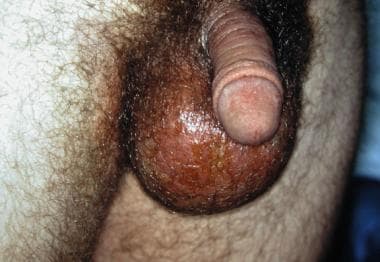 Irritant reaction on the scrotum after contact with garlic (Allium sativum). Courtesy of Martin Giandoni, MD. Reprinted with permission from Cutis 67: 193, 2001.
Liliaceae
The family Liliaceae includes tulips, hyacinths, and asparagus.
Tulip fingers, shown below, is a combined allergic and irritant contact dermatitis caused by tulip bulbs (Tulipa species). Erythematous, scaling plaques mark the periungual skin and the fingertips, particularly the tips of the first and second fingers of the dominant hand. Pulpitis and paronychia may occur, and dermatitis can spread to the face, the neck, the arms, and the anogenital region. [13]
 Tulipa species (Liliaceae). Reprinted with permission from Cutis (2003;71:347-348). Copyright 2003, Quadrant HealthCom, Inc.
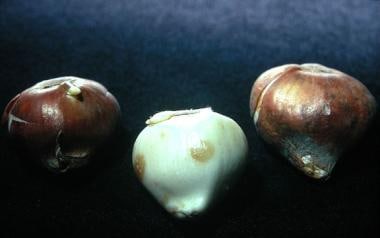 The coverings of tulip bulbs can cause irritant contact dermatitis, and tulipalin A and B can cause allergic contact dermatitis. Reprinted with permission from Cutis (2003;71:347-348). Copyright 2003, Quadrant HealthCom, Inc.
Tuliposide A, a glycoside, is found in the white epidermis of bulbs. This compound is converted to tulipalin A, the allergen, by means of acidic hydrolysis. Tuliposide B, the alpha-hydroxy derivative of tuliposide A, and the hydrolytic product tulipalin B are commonly found in tulips; they are much weaker sensitizers than tulipalin A.
Alstroemeriaceae
The family Alstroemeriaceae includes the Peruvian lily. Florists often develop erythema, fissures, vesicles, hyperkeratosis, and exfoliation of the fingertips, which often affects their dominant hand. The allergen can pass through vinyl (eg, polyvinyl chloride) gloves. [14, 15]
Tuliposide A and B are found in virtually all portions of the plant. The flowers, shown below, contain more allergen than the stems; the leaves have the smallest amount of allergen.
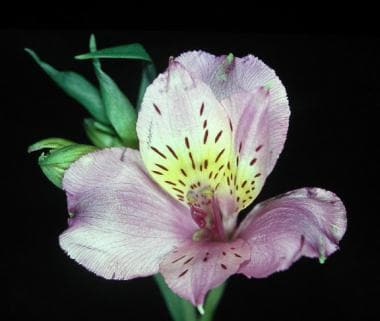 Alstroemeria ligtu (Alstroemeriaceae). Reprinted with permission from WB Saunders.
Primulaceae
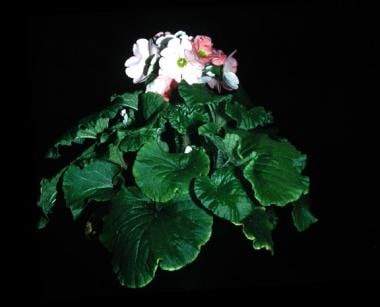
Primula obconica contains the allergen primin in microscopic glandular hairs. The highly allergenic petals and sepals are frequently extracted (ie, deadheaded) to maintain cultivation. Primin allergy is widely recognized in Europe, and it occurs predominantly in women. [16]
Pinaceae
The Pinaceae family, which includes pine trees (ie, Pinus species) and spruce trees (ie, Picea species), is a major source of colophony and turpentine.
Allergic contact dermatitis from handling trees is uncommon. Contact dermatitis due to colophony most commonly occurs after contact with medical adhesives. Colophony, or wood rosin, is a sticky amber-colored material derived primarily from distillates of pine stumps. The major use of colophony is as a paper finish to prevent the spreading of ink. The main allergens of colophony are oxidation products of abietic acid and its isomer primaric acid.
Turpentine is an oleoresin derived from various conifers. Gum tapped from the trunk is separated by means of vacuum or steam distillation. Turpentine contains irritants, such as alpha-pinene, and allergens, such as delta-3-carene. The volatile fumes of turpentine cause facial dermatitis, and direct contact with turpentine causes periungual dermatitis.
Myrtaceae
The Myrtaceae or Myrtle family is composed of more than 100 genera and more than 3000 species. Included in this family is the genus Eucalyptus, which alone contains approximately 500 species. Most of the commercially important members of the Melaleuca genus are found in Australia and New Zealand, but other species are grown in Indonesia, New Guinea, New Caledonia, and Malaysia.
Tea tree oil is an essential oil distilled from the leaves of the hardwood tree, Melaleuca alternifolia. The oil can be found in numerous cosmetic and household products, including massage oils; aromatherapy candles, compresses, and inhalers; mouthwashes; laundry detergents and fabric softeners; and moisturizing creams, among others Tea tree oil is being increasingly used for its purported beneficial medicinal effects. In parallel with this increased use is an expanding series of reported adverse effects, including allergic contact dermatitis, systemic contact dermatitis, linear IgA disease, erythema multiforme–like id reactions, and systemic hypersensitivity reactions. [17]
Annonaceae
Ylang-ylang oil is extracted from the flowers of the Cananga odorata tree and belongs to the Annonaceae family of plants. The Annonaceae family consists of 2050 species and 125 genera, most of which are found in the tropics. The C odorata tree is native to the Malay Archipelago and is now grown in southern India, Java, the Philippines, and many other islands in the Pacific primarily for the soap and perfume industry. [18]
Fragrance materials are among the most common causes of allergic contact dermatitis. The ylang-ylang oil contains several allergens, including isoeugenol—the main sensitizer—and derivatives of geraniol and linalool. Ylang-ylang sensitivity can result in occupational contact dermatitis, especially among manicurists, hairdressers, aromatherapists, and individuals in the cosmetic manufacturing industry. Most of the reported cases have described hand dermatitis resulting from products containing ylang-ylang oil. Given the heightened popularity of herbal and botanical products in the United States and abroad, it is important that dermatologists recognize the potential for ylang-ylang oil allergy in patients with exposures to cosmetic or aromatherapy products containing ylang-ylang oil.
Contact Urticaria
Urticarial reactions to plants are divided into immunologic and nonimmunologic categories or toxin-mediated categories.
Immunologic contact urticaria
Immunologic contact urticaria typically affects individuals who have a long history of handling food and/or atopy.
Celery (Apium graveolens) is the most common plant cause of generalized urticarial or anaphylactoid reactions. Within 30 minutes of contact with certain plants, pruritus, erythema, vesicles, and urticarial swelling may develop. Cooking, processing, deep-freezing, or crushing of fruits and vegetables generally reduces their allergenicity.
Protein contact dermatitis represents a chronic dermatitis in which patch testing results are typically negative; however, prick tests with large protein allergens usually causes positive results.
The most sensitive tests for immunologic contact dermatitis are the prick test and the scratch chamber test. Prevention is the key method of controlling this condition; however, the use of antihistamines can be helpful.
Toxin-mediated contact urticaria
Plants in the Urticaceae family cause most cases of plant-induced contact urticaria. In the United States, the most commonly involved plant is the stinging nettle (Urtica dioica) (see image below).
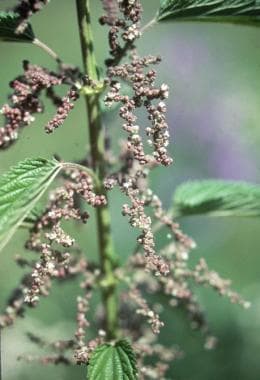
Causative plants possess trichomes, or sharp hairs, on their leaves and stems. Hypodermic needle–like hollows are dislodged when the plant is rubbed. These hollows release the irritant chemicals, which include acetylcholine, histamine, and 5-hydroxytryptamine.
Urticarial lesions achieve maximal size within 5 minutes of contact. Pruritus, erythema, and burning may last for 2 hours. Persistent paresthesias may last for more than 12 hours. Most reactions are self-limited and require no treatment.
Irritant Dermatitis
Irritant dermatitis due to plants can result from direct mechanical injury or chemical contact. See Irritant Contact Dermatitis.
Mechanical irritant dermatitis
Large spines and thorns can cause penetrating trauma, and the wounds can become secondarily infected. Smaller glochids (tufts of short, barbed hairs) embed in the skin like fishhooks. Although cacti possess larger spines, smaller glochids induce more troubling dermatologic manifestations.
Penetrating injuries can introduce pathogenic microorganisms into the wound. Examples include Clostridium tetani and Staphylococcus aureus (from spines and thorns), Sporothrix schenckii (from rose thorns, grasses, and sphagnum moss), Mycobacterium kansasii (from blackberries), Mycobacterium marinum (from cactus spines), and Mycobacterium ulcerans (from spiky tropical vegetation).
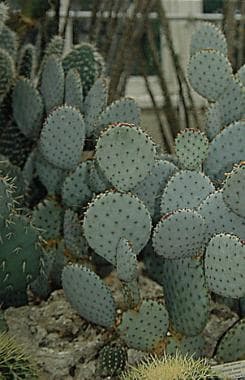
Glochids from prickly pears (Opuntia species) (see image below) can cause an extremely pruritic, papular eruption called sabra dermatitis, which can easily be confused with scabies or fiberglass dermatitis.
Various glochid removal techniques are described, including the use of warm wax, glue, sticking plaster, facial masks, and cellophane tape.
Chemical irritant dermatitis
Several plant families possess chemicals that irritate human skin. One of the most common chemical irritants is calcium oxalate. Calcium oxalate can enhance the irritancy of other chemicals. Calcium oxalate–induced microabrasions commonly occur on the hands of pineapple workers. As a result, bromelin, a proteolytic enzyme found in pineapples, gains entry into the skin. This additive effect results in severe fissures, fingerprint loss, and microhemorrhages on the hands.
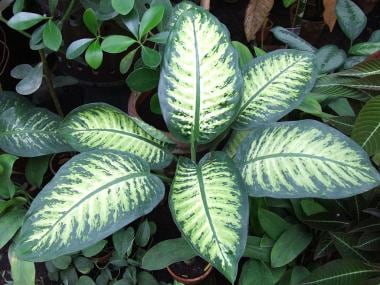
Dieffenbachia bauseii (Araceae), shown below and also known as dumb cane, is an extremely popular decorative plant that releases calcium oxalate after coming in contact with a moist surface. Ensuing symptoms can include salivation, burning, mucosal edema, blistering, and hoarseness.
Daffodil itch is probably the most common dermatitis in florists. This condition results from contact with calcium oxalate (see below). Xerosis, scales, fissures, and erythema primarily involve the fingertips, the hands, and the forearms.
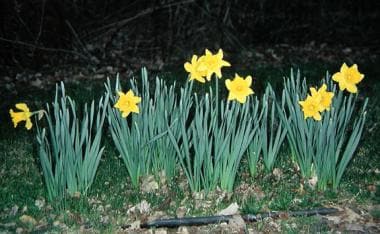 Daffodils, Narcissus pseudonarcissus, are also known as Lent lilies because they bloom in late March and early April in much of the United States.
Poinsettia (Euphorbia pulcherrima) and spurges (family Euphorbiaceae) contain latex with irritant phorbol, diterpenes, and/or daphnane esters. Symptoms can include pain and blistering. Contact with the esters may result in temporary blindness.
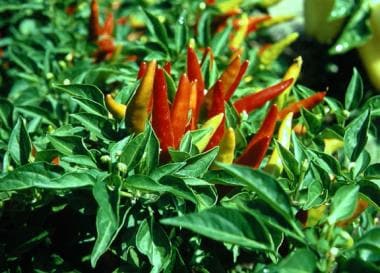
Capsaicin in roasted chili peppers (Capsicum annum) can cause chili burns or Hunan hand syndrome after prolonged contact (see below). Capsaicin depolarizes nerve endings, causing vasodilation, smooth muscle stimulation, glandular secretion, and sensory nerve activation.
Severe irritant dermatitis, with erythema, papulovesicles, pustules, and even leukocytoclastic vasculitis, can result from contact with the century plant (Agave americana). The irritant is thought to be caused by latex-derived calcium oxalate and saponins. [19]
Occupational Plant Dermatoses
Occupational exposure to plants occurs in various professions. [20] Florists; horticulturists; grocery store employees; and outdoor workers, especially farmers, loggers, and foresters, are most commonly affected. Other individuals who are commonly affected include gardeners, food handlers, pharmaceutical workers, and botanists.
Florists [21]
Hand dermatitis in florists varies with exposure. In some studies, annual and lifetime prevalences approach 25-30% and 50%, respectively. Daffodil itch (a chemical irritant dermatitis) is probably the most common dermatitis in florists. This condition is caused by the handling of stems and bulbs containing calcium oxalate. Because florists' hands are often wet, primary irritant reactions may lead to allergic sensitization over time. The most common allergic sensitizers appear to be SQLs, tulipalin A, and primin.
Horticulturalists
An estimated 10% of horticultural workers are allergic to Asteraceae plants. A family history of atopy increases an individual's risk of urticaria.
Grocery store workers
Along with irritant and urticarial reactions, grocery store workers are also at risk for phytophotodermatitis. Their risk increases depending on 2 factors: the amount of exposure to fresh produce (especially celery) and the use of tanning salons. Grocery store workers with both risk factors have a prevalence ratio of more than 40.
Outdoor workers
Poison ivy and poison oak (Toxicodendron species) are the main causes of occupational contact dermatitis in outdoor workers. Toxicodendron dermatitis accounts for 10% of all lost-time injuries among members of the US Department of Agriculture Forest Service. As many as 25% of forest firefighters need to leave the fire line because of severe Toxicodendron dermatitis. Forestry workers may also develop woodcutter's eczema, an allergic reaction to airborne SQLs in Frullania plants. These liverworts grow on tree trunks in the American and Canadian Pacific Northwest. [22]
Carpenters and wood hobbyists [23]
Individuals exposed to fine sawdust may develop airborne contact dermatitis after exposure to sensitizing tree products. Exotic woods and woods treated with protective chemicals appear to be particularly sensitizing.
Musicians
Cocus wood (Brya ebenus, family Fabaceae), or granadilla, is used in the cane reeds of oboes, bassoons, clarinets, and saxophones. This wood may sensitize musicians and cause allergic cheilitis. Propolis in the varnish of some violins can cause an allergic contact dermatitis on the neck and the chin. [24]
Skin reactions to plant extracts
Essential oils are aromatic substances extracted from flowers, plants, and wood resins by a variety of methods such as distillation or maceration. Allergic contact dermatitis from essential oils has been documented in several occupational subgroups, including bar workers, citrus fruit pickers, hairdressers, beauticians, aromatherapists, and massage therapists. [25] The most commonly cited specific oils include tea tree oil (Melaleuca alternifolia), lavender, jasmine, rosewood, lemon oils, orange oils (including oil of bergamot), citronella, cassia oil, ylang-ylang oil, and clove oil.
Workup
Plant identification
Identifying plants is a difficult task. The following recommendations may help neophyte botanists.
First, specimens should be collected. Unlike shrubs (ie, low-growing plants with woody stems), herbs (ie, low-growing plants with fleshy stems) should be collected in their entirety with their flowering and/or fruiting materials intact. Woody plants should be collected with about 2 ft of the ends of the branch; the leaves should be attached, and any flowering or fruiting materials should be present. Plants may be pressed before they are submitted for identification. Alternatively, they may be placed in a plastic bag with no added water.
Submit specimens with the following data: (1) a description of the location where the plant was found, and (2) a detailed description of the habitat or origin of the plant (eg, cultivated in a garden or growing wild along a creek bank, in an open field, in woodlands at high elevation).
A plant taxonomist should be consulted. Every US state and most Canadian provinces have an established protocol for routine and rapid plant identification. In most places, the service is free. In suburban and rural areas, the county or regional Agricultural Extension Service or Farm Advisors are knowledgeable about the procedures for immediate plant identification, and they have access to the regional herbaria. Urban areas have similar services, which are usually accessed through the urban horticulturist of the state extension service or through the local garden center or botanical garden.
Patch testing
A thorough description of patch testing procedures can be found in the Medscape Drugs & Diseases article on Allergic Contact Dermatitis. A comprehensive review of patch testing for plant allergens is included in the Bibliography in the article by Mitchell. [26, 27]
Treatment & Management
Exposed areas should be washed immediately with copious amounts of water. Soaps should be used only after a thorough washing with water because they may actually expand the area of resin exposure on the skin. If washing is delayed by 10 minutes, only 50% of the urushiol can be removed. By 60 minutes, washing is ineffective. Allergic contact dermatitis is self-limited and typically resolves in 3-4 weeks. Symptom relief is the main therapeutic goal. [28]
After vesicles appear, weepy and/or crusted areas may be treated with wet-to-dry soaks of aluminum acetate. Superpotent topical corticosteroids may be beneficial if applied before vesicles appear. Systemic steroids (eg, prednisone) are extremely effective when indicated and are best given in a dose of 1-2 mg/kg/d. The dose should be slowly tapered over 2-3 weeks; otherwise, relapse occurs. Alternatively, treatment with intramuscular triamcinolone acetonide 1 mg/kg yields the same effects; typically, this drug has fewer adverse effects related to increased appetite and water retention. Methylprednisolone dose-packs are frequently associated with rebound flares of dermatitis because they deliver a lower dose of steroid for only a short course.
Oral antihistamines are not effective, and topical antihistamines can complicate matters by inducing an allergic reaction on dermatitic skin. To date, oral hyposensitization programs have failed. Most patients develop pruritus ani, generalized pruritus, and urticaria; they commonly report that the treatment is worse than the condition.
More than 150 different barrier creams have been tested. In 1995, Marks and coworkers published encouraging results with an organoclay compound, 5% quaternium-18 bentonite lotion (IvyBlock; EnviroDerm Pharmaceuticals, Louisville, Ky), which is available as an over-the-counter preparation. [29]
For centuries, the herbal remedy jewelweed (Impatiens species) has been used to treat poison ivy exposure. A randomized, double-blinded, paired comparison demonstrated that jewelweed is not effective in the treatment of allergic contact dermatitis due to poison ivy. [30]
In the case of widespread and severe Asteraceae-induced dermatitis, potent topical steroids and oral prednisone are relatively ineffective unless they are used early. Azathioprine may help in protracted cases (eg, chronic photosensitivity dermatoses). Dosing is based on functional levels of the enzyme thiopurine methyltransferase. Chloroquine, ethinyl estradiol, and psoralen UVA (PUVA) with or without prednisone have been reported as helpful in some cases. [31] Whole body mechlorethamine may be temporarily effective. Cyclosporin often results in severe rebound upon its discontinuation and should be avoided.
Patient education
For patient education resources, visit the Skin Conditions and Beauty Center. Also, see the patient education article Contact Dermatitis.
Questions & Answers
Overview
What are the categories of botanical dermatology?
What is the taxonomy of plants relevant to botanical dermatology?
What is the prevalence of plant-related dermatitis?
What are the sexual predilections of plant-related dermatitis?
Which age groups have the highest prevalence of plant-related dermatitis?
What is the role of Anacardiaceae plants in botanical dermatology?
How are the plants in the genus Toxicodendron identified?
Which trees in the family of Anacardiaceae cause dermatitis?
What is the role of Ginkgo biloba in botanical dermatology?
What is the role of species in the genus Grevillea in botanical dermatology?
What is the pathophysiology of allergic contact dermatitis due to Anacardiaceae plants?
What are the signs and symptoms of allergic contact dermatitis due to Anacardiaceae plants?
Who is at highest risk of chrysanthemum-caused allergic contact dermatitis?
Which Asteraceae plants cause allergic contact dermatitis?
How are Asteraceae plants identified?
How does ragweed cause allergic contact dermatitis?
How does feverfew (carrot weed) cause allergic contact dermatitis?
Who is at highest risk of sunflower-caused allergic contact dermatitis?
How do dandelions (Taraxacum officinale) cause allergic contact dermatitis?
What is the pathophysiology of allergic contact dermatitis due to Asteraceae plants?
What are the signs and symptoms of allergic contact dermatitis caused by Asteraceae plants?
How does garlic cause allergic contact dermatitis?
What are the signs and symptoms of tulip fingers?
How do tulips cause allergic contact dermatitis?
How do Peruvian lilies cause allergic contact dermatitis?
How does Primula obconica cause allergic contact dermatitis?
How do pine and spruce trees cause allergic contact dermatitis?
What is the role of tea tree oil in botanical dermatology?
How does ylang-ylang oil cause allergic contact dermatitis?
How are urticarial reactions characterized in botanical dermatology?
What is immunologic contact urticaria in botanical dermatology?
What is toxin-mediated contact urticaria in botanical dermatology?
What causes irritant dermatitis in botanical dermatology?
What is mechanical irritant dermatitis in botanical dermatology?
What is chemical irritant dermatitis in botanical dermatology?
Which occupations are at highest risk of botanical dermatoses?
What is the prevalence of occupational plant dermatoses among florists?
What is the prevalence of occupational plant dermatoses among horticulturalists?
What is the prevalence of occupational plant dermatoses among grocers?
What is the prevalence of occupational plant dermatoses among forestry workers?
What causes occupational plant dermatoses among carpenters and wood workers?
What causes occupational plant dermatoses among musicians?
Which occupations are at highest risk of plant dermatoses from essential oils?
How are botanical dermatoses diagnosed?
How are botanical dermatoses treated?
-
Young poison ivy plant Toxicodendron radicans. The leaves of 3 are easily identified. Reprinted with permission from WB Saunders.
-
Mature poison ivy Toxicodendron radicans. Fruit arises in an axillary position in the angle between the leaf and the branch.
-
Mature gingko tree, Ginkgo biloba, growing in Frederick, Md.
-
Ginkgo biloba has a characteristic bilobed leaf.
-
Daisy flower, Leucanthemum species, with characteristic flower heads of the Asteraceae family.
-
Finger of a florist with an eczematous plaque caused by sensitivity to tulipalin A, the allergen contained in Peruvian lilies (family Alstroemeria).
-
Airborne contact dermatitis in a patient who is allergic to sesquiterpene lactones. The involvement of the anterior part of the neck seen here is typically absent in photodermatoses. Courtesy of Dirk Elston, MD.
-
Irritant reaction on the scrotum after contact with garlic (Allium sativum). Courtesy of Martin Giandoni, MD. Reprinted with permission from Cutis 67: 193, 2001.
-
Tulipa species (Liliaceae). Reprinted with permission from Cutis (2003;71:347-348). Copyright 2003, Quadrant HealthCom, Inc.
-
The coverings of tulip bulbs can cause irritant contact dermatitis, and tulipalin A and B can cause allergic contact dermatitis. Reprinted with permission from Cutis (2003;71:347-348). Copyright 2003, Quadrant HealthCom, Inc.
-
Alstroemeria ligtu (Alstroemeriaceae). Reprinted with permission from WB Saunders.
-
Primula obconica
-
Urtica dioica, the common stinging nettle.
-
Prickly pears, Opuntia species.
-
Dieffenbachia bauseii (Araceae), also known as dumb cane.
-
Daffodils, Narcissus pseudonarcissus, are also known as Lent lilies because they bloom in late March and early April in much of the United States.
-
Chili peppers, Capsicum annum.