Continually Updated Clinical Reference
 
 
  All Sources     eMedicine     Medscape     Drug Reference     MEDLINE
 
eMedicine - Holoprosencephaly : Article by

Quick Find
Authors & Editors
Introduction
Differentials
Radiograph
CT Scan
MRI
Ultrasound
Nuclear Medicine
Angiography
Intervention
Further Reading
Multimedia
References

Related Articles
Hydranencephaly


Patient Education
Click here for patient education.


Author: David H Tegay, DO, FACMG, Interim Chair, Department of Medicine, Associate Professor of Medicine and Medical Genetics, New York College of Osteopathic Medicine at the New York Institute of Technology; Assistant Professor of Pediatrics, Internal Medicine and Pathology, Stony Brook University Medical Center

David H Tegay is a member of the following medical societies: American College of Medical Genetics, American College of Osteopathic Internists, American College of Physicians, American Medical Association, American Osteopathic Association, American Society of Human Genetics, and Federation of American Societies for Experimental Biology

Coauthor(s): Harris L Cohen, MD, FACR, Vice Chairman/Associate Chairman (Research Activities), Director, Division of Body Imaging, Professor of Radiology, Stony Brook School of Medicine; Visiting Professor of Radiology, Johns Hopkins School of Medicine; Mark Rosovsky, MD, Attending Radiologist, Advanced Radiology Associates, Bridgeport Hospital

Editors: Michael A Bruno, MD, Associate Professor, Departments of Radiology and Medicine, Pennsylvania State University College of Medicine; Director, Radiology Quality Management Services, Milton S Hershey Medical Center, Pennsylvania State University College of Medicine; Bernard D Coombs, MB, ChB, PhD, Consulting Staff, Department of Specialist Rehabilitation Services, Hutt Valley District Health Board, New Zealand; Marta Hernanz-Schulman, MD, FAAP, Professor, Radiology, Radiological Sciences, and Pediatrics, Director, Department of Pediatric Radiology, Radiologist-in-Chief, Director, Department of Diagnostic Imaging, Vanderbilt University Medical Center, Vanderbilt Children's Hospital; Robert M Krasny, MD, Consulting Staff, Department of Radiology, The Angeles Clinic and Research Institute; Lawrence M Davis, MD, Assistant Professor of Diagnostic Imaging (Clinical), Department of Diagnostic Imaging, Warren Alpert Medical School at Brown University

Author and Editor Disclosure

Synonyms and related keywords: holoprosencephaly, HPE, alobar holoprosencephaly, alobar HPE, lobar holoprosencephaly, lobar HPE, semilobar holoprosencephaly, semilobar HPE, arrhinencephaly, cebocephaly, cyclopia, ethmocephaly, holotelencephaly, Shh gene, Sonic Hedgehog protein, ZIC2, SIX3, TGIF, monoventricle, fused cerebral hemispheres, middle interhemispheric fusion variant, MIHF

Background

Holoprosencephaly denotes an incomplete or absent division of the embryonic forebrain (prosencephalon) into distinct lateral cerebral hemispheres.1, 2, 3, 4, 5

DeMyer historically and roughly categorized holoprosencephaly into 3 types (from most severe to least severe)6: (1) alobar holoprosencephaly, or complete absence of midline forebrain division resulting in a monoventricle and fused cerebral hemispheres; (2) semilobar holoprosencephaly, or incomplete forebrain division resulting in partial separation of the cerebral hemispheres, typically posteriorly; and (3) lobar holoprosencephaly, or complete ventricular separation with focal areas of incomplete cortical division or anterior falcine hypoplasia.

Distinctive midline facial malformations occur in most cases. These malformations are correlated with the degree of holoprosencephaly and have prognostic importance. From most severe to least, the facial phenotypes are as follows: (1) cyclopia, or a single, midline, fused eye beneath a proboscis; (2) ethmocephaly, or ocular hypotelorism with a proboscis; (3) cebocephaly, or ocular hypotelorism with a single nostril; (4) ocular hypotelorism and midline clefting; and (5) milder facial dysmorphic features in combination or in isolation.

Additional clinical manifestations include developmental delay, which is roughly correlated with the degree of holoprosencephaly; variable seizures; pituitary dysfunction; hydrocephalus; and feeding difficulties, which typically result in reduced survival.

Active research into the pathophysiology of holoprosencephaly has revealed multiple teratogenic and genetic causes (both chromosomal and single gene), and further genetic characterization is ongoing.

Related eMedicine topic:
Hydranencephaly

Related Medscape topics:
Resource Center Neonatal Medicine
Specialty Site Neurology & Neurosurgery
Specialty Site Pediatrics

Pathophysiology

Embryogenetic processes

Holoprosencephaly arises from disruption of the normal induction and patterning of the rostral neural tube during early embryogenesis. The primary vesicles of the brain—the prosencephalon, mesencephalon, and rhombencephalon—are discernible by the third embryonic week. Separate lateral telencephalic and diencephalic structures develop from a single prosencephalic vesicle, normally beginning by the fifth embryonic week of gestation.

Genetic factors

Active research into the pathophysiology of holoprosencephaly has revealed multiple teratogenic and genetic causes (both chromosomal and single gene), and further genetic characterization is ongoing.

The involvement of multiple genes has been implicated in ventral forebrain induction; their products include the Sonic Hedgehog (Shh) protein and the Hedgehog signal transduction proteins Patched (Ptc) and Smoothened (Smo), as well as proteins in the Gli family and cholesterol biosynthesis pathways.

A variety of teratogens, chromosomal abnormalities (in 25-50% of cases), and single gene mutations can result in holoprosencephaly. Trisomy 13 (in about 40% of cases) and trisomy 18 are the most frequently identified chromosomal anomalies. A host of chromosomal deletions, duplications, and translocations have also been associated with holoprosencephaly.

A mutation in the Shh gene is the most frequent single-gene cause of nonsyndromic and familial holoprosencephaly. The ZIC2, SIX3, and TGIF genes have also been implicated. However, together with Shh mutations, alterations in these genes only account for the minority of cases of holoprosencephaly.

Many single-gene disorders (18-25%) can result in syndromes with a variable incidence of holoprosencephaly. Examples include Pallister-Hall, Rubinstein-Taybi, Kallmann, Smith-Lemli-Opitz, Meckel, hydrolethalus, pseudotrisomy 13, and microtia-anotia syndromes. Maternal diabetes has been implicated in about 1% of cases.

Related eMedicine topic:
Manifestations of Craniofacial Syndromes

Frequency

United States

Holoprosencephaly is present in 1 in 10,000-20,000 neonates at birth and occurs with a rate of 1 in 250 during embryogenesis.4, 7

International

The international frequency of holoprosencephaly is similar to that in the United States. Leoncini et al reviewed birth data of over 7 million births from areas in North and South America, Europe, and Australia from 2000 to 2004.3 The investigators noted a total of 963 registered cases of holoprosencephaly, yielding an overall prevalence of 1.31 per 10,000 births.3

Mortality/Morbidity

In general, holoprosencephaly results in substantial early morbidity and mortality with a significantly reduced survival. However, individual reports describe long-term survival in all forms of holoprosencephaly. The strongest correlation is a direct relationship between the severity of facial anomalies and increased mortality. In individuals with cyclopia or ethmocephaly, survival is rare beyond 1 week.

Patients with alobar holoprosencephaly have a survival rate of about 50% by age 4-5 months and about 20% at age 12 months. Isolated semilobar and lobar holoprosencephaly have empiric survival rates of about 50% to age 12 months. Ascertainment bias may negatively skew reported survival rates for lobar holoprosencephaly, as more severely affected individuals are overrepresented due to an underdiagnosis of less severely affected cases.

Virtually all surviving individuals have some degree of developmental delay, often persisting as mental retardation; this generally occurs in direct correlation to the severity of holoprosencephaly. However, case reports do describe individuals with lobar holoprosencephaly who have normal or near-normal development. In addition, feeding difficulties leading to aspiration pneumonia and/or failure to thrive frequently occur in individuals within all subtypes.

Data from The Carter Center for Brain Research in Holoprosencephaly and Related Malformations indicate that complication rates in surviving individuals are as follows7:

  • Alobar holoprosencephaly –
    • Spasticity in 85%
    • Pituitary/hypothalamic dysfunction (diabetes insipidus, hypogonadism, hypothyroidism) in 85%
    • Hypotonia in 80%
    • Seizures in 60%
    • Hydrocephalus in 10%
    • Choreoathetosis in less than 5%
    • Ambulation, use of hands, and use of words in 0% each
  • Semilobar holoprosencephaly –
    • Spasticity in 85%
    • Pituitary/hypothalamic dysfunction (diabetes insipidus, hypogonadism, hypothyroidism) in 74%
    • Hypotonia in 70%
    • Seizures in 50%
    • Choreoathetosis in 20%
    • Ambulation, use of hands, and use of words in 10% each
  • Lobar holoprosencephaly –
    • Spasticity in 60%
    • Pituitary/hypothalamic dysfunction (diabetes insipidus, hypogonadism, hypothyroidism) in 50%
    • Hypotonia in 40%
    • Seizures in 50%
    • Choreoathetosis in 40%
    • Ambulation, use of hands, and use of words in 40% each
  • Middle interhemispheric fusion variant –
    • Spasticity in 86%
    • Pituitary/hypothalamic dysfunction (diabetes insipidus, hypogonadism, hypothyroidism) in 0%
    • Hypotonia in 60%
    • Seizures in 40%
    • Choreoathetosis in 0%
    • Ambulation, use of hands, and use of words in 50% each

Sex

At birth, the ratio of females to males with holoprosencephaly is 2:1.

  • The female-to-male ratio increases as the severity of holoprosencephaly increases.
  • In alobar holoprosencephaly, the female-to-male ratio is 3:1, whereas with lobar holoprosencephaly, the ratio is 1:1.
  • In addition, females often have more severe facial anomalies. The reason for this sex discrepancy remains unknown.

Age

The age of onset is at 3-4 weeks of gestation. During early embryonic development, the frequency peaks at 1:250 but progressively declines because of high fetal mortality rates and elective pregnancy termination, which results in an incidence at birth of 1:10,000-20,000.

Anatomy

Normally, the embryonic prosencephalon forms distinct lateral telencephalic (cerebral cortex, hippocampus, basal ganglia, olfactory bulbs) and diencephalic (dorsal thalamus, hypothalamus) structures, including the associated ventricles, olfactory and optic bulbs and tracts. In holoprosencephaly, a continuum of deficiencies in embryonic forebrain cleavage range from the most severe, or alobar, forms to the least severe, or lobar, forms.

Alobar holoprosencephaly is the most severe form, consisting of a single brain ventricle (monoventricle) without any formation of an interhemispheric fissure (ie, fused cerebral hemispheres). The falx cerebri, corpus callosum, septum pellucidum, and fornix are absent, as are the olfactory bulbs and optic tracts. The thalami are fused.

Semilobar holoprosencephaly is less severe, with partial formation of the interhemispheric fissure, particularly posteriorly. A rudimentary falx may be present, and a primitive occipital horn may develop.

Lobar holoprosencephaly is the least severe form, with almost complete formation of the interhemispheric fissure and only focal areas of cortical continuity across the interhemispheric fissure, usually anteriorly. Sometimes, lobar holoprosencephaly is limited to an absence of the septum pellucidum.

The middle interhemispheric fusion variant is a relatively recently described anatomic entity that some consider part of the spectrum of holoprosencephaly.8 This variant denotes incomplete cleavage of the posterior frontal and parietal lobes, with varying degrees of incomplete cleavage of the basal ganglia and thalami and an absent body of the corpus callosum.

Other frequently associated central nervous system (CNS) malformations include arrhinencephaly (absent olfactory bulbs and tracts), hydrocephalus, and neural migration abnormalities.

Related Medscape topics:
Resource Center Neonatal Medicine
Specialty Site Neurology & Neurosurgery
Specialty Site Ophthalmology

Clinical Details

Typical facial anomalies are correlated with the degree of holoprosencephaly and have prognostic importance.1, 2 From most severe to least severe, these include the following: (1) cyclopia, in which a single, midline, fused eye exists in a single orbit below a proboscis; (2) ethmocephaly, in which ocular hypotelorism is present with an interorbital proboscis; (3) cebocephaly, in which ocular hypotelorism is present with a single-nostril nose; (4) ocular hypotelorism and midline clefting; and (5) ocular hypotelorism and bilateral clefting.

More subtle facial dysmorphic features may also be present. These include a flat nasal bridge and tip; a single, midline, upper incisor; a bifid uvula; absent nasal bones and nasal septum; and congenital nasal pyriform aperture stenosis (decreased width of the nasal pyriform aperture at the level of the interior meatus).

Microcephaly is the rule, and macrocephaly, if present, is suggestive of hydrocephalus.

Virtually all surviving individuals with the more severe forms of holoprosencephaly have some developmental delay, often persisting as mental retardation. In general, this finding is directly correlated with the severity of holoprosencephaly.

Also not uncommon are seizures, hypotonia and/or hypertonia, extrapyramidal features, such as dystonia and/or chorea; hypothalamic and brainstem dysfunction leading to autonomic dysfunction and swallowing difficulties; pituitary dysfunction, which can manifest as partial or complete panhypopituitarism with resultant endocrine deficiencies; and feeding difficulties, which can lead to aspiration pneumonia and failure to thrive.

Preferred Examination

The imaging study of choice for the diagnosis and classification of holoprosencephaly is cranial magnetic resonance imaging (MRI).9, 10, 11 The next best imaging modalities are ultrasonography and cranial computed tomography (CT) scanning.1, 2, 12, 13, 14 Ultrasonography can be limited in cases of microcephaly if there is a very small fontanelle. Transcranial ultrasonography, however, can be performed through the calvaria, at times using the thinner temporal bones. Often this technique requires a transducer of lower frequency, resulting in better penetration, albeit at the loss of some near field resolution.

Prenatal evaluation by means of transabdominal or transvaginal ultrasonography can be used to identify most cases of alobar or semilobar holoprosencephaly. Prenatal MRI can be done in cases in which the infant's head is not easily accessible at the time of ultrasonographic evaluation or in cases in which the anatomy is not satisfactorily delineated at prenatal ultrasonography.

Related Medscape topic:
Resource Center Radiology

Limitations of Techniques

Prenatal sonography is not a reliable method for diagnosing mild forms of holoprosencephaly, such as lobar holoprosencephaly, because of its high false-negative rate. In addition, prenatal ultrasonography often cannot distinguish between alobar holoprosencephaly and semilobar holoprosencephaly. A transabdominal sonographic diagnosis of holoprosencephaly before 16 weeks' gestation is difficult.


Hydranencephaly

Other Problems to Be Considered

Hydrocephalus
Hydrolethalus syndrome
Meckel syndrome
Pallister-Hall syndrome
Porencephalic cyst
Pseudotrisomy 13
Smith-Lemli-Opitz syndrome
Septo-optic dysplasia
Trisomy 13 (Patau syndrome)
Trisomy 18 (Edward syndrome)
Ventriculomegaly


Findings

Craniofacial defects associated with holoprosencephaly that may be detected on plain radiographs include a single, fused orbit; orbital hypotelorism; abnormal nasal bone formation; facial clefts; and a single, midline, central incisor.

Degree of Confidence

Changes apparent on plain radiography are nonspecific and insufficient to make the diagnosis of holoprosencephaly.

False Positives/Negatives

Not all individuals with holoprosencephaly have craniofacial abnormalities that are detectable on plain radiography. However, holoprosencephaly is in the differential diagnosis whenever these associated anomalies are found.


Findings

On CT scan images, alobar holoprosencephaly results in a horseshoe-shaped monoventricle, an absent interhemispheric fissure, fused thalami, an absent falx, agenesis of the corpus callosum, an absent septum pellucidum, and absent olfactory bulbs.

Semilobar holoprosencephaly is characterized by partial ventricular differentiation but with a single ventricular cavity, a partial interhemispheric fissure and falx (posterior-ventral axis), partial or incomplete formation of the corpus callosum, and a variable degree of thalamic fusion. The olfactory bulbs are often absent. The abnormality is more severe anteriorly, with partial cleavage and lateral differentiation occurring posteriorly. In these individuals, the posterior portion of the corpus callosum is present, and the more anterior portion, where failure of cleavage has occurred, is absent.

Lobar holoprosencephaly occurs with partial fusion of the frontal lobe with an otherwise normally formed interhemispheric fissure, lateral ventricular formation, variable and incomplete absence of the anterior corpus callosum and/or septum pellucidum, and separate thalami. The olfactory tracts are present.

The middle interhemispheric fusion variant appears as incomplete cleavage of the posterior frontal and parietal lobes and, often, incomplete cleavage of the basal ganglia and thalami. The body of the corpus callosum is absent in the area where cleavage has failed to occur.

Degree of Confidence

CT scans can establish a diagnosis of holoprosencephaly by providing images of the brain anatomy. CT scanning is best suited for imaging the bony structure of the skull.

False Positives/Negatives

CT scanning provides less detail of the brain parenchyma than MRI and does not provide good images of the posterior fossa and brainstem. Therefore, some cases of mild holoprosencephaly and associated CNS anomalies can be missed on CT scans.

In addition, CT scanning exposes the patient to ionizing radiation and is therefore relatively contraindicated in the prenatal diagnosis.


Findings

Cranial MRI is the diagnostic imaging modality of choice for cases of holoprosencephaly.

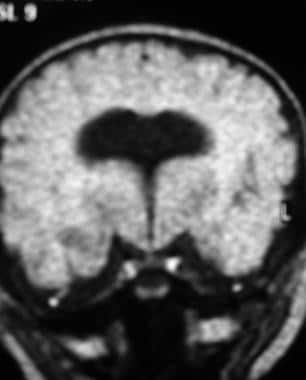
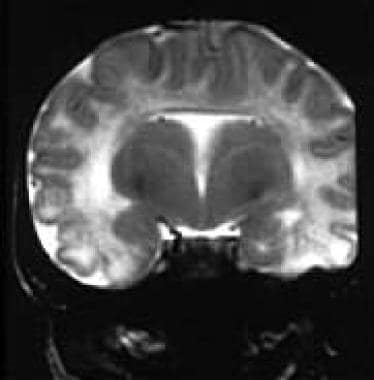
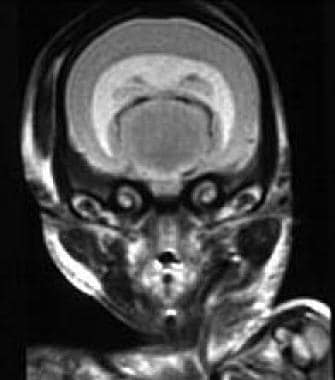
Alobar holoprosencephaly results in a horseshoe-shaped monoventricle, an absent interhemispheric fissure, fused thalami, an absent falx, agenesis of the corpus callosum, an absent septum pellucidum, absent olfactory bulbs, abnormal cerebral cortex, and migration anomalies.

Semilobar holoprosencephaly is characterized by partial ventricular differentiation but with a single ventricular cavity, a partial interhemispheric fissure and falx (posterior-ventral axis), partial or incomplete formation of the anterior corpus callosum, and a variable degree of thalamic fusion. The olfactory bulbs are often absent.

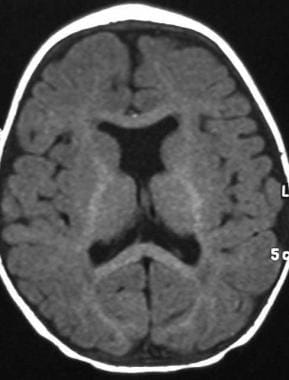
Lobar holoprosencephaly occurs with partial fusion of the frontal lobe with an otherwise normally formed interhemispheric fissure, lateral ventricular formation, variable and incomplete absence of the anterior corpus callosum and/or septum pellucidum, and separate thalami. The olfactory tracts are present.

The middle interhemispheric fusion variant appears as incomplete cleavage of the posterior frontal and parietal lobes and incomplete cleavage of the basal ganglia and thalami. The body of the corpus callosum is absent, coincident with the site of failure of cerebral separation.

Degree of Confidence

Cranial MRI is the diagnostic imaging modality of choice.

False Positives/Negatives

Fetal MRI may yield both false-positive and false-negative results if the study is not performed according to established protocols and if the images are not interpreted by an experienced individual. Fetal activity can significantly degrade the images and may need to be circumvented by repeated sequences. Single-shot fast spin-echo (SS-FSE) MRI techniques can also often circumvent this problem.


Findings

At prenatal ultrasonography, primary CNS findings include the following: (1) single, sickle-shaped or horseshoe monoventricle; (2) absent midline echo due to the absence of an interhemispheric fissure, falx, corpus callosum, and septum pellucidum; (3) thin cortical rim; (4) single, fused thalamus; (5) microcephaly; and (6) ventriculomegaly/hydrocephalus.

Associated craniofacial ultrasonographic findings include the following: (1) ocular hypotelorism or cyclopia, (2) proboscis or abnormal nasal bone formation, and (3) cleft lip and/or palate (midline or bilateral).

Postnatally, alobar holoprosencephaly shows a single ventricle, fused thalami, and a thin, usually poorly differentiated cortical mantle. A dorsal cyst or ventricular remnant may also be detected.

Semilobar holoprosencephaly is detected by identifying the partial cleavage of the occipital horns and the presence of a posterior falx and a posterior portion of the corpus callosum. Anteriorly, there is typically fusion of the ventricles and of the hemispheres, with concomitant absence of the corpus callosum and of the septum pellucidum.

Lobar holoprosencephaly is a continuum. In some patients, the ultrasonographic images show fusion of the anterior horns and of portions of the frontal lobes. The mildest forms of lobar holoprosencephaly may be manifested only by absence of the septum pellucidum.

Sonograms of the middle interhemispheric fusion variant demonstrate normal cleavage anteriorly and posteriorly, with fusion of the hemispheres and absence of body of the corpus callosum in the posterior, frontal, and parietal regions.

Degree of Confidence

Reportedly, cases of alobar holoprosencephaly have been detected as early as 9-14 weeks' gestation (and often detected at 18-20 weeks on routine anatomic scans), semilobar holoprosencephaly has been detected by 13-20 weeks' gestation, and lobar holoprosencephaly has been detected by 21 weeks' gestation with the use of transvaginal ultrasonography. Conventional transabdominal ultrasonography cannot achieve this degree of early detection.

Fetal MRI should be considered to confirm and further classify cases of holoprosencephaly.

False Positives/Negatives

Prenatal ultrasonography is not a reliable method of diagnosing mild forms of holoprosencephaly, such as lobar holoprosencephaly, because of its high false-negative rate. In addition, prenatal ultrasonography often cannot distinguish between alobar holoprosencephaly and semilobar holoprosencephaly. Transabdominal ultrasonographic diagnosis of holoprosencephaly before 16 weeks of gestation is difficult.

A false-positive diagnosis of holoprosencephaly has been reported in cases of hydrocephalus, hydranencephaly, arachnoid or porencephalic cysts, Dandy-Walker malformations with ventriculomegaly, septo-optic dysplasia, and other CNS malformations.


Findings

Nuclear medicine studies are not helpful in establishing a diagnosis of holoprosencephaly.


Findings

Angiography is not indicated because it is unnecessary in establishing a diagnosis of holoprosencephaly. However, in the past, an azygous anterior cerebral artery running over the cerebral surface has been documented by angiography, in cases of alobar and semilobar holoprosencephaly, to correlate somewhat with the degree of holoprosencephaly.


The treatment of holoprosencephaly is primarily symptomatic and supportive.

A ventriculoperitoneal shunt may be necessary in the treatment of hydrocephalus or in shunting of the dorsal cyst.

A gastrostomy tube may be necessary to treat swallowing difficulties.

Fundoplication may be necessary because of gastroesophageal reflux and recurrent aspiration.

Related Medscape topics:
Specialty Site Critical Care
Specialty Site Gastroenterology
Specialty Site Neurology & Neurosurgery
Specialty Site Surgery

Medical/Legal Pitfalls

  • The following situations may result in inaccurate prenatal counseling, incomplete fetal evaluation, and possible wrongful-birth allegations resulting from the parents' inability to make a truly informed decision during pregnancy:
    • Failure to include and rule out holoprosencephaly in the differential diagnosis of hydrocephalus/ventriculomegaly, as noted on prenatal sonograms, in a timely fashion
    • Failure to recommend a timely evaluation for associated fetal anomalies with detailed level II ultrasonography and fetal echocardiography when holoprosencephaly is identified on a routine prenatal sonogram
    • Failure to offer and explain invasive prenatal diagnostic testing options for the identification of genetic causes of holoprosencephaly
    • Failure to accurately counsel the family about the natural history of holoprosencephaly
    • Failure to offer genetic counseling to review options and the risks of recurrence

See also the Medscape topic Medical Malpractice and Legal Issues.

Special Concerns

  • Consultation with the following appropriate medical specialists may be necessary for informed decision making and for guiding further diagnostic evaluation and therapy:
    • Perinatologist, if the case was diagnosed prenatally
    • Clinical geneticist
    • Endocrinologist
    • Neurologist
    • Neurosurgeon
    • Gastroenterologist and craniofacial team, if long-term survival seems likely
  • Early intervention and a developmental evaluation may be helpful in some cases.
  • The risk of recurrence for parents of an individual with holoprosencephaly vary depending on the etiology, as follows:
    • Empiric recurrence risk if no specific etiology is identified – About 6%
    • Recurrence risk if holoprosencephaly is due to trisomy 13 or 18 – About twice the maternal age-related risk for recurrence of that particular trisomy
    • Recurrence risk if holoprosencephaly is due to a de novo single gene mutation of Shh, ZIC2, SIX3, or TGIF – Slightly above the general population risk (because of the possibility of germline mosaicism)
    • Recurrence risk if holoprosencephaly is due to an inherited single gene mutation in Shh, ZIC2, SIX3, or TGIF – As much as 50% (as in all autosomal dominant conditions but somewhat lower due to incomplete penetrance and variable expression)
    • Recurrence risk if holoprosencephaly is due to an inherited autosomal recessive condition – As much as 25% (as in all recessive conditions but somewhat lower due to incomplete penetrance and variable expression)
  • If a specific genetic cause can be determined, then prenatal or preimplantation genetic testing may be an option
    • Genetic testing should include high-resolution karyotyping of the affected individual

      If the results of high-resolution karyotyping are normal, then syndrome-specific testing (eg, 7-dehydrocholesterol [7-DHC] levels in Smith-Lemli-Opitz syndrome) or isolated holoprosencephaly genetic testing (eg, Shh, ZIC2, SIX3, TGIF) can be performed.

    • Identification of a specific genetic cause for holoprosencephaly can help in predicting prognosis and the risk of recurrence.


NINDS Holoprosencephaly Information Page.
National Institute of Neurological Disorders and Stroke, National Institutes of Health, Bethesda, MD 

Information About Holoprosencephaly.
Carter Centers for Research in Holoprosencephaly. Texas Scottish Rite Hospital P.O. Box 190567, 2222 Welborn Street, Dallas, TX


Media file 1:  Presumed alobar holoprosencephaly in a kitten.
Click to see larger pictureClick to see detailView Full Size Image
Media type:  Image

Media file 2:  Coronal fluid-attenuated inversion recovery magnetic resonance image shows alobar holoprosencephaly.
Click to see larger pictureClick to see detailView Full Size Image
Media type:  MRI

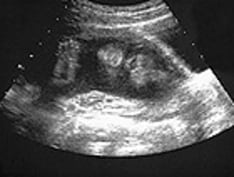
Media file 3:  Fetal magnetic resonance image shows alobar holoprosencephaly. Courtesy of Dorothy I. Bulas, MD.
Click to see larger pictureClick to see detailView Full Size Image
Media type:  MRI

Media file 4:  Early fetal magnetic resonance image shows alobar holoprosencephaly. Courtesy of Dorothy I. Bulas, MD.
Click to see larger pictureClick to see detailView Full Size Image
Media type:  MRI

Media file 5:  Axial T1-weighted magnetic resonance image shows septo-optic dysplasia, representing a variant of lobar holoprosencephaly.
Click to see larger pictureClick to see detailView Full Size Image
Media type:  MRI


  1. Cohen HL, Sivit CJ, eds. Holoprosencephaly. Fetal and Pediatric Ultrasound: A Casebook Approach. New York, NY: McGraw-Hill; 2001:12-6.
  2. Muenke M, Beachy PA. Holoprosencephaly. In: Scriver CR, Beaudet AL, Sly WS, et al, eds. The Metabolic & Molecular Bases of Inherited Disease. 8th ed. New York, NY: McGraw-Hill; 2001:6203-30.
  3. Leoncini E, Baranello G, Orioli IM, et al. Frequency of holoprosencephaly in the International Clearinghouse Birth Defects Surveillance Systems: Searching for population variations. Birth Defects Res A Clin Mol Teratol. Jun 19 2008;epub ahead of print. [Medline].
  4. Dubourg C, Bendavid C, Pasquier L, et al. Holoprosencephaly. Orphanet J Rare Dis. Feb 2 2007;2:8. [Medline][Full Text].
  5. Golden JA. Towards a greater understanding of the pathogenesis of holoprosencephaly. Brain Dev. Dec 1999;21(8):513-21. [Medline].
  6. DeMyer W, Zeman W, Palmer CG. The face predicts the brain: diagnostic significance of median facial anomalies for holoprosencephaly (arhinencephaly). Pediatrics. Aug 1964;34:256-63. [Medline].
  7. The Carter Centers for Brain Research in Holoprosencephaly and Related Malformations. Information about holoprosencephaly. Available at http://hpe.stanford.edu/about/. Accessed August 1, 2008.
  8. Lewis AJ, Simon EM, Barkovich AJ, et al. Middle interhemispheric variant of holoprosencephaly: a distinct cliniconeuroradiologic subtype. Neurology. Dec 24 2002;59(12):1860-5. [Medline].
  9. Herman-Sucharska I, Urbanik A. [MRI of fetal central nervous system malformations] [Polish]. Przegl Lek. 2007;64(11):917-22. [Medline].
  10. Sonigo PC, Rypens FF, Carteret M, Delezoide AL, Brunelle FO. MR imaging of fetal cerebral anomalies. Pediatr Radiol. Apr 1998;28(4):212-22. [Medline].
  11. Barkovich AJ, Maroldo TV. Magnetic resonance imaging of normal and abnormal brain development. Top Magn Reson Imaging. Spring 1993;5(2):96-122. [Medline].
  12. Kim MS, Jeanty P, Turner C, Benoit B. Three-dimensional sonographic evaluations of embryonic brain development. J Ultrasound Med. Jan 2008;27(1):119-24. [Medline][Full Text].
  13. Wilson RD, Chitayat D, McGillivray BC. Fetal ultrasound abnormalities: correlation with fetal karyotype, autopsy findings, and postnatal outcome--five-year prospective study. Am J Med Genet. Nov 15 1992;44(5):586-90. [Medline].
  14. McGahan JP, Nyberg DA, Mack LA. Sonography of facial features of alobar and semilobar holoprosencephaly. AJR Am J Roentgenol. Jan 1990;154(1):143-8. [Medline][Full Text].
  15. Barr M Jr, Cohen MM Jr. Holoprosencephaly survival and performance. Am J Med Genet. Jun 25 1999;89(2):116-20. [Medline].
  16. Berry SM, Gosden C, Snijders RJ, Nicolaides KH. Fetal holoprosencephaly: associated malformations and chromosomal defects. Fetal Diagn Ther. 1990;5(2):92-9. [Medline].
  17. Keller K, McCune H, Williams C, Muenke M. Lobar holoprosencephaly in an infant born to a mother with classic phenylketonuria. Am J Med Genet. Nov 13 2000;95(2):187-8. [Medline].
  18. Peebles DM. Holoprosencephaly. Prenat Diagn. May 1998;18(5):477-80. [Medline].
  19. Roach E, Demyer W, Conneally PM, Palmer C, Merritt AD. Holoprosencephaly: birth data, benetic and demographic analyses of 30 families. Birth Defects Orig Artic Ser. 1975;11(2):294-313. [Medline].
  20. Roessler E, Du YZ, Mullor JL, Casas E, et al. Loss-of-function mutations in the human GLI2 gene are associated with pituitary anomalies and holoprosencephaly-like features. Proc Natl Acad Sci U S A. Nov 11 2003;100(23):13424-9. [Medline][Full Text].
  21. Warr N, Powles-Glover N, Chappell A, et al. Zic2-associated holoprosencephaly is caused by a transient defect in the organiser region during gastrulation. Hum Mol Genet. Jul 9 2008;epub ahead of print. [Medline].

Holoprosencephaly excerpt

Article Last Updated: Oct 15, 2008