| Patient Education |
|
Click here for patient education.
|
|
AUTHOR AND EDITOR INFORMATION
Section 1 of 11
Author: Hassan Ahmad Hassan Al-Shatoury, MD, PhD, MHPE, Assistant Professor, Department of Neurosurgery, Suez Canal University; Co-Director, Center of Research and Development in Medical Education and Health Services Suez Canal University Hospital
Coauthor(s):
Ayman Ali Galhom, MD, PhD, Fellow, Department of Neurosurgery, University of Mississippi Medical Center;
Franklin C Wagner, Jr, MD, Former Chief, Division of Spine and Spinal Cord Surgery, Former Professor, Department of Neurosurgery, University of Illinois at Chicago College of Medicine
Editors: Curtis W Slipman, MD, Director, University of Pennsylvania Spine Center, Associate Professor, Department of Physical Medicine and Rehabilitation, University of Pennsylvania Medical Center; Francisco Talavera, PharmD, PhD, Senior Pharmacy Editor, eMedicine; Patrick M Foye, MD, FAAPMR, FAAEM, Associate Professor of Physical Medicine and Rehabilitation, Co-Director of Musculoskeletal Fellowship, Co-Director of Back Pain Clinic, Director of Coccyx Pain (Tailbone Pain, Coccydynia) Service, UMDNJ-New Jersey Medical School; Kelly L Allen, MD, Consulting Staff, Department of Physical Medicine and Rehabilitation, Lourdes Regional Rehabilitation Center, Our Lady of Lourdes Medical Center; Consuelo T Lorenzo, MD, Consulting Staff, Department of Physical Medicine and Rehabilitation, Alegent Health Care, Immanuel Rehabilitation Center
Author and Editor Disclosure
Synonyms and related keywords:
cervical osteoarthritis, degenerative arthropathy of the cervical spine, facet joints, longitudinal ligaments, ligamentum flavum, chronic cervical degeneration, cervical disk degeneration, cervical disc degeneration, disk herniation, spur formation, nerve root compression, progressive spinal cord compression, foraminal stenoses, foraminal stenosis, spinal canal stenosis, chronic neck pain, diminished cervical range of motion, cervical spondylotic myelopathy, quadriparesis, sphincteric dysfunction, chronic suboccipital headache, cervical radiculopathy, acute herniated disk, cervical intervertebral disk degeneration, transverse lesion syndrome, motor syndrome, central cord syndrome, Brown-Séquard syndrome, brachialgia, tandem spinal stenosis, neurogenic claudication, gait abnormality, dysphagia, vertebrobasilar insufficiency, elevated hemidiaphragm, Spurling sign, Lhermitte sign, Hoffman sign, degenerative disk disease, DDD
Background
Cervical spondylosis is a chronic degenerative condition of the cervical spine that affects the vertebral bodies and intervertebral disks of the neck (in the form of, for example, disk herniation and spur formation), as well as the contents of the spinal canal (nerve roots and/or spinal cord). Some authors also include the degenerative changes in the facet joints, longitudinal ligaments, and ligamentum flavum. (See also Cervical Spondylosis: Diagnosis and Management, Spinal Stenosis [in the Neurosurgery section], and Spinal Stenosis [in the Orthopedic Surgery section.) Spondylosis progresses with age and often develops at multiple interspaces. Chronic cervical degeneration is the most common cause of progressive spinal cord and nerve root compression. Spondylotic changes can result in stenosis of the spinal canal, lateral recess, and foramina. Spinal canal stenosis can lead to myelopathy, whereas the latter 2 can cause radiculopathy.
Pathophysiology
Intervertebral disks lose hydration and elasticity with age, and these losses lead to cracks and fissures. The surrounding ligaments also lose their elastic properties and develop traction spurs. The disk subsequently collapses as a result of biomechanical incompetence, causing the annulus to bulge outward. As the disk space narrows, the annulus bulges, and the facets override. This change, in turn, increases motion at that spinal segment and further hastens the damage to the disk. Annulus fissures and herniation may occur. Acute disk herniation may complicate chronic spondylotic changes. As the annulus bulges, the cross-sectional area of the canal is narrowed. This effect may be accentuated by hypertrophy of the facet joints (posteriorly) and of the ligamentum flavum, which becomes thick with age. Neck extension causes the ligaments to fold inward, reducing the anteroposterior (AP) diameter of the spinal canal. As disk degeneration occurs, the uncinate process overrides and hypertrophies, compromising the ventrolateral portion of the foramen. Likewise, facet hypertrophy decreases the dorsolateral aspect of the foramen. This change contributes to the radiculopathy that is associated with cervical spondylosis. Marginal osteophytes begin to develop. Additional stresses, such as trauma or long-term heavy use, may exacerbate this process. These osteophytes stabilize the vertebral bodies adjacent to the level of the degenerating disk and increase the weight-bearing surface of the vertebral endplates. The result is decreased effective force on each of these structures. Degeneration of the joint surfaces and ligaments decreases motion and can act as a limiting mechanism against further deterioration. Thickening and ossification of the posterior longitudinal ligament (OPLL) also decreases the diameter of the canal. The blood supply of the spinal cord is an important anatomic factor in the pathophysiology. Radicular arteries in the dural sleeves tolerate compression and repetitive minor trauma poorly. The spinal cord and canal size also are factors. A congenitally narrow canal does not necessarily predispose a person to myelopathy, but symptomatic disease rarely develops in individuals with a canal that is larger than 13 mm.
Frequency
United States
Cervical spondylosis is a common condition that is estimated to account for 2% of all hospital admissions. It is the most frequent cause of spinal cord dysfunction in patients older than 55 years. On the basis of radiologic findings, 90% of men older than 50 years and 90% of women older than 60 years have evidence of degenerative changes in the cervical spine.
International
Investigators in a study involving Ghanaians reported, "out of 225 patients who carried loads on their head, 143 (63.6%) had cervical spondylosis, and of the 80 people who did not carry load on their head, 29 (36%) had cervical spondylosis."
Mortality/Morbidity
- The course of cervical spondylosis may be slow and prolonged, and patients may either remain asymptomatic or have mild cervical pain.
- Long periods of nonprogressive disability are typical, and in a few cases, the patient's condition progressively deteriorates.
- Morbidity ranges from chronic neck pain, radicular pain, diminished cervical range of motion (ROM), headache, myelopathy leading to weakness, and impaired fine motor coordination to quadriparesis and/or sphincteric dysfunction (eg, difficulty with bowel or bladder control) in advanced cases. The patient may eventually become chair-bound or bedridden.
Race
No apparent correlation between race and cervical spondylosis exists.
Sex
Both sexes are affected equally. Cervical spondylosis usually starts earlier in men than in women.
Age
- Symptoms of cervical spondylosis may appear in persons as young as 30 years but are found most commonly in individuals aged 40-60 years. Radiologic spondylotic changes increase with patient age; 70% of asymptomatic persons older than 70 years have some form of degenerative change in the cervical spine. See also Frequency.
- Cervical spondylosis usually starts earlier in men than in women.
- When cervical spondylosis develops in a young individual, it is almost always secondary to a predisposing abnormality in 1 of the joints between the cervical vertebrae, probably as a result of previous mild trauma.
History
Common clinical syndromes associated with cervical spondylosis include the following: - Cervical pain
- Chronic suboccipital headache may be present. Mechanisms include direct nerve compression; degenerative disk, joint, or ligamentous lesions; and segmental instability.
- Pain can be perceived locally, or it may radiate to the occiput, shoulder, scapula, or arm.
- The pain, which is worse when the patient is in certain positions, can interfere with sleep.
- Cervical radiculopathy
- Compression of the cervical nerve roots leads to ischemic changes that cause sensory dysfunction (eg, radicular pain) and/or motor dysfunction (eg, weakness). Radiculopathy most commonly occurs in persons aged 40-50 years.
- An acute herniated disk or chronic spondylotic changes can cause cervical radiculopathy and/or myelopathy.
- The C6 root is the most commonly affected one because of the predominant degeneration at the C5-C6 interspace; the next most common sites are at C7 and C5.
- Most cases of cervical radiculopathy resolve with conservative management; few require surgical intervention.
- Cervical myelopathy
- Cervical spondylotic myelopathy is the most serious consequence of cervical intervertebral disk degeneration, especially when it is associated with a narrow cervical vertebral canal.
- Cervical myelopathy has an insidious onset, which typically becomes apparent in persons aged 50-60 years. Complete reversal is rare once myelopathy occurs.
- Involvement of the sphincters is unusual at presentation, as based on the patient's perception of symptoms.
- Five categories of cervical spondylotic myelopathy are described; these are based on the predominant neurologic findings, as follows:
- Transverse lesion syndrome - Corticospinal and spinothalamic tracts, as well as the posterior columns, are involved.
- Motor syndrome - This primarily involves the corticospinal or anterior horn cells.
- Central cord syndrome - Motor and sensory involvement is greater in the upper extremities than the lower extremities. (See also Central Cord Syndrome.)
- Brown-Séquard syndrome - Unilateral cord lesion with ipsilateral corticospinal tract involvement and contralateral analgesia are present below the level of the lesion. (See also Brown-Sequard Syndrome, in the Physical Medicine and Rehabilitation section, and Brown-Sequard Syndrome, in the Emergency Medicine section.)
- Brachialgia and cord syndrome - Predominant upper limb pain is present, with some associated long-tract involvement.
- Less common manifestations
- Primary sensory loss may be present in a glovelike distribution.
- Tandem spinal stenosis is a simultaneous cervical and lumbar stenosis resulting from spondylosis. It is a triad of findings: neurogenic claudication, complex gait abnormality, and a mixed pattern of upper and lower motor neuron signs.
- Dysphagia may be present if the spurs are large enough to compress the esophagus.
- Vertebrobasilar insufficiency and vertigo may be observed.
- Elevated hemidiaphragm, caused by spondylotic compression of C3-4 (as noted in a case report), may be another finding.
Physical
Findings at physical examination may include the following:
- Spurling sign - Radicular pain is exacerbated by extension and lateral bending of the neck toward the side of the lesion, causing additional foraminal compromise.
- Lhermitte sign - This generalized electrical shock sensation is associated with neck extension.
- Hoffman sign - Reflex contraction of the thumb and index finger occurs in response to nipping of the middle finger. This sign is evidence of an upper motor neuron lesion. A Hoffman sign may be insignificant if present bilaterally.
- Distal weakness
- Decreased ROM in the cervical spine, especially with neck extension
- Hand clumsiness
- Loss of sensation
- Increased reflexes in the lower extremities and in the upper extremities below the level of the lesion
- A characteristically broad-based, stooped, and spastic gait
- Extensor planter reflex in severe myelopathy
Causes
- Age
- Cervical spondylosis is a disease observed most commonly in elderly individuals.
- Among persons younger than 40 years, 25% have degenerative disk disease (DDD), and 4% have foraminal stenosis, as confirmed with magnetic resonance imaging (MRI).
- In persons older than 40 years, almost 60% have DDD, and 20% have foraminal stenosis, as confirmed with MRI.
- Trauma
- The role of trauma in spondylosis is controversial.
- Repetitive, subclinical trauma probably influences the onset and rate of progression of spondylosis.
- Work activity - Cervical spondylosis is significantly higher in patients who carry loads on their head than in those who do not (see Frequency).
- Genetics
- The role of genetics is unclear.
- Patients older than 50 years who have normal cervical spine radiographic findings are significantly more likely to have a sibling with normal or mildly abnormal radiographic results.
Adhesive Capsulitis
Brown-Sequard Syndrome
Carpal Tunnel Syndrome
Central Cord Syndrome
Cervical Disc Disease
Cervical Myofascial Pain
Cervical Sprain and Strain
Chronic Pain Syndrome
Diabetic Neuropathy
Multiple Sclerosis
Myofascial Pain
Neoplastic Brachial Plexopathy
Osteoporosis and Spinal Cord Injury
Radiation-Induced Brachial Plexopathy
Rheumatoid Arthritis
Traumatic Brachial Plexopathy
Other Problems to Be Considered
OPLL Occipital neuralgia as a result of spondylotic changes at C1-C2 Shoulder problems Primary spinal cord tumors Syringomyelia Extramedullary lesions (tumors, thoracic disk herniation) Hereditary spastic paraplegia Normal pressure hydrocephalus Spinal cord infarction Spinal sepsis Whiplash syndrome (hyperextension-hyperflexion injury) Pancoast tumors Double crush syndrome (coexistence of a radiculopathy and peripheral nerve compression in the carpal or cubital tunnel)
Lab Studies
- Usually, no specific findings are present.
- Other findings may include those related to an underlying etiologic or pathogenetic disorder that initiates the spondylotic changes.
Imaging Studies
- Plain cervical radiography is routine in every patient with suspected cervical spondylosis.
- This examination is valuable in evaluating the uncovertebral and facet joints, the foramen, intervertebral disk spaces, and osteophyte formation.
- In select circumstances, flexion-extension views may be needed to detect instability.
- Myelography, with computed tomography (CT) scanning, is usually the imaging test of choice to assess spinal and foraminal stenosis.1
- Because myelography method is invasive, most physicians depend on MRI in diagnosing cervical spondylosis.1
- Myelography adds anatomic information in evaluating spondylosis.
- Myelography may be especially useful in visualizing the nerve root takeoff.
- CT scanning, with or without intrathecal dye, can be used to estimate the diameter of the canal.
- CT scans may demonstrate small, lateral osteophytes and calcific opacities in the middle of the vertebral body.
- MRI is a considerable advance in the use of imaging to diagnose cervical spondylosis. It offers the following advantages:
- Direct imaging in multiple planes
- Better definition of neural elements
- Increased accuracy in evaluating intrinsic spinal cord diseases
- Noninvasiveness
- Myelogramlike images
- High–signal-intensity lesions can be seen on magnetic resonance images of spinal cord compression; this finding indicates a poor prognosis.
Other Tests
- Electromyography is useful in evaluating radiculopathy caused by spondylosis, but it may have only limited value in assessing myelopathy.
- In myelopathy, somatosensory evoked potential (SSEP) responses are delayed or have a low amplitude.2
- Cortical motor evoked potentials (MEP) may be more sensitive than SSEPs in evaluating spinal cord dysfunction.3
- As an invasive procedure, cervical diskography is not commonly used in the evaluation of cervical spondylosis.
- Urodynamic studies may be helpful in evaluating bladder incontinence (see Other Treatment).
Histologic Findings
Thinning and fragmentation of the articular cartilage may be observed. The normal smooth, white articular surface becomes irregular and yellow. Continued loss of articular cartilage leads to exposure of areas of subchondral bone, which appear as shiny foci on the articular surface (eburnation). Fibrosis, increased bone formation, and cystic changes frequently occur in the underlying bone. Loss of articular cartilage stimulates new bone formation, usually in the form of nodules (osteophytes) at the bone edges.
Rehabilitation Program
Physical Therapy
- Immobilization of the cervical spine is the mainstay of conservative treatment for patients with cervical spondylosis. Immobilization limits the motion of the neck, thereby reducing nerve irritation. Soft cervical collars are recommended for daytime use only, but they are unable to appreciably limit the motion of the cervical spine. More rigid orthoses (eg, Philadelphia collar, Minerva body jacket) can significantly immobilize the cervical spine (see Special Concerns). The patient's tolerance and compliance are considerations when any of the braces are used. A program of isometric cervical exercises may help to limit the loss of muscle tone that results from the use of more restrictive orthoses. Molded cervical pillows can better align the spine during sleep and provide symptomatic relief for some patients.
- Mechanical traction is a widely used technique. This form of treatment may be useful because it promotes immobilization of the cervical region and widens the foraminal openings. However, traction in the treatment of cervical pain was not better than placebo in 2 randomized groups.
- The use of cervical exercises has been advocated in patients with cervical spondylosis. Isometric exercises are often beneficial to maintain the strength of the neck muscles. Neck and upper back stretching exercises, as well as light aerobic activities, also are recommended. The exercise programs are best initiated and monitored by a physical therapist.
- Passive modalities generally involve the application of heat to the tissues in the cervical region, either by means of superficial devices (eg, moist-heat packs) or mechanisms for deep-heat transfer (eg, ultrasound, diathermy).
- Manual therapy, such as massage, mobilization, and manipulation, may provide further relief for patients with cervical spondylosis. Mobilization is performed by a physical therapist and is characterized by the application of gentle pressure within or at the limits of normal motion, with the goal of increasing the ROM. Manual traction may be better tolerated than mechanical traction in some patients. Manipulation is characterized by a high-velocity thrust, which is often delivered at or near the limit of the ROM. The intention is to increase articular mobility or to realign the spine. Contraindications to manipulative therapy include myelopathy, severe degenerative changes, fracture or dislocation, infection, malignancy, ligamentous instability, and vertebrobasilar insufficiency.
Occupational Therapy
Patients with upper extremity weakness often lose their ability to perform activities of daily living (ADL), vocational activities, or recreational activities. Lifestyle modifications may involve an evaluation of workplace ergonomics, postural training, neck-school therapy (supervised, small-group therapy), stress management, and vocational assistance. Disability can be improved with specific strengthening exercises of the upper extremities, special splinting to compensate for weakness, and the use of assistive devices that allow the patient to perform previously impossible activities.
Recreational Therapy
The recreational therapist can use recreational and community activity to accomplish the following: - Help the patient maintain his/her physical strength, social skills, and motivation
- Assist the patient and family in adjusting to the disability
- Decrease the patient's atypical behaviors
- Increase the patient's independence
- Reinforce other therapies
- Provide community integration
- Further evaluate the level of functioning in cases of severe disability caused by cervical spondylosis
Medical Issues/Complications
Cervical spondylosis may result in complications (see Mortality/Morbidity), including the following:
- Cervical myelopathy
- Paraplegia
- Tetraplegia
- Recurrent chest infection
- Pressure sores
- Recurrent urinary tract infection
Surgical Intervention
Consultations
Consultations with the following specialists may be helpful: - Psychologist or psychiatrist
- Neurologist
- Neurosurgeon and/or orthopedic spinal surgeon
- Urologist
- Internist
- Occupational therapist
- Physical therapist
- Recreational therapist
- Social worker
Other Treatment
- Injection - Cervical, zygapophyseal, intra-articular steroid injection can be helpful for active synovitis. The facet injections can be diagnostic and therapeutic. Mechanical facet pain is better evaluated with facet joint nerve blocks. Long-term relief can often be accomplished with a rhizotomy procedure. Cervical epidural block might be beneficial in cervical spondylosis, especially if an inflammatory component is present. Epidural and selective nerve root blocks can be diagnostically and therapeutically helpful in cases of radiculopathy. Trigger-point injections may be helpful.
- Treatment of bowel and bladder dysfunction - Some patients with bowel dysfunction may benefit from a daily suppository, enema, or oral laxative. The administration should be followed by digital stimulation so that the patient's defecation occurs at a predictable time. Evaluate bladder incontinence with urodynamic studies. Pharmacologic intervention is possible in some patients, but many individuals need an intermittent catheterization program and control of fluid intake. An indwelling catheter is occasionally required if the patient does not have the dexterity to comply with a catheter program.
- Rehabilitative nursing - A nurse should be involved in the educational process regarding the development of an effective bowel and/or bladder program and the prevention of pressure sores.
- Psychosocial support - Patients with significant disability often react with fear, anxiety, or depression. Referral to a psychologist or psychiatrist for psychotherapy, pharmacotherapy, and/or family counseling may be indicated.
The goal of pharmacotherapy is to reduce morbidity and prevent complications.
Drug Category: Nonsteroidal anti-inflammatory drugs
Nonsteroidal anti-inflammatory drugs (NSAIDs) are used in the treatment of cervical spondylosis. If one class seems to be ineffective after a 2-week trial, a formulation from another class may be tried. The most commonly used NSAIDs are ibuprofen, acetylsalicylic acid, naproxen, indomethacin, mefenamic acid, and piroxicam.
| Drug Name | Naproxen (Anaprox, Naprelan, Naprosyn, Aleve) |
| Description | Relieves mild to moderately severe pain and inhibits inflammatory reactions, probably by decreasing the activity of the enzyme cyclooxygenase, thus inhibiting prostaglandin synthesis.
|
| Adult Dose | 250-500 mg PO bid; may increase to 1.5 g/d for limited periods; generally, not to exceed 1.25 g/d
|
| Pediatric Dose | <2 years: Not established >2 years: 2.5 mg/kg/dose PO; not to exceed 10 mg/kg/d |
| Contraindications | Documented hypersensitivity; peptic ulcer disease; recent GI bleeding or perforation; renal insufficiency |
| Interactions | Co-administration with aspirin increases risk of inducing serious NSAID-related side effects; probenecid may increase concentrations and, possibly, toxicity of NSAIDs; may decrease effect of hydralazine, captopril, and beta blockers; may decrease diuretic effects of furosemide and thiazides; may increase PT when taking anticoagulants (instruct patients to watch for signs of bleeding); may increase risk of methotrexate toxicity; phenytoin levels may be increased when administered concurrently |
| Pregnancy | B - Fetal risk not confirmed in studies in humans but has been shown in some studies in animals D - Fetal risk shown in humans; use only if benefits outweigh risk to fetus
|
| Precautions | Acute renal insufficiency, interstitial nephritis, hyperkalemia, hyponatremia, and renal papillary necrosis may occur; patients with pre-existing renal disease or compromised renal perfusion risk acute renal failure; leukopenia occurs rarely, is transient, and usually returns to normal during therapy; persistent leukopenia, granulocytopenia, or thrombocytopenia warrants further evaluation and may require discontinuation of drug |
| Drug Name | Ibuprofen (Ibuprin, Advil, Motrin) |
| Description | NSAID from propionic acid derivatives group. Effective inhibitor of cyclo-oxygenase, which is responsible for biosynthesis of prostaglandins. Rapidly absorbed after oral administration. Half-life in plasma is about 2 h. Ibuprofen passes slowly into the synovial spaces and may remain there in higher concentration as the concentration in plasma declines. Excretion is rapid and complete (mainly excreted in urine as metabolites or conjugates). |
| Adult Dose | 1200-1800 mg PO divided q4-6h; not to exceed 3200 mg in divided doses |
| Pediatric Dose | <6 years: Not established 6-12 years: 4-10 mg/kg/dose PO tid/qid >12 years: Administer as in adults |
| Contraindications | Documented hypersensitivity to ibuprofen, other NSAIDs, or aspirin; avoid in peptic ulcer disease, recent GI bleeding or perforation, renal insufficiency, and high risk of bleeding |
| Interactions | May reduce diuretic and natriuretic effects of furosemide; may decrease antihypertensive effects of such agents as thiazide diuretics, beta-adrenergic antagonists, and inhibitors of angiotensin-converting enzyme; co-administration with anticoagulants may increase PT (monitor and watch for signs of bleeding); may increase serum lithium levels; may increase risk of methotrexate toxicity; probenecid may increase toxicity of NSAIDs |
| Pregnancy | C - Fetal risk revealed in studies in animals but not established or not studied in humans; may use if benefits outweigh risk to fetus D - Fetal risk shown in humans; use only if benefits outweigh risk to fetus
|
| Precautions | Caution in congestive heart failure, hypertension, and decreased renal and hepatic function; discontinue if clinical symptoms and signs of liver disease develop or if abnormal liver test results persist; caution in anticoagulation abnormalities or during anticoagulant therapy; GI adverse effects may occur; common adverse side effects include thrombocytopenia, skin rashes, headache, dizziness, and blurred vision, as well as (in a few cases) toxic amblyopia |
| Drug Name | Indomethacin (Indocin, Indochron E-R) |
| Description | Rapidly absorbed; metabolism occurs in the liver by demethylation, deacetylation, and glucuronide conjugation. Indomethacin inhibits prostaglandin synthesis. |
| Adult Dose | 25-50 mg PO bid/tid 75 mg SR PO bid; not to exceed 200 mg/d
|
| Pediatric Dose | 1-2 mg/kg/d divided PO bid/qid; not to exceed 4 mg/kg/d or 150-200 mg/d
|
| Contraindications | Documented hypersensitivity; GI bleeding or renal insufficiency |
| Interactions | Co-administration with aspirin increases risk of inducing serious NSAID-related side effects; probenecid may increase concentrations and, possibly, toxicity of NSAIDs; may decrease effect of hydralazine, captopril, and beta blockers; may decrease diuretic effects of furosemide and thiazides; may increase PT when taking anticoagulants (instruct patients to watch for signs of bleeding); may increase risk of methotrexate toxicity; phenytoin levels may be increased when administered concurrently |
| Pregnancy | B - Fetal risk not confirmed in studies in humans but has been shown in some studies in animals D - Fetal risk shown in humans; use only if benefits outweigh risk to fetus
|
| Precautions | Acute renal insufficiency, hyperkalemia, hyponatremia, interstitial nephritis, and renal papillary necrosis may occur; increases risk of acute renal failure in patients with pre-existing renal disease or compromised renal perfusion; reversible leukopenia may occur (discontinue if there is persistent leukopenia, granulocytopenia, or thrombocytopenia)
|
| Drug Name | Mefenamic acid (Ponstel) |
| Description | Inhibits inflammatory reactions and pain by decreasing prostaglandin synthesis.
|
| Adult Dose | 500 mg PO initially, followed by 250 mg q4h prn
|
| Pediatric Dose | <12 years: Not established >12 years: Administer as in adults |
| Contraindications | Documented hypersensitivity; peptic ulcer disease, recent GI bleeding or perforation, renal insufficiency, and high risk of bleeding |
| Interactions | Co-administration with aspirin increases risk of inducing serious NSAID-related side effects; probenecid may increase concentrations and, possibly, toxicity of NSAIDs; may decrease effect of hydralazine, captopril, and beta blockers; may decrease diuretic effects of furosemide and thiazides; may increase PT when taking anticoagulants (instruct patients to watch for signs of bleeding); may increase risk of methotrexate toxicity; phenytoin levels may be increased when administered concurrently |
| Pregnancy | C - Fetal risk revealed in studies in animals but not established or not studied in humans; may use if benefits outweigh risk to fetus D - Fetal risk shown in humans; use only if benefits outweigh risk to fetus
|
| Precautions | May have adverse effects in fetus; caution in congestive heart failure, hypertension, and decreased renal and hepatic function; caution in anticoagulation abnormalities or during anticoagulant therapy |
| Drug Name | Piroxicam (Feldene) |
| Description | Decreases the activity of cyclooxygenase, which in turn inhibits prostaglandin synthesis; piroxicam's effects decrease the formation of inflammatory mediators.
|
| Adult Dose | 10-20 mg/d PO qd
|
| Pediatric Dose | 0.2-0.3 mg/kg/d PO qd; not to exceed 15 mg/d
|
| Contraindications | Documented hypersensitivity; active GI bleeding |
| Interactions | Co-administration with aspirin increases risk of inducing serious NSAID-related side effects; probenecid may increase concentrations and, possibly, toxicity of NSAIDs; may decrease effect of hydralazine, captopril, and beta blockers; may decrease diuretic effects of furosemide and thiazides; may increase PT when taking anticoagulants (instruct patients to watch for signs of bleeding); may increase risk of methotrexate toxicity; phenytoin levels may be increased when administered concurrently |
| Pregnancy | B - Fetal risk not confirmed in studies in humans but has been shown in some studies in animals D - Fetal risk shown in humans; use only if benefits outweigh risk to fetus
|
| Precautions | Acute renal insufficiency, hyperkalemia, hyponatremia, interstitial nephritis, and renal papillary necrosis may occur; increases risk of acute renal failure in patients with pre-existing renal disease or compromised renal perfusion; reversible leukopenia may occur (discontinue if there is persistent leukopenia, granulocytopenia, or thrombocytopenia)
|
| Drug Name | Aspirin (Anacin, Ascriptin, Bayer Aspirin) |
| Description | Treats mild to moderately severe pain and headache. The drug inhibits prostaglandin synthesis, which prevents the formation of platelet-aggregating thromboxane A2; aspirin acts on the heat-regulating center of the hypothalamus and vasodilates peripheral vessels to reduce fever. By inhibiting prostaglandin synthesis, aspirin may also inhibit key steps in the inflammation process.
Treatment is administered for at least 8 wk.
|
| Adult Dose | 90-100 mg/kg/d PO divided q6-8h for 2 wk initially, then 60-70 mg/kg/d for 6 wk; not to exceed 3.6-5.4 g/d
|
| Pediatric Dose | 60-90 mg/kg/d PO divided q6-8h for 8 wk; adjust according to serum levels |
| Contraindications | Documented hypersensitivity; liver damage, hypoprothrombinemia, vitamin K deficiency, bleeding disorders, asthma; due to association of aspirin with Reye syndrome, do not use in children (<16 y) with viral infections |
| Interactions | Effects may decrease with antacids and urinary alkalinizers; corticosteroids decrease salicylate serum levels; additive hypoprothrombinemic effects and increased bleeding time may occur with co-administration of anticoagulants; may antagonize uricosuric effects of probenecid and increase toxicity of phenytoin and valproic acid; doses >2 g/d may potentiate glucose-lowering effect of sulfonylurea drugs; simultaneous administration of other NSAIDs may decrease the cardioprotective and stroke-preventive effects |
| Pregnancy | C - Fetal risk revealed in studies in animals but not established or not studied in humans; may use if benefits outweigh risk to fetus D - Fetal risk shown in humans; use only if benefits outweigh risk to fetus
|
| Precautions | May cause transient decrease in renal function and aggravate chronic kidney disease; avoid use in patients with severe anemia, with history of blood coagulation defects, or taking anticoagulants |
Drug Category: Corticosteroids
Corticosteroids have potent anti-inflammatory properties. These medications can be given orally or as a single intramuscular (IM) injection.
| Drug Name | Prednisone (Deltasone, Orasone, Sterapred) |
| Description | Glucocorticoid steroid used to treat a variety of inflammatory conditions. Prednisone may decrease inflammation by reversing increased capillary permeability and suppressing PMN activity. Dosages may be adjusted for individual sensitivities and associated medical conditions. |
| Adult Dose | <60 years: 5-200 mg/d PO qd or in divided doses; not to exceed 200 mg/d; adjust to lowest effective dose once desired response achieved >60 years: Reduced dose may be necessary |
| Pediatric Dose | 4-5 mg/m2/d PO; alternatively, 0.05-2 mg/kg PO divided bid/qid; taper over 2 wk as symptoms resolve |
| Contraindications | Documented hypersensitivity; viral infection, peptic ulcer disease, hepatic dysfunction, connective tissue infections, and fungal or tubercular infections; diabetes; recent abdominal surgery; congestive heart failure; hypertension; myasthenia gravis; current or recent illness with chicken pox or measles |
| Interactions | Co-administration with estrogens may decrease clearance; when used with digoxin, digitalis toxicity secondary to hypokalemia may increase; phenobarbital, phenytoin, and rifampin may increase metabolism of glucocorticoids (consider increasing maintenance dose); monitor for hypokalemia with co-administration of diuretics |
| Pregnancy | B - Fetal risk not confirmed in studies in humans but has been shown in some studies in animals
|
| Precautions | Take qd or qod doses in the morning; abrupt discontinuation of glucocorticoids may cause adrenal crisis; hyperglycemia, edema, osteonecrosis, pancreatitis, myopathy, peptic ulcer disease, hypokalemia, osteoporosis, euphoria, psychosis, myasthenia gravis, growth suppression, and infections may occur with glucocorticoid use; take with food; adverse effects include dizziness (intensified by alcohol consumption), increased appetite, insomnia, indigestion, restlessness, confusion, convulsions, reddish-purple lines on skin, muscle cramps, blood in stool, skin rash, swollen legs or feet, mood swings, weight gain, weakness or fatigue, hives, thirst, and frequent urination; overdose symptoms include convulsions, headache, hallucinations, and heart failure |
Drug Category: Muscle relaxants
Muscle relaxants are used to treat muscle spasm, which may play a role in patient discomfort.
| Drug Name | Methocarbamol (Robaxin) |
| Description | Skeletal muscle relaxant used in conjunction with other therapies to treat pain and discomfort associated with musculoskeletal conditions. Reduces nerve impulse transmission from spinal cord to skeletal muscle. |
| Adult Dose | <60 years: 1.5 g PO qid for first 48-72 h; not to exceed 6 or 8 g/d in severe conditions; usual maintenance dose is 750 mg to 1 g PO qid or 1.5 g tid >60 years: Reduced dose may be necessary Maintenance dose: 800 mg (2 tabs) PO qid |
| Pediatric Dose | <12 years: Not established >12 years: Administer as in adults |
| Contraindications | Documented hypersensitivity; renal impairment |
| Interactions | Increases toxicity of CNS depressants |
| Pregnancy | C - Fetal risk revealed in studies in animals but not established or not studied in humans; may use if benefits outweigh risk to fetus
|
| Precautions | Caution in history of seizures; take with food; adverse effects include lightheadedness, blurred vision, dizziness, drowsiness (patient should avoid performing dangerous tasks while on medication), itching, conjunctivitis, fever, headache, hives, nasal congestion, nausea or vomiting, rash, urticaria (ie, itching attack, possibly as a result of drug sensitivity), extreme weakness, temporary vision loss, and transient paralysis; overdose symptoms include, convulsions, vomiting, diarrhea, headache, nausea, difficult breathing, sensation of paralysis, and coma; may cause color interference in certain screening tests for 5-hydroxyindoleacetic acid (5-HIAA) and vanillylmandelic acid (VMA); patient should avoid drinking alcoholic beverages or taking other CNS depressants, because of the potential for additive CNS depression (excessive sleepiness, slurred speech, decreased awareness); caution in impaired liver or kidney function; adverse effects likely in patients >60 y; avoid use while breastfeeding (potential risk to newborn); prolonged use requires monitoring |
Drug Category: Antidepressants
These agents are useful in select cases of chronic pain.
| Drug Name | Amitriptyline (Elavil) |
| Description | Antidepressant with sedative effects. The mechanism of action is unknown. Amitriptyline is not an MAOI and does not act primarily by stimulating CNS. |
| Adult Dose | Outpatients: 75 mg PO qd in divided doses; not to exceed 150 mg/d; therapeutic effect may take as long as 30 d to develop Hospitalized patients: May require 100 mg/d PO; may gradually increase up to 300 mg/d Adolescents and elderly patients: Lower doses recommended; 10 mg PO tid with 20 mg hs may be satisfactory if higher dosages not tolerated |
| Pediatric Dose | <12 years: Not established >12 years: Administer as in adults |
| Contraindications | Documented hypersensitivity; use of MAOIs in past 14 d; history of seizures, cardiac arrhythmias, glaucoma, or urinary retention; should not be used in acute recovery phase after myocardial infarction |
| Interactions | Phenobarbital may decrease effects; co-administration with CYP2D6 enzyme system inhibitors (eg, cimetidine, quinidine) may increase levels; inhibits hypotensive effects of guanethidine; may interact with thyroid medications, alcohol, CNS depressants, barbiturates, and disulfiram |
| Pregnancy | D - Fetal risk shown in humans; use only if benefits outweigh risk to fetus
|
| Precautions | Caution in cardiac conduction disturbances and history of hyperthyroidism, renal impairment, or hepatic impairment; avoid in elderly patients; both increased and decreased blood glucose levels reported; when possible, discontinue several days before elective surgery |
Further Inpatient Care
- In general, patients with uncomplicated cervical spondylosis and mild disability can be followed up on an outpatient basis.
- Patients with severe disability are better examined in the hospital.
Further Outpatient Care
- Obtaining a thorough history and physical examination is required to assess the following:
- Status of the cervical spine
- Function of the genitourinary, musculoskeletal, gastrointestinal, vascular, respiratory, and integumentary systems
- Nutritional, psychological, and vocational aspects of independent living and healthy living habits
- Laboratory studies may be indicated.
- Tests can be used to determine the patient's overall state of health and the complete blood picture.
- Urinalysis and an assessment of renal function may be performed.
- Physical therapy is recommended (see Physical Therapy).
- Occupational therapy is often beneficial (see Occupational Therapy).
- The following specialists may be consulted as needed:
- Social worker
- Psychologist
- Recreational therapist
- Orthopedist
- Neurologist or neurosurgeon
- Urologist
- Internist
In/Out Patient Meds
- Medications may include the following:
- NSAIDs - Acetylsalicylic acid, naproxen, ibuprofen, indomethacin, mefenamic acid, piroxicam
- Corticosteroids - Oral prednisone or single IM injection
- Muscle relaxants - Cyclobenzaprine, methocarbamol, and baclofen
- Narcotic agents
- Antidepressants - Doxepin, amitriptyline
Transfer
- The patient may need to be transferred or referred to a facility in which the following specialists are available:
- Occupational therapist - The therapist can help to modify the patient's home or work environment. Early referral is indicated to minimize deconditioning caused by further immobility or inactivity.
- Physical therapist
- Neurosurgeon
- Recreational therapist
- Psychologist
Deterrence
- Patients may apply the following measures to help prevent cervical spondylosis or its complications:
- Avoid high-impact exercise (eg, running, jumping).
- Maintain cervical ROM with daily ROM exercise.
- Maintain neck muscle strength, especially neck extensor strength.
- Avoid holding the head in 1 position for a long period (for example, while driving or watching TV).
- Avoid prolonged neck extension.
- Be careful when performing physical activities that are done infrequently; such activities can trigger a flare in symptoms.
- If the patient has only morning stiffness, a long, hot shower every morning may help.
- Cervical spondylosis is difficult to prevent because it is a part of the normal aging process. Individuals may reduce their risk by maintaining good neck strength and flexibility along with leading an active and healthy lifestyle. Preventing neck injuries (eg, using proper equipment in contact sports, headrest and seatbelt use in automobiles) also may reduce the risk of developing this condition.
Complications
- Cervical spondylotic myelopathy, the most serious consequence
- Cervical myelopathy; can cause disabilities, which are categorized as follows:
- Grade 0 - Root signs and symptoms, with no evidence of cord involvement, are observed.
- Grade I - Signs of cord involvement are present, but the patient's gait is normal.
- Grade II - Mild gait involvement is present, and the patient may be employed.
- Grade III - Gait abnormality prevents the patient's employment.
- Grade IV - Ambulation is possible only with assistance.
- Grade V - The patient is chair-bound or bedridden.
- Paraplegia
- Tetraplegia
- Recurrent chest infection
- Pressure sores
Prognosis
- Cervical spondylosis is a slowly progressive, chronic joint disability, especially when it is associated with neuronal compression.
- Cervical spondylotic myelopathy is the most serious consequence.
- High–signal-intensity lesions can be seen on magnetic resonance images of spinal cord compression; this finding indicates a poor prognosis.
Patient Education
Medical/Legal Pitfalls
- Medical pitfalls
- Use of a bed that is too hard
- Overuse of muscle relaxants or pain medications
- Prolonged rest, inactivity, or vigorous exercise
- Overreliance on imaging studies
- Failure to recognize depression
- Failure to recognize sleep disturbance
- Failure to recognize chronic pain syndrome
- Legal pitfalls
- The role of trauma in cervical spondylosis is controversial, especially in today's medicolegal climate.
- In particular, worker's compensation and accidental injury cases may revolve around issues related to cervical spondylosis.
Special Concerns
- Use and abuse of cervical orthotics
- One of the most useful cervical orthotic devices for cervical spondylosis is the soft collar. Although it does not actually prevent neck motion, it serves as a reminder to immobilize the neck.
- Cervical orthotic devices are inexpensive and do not interfere with carotid or vertebral circulation.
- Cervical orthotic devices should usually be used only for short periods.
- The center of a cervical orthotic device is wider than the ends. The collar should be worn so that the narrow portion is anterior. This positioning helps to make neck extension (which worsens spondylosis) difficult, while still permitting flexion.
- Surgical intervention - The decision to pursue surgical intervention should be made with caution, especially in advanced cases with myelopathy. The surgical outcome may be unsatisfactory, and the patient and his/her relatives should be made aware of the expected benefits of surgery.7
| Media file 1:
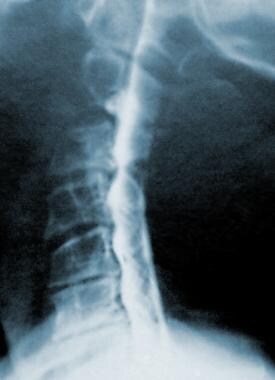
Cervical myelogram shows advanced spondylotic changes and multiple compression of the spinal cord by osteophytes. |
 | View Full Size Image | |
Media type: X-RAY
|
| Media file 2:
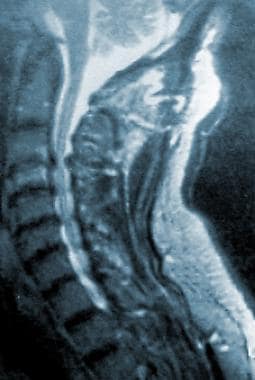
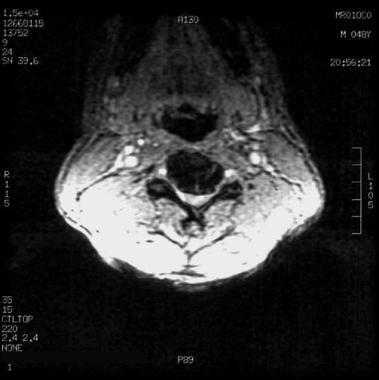
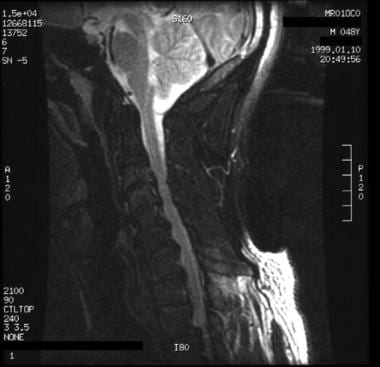
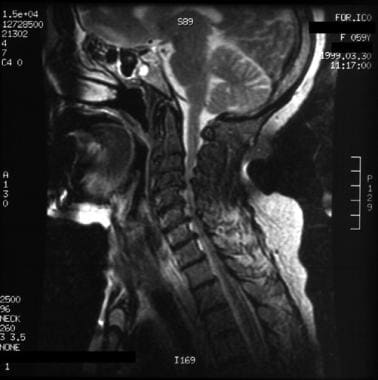
Cervical, T2-weighted magnetic resonance image shows obliteration of the subarachnoid space as a result of spondylotic changes. |
 | View Full Size Image | |
Media type: MRI
|
- Young WF. Cervical spondylotic myelopathy: a common cause of spinal cord dysfunction in older persons. Am Fam Physician. Sep 1 2000;62(5):1064-70, 1073. [Medline]. [Full Text].
- Tsiptsios I, Fotiou F, Sitzoglou K, et al. Neurophysiological investigation of cervical spondylosis. Electromyogr Clin Neurophysiol. Jul-Aug 2001;41(5):305-13. [Medline].
- Weber M, Eisen A. Are motor evoked potentials (MEPs) helpful in the differential diagnosis of spondylotic cervical myelopathy (SCM)?. Suppl Clin Neurophysiol. 2000;53:419-23. [Medline].
- Epstein N. Posterior approaches in the management of cervical spondylosis and ossification of the posterior longitudinal ligament. Surg Neurol. Sep-Oct 2002;58(3-4):194-207; discussion 207-8. [Medline].
- Epstein NE. Laminectomy for cervical myelopathy. Spinal Cord. Jun 2003;41(6):317-27. [Medline].
- Wang MY, Shah S, Green BA. Clinical outcomes following cervical laminoplasty for 204 patients with cervical spondylotic myelopathy. Surg Neurol. Dec 2004;62(6):487-92; discussion 492-3. [Medline].
- Wang MC, Chan L, Maiman DJ, et al. Complications and mortality associated with cervical spine surgery for degenerative disease in the United States. Spine. Feb 1 2007;32(3):342-7. [Medline].
- Alexander JT. Natural history and nonoperative management of cervical spondylosis. In: Menezes AH, Sonnatage VH, eds. Principles of Spinal Surgery. New York, NY: McGraw-Hill; 1996:547-57.
- Binder AI. Cervical spondylosis and neck pain. BMJ. Mar 10 2007;334(7592):527-31. [Medline].
- Braddom RL. Management of common cervical pain syndromes. In: Delisa JA, ed. Rehabilitation Medicine: Principles and Practice. Philadelphia, Pa: Lippincott Williams & Wilkins; 1993:1036-46.
- Carr RG. The physiatrist and cervical spondylosis. In: Saunders RL, Bernini PM, eds. Cervical Spondylotic Myelopathy. Boston, Mass: Blackwell Scientific; 1992:96-109.
- Chan CW. Spinal cord injury. In: Sinaki M, ed. Basic Clinical Rehabilitation Medicine. Minneapolis, Minn: Mosby-Year Book; 1993:183-94.
- Clark CR. Degenerative conditions of the spine: differential diagnosis and non-surgical treatment. In: Frymoyer JW, ed. The Adult Spine: Principles and Practice. New York, NY: Raven Press; 1991:1154-64.
- Epstein N. Ossification of the cervical posterior longitudinal ligament: a review. Neurosurg Focus. Aug 15 2002;13(2):ECP1. [Medline].
- Fiscgrund JS, Herkowitz HN. Cervical spondylotic radiculopathy, natural history and pathophysiology. In: Herkowitz HN, Rothman RH, Simeone FA, eds. Rothman-Simeone, the Spine. 4th ed. Philadelphia, Pa: WB Saunders; 1999:461-5.
- Fouyas IP, Statham PF. Operative treatment of cervical spondylosis. Br J Neurosurg. Dec 1998;12(6):594-5. [Medline].
- Hoff JT, Panadopoulos SM. Cervical disc disease and cervical spondylosis. In: Wilkins RH, Rengachary SS, eds. Neurosurgery. New York, NY: McGraw-Hill; 1996:3756-74.
- Iwabuchi M, Kikuchi S, Sato K. Pathoanatomic investigation of cervical spondylotic myelopathy. Fukushima J Med Sci. Dec 2004;50(2):47-54. [Medline].
- Jumah KB, Nyame PK. Relationship between load carrying on the head and cervical spondylosis in Ghanaians. West Afr J Med. Jul-Sep 1994;13(3):181-2. [Medline].
- Kadanka Z, Mares M, Bednarík J, et al. Predictive factors for mild forms of spondylotic cervical myelopathy treated conservatively or surgically. Eur J Neurol. Jan 2005;12(1):16-24.
- Kadanka Z, Mares M, Bednarík J, et al. Predictive factors for spondylotic cervical myelopathy treated conservatively or surgically. Eur J Neurol. Jan 2005;12(1):55-63.
- Kawaguchi Y, Kanamori M, Ishihara H, et al. Pathomechanism of myelopathy and surgical results of laminoplasty in elderly patients with cervical spondylosis. Spine. Oct 1 2003;28(19):2209-14. [Medline].
- Kimura R, Park YS, Nakase H, et al. Syringomyelia caused by cervical spondylosis. Acta Neurochir (Wien). Feb 2004;146(2):175-8. [Medline].
- Nurick S. The pathogenesis of the spinal cord disorder associated with cervical spondylosis. Brain. 1972;95(1):87-100. [Medline].
- Papadopoulos CA, Katonis P, Papagelopoulos PJ, et al. Surgical decompression for cervical spondylotic myelopathy: correlation between operative outcomes and MRI of the spinal cord. Orthopedics. Oct 2004;27(10):1087-91. [Medline].
- Rao RD, Currier BL, Albert TJ, et al. Degenerative cervical spondylosis: clinical syndromes, pathogenesis, and management. J Bone Joint Surg Am. Jun 2007;89(6):1360-78. [Medline].
- Sakaura H, Hosono N, Mukai Y, et al. Long-term outcome of laminoplasty for cervical myelopathy due to disc herniation: a comparative study of laminoplasty and anterior spinal fusion. Spine. Apr 1 2005;30(7):756-9. [Medline].
- Sari-Kouzel H, Cooper R. Managing pain from cervical spondylosis. Practitioner. Apr 1999;243(1597):334-8. [Medline].
- Singh A, Crockard HA, Platts A, et al. Clinical and radiological correlates of severity and surgery-related outcome in cervical spondylosis. J Neurosurg. Apr 2001;94(2 Suppl):189-98. [Medline].
Cervical Spondylosis excerpt Article Last Updated: Dec 21, 2007
|