Continually Updated Clinical Reference
 
 
  All Sources     eMedicine     Medscape     Drug Reference     MEDLINE
 
eMedicine - Denys-Drash Syndrome : Article by

Quick Find
Authors & Editors
Introduction
Clinical
Differentials
Workup
Treatment
Medication
Follow-up
Miscellaneous
References

Related Articles
Nephrotic Syndrome

WAGR Syndrome

Wilms Tumor


Patient Education
Click here for patient education.


Author: Agnieszka Swiatecka-Urban, MD, FASN, Assistant Professor, Department of Pediatrics, Cell Biology and Physiology, University of Pittsburgh School of Medicine; Assistant Professor, Department of Nephtology, Children's Hospital of Pittsburgh

Agnieszka Swiatecka-Urban is a member of the following medical societies: American Society of Nephrology, American Society of Pediatric Nephrology, and Women in Nephrology

Coauthor(s): Prasad Devarajan, MD, Louise M Williams Endowed Chair in Pediatrics, Professor of Pediatrics and Developmental Biology, Director of Nephrology and Hypertension, Director of Clinical Nephrology Laboratories, Chief Executive Officer of Dialysis Unit, Department of Pediatrics, Cincinnati Children's Hospital Medical Center, University of Cincinnati College of Medicine

Editors: Ian Krantz, MD, Department of Pediatrics, Assistant Professor, University of Pennsylvania and Children's Hospital of Philadelphia; Mary L Windle, PharmD, Adjunct Assistant Professor, University of Nebraska Medical Center College of Pharmacy, Pharmacy Editor, eMedicine.com, Inc; Leonard G Feld, MD, PhD, MMM, Chairman of Pediatrics, Carolinas Medical Center; Chief Medical Officer, Levine Children's Hospital, Carolinas Healthcare System; Paul D Petry, DO, FACOP, FAAP, Clinical Assistant Professor of Pediatrics, University of North Dakota, School of Medicine and Health Sciences; Consulting Staff, Altru Health System; Bruce Buehler, MD, Professor, Department of Pathology and Microbiology, Director, Hattie B Munroe Center for Human Genetics, Chairman, Department of Pediatrics, University of Nebraska Medical Center

Author and Editor Disclosure

Synonyms and related keywords: Denys-Drash syndrome, Drash syndrome, DDS, Wilms tumor, intersex disorder, congenital nephropathy, end-stage renal disorder, ESRD, diffuse mesangial sclerosis, nephrotic syndrome

Background

Denys-Drash syndrome (DDS) is a rare disorder consisting of the triad of congenital nephropathy, Wilms tumor, and intersex disorders resulting from mutations in the Wilms tumor suppressor (WT1) gene. Nephropathy is a constant feature; in the incomplete forms of the syndrome, the nephropathy coexists with either Wilms tumor or intersex disorders, but the vast majority of patients with DDS are destined to develop Wilms tumor in any residual renal tissue. The characteristic nephropathy in DDS is termed diffuse mesangial sclerosis. This condition manifests clinically as an early onset nephrotic syndrome and progresses to renal failure during the first 3 years of life. Among the intersex disorders, pure gonadal dysgenesis with male pseudohermaphroditism is the classic presentation, although a wide variety of abnormalities in gonadal differentiation can be encountered.

Pathophysiology

DDS is the result of mutations in the WT1 gene on chromosome band 11p13. The WT1 gene contains 10 exons producing 4 different messenger ribonucleic acids (mRNAs) as a result of 2 alternative splicing sites in exons 5 and 9 that in turn encode 4 different isoforms of the WT1 protein. Splicing at the second alternative site (exon 9) is thought to have a great biological importance and results in the inclusion or exclusion of 3 amino acids, lysine, threonine, and serine (KTS), yielding the KTS-positive isoform when the amino acids are included and KTS-negative isoform when excluded. The precise ratio of the KTS-positive/negative isoforms seems to be crucial for the normal function of the WT1 gene.

The WT1 protein is a transcription factor expressed predominantly in the embryonic kidneys and gonads. Exons 1-6 of the WT1 gene encode the regulatory domain, which regulates expression of target genes, and exons 7-10 encode the 4 zinc fingers of the deoxyribonucleic acid (DNA) binding region of the WT1 protein. The WT1 protein mediates the mesenchymal-epithelial transition and differentiation during morphogenesis of the kidney and gonad by repressing genes that encode cell proliferation factors and by activating genes that encode markers of epithelial cell differentiation.

Point mutations in the WT1 gene result in loss of its regulatory function, with the consequent abnormalities in glomerular formation and gonadal differentiation seen in DDS. Mutations that disrupt the second alternative splicing site of the WT1 gene alter the normal ratio of KTS-positive/negative isoforms from 2:1 to 1:2 and result in abnormalities in glomerular formation and gonadal differentiation seen in Frasier syndrome. In striking contrast, complete deletions of band 11p13 result in the Wilms tumor, aniridia, genitourinary malformations, and mental retardation (WAGR) syndrome, which is characterized by structural urinary tract abnormalities without nephropathy.

Frequency

International

The frequency of DDS is unknown. Worldwide, more than 160 cases of DDS have been reported since 1967 when Denys et al originally described a child with nephropathy, ambiguous genitalia, and Wilms tumor.

Mortality/Morbidity

Mortality and morbidity are high because of the natural history of the nephropathy and the high risk of malignancies.

  • Nephropathy: DDS patients develop early-onset nephrotic syndrome, high prevalence of severe hypertension, and rapid progression to end-stage renal disease (ESRD).
  • Malignancy: The vast majority of patients with DDS are destined to develop Wilms tumor in the native kidneys and are at significant risk for development of gonadoblastoma in the dysgenetic gonads.

Race

Denys-Drash syndrome has no race predilection.

Sex

Although both sexes can be affected, the presence of intersex disorders makes the estimation of the male-to-female ratio misleading, because individuals with DDS who are assigned the female gender may be genotypic males (XY gonadal dysgenesis with female phenotype). Ascertainment is also biased toward children with ambiguous genitalia (males), whereas diagnosis in females may be delayed or not established.

Age

  • Nephropathy: Nephrotic syndrome usually manifests in infants aged 2 weeks to 18 months. Progression to ESRD occurs within weeks to 2 years from the time of diagnosis or before the age of 3 years.
  • Wilms tumor: Median age at discovery is approximately 2 years in cases associated with DDS, as opposed to 3.5 years in patients with isolated Wilms tumor without DDS.
  • Intersex disorders: These conditions usually manifest at birth.


History

  • Symptoms related to nephropathy: Placental size, pregnancy, and delivery are usually normal. At onset (usually within the first year of life), typical symptoms are those of nephrotic syndrome (eg, edema, abdominal distention, recurrent infections). With the rapid decline of the glomerular filtration rate (GFR) and progression to ESRD, the following additional symptoms develop:
    • Decreased activity
    • Poor feeding and growth
    • Loss of developmental milestones
    • Nonspecific aches and pains
    • Oliguria
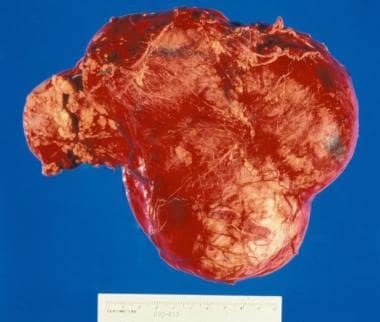
  • Symptoms related to Wilms tumor: Palpable abdominal mass is the most common manifesting symptom, noticed in 90% of children by a physician on routine physical examination or by the parent during routine care. Other symptoms include the following:
    • Abdominal distention
    • Abdominal pain
    • Hematuria
    • Weight loss
    • Poor feeding
    • Inguinal hernia
    • Acute abdomen

Physical

  • Signs related to nephropathy: At onset, signs of nephrotic syndrome predominate (eg, generalized edema, ascites). Evidence of venous thrombosis occasionally may develop secondary to nephrotic syndrome. With the decline of GFR, severe hypertension becomes apparent. Pallor reflecting anemia develops. When ESRD ensues, the following signs develop secondary to renal osteodystrophy:
    • Decreased activity
    • Loss of developmental milestones
    • Decline in the growth rate
    • Skeletal abnormalities (similar to those of vitamin D-deficient rickets)
  • Signs related to Wilms tumor: A palpable abdominal mass, hematuria, and hypertension are the most common signs. Other findings may include the following:
    • Weight loss
    • Obstipation
    • Inguinal hernia
    • Acute surgical abdomen
    • Respiratory distress from pleural effusions
    • Signs of congestive heart failure (CHF)
  • Signs related to intersex disorders: Most individuals with DDS who carry the 46,XY or 46,XX/46,XY karyotype have male pseudohermaphroditism. The spectrum of anomalies of the external genitalia may include penoscrotal hypospadias with cryptorchidism, enlarged clitoris with labial fusion, bifid scrotum with palpable gonads, and micropenis.

    Abnormalities of the internal reproductive organs in these individuals may include presence of the vagina and uterus, streak ovaries, and dysgenetic testes. Individuals with the 46,XX karyotype may have streak gonads but usually display a normal phenotype and are considered to have the incomplete form of DDS.

Causes

  • More than 96% of individuals with a clinical diagnosis of DDS have been found to carry a mutation in the WT1 gene. The vast majority of these mutations are missense changes in exons 9 or 8, which encode for the zinc fingers 3 and 2, respectively. The exon 9 amino acid, arginine-394, critical in the DNA binding activity of the WT1 protein, is considered a mutational hot spot for Denys-Drash syndrome. A recent review of the literature reported a mutation of arginine-394 in 14 of 30 patients with Denys-Drash syndrome. Mutations in other exons of the WT1 gene are very rare.
  • Mutation in but a single allele of the WT1 gene is sufficient to produce nephropathy and intersex disorder. One hypothesis suggests the abnormal WT1 allele product interacts with the function of the unaffected wild-type WT1 allele in a dominant-negative fashion and changes its normal regulatory functions.
  • The vast majority of patients with DDS have male karyotype and present with a wide spectrum of gonadal abnormalities; conversely, individuals with DDS and female karyotype have less severe or no gonadal abnormalities.
    • In patients with 46,XY, the KTS-negative isoform of the WT1 protein associates and achieves synergy with steroidogenic factor 1 (SF1). SF1, in turn, promotes expression of the gene-encoding müllerian inhibiting substance (MIS).
    • In addition, DAX1, a gene that directs ovarian development, antagonizes this synergy. In the presence of the WT1 mutations characteristic in DDS, the abnormal WT1 protein cannot associate with SF1, and testis development fails because of the decreased expression of MIS and the unopposed action of the DAX1 gene.
    • The degree to which the synergy between WT1 and SF1 is interrupted determines the severity of gonadal abnormalities in 46,XY individuals. In contrast, in 46,XX individuals, an intact WT1 gene has not been shown absolutely necessary for normal female development; these patients have less severe or no gonadal abnormalities.
  • Development of Wilms tumor in patients with DDS results from mutations in both alleles of the WT1 gene. According to the 2-hit genetic model, Wilms tumor is a consequence of 2 independent events that lead to loss of function of both alleles of the WT1 gene. A constitutional or germline mutation in a single allele of the WT1 gene (first hit) leads to persistence of an undifferentiated mesenchyme. A somatic mutation (second hit) or loss of heterozygosity in the second allele causes uncontrolled cell proliferation and Wilms tumor formation.


Nephrotic Syndrome
WAGR Syndrome
Wilms Tumor

Other Problems to be Considered

Frasier syndrome

Frasier syndrome is phenotypically similar to DDS, with some notable differences, and both are caused by mutations in the WT1 gene. Frasier syndrome consists of nephrotic syndrome, complete XY gonadal dysgenesis, and increased susceptibility to gonadal tumors, usually gonadoblastomas. The nephropathy of Frasier syndrome usually is focal segmental glomerulosclerosis, as opposed to diffuse mesangial sclerosis seen in DDS. Nephropathy usually is relentless but leads to ESRD in late childhood, unlike patients with DDS for whom ESRD typically ensues by age 3 years.

Frasier syndrome is caused by specific mutations in the WT1 gene that disrupt the alternative splicing site in intron 9, unlike the mutations near or within the zinc-finger coding region characteristic for DDS. Also contrasting with DDS, in which WT1 mutations cause dysfunctional proteins, the mutations seen in Frasier syndrome produce normal WT1 proteins but alter the normal ratio of the KTS-positive/negative isoforms from 2:1 to 1:2.

These mutations demonstrate that a correct ratio of the WT1 isoforms is a critical requirement for normal development of the glomeruli and gonads. Patients with Frasier syndrome have no increased risk for Wilms tumor because the KTS-negative isoform of the WT1 protein retains its tumor suppressor function. The high risk of gonadoblastoma in patients with Frasier syndrome reflects the overall high risk of tumorigenesis in dysgenic gonads. Molecular mechanisms that underlie the intersex state and nephropathy in Frasier syndrome are poorly understood.

Other renal tumors


Lab Studies

  • Urinalysis: Proteinuria is the hallmark of the nephropathy in DDS and is usually in the nephrotic range. Hematuria (gross or microscopic) may also be revealed.
  • Renal function tests: BUN and serum creatinine levels may be within reference ranges in the early stages of DDS but worsen with advancing nephropathy or development of bilateral Wilms tumor. ESRD development is accompanied by hyperkalemia and hyperphosphatemia.
  • Wilms tumor markers: Increased levels of hyaluronic acid, hyaluronic acid-stimulating activity, erythropoietin, and renin prohormone are associated with Wilms tumor.
  • Chromosome analysis: Obtain karyotype determination in all patients with suspected DDS, even in the absence of ambiguous genitalia. Analysis of band 11p13 and determination of the WT1 mutation is important in all patients with the nephropathy of DDS, even in the absence of Wilms tumor or obvious intersex disorder. These findings confirm the genetic diagnosis and alert the physician to the significantly increased risk of Wilms tumor development.

Imaging Studies

  • Abdominal and pelvic ultrasound: Obtain an ultrasound examination of all patients who present with signs and symptoms that suggest DDS. At regular intervals after the initial diagnosis, continue evaluating the kidneys for the quality of renal parenchyma and for the presence of Wilms tumor. Screen all individuals for the presence of abnormal internal genitalia (eg, undescended testes, undifferentiated and/or streak gonads) because of their risk of developing a gonadoblastoma (both in 46,XY and 46,XX individuals).
  • Abdominal and pelvic CT scanning: This scan is a more sensitive test for revealing Wilms tumor, especially to reveal unsuspected contralateral tumor or metastases, to demonstrate invasion of contiguous structures, to predict surgical resectability, and to monitor response to chemotherapy and surgical resection.
  • Chest radiography: Radiography reveals pulmonary metastases.

Procedures

  • Percutaneous kidney biopsy: Biopsy is essential for the diagnosis of DDS because it confirms the presence of diffuse mesangial sclerosis. Obtain the kidney biopsy specimen by percutaneous biopsy in children without Wilms tumor at the time of presentation. In patients with Wilms tumor, obtain kidney tissue at the time of nephrectomy.

Histologic Findings

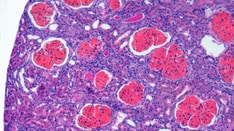
The pathognomonic kidney lesion is termed diffuse mesangial sclerosis. Features of the early phase include expansion of the glomerular mesangial matrix, obliteration of the capillary lumens, thickening of the glomerular basement membrane, and hypertrophy of the podocytes. Features of the late phase are mesangial matrix sclerosis, glomerular tuft contraction, prominent tubular atrophy, and interstitial fibrosis.

Wilms tumor originates from pluripotential cells of the metanephric blastema and consists of blastemal, stromal, and epithelial cells. The presence of anaplasia suggests a poor prognosis.

Multiple gonadal abnormalities have been described, including the following:

  • Streak ovary containing primordial follicles
  • Müllerian and wolffian ducts
  • Streak gonad with ovarian-type stroma lacking primordial follicles and with primitive canalicular seminiferous tubules
  • Dysgenetic or atrophic intraabdominal testes


Medical Care

Cornerstones of DDS medical therapy include management of fluid and electrolyte balance, treatment of hypertension, renal replacement therapy for patients with ESRD or after bilateral nephrectomy, and chemotherapy for patients with Wilms tumor.

Surgical Care

Surgical treatment of patients with DDS and Wilms tumor should follow the guidelines of the National Wilms Tumor Study-4 Protocols. Prophylactic total bilateral nephrectomy has been advocated, since the risk of Wilms tumor is very high in any residual renal tissue.

  • For patients without Wilms tumor at the time of initial presentation with DDS, early prophylactic bilateral nephrectomy, followed by renal replacement therapy, is recommended to avoid the risk of Wilms tumor development and consequent delay of kidney transplantation. As the risk of gonadal malignancy is also high in patients with gonadal dysgenesis, performing a gonadectomy at the time of nephrectomy is best. Institute appropriate hormonal therapy in these patients at puberty.
  • Kidney transplantation is the treatment of choice after bilateral nephrectomy. For patients with Wilms tumor, a 2-year period free of chemotherapy and tumor is recommended prior to renal transplantation.

Consultations

  • Pediatric nephrologist - For managing the nephropathy, ESRD, hypertension, and medical aspects of transplantation
  • Pediatric oncologist - For diagnosis and treatment of Wilms tumor and gonadoblastoma
  • Pediatric surgeon - For managing Wilms tumor, access in renal replacement therapy and surgical aspects of renal transplantation, and evaluation and possible removal of abnormal gonads
  • Pediatric endocrinologist - For evaluation and management of intersex disorders
  • Geneticist - For chromosomal analysis, molecular diagnosis, and genetic counseling

Diet

  • A low-sodium diet is important to manage hypertension and edema.
  • Patients with renal insufficiency require a low-potassium, low-phosphate diet.


The general medical therapy for the accompanying renal insufficiency, Hypertension, Nephrotic Syndrome, and Wilms Tumor are detailed in the respective chapters.


Further Outpatient Care

  • Arrange for follow-up with a pediatric nephrologist for renal transplantation and for ongoing management of nephrotic syndrome, hypertension, and renal insufficiency.
  • Arrange for follow-up with a pediatric oncologist for ongoing management of Wilms tumor.
  • Arrange for follow-up with a pediatric endocrinologist for management of intersex disorders.

Transfer

  • Children with DDS require integrated interdisciplinary care, including such pediatric subspecialty services as nephrology, surgery, oncology, endocrinology, and genetics.

Complications

  • Patients with nephrotic syndrome may encounter recurrent infections, nutritional deficiencies, and, occasionally, venous thrombosis. Progression to ESRD is inevitable.
  • Complications of chemotherapy include life-threatening infections and secondary malignancies.
  • High risks exist for Wilms tumor development in any residual renal tissue and for gonadoblastoma in dysgenetic gonads.

Prognosis

  • All patients develop nephropathy and progress to ESRD within 2 years from the diagnosis or before age 3 years.
  • Virtually all patients with DDS who have their native kidneys develop Wilms tumor. Patients with unilateral Wilms tumor are at risk for contralateral tumor. Staging and histologic criteria are prognostic in patients with Wilms tumor.

Patient Education

  • Provide genetic counseling.
  • Explain role of prophylactic surgery to prevent Wilms tumor and gonadoblastoma.
  • Explain renal replacement therapy options, including renal transplantation.


Medical/Legal Pitfalls

  • Failure to consider the diagnosis in a patient presenting with abdominal mass, Wilms tumor, early nephrotic syndrome, or intersex disorder
  • Failure to advocate early prophylactic nephrectomy and gonadectomy to prevent malignant transformation


  • Auber F, Lortat-Jacob S, Sarnacki S, et al. Surgical management and genotype/phenotype correlations in WT1 gene-related diseases (Drash, Frasier syndromes). J Pediatr Surg. Jan 2003;38(1):124-9; discussion 124-9. [Medline].
  • Breslow NE, Collins AJ, Ritchey ML, et al. End stage renal disease in patients with Wilms tumor: results from the National Wilms Tumor Study Group and the United States Renal Data System. J Urol. Nov 2005;174(5):1972-5. [Medline].
  • Call KM, Glaser T, Ito CY, et al. Isolation and characterization of a zinc finger polypeptide gene at the human chromosome 11 Wilms'' tumor locus. Cell. Feb 9 1990;60(3):509-20. [Medline].
  • Coppes MJ, Huff V, Pelletier J. Denys-Drash syndrome: relating a clinical disorder to genetic alterations in the tumor suppressor gene WT1. J Pediatr. Nov 1993;123(5):673-8. [Medline].
  • Coppes MJ, Campbell CE, Williams BR. The role of WT1 in Wilms tumorigenesis. FASEB J. Jul 1993;7(10):886-95. [Medline].
  • Eddy AA, Mauer SM. Pseudohermaphroditism, glomerulopathy, and Wilms tumor (Drash syndrome): frequency in end-stage renal failure. J Pediatr. Apr 1985;106(4):584-7. [Medline].
  • Gessler M, Konig A, Bruns GA. The genomic organization and expression of the WT1 gene. Genomics. Apr 1992;12(4):807-13. [Medline].
  • Habib R. Nephrotic syndrome in the 1st year of life. Pediatr Nephrol. Aug 1993;7(4):347-53. [Medline].
  • Habib R, Loirat C, Gubler MC, et al. The nephropathy associated with male pseudohermaphroditism and Wilms'' tumor (Drash syndrome): a distinctive glomerular lesion--report of 10 cases. Clin Nephrol. Dec 1985;24(6):269-78. [Medline].
  • Heathcott RW, Morison IM, Gubler MC, et al. A review of the phenotypic variation due to the Denys-Drash syndrome-associated germline WT1 mutation R362X. Hum Mutat. Apr 2002;19(4):462. [Medline].
  • Jadresic L, Leake J, Gordon I, et al. Clinicopathologic review of twelve children with nephropathy, Wilms tumor, and genital abnormalities (Drash syndrome). J Pediatr. Nov 1990;117(5):717-25. [Medline].
  • Jensen JC, Ehrlich RM, Hanna MK, et al. A report of 4 patients with the Drash syndrome and a review of the literature. J Urol. May 1989;141(5):1174-6. [Medline].
  • Kashtan CE. Glomerular disease. Semin Nephrol. Jul 1999;19(4):353-63. [Medline].
  • Kessler O, Franco I, Jayabose S, et al. Is contralateral exploration of the kidney necessary in patients with Wilms tumor?. J Urol. Aug 1996;156(2 Pt 2):693-5. [Medline].
  • Kist-van Holthe JE, Ho PL, Stablein D, et al. Outcome of renal transplantation for Wilms' tumor and Denys-Drash syndrome: a report of the North American Pediatric Renal Transplant Cooperative Study. Pediatr Transplant. Jun 2005;9(3):305-10. [Medline].
  • Koziell A, Grundy R. Frasier and Denys-Drash syndromes: different disorders or part of a spectrum?. Arch Dis Child. Oct 1999;81(4):365-9. [Medline].
  • Kucinskas L, Rudaitis S, Pundziene B, Just W. Denys-Drash syndrome. Medicina (Kaunas). 2005;41(2):132-4. [Medline].
  • Little M, Holmes G, Bickmore W, et al. DNA binding capacity of the WT1 protein is abolished by Denys-Drash syndrome WT1 point mutations. Hum Mol Genet. Mar 1995;4(3):351-8. [Medline].
  • Little S, Hanks S, King-Underwood L, et al. A WT1 exon 1 mutation in a child diagnosed with Denys-Drash syndrome. Pediatr Nephrol. Jan 2005;20(1):81-5. [Medline].
  • Mesrobian HG. Wilms tumor: past, present, future. J Urol. Aug 1988;140(2):231-8. [Medline].
  • Motoyama O, Arai K, Kawamura T, et al. Clinical course of congenital nephrotic syndrome and Denys-Drash syndrome in Japan. Pediatr Int. Dec 2005;47(6):607-11. [Medline].
  • Mueller RF. The Denys-Drash syndrome. J Med Genet. Jun 1994;31(6):471-7. [Medline].
  • Pritchard-Jones K. The Wilms tumour gene, WT1, in normal and abnormal nephrogenesis. Pediatr Nephrol. Sep 1999;13(7):620-5. [Medline].
  • Rauscher FJ. The WT1 Wilms tumor gene product: a developmentally regulated transcription factor in the kidney that functions as a tumor suppressor. FASEB J. Jul 1993;7(10):896-903. [Medline].
  • Royer-Pokora B, Beier M, Henzler M, et al. Twenty-four new cases of WT1 germline mutations and review of the literature: genotype/phenotype correlations for Wilms tumor development. Am J Med Genet A. Jun 15 2004;127(3):249-57. [Medline].
  • Rudin C, Pritchard J, Fernando ON, et al. Renal transplantation in the management of bilateral Wilms'' tumour (BWT) and of Denys-Drash syndrome (DDS). Nephrol Dial Transplant. Jun 1998;13(6):1506-10. [Medline].
  • Schumacher V, Scharer K, Wuhl E, et al. Spectrum of early onset nephrotic syndrome associated with WT1 missense mutations. Kidney Int. Jun 1998;53(6):1594-600. [Medline].
  • Schumacher V, Thumfart J, Drechsler M, et al. A novel WT1 missense mutation presenting with Denys-Drash syndrome and cortical atrophy. Nephrol Dial Transplant. Feb 2006;21(2):518-21. [Medline].
  • Schumacher V, Schneider S, Figge A, et al. Correlation of germ-line mutations and two-hit inactivation of the WT1 gene with Wilms tumors of stromal-predominant histology. Proc Natl Acad Sci U S A. Apr 15 1997;94(8):3972-7. [Medline].
  • Swiatecka-Urban A, Mokrzycki MH, Kaskel F, et al. Novel WT1 mutation (C388Y) in a female child with Denys-Drash syndrome. Pediatr Nephrol. Aug 2001;16(8):627-30. [Medline].

Denys-Drash Syndrome excerpt

Article Last Updated: Mar 29, 2006