| Patient Education |
|
Click here for patient education.
|
|
AUTHOR AND EDITOR INFORMATION
Section 1 of 11
Author: Daniel C Postellon, MD, Clinical Associate Professor, College of Human Medicine, Pediatrics and Human Development, Michigan State University; Consulting Staff, Pediatric Endocrine Clinic, DeVos Children's Hospital
Daniel C Postellon is a member of the following medical societies: American Academy of Pediatrics, American Diabetes Association, and Lawson-Wilkins Pediatric Endocrine Society
Editors: Ian Krantz, MD, Department of Pediatrics, Assistant Professor, University of Pennsylvania and Children's Hospital of Philadelphia; Mary L Windle, PharmD, Adjunct Assistant Professor, University of Nebraska Medical Center College of Pharmacy, Pharmacy Editor, eMedicine.com, Inc; Robert Anthony Saul, MD, Clinical Professor, Department of Pediatrics, University of South Carolina; Senior Clinical Geneticist, Greenwood Genetic Center; Paul D Petry, DO, FACOP, FAAP, Consulting Staff, Freeman Pediatric Care, Freeman Health System; Bruce Buehler, MD, Professor, Department of Pediatrics, Pathology and Microbiology, Executive Director, Hattie B Munroe Center for Human Genetics and Rehabilitation, University of Nebraska Medical Center
Author and Editor Disclosure
Synonyms and related keywords:
Turner syndrome, Turner's syndrome, 45,X karyotype, Bonnevie-Ullrich syndrome, gonadal dysgenesis, monosomy X, XO syndrome, short stature, Leri-Weill dyschondrosteosis, coarctation of the aorta, aortic dissection, diabetes mellitus, hypertension, osteoporosis, urinary tract infections, aortic valve disease, mitral valve disease, subacute bacterial endocarditis, SBE, Noonan syndrome, gonadoblastoma, amenorrhea, ovarian failure, webbed neck, cubitus valgus, Madelung deformities, shield chest, lymphedema, otitis media, Crohn disease, ulcerative colitis, scoliosis, bicuspid aortic valve, hypothyroidism, cystic hygroma, horseshoe kidney
Background
In 1938, Henry Turner first described Turner syndrome, which is one of the most common chromosomal abnormalities.1 More than 95% of adult women with Turner syndrome exhibit short stature and infertility.
Pathophysiology
Turner syndrome is caused by the absence of one set of genes from the short arm of one X chromosome. In patients with 45,X karyotype, about two thirds are missing the paternal X chromosome. In addition to monosomy X, a similar clinical picture is found with a 46,XXiq karyotype and in some individuals with mosaic karyotypes. A deletion of the SHOX gene can cause a similar skeletal phenotype known as Leri-Weill dyschondrosteosis.
Frequency
United States
The frequency is approximately 1 in 2000 live-born female infants.2 As many as 15% of spontaneous abortions have a 45,X karyotype.
International
The incidence is the same as in the United States. No known ethnic or racial factors influence frequency.
Mortality/Morbidity
- Mortality may be increased in the neonatal period because of coarctation of the aorta and in adulthood because of cardiovascular disease, particularly aortic dissection. Obesity, with associated diabetes mellitus and hypertension, can also contribute to early mortality. Limited epidemiologic studies suggest that life expectancy is reduced by about 10 years. Osteoporosis is common.
- Renal anomalies found in some individuals may cause a predisposition to urinary tract infections or hypertension. Even in the absence of cardiac or renal anomalies, patients are prone to develop hypertension.
- Individuals with mitral valve disease or aortic valve disease require subacute bacterial endocarditis (SBE) prophylaxis.
Race
- No racial or ethnic predilections are known.
Sex
- Turner syndrome only occurs in females.
- Noonan syndrome, sometimes inappropriately called male Turner syndrome, can occur in males or females. It is an autosomal dominant genetic disorder and is not a chromosomal disorder. It is unrelated to Turner syndrome.
Age
- As a chromosomal disorder, Turner syndrome is present at conception or following the first cell division and remains throughout life.
- Gonadotropin levels, particularly follicle-stimulating hormone (FSH) levels, may be elevated at birth, although not reliably enough for use in excluding the diagnosis. They are gradually suppressed by about age 4 years, only to rise to menopausal levels after age 10 years.
History
- Patients should be investigated for the presence of Y chromosomal material using a Y-centromeric probe. These patients may have malignant gonadoblastomas or testicular tissue.3 The presence of virilization requires a thorough search for gonadal, adrenal, or midline tumors.
- Older individuals may have a history of swollen hands and feet at birth.
- Children usually present with short stature, but some girls younger than 11 years have heights within the normal range. Although the presence of other features may increase the index of suspicion, a karyotype is indicated in any girl with unexplained short stature.
- In older adolescents and adults, presenting symptoms usually involve issues of puberty and fertility as well as short stature. Adrenarche, the beginning of pubic hair growth, occurs at a normal age and is not an indication that puberty will progress normally. Breast development is absent when ovarian failure occurs before puberty. Some girls have spontaneous breast development or menses. Diagnosis should be considered in individuals with primary or secondary amenorrhea and in adult women with unexplained infertility, particularly when such individuals also are short in stature.
Physical
Approximately 95% of individuals with Turner syndrome have both short stature and signs of ovarian failure upon physical examination.
- Short stature: In adults, short stature is due to both a slightly slower growth rate in childhood and to an essentially absent adolescent growth spurt. Before age 11 years, some girls have height and growth rates that are well within the normal range, but heights are below the 50th percentile for girls without Turner syndrome.
- Ovarian failure: Suspect ovarian failure in girls who have no breast development by age 12 years or who have not started menses by age 14 years. Elevated levels of luteinizing hormone (LH) and FSH confirm ovarian failure.
- Pubic hair: Pubic hair development is normal.
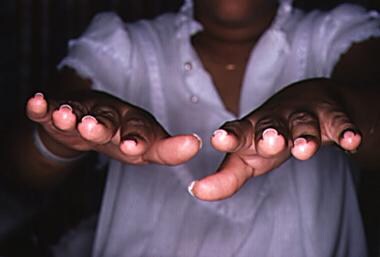
- Nails: Many patients have hypoplastic or hyperconvex nails. Although these are not a clinical problem, they are rarely seen in other patients.
- Nevi: Excessive numbers of nevi, when compared to other family members, are common. These may be removed if rubbed or irritated by clothing, but an increased risk of keloid formation is noted.
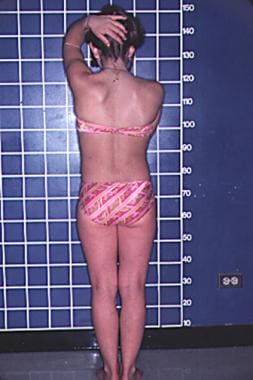
- Webbed neck: Lymphedema in utero can cause a broad neck and a low or indistinct hairline.
- Cubitus valgus (increased carrying angle): This is a common skeletal anomaly in girls due to abnormal development of the trochlear head. Other anomalies include Madelung deformities and short fourth and fifth metacarpals and metatarsals.
- Short fourth metacarpal or metatarsal: Although this finding is of minimal clinical significance, it can be a clue to the presence of Turner syndrome.
- Shield chest: The chest appears to be broad with widely spaced nipples. This may be caused in part by a short sternum.
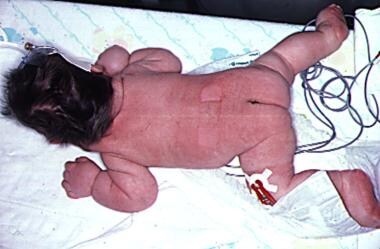
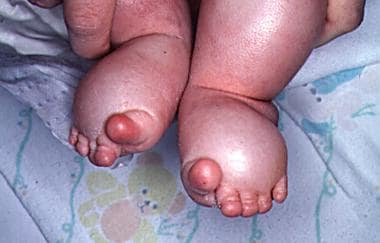
- Lymphedema: Lymphedema may be present at any age and is one finding that can suggest Turner syndrome on fetal ultrasonography. Lymphedema is the cause of other anomalies, such as the webbed neck and low posterior hairline. In infants, the combination of dysplastic or hypoplastic nails and lymphedema gives a characteristic sausagelike appearance to the fingers and toes.
- Eye: Ptosis, strabismus, amblyopia, and cataracts are more common in girls with Turner syndrome. Epicanthal folds can be present. Red-green color blindness is an X-linked condition and is believed to occur in girls with Turner syndrome as commonly as it does in males.
- Ears: Serous otitis media is more common, probably due to poor anatomic drainage of the middle ear, which may be associated with a high-arched palate. The auricles may be posteriorly rotated or low set as a result of lymphedema. Hearing loss due to otosclerosis is common in adults.
- GI bleeding: This is usually due to intestinal vascular malformations, but the incidence of Crohn disease and ulcerative colitis is also increased.
- Hip dislocation: Infants have a higher incidence of congenital hip dislocation. They should be evaluated clinically and referred for further treatment, if needed.
- Scoliosis: This occurs in 10% of adolescent girls with Turner syndrome and may contribute to short stature. Scoliosis screening is essential.
- Hypertension: Blood pressure elevations may be caused by coarctation of the aorta or renal anomalies but often occur even in the absence of such findings. Blood pressure should be routinely monitored and measured at each medical visit. Four-limb blood pressures should also be evaluated because of the concern of coarctation.
- Murmurs: Cardiovascular malformations include coarctation of the aorta, bicuspid aortic valve, and aortic dissection in adulthood. All individuals should have an initial evaluation and periodic follow-up care from a cardiologist. Evaluation prior to initiation of estrogen therapy or assisted reproduction is strongly recommended.
- Thyroid: As many as half of patients have positive antithyroid antibodies, and 10-30% develop hypothyroidism. This is often associated with thyroid enlargement.
- Cutis laxa: Loose folds of skin, particularly in the neck, are signs in newborns. This is a result of resolving lymphedema and occasionally is observed after infancy.
- Prenatal signs
- Most concepti with a 45,X karyotype spontaneously abort. Most, if not all, of those who survive to birth are suspected to have mosaicism for a normal cell line.
- Turner syndrome may be prenatally diagnosed by amniocentesis or chorionic villous sampling. Obtain a karyotype by one of these methods if ultrasonography of a fetus reveals a nuchal cystic hygroma, horseshoe kidney, left-sided cardiac anomalies, or nonimmune fetal hydrops. A postnatal karyotype may be performed instead of amniocentesis or chorionic villus sampling and is also recommended if the human chorionic gonadotropin (HCG), estradiol, or alpha-fetoprotein (AFP) level is elevated during pregnancy.
- Neonatal pedal edema suggests a diagnostic evaluation for Turner syndrome.
Causes
The diagnosis of Turner syndrome requires the presence of typical phenotypic features and the complete or partial absence of a second sex chromosome.
- Advanced maternal age is not associated with an increased incidence.
- In patients with a single X chromosome, the chromosome is of maternal origin in two thirds of cases.
- Many of the features of Turner syndrome, including the short stature, are due to the lack of a second SHOX gene, which is on the X chromosome.
Noonan Syndrome
Other Problems to be Considered
Autoimmune thyroiditis
Gonadal dysgenesis
Lymphedema
XY gonadal agenesis syndrome
Lab Studies
- Diagnosis
- Karyotyping is required for diagnosis. Diagnosis is confirmed by the presence of a 45,X cell line or a cell line with deletion of the short arm of the X chromosome (Xp deletion).
- The buccal smear for Barr bodies is obsolete.
- Y chromosome
- Patients should be tested for the presence of Y chromosomal material using a Y-centromeric probe.
- Patients with 45,X/46,XY mosaicism may have mixed gonadal dysgenesis and are at a high risk for gonadoblastoma. These patients may require a prophylactic gonadectomy to prevent death from malignancy.
- Patients with ring chromosomes or fragments of chromosomes should be examined for Y chromosomal material for the same reason.
- Gonadotrophins
- Both LH and FSH may be elevated in untreated patients younger than 4 years. Gonadotropins are later suppressed to normal or near-normal levels, only to rise to menopausal levels after age 10 years.
- Assess both LH and FSH levels prior to initiating estrogen replacement therapy.
- Thyroid function tests
- Because of the high prevalence of hypothyroidism in Turner syndrome, obtain thyroid function tests at diagnosis.
- Thyroid-stimulating hormone (TSH) measurements should be repeated every 1-2 years or if symptoms develop because patients may develop hypothyroidism at a later age.
- Glucose metabolism
- Abnormalities of glucose metabolism, including overt diabetes mellitus, are more common than in unaffected children.
- Glucose tolerance tests should not be used as a screening test. Obesity should be avoided.
- Screening for diabetes mellitus is best performed by obtaining fasting glucose levels.
- Urinalysis for glucose should be performed at each follow-up visit with patients taking oxandrolone or human growth hormone.
- Continuing care: As routine health maintenance, patients with Turner syndrome should have BUN, creatinine, fasting blood sugar (FBS), fasting lipids, liver enzymes, free thyroxine (T4), and TSH levels measured annually after childhood.
- Virilization: Signs of excess androgens are generally absent. If virilization occurs, a search for Y chromosomal material by fluorescent in situ hybridization (FISH) or polymerase chain reaction (PCR) is necessary as part of an evaluation for possible gonadoblastoma.
Imaging Studies
- Renal
- At diagnosis, perform ultrasonography of the kidneys and renal collecting system.
- Annual urine cultures and measurement of BUN and creatinine levels are recommended for those patients with abnormalities of the renal collecting system that predispose to obstruction.
- Cardiovascular
- Perform echocardiography, MRI examination of the heart, or both upon diagnosis. Evaluate 4-limb blood pressures secondary to the high incidence of coarctation of the aorta.
- A cardiologist should monitor abnormalities.
- Because of the risk of aortic dissection, cardiovascular examinations should be repeated every 5 years during adulthood and prior to assisted reproduction.
- A complete cardiovascular evaluation should be completed prior to attempting assisted reproduction.
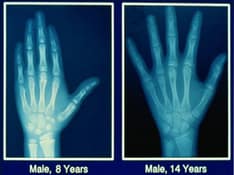
- Bone age
- Bone age is usually normal prior to adolescence but is delayed afterward because of the lack of estrogens.
- Obtain bone age before starting growth hormone or estrogen therapy. Growth hormone is ineffective if the epiphyses are fused.
- Bone density
- Osteoporosis is common but may be overdiagnosed in short individuals.
- Measure bone density initially in adults and 3 years later.
Other Tests
Audiology is indicated in patients with Turner syndrome.
- Infants diagnosed at birth should have a hearing assessment in the nursery. Otherwise, formal hearing assessment is recommended at age 1 year and before entering school. Formal re-evaluation every 5 years has been recommended.
- More frequent testing is needed in children with repeated otitis media.
- Adults should also have a hearing evaluation at least once with further testing later if hearing loss is suspected.
Medical Care
- Turner syndrome is a lifelong condition. Most people live long and healthy lives, yet some are susceptible to numerous chronic conditions.
- Health supervision involves careful medical follow-up care, which includes screening for commonly associated chronic diseases. Early preventive care and treatment are also essential.
- In childhood, growth hormone therapy is standard to prevent short stature as an adult.4 Estrogen replacement therapy is usually required, but starting too early can compromise adult height. Estrogen usually is started from age 12-15 years.
Surgical Care
- Patients are suspected of having a high risk of keloid formation. This must be taken into consideration if cosmetic surgery is contemplated because keloids may negate any gain from such procedures.
- SBE prophylaxis is required prior to any dental or surgical procedure in women with cardiac valve disease to prevent SBE.
Consultations
- Endocrinologist
- During childhood and adolescence, patients should visit a pediatric endocrinologist at regular intervals.
- Attention should be paid to growth and development, thyroid status, and osteoporosis prevention with growth hormone, estrogens, and progestins.
- Patients on growth hormone should be seen every 3-4 months.
- Cardiologist
- A cardiologist should evaluate all patients at diagnosis.
- Patients found to have significant anomalies should have long-term follow-up care and possibly SBE prophylaxis.
- Because of the risks of aortic root dilatation and mortality due to aortic dissection, cardiac evaluation (including echocardiography) may be worthwhile every 5 years, even in patients with normal findings on initial cardiovascular examination.
- Patients contemplating pregnancy should have a complete cardiovascular evaluation prior to attempting assisted reproduction or conception.
- Patients with a bicuspid aortic valve, coarctation of the aorta, or dilation of the aorta have a higher risk of dissecting aortic aneurysm or rupture.
- Nephrologist or urologist
- Almost a third of patients have renal anomalies that may require evaluation and follow-up care by a nephrologist. At a minimum, such patients should have a yearly urine culture and an annual measurement of BUN and creatinine levels.
- Girls with horseshoe kidneys have an increased risk of Wilms tumor. Patients with horseshoe kidneys should have renal ultrasound examinations every 4-6 months until the age 8 years and every 6-12 months thereafter.
- Psychologist
- Overall psychological health is good, but specific perceptual weaknesses or learning disabilities may be present. Assessment of intelligence, learning ability, motor skills, and social maturity should be made prior to enrollment in kindergarten.
- As with any chronic illness, attention should be paid to fostering healthy socialization and to appropriate career and vocational planning.
- Genetics
- Turner syndrome is not an inherited disorder, and the recurrence risk is low.
- Because of infertility, the syndrome is rarely passed to offspring.
- Consultation is helpful when the condition is diagnosed in utero or when Turner syndrome is suspected in the setting of a normal peripheral blood karyotype.
- Patients should be tested for the presence of Y-chromosomal material using a Y-centromeric probe.
Diet
- Dietary requirements are similar to other children or adults.
- Both short stature and ovarian failure are risk factors for osteoporosis, and care should be taken to ensure adequate daily intake of calcium (1.0-1.5 g) and vitamin D (at least 400 IU).
- Patients should avoid obesity because it increases already high risks of hypertension and insulin resistance.
- Patients with short stature require fewer calories than those of normal height.
Activity
- Physical activity should be encouraged as prevention for obesity and osteoporosis.
Drug Category: Human growth hormone
These agents are the primary treatment for short stature. They stimulate growth of linear bone, skeletal muscle, and organs.
| Drug Name | Somatotropin (Nutropin, Genotropin, Humatrope, Norditropin, Saizen, Tev-Tropin) |
| Description | Taller adult heights are associated with earlier treatment and with the duration of treatment prior to induced or spontaneous puberty. With treatment, approximately 50% of patients reach an adult height of 150 cm (59") or more, compared with an untreated mean adult height of 142 cm (56"). |
| Adult Dose | Not recommended at present for adults after the epiphyses have closed |
| Pediatric Dose | Varies with specific product: 0.05 mg/kg/d (as somatropin [Saizen]) SC is one example; individualize according to growth results |
| Contraindications | Documented hypersensitivity; hypersensitivity to benzyl alcohol, cresol, or other preservatives used in preparation of liquid injectable; fused (closed) epiphyses; active neoplasia; neonates |
| Interactions | Corticosteroids interfere with growth-promoting actions; estrogens can cause epiphyseal fusion, which stops growth; patient must be euthyroid for optimal effects |
| Pregnancy | C - Fetal risk revealed in studies in animals but not established or not studied in humans; may use if benefits outweigh risk to fetus
|
| Precautions | Caution in diabetes mellitus; reconstitute with sterile water for injection if administering to newborns (avoids benzyl alcohol); monitor bone age, thyroid function, and blood glucose; intracranial hypertension |
Drug Category: Anabolic steroids
This is an adjuvant for growth hormone therapy.
| Drug Name | Oxandrolone (Oxandrin, Anavar) |
| Description | Of limited use. Some endocrinologists recommend use in patients diagnosed in their teens to achieve a maximum adult height quickly. When used, often combined with growth hormone to allow a lower dose, thus decreasing the potential for adverse effects. |
| Adult Dose | Not recommended |
| Pediatric Dose | <8 years: Not recommended >8 years: 0.05 mg/kg/d PO; not to exceed 0.05 mg/kg/d |
| Contraindications | Documented hypersensitivity; hypercalcemia |
| Interactions | May worsen glucose tolerance; possible increased sensitivity to PO anticoagulants |
| Pregnancy | X - Contraindicated; benefit does not outweigh risk
|
| Precautions | Caution in heart failure, CAD, edema, hypertension, psychiatric disorders, substance abuse, or liver dysfunction; monitor bone growth and blood glucose |
Drug Category: Thyroid replacement therapies
These agents are used for treatment of hypothyroidism.
| Drug Name | Levothyroxine (Synthroid, Levoxyl, Levothroid, L-thyroxine) |
| Description | Hypothyroidism is common with Turner syndrome and is treated like any other hypothyroidism. Thyroid hormones influence growth and maturation of tissues. Involved in normal growth, metabolism, and development. |
| Adult Dose | 0.1-0.125 mg/d PO |
| Pediatric Dose | Approximately 3 mcg/kg/d PO Young children and infants require higher doses per kg; consult package insert or a pediatric endocrinologist; dose should be adjusted to avoid elevated TSH levels and elevated (free) T4 levels |
| Contraindications | Documented hypersensitivity; uncorrected adrenal insufficiency |
| Interactions | Growth hormone ineffective unless euthyroid; cholestyramine may decrease absorption, as may a high-fiber or high-soy diet (such diets may require an increase in dose but are not contraindicated) |
| Pregnancy | A - Fetal risk not revealed in controlled studies in humans
|
| Precautions | Not for use as treatment in patients with obesity and euthyroidism; overtreatment may worsen osteoporosis; caution in cardiovascular disease; monitor thyroid function periodically |
Drug Category: Estrogen replacement therapies
Almost all individuals require estrogen replacement. Estrogen is usually started at chronologic age 12 years or older. Adults usually require cyclic therapy with both estrogen and progestin. Transdermal or parenteral estrogen may be useful in limiting some adverse effects of estrogen therapy.
| Drug Name | Estrogens |
| Description | Available in many forms (eg, estradiol [Estrace], conjugated estrogens [Premarin]). Restore estrogen levels to concentrations that induce negative feedback at gonadotrophic regulatory centers, which, in turn, reduces release of gonadotropins from pituitary. Increases synthesis of DNA, RNA, and many proteins in target tissues. |
| Adult Dose | 35-50 mcg/d PO |
| Pediatric Dose | Estrogen should begin at lowest possible dose and not earlier than age 12 years. Some endocrinologists start with a low daily dose of ethinyl estradiol 10 mcg/d or less PO, and cycle therapy after several mo of treatment; low-dose transdermal or parenteral treatment may be preferable and is being investigated |
| Contraindications | Documented hypersensitivity; breast cancer; undiagnosed abnormal genital bleeding; active thrombophlebitis or thromboembolic disorders; history of thrombophlebitis, thrombosis, or thromboembolic disorders associated with previous estrogen use (except when used in treatment of breast malignancy); Premarin may be rejected by some patients as an animal-rights issue |
| Interactions | May reduce hypoprothrombinemic effect of anticoagulants; possible reduced estrogen levels with coadministration of barbiturates, rifampin, and other agents that induce hepatic microsomal enzymes; possible increase in pharmacologic and toxicologic effects of corticosteroids, via inactivation of hepatic P450 enzyme; possible loss of seizure control when administered concurrently with hydantoins |
| Pregnancy | X - Contraindicated; benefit does not outweigh risk
|
| Precautions | May cause some degree of fluid retention and require careful observation; possible undesirable manifestations of excessive estrogenic stimulation |
Drug Category: Antihypertensive agents
These products are used to control hypertension and to ultimately prevent complications such as aortic dissection. The 2 most common class of medications used for these purposes in pediatric patients are beta-blockers and ACE inhibitors. Propranolol is an example of one of the beta-blockers used in pediatrics, whereas captopril is an example of an ACE inhibitor. Additional drug recommendations for patients aged 1-17 years may be found in The Fourth Report on the Diagnosis, Evaluation, and Treatment of High Blood Pressure in Children and Adolescents. For neonatal doses, see the eMedicine article Neonatal Hypertension. For pediatric doses, see the eMedicine article Hypertension.
| Drug Name | Propranolol (Inderal) |
| Description | Has membrane-stabilizing activity and decreases automaticity of contractions.
|
| Adult Dose | 40-80 mg PO bid initially; increase to 160-320 mg/d (some patients require up to 640 mg/d) |
| Pediatric Dose | 0.5 mg/kg/d PO divided bid/qid; increase gradually q3-7d; dosage range is 2-4 mg/kg/d divided bid |
| Contraindications | Documented hypersensitivity; uncompensated congestive heart failure; bradycardia, cardiogenic shock; AV conduction abnormalities (without pacemaker) |
| Interactions | Coadministration with aluminum salts, barbiturates, NSAIDs, penicillins, calcium salts, cholestyramine, and rifampin may decrease propranolol effects; calcium channel blockers, cimetidine, loop diuretics, and MAOIs may increase toxicity of propranolol; toxicity of hydralazine, haloperidol, benzodiazepines, and phenothiazines may increase with propranolol |
| Pregnancy | C - Fetal risk revealed in studies in animals but not established or not studied in humans; may use if benefits outweigh risk to fetus
|
| Precautions | Beta-adrenergic blockade may decrease signs of acute hypoglycemia and hyperthyroidism; abrupt withdrawal may exacerbate symptoms of hyperthyroidism, including thyroid storm; withdraw drug slowly and monitor closely |
| Drug Name | Captopril (Capoten) |
| Description | Prevents conversion of angiotensin I to angiotensin II, a potent vasoconstrictor, resulting in lower aldosterone secretion. |
| Adult Dose | 12.5-25 mg PO 2-3 times/d; may increase by 12.5-25 mg/dose at 1- to 2-wk intervals up to 50 mg tid |
| Pediatric Dose | 6.25-12.5 mg/dose PO q12-24h; not to exceed 6 mg/kg/d |
| Contraindications | Documented hypersensitivity; renal impairment |
| Interactions | NSAIDs may reduce hypotensive effects of captopril; ACE inhibitors may increase digoxin, lithium, and allopurinol levels; rifampin decreases captopril levels; probenecid may increase captopril levels; the hypotensive effects of ACE inhibitors may be enhanced when administered concurrently with diuretics |
| Pregnancy | D - Fetal risk shown in humans; use only if benefits outweigh risk to fetus
|
| Precautions | Caution in renal impairment, valvular stenosis, or severe congestive heart failure |
Drug Category: Vitamins and minerals
Osteoporosis is common and is a major cause of morbidity in adults. Treatment is the same as for other adult women with osteoporosis. Monitor diet and ensure an intake of at least 1 g/d of calcium and 400 IU/d of vitamin D. Treatment with growth hormone and estrogen are also important in the prevention of osteoporosis later in life.
| Drug Name | Ergocalciferol (Calciferol, Drisdol) |
| Description | Vitamin D is a micronutrient essential for normal absorption of calcium and phosphorus. Also produced in response to exposure to ultraviolet B light. |
| Adult Dose | Recommended: 400 IU/d PO For osteoporosis: 400-1000 IU/d PO or more |
| Pediatric Dose | 400-1000 IU/d PO |
| Contraindications | Documented hypersensitivity; hypercalcemia; malabsorption syndrome |
| Interactions | Cholestyramine, mineral oil, orlistat, and high-fiber diets may decrease absorption; thiazide diuretics may increase effects of vitamin D |
| Pregnancy | A - Fetal risk not revealed in controlled studies in humans C - Fetal risk revealed in studies in animals but not established or not studied in humans; may use if benefits outweigh risk to fetus
|
| Precautions | Avoid overdosage; efficacy requires adequate intake of calcium; caution in impaired renal function, renal stones, heart disease, or arteriosclerosis |
| Drug Name | Calcium salts (acetate, carbonate, chloride, gluconate) |
| Description | Supplemental source of dietary calcium. Calcium carbonate is 40% elemental calcium. |
| Adult Dose | 1-1.5 g/d elemental calcium PO divided bid/qid |
| Pediatric Dose | Calcium carbonate or other calcium salt: 0.5-1 g/d elemental calcium PO divided bid/qid or 45-65 mg/kg/d PO |
| Contraindications | Renal calculi; hypercalcemia; hypophosphatemia; renal or cardiac disease; digitalis toxicity |
| Interactions | May decrease effects of bisphosphonates, tetracyclines, atenolol, salicylates, iron salts, and fluoroquinolones; thiazide diuretics may increase toxicity due to decreased calcium clearance; large intakes of dietary fiber may decrease calcium absorption and levels |
| Pregnancy | B - Fetal risk not confirmed in studies in humans but has been shown in some studies in animals
|
| Precautions | Hypercalcemia or hypercalcuria may occur when therapeutic amounts are given |
Prognosis
- Overall prognosis is good.
- Even with growth hormone therapy, most individuals are shorter than average.
- Turner syndrome is not a cause of mental retardation.
- Life expectancy is slightly shorter than average but may be improved by attention to associated chronic illnesses, such as obesity and hypertension.
- Almost all individuals are infertile, but pregnancy with donor embryos is possible.5
Patient Education
Medical/Legal Pitfalls
- The presentation of Turner syndrome may be subtle. Consider performing a karyotype in any girl with unexplained short stature
- Yearly follow-up TSH tests help avoid unrecognized hypothyroidism, which can interfere with growth.
- Osteoporosis and aortic arch dissection are known complications of Turner syndrome in adulthood. Successful treatment requires screening and early treatment, before symptoms occur.
- Virilization of a patient with Turner syndrome suggests a gonadoblastoma or other tumor. In such patients, Y chromosome material should be sought using a Y-centromeric probe and a gonad, adrenal, or midline tumor should be vigorously pursued.
Special Concerns
- Infertility
- Most patients are infertile, although spontaneous unassisted pregnancy has occurred. Therefore, the diagnosis should not be relied on as a birth control method.
- In spontaneous unassisted pregnancy, the risk of having an infant with Turner syndrome or Down syndrome is increased. Risk of miscarriage is also high.
- Assisted reproduction
- Pregnancy has been achieved by means of fresh or frozen embryo transfer. Transfer of only one embryo at a time is recommended to avoid additional complications of twin pregnancies.
- Prior to embryo transfer, a complete renal and cardiovascular evaluation is warranted, including echocardiography. Hypertension or other cardiovascular problems may complicate pregnancy, and careful follow-up care during pregnancy is needed. Thyroid status should also be assessed because hypothyroidism during pregnancy may be associated with a poorer outcome.
- Although implantation and clinical pregnancy rates are similar to other women with ovarian failure, the miscarriage rate is high, probably because of uterine factors.
- Caesarean delivery is usual and is possibly related to small pelvic outlet size.
| Media file 1:
A patient with Turner syndrome is shown. This posterior view shows a low hairline and a shield-shaped chest. Note the narrow hip development. |
 | View Full Size Image | |
Media type: Photo
|
| Media file 2:
Lymphedema of the feet in an infant is shown. The toes have the characteristic sausagelike appearance. |
 | View Full Size Image | |
Media type: Photo
|
| Media file 3:
Hyperconvex nails in Turner syndrome. Note U-shaped cross section. |
 | View Full Size Image | |
Media type: Photo
|
| Media file 4:
Generalized lymphedema is seen here in an infant with Turner syndrome. The loose skin folds around the neck will form a webbed neck later in life. |

 | View Full Size Image | |
Media type: Photo
|
- Turner HH. A syndrome of infantilism, congenital webbed neck, and cubitus valgus. Endocrinology. 1938;23:566-574.
- Donaldson MD, Gault EJ, Tan KW, Dunger DB. Optimising management in Turner syndrome: from infancy to adult transfer. Arch Dis Child. Jun 2006;91(6):513-20. [Medline].
- Bianco B, Lipay MV, Melaragno MI, Guedes AD, Verreschi IT. Detection of hidden Y mosaicism in Turner's syndrome: importance in the prevention of gonadoblastoma. J Pediatr Endocrinol Metab. Sep 2006;19(9):1113-7. [Medline].
- Davenport ML, Crowe BJ, Travers SH, Rubin K, Ross JL, Fechner PY, et al. Growth hormone treatment of early growth failure in toddlers with Turner syndrome: a randomized, controlled, multicenter trial. J Clin Endocrinol Metab. Sep 2007;92(9):3406-16. [Medline].
- Foudila T, Soderström-Anttila V, Hovatta O. Turner's syndrome and pregnancies after oocyte donation. Hum Reprod. Feb 1999;14(2):532-5. [Medline]. [Full Text].
- Backeljauw P. Does growth hormone therapy before 4 years of age enhance the linear growth of girls with Turner's syndrome?. Nat Clin Pract Endocrinol Metab. Feb 2008;4(2):78-9. [Medline].
- Bender B, Puck M, Salbenblatt J, Robinson A. Cognitive development of unselected girls with complete and partial X monosomy. Pediatrics. Feb 1984;73(2):175-82. [Medline].
- Bolar K, Hoffman AR, Maneatis T, Lippe B. Long-term safety of recombinant human growth hormone in turner syndrome. J Clin Endocrinol Metab. Feb 2008;93(2):344-51. [Medline].
- Bondy CA. Care of girls and women with Turner syndrome: A guideline of the Turner Syndrome Study Group. J Clin Endocrinol Metab. Jan 2007;92(1):10-25. [Medline].
- Carr RF, Ochs RH, Ritter DA, Kenny JD, Fridey JL, Ming PM. Fetal cystic hygroma and Turner's syndrome. Am J Dis Child. Jun 1986;140(6):580-3. [Medline].
- Davenport ML, Punyasavatsut N, Stewart PW, Gunther DF, Savendahl L, Sybert VP. Growth failure in early life: an important manifestation of Turner syndrome. Horm Res. 2002;57(5-6):157-64. [Medline].
- Elsheikh M, Conway GS, Wass JA. Medical problems in adult women with Turner's syndrome. Ann Med. Apr 1999;31(2):99-105. [Medline].
- Even L, Cohen A, Marbach N, Brand M, Kauli R, Sippell W, et al. Longitudinal analysis of growth over the first 3 years of life in Turner's syndrome. J Pediatr. Oct 2000;137(4):460-4. [Medline].
- Frias JL, Davenport ML. Health supervision for children with Turner syndrome. Pediatrics. Mar 2003;111(3):692-702. [Medline].
- Fryer SL, Kwon H, Eliez S, Reiss AL. Corpus callosum and posterior fossa development in monozygotic females: a morphometric MRI study of Turner syndrome. Dev Med Child Neurol. May 2003;45(5):320-4. [Medline].
- Garden AS, Diver MJ, Fraser WD. Undiagnosed morbidity in adult women with Turner's syndrome. Clin Endocrinol (Oxf). Nov 1996;45(5):589-93. [Medline].
- Gravholt C. Clinical Practice in Turner Syndrome. Nature Clinical Practice Endocrinology & Metabolism. 2005;1:41-52.
- Gravholt CH, Juul S, Naeraa RW, Hansen J. Morbidity in Turner syndrome. J Clin Epidemiol. Feb 1998;51(2):147-58. [Medline].
- Hasle H, Olsen JH, Nielsen J, Hansen J, Friedrich U, Tommerup N. Occurrence of cancer in women with Turner syndrome. Br J Cancer. May 1996;73(9):1156-9. [Medline].
- Health supervision for children with Turner syndrome. American Academy of Pediatrics. Committee on Genetics. Pediatrics. Dec 1995;96(6):1166-73. [Medline].
- Hovatta O. Pregnancies in women with Turner's syndrome. Ann Med. Apr 1999;31(2):106-10. [Medline].
- Kaneko N, Kawagoe S, Hiroi M. Turner's syndrome--review of the literature with reference to a successful pregnancy outcome. Gynecol Obstet Invest. 1990;29(2):81-7. [Medline].
- Lin AE, Lippe B, Rosenfeld RG. Further delineation of aortic dilation, dissection, and rupture in patients with Turner syndrome. Pediatrics. Jul 1998;102(1):e12. [Medline]. [Full Text].
- Lippe BM. Primary Ovarian Failure. In: Clinical Pediatric Endocrinology. 1990. Philadelphia, Pa: WB Saunders; 325-366.
- Lyon AJ, Preece MA, Grant DB. Growth curve for girls with Turner syndrome. Arch Dis Child. Oct 1985;60(10):932-5. [Medline].
- Mazzanti L, Prandstraller D, Tassinari D, Rubino I, Santucci S, Picchio FM, et al. Heart disease in Turner's syndrome. Helv Paediatr Acta. Aug 1988;43(1-2):25-31. [Medline].
- Medeiros CC, Marini SH, Baptista MT, Guerra G Jr, Maciel-Guerra AT. Turner's syndrome and thyroid disease: a transverse study of pediatric patients in Brazil. J Pediatr Endocrinol Metab. Apr 2000;13(4):357-62. [Medline].
- Natowicz M, Kelley RI. Association of Turner syndrome with hypoplastic left-heart syndrome. Am J Dis Child. Feb 1987;141(2):218-20. [Medline].
- Neumann PJ, Gharib SD, Weinstein MC. The cost of a successful delivery with in vitro fertilization. N Engl J Med. Jul 28 1994;331(4):239-43. [Medline].
- Pai GS, Leach DC, Weiss L, Wolf C, Van Dyke DL. Thyroid abnormalities in 20 children with Turner syndrome. J Pediatr. Aug 1977;91(2):267-9. [Medline].
- Price WH, Clayton JF, Collyer S, De Mey R, Wilson J. Mortality ratios, life expectancy, and causes of death in patients with Turner's syndrome. J Epidemiol Community Health. Jun 1986;40(2):97-102. [Medline].
- Sas TC, de Muinck Keizer-Schrama SM, Stijnen T, van Teunenbroek A, Hokken-Koelega AC, Waelkens JJ, et al. Final height in girls with Turner's syndrome treated with once or twice daily growth hormone injections. Dutch Advisory Group on Growth Hormone. Arch Dis Child. Jan 1999;80(1):36-41. [Medline]. [Full Text].
- Sculerati N, Ledesma-Medina J, Finegold DN, Stool SE. Otitis media and hearing loss in Turner syndrome. Arch Otolaryngol Head Neck Surg. Jun 1990;116(6):704-7. [Medline].
- Soriano-Guillen L, Coste J, Ecosse E, Léger J, Tauber M, Cabrol S, et al. Adult height and pubertal growth in Turner syndrome after treatment with recombinant growth hormone. J Clin Endocrinol Metab. Sep 2005;90(9):5197-204. [Medline]. [Full Text].
- Starke M, Albertsson Wikland K, Möller A. Parents' descriptions of development and problems associated with infants with Turner syndrome: a retrospective study. J Paediatr Child Health. May-Jun 2003;39(4):293-8. [Medline].
- Stephure DK. Impact of growth hormone supplementation on adult height in turner syndrome: results of the Canadian randomized controlled trial. J Clin Endocrinol Metab. Jun 2005;90(6):3360-6. [Medline].
- Stratakis CA, Rennert OM. Turner Syndrome An Update. The Endocrinologist. 2005;15:27-36.
- Zinn AR, Ross JL. Molecular analysis of genes on Xp controlling Turner syndrome and premature ovarian failure (POF). Semin Reprod Med. Jun 2001;19(2):141-6. [Medline].
Turner Syndrome excerpt Article Last Updated: Jun 5, 2008
|