| Patient Education |
|
Click here for patient education.
|
|
You are in: eMedicine Specialties >
Pediatrics: General Medicine > Hematology
Thalassemia Intermedia
Article Last Updated: Oct 18, 2007
AUTHOR AND EDITOR INFORMATION
Section 1 of 11
Author: Hassan M Yaish, MD, Associate Professor Of Pediatrics, Director of Hematology Services, Medical Director of the Comprehensive Hemophilia and Bleeding Disorders Treatment Center, Pediatric Hematologist/Oncologist, Department of Pediatrics, Primary Children's Medical Center, University of Utah School of Medicine
Hassan M Yaish is a member of the following medical societies: American Academy of Pediatrics, American Medical Association, American Society of Hematology, American Society of Pediatric Hematology/Oncology, Michigan State Medical Society, and New York Academy of Sciences
Editors: J Martin Johnston, MD, Director of Pediatric Hematology/Oncology, Backus Children's Hospital, Memorial Health University Medical Center; Mary L Windle, PharmD, Adjunct Assistant Professor, University of Nebraska Medical Center College of Pharmacy, Pharmacy Editor, eMedicine.com, Inc; James L Harper, MD, Associate Professor, Department of Pediatrics, Division of Hematology/Oncology and Bone Marrow Transplantation, Associate Chairman for Education, Department of Pediatrics, University of Nebraska Medical Center; Assistant Clinical Professor, Department of Pediatrics, Creighton University; Director, Continuing Medical Education, Children's Memorial Hospital; Pediatric Director, Nebraska Regional Hemophilia Treatment Center; Helen SL Chan, MBBS, FRCP(C), FAAP, Senior Scientist, Research Institute; Professor, Division of Hematology/Oncology, Department of Pediatrics, The Hospital for Sick Children, University of Toronto, Canada; Robert J Arceci, MD, PhD, King Fahd Professor of Pediatric Oncology, Department of Oncology, Division of Pediatric Oncology, Johns Hopkins University School of Medicine
Author and Editor Disclosure
Synonyms and related keywords:
beta thalassemia intermedia, β thalassemia intermedia, beta thalassemia major, β thalassemia major, beta thalassemia trait, β thalassemia trait, hemoglobin, Hb, Hb level, globin chain synthesis, erythropoiesis, iron overload, hepcidin, anemia, growth retardation, failure to thrive, bone fractures, enlarged spleen, splenomegaly
Background
Thalassemia intermedia is a term used to define a group of patients with β thalassemia in whom the clinical severity of the disease is somewhere between the mild symptoms of the β thalassemia trait and the severe manifestations of β thalassemia major. The diagnosis is a clinical one that is based on the patient maintaining a satisfactory hemoglobin (Hb) level of at least 6-7 g/dL at the time of diagnosis without the need for regular blood transfusions. This initial definition of thalassemia intermedia, which was based on clinical observation alone, retained its validity even after some of the specific mutations associated with thalassemia intermedia were recognized because severity of the clinical course remains unpredictable even in known genotypes. For this reason, some patients with a β thalassemia intermedia genotype are treated as if they have thalassemia major because they present with severe manifestations; similarly, others with a thalassemia intermedia genotype are considered to have thalassemia minor because of the mild or even asymptomatic nature of their condition. This variability is most likely related to the presence or absence of modifying genes. It has been surprisingly seen among siblings with the same genotype. Because of the significant overlap in clinical severity among the 3 types of β thalassemia and despite the fact that several genotypes are associated with the β thalassemia intermedia picture, the diagnosis continues to be a clinical one, regardless of the genotype involved. Moreover, in an individual patient, the diagnosis may change from thalassemia intermedia to thalassemia major once the patient begins to have more severe symptoms and to require regular blood transfusions.
Pathophysiology
Because, in general, all symptoms and manifestations of thalassemia are caused by an imbalance in globin chain synthesis, the milder symptoms of thalassemia intermedia in any one patient may be attributable to the following: - The particular inherited globin chain mutations (ie, milder homozygous or combined heterozygous mutations affecting the β globin promoter) may produce these milder symptoms.
- Co-inheritance of a genetic determinant that decreases the imbalance between α and β chain production (eg, α thalassemia trait) can occur.
- γ chain production may be increased, resulting in an elevated level of Hb F, as in the case of β/δ deletion mutations that, when associated with a β thalassemia gene mutation, produce a combined heterozygous condition that can result in thalassemia intermedia. Most patients with Hb E/β thalassemia (interaction of Hb E and β thalassemia) exhibit the clinical course of thalassemia intermedia. The incidence of this condition is increasing in the United States because of the large population of new immigrants to the United States from Southeast Asia.
The symptoms of thalassemia intermedia reflect ineffective erythropoiesis, which leads to anemia, medullary expansion, and extramedullary hematopoiesis. Iron overload is a potential complication of thalassemia, even in patients who do not require RBC transfusions. It results from excessive absorption of dietary iron, mediated by the downregulation of hepcidin, which is a hepatic hormone that acts as a major regulator of systemic iron homeostasis. Hepcidin inhibits iron absorption from the diet and inhibits the recycling of iron by the macrophages. It is increased by iron loading and is inhibited by erythropoietic activity.
In patients with thalassemia intermedia who are receiving regular blood transfusions, the erythropoietic activity is exaggerated. This usually results in inhibition of hepcidin, which causes increased absorption of iron from the diet and depletion of iron macrophages. Iron overload is supposed to increase the hepcidin level, thus, suppressing the absorption of iron. However, this does not occur in patients with thalassemia because, in β thalassemia, serum factors may override the potential effect of iron overload on the expression of the hepcidin gene (HAMP). This provides an explanation for the failure to arrest the excessive iron absorption in such patients.
In contrast, hepcidin levels are usually elevated in patients with thalassemia major who are receiving regular blood transfusions because of reduced erythropoietic activities and increased iron overload. As a result of hepcidin's effect on iron recycling by macrophages, ferritin levels are usually high in patients with β thalassemia major receiving blood transfusions compared with those with thalassemia major who are not receiving transfusions despite similar liver iron concentrations in both conditions.
Hepcidin measurements could possibly be used in the future as diagnostic tool for iron overload in patients with thalassemia, and hepcidin may even be used as a therapeutic agent for some iron overload conditions.
Frequency
United States
Because of the recent immigration waves from Eastern Europe and Southeast Asia, more patients with thalassemia are expected to be encountered in the United States.
International
This condition appears to be much more common in the Mediterranean basin, northern Africa, the Indian subcontinent, and Eastern Europe than in other areas of the world. One reason for the higher incidence of thalassemia intermedia in developing countries is that medical resources for aggressive management of symptomatic thalassemia are unavailable. Most affected individuals in these regions remain untreated.
Many likely die from complications of the disease; other individuals, who have milder courses and, by definition, are considered to have thalassemia intermedia because they are able to maintain an Hb level of more than 6-7 g/dL, survive with chronic disease. If these individuals lived in a developed country, they would be diagnosed with thalassemia major and would be treated. For this reason, similar to the situation in the United States, no accurate figures for the worldwide incidence of β thalassemia intermedia are currently available.
Mortality/Morbidity
- Morbidity is fairly common in thalassemia intermedia because many patients are not transfused regularly despite their marginal Hb level. The obligatory increase in erythropoiesis results in bone deformities, osteoporosis, fractures, growth retardation, tumorlike masses with possible spinal cord compression, and neurologic complications. Additional morbidity comes from iron overload, which eventually occurs even in patients who do not receive blood transfusions.
- Mortality rates are usually high in developing countries because of complications such as organ failure, severe anemia and its sequelae, infections, and (unchelated) iron overload. Heart disease is the leading cause of mortality associated with this condition. It results from the high output state caused by chronic tissue hypoxia as well as the vascular involvement that leads to pulmonary vascular resistance.
- In recent years, several publications have addressed the issue of hypercoagulability and pulmonary hypertension in patients with thalassemia intermedia, especially those who underwent splenectomy.4
- A multicenter study to assess the incidence of thrombotic events in patients with thalassemia found that 4% of patients with thalassemia intermedia develop thrombotic events compared to only 0.9% with thalassemia major.7
Race
As with all thalassemia syndromes, the condition is encountered in people of all races. However, thalassemia intermedia is more common among certain racial groups in the United States, such as persons of Mediterranean, Asian, or African descent.
Sex
Thalassemia intermedia occurs with equal frequency in males and females. Menstruating females are, on average, somewhat more anemic and marginally less likely to develop iron overload.
Age
Unlike thalassemia major, which usually becomes evident during the first year of life, the onset of thalassemia intermedia is typically somewhat later because of its milder clinical picture. In some cases, the diagnosis is made by chance when a hematologic abnormality is found incidentally.
History
The history in thalassemia intermedia usually depends on the patient's age at diagnosis and the severity of the condition at onset.
- Patients with mild cases show no significant symptoms and may go unnoticed.
- In moderately severe cases, patients or their family members may observe slight pallor, slight yellowish discoloration of the sclerae, or enlarged abdomen. Low Hb levels or an enlarged spleen upon routine physical examination may represent the first indication of the disease.
- In more severe forms, the patient may seek medical advice because of malaise, pallor, easy fatigability, or bone deformities or fractures.
- In extremely rare circumstances, a patient with anemia and an enlarged abdomen may develop a serious unexpected symptom such as paralysis.
- This usually reflects transverse myelopathy that results from compression of the spinal cord by a tumorlike mass of extramedullary hematopoietic tissue.
- In such patients, detailed workup reveals the correct diagnosis.
- The patient might seek medical advice because of a family history of thalassemia or the knowledge that both parents are carriers of a thalassemic condition.
Physical
The physical examination findings vary according to severity and stage of the disease.
- Pallor is almost always present to some degree.
- Abnormal facies with prominent facial bones and dental malocclusions are observed in patients with severe disease who are untreated. Growth retardation, failure to thrive, fractures, and bone deformities are also commonly found in this group of patients.
- An enlarged spleen is a common finding.
- Younger patients who are seen early may show only minimal findings upon examination, such as pallor or splenomegaly.
Causes
- The condition is inherited and may result from a wide variety of genotypes. Certain homozygous β thalassemia alleles, such as β+ thalassemia in some African Americans or homozygous β0 alleles (δ-β/δ-β) in some patients of Arabic descent, have produced thalassemia intermedia.
- Several forms of combined heterozygous thalassemia can also result in a clinical course consistent with thalassemia intermedia. Two examples are β0/(δ-β)0 thalassemia, described in Greeks, Italians, and Asians, and the β+/(δ-β)0 variant, which is clinically similar to the first condition but can be differentiated by the presence of some Hb A.
- Heterozygosity for Hb Lepore, a thalassemic hemoglobinopathy, when associated with either β+ or β0 thalassemia can also produce thalassemia intermedia. As previously noted, the interaction of β thalassemia with Hb E disease produces thalassemia intermedia in many patients.
- More than 150 different mutations in the β thalassemia genes are currently known. For more detailed information, see Thalassemia.
Acrodermatitis Enteropathica
Other Problems to be Considered
Acute leukemias Hemolytic anemias (autoimmune, metabolic) Hemophagocytosis Hypersplenism Iron-deficiency anemia Beta thalassemia major Thalassemia traits Thrombocytopenia, associated with splenomegaly in various clinical entities Anemia, hypochromic and microcytic
Lab Studies
- Severe forms of thalassemia intermedia must be differentiated from β thalassemia major; this is mainly a clinical differentiation based on close monitoring to determine whether the patient's Hb level can be maintained at 6-7 g/dL without blood transfusions. The severe anemia, if associated with thrombocytopenia, hypersplenism, and the immature leukocytes often observed on peripheral blood films, raises the question of acute leukemia or metastatic lymphoma. Milder cases, on the other hand, must be differentiated from thalassemia trait or even anemias related to iron deficiency or chronic inflammation. Unlike the intermedia forms, β thalassemia trait rarely produces an Hb level less than 9 g/dL. Iron deficiency anemia is characterized by a normal Hb electrophoresis pattern and abnormal iron study results.
- The following tests are usually adequate to suggest a diagnosis of thalassemia major or intermedia:
- CBC count and differential reveal anemia with marked hypochromasia and microcytosis. An Hb level below 7-8 g/dL indicates a severe case; whether the thalassemia is major or intermedia can be determined only after adequate monitoring.
- Hb electrophoresis shows an abnormal pattern. An elevated Hb A2 fraction up to 7% indicates a β thalassemia, typically β thalassemia trait or certain forms of thalassemia intermedia. However, absence of Hb A2 does not exclude the diagnosis of β thalassemia; in fact, an Hb A2 of 0% frequently arises from a homozygous deletion of both the β and the δ chain genes because δ chains are needed to produce Hb A2. In the intermedia type overall, Hb F ranges from 20-100%, Hb A from 0-80%, and A2 up to 7% of total.
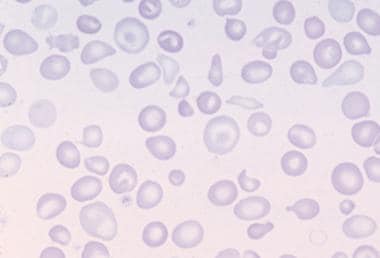
- Peripheral blood film examination usually reveals marked hypochromasia and microcytosis, polychromasia, target cells, and significant variation in the size of the RBCs (see Media file 1).
- Iron studies should be performed, either as baseline in anticipation of iron overload in the future or for diagnosis and management of this condition when suspected.
- Ferritin level is an adequate tool for screening but is not the perfect test for a precise evaluation of the progress of iron overload and the development of tissue damage as a complication. It is a noninvasive test that is easy to obtain and is of value in the early stages of iron overload process; however, it becomes inaccurate when iron accumulates heavily, it lacks sensitivity and specificity, and it correlates poorly with hepatic iron concentration. It is also known to be a positive plasma reactant, which rises in association with inflammation.
- Serum transferrin saturation may provide some information about the patient's iron status; however, it lacks sensitivity. Twenty-four–hour deferoxamine-induced urinary iron excretion is a beneficial test in deciding when chelation therapy should be started (presence of adequate iron available for chelation); it is not a practical test to evaluate iron overload, however. Urine aliquots are not usually collected correctly, the ratio of stool-to-urine iron is variable, and furthermore, it correlates poorly with hepatic iron deposits.
- Either bone marrow grading of iron stores or monitoring the numbers of nucleated red blood cells in the peripheral blood may reflect the stage of iron overload. Patients with thalassemia intermedia tend to develop iron overload somewhat later than those with thalassemia major regardless of whether they are on a transfusion schedule.
- Once the patient is started on blood transfusions, the onset of iron overload should be expected earlier than in patients who are not receiving transfusion, and closer follow-up is required.
- Tests to identify endocrine disturbances such as diabetes mellitus or thyroid, adrenal, or other gland dysfunction are also required.
- Liver function tests are needed at diagnosis and during follow-up, especially in patients who are receiving blood transfusions.
Imaging Studies
- Chest radiography should be obtained to evaluate the size of the heart.
- A skeletal survey should be conducted to evaluate the status of the bones and to monitor bone changes that are due to the chronic hyperactivity of the marrow.
- CT scanning or even MRI of the liver to evaluate iron deposition has been very helpful for monitoring patients on transfusion regimens and chelation therapy. Variable correlation results were reported for both. However, MRI appears to be more informative than CT scanning and is the only modality available to evaluate cardiac and pituitary iron stores.
- Echocardiography should be performed to evaluate the function of the heart.
Other Tests
- With iron overload, ECG is necessary to monitor for cardiac conduction defects (eg, atrioventricular block).
- Genetic counseling and DNA studies using DNA probes from known thalassemia intermedia genotypes are very useful in prenatal diagnosis and identification of new cases in selected patients at risk.
- Study of the genotype yields no advantage and is not warranted to differentiate between thalassemia major and intermedia when, for example, a previously stable Hb level in a patient assumed to have thalassemia intermedia suddenly drops and the patient becomes transfusion dependent.
- Genotype testing is beneficial when deciding whether to terminate a pregnancy when the fetus is affected. A thalassemia intermedia genotype probably indicates a milder disease, and parents may decide to continue the pregnancy.
Procedures
- Examination of liver tissues obtained by ultrasonographically guided biopsy is an optimal way to evaluate body iron burden and the status of the liver itself (eg, fibrosis, inflammation). Cardiac biopsy is not sensitive because the distribution of iron in the heart is not homogeneous. A noninvasive method that correlates precisely with biopsy-determined hepatic iron levels is the susceptometry superconducting quantum interference device (SQUID).
- Once chelation therapy is deemed necessary, evaluation of liver tissue damage from iron deposition is required. Some have suggested that liver histologic studies for iron status be obtained every 2 years.
Histologic Findings
Erythroid hyperplasia is the major finding in the bone marrow. In addition, excessive iron deposition is observed in later stages in both marrow and liver. Osteopenia and osteoporosis are also observed in untreated individuals with relatively low Hb levels. Quantitative assessment of liver iron deposition can be used as a guideline for starting chelation; an iron concentration of 1.5 mg/g of liver (dry weight) has been suggested as an appropriate threshold.
Medical Care
The treatment of most cases of thalassemia intermedia involves close monitoring and observation. - Patients with satisfactory Hb levels are frequently monitored.
- These patients usually require blood transfusions only on certain occasions such as the presence of intercurrent infections, hypersplenism, or other illnesses.
- If patients can no longer maintain an Hb level of more than 6 g/dL, they are either started on a regimen of regular blood transfusions or a different option, such as splenectomy, should be tried. Patients with evidence of hypersplenism have a good chance to have their need for blood transfusion reduced or totally eliminated; this might last for months or years. Others may try to administer one of the drugs that may induce stress erythropoiesis and raise Hb levels. Hydroxyurea has been frequently used for this purpose. In separate studies on a large number of patients, a response rate exceeding 75% was reported after long-term therapy.1 However, this high rate of response was not confirmed by other studies.
- The initial regimen includes transfusion of 10-15 mL of packed red blood cells (PRBC) every 4-5 weeks to keep the Hb level over 10.0 g/dL.
- Blood transfusions should be leukocyte poor to avoid sensitization because such patients have the potential of becoming transfusion dependent in the future.
- Patients should be checked and typed for minor blood groups to avoid further difficulties in providing appropriate blood for them in the future.
- Identification of a small group of dedicated donors minimizes the risk of viral exposure and alloimmunization.
- Iron status must be carefully monitored, and patients with iron overload should be treated with an aggressive chelation regimen as soon as indicated.
- A popular chelation regimen includes administration of deferoxamine 5 days per week as a subcutaneous infusion over 8-12 hours. A new tridentate oral iron chelator, ICL670, which is able to bind tissue iron effectively is currently on a phase III trial in many centers and is available for use in patients who experience difficulties or noncompliance in administering deferoxamine.
- A similar dose is often administered at the time of blood transfusions to help bind the transfused iron (from hemolyzed RBCs).
- Nutritional deficiencies should be addressed and treated.
- A folic acid supplement should be administered.
- Vitamin C supplementation has been effective in enhancing the efficiency of deferoxamine in chelating iron from tissues.
- Patients who have undergone a splenectomy should be placed on prophylactic antibiotics and be treated empirically for any signs of infection or fever while awaiting the results of blood cultures.
- Appropriate vaccinations, including the polyvalent polysaccharide pneumococcal, the Haemophilus influenzae type b, and the quadrivalent meningococcal vaccines, should be administered to patients 1-2 weeks before splenectomy.
- Patients with severe β thalassemia intermedia are prone to infection with Yersinia enterocolitica, similar to individuals with the severe forms of thalassemia major. For this reason, patients who develop fever without clear cause should receive appropriate treatment even if culture results are negative.
- Young children should have their growth and development closely monitored; any deviation from normal should alert the physician to further investigate the need for blood transfusions.
- Failure to thrive, exercise intolerance, and bone deformities and fractures are all potential complications; the health care provider should always look for ways to prevent these complications or at least identify and treat them early with regular blood transfusions, which are frequently effective in reversing or preventing their progress.
- In patients with severe thalassemia intermedia who require aggressive therapy to sustain life, bone marrow transplant, similar to that performed in patients with thalassemia major, is a reasonable alternative to transfusion and chelation if a matched sibling donor is available.
- Many studies have shown that patients with thalassemia intermedia who are not on regular blood transfusion because of their milder symptoms nevertheless develop major complications related to their chronic anemia and ineffective erythropoiesis (IE). Considering the cost-benefit balance of regular treatment in patients with thalassemia major, most patients with thalassemia intermedia would apparently benefit from similar therapy to prevent the complications, rather than waiting to deal with such complications when they occur.
Surgical Care
Splenectomy is frequently recommended for patients who are no longer able to maintain an adequate Hb level. It is usually performed to restore the Hb steady state in patients who are not receiving blood transfusions and frequently succeeds in averting the need for regular transfusions. Observations and case reports have shown that splenectomy in such patients may cause serious venous thrombotic events, ranging from deep vein thrombosis to pulmonary thrombotic lesions complicated by pulmonary hypertension.2, 3, 4, 5 Several reports of serious thrombotic events such as transient ischemic attacks associated with hemiparesis and intracranial manifestations of Moyamoya syndrome were reported postsplenectomy in patients with thalassemia intermedia.5 For this reason, one should delay or reconsider such a procedure whenever possible. This is supported by the fact that many children who underwent splenectomy to avoid becoming transfusion dependent experienced only a transient effect, and most later required regular transfusions. - Placement of a central vascular access catheter in patients with severe disease is very helpful for blood transfusions, daily chelation, and laboratory work, especially when accessing a patient's peripheral veins becomes very difficult.
- In the rare patient with large tumorlike masses that compress vital organs, surgical resection rather than radiation therapy is usually preferred.
- Liver biopsy is indicated in the patient receiving chelation therapy for hemosiderosis to evaluate the degree of liver involvement and iron overload.
Consultations
- Patients in whom thalassemia is suspected should be seen and evaluated by a hematologist.
- Consultation with a cardiologist is indicated to evaluate cardiac function and monitor potential complications due to the anemia, transfusion, or iron overload.
- Consultation with an endocrinologist is indicated for evaluation of possible involvement of various endocrine glands, which could result in diabetes mellitus or a thyroid disorder.
- Patients should be seen by a gastroenterologist for diagnosis and management of liver complications.
Diet
A well-balanced diet with adequate folic acid supply is a necessity. Foods with high iron content should be avoided, particularly meat because heme iron is especially well absorbed. Vitamin C assists absorption of dietary iron; patients should avoid co-ingesting vitamin C and iron-rich foods. Alternatively, drinking tea with iron-rich foods helps chelate some of the iron before it is absorbed in the bowels.
Activity
Many patients with thalassemia intermedia should be able to tolerate most daily activities. However, once the anemia worsens, exercise intolerance develops and may represent a warning sign indicating the need for initiation of blood transfusions. Massive splenomegaly has been observed in severe cases and is a cause for limiting the patient's activity for fear of injury to the abdomen causing rupture of the spleen. Regular transfusions decrease the size of the spleen in most instances, allowing splenectomy to be avoided whenever possible.
No specific medications are available for the treatment of thalassemia intermedia. Most patients with severe disease are prone to developing megaloblastic anemia due to folate deficiency for several reasons, including poor absorption, low dietary intake, and, most importantly, the extreme demand of the very active bone marrow for folic acid. For this reason, most patients benefit from a low dose of folate. Many patients with thalassemia intermedia ultimately require regular blood transfusions, usually about every 3-5 weeks. Similar to patients with thalassemia major, patients with thalassemia intermedia who receive regular transfusions are usually premedicated with an antipyretic, such as acetaminophen, and an antihistamine, such as diphenhydramine, 30 minutes before transfusion to prevent both febrile and allergic reactions. Patients with iron overload should be treated with parenteral chelation therapy. The drug of choice is deferoxamine administered subcutaneously by infusion pump 5 times per week. It can be administered while the patient sleeps. Low-dose vitamin C with each infusion of deferoxamine is beneficial in enhancing iron chelation. An oral iron chelator was recently introduced and proved to be effective. Deferasirox (Exjade) is now widely used in the form of tablets for oral suspension given once a day. Patients with iron overload who develop fever of unknown origin may have Y enterocolitica infection. Treatment with gentamicin and oral trimethoprim-sulfamethoxazole should be initiated if no other cause for the fever is identified. Hepatitis C virus (HCV) infection is the most common cause of hepatitis in patients with thalassemia. Because of the high risk of liver failure or even hepatocellular carcinoma in a liver already damaged by iron toxicity and frequent blood transfusions, HCV infection should be aggressively treated in these patients. Interferon alfa therapy has been effective in many children with HCV infection. Other agents that may be of value in patients with thalassemia intermedia include vitamin E, which may prevent some of the toxic effects of the free radicals and other iron-related toxicity. Penicillin or one of its derivatives should be prophylactically administered for patients who have undergone a splenectomy. Some have also recommended a daily low dose of aspirin as prophylactic treatment in patients with thalassemia intermedia who underwent a splenectomy to prevent thrombotic events.
Drug Category: Antipyretics, analgesic
These agents can help prevent febrile reactions in patients who are frequently transfused and thus may develop sensitization to blood products.
| Drug Name | Acetaminophen (Feverall, Tylenol, Tempra) |
| Description | Antipyretic effect through action on hypothalamic heat-regulating center. Although equal to aspirin in action, preferred because it has fewer adverse effects. |
| Adult Dose | 325-650 mg PO 30 min before transfusion |
| Pediatric Dose | 10-15 mg/kg/dose PO 30 min before transfusion |
| Contraindications | Documented hypersensitivity |
| Interactions | Rifampin can reduce analgesic effects of acetaminophen; coadministration with barbiturates, carbamazepine, hydantoins, and isoniazid may increase hepatotoxicity |
| Pregnancy | B - Fetal risk not confirmed in studies in humans but has been shown in some studies in animals
|
| Precautions | Hepatotoxicity possible in people with chronic alcoholism following various dose levels; severe or recurrent pain or high or continued fever may indicate a serious illness; APAP is contained in many OTC products, and combined use with these products may result in cumulative APAP doses exceeding recommended maximum dose |
Drug Category: Antihistamines
These agents prevent or ameliorate allergic reactions associated with transfusion of blood products.
| Drug Name | Diphenhydramine hydrochloride (Benadryl, Benylin) |
| Description | Elicits anticholinergic and sedative effects. |
| Adult Dose | 25-50 mg PO q6-8h prn; not to exceed 400 mg/d 10-50 mg IV/IM q6-8h prn; not to exceed 400 mg/d |
| Pediatric Dose | Neonates and premature infants: Do not administer Infants and children: 1 mg/kg/dose PO/IV q6h or 5 mg/kg/d PO/IV divided q6h |
| Contraindications | Documented hypersensitivity; MAOIs |
| Interactions | Potentiates effect of CNS depressants; because of alcohol content, do not administer syr dosage form to patient taking medications that can cause disulfiramlike reactions |
| Pregnancy | C - Fetal risk revealed in studies in animals but not established or not studied in humans; may use if benefits outweigh risk to fetus
|
| Precautions | May exacerbate angle closure glaucoma, hyperthyroidism, peptic ulcer, and urinary tract obstruction |
Drug Category: Chelating agents
Chelating agents are an integral part of successful treatment of thalassemia. They remove excess iron deposits that are the main cause of long-term morbidity and mortality in this condition.
| Drug Name | Deferoxamine mesylate (Desferal) |
| Description | Chelates iron from ferritin and hemosiderin but not from transferrin, cytochrome, or Hb. Helps prevent damage to liver and bone marrow from iron deposition. |
| Adult Dose | 1000 mg IV may be administered at a rate not to exceed 15 mg/kg/h; follow by a dose of 500 mg q4h for 2 doses; may administer additional IV infusion slowly over 24 h; not to exceed 6000 mg/d |
| Pediatric Dose | 20-40 mg/kg/d SC by infusion pump over 8-12 h 5 d/wk With blood transfusions: 1-2 g IV slow infusion; not to exceed infusion rate of 15 mg/kg/h |
| Contraindications | Documented hypersensitivity; patients that do not have acute iron poisoning; severe renal disease and anuria (dose reduction after the loading dose should be considered in these circumstances) |
| Interactions | Can cause loss of consciousness when administered with prochlorperazine |
| Pregnancy | C - Fetal risk revealed in studies in animals but not established or not studied in humans; may use if benefits outweigh risk to fetus
|
| Precautions | Tachycardia, hypotension, and shock may occur in patients receiving long-term therapy and could add to the cardiovascular collapse due to iron toxicity; GI adverse effects of the drug include abdominal discomfort, nausea, vomiting, and diarrhea, which may add to the symptoms of acute iron toxicity; flushing and fever are reported; increased susceptibility to Y enterocolitica infection |
| Drug Name | Deferasirox (Exjade) |
| Description | Tab for oral susp. Oral iron chelation agent demonstrated to reduce liver iron concentration in adults and children who receive repeated RBC transfusions. Binds iron with high affinity in a 2:1 ratio. Approved to treat chronic iron overload due to multiple blood transfusions. Treatment initiation recommended with evidence of chronic iron overload (ie, transfusion of about 100 mL/kg packed RBCs [about 20 U for 40-kg person] and serum ferritin level consistently >1000 mcg/L). |
| Adult Dose | Initial: 20 mg/kg/d PO on empty stomach 30 min ac; as initial dose calculate dose to nearest whole tab Maintenance: Adjust dose by 5- to 10-mg/kg/d increments q3-6mo according to serum ferritin level trends; not to exceed 30 mg/kg/d Note: Dissolve tab completely in water, orange juice, or apple juice, then immediately drink susp; resuspend any remaining residue in small volume of liquid and swallow
|
| Pediatric Dose | <2 years: Not established >2 years: Administer as in adults
|
| Contraindications | Documented hypersensitivity |
| Interactions | Data limited; do not take with aluminum-containing antacids |
| Pregnancy | B - Fetal risk not confirmed in studies in humans but has been shown in some studies in animals
|
| Precautions | Common adverse effects include diarrhea, nausea, abdominal pain, headache, pyrexia, cough, and rash; may increase serum creatinine and hepatic enzyme levels; decrease dose with persistent elevation of serum creatinine level; may cause auditory and visual disturbances; slight decreases in serum copper and zinc levels may occur; dissolve tab completely in water, orange juice, or apple juice and drink resulting susp immediately (do not swallow tab whole, do not chew or crush); measure serum ferritin levels monthly and adjust dose every 3-6 mo based on serum ferritin trends |
Drug Category: Antimicrobial agents
These agents are known to be effective against organisms that may cause infection in patients with iron overload who are also receiving deferoxamine therapy. Y enterocolitica infections are rare in healthy patients because the organism requires siderophores, which are present in patients with thalassemia but not in healthy patients. The appropriate therapy is a combination of trimethoprim-sulfamethoxazole and gentamicin. Patients who require splenectomy must receive prophylactic antibiotics to prevent fulminating sepsis, especially patients younger than 5 years.
| Drug Name | Trimethoprim-sulfamethoxazole (Bactrim, Septra, Cotrim) |
| Description | By blocking tetrahydrofolic acid, selectively inhibits synthesis of nucleic acids and proteins by bacteria. |
| Adult Dose | 160 mg (trimethoprim)/800 mg (sulfamethoxazole) PO q12h (ie, one double-strength [DS] tab PO q12h) |
| Pediatric Dose | <2 months: Do not administer >2 months: 8-10 mg/kg/d (based on trimethoprim component) PO/IV divided q12h |
| Contraindications | Documented hypersensitivity; megaloblastic anemia due to folate deficiency; age <2 mo |
| Interactions | May increase PT when used with warfarin (perform coagulation tests and adjust dose accordingly); coadministration with dapsone may increase blood levels of both drugs; coadministration of diuretics increases incidence of thrombocytopenia purpura in elderly patients; phenytoin levels may increase with coadministration; may potentiate effects of methotrexate in bone marrow depression; hypoglycemic response to sulfonylureas may increase with coadministration; may increase levels of zidovudine |
| Pregnancy | C - Fetal risk revealed in studies in animals but not established or not studied in humans; may use if benefits outweigh risk to fetus
|
| Precautions | Do not use near term in pregnancy because of risk of kernicterus; discontinue at first appearance of skin rash or sign of adverse reaction; obtain CBC counts frequently; discontinue therapy if significant hematologic changes occur; goiter, diuresis, and hypoglycemia may occur with sulfonamides; prolonged IV infusions or high doses may cause bone marrow depression (if signs occur, administer 5-15 mg/d leucovorin); caution in folate deficiency (eg, people with long-term alcoholism, elderly people, those receiving anticonvulsant therapy, those with malabsorption syndrome); hemolysis may occur in individuals with G-6-PD deficiency; patients with AIDS may not tolerate or respond to therapy; caution in renal or hepatic impairment (perform urinalyses and renal function tests during therapy); administer fluids to prevent crystalluria and stone formation |
| Drug Name | Gentamicin |
| Description | An aminoglycoside. Effective against gram-negative aerobic microorganisms. |
| Adult Dose | 1-1.5 mg/kg IV q8h with normal renal function |
| Pediatric Dose | 6-7.5 mg/kg/d IV divided q8h |
| Contraindications | Documented hypersensitivity; non–dialysis-dependent renal insufficiency |
| Interactions | Coadministration with other aminoglycosides, cephalosporins, penicillins, and amphotericin B may increase nephrotoxicity; aminoglycosides enhance effects of neuromuscular blocking agents, thus prolonged respiratory depression may occur; coadministration with loop diuretics may increase auditory toxicity of aminoglycosides; possible irreversible hearing loss of varying degrees may occur (monitor regularly) |
| Pregnancy | C - Fetal risk revealed in studies in animals but not established or not studied in humans; may use if benefits outweigh risk to fetus
|
| Precautions | Narrow therapeutic index (not intended for long-term therapy); caution in renal failure (patient not on dialysis), myasthenia gravis, hypocalcemia, and conditions that depress neuromuscular transmission; adjust dose in renal impairment |
| Drug Name | Penicillin V (Veetids) |
| Description | DOC for prophylaxis in patients with thalassemia who have undergone a splenectomy (erythromycin used in patients allergic to penicillin); active against most microorganisms considered to be major pathogens in splenectomized patients (ie, streptococcal, pneumococcal, and some staphylococcal microorganisms) but not penicillinase-producing species. Prophylaxis provided for >3 y after splenectomy. |
| Adult Dose | 250-500 mg PO bid |
| Pediatric Dose | <5 years: 125 mg/dose PO bid >5 years: 250 mg/dose PO bid Streptococcal infections: Administer above doses for >10 d Prophylaxis: Treat for >3 y after splenectomy |
| Contraindications | Documented hypersensitivity |
| Interactions | Probenecid may increase effectiveness by decreasing clearance; tetracyclines are bacteriostatic, causing a decrease in the effectiveness of penicillins when administered concurrently |
| Pregnancy | C - Fetal risk revealed in studies in animals but not established or not studied in humans; may use if benefits outweigh risk to fetus
|
| Precautions | Patients with asthma may have hypersensitivity; PO route usually not adequate for treatment of severe infections; treat for minimum of 10 d for streptococcal infections |
Drug Category: Vitamins
These agents are compounds that are present in small amounts in food and are essential for normal metabolism, cell function, and healthy tissues.
| Drug Name | Ascorbic acid (Cecon, Cevalin, Vita-C) |
| Description | Vitamin C has been shown to enhance the function of deferoxamine by keeping iron in a form that can be chelated. When administered with deferoxamine, allows more iron to be removed. |
| Adult Dose | 100-200 mg/d PO during deferoxamine therapy |
| Pediatric Dose | 3 mg/kg/d PO with SC deferoxamine infusion |
| Contraindications | Documented hypersensitivity |
| Interactions | Decreases effects of warfarin and fluphenazine; increases aspirin levels |
| Pregnancy | A - Fetal risk not revealed in controlled studies in humans
|
| Precautions | Use in patients with severe iron overload may induce a short-term deterioration with acute cardiac toxicity |
| Drug Name | Folic acid (Folvite) |
| Description | Required for DNA synthesis; therefore, patients with all conditions associated with rapid cellular turnover, such as hyperactive marrow in thalassemia, have greatly increased demand. Because use of folic acid in hemolytic anemias is extreme, deficiency states are fairly common in most of these patients. Patients who do not receive folic acid supplementation may develop megaloblastic anemia, increasing the severity of the original disease process. |
| Adult Dose | 1 mg PO qd |
| Pediatric Dose | Administer as in adults |
| Contraindications | Documented hypersensitivity; pernicious anemia; aplastic anemia |
| Interactions | Increase in seizure frequency and a decrease in subtherapeutic levels of phenytoin reported when used concurrently |
| Pregnancy | A - Fetal risk not revealed in controlled studies in humans
|
| Precautions | Pregnancy category C if dose exceeds RDA; benzyl alcohol may be contained in some products as a preservative (associated with a fatal gasping syndrome in premature infants); resistance to treatment may occur in patients with alcoholism and deficiencies of other vitamins |
Drug Category: Antioxidants
Vitamin E has been shown to help in decreasing iron-mediated toxic effects on cells by preventing or decreasing membrane-lipid peroxidation.
| Drug Name | Vitamin E (Vita-Plus E Softgels, Vitec, Aquasol E) |
| Description | MOA has been known for many years. In newborn or premature infants, in particular, deficiency has resulted in peculiar red blood cell morphology, leading to hemolysis; these changes are reversed by vitamin E. Peroxidation of membrane lipids by various oxidants, including iron-mediated oxygen radicals, is the main cause of this hemolysis and can be prevented by antioxidants such as vitamin E. |
| Adult Dose | 50-2000 IU/d PO |
| Pediatric Dose | 1 IU/kg/d PO |
| Contraindications | Documented hypersensitivity |
| Interactions | Mineral oil decreases absorption of vitamin E; vitamin E delays absorption of iron and increases effects of anticoagulants |
| Pregnancy | A - Fetal risk not revealed in controlled studies in humans
|
| Precautions | Pregnancy category C if dose exceeds RDA; vitamin E may induce vitamin K deficiency; necrotizing enterocolitis may occur when large doses of vitamin E are administered |
Drug Category: Corticosteroids
These agents can help prevent local and systemic reactions to exogenous agents.
| Drug Name | Hydrocortisone (Solu-Cortef, Cortef) |
| Description | An anti-inflammatory adrenocortical steroid. Helps prevent local reaction to SC perfusion of deferoxamine. Both sodium succinate (Solu-Cortef) and sodium phosphate (Cortef) forms are used for IV infusions, but sodium acetate form (Hydrocortone) is not. |
| Pediatric Dose | Newborns: Do not administer Infants and children: 5-10 mg added to deferoxamine solution before infusion |
| Contraindications | Documented hypersensitivity; systemic fungal infection; tuberculosis; peptic ulcer; newborn infant (because of benzyl alcohol content) |
| Interactions | Corticosteroid clearance may decrease with estrogens; may increase digitalis toxicity secondary to hypokalemia |
| Pregnancy | C - Fetal risk revealed in studies in animals but not established or not studied in humans; may use if benefits outweigh risk to fetus
|
| Precautions | Many adverse effects are known, but minimal doses used in this setting reduce this concern; however, because deferoxamine therapy is long term and must be administered almost daily, serious consideration is required for any condition that might be a contraindication; abrupt withdrawal may cause acute adrenal insufficiency; caution in hyperthyroidism, liver cirrhosis, ulcerative colitis, hypertension, and osteoporosis |
Drug Category: Vaccines
Patients who have undergone a splenectomy are prone to developing infections with any of 3 common encapsulated organisms (ie, Pneumococcus species, H influenzae, and Meningococcus species). Patients who are to undergo splenectomy now receive immunizations against these organisms 1-2 weeks before the procedure. This practice allows the spleen to participate in production of antibodies before being removed.
| Drug Name | Pneumococcal vaccine/PS23 (Pneumovax-23, Pnu-Imune 23) |
| Description | The older polyvalent/polysaccharide vaccine contains the 23 most prevalent serotypes responsible for about 70% of all invasive infectious diseases, but it cannot be administered to children <2 y. A new generation of this vaccine, called conjugate vaccine, now available, has only 7 serotypes, but it can be administered to infants as young as 2 mo. This is a very important achievement because splenectomized infants are more prone to develop pneumococcal infections than any other group of patients. Conjugate form is administered in a series of 2-3 doses at ages 2, 4, and 6 mo. |
| Pediatric Dose | <2 years: Do not administer polyvalent vaccine >2 years: 0.5 mL IM as primary vaccination Splenectomy: 0.5 mL IM 1-2 wk before surgery Booster dose (ie, 0.5 mL IM) usually administered 3-5 y after first dose |
| Contraindications | Documented hypersensitivity; children <2 y (polyvalent vaccine) |
| Interactions | May be administered with other vaccines recommended before splenectomy in different syringes and at different sites; immunosuppressive agents (eg, large amounts of corticosteroids, antimetabolites, alkylating agents, cytotoxic agents) may reduce effectiveness; therapy with immunoglobulin preparations is likely to block the active immunity induced with pneumococcal vaccination, withhold for 3 mo after discontinuation of immunoglobulin therapy |
| Pregnancy | C - Fetal risk revealed in studies in animals but not established or not studied in humans; may use if benefits outweigh risk to fetus
|
| Precautions | May cause moderately severe or severe illness with or without fever, arthralgias, urticaria, or Guillain-Barré syndrome (rarely) |
| Drug Name | Haemophilus influenzae b conjugate vaccine (ActHIB, HibTITER, PedvaxHIB |
| Description | Recommended 2 wk before splenectomy. Patients who have already received their primary vaccination early in life and also received booster at 12 mo or later are usually protected, even though they may benefit from an additional dose before procedure. Conjugate form administered in a series of 2-3 doses at ages 2, 4, and 6 mo. |
| Pediatric Dose | 0.5 mL IM before surgery |
| Contraindications | Documented hypersensitivity to any component including thimerosal |
| Interactions | Corticosteroids or cyclosporine may inhibit full immunologic response |
| Pregnancy | C - Fetal risk revealed in studies in animals but not established or not studied in humans; may use if benefits outweigh risk to fetus
|
| Precautions | Delay immunization if febrile illness is evident; may cause erythema, swelling, or tenderness; cause-and-effect relationship with observed postvaccine Guillain-Barré syndrome has not been established |
| Drug Name | Meningococcal vaccine (Menomune A/C/Y/W-135) |
| Description | Similar to polyvalent pneumococcal vaccine, this is used in children >2 y with risk (eg, complement deficiency, asplenia). Serogroup specific against groups A, C, Y, and W-135 N meningitides. |
| Pediatric Dose | <2 years: Do not administer >2 years: 0.5 mL SC |
| Contraindications | Documented hypersensitivity; age <2 y; IV/IM/ID administration |
| Interactions | Administration of immunoglobulin within 1 mo or concurrent administration with immunosuppressive agents may inhibit full immunologic response; coadministration with whole-cell pertussis or whole-cell typhoid vaccines may increase endotoxin content |
| Pregnancy | C - Fetal risk revealed in studies in animals but not established or not studied in humans; may use if benefits outweigh risk to fetus
|
| Precautions | Localized erythema at injection site; asplenic patients with lymphoid tumors who receive either chemotherapy or irradiation respond poorly; avoid during course of acute illness; routine vaccination recommended for high-risk groups (eg, deficiencies in late complement components [C3, C5-C-9], personnel with laboratory or industrial exposure to Neisseria meningitidis aerosols, travelers, residents of hyperendemic areas); for information concerning geographic areas in which vaccination is recommended, contact the Centers for Disease Control and Prevention (404-332-4559); serious adverse reactions should be reported to United States Department of Health and Human Services (1-800-822-7967) |
| Drug Name | Pneumococcal 7-valent conjugate vaccine (Prevnar) |
| Description | Sterile solution of saccharides of capsular antigens of Streptococcus pneumoniae serotypes 4, 6B, 9V, 14, 18C, 19F, and 23F individually conjugated to diphtheria CRM197 protein. These 7 serotypes have been responsible for >80% of invasive pneumococcal disease in children <6 y in the United States. Also accounted for 74% of penicillin-nonsusceptible S pneumoniae (PNSP) and 100% of pneumococci with high-level penicillin resistance. Customary age for first dose is 2 mo, but it can be administered to infants as young as 6 wk. |
| Adult Dose | Not established |
| Pediatric Dose | 3 doses of 0.5 mL IM each at 6-8 wk intervals, followed by a fourth dose of 0.5 mL at age 12-15 mo; recommended dosing interval is 6-8 wk; administer fourth dose 2 mo, or later, following the third dose |
| Contraindications | Documented hypersensitivity to any component or diphtheria toxoid; severe or moderate febrile illness; thrombocytopenia or coagulation disorder contraindicating IM injection (unless benefits outweigh risks of administration) |
| Interactions | Effects may decrease with immunosuppressive agents (eg, immunosuppressive doses of corticosteroids, antimetabolites, alkylating agents, cytotoxic agents); pneumococcal 7-valent conjugate vaccine may increase effects of anticoagulant therapy; globulin preparations may interfere with immune response to pneumococcal vaccine and reduce efficacy (do not administer within 3 mo of vaccine) |
| Pregnancy | C - Fetal risk revealed in studies in animals but not established or not studied in humans; may use if benefits outweigh risk to fetus
|
| Precautions | For IM use only, do not administer IV under any circumstances; take special care to prevent injection into or near a blood vessel or nerve; caution in patients with possible history of latex sensitivity (packaging contains dry natural rubber); use of pneumococcal conjugate vaccine does not replace use of 23-valent pneumococcal polysaccharide vaccination in children aged >24 mo with sickle cell disease, asplenia, HIV infection, chronic illness, or those who are immunocompromised; caution in coagulation disorders |
Further Inpatient Care
- Most medical care in thalassemia intermedia is provided in an outpatient setting. Inpatient care is reserved for surgical procedures such as splenectomy or resection of large extramedullary hematopoietic tumorlike masses compressing vital organs, infectious complications, or in rare severe cases that are treated by a bone marrow transplant.
Further Outpatient Care
- Frequent outpatient visits are needed in the early stages to monitor hematologic parameters, activity, exercise tolerance, growth, and development of bone changes. Once the patient requires regular transfusions, monthly outpatient visits for blood transfusions and laboratory work for monitoring iron load status are usually required. While receiving chelation therapy, patients should have eye examinations and hearing tests as part of monitoring for the complications of deferoxamine therapy.
Deterrence/Prevention
- Prevention of thalassemia intermedia is based on public education, family counseling, and widespread measures, such as screening before marriage in high-risk populations, similar to those recommended for thalassemia in general.
Complications
- Most complications expected in thalassemia intermedia have been described in other sections. The conversion of thalassemia intermedia to a transfusion-dependent state is, by itself ,the most serious complication because that marks the transition of thalassemia intermedia to a more severe form of β thalassemia.
- As a result of the advanced care provided to patients with thalassemia, they are now surviving to an advanced age. With this longer survival comes new problems, which require a change in the approach to the care of affected patients. Three such complications have recently been described as major issues in the adults with thalassemia.
- HCV infection is a major complication of the lifelong blood transfusions in patients with the severe forms of thalassemia. This is probably less of a problem in patients with thalassemia intermedia who are not transfusion dependent. Nevertheless, HCV has also been reported in patients with thalassemia who have never had transfusions.
- The incidence of positive HCV antibodies or RNA in patients aged 25 years or older (who were treated before the screening for HCV was initiated in 1990) was reported by the Thalassemia Clinical Research Network (TCRN) to be as high as 70% compared with only 5% in patients aged 15 years or younger.6 The American Association of Blood Banks (AABB) has reported that the chance to contract HCV from blood transfusions in the United States is 1 per 1 million units transfused. Unfortunately, this is not the case in some developing countries where the rate was reported to be 63.8%.
- HCV and iron overload are risk factors for cirrhosis and hepatocellular carcinoma (HCC); for this reason, many recommend to monitor such patients closely with liver ultrasonography and alpha fetoprotein level (AFP). About 33% of patients with HCV in North America are expected to spontaneously clear the virus.
- Thrombotic events have been increasingly encountered not only in patients with thalassemia intermedia but also in those with thalassemia major and β thalassemia/Hb E disease. In one study of 85 patients with thalassemia intermedia and 65 with thalassemia major, the incidence of venous thromboembolic events was 29% and 2%, respectively. Twenty-three of the 24 patients with thalassemia intermedia and venous thromboembolic events had undergone splenectomy. For this reason, some recommend short-term antithrombotic therapy both perioperatively and when a risk factor for thrombosis exists. A low-dose daily aspirin is also recommended for all patients with thalassemia who are splenectomized and for those with thalassemia major and a platelet count of 600,000/mL after splenectomy.
- Fertility in adult patients with thalassemia is another new issue that providers have to deal with.
- Severe thalassemia is often characterized by hypersplenism, which usually results in exaggerated anemia, thrombocytopenia, and enlarged abdomen.
- Iron overload, liver disease, and cardiac and endocrine defects are also encountered in this condition.
- Bone deformities, fractures, and neurologic complications from compression by tumorlike extramedullary hematopoietic tissue masses are more frequently observed in thalassemia intermedia than in thalassemia major because the hyperactivity of the marrow in patients with untreated thalassemia intermedia is not suppressed by repeated blood transfusions.
- Complications of blood transfusions, such as hepatitis and other transmitted organisms, are all well known.
Prognosis
- Patients with milder cases have good prognosis; however, after several years of stable disease, many patients develop the severe form and become transfusion dependent. Patients with the severe forms have the same prognosis as those with thalassemia major.
- In most cases, the transformation from the stable state to the transfusion-dependent state is usually gradual. A patient with an Hb of 7-8 g/dL for a long time may drop to 6 g/dL or less. In this case, and in the closely monitored patient, the drop is frequently attributed to a viral infection or transient cause. A single blood transfusion is usually recommended, and the patient is closely monitored. In many occasions, the patient's status continues as before, and no more blood is needed for the time.
- However, in other patients, a month or so after the transfusion, the Hb drops again and, at this time, the spleen (which has been enlarged all along) is now larger or more active; therefore, splenectomy is usually considered. Many patients respond well to the procedure and require no more blood for the time being. However, others maintain good Hb for several months or longer before developing the severe anemia again. At this time, the need for regular blood transfusions becomes clear; close monitoring for iron overload followed by chelation therapy when indicated should be undertaken. For this reason, all patients with thalassemia intermedia should be closely monitored in anticipation for developing such changes, which require immediate action.
Patient Education
Education of the population at risk is the most effective prevention method. Measures similar to those undertaken in certain parts of Europe have been very effective in decreasing the numbers of patients with thalassemia in general (see Thalassemia, Beta). Even in developing countries, massive education about thalassemia has changed the outlook and provided local people a great incentive to do whatever is necessary to eliminate the condition or at least minimize its severity.
Medical/Legal Pitfalls
- The diagnosis of thalassemia intermedia is purely clinical and is usually made after a period of observation to determine that the patient is able to maintain a satisfactory Hb level for a long time without the need for blood transfusions. If the physician settles for a marginal level of Hb and decides not to initiate blood transfusion therapy, the patient's Hb level may fluctuate and decrease further, potentially reaching a very low level if the patient is not closely monitored. Should this occur, permanent damage, including heart failure, bone deformity, hypersplenism, liver damage, or other complications, may occur. In otherwise similar circumstances, patients with marginally severe disease should be treated in the same way as patients with thalassemia major to avoid medicolegal actions that may leave the provider liable.
- In prenatal diagnosis of thalassemia intermedia, DNA probes of known genotypes are usually used. Because this condition varies significantly in severity (despite the misleading name), a milder form of disease may be anticipated in a baby who turns out to be affected by a more severe form of the disease. For this reason, parents should be informed in advance that testing may help rule out the possibility of severe disease (such as when a heterozygous condition is diagnosed) or may confirm severe disease when a homozygosity or heterozygosity for 2 severe mutations is confirmed. However, intermediate cases may be misleading, and the predictability is much less accurate.
- Increased absorption of iron in all forms of thalassemia results in hemosiderosis or iron overload regardless of whether the patient is receiving regular blood transfusions. Failure to monitor for or recognize this may end in significant organ damage. For this reason, close monitoring of iron status, ferritin level, and liver function tests is needed for evaluation. When in doubt about whether iron levels in the patient's tissues are sufficient to initiate chelation, a deferoxamine challenge test with measurement of urinary iron excreted is appropriate.
| Media file 1:
Peripheral blood film in thalassemia intermedia. |
 | View Full Size Image | |
Media type: Photo
|
- Karimi M, Darzi H, Yavarian M. Hematologic and clinical responses of thalassemia intermedia patients to hydroxyurea during 6 years of therapy in Iran. J Pediatr Hematol Oncol. Jul 2005;27(7):380-5. [Medline].
- Atichartakarn V, Angchaisuksiri P, Aryurachai K, Chuncharunee S, Thakkinstian A. In vivo platelet activation and hyperaggregation in hemoglobin E/beta-thalassemia: a consequence of splenectomy. Int J Hematol. Apr 2003;77(3):299-303. [Medline].
- Blendis LM, Modell CB, Bowdler AJ. Some effects of splenectomy in thalassaemia major. Br J Haematol. Sep 1974;28(1):77-87. [Medline].
- Cappellini MD, Grespi E, Cassinerio E, Bignamini D, Fiorelli G. Coagulation and splenectomy: an overview. Ann N Y Acad Sci. 2005;1054:317-24. [Medline].
- Sanefuji M, Ohga S, Kira R, et al. Moyamoya syndrome in a splenectomized patient with beta-thalassemia intermedia. J Child Neurol. Jan 2006;21(1):75-7. [Medline].
- Cunningham MJ, Macklin EA, Neufeld EJ, et al. Complications of beta-thalassemia major in North America. Blood. Jul 1 2004;104(1):34-9. [Medline].
- Aessopos A, Kati M, Farmakis D. Heart disease in thalassemia intermedia: a review of the underlying pathophysiology. Haematologica. May 2007;92(5):658-65. [Medline].
- Aessopos A, Kati M, Meletis J. Thalassemia intermedia today: should patients regularly receive transfusions?. Transfusion. May 2007;47(5):792-800. [Medline].
- Gardenghi S, Marongiu MF, Ramos P, et al. Ineffective erythropoiesis in beta-thalassemia is characterized by increased iron absorption mediated by down-regulation of hepcidin and up-regulation of ferroportin. Blood. Jun 1 2007;109(11):5027-35. [Medline].
- Lagos P, Lagona E, Kattamis C. Serum ferritin in beta-thalassaemia intermedia. Lancet. Jan 26 1980;1(8161):204-5. [Medline].
- Lilleyman JS, Hann IM, Blanchette V. The thalassemia. In: Pediatric Hematology. 2000:316, 325.
- Luyendijk W, Went L, Schaad HD. Spinal cord compression due to extramedullary hematopoiesis in homozygous thalassemia. Case report. J Neurosurg. Feb 1975;42(2):212-6. [Medline].
- McIntosh N. Beneficial effects of transfusing a patient with nontransfusion-dependent thalassaemia major. Arch Dis Child. Jun 1976;51(6):471-2. [Medline].
- Nathan DG, Oski FA. The tha
|