|
Related Articles | Conjunctivitis, Acute Hemorrhagic
Conjunctivitis, Allergic
Conjunctivitis, Bacterial
Conjunctivitis, Giant Papillary
Conjunctivitis, Neonatal
Contact Lens Complications
Keratitis, Herpes Simplex
Keratoconjunctivitis, Atopic
Keratoconjunctivitis, Epidemic
Keratoconjunctivitis, Sicca
Nasolacrimal Duct, Obstruction
Pharyngoconjunctival Fever
Red Eye Evaluation
Uveitis, Anterior, Nongranulomatous
|
|
You are in: eMedicine Specialties >
Ophthalmology > CONJUNCTIVA
Conjunctivitis, Viral
Article Last Updated: Mar 8, 2007
AUTHOR AND EDITOR INFORMATION
Section 1 of 10
Author: Ingrid U Scott, MD, MPH, Professor, Department of Ophthalmology and Public Health Sciences, Penn State College of Medicine
Ingrid U Scott is a member of the following medical societies: American Academy of Ophthalmology, American Medical Association, American Society of Cataract and Refractive Surgery, American Society of Retina Specialists, Association for Research in Vision and Ophthalmology, Macula Society, Phi Beta Kappa, and Retina Society
Coauthor(s):
Kevin K M Luu, MD, Consulting Staff, Pediatric Anesthesia Associates Medical Group Inc; Consulting Staff, Children's Hospital Central California
Editors: Jerre Freeman, MD, Founder, Chairman, Memphis Eye and Cataract Associates; Clinical Professor, Department of Ophthalmology, University of Tennessee Health Science Center; Francisco Talavera, PharmD, PhD, Senior Pharmacy Editor, eMedicine; Christopher J Rapuano, MD, Professor, Department of Ophthalmology, Jefferson Medical College; Co-Chairman of the Cornea Service, Co-Chairman of Refractive Surgery Department, Wills Eye Hospital; Lance L Brown, OD, MD, Ophthalmologist, Affiliated With Freeman Hospital and St John's Hospital, Regional Eye Center, Joplin, Missouri; Hampton Roy Sr, MD, Associate Clinical Professor, Department of Ophthalmology, University of Arkansas for Medical Sciences
Author and Editor Disclosure
Synonyms and related keywords:
viral conjunctivitis, conjunctival infection, adenovirus, adenoviral conjunctivitis, epidemic keratoconjunctivitis, pinkeye, pink eye, pharyngoconjunctival fever, herpes simplex virus, HSV, ocular herpes simplex infection, follicular conjunctivitis, varicella-zoster virus, VZV, picornavirus, enterovirus 70, Coxsackie A24, hemorrhagic conjunctivitis, poxvirus, molluscum contagiosum, vaccinia, human immunodeficiency virus, HIV
Background
Viruses are a common cause of conjunctivitis in patients of all ages. A variety of viruses can be responsible for conjunctival infection; however, adenovirus is by far the most common cause, and herpes simplex virus (HSV) is the most problematic. Less common causes include varicella-zoster virus (VZV), picornavirus (enterovirus 70, Coxsackie A24), poxvirus (molluscum contagiosum, vaccinia), and human immunodeficiency virus (HIV). Rarely, conjunctivitis is seen during systemic infection with influenza virus, Epstein-Barr virus, paramyxovirus (measles, mumps, Newcastle), and rubella.
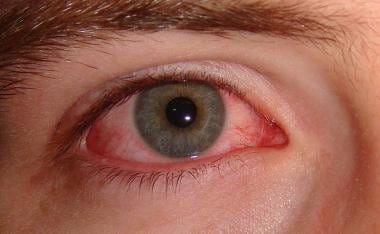
Viral conjunctivitis, although usually benign and self-limited, tends to follow a longer course than acute bacterial conjunctivitis, lasting for approximately 2-4 weeks. Viral infection is characterized commonly by an acute follicular conjunctival reaction and preauricular adenopathy.
Pathophysiology
Adenoviral conjunctivitis is the most common cause of viral conjunctivitis. Particular subtypes of adenoviral conjunctivitis include epidemic keratoconjunctivitis (pink eye) and pharyngoconjunctival fever. Transmission occurs through contact with infected upper respiratory droplets, fomites, and contaminated swimming pools.
Primary ocular herpes simplex infection is common in children and usually is associated with a follicular conjunctivitis. Infection usually is caused by HSV type I, although HSV type II may be a cause, especially in neonates. Recurrent infection, typically seen in adults, usually is associated with corneal involvement.
VZV can affect the conjunctiva during primary infection (chickenpox) or secondary infection (zoster). Infection can be caused by direct contact with VZV or zoster skin lesions or by inhalation of infectious respiratory secretions.
Picornaviruses cause an acute hemorrhagic conjunctivitis that is clinically similar to adenoviral conjunctivitis but is more severe and hemorrhagic. Infection is highly contagious and occurs in epidemics.
Molluscum contagiosum may produce a chronic follicular conjunctivitis that occurs secondary to shedding of viral particles into the conjunctival sac from an irritative eyelid lesion.
Vaccinia virus has become a rare cause of conjunctivitis because with the elimination of smallpox, the vaccination rarely is administered. Infection occurs through accidental inoculation of viral particles from the patient's hands.
HIV is the etiologic agent of acquired immunodeficiency syndrome (AIDS). Ocular abnormalities in patients with AIDS primarily affect the posterior segment, but anterior segment findings have been reported. When conjunctivitis occurs in a patient with AIDS, it tends to follow a more severe and prolonged course than in patients without AIDS. In general, patients with AIDS may develop a transient nonspecific conjunctivitis, characterized by irritation, hyperemia, and tearing, that requires no specific treatment. Microsporidia has been isolated from the cornea and conjunctiva of several patients with AIDS and keratoconjunctivitis. In these patients, symptoms included foreign body sensation, blurred vision, and photophobia; most cases resolved without antimicrobial therapy.
Frequency
United States
Viral conjunctivitis is a common ocular disease both in the United States and worldwide. Because it is so common, and many cases are not brought to medical attention, accurate statistics on the frequency of disease are unavailable. Viral infection frequently occurs in epidemics within families, schools, offices, and military organizations.
International
Same as in the United States.
Mortality/Morbidity
Most cases of viral conjunctivitis are self-limited and mild, although chronic infections have been reported. Long-term ocular sequelae are uncommon.
Sex
Viral conjunctivitis can occur equally in men and women.
Age
Viral conjunctivitis can affect all age groups, depending on the specific viral etiology. Usually, adenovirus affects patients aged 20-40 years. HSV and primary VZV infection usually affect young children and infants. Herpes zoster ophthalmicus results from reactivation of latent VZV infection and may present in any age group. Typically, the picornaviruses affect children and young adults in the lower socioeconomic classes.
History
While the manifestations of various types of bacterial conjunctivitis are fairly homogenous, those of viral conjunctivitis can vary from one disease process to another. History should focus on eliciting information that will aid in differentiating the various etiologic agents of viral infection.
- Inquire about timing, onset, and duration of systemic and ocular symptoms; severity and frequency of symptoms; appropriate risk factors; and personal and environmental exposures.
- Patients with adenoviral conjunctivitis may give a history of recent exposure to an individual with red eye at home, school, or work, or they may have a history of recent symptoms of an upper respiratory tract infection. The eye infection may be unilateral or bilateral.
- Patients may complain of ocular itching, foreign body sensation, tearing, redness, and photophobia (with corneal involvement as in epidemic keratoconjunctivitis).
- Systemic manifestations are rare, except in cases of pharyngoconjunctival fever.
- Primary ocular HSV infection predominantly affects young children and infants, but it may occur in individuals of all ages. Patients usually present with a red, irritated, watery eye. Often, concomitant eyelid skin involvement with multiple vesicular lesions is present.
- VZV is characterized by a generalized vesicular eruption, fever, and constitutional symptoms. Ocular infection usually is unilateral and presents as small papular lesions that erupt along the lid margin or at the limbus and may be accompanied by a mild follicular conjunctivitis.
- Herpes zoster ophthalmicus represents reactivation of latent VZV infection of the trigeminal ganglion. It is characterized by a prodrome of fever, malaise, nausea, vomiting, and severe pain and skin lesions along the ophthalmic division of the trigeminal nerve. Conjunctival involvement includes hyperemia, follicular or papillary conjunctivitis, and a serous or mucopurulent discharge.
- Acute hemorrhagic conjunctivitis has been reported in epidemics in association with 2 major picornaviruses, enterovirus 70 and Coxsackie A24. It mostly affects children and young adults in the lower socioeconomic classes. Patients experience a rapid onset of watery discharge, foreign body sensation, burning, and photophobia within 24 hours of exposure.
- Molluscum contagiosum can produce a chronic follicular conjunctivitis in association with an irritative eyelid lesion. The lesion usually is a small, elevated, pearly, umbilicated nodule near the lid margin. Multiple lesions may be present, especially in patients who are HIV positive.
- Other viruses are less frequent causes of conjunctivitis. In these cases, conjunctivitis usually occurs in association with a systemic illness and includes infections caused by influenza virus, Epstein-Barr virus, paramyxovirus (measles, mumps, Newcastle), rubella, and HIV.
Physical
- Typical signs of adenoviral conjunctivitis include preauricular adenopathy, epiphora, hyperemia, chemosis, subconjunctival hemorrhage, follicular conjunctival reaction, and occasionally a pseudomembranous or cicatricial conjunctival reaction. The cornea often demonstrates a punctate epitheliopathy. The eyelids often are edematous and ecchymotic. In severe cases, there can be a corneal epithelial defect. It typically begins in one eye and progresses to the fellow eye over a few days. The second eye is usually less significantly involved.
- With HSV infection, vesicles may be present on the eyelid or face, the eyelids may be swollen, and an ulcerative blepharitis may be present.
- Corneal involvement in HSV manifests as a dendritic keratitis with typical features of linear branching and dendritic figures.
- Small papular lesions that erupt along the lid margin or at the limbus are present with varicella conjunctivitis. These lesions may resolve without sequelae, or they may become pustular and form painful reactive conjunctival ulcers.
- In herpes zoster ophthalmicus, look for skin involvement with the appearance of a dermatomal pattern of vesicles. These vesicles may become necrotic, resulting in pitted scarring of the skin. Conjunctival involvement includes hyperemia, follicular or papillary conjunctivitis, and a serous or mucopurulent discharge. Preauricular adenopathy is common. Very early in the process, there may be multiple fine dendritic corneal lesions, which disappear over a few days without treatment.
- Acute hemorrhagic conjunctivitis starts unilaterally but rapidly involves the fellow eye within 1 or 2 days. Signs on examination include a swollen, edematous eyelid, and pronounced hemorrhage beneath the bulbar conjunctiva.
Causes
A variety of viruses can be responsible for conjunctival infection. Adenovirus is the most common cause, and HSV is the most problematic. Less common causes include VZV, picornavirus (enterovirus 70, Coxsackie A24), poxvirus (molluscum contagiosum, vaccinia), and HIV.
Conjunctivitis, Acute Hemorrhagic
Conjunctivitis, Allergic
Conjunctivitis, Bacterial
Conjunctivitis, Giant Papillary
Conjunctivitis, Neonatal
Contact Lens Complications
Keratitis, Herpes Simplex
Keratoconjunctivitis, Atopic
Keratoconjunctivitis, Epidemic
Keratoconjunctivitis, Sicca
Nasolacrimal Duct, Obstruction
Pharyngoconjunctival Fever
Red Eye Evaluation
Uveitis, Anterior, Nongranulomatous
Other Problems to be Considered
HSV keratoconjunctivitis
VZV keratoconjunctivitis
Ocular chlamydial infections
Vernal keratoconjunctivitis
Blepharoconjunctivitis
Contact lens keratoconjunctivitis
Foreign body
Epithelial keratitis
Lab Studies
- Generally, a diagnosis of viral conjunctivitis is made on the clinical features alone. Such findings include the classic corneal dendrites of HSV infection and follicular conjunctivitis, and preauricular adenopathy associated with adenoviral infection.
- Conventional laboratory identification can be expensive and time-consuming but may be helpful in certain circumstances.
- Specimens should be obtained for culture and smear if inflammation is severe, in chronic or recurrent infections, with atypical conjunctival reactions, and with failure to respond to treatment.
- Giemsa staining of conjunctival scrapings may aid in characterizing the inflammatory response. Polymorphonuclear cells are prevalent in bacterial infections, whereas mononuclear cells and lymphocytes are seen with viruses.
- Viral isolation methods may be helpful in the diagnosis of acute follicular conjunctivitis, but they are not indicated in chronic conjunctivitis.
- Direct immunofluorescence monoclonal antibody staining and enzyme-linked immunosorbent assay (ELISA) are rapid and widely available detection techniques.
- Alternative methods include immunoperoxidase, electron microscopy, and polymerase chain reaction (PCR).
- Serologic tests are available but generally require 2 serum samples at least 2 weeks apart, which can delay treatment.
Medical Care
Treatment of adenoviral conjunctivitis is supportive. No evidence exists that demonstrates efficacy of antiviral agents.
- Patients should be instructed to use cold compresses and lubricants, such as artificial tears, for comfort.
- Topical vasoconstrictors and antihistamines may be used for severe itching but generally are not indicated because they are minimally helpful and may cause rebounding of symptoms, as well as local toxicity and hypersensitivity.
- For patients who may be susceptible, a topical astringent or antibiotic may be used to prevent bacterial superinfection.
- Topical steroids may be used for pseudomembranes or when subepithelial infiltrates impair vision, although subepithelial infiltrates may recur after discontinuing the steroids. Extreme caution should be taken when using corticosteroids, as they may worsen an underlying HSV infection.
- An in vitro study using adenovirus 8 and A549 human epithelial cell cultures demonstrated that povidone-iodine at a concentration of 1:10 (0.8%) is highly effective against free adenovirus, less effective against intracellular adenoviral particles in already infected cells, and not significantly cytotoxic for healthy cells. Thus, povidone-iodine 0.8% may represent a potential option to reduce contagiousness in cases of adenoviral infections.
- Patients with conjunctivitis caused by HSV usually are treated with topical antiviral agents, including idoxuridine solution and ointment, vidarabine ointment, and trifluridine solution. An ophthalmologist should see any patient with ocular HSV infection. Treatment of HSV keratitis is discussed in Keratitis, Herpes Simplex.
- Treatment of VZV eye disease includes oral acyclovir, 600-800 mg, 5 times daily for 7-10 days, to terminate viral replication. Topical corticosteroids usually are not indicated for conjunctivitis or keratitis.
- Treatment of acute hemorrhagic conjunctivitis is supportive as in adenoviral infection and includes bed rest, cold compresses, and analgesics. Antibiotics have no useful role unless bacterial superinfection is present.
- For conjunctivitis associated with molluscum contagiosum, disease will persist until the skin lesion is treated. Removal of the central core of the lesion or inducement of bleeding within the lesion usually is enough to cure the infection. Occasionally, surgical excision is required.
- Other viral causes of conjunctivitis generally are self-limited and treated supportively with compresses for comfort and topical antibiotics as necessary to prevent bacterial superinfection.
Consultations
An important aspect of treatment is to know the proper time to refer the patient to a specialist.
- Patients with hyperacute conjunctivitis or those with corneal involvement, such as ulceration, herpetic keratitis, or suspected orbital cellulitis, should be referred to an ophthalmologist.
- An ophthalmologist also should evaluate patients who fail to respond to appropriate therapy.
Medications used in the treatment of viral conjunctivitis include the following: topical artificial tears, 4-8 times per day, for 1-3 weeks; topical vasoconstrictor/antihistamine, 4 times per day, for severe itching; topical steroids for pseudomembranes and subepithelial infiltrates; topical antibiotic to prevent bacterial superinfection; topical antiviral agents for HSV infection; and oral acyclovir for VZV infection.
Drug Category: Ocular lubricants
Used for symptomatic relief.
| Drug Name | Artificial tears (Refresh, Celluvisc, Murine) |
| Description | Act to stabilize and thicken precorneal tear film and prolong tear film breakup time, which occurs with dry eye states. |
| Adult Dose | 1-2 gtt 4-8 times/d; may use more frequently if preservative free |
| Pediatric Dose | Administer as in adults |
| Contraindications | Documented hypersensitivity |
| Interactions | None reported |
| Pregnancy | A - Safe in pregnancy
|
| Precautions | Hyperemia, photophobia, stickiness of eyelashes, and ocular discomfort or irritation may occur |
Drug Category: Antihistamines
Used to treat severe itching.
| Drug Name | Levocabastine (Livostin) |
| Description | Potent histamine H1-receptor antagonist; for ophthalmic use. |
| Adult Dose | 1 gtt in each affected eye qid |
| Pediatric Dose | <12 years: Not established >12 years: Administer as in adults |
| Contraindications | Documented hypersensitivity |
| Interactions | None reported |
| Pregnancy | C - Safety for use during pregnancy has not been established.
|
| Precautions | Shake well prior to use; not for internal (systemic) use; avoid use of contact lenses while on medication |
Drug Category: Corticosteroids
For pseudomembranes and decreased vision and/or glare due to subepithelial infiltrates. Have anti-inflammatory properties and cause profound and varied metabolic effects. In addition, these agents modify the body's immune response to diverse stimuli.
| Drug Name | Prednisolone (AK-Pred, Pred Forte) |
| Description | Decreases inflammation by suppressing migration of polymorphonuclear leukocytes and reversing increased capillary permeability. Less potent (eg, prednisolone 0.125%, fluorometholone 0.1%) are usually sufficient to treat subepithelial infiltrates. The steroid must be tapered very slowly, over months. |
| Adult Dose | 1 gtt q1-6h, depending on severity of infection; taper slowly over several d to wk |
| Pediatric Dose | Administer as in adults |
| Contraindications | Documented hypersensitivity; HSV keratitis; acute viral keratitis; VZV; suspected fungal keratitis; mycobacterial infection; glaucoma |
| Interactions | None reported |
| Pregnancy | C - Safety for use during pregnancy has not been established.
|
| Precautions | Caution in patients with glaucoma; corticosteroids are associated with increased intraocular pressure and cataract in some patients; they may worsen certain infections, such as from herpes simplex, bacteria, and fungi |
Drug Category: Antivirals
Used for the treatment of HSV infection.
| Drug Name | Trifluridine (Viroptic) |
| Description | Pyrimidine (thymidine) analogue DOC in the United States for topical antiviral therapy for HSV infection. Inhibits viral replication by incorporating into viral DNA in place of thymidine. If no response in 7-14 d, consider other treatments. |
| Adult Dose | 1 gtt into affected eye q2h while awake; not to exceed 9 gtt/d for 10 d, not to exceed 21 d; taper thereafter |
| Pediatric Dose | Administer as is adults |
| Contraindications | Documented hypersensitivity |
| Interactions | None reported |
| Pregnancy | C - Safety for use during pregnancy has not been established.
|
| Precautions | All topical antiviral medications currently available for clinical use in the United States are toxic; adverse reactions include discomfort upon instillation and palpebral edema, irritation, and superficial punctate or epithelial keratopathy |
| Drug Name | Acyclovir (Zovirax) |
| Description | Prodrug activated by phosphorylation by virus-specific thymidine kinase that inhibits viral replication. |
| Adult Dose | Herpes zoster ophthalmicus: 800 mg PO 5 times/d for 7-10 d Recurrent episodes: 400-800 mg PO bid for 7-10 d; initiate treatment immediately upon onset of symptoms of recurrent episodes Prevention of herpes simplex infections: 400 mg PO bid, can be used to prevent recurrent herpes simplex infections and inflammations |
| Pediatric Dose | 20 mg/kg/dose PO q6h up to a maximum of 800 mg |
| Contraindications | Documented hypersensitivity; caution in renal disease |
| Interactions | Concomitant use of probenecid or zidovudine prolongs half-life and increases CNS toxicity of acyclovir |
| Pregnancy | B - Usually safe but benefits must outweigh the risks.
|
| Precautions | Caution in renal failure or when using nephrotoxic drugs |
Further Outpatient Care
- Patients with conjunctivitis, especially those treated with medications, require follow-up care. Patients should return in 1-3 weeks or sooner if the condition significantly worsens.
- Patients with conjunctivitis who wear contact lenses should be instructed to discontinue lens wear until signs and symptoms have resolved.
Deterrence/Prevention
- Prevention of transmission, especially in health care facilities, is extremely important.
- Careful hand washing before seeing every patient, proper cleansing of instruments, and frequent changing of multiuse ophthalmic drops are vital.
- Using a single infective examination room, as well as educating the staff and the patient, is important.
- Patients should be instructed to take contagion and isolation precautions for at least 2 weeks or as long as the eyes are red and weeping.
Complications
- Complications include the following: punctate keratitis with subepithelial infiltrates, bacterial superinfection, corneal ulceration with keratoconjunctivitis, and chronic infection.
- Epithelial keratitis may accompany viral conjunctivitis. Punctate epithelial erosions that stain with fluorescein characterize viral keratitis. Rarely, these changes are sufficiently distinctive morphologically to allow identification of a specific type of virus as the etiologic agent. If the conjunctivitis persists or is severe, disturbances in the anterior stroma beneath the epithelial abnormalities may occur. In general, the stromal or subepithelial abnormalities are transient and resolve despite persistence of epithelial keratitis. However, in cases of adenoviral infection, the stromal abnormalities may persist for months to years, long after the epithelial changes have resolved. In such cases, these subepithelial infiltrates are considered to be immunologic in origin, the result of antigen-antibody reaction. If they are in the pupillary axis, they may cause decreased vision and/or glare.
Prognosis
- Most cases of viral conjunctivitis are acute, benign, and self-limited. The infection usually resolves spontaneously within 2-4 weeks. Subepithelial infiltrates may last for several months, and, if in the visual axis, they may cause decreased vision or glare.
Patient Education
- To allay patient anxiety, it is helpful to inform patients that their symptoms may worsen during the first 4-7 days after onset before they begin to improve and may not resolve for 2-4 weeks. The contagiousness of the infection also should be emphasized. Proper isolation from work or school is advisable to prevent epidemics in the office and at school.
- For excellent patient education resources, visit eMedicine's Eye and Vision Center and Skin, Hair, and Nails Center. Also, see eMedicine's patient education articles Pinkeye, How to Instill Your Eyedrops, and Molluscum Contagiosum.
Medical/Legal Pitfalls
- Physicians have been sued by patients who believe they acquired viral conjunctivitis in the doctor's office. Every attempt to prevent transmission from patient to patient (not to mention doctor) should be made. Suggestions include not having patients with a red eye wait in the general waiting room, having a special examination room for patients with red eye, disinfecting the examination room after seeing any patient with a red eye, not shaking hands with patients with red eye (after explaining the reason to them), touching their eyelids with cotton-tipped applicators and not your fingers, washing the hands immediately after examining the patient (even before writing in the chart), and not giving the chart to the patient to bring to the receptionist.
Special Concerns
- Viral conjunctivitis is an occupational hazard of eye care physicians. Take all precautions possible not to become a victim.
- Boerner CF, Lee FK, Wickliffe CL, et al. Electron microscopy for the diagnosis of ocular viral infections. Ophthalmology. Dec 1981;88(12):1377-81. [Medline].
- Diamante GG, Leibowitz HM. Superficial punctate keratopathy. In: Leibowitz HM, Waring GO, eds. Corneal Disorders: Diagnosis and Management. 2nd ed. 1998: 432-79.
- Jackson WB. Differentiating conjunctivitis of diverse origins. Surv Ophthalmol. Jul-Aug 1993;38 Suppl:91-104. [Medline].
- Lee SY, Pavan-Langston D. Role of acyclovir in the treatment of herpes simplex virus keratitis. Int Ophthalmol Clin. 1994;34(3):9-18. [Medline].
- Liesegang TJ. Conjunctiva. In: Wright KW, ed. Textbook of Ophthalmology. 1997: 665-90.
- MMWR. Microsporidian keratoconjunctivitis in patients with AIDS. MMWR Morb Mortal Wkly Rep. Mar 23 1990;39(11):188-9. [Medline].
- Monnerat N, Bossart W, Thiel MA. [Povidone-iodine for treatment of adenoviral conjunctivitis: an in vitro study]. Klin Monatsbl Augenheilkd. May 2006;223(5):349-52. [Medline].
- Park SW, Lee CS, Jang HC, et al. Rapid identification of the coxsackievirus A24 variant by molecular serotyping in an outbreak of acute hemorrhagic conjunctivitis. J Clin Microbiol. Mar 2005;43(3):1069-71. [Medline].
- Reed DB. Viral and bacterial conjunctivitis. Prevention of disastrous results. Postgrad Med. Sep 15 1989;86(4):103-4, 107-9, 113-4. [Medline].
- Syed NA, Hyndiuk RA. Infectious conjunctivitis. Infect Dis Clin North Am. Dec 1992;6(4):789-805. [Medline].
Conjunctivitis, Viral excerpt Article Last Updated: Mar 8, 2007
|