You are in: eMedicine Specialties > Ophthalmology > CONJUNCTIVA Cicatricial PemphigoidArticle Last Updated: Apr 2, 2006AUTHOR AND EDITOR INFORMATIONAuthor: C Stephen Foster, MD, FACS, FACR, FAAO, Clinical Professor of Ophthalmology, Harvard Medical School; Consulting Staff, Department of Ophthalmology, Massachusetts Eye and Ear Infirmary; Founder and President, Ocular Immunology and Uveitis Foundation, Massachusetts Eye Research and Surgery Institution C Stephen Foster is a member of the following medical societies: Alpha Omega Alpha, American Academy of Ophthalmology, American Association of Immunologists, American College of Rheumatology, American College of Surgeons, American Federation for Clinical Research, American Medical Association, American Society for Microbiology, American Uveitis Society, Association for Research in Vision and Ophthalmology, Massachusetts Medical Society, Royal Society of Medicine, and Sigma Xi Coauthor(s): Erik Letko, MD, Fellow in Immunology and Uveitis Service, Department of Ophthalmology, Massachusetts Eye and Ear Infirmary, Harvard Medical School Editors: Jerre Freeman, MD, Founder, Chairman, Memphis Eye and Cataract Associates; Clinical Professor, Department of Ophthalmology, University of Tennessee Health Science Center; Simon K Law, MD, PharmD, Assistant Professor of Ophthalmology, Jules Stein Eye Institute; Chief of Section of Ophthalmology Surgical Services, Department of Veterans Affairs Healthcare Center, West Los Angeles; Christopher J Rapuano, MD, Professor, Department of Ophthalmology, Jefferson Medical College; Co-Chairman of the Cornea Service, Co-Chairman of Refractive Surgery Department, Wills Eye Hospital; Lance L Brown, OD, MD, Ophthalmologist, Affiliated With Freeman Hospital and St John's Hospital, Regional Eye Center, Joplin, Missouri; Hampton Roy Sr, MD, Associate Clinical Professor, Department of Ophthalmology, University of Arkansas for Medical Sciences Author and Editor Disclosure Synonyms and related keywords: ocular cicatricial pemphigoid, OCP, mucous membrane pemphigoid, MMP, chronic cicatrizing conjunctivitis INTRODUCTIONBackgroundOcular cicatricial pemphigoid (OCP) is one of the subsets of mucous membrane pemphigoid (MMP), a group of systemic autoimmune diseases characterized by T-lymphocyte dysregulation, the production of circulating autoantibodies directed against a variety of adhesion molecules in the hemidesmosome-epithelial membrane complex, and the production of proinflammatory cytokines and immune system activation markers. OCP can affect the skin and other mucous membranes (eg, oral mucosa, pharynx, larynx, trachea, esophagus, vagina, urethra, anus), in addition to its hallmark feature, chronic cicatrizing conjunctivitis. PathophysiologyThe pathophysiologic mechanisms of OCP, as well as conjunctival fibrosis, are not completely understood. Clearly, a defect exists in immunoregulation, with production of autoantibodies directed against the beta 4 subunit of alpha 6 beta 4 integrin, and, reportedly, in some instances, against alpha 3, beta 3, or gamma 2 subunits of laminin 5. A triggering agent in the genetically susceptible individual, leading to clinical manifestations of the disease, may occur in a "2-hit" mechanism. It is probably operative in some patients. Human leukocyte antigen DR2 (HLA-DR2), human leukocyte antigen DR4 (HLA-DR4 [HLA-DR*0401]), and human leukocyte antigen DQw7 (HLA-DQw7 [DQB1*0301]) genotypes have been identified as conferring increased susceptibility to the development of OCP. In some patients, systemic practolol therapy and topical antiglaucoma drugs, such as pilocarpine, timolol, epinephrine, Humorsol, idoxuridine, and phospholine iodide, have triggered the onset of OCP. The term pseudopemphigoid or drug-induced pemphigoid may be used to describe these cases. Whether or not these cases associated with medication use are identical to OCP is not completely clear. On the molecular level, the initial trigger may be a process by which the OCP antigen undergoes a conformational change that provides antigenic stimulation. This signal results in the generation of B-cell clones that produce antibodies against antigens located at the basement membrane zone (BMZ), initiating a type II Gell and Coombs hypersensitivity reaction. The antibodies of immunoglobulin G (IgG), immunoglobulin A (IgA), and/or immunoglobulin M (IgM) bind to the antigen and initiate complement activation. Circulating autoantibodies are difficult to demonstrate by classic indirect immunofluorescence technique in patients with OCP. Specialized radioimmunoassay and immunoblot techniques allow the circulating autoantibodies to be seen in all patients with OCP who have active conjunctivitis. The resultant inflammatory mediators that are produced induce migration of lymphocytes, eosinophils, neutrophils, and mast cells to the BMZ. The separation of the epithelium from the underlying tissues within the BMZ may be the result of direct cytotoxic action or the effect of lysosomal proteolytic enzymes. Fibroblast activation secondary to inflammatory cytokine influences, with collagen production and subsequent cicatrization, is the end result in the conjunctiva. Progressive fibrosis causes profound tear insufficiency, meibomian gland dysfunction, and mucin deficiency. Symblepharon formation, trichiasis, distichiasis, and keratinization cause corneal epitheliopathy, persistent corneal epithelial defects, stromal ulcers, corneal scarring, neovascularization, and even perforation. OCP is a chronic, slowly progressive, bilateral blinding, systemic autoimmune disease. Multiple antigens in the BMZ of squamous epithelia may serve as targets for a spectrum of autoantibodies observed in OCP. Molecular definition of these autoantigens facilitates the classification and characterization of subsets of OCP. Sera from patients with OCP have been shown to recognize beta 4 integrin, which is a 205-kDa protein, also known as CD104. A subset of patients with clinical features similar to OCP also has been shown to have autoantibodies against epiligrin, which is identified as laminin 5, a ligand for alpha 6 beta 4 integrin, and autoantibodies to the alpha 6 integrin subunit. OCP probably is a spectrum of several different diseases associated with different target antigens, different triggers, and different therapeutic responses. FrequencyUnited StatesIncidence is estimated between 1 in 8,000 and 1 in 46,000 ophthalmic patients. It is likely that early stages of OCP are not reflected in these estimates because of difficulties in making the correct diagnosis. The real frequency of the disease probably is higher. InternationalDistribution appears to be worldwide. No geographical predilection is reported. Mortality/MorbidityOral lesions occur in 75-100% of patients with OCP. Skin involvement (eg, face, neck, scalp) occurs in approximately 25% of patients with OCP. RaceOCP can occur in all races. SexFemales predominate patients diagnosed with OCP. The female-to-male ratio is estimated to be 1.5:1 to 3:1. AgeAverage age of onset is 50-60 years; however, the exact age of onset may be younger, since most patients with early stages of OCP remain undiagnosed. Some cases have been diagnosed as early as 12 and 19 years. CLINICALHistory
Physical
CausesThe cause of OCP is unknown. Genetic factors and several triggers can increase the likelihood of the onset of OCP.
DIFFERENTIALSARMD, Retinal Electronic Prosthesis and RPE Transplantation Neovascularization, Corneal, CL-related
| |||||||||||||||||||||||||||||||||||||||||||||||||||||||||||||||||||||||||||||||||||||||||||||||||||||||||||||||||||
| Drug Name | Dapsone (Avlosulfon) |
|---|---|
| Description | Recommended as first-line agent for treatment of OCP if inflammatory activity is not severe, disease is not rapidly progressive, and patient is not glucose-6-phosphate dehydrogenase deficient. A response usually is observed within 4 weeks of initiation of therapy. Has both antimicrobial and anti-inflammatory activity. Mechanisms by which it influences inflammatory and immune systems are not clear. Able to penetrate bacterial cells and have both bactericidal and bacteriostatic activity against Mycobacterium leprae. Believed to mediate anti-inflammatory effects in cicatricial pemphigoid by a variety of mechanisms. Evidence suggests that dapsone stabilizes lysosomal membranes, decreasing release of contents, and interferes with myeloperoxidase halide-mediated cytotoxic system of neutrophils. May inhibit Arthus reaction and adjuvant-induced arthritis in a manner similar to that of corticosteroids and indomethacin. |
| Adult Dose | 25 mg PO bid for 1 wk initially; increase to 50 mg bid and adjust dose based on clinical response and drug tolerance, not to exceed 150 mg/d; taper slowly to maintenance level once inflammatory process is under control |
| Pediatric Dose | 1 mg/kg PO divided bid; not to exceed 100 mg/d |
| Contraindications | Documented hypersensitivity; known G-6-PD deficiency |
| Interactions | May inhibit anti-inflammatory effects of clofazimine; hematologic reactions may increase with folic acid antagonists, eg, pyrimethamine (monitor for agranulocytosis during the second and third months of therapy); probenecid increases dapsone toxicity; trimethoprim with dapsone may increase toxicity of both drugs; because of increase in renal clearance, dapsone levels may significantly decrease when administered concurrently with rifampin |
| Pregnancy | C - Safety for use during pregnancy has not been established. |
| Precautions | Perform weekly blood counts (first month); then perform WBC counts monthly (6 mo); then semi-annually; discontinue if significant reduction in platelets, leukocytes, or hematopoiesis is seen Caution in methemoglobin reductase deficiency, G-6-PD deficiency (patients receiving >200 mg/d), or hemoglobin M because of high risk for hemolysis and Heinz body formation; caution in patients exposed to other agents or conditions (eg, infection, diabetic ketosis) capable of producing hemolysis; death resulting from agranulocytosis, aplastic anemia, and other blood dyscrasias has been reported in association with dapsone treatment; phototoxicity may occur when exposed to UV light Additional adverse effects include reversible peripheral neuropathy, toxic hepatitis, cholestatic jaundice, GI intolerance, cutaneous hypersensitivity reactions, and potentially fatal mononucleosislike syndrome (rare), possibly from a hypersensitivity reaction characterized by fever, malaise, exfoliative dermatitis, methemoglobinemia, anemia, lymphadenopathy, and hepatomegaly with jaundice; eosinophilia and an increased number of atypical lymphocytes are generally present; condition improves with dapsone discontinuation and institution of corticosteroid therapy |
Inhibit cell growth and proliferation.
| Drug Name | Methotrexate (Folex, Rheumatrex) |
|---|---|
| Description | Chemical structure analogous to that of folic acid. Prevents conversion of dihydrofolate to tetrahydrofolate by competitively and irreversibly binding to enzyme dihydrofolate reductase. Tetrahydrofolate is an essential cofactor in production of 1-carbon units critical to synthesis of purine nucleotides and thymidylate. Less rapid, partially reversible competitive inhibition of thymidylate synthetase occurs within 24 h after methotrexate administration. Net effect is inhibition of DNA synthesis, DNA repair, RNA synthesis, and cell division at specific stages of the cell cycle. Has little effect on resting cells. Exerts cytotoxic actions in actively proliferating tissues such as malignant cells, fetal cells, cells of GI tract, urinary bladder, buccal mucosa, and bone marrow. By inhibiting DNA synthesis in immunologically competent cells, methotrexate has some activity as immunosuppressive agent. Both B and T cells are affected, and primary and secondary antibody responses can be suppressed when administered during antigen encounter. To date, no controlled data in humans or animals indicate that methotrexate is carcinogenic. |
| Adult Dose | 2.5-7.5 mg/wk PO/IV/IM single dose or divided q36-48h; increase dose gradually as dictated by clinical response, not to exceed 25 mg/wk |
| Pediatric Dose | 5-15 mg/m2/wk PO/IM single dose or 3 divided doses 12 h apart |
| Contraindications | Documented hypersensitivity; breastfeeding women; alcoholism, alcoholic liver disease, or chronic liver disease of any etiology; immunodeficiency states (irrespective of cause); preexisting blood dyscrasias or bone marrow suppression |
| Interactions | Oral aminoglycosides may decrease absorption and blood levels of concurrent oral methotrexate (MTX); charcoal lowers MTX levels; coadministration with etretinate may increase hepatotoxicity of MTX; folic acid or its derivatives contained in some vitamins may decrease response to MTX; coadministration with NSAIDs may be fatal; indomethacin and phenylbutazone can increase MTX plasma levels; may decrease phenytoin serum levels; probenecid, salicylates, procarbazine, and sulfonamides, including TMP-SMZ, may increase effects and toxicity of MTX; may increase plasma levels of thiopurines |
| Pregnancy | X - Contraindicated in pregnancy |
| Precautions | Myelosuppression is major dose-limiting toxicity; leucovorin is given to rescue bone marrow, optimally in 6-8 h after methotrexate administration, and is continued for 72 h thereafter; hepatotoxicity may develop after short- and long-term use; acute liver toxicity, manifested by transient increase in serum transaminases may be evident within a few days of high-dose methotrexate administration; chronic, low-dose methotrexate therapy, as commonly used, may lead to hepatic fibrosis and, occasionally, to cirrhosis; liver function tests are not reliable indexes of development of hepatic fibrosis (liver biopsy is definitive); pulmonary toxicity, including acute pneumonitis and pulmonary fibrosis, has been reported with both low- and high- dose methotrexate therapy; pneumonitis presents with a dry nonproductive cough with dyspnea, high fever, and hypoxemia and probably represents either an idiosyncratic reaction or hypersensitivity (usually responds to discontinuation of MTX and brief systemic steroid therapy);GI toxicities include nausea, ulcerative mucositis, and diarrhea, all of which may respond to dosage reduction; alopecia, dermatitis, and acute renal failure due to precipitation of drug in renal tubules may occur with high-dose regimens; ocular adverse effects are not uncommon; they include irritation, photophobia, aggravation of seborrheic blepharitis, and epiphora in 25% of patients; signs and symptoms usually abate with time and do not necessitate discontinuation of drug |
| Drug Name | Azathioprine (Imuran) |
|---|---|
| Description | Prodrug quickly metabolized in liver to active form, 6-MP, which in turn interferes with purine metabolism and ultimately with DNA, RNA, and protein synthesis. Shown to suppress both B and T lymphocytes. Effective in suppressing mixed lymphocyte reaction in vivo and recirculating T lymphocytes that are in the process of homing. Also can suppress development of monocyte precursors and thus participation of K cells (which themselves are derived from monocyte precursors) in antibody-dependent cytotoxicity reactions. Reduce dose by 25% if allopurinol is administered concomitantly, since allopurinol interferes with metabolism of 6-MP8. |
| Adult Dose | 2-3 mg/kg PO qd or divided doses, suggested |
| Pediatric Dose | Initial dose: 2-5 mg/kg/d PO Maintenance dose: 1-2 mg/kg/d PO |
| Contraindications | Documented hypersensitivity; immunosuppressed patients; rheumatoid arthritis previously treated with alkylating agents (risk of neoplasia is potentially high). |
| Interactions | Toxicity increases with allopurinol (reduce dose by 25%); concurrent use with ACE inhibitors may induce severe leukopenia; may increase levels of MTX metabolites and decrease effects of anticoagulants, neuromuscular blockers, and cyclosporine; clearance of azathioprine may be affected by drugs that inhibit (ketoconazole, erythromycin) or induce (phenytoin, rifampin, phenobarbital) hepatic microsomal enzyme system |
| Pregnancy | D - Unsafe in pregnancy |
| Precautions | Bone marrow suppression with leukopenia and thrombocytopenia are common; typically, myelosuppression is delayed, appearing 1-2 wk after initiation of therapy, and may persist for days to weeks after drug has been discontinued; prompt dosage reduction or withdrawal of azathioprine may be necessary if myelosuppression is severe; symptomatic GI discomfort (nausea, vomiting, and diarrhea) is most common adverse effect and principal reason for discontinuation of azathioprine therapy; other adverse effects include interstitial pneumonitis, hepatocellular necrosis, pancreatitis, stomatitis, alopecia and, rarely, secondary infections May potentiate risk of neoplasia, especially leukemia and lymphomas, in transplant patients (several studies have shown no difference in frequency of malignancy in general population from that observed in patients with rheumatoid arthritis receiving conventional doses of azathioprine) Avoided, whenever possible, giving to pregnant women because has been shown to bemutagenic and teratogenic in laboratory animals and to cross placenta in humans; conception also should be avoided for a period of not less than 12 wk after discontinuation of therapy; use of azathioprine in breastfeeding mothers is not recommended because drug or metabolites are transferred at low levels in breast milk; patients with impaired renal function, especially elderly patients, or who have just undergone kidney transplantation, may have delayed clearance of azathioprine and its metabolites and, thus, requires dosage adjustments to avoid toxic sequelae |
| Drug Name | Cyclophosphamide (Cytoxan, Neosar) |
|---|---|
| Description | Belongs to nitrogen mustard family of alkylating agents. Prodrug that must be converted in vivo by hepatic microsomal cytochrome P-450 mixed function oxidase system into its active metabolites, phosphoramide mustard and 4-hydroxy-cyclophosphamide. Products act through nucleophilic substitution reactions resulting in formation of covalent cross linkages (alkylation) with DNA, thereby mediating their major immunosuppressive activity. At clinical doses, has profound effect on lymphoid cells. Both B- and T-cell function are depressed, although with acute administration of high doses of drug, B cells appear to be more affected. It is preferred that patients take total daily dose in morning and maintain adequate oral fluids throughout rest of day, in an effort to induce frequent voiding. In this way, risk of hemorrhagic cystitis from prolonged contact of bladder mucosa with cyclophosphamide metabolites is minimized. Intravenous administration of cyclophosphamide offers certain advantages overoral administration and is useful in the following clinical situations: (1) permits rapid induction in patients with severe ocular inflammatory involvement; (2) avoids prolonged bladder exposure, allowing larger doses, yet less frequent dosing in patients with hemorrhagic cystitis induced from oral intake; and (3) induces only transient neutropenia, making intercurrent infections less likely |
| Adult Dose | 1-2 mg/kg/d PO/IV, suggested; these authors administer 500 mg/m2 IV in 250 cc normal saline, piggy-backed onto second half of 1 L 0.5% dextrose in water, infused over 2-h period; infusions are repeated q3-4wk, depending on clinical response and nadir of leukocyte count |
| Pediatric Dose | Administer as in adults |
| Contraindications | Documented hypersensitivity; severely depressed bone marrow function |
| Interactions | Allopurinol may increase risk of bleeding or infection and enhance myelosuppressive effects of cyclophosphamide; may potentiate doxorubicin-induced cardiotoxicity; may reduce digoxin serum levels and antimicrobial effects of quinolones; chloramphenicol may increase half-life of cyclophosphamide while decreasing metabolite concentrations; may increase effect of anticoagulants; coadministration with high doses of phenobarbital may increase rate of metabolism and leukopenic activity of cyclophosphamide; thiazide diuretics may prolong cyclophosphamide-induced leukopenia and neuromuscular blockade by inhibiting cholinesterase activity |
| Pregnancy | D - Unsafe in pregnancy |
| Precautions | As many as 70% of patients experience anorexia, nausea, vomiting, or stomatitis, effects that apparently are dose related; for doses these authors use in care of patients with ocular inflammation, incidence of such adverse effects is much lower; 5-30% of patients receiving intensive or prolonged therapy, may experience alopecia, which is usually reversible Most common dose-limiting toxicity of cyclophosphamide is bone marrow depression; the leukocytes being more significantly affected than platelets; nadir of leukopenia usually occurs within 1-2 wk after IV therapy is initiated; recovery is observed within 10 d of last dose; a relatively common and well-recognized dose-limiting adverse effect is sterile hemorrhagic cystitis, which results from high concentrations of active metabolites (eg, acrolein) in bladder; onset of complications is variable, occurring as early as 24 h after initiation of therapy to as late as several wk after drug discontinuation (should this complication arise, patientsmust undergo cystoscopy); has been associated with development of secondary malignancies, most commonly acute myelocytic leukemia and bladder carcinoma, in patients with intercurrent neoplastic, rheumatologic, or renal disease who have received cumulative doses in excess of 76 g; has been recommended that patients who have received daily doses in excess of 50 mg cyclophosphamide for more than 2 y or who have experienced multiple episodes of hemorrhagic cystitis undergo routine screening including yearly urine cytology; if suspicious or malignant cells are present, performing a biopsy of abnormal areas is mandatory Gonadal dysfunction, including azoospermia and amenorrhea, has been observed in 60% of patients after 6 mo of treatment; sperm banking is advisable before initiation of therapy, particularly if protracted therapy is anticipated Ocular adverse effects have been reported, including dry eyes in as many as 50% of patients treated, blurred vision, and increased intraocular pressure (mechanism underlying those adverse effects or a causal link to cyclophosphamide therapy itself is poorly defined); other less common adverse effects include cardiac myopathy (with large doses), hepatic dysfunction, irreversible pulmonary fibrosis, impaired renal clearance of water with resultant hyponatremia, and anaphylaxis |
To reduce inflammatory response; however, these are not useful drugs for this disease because of the necessity for long-term usage and the adverse effects. Reserve their use for the severely inflamed eyes that do not readily respond to immunosuppression alone.
| Drug Name | Prednisone (Deltasone, Orasone, Meticorten) |
|---|---|
| Description | Immunosuppressant that may decrease inflammation by reversing increased capillary permeability and suppressing PMN activity. |
| Adult Dose | 1 mg/kg/d PO administered during the first week of therapy; then, the dose is tapered each following week by 10 mg and corticosteroid therapy is discontinued within 8-12 wk |
| Pediatric Dose | Not established |
| Contraindications | Documented hypersensitivity; viral infection, peptic ulcer disease, hepatic dysfunction, connective tissue infections, and fungal or tubercular skin infections; GI disease |
| Interactions | Coadministration with estrogens may decrease prednisone clearance; concurrent use with digoxin may cause digitalis toxicity secondary to hypokalemia; phenobarbital, phenytoin, and rifampin may increase metabolism of glucocorticoids (consider increasing maintenance dose); monitor for hypokalemia with coadministration of diuretics |
| Pregnancy | C - Safety for use during pregnancy has not been established. |
| Precautions | Abrupt discontinuation of glucocorticoids may cause adrenal crisis; hyperglycemia, edema, osteonecrosis, myopathy, peptic ulcer disease, hypokalemia, osteoporosis, euphoria, psychosis, myasthenia gravis, growth suppression, and infections may occur with glucocorticoid use |
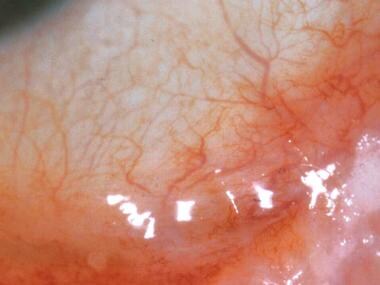
| Media file 1: Ocular cicatricial pemphigoid, stage II. Note the fornix foreshortening. | |
![]() | View Full Size Image | Media type: Photo |
| Media file 2: Ocular cicatricial pemphigoid, stage III. Note the symblepharon. | |
![]() | View Full Size Image | Media type: Photo |
| Media file 3: Ocular cicatricial pemphigoid, stage IV. Note the ankyloblepharon and ocular surface keratinization. | |
![]() | View Full Size Image | Media type: Photo |
| Media file 4: Corneal neovascularization with ulceration and stromal thinning after persistent epithelial defect in a patient with ocular cicatricial pemphigoid. | |

![]() | View Full Size Image | Media type: Photo |
Cicatricial Pemphigoid excerpt
Article Last Updated: Apr 2, 2006