You are in: eMedicine Specialties > Neurology > Seizures and Epilepsy Complex Partial SeizuresArticle Last Updated: Oct 11, 2006AUTHOR AND EDITOR INFORMATIONAuthor: Anthony M Murro, MD, Laboratory Director, Professor, Department of Neurology, Medical College of Georgia Anthony M Murro is a member of the following medical societies: American Academy of Neurology and American Epilepsy Society Editors: Joseph F Hulihan, MD, Vice President, Medical Affairs, Ortho-McNeil Janssen Scientific Affairs, LLC; Francisco Talavera, PharmD, PhD, Senior Pharmacy Editor, eMedicine; Selim R Benbadis, MD, Professor, Director of Comprehensive Epilepsy Program, Departments of Neurology and Neurosurgery, University of South Florida School of Medicine, Tampa General Hospital; Matthew J Baker, MD, Consulting Staff, Collier Neurologic Specialists, Naples Community Hospital; Nicholas Y Lorenzo, MD, Chief Editor, eMedicine Neurology; Consulting Staff, Neurology Specialists and Consultants Author and Editor Disclosure Synonyms and related keywords: attacks, convulsions, fainting, spells, impaired consciousness, simple motor automatisms, manual automatisms, oral automatisms, perseverative automatisms, bizarre automatisms, temporal lobe complex partial seizures, parietal lobe seizures, frontal lobe seizures, extratemporal lobe seizures, occipital lobe seizures, complex partial status epilepticus, sudden unexpected death in epilepsy, SUDEP, brain trauma, encephalitis, meningitis, stroke, perinatal brain injuries, vascular malformations, cortical dysplasia, neoplasms, febrile seizures, temporal lobe epilepsy, INTRODUCTIONBackgroundComplex partial seizures cause impaired consciousness and arise from a single brain region. Impaired consciousness implies decreased responsiveness and awareness of self and surroundings. During a complex partial seizure, the patient may not communicate, respond to commands, or remember events that occurred. Consciousness might not be impaired completely. During a complex partial seizure, some patients may make simple verbal responses, follow simple commands, or continue to perform simple or, less commonly, complex motor behaviors such as operating a car. Complex partial seizures typically arise from the temporal lobe but may arise from any cortical region. Automatisms are quasi-purposeful motor or verbal behaviors that commonly accompany complex partial seizures. The behavior is called quasi-purposeful because it is repeated inappropriately or is inappropriate for the situation. Verbal automatisms range from simple vocalizations, such as moaning, to more complex, comprehensible, stereotyped speech. Automatisms also may occur during nonepileptic states of confusion (eg, metabolic encephalopathy), after ictus, and during absence seizures. Motor automatisms are classified as simple or complex. Simple motor automatisms include oral automatisms (eg, lip smacking, chewing, swallowing) and manual automatisms (eg, picking, fumbling, patting). Unilateral manual automatisms accompanied by contralateral arm dystonia usually indicates seizure onset from the cerebral hemisphere ipsilateral to the manual automatisms. Complex motor automatisms are more elaborate, coordinated movements involving bilateral extremities. Examples of complex motor automatisms are cycling movements of the legs and stereotyped swimming movements. De novo automatisms often begin after seizure onset. In other cases, perseverative automatisms occur as repetitions of motor activity that began before the seizure. Bizarre automatisms such as alternating limb movements, right-to-left head rolling, or sexual automatisms may occur with frontal-lobe seizures. Seizures often begin with a brief aura (simple partial seizure) lasting seconds and then becomes a complex partial seizure. The type of aura is related to the site of cortical onset. Temporal-lobe seizures often begin with a rising abdominal sensation, fear, unreality, or déją vu. Parietal-lobe seizures may begin with an electrical sensation, tingling, or numbness. Occipital-lobe seizures may begin with visual changes, such as the perception of colored lines, spots, or shapes or even a loss of vision. Complex partial seizures of the temporal lobe often begin with a motionless stare followed by simple oral or motor automatisms. In contrast, frontal-lobe seizures often begin with vigorous motor automatisms or stereotyped clonic or tonic activity. Extratemporal-lobe seizures may spread quickly to the frontal lobe and produce motor behaviors similar to those associated with complex partial seizures of the frontal lobe. Tonic and dystonic arm posturing may occur in the arm contralateral to the seizure focus. Sustained head or eye turning contralateral to the seizure focus may occur immediately before or simultaneously with clonic or tonic activity elsewhere. Complex partial seizures often last 30 seconds to 2 minutes. Longer seizures may occur, particularly when the seizures become generalized convulsions. Complex partial status epilepticus may also occur with prolonged episodes of waxing and waning of consciousness. PathophysiologySingle photon emission CT (SPECT) ictal studies show hypoperfusion of bilateral frontal and parietal association cortex, and hyperfusion of the mediodorsal thalamus and rostral brainstem. Ictal effects on these structures by means of the spread of epileptic discharges or a transsynaptic mechanism may mediate impaired consciousness during complex partial seizures. FrequencyUnited StatesFor people younger than 60 years, the incidence of partial seizures is 20 cases per 100,000 person-years. For people aged 60-80 years, incidence increases to 80 cases per 100,000 person-years. The prevalence of epilepsy is 0.5-1 case per 100 persons. Complex partial seizures occur in about 35% of persons with epilepsy. InternationalPartial seizures are more common in countries where cysticercosis is prevalent. Mortality/Morbidity
CLINICALHistory
PhysicalPhysical examination is directed to elucidate focal cortical neurologic findings, such as the following:
Causes
DIFFERENTIALSAbsence Seizures Ambulatory Electroencephalography (EEG) Aphasia Apraxia and Related Syndromes Benign Childhood Epilepsy Benign Neonatal Convulsions Chronic Paroxysmal Hemicrania Confusional States and Acute Memory Disorders Early Myoclonic Encephalopathy EEG in Common Epilepsy Syndromes EEG in Status Epilepticus EEG Seizure Monitoring Epilepsia Partialis Continua Epilepsy in Adults with Mental Retardation Epilepsy in Children with Mental Retardation Epilepsy, Juvenile Myoclonic Epileptic and Epileptiform Encephalopathies Epileptiform Discharges Febrile Seizures First Seizure in Adulthood: Diagnosis and Treatment First Seizure: Pediatric Perspective Focal EEG Waveform Abnormalities Frontal Lobe Epilepsy Frontal Lobe Syndromes Identification of Potential Epilepsy Surgery Candidates
| |||||||||||||||||||||||||||||||||||||||||||||||||||||||||||||||||||||||||||||||||||||||||||||||||||||||||||||||||||||||||||||||||||||||||||||||||||||||||||||||||||||||||||||||||||||||||||||||||||||||||||||||||||||||||||||||||||||
| Drug Name | Carbamazepine (Carbamazepine, Tegretol, Tegretol XR) |
|---|---|
| Description | Effective for treatment of complex partial seizures. Appears to act by reducing polysynaptic responses and blocking posttetanic potentiation. Major mechanism of action is reducing sustained, high-frequency, repetitive neural firing. |
| Adult Dose | 200 mg PO bid (100 mg qid of suspension); increase qwk by no more than 200 mg/d tid/qid (bid with extended release) until best response; generally not to exceed 1600 mg/d |
| Pediatric Dose | <6 years: 10-20 mg/kg/d PO bid/tid (qid with suspension); increase qwk to achieve optimal clinical response with tid/qid 6-12 years: 100 mg bid (50 mg qid of suspension); gradually increase qwk by 100 mg/d tid/qid (bid with extended release) until best response; generally not to exceed 1000 mg/d >12 years: Administer as in adults; generally not to exceed 1000 mg/d in children 12-15 y or 1200 mg/d in adolescents >15 y |
| Contraindications | Documented hypersensitivity; history of bone-marrow depression |
| Interactions | Do not use concomitantly with MAOIs; discontinue MAOIs at least 14 d before initiating carbamazepine; may decrease serum concentrations of primidone or phenobarbital, which may increase serum concentration of carbamazepine, possibly because of altered hepatic metabolism; cimetidine may increase plasma levels and toxicity; interaction appears to be most important when cimetidine added during first 4 wk of therapy; use of danazol within 30 d may increase levels 38-123% (avoid concomitant administration if possible) |
| Pregnancy | D - Unsafe in pregnancy |
| Precautions | Not simple analgesic; do not use for relief of minor aches or pains; caution in increased intraocular pressure; manufacturer recommends pretreatment CBC count, including platelets and possibly reticulocytes, and serum iron level; CBC count, platelets, and differential should be performed monthly in first 2 mo and then yearly or every other year; patients should observe caution while driving or performing other tasks requiring alertness, coordination, or physical dexterity (may produce drowsiness, dizziness, or blurred vision); hyponatremia |
| Drug Name | Phenytoin (Dilantin, Phenytek) |
|---|---|
| Description | Primary site of action of hydantoins, appears to be motor cortex, where it may inhibit spread of seizure activity. May reduce maximal activity of brainstem, centers responsible for tonic phase of grand mal seizures. Individualize dose. If daily dosage cannot be divided equally, large dose should be taken at bedtime. Phosphorylated formulation (fosphenytoin) available for parenteral use and may be given IM or IV. |
| Adult Dose | Initial dose: 100 mg (125 mg suspension) PO/IV tid Maintenance: 300-400 mg/d PO/IV divided tid, or qd/bid if using extended release; increase to 600 mg/d (625 mg/d suspension) may be necessary; not to exceed 1500 mg/24h |
| Pediatric Dose | Initial dose: 5 mg/kg/d PO/IV divided bid/tid Maintenance: 4-8 mg/kg PO/IV divided bid/tid >6 years: May require minimum adult dose (300 mg/d); not to exceed 300 mg/d |
| Contraindications | Documented hypersensitivity; because of effect on ventricular automaticity, do not use in sinoatrial block, sinus bradycardia, second- or third-degree AV block, or Adams-Stokes syndrome |
| Interactions | Amiodarone, benzodiazepines, chloramphenicol, cimetidine, disulfiram, ethanol (acute ingestion), fluconazole, isoniazid, metronidazole, miconazole, omeprazole, phenacemide, phenylbutazone, succinimides, sulfonamides, trimethoprim, and valproic acid may increase toxicity; barbiturates, carbamazepine, diazoxide, ethanol (chronic ingestion), rifampin, theophylline, antacids, charcoal, and sucralfate may decrease effects; may decrease effects of acetaminophen, amiodarone, carbamazepine, cardiac glycosides, corticosteroids, dicumarol, disopyramide, doxycycline, estrogens, haloperidol, methadone, metyrapone, mexiletine, oral contraceptives, quinidine, theophylline, and valproic acid |
| Pregnancy | D - Unsafe in pregnancy |
| Precautions | Death from cardiac arrest has occurred after too-rapid IV administration, sometimes preceded by marked QRS widening; blood dyscrasias have occurred (manufacturer recommends CBC counts and urinalyses at start and monthly intervals for several months thereafter); discontinue if skin rash appears, and do not resume if rash is exfoliative, bullous, or purpuric; caution in acute intermittent porphyria or diabetes (may raise blood glucose levels); discontinue if hepatic dysfunction occurs |
| Drug Name | Valproic acid (Depakote, Depakene, Depacon) |
|---|---|
| Description | Chemically unrelated to other drugs used to treat seizure disorders. Mechanism of action not established, but activity may be related to increased brain levels of GABA or enhanced GABA action. May also potentiate postsynaptic GABA responses, affect potassium channel, or have direct membrane-stabilizing effect. For conversion to monotherapy, concomitant AED dosage ordinarily reduced by approximately 25% q2wk. Reduction may be started at beginning of therapy or delayed 1-2 wk if seizures likely to occur with reduction. Monitor patients closely during this period for increased seizure frequency. As adjunctive therapy, divalproex sodium 10-15 mg/kg/d may be added to regimen; dosage may be increased 5-10 mg/kg/d qwk to optimal clinical response (usually with <60 mg/kg/d). |
| Adult Dose | Monotherapy: 10-15 mg/kg/d PO in 1-3 divided doses; increase by 5-10 mg/kg/wk until seizures controlled or adverse effects prevent further increases; not to exceed 60 mg/kg/d; if total daily dose >250 mg, give in divided doses |
| Pediatric Dose | Administer as in adults |
| Contraindications | Documented hypersensitivity; hepatic disease/dysfunction |
| Interactions | Cimetidine may slightly but significantly decrease clearance and increase half-life; erythromycin may increase serum concentrations, producing toxicity; felbamate may increase mean peak levels by 35%; rifampin may increase oral clearance by 40%; in children, salicylates decrease protein binding and metabolism May cause variable changes in carbamazepine concentration with increased levels of active metabolite; carbamazepine may decrease levels, with possible loss of seizure control; displaces diazepam from plasma albumin-binding sites and inhibits metabolism, increasing toxicity; inhibits ethosuximide metabolism, and thus serum levels of both drugs should be monitored, especially in presence of other anticonvulsants; inhibits phenobarbital metabolism; phenobarbital can increase clearance; may increase action of phenytoin, even at therapeutic levels; phenytoin may increase metabolism, with decreased pharmacologic effects; may displace warfarin from protein binding sites (monitor coagulation); may decrease zidovudine clearance in HIV-seropositive patients |
| Pregnancy | D - Unsafe in pregnancy |
| Precautions | Thrombocytopenia and abnormal coagulation parameters have occurred; probability of thrombocytopenia increases significantly at total trough valproate plasma concentrations >110 mcg/mL in females and 135 mcg/mL in males; manufacturer recommends determining platelet counts and bleeding time before therapy, at periodic intervals, and before surgery; hemorrhage, bruising, or hemostasis/coagulation disorder indication for dosage reduction or withdrawal; hyperammonemia may occur if patient has increased renal ammonium production and inhibited urea synthesis (combined effect may contribute to hepatotoxicity; pancreatitis possible; closely monitor patients for malaise, weakness, facial edema, anorexia, jaundice, and vomiting; patients should use caution while driving or performing other tasks requiring alertness, coordination, or physical dexterity |
| Drug Name | Gabapentin (Neurontin) |
|---|---|
| Description | Has properties in common with other anticonvulsants but exact mechanism of action unknown. Structurally related to GABA but does not interact with GABA receptors. |
| Adult Dose | Day 1: 100 mg PO tid or 300 mg hs Day 2: Increase dose to 400 mg PO tid over 3 d and titrate dose prn Increases in daily dose best tolerated when done slowly; not to exceed 1200 mg qid |
| Pediatric Dose | <12 years: Not established >12 years: Administer as in adults |
| Contraindications | Documented hypersensitivity |
| Interactions | Antacids may reduce bioavailability by about 20% and should be administered at least 2 h before; cimetidine may reduce clearance but may not be of clinical significance; may increase norethindrone levels by 13% |
| Pregnancy | C - Safety for use during pregnancy has not been established. |
| Precautions | Caution in severe renal disease |
| Drug Name | Lamotrigine (Lamictal) |
|---|---|
| Description | Triazine derivative useful in treatment of seizures and neuralgic pain. Inhibits release of glutamate and inhibits voltage-sensitive sodium channels, which stabilizes neuronal membrane. Follow manufacturer's recommendations for dose adjustments. |
| Adult Dose | Adjunctive therapy with enzyme-inducing anticonvulsant Weeks 1-2: 50 mg/d PO Weeks 3-4: 100 mg/d in 2 divided doses Maintenance: 300-500 mg/d (in 2 divided doses); to achieve maintenance, increase by 100 mg/d q1-2wk Adjunctive therapy with anticonvulsant regimen containing valproate Weeks 1-2: 25 mg PO qod Weeks 3-4: 25 mg/d Maintenance: 100-200 mg/d PO qd/bid; to achieve maintenance, increase by 25-50 mg/d PO q1-2wk Conversion from single enzyme-inducing anticonvulsant to lamotrigine monotherapy Weeks 1-2: 50 mg/d Weeks 3-4: 100 mg/d in 2 divided doses Maintenance: 300-500 mg/d (in 2 divided doses); to achieve maintenance, increase by 100 mg/d PO q1-2wk; enzyme-inducing anticonvulsant gradually withdrawn over 4 wk by 20% decrements q1wk |
| Pediatric Dose | 2-12 years Adjunctive therapy with enzyme-inducing anticonvulsant Weeks 1-2: 0.6 mg/kg/d PO in 2 divided doses, rounded down to nearest 5 mg Weeks 3-4: 1.2 mg/kg/d PO in 2 divided doses, rounded down to nearest 5 mg Maintenance: 5-15 mg/kg/d; not to exceed 400 mg/d divided bid; to achieve usual maintenance dose, increase subsequent doses q1-2wk as follows: Calculate 1.2 mg/kg/d, round down to nearest 5 mg, and add amount to previous daily dose As concomitant therapy with valproic acid Weeks 1-2: 0.15 mg/kg/d PO qd or divided bid, rounded down to nearest 5 mg; if initially calculated daily dose is 2.5-5 mg, then 5 mg PO qod for first 2 wk Weeks 3-4: 0.3 mg/kg/d PO qd or divided bid, rounded down to nearest 5 mg Maintenance: 1-5 mg/kg/d PO; not to exceed 200 mg/d qd or divided bid; to achieve usual maintenance dose, increase subsequent doses q1-2wk as follows: Calculate 0.3 mg/kg/d, round down to nearest 5 mg, and add amount to previous qd dose >12 years As adjunctive therapy with enzyme-inducing anticonvulsant |
| Contraindications | Documented hypersensitivity |
| Interactions | Acetaminophen increases renal clearance, decreasing effects; phenobarbital and phenytoin increase metabolism, decreasing levels; valproic acid increases half-life |
| Pregnancy | C - Safety for use during pregnancy has not been established. |
| Precautions | Caution in impaired renal or hepatic function; rash in 5% of patients; children who take with valproate have significantly increased risk of severe allergic drug reactions |
| Drug Name | Topiramate (Topamax) |
|---|---|
| Description | Sulfamate-substituted monosaccharide with broad spectrum of antiepileptic activity; may have state-dependent sodium channel blocking action; potentiates inhibitory activity of neurotransmitter GABA. May block glutamate activity. Monitoring plasma concentrations not necessary to optimize therapy. If added to phenytoin, may need to adjust phenytoin dose to achieve optimal clinical outcome. |
| Adult Dose | 50 mg/d PO; titrate by 50 mg/d qwk to target dose of 200 mg PO bid; not to exceed 1600 mg/d |
| Pediatric Dose | Not established |
| Contraindications | Documented hypersensitivity |
| Interactions | Phenytoin can decrease levels by as much as 48%; carbamazepine and valproic acid reduce levels by 40% and 14%, respectively; reduces digoxin and norethindrone levels; carbonic anhydrase inhibitors may increase risk of renal stone formation and should be avoided; may have additive effect with CNS depressants in CNS depression and other cognitive or neuropsychiatric adverse effects |
| Pregnancy | C - Safety for use during pregnancy has not been established. |
| Precautions | Increases risk of kidney stone by 2-4 times that of untreated population (1.5%); increasing fluid intake may reduce this risk; caution in renal or hepatic impairment |
| Drug Name | Tiagabine (Gabitril) |
|---|---|
| Description | Mechanism of action in antiseizure effect unknown but thought related to its ability to enhance activity of GABA, major inhibitory neurotransmitter in CNS. May block GABA uptake into presynaptic neurons, increasing GABA for receptor binding on surfaces of postsynaptic cells and possibly preventing propagation of neural impulses that contribute to seizures by GABAergic action. Modification of concomitant AED doses not necessary unless clinically indicated. |
| Adult Dose | 4 mg PO qd in 2 or 4 divided doses; increase 4-8 mg/wk until clinical response achieved or total daily dose of 56 mg/d; Doses >56 mg/d not systematically evaluated in well-controlled trials |
| Pediatric Dose | <12 years: Not established 12-18 years: 4 mg PO qd; increase by 4 mg at beginning of wk 2; thereafter, may increase total daily dose by 4-8 mg/wk until clinical response achieved or 32 mg/d administered Doses >32 mg/d tolerated in small number of adolescent patients for relatively short duration |
| Contraindications | Documented hypersensitivity |
| Interactions | Hastened clearance in patients treated with carbamazepine, phenytoin, primidone, or phenobarbital |
| Pregnancy | C - Safety for use during pregnancy has not been established. |
| Precautions | Patients receiving valproate monotherapy may require low doses or slow dose titration for clinical response; moderately severe to incapacitating generalized weakness reported in as many as 1% of patients with epilepsy; weakness may resolve after dose reduction or discontinuation; withdraw slowly to reduce potential for increased seizure frequency |
| Drug Name | Felbamate (Felbatol) |
|---|---|
| Description | Oral AED with weak inhibitory effects on GABA receptor binding and benzodiazepine receptor binding but interacts as antagonist at strychnine-insensitive glycine recognition site of NMDA receptor-ionophore complex. Not indicated as first-line antiepileptic treatment. Recommended only in those patients whose epilepsy is so severe that benefits outweigh risks of aplastic anemia or liver failure. |
| Adult Dose | Monotherapy Initial dose: 1200 mg/d PO divided tid/qid; titrate to 2400 mg/d by 600-mg q2wk and to 3600 mg/d if clinically indicated Conversion to monotherapy Initial dose: 1200 mg/d PO divided tid/qid Week 1: Reduce dose of concomitant AEDs by one third at start Week 2: Increase dosage to 2400 mg/d while reducing dosage of other AEDs by additional one third of original dosage Week 3: Increase dosage up to 3600 mg/d and continue to reduce dosage of other AEDs prn Adjunctive therapy Week 1: 1200 mg/d PO and reduce dose of concomitant AEDs Week 2: 2400 mg/d PO and reduce original AED doses by 33% Week 3: 3600 mg/d PO and reduce AED doses as clinically indicated |
| Pediatric Dose | <14 years: Not established Adjunctive therapy 2-14 years: 15 mg/kg/d PO divided tid/qid while reducing AED doses by 20% to control plasma levels of concurrent phenytoin, valproic acid, phenobarbital, and carbamazepine (and metabolites) Increase felbamate dosage by 15 mg/kg/d PO qwk to 45 mg/kg/d; most adverse effects during adjunctive therapy resolve as dosage of concomitant AEDs decreased >14 years: Administer as in adults |
| Contraindications | Documented hypersensitivity; history of any blood dyscrasia or hepatic dysfunction |
| Interactions | May increase steady-state phenytoin levels (reduction of phenytoin dose by as much as 40% may be necessary); phenytoin may double felbamate clearance, resulting in >45% decrease in steady-state levels; may increase phenobarbital plasma concentrations; phenobarbital may reduce plasma levels; may decrease steady-state carbamazepine levels and increase steady-state carbamazepine metabolite levels; may increase steady-state valproic acid levels |
| Pregnancy | C - Safety for use during pregnancy has not been established. |
| Precautions | Associated with marked increase in incidence of aplastic anemia (risk may be greatest during first year of therapy); manufacturer recommends periodic CBC count monitoring; increases risk of hepatic failure resulting in death; manufacturer recommends liver function testing (ALT, AST, bilirubin) before start and then q1-2wk during therapy; immediately discontinue if any liver abnormalities detected during treatment |
| Drug Name | Phenobarbital (Luminal) |
|---|---|
| Description | Anticonvulsant activity at anesthetic doses and can be administered orally. If IM chosen, should be injected into large muscle, eg, gluteus maximus, vastus lateralis, or other areas with little risk of encountering nerve trunk or major artery. Injection into or near peripheral nerves may result in permanent neurologic deficit. Restrict IV use to conditions in which other routes not feasible because patient unconscious (eg, cerebral hemorrhage, eclampsia, status epilepticus) or when prompt action imperative |
| Adult Dose | PO: 60-100 mg/d IV or IM: 200-320 mg q6h prn |
| Pediatric Dose | PO: 3-6 mg/kg/d IV or IM: 4-6 mg/kg/d for 7-10 d to blood level of 10-15 mcg/mL, or 10-15 mg/kg/d |
| Contraindications | Documented hypersensitivity; marked impairment of liver function; severe respiratory disease; nephritis |
| Interactions | Alcohol may produce additive CNS effects and death; chloramphenicol may inhibit metabolism (phenobarbital may enhance chloramphenicol metabolism); MAOIs may enhance sedative effects; rifampin induces hepatic microsomal enzymes and may decrease effectiveness; valproic acid may decrease metabolism and increase toxicity; can decrease effects of anticoagulants (patients whose PT/aPTT stabilized with anticoagulants may require dosage adjustments if phenobarbital added to or withdrawn from regimen); may decrease serum carbamazepine levels May decrease contraceptive effects because of induction of microsomal enzymes; menstrual irregularities and pregnancy may occur (alternate birth control suggested); may enhance corticosteroid metabolism by inducing hepatic microsomal enzymes; may increase digitoxin metabolism; may decrease antimicrobial effectiveness of metronidazole; decreases theophylline levels, possibly decreasing effects; may increase clearance and decrease bioavailability of verapamil |
| Pregnancy | B - Usually safe but benefits must outweigh the risks. |
| Precautions | In select patients receiving prolonged therapy, periodic laboratory evaluation of organ (eg, hematopoietic, renal, hepatic systems) may be useful; caution in fever, hyperthyroidism, diabetes mellitus, or severe anemia (adverse reactions possible); caution in myasthenia gravis or myxedema |
| Drug Name | Oxcarbazepine (Trileptal) |
|---|---|
| Description | Pharmacologic activity primarily by 10-monohydroxy metabolite (MHD). May block voltage-sensitive sodium channels, inhibit repetitive neuronal firing, and impair synaptic impulse propagation. Anticonvulsant effect may occur by affecting potassium conductance and high-voltage activated calcium channels. Pharmacokinetics similar in children > 8 y and adults. Children <8 y have 30-40% increased clearance. Use in children <2 y not studied in controlled clinical trials. |
| Adult Dose | Adjunctive therapy Initial dose: 600 mg/d PO divided bid; may increase by maximum of 600 mg/d qwk; recommended daily dose is 1200 mg/d PO; monitor for adverse effects Conversion to monotherapy Initial dose: 600 mg/d PO divided bid; gradually reduce dose of concomitant anticonvulsants over about 3-6 wk, and gradually increase oxcarbazepine dose over 2-4 wk; may increase dose as needed by maximum 600 mg/d PO qwk; closely monitor during transition adverse effects Initiation of monotherapy Initial dose: 600 mg/d PO divided bid; increase by 300 mg/d PO q3d to 1200 mg/d; monitor patients for adverse effects |
| Pediatric Dose | Adjunctive therapy 4-16 years: 8-10 mg/kg/d PO divided bid; not to exceed 600 mg/d; gradually increase to target dose over 2 wk Target dose based on body weight as follows: 20-29 kg: 900 mg/d PO 29.1-39 kg: 1200 mg/d PO >39 kg: 1800 mg/d PO |
| Contraindications | Documented hypersensitivity |
| Interactions | May inhibit CYP2C19 and induce CYP3A4/5; CYPP450 inducers can decrease plasma concentrations of oxcarbazepine and MHD; may decrease levels of dihydropyridine calcium antagonists and oral contraceptives; significant drug interactions related to protein binding unlikely because MHD plasma protein binding low (40%); can reduce serum concentrations of carbamazepine, phenobarbital, phenytoin, and valproic acid; doses >1200 mg/d may increase phenytoin serum concentration by as much as 40% and phenobarbital concentrations by as much as 15%; drugs metabolized by CYP450 enzymes (eg, carbamazepine, phenytoin, phenobarbital) can decrease MHD serum concentration by about 29-40%; can reduce serum concentrations of oral contraceptives and make them ineffective; can increase clearance of felodipine; verapamil may reduce serum MHD levels |
| Pregnancy | C - Safety for use during pregnancy has not been established. |
| Precautions | Adverse cognitive effects (eg, psychomotor slowing, impaired concentration, impaired speech, impaired language); in impaired renal function (CrCl <30 mL/min), begin at half usual starting dose and increase increments slowly; can cause hyponatremia ( <125 mmol/L); 25-30% of people with hypersensitivity to carbamazepine hypersensitive to oxcarbazepine; rapid withdrawal can exacerbate seizures (closely observe patient for drug adverse effects, and monitor plasma levels of concomitant anticonvulsants during titration) |
| Drug Name | Levetiracetam (Keppra) |
|---|---|
| Description | For adjunctive treatment of partial seizures. Binds to presynaptic vesicle protein (SV2A). Blocks high-voltage calcium currents. Suppresses several negative modulators of GABA and glycine-gated currents. |
| Adult Dose | 500 mg PO bid initially; may increase by 1000 mg/d q2wk; not to exceed 3000 mg/d; reduce dose in reduced renal clearance |
| Pediatric Dose | <4 years: Not established 4-15 years: 20 mg/kg/d PO divided bid; may increase by 20-mg/kg/d q2wk; not to exceed 60 mg/kg/d; use oral solution if weight <20 kg >16 years: Administer as in adults |
| Contraindications | Documented hypersensitivity |
| Interactions | None reported |
| Pregnancy | C - Safety for use during pregnancy has not been established. |
| Precautions | Caution in renal impairment (reduce dose); major adverse effects include somnolence, asthenia, incoordination, mild leukopenia (3%), and behavioral changes (eg, anxiety, hostility, emotional lability, depression and psychosis [1-2%], depersonalization); seizure frequency may increase following discontinuation (do so gradually); statistically significant decreases in RBCs and WBCs have been observed |
| Drug Name | Pregabalin (Lyrica) |
|---|---|
| Description | Binds to the alpha2-delta subunit site of voltage-gated calcium channels) in central nervous system tissues. Modulates calcium channel function and reduces release of multiple neurotransmitters. |
| Adult Dose | 50 mg PO tid initially; increase dose gradually, not to exceed 300 mg/d PO; adjust dose in reduced renal function |
| Pediatric Dose | Not established |
| Contraindications | Documented hypersensitivity |
| Interactions | May cause additive effects on cognitive and gross motor functioning when coadministered with drugs that cause dizziness or somnolence |
| Pregnancy | C - Safety for use during pregnancy has not been established. |
| Precautions | Discontinue gradually (over a minimum of 1 wk) to minimize increased seizure frequency in patients with seizure disorders; may cause insomnia, nausea, headache, or diarrhea with abrupt withdrawal; common adverse effects include dizziness, somnolence, blurred vision, weight gain, and peripheral edema; may elevate creatinine kinase level, decrease platelet count, and increase PR interval; doses >300 mg/d associated with higher rate of adverse effects and treatment discontinuation; decrease dose with renal impairment (ie, CrCl <60 mL/min) |
| Drug Name | Zonisamide (Zonegran) |
|---|---|
| Description | May block sodium channels and reduce voltage-dependent, T-type Ca2+ currents and transient inward currents. Binds to the allosteric GABA/benzodiazepine receptor ionophore. Has weak carbonic anhydrase inhibiting activity. |
| Adult Dose | 100 mg/d PO for 2 wk, then increase by 100 mg/d PO q2wk, not to exceed 400 mg/d; may be given qd or bid |
| Pediatric Dose | Not established |
| Contraindications | Documented hypersensitivity to sulfonamides or zonisamide |
| Interactions | May increase serum carbamazepine levels; carbamazepine may increase concentrations; phenobarbital may decrease levels |
| Pregnancy | C - Safety for use during pregnancy has not been established. |
| Precautions | May cause drowsiness, weight loss, ataxia, nausea, and slowing of mental activity; pediatric patients have an increased risk for oligohidrosis and hyperthermia |
| Media file 1: MRI in a patient with temporal-lobe complex partial seizures due to a hippocampal tumor, which appears as an enlargement of the hippocampus (box). | |
![]() | View Full Size Image | Media type: MRI |
| Media file 2: MRI in a patient with complex partial seizures due to biopsy-proven CNS vasculitis shows 2 high-signal-intensity lesions. | |
![]() | View Full Size Image | Media type: MRI |
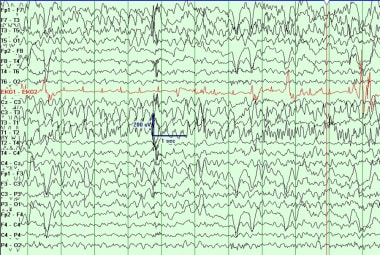
| Media file 3: Electroencephalographic recording of a temporal-lobe complex partial seizure shows the seizure pattern (boxes). | |
![]() | View Full Size Image | Media type: Rhythm Strip |
Complex Partial Seizures excerpt
Article Last Updated: Oct 11, 2006