Overview of MELAS
The syndrome of mitochondrial encephalomyopathy, lactic acidosis, and strokelike episodes (MELAS) has strokelike events that are acute in onset, often transient, and occasionally associated with a febrile illness. The vascular territories of focal brain lesions and the prior medical history of these patients differ substantially from those of typical patients with stroke, can cross vascular territories and show reversibility. The history can include all or some of the following signs and symptoms, and in various degrees of severity: recurrent migraine-like headaches, short stature, hearing loss, exercise intolerance with lactic acidemia and proximal weakness, cardiac conduction defects, and diabetes mellitus.
This syndrome is due to point or microdeletion mutations in mitochondrial DNA; as in all diseases with mitochondrial transmission, the disease is inherited via the ovum and hence always from the mother. Mitochondrial DNA is 10 times more prone to mutation than somatic DNA. Since both normal mitochondria and abnormal mitochondria may be present in tissues, the affected organs, cells, and clinical presentation can be heterogeneous. This phenomenon is termed heteroplasmy. [1] Multiple organ systems can be involved, which offers some clues to the diagnosis as not being classical stroke.
MELAS is a complicated, multisystem disease. Since the symptoms, signs, and acute clinical presentations are so varied and the disease is relatively rare, the disease is misdiagnosed frequently. Although MELAS remains a largely untreatable condition, several trials have shown promise. Prevention and management of medical complications may prolong survival, adding to the benefit of establishing a diagnosis.
Although classic features are seen on muscle biopsy, a negative muscle biopsy does not rule out this disease because of heteroplasmy. Therefore, a high degree of clinical suspicion is necessary based on atypical features to prompt a genetic analysis.
A multidisciplinary team approach is needed in the diagnosis and further care of patients with MELAS. Genetic testing and counseling should be offered to family members.
For more information on stroke, see Hemorrhagic Stroke and Ischemic Stroke.
For patient education information, see the Stroke Center, as well as Stroke.

Epidemiology of MELAS
The prevalence of mitochondrial encephalomyopathy, lactic acidosis, and strokelike episodes (MELAS) is 16–18/100,000, with the highest reported diagnostic rate in Western regions and the lowest rate in Asia. An epidemiologic study in northern Finland found the prevalence of the A3243G MELAS mutation (responsible for 80% of cases) to be 16.3 per 100,000. In certain groups of stroke patients, such as those younger than 50 years, the prevalence of mitochondrial disease has been reported to be as high as 22%.
Males and females appear equally affected. Patients have normal early development and usually present in childhood with recurrent migraine-like headaches and vomiting. Typically, patients present with strokelike episodes by 40 years of age; however, strokelike episodes may present as early as the teens.The majority develop symptoms before age 20, with few before age 2 or after 40, although there are reports of even later onset of stroke symptoms.
Morbidity and mortality
Patients present early with seemingly benign problems such as migraines; later, they may develop the full gamut of conditions that define the syndrome. The neurological dysfunction increases with increased age.
Seizures may become uncontrollable; dementia and other psychiatric disorders may supervene. Multiple strokes in different vascular territories may occur.
Median survival from diagnosis is approximately 17 years, including a subgroup with severe disease with a much shorter lifespan from diagnosis. In general, younger age at diagnosis and more severe symptoms correlate to shorter lifespan. However, there are patients alive in their 50s. Most deaths are due to medical complications; a few are a result of status epilepticus. [2, 3]
Clinical Presentation of MELAS
Patient history
When relatively young patients without common risk factors for ischemic stroke present with strokelike episodes and lesions that cross vascular boundaries, mitochondrial encephalomyopathy, lactic acidosis, and strokelike episodes (MELAS) should be considered. Other points in favor of MELAS include previous migraine headaches, vomiting, acidotic episodes, or unexplained neurologic/psychiatric disorders.
Patients with MELAS typically have normal early development, followed by migraine-like headaches, focal or generalized seizures, growth retardation, hearing loss, [4, 5] limb weakness, exercise intolerance, and strokelike episodes. However, because cardiac conditions and diabetes can occur, patients may appear to have typical stroke risk factors, and only a closer look at atypical features of the presentation and history are clues to the diagnosis.
The cerebral lesions favor the posterior regions of the hemispheres, with hemianopia and cortical blindness appearing more frequently than hemiparesis.
Individual strokelike episodes may be followed by a complete recovery, but residual deficits and/or a progressive encephalopathy generally appear eventually.
Some of the common presentations include the following:
-
History of migraine along with vomiting
-
Cognitive deficits
-
Psychiatric problems
-
Seizures
-
Hearing loss
-
Diabetes [6]
Physical examination
The physical findings listed below are nonspecific. When the abnormalities occur together, MELAS should be considered, especially when a remitting-relapsing history is obtained. The physical findings include the following:
-
Short stature
-
Muscle weakness
-
Hyponatremia (possibly SIADH, hypocorism, or renal etiology)
-
Cardiomyopathy and other cardiac abnormalities
-
Cognitive and psychiatric problems (eg, learning difficulties, dementia, psychosis, personality disorders)
-
Aphasia
-
Cortical blindness
-
Hemianopia
-
Hearing loss
-
Hemiparesis
-
Ataxia
-
Seizures or myoclonus
-
Tremor
Etiology of MELAS
Genetic mutations
Mitochondrial encephalomyopathy, lactic acidosis, and strokelike episodes (MELAS) is a mitochondrial genetic disease with the majority of mutations in the mtDNA gene, MT-TL1. At least 30 different point mutations have been associated with MELAS. The most common defect, present in 80% of patients, is a point mutation at nucleotide position 3243 in the transfer RNA for leucine. A number of other point mutations and double point mutations have also been associated with MELAS. [7] There is a hypothesis that the most common mutations in MELAS confer a defect in taurine modification of initiation of transcription, leading to a failure of mitochondrial transcription. [8] This hypothesis led to a trial of taurine treatment of MELAS, with initial promising results (see Treatment).
Valproic acid
Several case reports have suggested that valproic acid, an antiepileptic drug used also in migraine and psychiatric disorders, may exacerbate symptoms of MELAS. Apparently, valproic acid also may unmask a previously undiagnosed condition of MELAS.
Metabolic hypothesis
Metabolic and vascular mechanisms have both been suggested as causes of the strokelike episodes in MELAS. According to the metabolic hypothesis, a defect exists in neuronal oxidative metabolism, with resulting mismatch between perfusion and metabolism. Perfusion may be normal, but the electron-transport chain defects of the mitochondria result in decreased ATP production, leading to neuronal death.
Lactic acidosis
Magnetic resonance (MR) spectroscopic studies have shown that lactic acidosis may be increased, leading to neuronal toxicity in patients undergoing strokelike episodes. Cell death, however, does not explain the resolution of lesions by MRI or the remitting-relapsing nature of the disease.
Abnormal mitochondria and nitric oxide metabolism
An alternative hypothesis suggests that the abnormal mitochondria in endothelial and smooth muscle cells of blood vessels cause impaired autoregulation. Abnormal nitric oxide metabolism in endothelial cells is believed to be the underlying reason for the impaired autoregulation. Blood vessels in the brain and the muscle are affected preferentially by the abnormal autoregulation compared with other tissues.
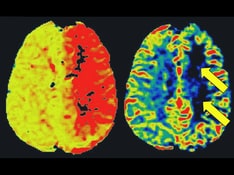
Currently, whether the above mechanisms are independent processes or both jointly responsible for the pathology is unclear. Various imaging modalities have shown that the focal brain lesions in MELAS are unlike typical ischemic strokes. Specifically, the lesions are associated with increased blood flow, hyperemia, and vasogenic edema, rather than focal ischemia.
Differential Diagnosis
Mitochondrial encephalomyopathy, lactic acidosis, and strokelike episodes (MELAS) is a complicated, multisystem disease. Since the symptoms, signs, and acute clinical presentations are so varied and the disease is relatively rare, the disease is misdiagnosed frequently.
The differential diagnosis of the syndrome of mitochondrial encephalomyopathy, lactic acidosis, and strokelike episodes (MELAS) includes the following:
-
Posterior Reversible Encephalopathy Syndrome (PRES)
Laboratory Studies
Lactic acid and pyruvate
If the history and physical findings are suggestive of mitochondrial encephalomyopathy, lactic acidosis, and strokelike episodes (MELAS), lactic acid and pyruvate may be used as screening tests, after first eliminating the more common causes of lactic acidosis, such as tissue hypoxic-ischemic injury, hyperglycemia, and hypoglycemia. The more uncommon amino acid and fatty acid metabolic disorders also need to be considered.
Characteristics of lactic acidosis in MELAS are somewhat unique. Arterial lactate and pyruvate are high and cerebrospinal fluid (CSF) lactate also may be high. Lactate and pyruvate may increase substantially with exercise. Lactate/pyruvate ratio may be increased.
The increased lactate-to-pyruvate ratio is observed in the face of a normal O2 saturation, as opposed to tissue-injury lactic acidosis in which the increased ratio is associated with decreased O2 saturation.
Mitochondrial DNA analysis
Mitochondrial DNA analysis is now available commercially from several sources to identify the mutations responsible for this disease. The local laboratory director may need to be consulted regarding the specific vendor to be used. Both MELAS-specific tests and overlap with other mitochondrial mutational disorders are available. [9] If clinical suspicion is high and the most common mutation negative, both whole genomic and mitochondrial genomic sequencing can be performed.
In around 80% of cases, the responsible point mutation is at position 3243 of the nucleotide sequence. Close to 8% are at position 3271. A number of additional point mutations, double point mutations, and one 4-base pair deletion mutation have also been described.
Mutations can be apparent in peripheral blood and muscle.
CT Scanning
CT scan of the head may demonstrate areas of low attenuation that do not correspond to vascular territories and that may be transient, predominantly in the temporoparietal and occipital cortices and subjacent white matter. Basal ganglia calcification and generalized atrophy also are seen.
Magnetic Resonance Imaging
MRI studies show hyperintense T2 lesions predominantly in the gray and subcortical white matter in the temporal, parietal, and occipital lobes. Lesions spare the deep white matter and cross vascular boundaries. Basal ganglia calcifications and atrophy also are reported. Generalized cerebral atrophy is frequent. Serial MRI studies often demonstrate lesion resolution, differentiating these lesions from typical ischemic strokes. [10]
By using MR spectroscopy, several groups have shown that lactic acid levels in the brain parenchyma and ventricles may be increased during the acute phase of the disease and in chronic lesions. [11, 12]
Additional Tests
Findings of noninvasive and cerebral angiographic studies are generally normal or show focal capillary blush or early venous filling in affected cortical regions.
Single-photon emission computed tomography (SPECT) and positron emission tomography (PET) studies have been reported variably to show normal or increased (and occasionally diminished) cerebral blood flow to regions structurally abnormal on CT scan and MRI. [13] Metabolic PET studies demonstrate focally deranged metabolic states.
Electroencephalography is often performed when seizures are a concern. This is especially necessary in MELAS, since patients occasionally have intractable status epilepticus as a terminal condition.
Electrocardiography may reveal preexcitation or incomplete heart block.
Echocardiography may demonstrate cardiomyopathy.
Histologic Findings
Muscle biopsy demonstrates ragged red fibers on modified Gomori trichrome stain in at least 85% of cases. Ragged red fibers, common to MELAS, myoclonic epilepsy with ragged red fibers (MERRF), [14] Kearns-Sayer, and overlap syndromes, reflect proliferation of abnormal mitochondria under the sarcolemma. Negative muscle biopsy findings do not preclude consideration of mitochondrial encephalomyopathy, lactic acidosis, and strokelike episodes (MELAS) syndrome. Heteroplasmy complicates biopsy testing and a given sample may be negative and may require high-read depth.
Pathologic examination of brain tissues demonstrates multiple cortical and subjacent white matter ischemic regions, spongiform degeneration of cortex, and calcium deposition in capillary walls of the globus pallidus.
Endothelial and smooth muscle cells of pial arterioles and small arteries exhibit increased numbers of structurally abnormal mitochondria, and capillary lumens are narrowed due to endothelial hypertrophy.
Treatment of MELAS
A number of agents have been tried experimentally in patients with MELAS. Trials of coenzyme Q10, [15] idebenone, dichloroacetate, cytochrome c, L-carnitine, L-arginine, [16] various B vitamins, and most recently taurine all have been reported in small groups of patients as short- and long-term treatments.
A number of studies have claimed success by both biochemical and clinical measures with each of these agents. Lack of long-term follow-up and the natural history of remission of lesions, however, hamper accurate evaluation of these drugs. Dichloroacetate was subjected to a double-blind randomized controlled evaluation for efficacy in patients with MELAS, and negative results suggest not to use this agent. Several additional treatments are under study, including glutamine supplementation, mitochondrial modifiers, and other therapies. Results of these studies are not yet reported.
Coenzyme Q10
levels of coenzyme Q10 are not reduced in patients suffering from MELAS; its therapeutic benefit is presumed to be due to the increase in production of ATP at the inner mitochondrial membrane. Some success with use of coenzyme Q10 at a dose of 4 mg/kg/day has been reported. Idebenone (an analogue of coenzyme Q10) has been used in a few patients. [17]
Dichloroacetate
Both intravenous formulations and oral formulations of dichloroacetate have been used in the acute treatment of strokelike episodes, as well as in long-term prophylaxis of stroke in patients with MELAS. The possible therapeutic effect of dichloroacetate was thought to be mediated via reduction in lactate levels in blood and brain. [18] Reductions in brain lactate levels reported in earlier studies were inferred from MR spectroscopic readings, PET analysis of isolated brain regions, and estimates of total lactate levels in CSF.
A double-blind randomized trial sought to show improvement in Global Assessment of Treatment Efficacy (GATE) Score with oral dichloroacetate treatment. [19] GATE was based on a combination of neurological examination, neuropsychological assessment, Karnofsky score, and event inventory (eg, seizure, stroke, headaches). No difference in outcomes was noted between treatment and placebo arms. There were also no differences in venous and CSF lactate levels.
MR spectroscopic and MRI studies did not show any differences between dichloroacetate-treated patients and placebo-treated patients. A significant increase was seen in peripheral nerve toxicity leading to discontinuation of the treatment regimen in patients treated with dichloroacetate. Subjects in both arms of the trial were also given thiamine, coenzyme Q10, L-carnitine, and alpha-lipoic acid supplementation. [19]
L-arginine
Small studies suggest some clinical and symptomatic improvement from L-arginine treatment, presumable to enhance the precursor to address deficiency of nitric oxide. A report of 25 patients with MELAS who were treated with oral or intravenous L-arginine for 2 years showed improved flow-mediated vasodilatory response. [20] Subsequent 7-year followup demonstrated increased interictal duration and improved symptoms without deaths in the followup period. [21] Another study indicates L-arginine normalized cerebrovascular reactivity in 3 MELAS siblings. [22]
Taurine
Given the possibility that a failure of taurine-initiated transcription occurs in the most common mutations in MELAS, an open-label trial of high-dose taurine in 10 patients was recently reported. [1] Results were promising with a reduction of prior strokelike episodes without severe adverse reactions. Given variable natural history of this complex disorder, confirmation is likely still needed prior to general recommendations.
Supportive care
The general supportive care measures used in acute stroke syndromes also should be followed. Death in patients with MELAS is usually the result of cardiac failure, pulmonary embolus, or renal failure. Status epilepticus can occasionally be fatal; seizures should be treated aggressively.
Consultations
A neurologist, adult or pediatric, should be consulted for diagnosis and care of a patient with strokelike episodes, seizures, and encephalopathy.
Advice on the proper handling and processing of a muscle biopsy should be sought from a pathologist or neuromuscular disease specialist.
If psychosis is present, the patient may benefit from psychiatric consultation.
Poststroke rehabilitation needs are best addressed through consultations with a physical therapist, occupational therapist, speech-language pathologist, and rehabilitation specialist (neurologist or physiatrist).
Transfer
Transfer to a tertiary care center with multispecialty facilities is appropriate for patients suspected of having MELAS, particularly if muscle biopsy and MRI facilities are not readily available for diagnosis.
Immediate life-threatening issues, such as acidosis, seizures, pulmonary embolus, and cardiac arrhythmias, may need to be addressed locally prior to transfer.
Complications
Serious medical complications, such as cardiac failure, pulmonary embolus, renal failure, and aspiration pneumonia, require emergency treatment.
Prognosis
Progressive neurological deficits, with a tendency to relapses and remissions, characterize the typical course of MELAS. Most patients die by the fourth decade of medical complications. Some patients have survived into the sixth decade.