You are in: eMedicine Specialties > Neurology > Critical Care Neurology
|
Epidural Hematoma Last Updated: April 17, 2006 |
|
| Synonyms and related keywords: epidural hemorrhage, extradural hematoma, extradural hemorrhage, cerebral epidural hematoma, spinal epidural hematoma, EDH, SEDH, head injury, intracranial epidural hematoma
|
|   |
AUTHOR INFORMATION
| Section 1 of 10  |
|
| Author: David S Liebeskind, MD, Assistant Professor of Neurology, Neurology Director, Stroke Imaging; Associate Neurology Director, Department of Neurology, University of California at Los Angeles |
| David S Liebeskind, MD, is a member of the following medical societies:
American Academy of Neurology,
American Heart Association,
American Medical Association, American Society of Neuroimaging,
American Society of Neuroradiology,
National Stroke Association, and
Stroke Council of the American Heart Association |
| Editor(s): Edward Hogan, MD, Professor, Department of Neurology, Medical College of Georgia; Emeritus Professor and Chair, Department of Neurology, Medical University of South Carolina; Francisco Talavera, PharmD, PhD, Senior Pharmacy Editor, eMedicine;
Howard Kirshner, MD, Vice-Chair, Professor, Department of Neurology, Vanderbilt University School of Medicine;
Selim R Benbadis, MD, Professor of Neurology, Director of Comprehensive Epilepsy Program, Departments of Neurology and Neurosurgery, University of South Florida College of Medicine, Tampa General Hospital;
and Nicholas Lorenzo, MD, Chief Editor, eMedicine Neurology; Consulting Staff, Neurology Specialists and Consultants |
Disclosure
|   |
INTRODUCTION
| Section 2 of 10  |
|
Background: Epidural hematoma (ie, accumulation of blood in the potential space between dura and bone) may be intracranial (EDH) or spinal (SEDH). EDH occurs in approximately 2% of patients with head injuries and 5-15% of patients with fatal head injuries. EDH is considered to be the most serious complication of head injury, requiring immediate diagnosis and surgical intervention. EDH may be acute (58%), subacute (31%), or chronic (11%). SEDH may also be traumatic, though it may occur spontaneously. Pathophysiology: Epidural hematoma usually results from a brief linear contact force to the calvaria that causes separation of the periosteal dura from bone and disruption of interposed vessels due to shearing stress. Skull fractures occur in 85-95% of adult cases, but they are much less common in children because of the plasticity of the immature calvaria. Arterial or venous structures may be compromised, causing rapid expansion of the hematoma; however, chronic or delayed manifestations may occur when venous sources are involved. Extension of the hematoma usually is limited by suture lines owing to the tight attachment of the dura at these locations.
The temporoparietal region and the middle meningeal artery are involved most commonly (66%), although the anterior ethmoidal artery may be involved in frontal injuries, the transverse or sigmoid sinus in occipital injuries, and the superior sagittal sinus in trauma to the vertex. Bilateral epidural hematomas account for 2-10% of all acute epidural hematomas in adults but are exceedingly rare in children. Posterior fossa epidural hematomas represent 5% of all cases of epidural hematomas.
SEDH may be spontaneous or may follow minor trauma, such as lumbar puncture or epidural anesthesia. Spontaneous SEDH may be associated with anticoagulation, thrombolysis, blood dyscrasias, coagulopathies, thrombocytopenia, neoplasms, or vascular malformations. The peridural venous plexus usually is involved, though arterial sources of hemorrhage also occur. The dorsal aspect of the thoracic or lumbar region is involved most commonly, with expansion limited to a few vertebral levels. Frequency:
- In the US: Epidural hematoma complicates 2% of cases of head trauma (approximately 40,000 cases per year). SEDH affects 1 per 1,000,000 people annually. Alcohol and other forms of intoxication have been associated with a higher incidence of epidural hematoma.
- Internationally: International frequency is unknown, though it is likely to parallel the frequency in the United States.
Mortality/Morbidity: Mortality rate associated with epidural hematoma has been estimated to be 5-50%.
- The level of consciousness prior to surgery has been correlated with mortality rate: 0% for awake patients, 9% for obtunded patients, and 20% for comatose patients.
- Bilateral EDH has a mortality rate of 15-20%.
- Posterior fossa epidural hematoma has a mortality rate of 26%.
Race: No racial predilection has been reported.
Sex: EDH and SEDH are more frequent in men, with a male-to-female ratio of 4:1.
Age:
- EDH is rare in individuals younger than 2 years.
- EDH is also rare in individuals older than 60 years because the dura is tightly adherent to the calvaria.
- SEDH has a bimodal distribution with peaks during childhood and during the fifth and sixth decades of life. Increasing age has been noted as a risk factor for postoperative SEDH.
|   |
CLINICAL
| Section 3 of 10  |
|
History: Epidural hematoma should be suspected in any individual who sustains head trauma. Although classically associated with a lucid interval between the initial loss of consciousness at the time of impact and a delayed decline in mental status (10-33% of cases), alterations in the level of consciousness may have a variable presentation. Posterior fossa epidural hematoma may exhibit a rapid and delayed progression from minimal symptoms to even death within minutes. - Symptoms of epidural hematoma include the following:
- Focal neurological deficits (eg, visual field cuts, aphasia, weakness, numbness)
- SEDH typically causes severe localized back pain with delayed radicular radiation that may mimic disk herniation. Associated symptoms may include the following:
Physical: - The physical examination should include a thorough evaluation for evidence of traumatic sequelae and associated neurological deficits, including the following:
- Bradycardia and/or hypertension indicative of elevated intracranial pressure
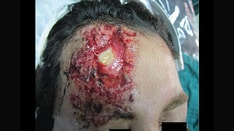
- Skull fractures, hematomas, or lacerations
- Cerebrospinal fluid (CSF) otorrhea or rhinorrhea resulting from skull fracture with disruption of the dura
- Instability of the vertebral column
- Alteration in level of consciousness (ie, Glasgow Coma Scale score)
- Anisocoria (eg, ipsilateral dilation of the pupil due to uncal herniation with compression of the oculomotor nerve)
- Weakness (eg, contralateral hemiparesis due to compression of the cerebral peduncle)
- Other focal neurological deficits (eg, aphasia, visual field defects, numbness, ataxia)
- SEDH may have variable findings on physical examination, determined by the level of the lesion. The findings include the following:
- Weakness (unilateral or bilateral)
- Sensory deficits with radicular paresthesias (unilateral or bilateral)
- Various alterations in reflexes
- Alterations of bladder or anal sphincter tone
Causes: - Coagulopathy or bleeding diathesis
- Hepatic disease with portal hypertension
|   |
DIFFERENTIALS
| Section 4 of 10  |
|
Alcohol (Ethanol) Related Neuropathy Anisocoria Ankylosing Spondylitis Cervical Spondylosis: Diagnosis and Management Foix-Alajouanine Syndrome Head Injury Intracranial Epidural Abscess Intracranial Hemorrhage Posttraumatic Epilepsy
Spinal Cord Hemorrhage Spinal Epidural Abscess
Other Problems to be Considered:
Back pain
Spinal Cord Disease |
|
Patient Education
|
|
Click here for patient education.
|
|
|
|
|
|   |
WORKUP
| Section 5 of 10  |
|
Lab Studies:
- Complete blood count (CBC) with platelets - To monitor for infection and assess hematocrit and platelets for further hemorrhagic risk
- Prothrombin time (PT)/activated partial thromboplastin time (aPTT) - To identify bleeding diathesis
- Serum chemistries, including electrolytes, blood urea nitrogen (BUN), creatinine, and glucose - To characterize metabolic derangements that may complicate clinical course
- Toxicology screen and serum alcohol level - To identify associated causes of head trauma and establish need for surveillance with regard to withdrawal symptoms
- Type and hold an appropriate amount of blood - To prepare for necessary transfusions needed because of blood loss or anemia
Imaging Studies:
- Plain radiography of the head (skull radiography) may reveal skull fractures, though CT scanning has largely replaced the use of skull radiography because the diagnostic information is so much greater with CT. Cervical spine radiographs with anteroposterior, lateral, and odontoid views are useful to identify associated traumatic fractures. Plain radiographs of the vertebral column may identify a cavernous angioma.
- Myelography outlines the epidural space and may illustrate a space-occupying mass. CT myelography may be used when MRI is unavailable or if the patient cannot tolerate MRI.
- Noncontrast CT scanning of the head not only visualizes skull fractures but also directly images an epidural hematoma.
- Acute epidural hematoma may appear as a hyperdense lenticular-shaped mass situated between the brain and the skull, though regions of hypodensity may be seen with serum or fresh blood. On rare occasion, an acute epidural may appear completely isointense with respect to brain. Planoconvex or crescent-shaped epidural hematoma must be differentiated from subdural hemorrhage. Subacute lesions are homogenously hyperdense.
- Chronic epidural hematoma may have a heterogeneous appearance due to neovascularization and granulation, with peripheral enhancement on contrast administration.
- CT scanning may also depict air collections and displacement of brain parenchyma.
- Clinical deterioration should prompt repeat imaging with CT scanning.
- MRI also demonstrates the evolution of an epidural hematoma, though this imaging modality may not be appropriate for patients in unstable condition.
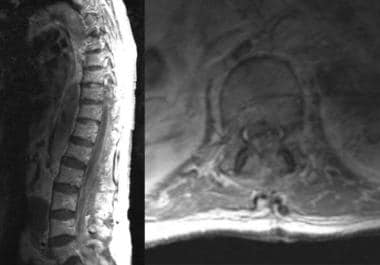
- Spinal MRI may delineate the location of an epidural hematoma and identify an associated vascular malformation.
- Spinal cord enhancement may be apparent and should be distinguished from inflammation or neoplasia.
- Diffusion-weighted imaging with the use of periodically rotated overlapping parallel lines with enhanced reconstruction (PROPELLER) MRI may be used for improved detection of acute spinal epidural hematoma.
- Gadolinium-enhanced magnetic resonance arteriography (MRA) may further define the extent of an arteriovenous malformation.
- Conventional angiography may be required to demonstrate definitively the presence of a vascular malformation.
Other Tests:
- Functional studies of the spinal cord, such as somatosensory evoked potentials, may be used for intraoperative monitoring or for prognostication following surgery.
Procedures:
- Emergent decompression with placement of a burr hole may be necessary when neurosurgical consultation is unavailable. For patients showing rapid deterioration with clinical signs of impending herniation, place a burr hole on the side of the dilating pupil. In the absence of a CT scan, place the burr hole 2 finger widths anterior to the tragus of the ear and 3 finger widths above the tragus of the ear.
- Lumbar puncture provides little additional information and may exacerbate neurological damage.
|   |
TREATMENT
| Section 6 of 10  |
|
Medical Care: Initial resuscitation efforts should include assessment and stabilization of airway patency, breathing, and circulation. A thorough trauma evaluation is mandatory, including inspection for skull fractures and appreciation of the force and location of impact. Immobilization of the spine should be followed by emergent transfer of the patient to the nearest level I trauma center supported with neurosurgical consultation. - Triage and initial management of a patient with epidural hematoma may be tailored to the degree of neurological impairment at presentation. Alert patients may be evaluated with a CT scan following a brief neurologic examination.
- A patient with a small epidural hematoma may be treated conservatively, though close observation is advised, as delayed, yet sudden, neurological deterioration may occur.
- Trauma patients may require diagnostic peritoneal lavage and x-rays of the chest, pelvis, and cervical spine.
- While neurosurgical consultation is requested, administer intravenous fluids to maintain euvolemia and to provide adequate cerebral perfusion pressure.
- Patients with elevated intracranial pressure may be treated with osmotic diuretics and hyperventilation, with elevation of the head of the bed at an angle of 30 degrees. Patients who are intubated may be hyperventilated with intermittent mandatory ventilation at a rate of 16-20 breaths per minute and tidal volume of 10-12 mL/kg. A carbon dioxide partial pressure of 28-32 mm Hg is ideal, as severe hypocapnia (<25 mm Hg) may induce cerebral vasoconstriction and ischemia.
- Coagulopathy or persistent bleeding may require administration of vitamin K, protamine sulfate, fresh frozen plasma, platelet transfusions, or clotting factor concentrates.
Surgical Care: Although several recent reports have described successful conservative management of epidural hematoma, surgical evacuation constitutes definitive treatment of this condition. Craniotomy or laminectomy is followed by evacuation of the hematoma, coagulation of bleeding sites, and inspection of the dura. The dura is then tented to the bone and, occasionally, epidural drains are employed for as long as 24 hours. - Minimally invasive surgical procedures, including the use of burr holes and negative pressure drainage, may be used in selected cases.
- Novel therapeutic approaches may include the use of endovascular embolization to minimize bleeding during the acute stage.
Consultations: - Neurosurgeon (for potential emergent evacuation of the hematoma)
- Rehabilitation specialist
Diet: The hypermetabolic and catabolic phenomena associated with severe head injury necessitate caloric supplementation. Initiate enteral feedings as soon as possible. Activity: Patients who are treated conservatively should undergo close observation and should avoid strenuous activity. Inpatients should remain on bedrest during the initial phase; this can be followed by a progressive increase in activity.
|   |
MEDICATION
| Section 7 of 10  |
|
Osmotic diuretics, such as mannitol, may be used to diminish intracranial pressure. As hyperthermia may exacerbate neurological injury, acetaminophen may be given to reduce fevers. Anticonvulsants are used routinely to avoid seizures that may be induced by cortical damage. Patients with SEDH may require high-dose methylprednisolone when spinal cord compression is involved. Immobilized patients may require heparin for prevention of venous thrombosis, whereas vitamin K and protamine may be administered to restore normal coagulation parameters. Antacids are used to prevent gastric ulcers associated with traumatic brain injury and spinal cord damage.
Drug Category: Osmotic diuretics -- These agents reverse the pressure gradient across the blood-brain barrier, reducing intracranial pressure. Drug Name
| Mannitol (Osmitrol, Resectisol) -- Reduces cerebral edema by osmotic forces and decreases blood viscosity, resulting in reflex vasoconstriction and lowering of intracranial pressure. |
|---|
| Adult Dose | 0.75-1 g/kg IV, followed by 0.25-0.5 g/kg IV q3-5h to maintain serum hyperosmolarity (approximately 320 mOsm/L) |
|---|
| Pediatric Dose | Not established; dose is dependent on weight, clinical condition, and laboratory results |
|---|
| Contraindications | Documented hypersensitivity; anuria; severe pulmonary congestion or frank pulmonary edema; active intracranial bleeding; severe dehydration; progressive renal or cardiac failure |
|---|
| Interactions | May decrease serum lithium levels |
|---|
| Pregnancy |
C - Safety for use during pregnancy has not been established.
|
|---|
| Precautions | Perform periodic clinical evaluation and laboratory assessment to monitor changes in serum osmolarity, fluids, and electrolytes; persistently elevated serum osmolarity may result in rebound intracranial hypertension
Caution in renal dysfunction, hypervolemia, urinary tract obstruction, or cardiovascular instability |
|---|
Drug Category: Antipyretic agents -- These agents are helpful in relieving the fever associated with the condition.Drug Name
| Acetaminophen (Tylenol, Feverall, Aspirin Free Anacin) -- Reduces fever and maintains normothermia. DOC for pain in patients with documented hypersensitivity to aspirin or NSAIDs, with upper GI disease, or who are taking oral anticoagulants. |
|---|
| Adult Dose | 650 mg PO/PR q4-6h; not to exceed maximum daily dosage of 4 g |
|---|
| Pediatric Dose | <12 years: 10-15 mg/kg/dose PO/PR q4-6h prn; not to exceed 2.6 g/d
>12 years: 325-650 mg PO/PR q4h; not to exceed 5 doses (2.6 g) in 24 h| Contraindications | Documented hypersensitivity; known G-6-P deficiency; hepatic dysfunction |
|---|
| Interactions | Rifampin can reduce analgesic effects; barbiturates, carbamazepine, hydantoins, and isoniazid may increase hepatotoxicity |
|---|
| Pregnancy |
C - Safety for use during pregnancy has not been established.
|
|---|
| Precautions | Hepatotoxicity possible in patients with chronic alcoholism following various dose levels; severe or recurrent pain or high or continued fever may indicate serious illness; acetaminophen contained in many OTC products and combined use with these products may result in cumulative doses exceeding recommended maximum dose |
|---|
|
|---|
Drug Category: Anticonvulsants -- These agents reduce frequency of early posttraumatic seizures from 14% to 4%, but they do not prevent later seizures. If seizures are not experienced for 7-10 d, the drug may be discontinued.Drug Name
| Fosphenytoin (Cerebyx) -- Converted to phenytoin, which modulates neuronal voltage-dependent sodium channels. |
|---|
| Adult Dose | 15-20 mg/kg IV loading dose, followed by 300 mg IV q24h |
|---|
| Pediatric Dose | Not established; weight-adjusted dosage similar to that in adults |
|---|
| Contraindications | Documented hypersensitivity; sinus bradycardia; sinoatrial and third-degree AV block; Adams-Stokes syndrome |
|---|
| Interactions | Amiodarone, benzodiazepines, chloramphenicol, cimetidine, fluconazole, isoniazid, metronidazole, miconazole, phenylbutazone, succinimides, sulfonamides, omeprazole, phenacemide, disulfiram, ethanol (acute ingestion), trimethoprim, and valproic acid may increase toxicity;
Barbiturates, diazoxide, ethanol (chronic ingestion), rifampin, antacids, charcoal, carbamazepine, theophylline, and sucralfate decrease effects
Decreases effects of acetaminophen, corticosteroids, dicumarol, disopyramide, doxycycline, estrogens, haloperidol, amiodarone, carbamazepine, cardiac glycosides, quinidine, theophylline, methadone, metyrapone, mexiletine, oral contraceptives, and valproic acid| Pregnancy |
D - Unsafe in pregnancy
|
|---|
| Precautions | Avoid rapid administration to reduce risks of hypotension and cardiac arrhythmias; monitor for blood dyscrasias with serial blood tests; discontinue use if skin rash appears and do not resume use if rash is exfoliative, bullous, or purpuric; use caution in patients with acute intermittent porphyria, diabetes, or hepatic dysfunction |
|---|
|
|---|
Drug Category: Corticosteroids -- Anti-inflammatory properties mitigate tissue damage in spinal cord compression.Drug Name
| Methylprednisolone (Adlone, Medrol, Solu-Medrol) -- Reduces injury associated with spinal cord compression. Decreases inflammation by suppressing migration of polymorphonuclear leukocytes and reversing increased capillary permeability. |
|---|
| Adult Dose | 30 mg/kg IV bolus, followed by 4 mg/kg IV infusion over next 23 h |
|---|
| Pediatric Dose | Administer as in adults |
|---|
| Contraindications | Documented hypersensitivity; systemic fungal infection |
|---|
| Interactions | Inhibits metabolism of cyclosporine; inducers of hepatic enzymes (eg, phenobarbital, phenytoin, rifampin) increase clearance; troleandomycin and ketoconazole inhibit metabolism; variable interaction with aspirin and oral anticoagulants |
|---|
| Pregnancy |
C - Safety for use during pregnancy has not been established.
|
|---|
| Precautions | Caution in ulcerative colitis, peptic ulcer disease, renal insufficiency, hypertension, osteoporosis, myasthenia gravis, hypothyroidism, cirrhosis, and ocular herpes simplex; reductions in dosage should be gradual; psychic derangements may occur |
|---|
Drug Category: Antidotes -- These agents reverse some coagulopathies or bleeding diatheses.Drug Name
| Phytonadione; vitamin K (AquaMEPHYTON, Konakion, Mephyton) -- Promotes hepatic synthesis of clotting factors that inhibit warfarin effects. |
|---|
| Adult Dose | 2.5-10 mg IM/SC; repeat administration q6-8h until PT normalized |
|---|
| Pediatric Dose | Not established; suggested dose is as in adults |
|---|
| Contraindications | Documented hypersensitivity |
|---|
| Interactions | Antagonizes effects of warfarin sodium and dicumarol |
|---|
| Pregnancy |
C - Safety for use during pregnancy has not been established.
|
|---|
| Precautions | Ineffective in hereditary hypoprothrombinemia |
|---|
Drug Name
| Protamine sulfate -- Neutralizes effects of heparin. |
|---|
| Adult Dose | Dosage adjusted to time interval since discontinuation of IV heparin
Immediately: 1-1.5 mg/100 U heparin
30-60 min from discontinuation of heparin: 0.5-0.75 mg/100 U heparin
>60 min from discontinuation of heparin: 0.25-0.375 mg/100 U heparin
If SC heparin used, give 1-1.5 mg/100 U heparin; not to exceed 50 mg IV over 10 min| Pediatric Dose | Not established; suggested dose is as in adults |
|---|
| Contraindications | Documented hypersensitivity |
|---|
| Interactions | None reported |
|---|
| Pregnancy |
C - Safety for use during pregnancy has not been established.
|
|---|
| Precautions | Anticoagulant effects may occur if maximum dose exceeded |
|---|
|
|---|
Drug Category: Antacids -- These agents provide prophylaxis of gastric ulcers.Drug Name
| Famotidine (Pepcid) -- Competitively inhibits histamine at H2 receptor of gastric parietal cells, resulting in reduced gastric acid secretion, gastric volume, and hydrogen concentrations. Minimizes development of gastric ulcers. |
|---|
| Adult Dose | 20 mg IV/PO bid |
|---|
| Pediatric Dose | Not established; suggested dose is as in adults |
|---|
| Contraindications | Documented hypersensitivity |
|---|
| Interactions | None reported |
|---|
| Pregnancy |
B - Usually safe but benefits must outweigh the risks.
|
|---|
| Precautions | Adjust dosage in patients with renal insufficiency |
|---|
Drug Category: Anticoagulants -- These agents reduce risk of venous complications in immobilized patients.Drug Name
| Heparin -- Augments activity of antithrombin III and prevents conversion of fibrinogen to fibrin. Does not actively lyse but is able to inhibit further thrombogenesis. Prevents re-accumulation of clot after spontaneous fibrinolysis. Used for prophylaxis of deep venous thrombosis. |
|---|
| Adult Dose | 5000 U SC bid |
|---|
| Pediatric Dose | Weight-adjusted dosage |
|---|
| Contraindications | Documented hypersensitivity; subacute bacterial endocarditis; active bleeding; history of heparin-induced thrombocytopenia |
|---|
| Interactions | Antiplatelet agents may exacerbate hemorrhagic risk associated with heparin; digitalis, tetracyclines, nicotine, and antihistamines may interfere with heparin; precipitates may form when used in conjunction with doxorubicin, droperidol, ciprofloxacin, or mitoxantrone |
|---|
| Pregnancy |
C - Safety for use during pregnancy has not been established.
|
|---|
| Precautions | In neonates, preservative-free heparin recommended to avoid possible toxicity (ie, gasping syndrome) by benzyl alcohol, which is used as preservative; caution in severe hypotension and shock; monitor for bleeding in peptic ulcer disease, menstruation, increased capillary permeability, and when giving IM injections; discontinue use if thrombocytopenia develops |
|---|
|   |
FOLLOW-UP
| Section 8 of 10  |
|
Further Inpatient Care:
- Following initial management in the emergency department, the patient may be sent for emergent neurosurgical evacuation of the hematoma or may be transferred to the ICU for further care. Subsequent care generally includes the following:
- Serial neurologic examinations
- Treatment of elevated intracranial pressure
- Avoidance of hypotension or hypertension (ie, maintain mean arterial pressure [MAP] between 70-130 mm Hg)
- Use of isotonic solutions, such as normal saline, to minimize cerebral edema
- Avoidance of hyperthermia
- Treatment or prevention of posttraumatic seizures
- Observation and potential repair of CSF leaks
- Treatment of urinary tract infections
- Prevention of venous thrombosis
- Prophylaxis for gastric ulcers
- Physical, occupational, and speech therapy
- Repeat CT scan for clinical deterioration
Further Outpatient Care:
- After hospital discharge, continued physical, occupational, and speech therapy may be required.
In/Out Patient Meds:
- Mannitol or other osmotic diuretics for elevated intracranial pressure
- Steroids for spinal cord compression
- Subcutaneous heparin for prevention of venous complications
- Famotidine or other antacids for gastric ulcer prophylaxis
- Fosphenytoin or other anticonvulsants for posttraumatic seizures
- Anticholinergics for bladder complications
- Baclofen, diazepam, or tizanidine for spasticity due to spinal cord damage
- Amitriptyline, carbamazepine, or gabapentin for neuropathic pain
Transfer:
- Although emergent decompression of an epidural hematoma should not be delayed, trauma patients should be transferred to centers with neurosurgical expertise.
Deterrence/Prevention:
- Educate the public regarding traumatic brain injury, including appropriate use of safety equipment, precautions, and measures that may reduce the incidence of head injury.
- Avoid lumbar puncture or epidural anesthesia in individuals on anticoagulation, following thrombolysis, or when a bleeding diathesis is suspected.
Complications:
- Neurological deficits or death may occur.
- Posttraumatic seizures due to cortical damage may develop 1-3 months after the initial injury, with decreasing frequency over time. Alcoholism increases the risk of posttraumatic seizures.
- Delayed effects of an epidural hematoma include the postconcussion syndrome, which is characterized by headaches, dizziness, vertigo, restlessness, emotional lability, inability to concentrate, and fatigue.
- SEDH may cause spasticity, neuropathic pain, and urinary complications.
Prognosis:
- Declines with advancing age
- Deteriorates when associated with other intracranial injuries
- Depends on the initial Glasgow Coma Scale score (0% mortality for awake patients, 40% mortality for comatose individuals)
- Worsens with delays between injury and surgical intervention
- In SEDH, the MRI appearance of T2-hyperintensity within the spinal cord may portend a poor clinical outcome.
Patient Education:
- Educate patients regarding prevention of traumatic brain injury, with particular emphasis on sports injuries, use of safety precautions, and proper use of safety equipment.
|   |
MISCELLANEOUS
| Section 9 of 10  |
|
Medical/Legal Pitfalls:
- Consider epidural hematoma in all patients who have experienced head injury.
- Alteration in the level of consciousness may be highly variable and unreliable as a clinical predictor.
- Obtain CT scan whenever possible.
- Skull fractures are not always present, particularly in children.
- Delayed transfer and triage may be the principal determinant of death.
- Close observation requires frequent neurologic evaluations.
|   |
BIBLIOGRAPHY
| Section 10 of 10 |
|
-
Arrese I, Lobato RD, Gomez PA: Hyperacute epidural haematoma isodense with the brain on computed tomography. Acta Neurochir (Wien) 2004 Feb; 146(2): 193-4[Medline].
-
Awad JN, Kebaish KM, Donigan J: Analysis of the risk factors for the development of post-operative spinal epidural haematoma. J Bone Joint Surg Br 2005 Sep; 87(9): 1248-52[Medline].
-
Bejjani GK, Donahue DJ, Rusin J, Broemeling LD: Radiological and clinical criteria for the management of epidural hematomas in children. Pediatr Neurosurg 1996 Dec; 25(6): 302-8[Medline].
-
Bezircioglu H, Ersahin Y, Demircivi F, et al: Nonoperative treatment of acute extradural hematomas: analysis of 80 cases. J Trauma 1996 Oct; 41(4): 696-8[Medline].
-
Borovich B, Braun J, Guilburd JN, et al: Delayed onset of traumatic extradural hematoma. J Neurosurg 1985 Jul; 63(1): 30-4[Medline].
-
Bozbuga M, Izgi N, Polat G, Gurel I: Posterior fossa epidural hematomas: observations on a series of 73 cases. Neurosurg Rev 1999; 22(1): 34-40[Medline].
-
Chang FC, Lirng JF, Luo CB: Evaluation of clinical and MR findings for the prognosis of spinal epidural haematomas. Clin Radiol 2005 Jul; 60(7): 762-70[Medline].
-
Cohen JE, Montero A, Israel ZH: Prognosis and clinical relevance of anisocoria-craniotomy latency for epidural hematoma in comatose patients. J Trauma 1996 Jul; 41(1): 120-2[Medline].
-
Durand P, Adamson GJ: On-the-field management of athletic head injuries. J Am Acad Orthop Surg 2004 May-Jun; 12(3): 191-5[Medline].
-
Fujiwara H, Oki K, Momoshima S: PROPELLER diffusion-weighted magnetic resonance imaging of acute spinal epidural hematoma. Acta Radiol 2005 Aug; 46(5): 539-42[Medline].
-
Fukui MB, Swarnkar AS, Williams RL: Acute spontaneous spinal epidural hematomas. Am J Neuroradiol 1999 Aug; 20(7): 1365-72[Medline].
-
Guay J: Estimating the incidence of epidural hematoma - is there enough information?. Can J Anaesth 2004 May; 51(5): 514-5[Medline].
-
Heyman R, Heckly A, Magagi J: Intracranial epidural hematoma in newborn infants: clinical study of 15 cases. Neurosurgery 2005 Nov; 57(5): 924-9; discussion 924-9[Medline].
-
Holtas S, Heiling M, Lonntoft M: Spontaneous spinal epidural hematoma: findings at MR imaging and clinical correlation. Radiology 1996 May; 199(2): 409-13[Medline].
-
Ibanez J, Arikan F, Pedraza S: Reliability of clinical guidelines in the detection of patients at risk following mild head injury: results of a prospective study. J Neurosurg 2004 May; 100(5): 825-34[Medline].
-
Lee EJ, Hung YC, Wang LC, et al: Factors influencing the functional outcome of patients with acute epidural hematomas: analysis of 200 patients undergoing surgery. J Trauma 1998 Nov; 45(5): 946-52[Medline].
-
Liu JT, Tyan YS, Lee YK: Emergency management of epidural haematoma through burr hole evacuation and drainage. A preliminary report. Acta Neurochir (Wien) 2006 Mar; 148(3): 313-7[Medline].
-
Miller DJ, Steinmetz M, McCutcheon IE: Vertex epidural hematoma: surgical versus conservative management: two case reports and review of the literature. Neurosurgery 1999 Sep; 45(3): 621-4; discussion 624-5[Medline].
-
Narayan RK, Wilberger JE Jr, Povlishock JT, eds: Neurotrauma. 1st ed New York: McGraw Hill; 1996.
-
Pahapill PA, Lownie SP: Conservative treatment of acute spontaneous spinal epidural hematoma. Can J Neurol Sci 1998 May; 25(2): 159-63[Medline].
-
Rivas JJ, Lobato RD, Sarabia R, et al: Extradural hematoma: analysis of factors influencing the courses of 161 patients. Neurosurgery 1988 Jul; 23(1): 44-51[Medline].
-
Servadei F: Prognostic factors in severely head injured adult patients with epidural haematoma's. Acta Neurochir (Wien) 1997; 139(4): 273-8[Medline].
-
Suzuki S, Endo M, Kurata A: Efficacy of endovascular surgery for the treatment of acute epidural hematomas. AJNR Am J Neuroradiol 2004 Aug; 25(7): 1177-80[Medline].
-
Wester K: Decompressive surgery for "pure" epidural hematomas: does neurosurgical expertise improve the outcome? Neurosurgery 1999 Mar; 44(3): 495-500; discussion 500-2[Medline].
-
Wysowski DK, Talarico L, Bacsanyi J, Botstein P: Spinal and epidural hematoma and low-molecular-weight heparin. N Engl J Med 1998 Jun 11; 338(24): 1774-5[Medline].
-
Yilmazlar S, Kocaeli H, Dogan S: Traumatic epidural haematomas of nonarterial origin: analysis of 30 consecutive cases. Acta Neurochir (Wien) 2005 Dec; 147(12): 1241-8; discussion 1248[Medline].
Epidural Hematoma excerpt |