Continually Updated Clinical Reference
 
 
  All Sources     eMedicine     Medscape     Drug Reference     MEDLINE
 
eMedicine - Cervical Spondylosis: Diagnosis and Management : Article by

Quick Find
Authors & Editors
Introduction
Clinical
Differentials
Workup
Treatment
Medication
Follow-up
Miscellaneous
Multimedia
References

Related Articles
Amyotrophic Lateral Sclerosis

Ankylosing Spondylitis

Arteriovenous Malformations

Brainstem Gliomas

Cluster Headache

Diabetic Neuropathy

Median Neuropathy

Meningioma

Metastatic Disease to the Brain

Metastatic Disease to the Spine and Related Structures

Migraine Headache

Migraine Headache: Neuro-Ophthalmic Perspective

Migraine Variants

Multiple Sclerosis

Muscle Contraction Tension Headache

Polyarteritis Nodosa

Radial Mononeuropathy

Reflex Sympathetic Dystrophy

Subarachnoid Hemorrhage

Syringomyelia

Thoracic Outlet Syndrome

Torticollis


Patient Education
Back, Ribs, Neck, and Head Center

Vertebral Compression Fracture Overview

Vertebral Compression Fracture Causes

Vertebral Compression Fracture Symptoms

Vertebral Compression Fracture Treatment

Neck Strain Overview


Author: Eli M Baron, MD, Fellow in Combined Neurosurgical/Orthopedic Surgery, Institute of Spinal Disorders, Cedars Sinai Medical Center

Eli M Baron is a member of the following medical societies: Alpha Omega Alpha, American Association of Neurological Surgeons, Congress of Neurological Surgeons, North American Spine Society, and Phi Beta Kappa

Coauthor(s): William F Young, MD, Attending Neurosurgeon, Fort Wayne Neurological Center

Editors: William J Nowack, MD, Associate Professor, Department of Neurology, Epilepsy Center, University of Kansas Medical Center; Francisco Talavera, PharmD, PhD, Senior Pharmacy Editor, eMedicine; James H Halsey, MD, Professor, Department of Neurology, University of Alabama Medical Center; Selim R Benbadis, MD, Professor, Director of Comprehensive Epilepsy Program, Departments of Neurology and Neurosurgery, University of South Florida School of Medicine, Tampa General Hospital; Nicholas Y Lorenzo, MD, Chief Editor, eMedicine Neurology; Consulting Staff, Neurology Specialists and Consultants

Author and Editor Disclosure

Synonyms and related keywords: cervical degenerative joint disease, cervical degenerative disk disease, cervical osteoarthritis, cervical spondylotic myelopathy, CSM, disk degeneration, degenerative cervical disease, osteophytic bars, cervical radiculopathy, neck pain, shoulder pain, cervicalgia, chronic suboccipital headache, paresthesias, pseudoangina, breast pain, nontraumatic paraparesis, nontraumatic tetraparesis, numbness, clumsy hands, loss of manual dexterity, difficulty with writing, central cord syndrome, Tinel sign, Spurling sign, Babinski sign, Hoffman sign, pectoralis muscle reflex, spastic gait, Lhermitte sign

Background

Cervical spondylosis is a common degenerative condition of the cervical spine. It is most likely caused by age-related changes in the intervertebral disks. Clinically, several syndromes, both overlapping and distinct, are seen. These include neck and shoulder pain, suboccipital pain and headache, radicular symptoms, and cervical spondylotic myelopathy (CSM). As disk degeneration occurs, mechanical stresses result in osteophytic bars, which form along the ventral aspect of the spinal canal.

Frequently, associated degenerative changes in the facet joints, hypertrophy of the ligamentum flavum, and ossification of the posterior longitudinal ligament occur. All can contribute to impingement on pain-sensitive structures (eg, nerves, spinal cord), thus creating various clinical syndromes. Spondylotic changes are often observed in the aging population. However, only a small percentage of patients with radiographic evidence of cervical spondylosis are symptomatic.

Treatment is usually conservative in nature; the most commonly used treatments are nonsteroidal anti-inflammatory drugs (NSAIDs), physical modalities, and lifestyle modifications. Surgery is occasionally performed. Many of the treatment modalities for cervical spondylosis have not been subjected to rigorous, controlled trials. Surgery is advocated for cervical radiculopathy in patients who have intractable pain, progressive symptoms, or weakness that fails to improve with conservative therapy. Surgical indications for CSM remain somewhat controversial, but most clinicians recommend operative therapy over conservative therapy for moderate-to-severe myelopathy.

Pathophysiology

Cervical spondylosis is the result of disk degeneration. As disks age, they fragment, lose water, and collapse. Initially, this starts in the nucleus pulposus. This results in the central annular lamellae buckling inward while the external concentric bands of the annulus fibrosis bulge outward. This causes increased mechanical stress at the cartilaginous end plates at the vertebral body lip.

Subperiosteal bone formation occurs next, forming osteophytic bars that extend along the ventral aspect of the spinal canal and, in some cases, encroach on nervous tissue (Parke, 1988; McCormack, 1996). These most likely stabilize adjacent vertebrae, which are hypermobile as a result of the lost disk material (Wilkinson, 1960; Hoff, 1977). In addition, hypertrophy of the uncinate process occurs, often encroaching on the ventrolateral portion of the intervertebral foramina (Parke, 1988). Nerve root irritation also may occur as intervertebral discal proteoglycans are degraded (Rosomoff, 1992).

Ossification of the posterior longitudinal ligament, a condition often seen in certain Asian populations, can occur with cervical spondylosis. This condition can be an additional contributing source of severe anterior cord compression (Emery, 2001).

CSM occurs as a result of several important pathophysiological factors. These are static-mechanical, dynamic-mechanical, spinal cord ischemia, and stretch-associated injury. As ventral osteophytes develop, the cervical cord space becomes narrowed; thus, patients with congenitally narrowed spinal canals (10-13 mm) are predisposed to developing CSM.

Age-related hypertrophy of the ligamentum flavum and thickening of bone may result in further narrowing of the cord space (McCormack, 1996; Fehlings, 1998; Young, 2000). Additionally, degenerative kyphosis and subluxation are fairly common findings that may further contribute to cord compression in patients with CSM (Emery, 2001; McCormick, 2003). Dynamic factors relate to the fact that normal flexion and extension of the cord may aggravate spinal cord damage initiated by static compression of the cord. During flexion, the spinal cord lengthens, resulting in it being stretched over ventral osteophytic bars. During extension, the ligamentum flavum may buckle into the cord, pinching the cord between the ligaments and the anterior osteophytes (Fehlings, 1998; Young, 1999).

Spinal cord ischemia also most likely plays a role in CSM. Histopathologic changes seen in persons with CSM frequently involve gray matter, with minimal white matter involvement—a pattern consistent with ischemic insult. Ischemia most likely occurs at the level of impaired microcirculation (al-Mefty, 1993).

Stretch-associated injury has recently been implicated as a pathophysiologic factor in CSM (Henderson, 2005). The narrowing of the spinal canal and abnormal motion seen with CSM may result in increased strain and shear forces, which can cause localized axonal injury to the cord.

Frequency

International

CSM is the most common cause of nontraumatic spastic paraparesis and quadriparesis. In one report, 23.6% of patients presenting with nontraumatic myelopathic symptoms had CSM (Moore, 1997).

Mortality/Morbidity

See Background, Pathophysiology, and History.

Race

Cervical spondylosis may affect males earlier than females, but this is not true in all studied populations.

Sex

Irvine et al defined the prevalence of CSM using radiographic evidence. In males, the prevalence was 13% in the third decade, increasing to nearly 100% by age 70 years. In females, the prevalence ranged from 5% in the fourth decade to 96% in women older than 70 years. Another study examined patients at autopsy. At age 60 years, half the men and one third of the women had significant disease (Holt, 1966). A 1992 study noted that spondylotic changes are most common in persons older than 40 years. Eventually, greater than 70% of men and women are affected, but the radiographic changes are more severe in men than in women (Rahim, 1992).

Age

See Sex.


History

The various clinical syndromes seen with cervical spondylosis manifest quite differently.

  • Intermittent neck and shoulder pain, or cervicalgia, is the most common syndrome seen in clinical practice (McCormack, 1996). This can be a frustrating problem for physicians and patients because often the patient has no associated neurologic signs. When neurologic deficits are present, diagnostic imaging can often help define the cause. When they are not present, however, imaging findings are not usually helpful because the incidence of radiologic abnormalities is quite high in persons in this age group, even in asymptomatic patients.
    • A large part of the problem is that the source of pain in this situation is poorly understood. This syndrome is possibly related to compression of the sinovertebral nerves and the medial branches of the dorsal rami in the cervical region (Heller, 1992).
    • The neck pain experienced with cervical spondylosis is often accompanied by stiffness, with radiation into the shoulders or occiput, that may be chronic or episodic with long periods of remission (McCormack, 1996).
    • One third of patients with cervicalgia due to cervical spondylosis present with headache, and greater than two thirds present with unilateral or bilateral shoulder pain. A significant amount of these patients also present with arm, forearm, and/or hand pain (Heller, 1992).
  • Another poorly understood clinical syndrome seen with cervical spondylosis is chronic suboccipital headache. Although the C1 thru C3 dermatomes are represented on the head and it would seem likely that occipitoatlantal and atlantoaxial degeneration would cause pain in these areas, no contributions to these joints occur from the dorsal rami of C1-C3. In addition, the greater occipital nerve cannot usually be compressed by bony structures. Regardless, headaches can be the dominant symptom in a patient with degenerative cervical disease. The headaches are usually suboccipital and may radiate to the base of the neck and the vertex of the skull (Heller, 1992).
  • Perhaps more thoroughly understood than the above-discussed syndromes is radiculopathy associated with cervical spondylosis. The most commonly involved nerve roots are the sixth and seventh nerve roots, which are caused by C5-C6 or C6-C7 spondylosis, respectively. Patients usually present with pain, paresthesias or weakness, or a combination of these symptoms. The vast majority of these patients present without a history of trauma or other recalled precipitated cause. The pain is usually in the cervical region, the upper limb, shoulder, and/or interscapular region. At times, the pain may be atypical and manifest as chest pain (pseudoangina) or breast pain. Usually, the pain is more frequent in the upper limbs than in the neck, although it is frequently present in both areas (Ellenberg, 1994). Cervical radiculopathy is not usually associated with myelopathy (McCormack, 1996).
  • CSM is the most common cause of nontraumatic paraparesis and tetraparesis. The process usually develops insidiously.
    • In the early stages, patients often present with neck stiffness. Patients also may present with stabbing pain in the preaxial or postaxial border of the arms (Young, 1999). Patients with a high compressive myelopathy (C3-C5) can present with a syndrome of "numb, clumsy hands," for which the patient describes difficulty writing, a loss of manual dexterity, nonspecific and diffuse weakness, and abnormal sensations (McCormack, 1996). Those patients with a lower myelopathy typically present with a syndrome of weakness, stiffness, and proprioceptive loss in the legs. These patients often exhibit signs of spasticity.
    • Weakness or clumsiness of the hands may be seen in conjunction with weakness in the legs. Motor loss in the hands with relative sparing of the legs, however, is a relatively rare syndrome. Symptoms are commonly asymmetric in the legs.
    • Loss of sphincter control and urinary incontinence are rare; some patients, however, report urinary urgency, frequency, and/or hesitancy (McCormack, 1996; Young, 1999).
    • CSM significantly affects patients' quality of life. A recent study reported that greater than one third of patients with CSM have anxious or depressed moods related to their decreased mobility (Stoffman, 2005).
  • Another syndrome that may be seen in relation to cervical spondylosis is central cord syndrome. This syndrome typically occurs when an elderly patient experiences an acute hyperextension injury with preexisting acquired stenosis due to ventral osteophytes and infolding of redundant ligamentum flavum, resulting in acute cord compression. Patients usually present with a history of a blow to the forehead. The syndrome consists of greater upper extremity weakness than lower extremity weakness, varying degrees of sensory disturbances below the lesion, and myelopathic findings such as spasticity and urinary retention (Schneider, 1954).
  • Rarely, dysphagia or airway dysfunction has been reported secondary to cervical spondylosis (Kaye, 1977; Umerah, 1981; Sobol, 1984; Farooqi, 2006; Kanbay, 2006). Dysphagia may occur when large anterior osteophytes cause mechanical compression of the esophagus or periesophageal inflammation causes motion over the osteophytes. Conservative therapy with anti-inflammatory medications and other modalities has been advocated for mild-to-moderate cases of dysphagia, while surgery has been reserved for more severe cases (Sobol, 1984).

Physical

  • Examination findings include neck pain, radicular signs, and myelopathic signs. Patients with neck pain from spondylosis often present with neck stiffness. This is a nonspecific sign, and other causes of neck pain and stiffness (eg, myofascial pain, intrinsic shoulder pathology) must be considered and excluded.
  • If the history is compatible with cervical radiculopathy, carefully search for signs of muscle atrophy in the supraspinatus, infraspinatus, deltoid, triceps, and first dorsal interosseus muscles.
  • Winging of the scapula also may be present because it can occur with C6 or C7 radiculopathy. Palpate all muscles because this may allow earlier detection of wasting than visualization can provide. If weakness is detected in either 1 myotomal distribution or 2-3 peripheral nerves, peripheral nerve injury can likely be excluded as the cause. Muscle testing is important because muscle findings have more specificity than sensory or reflex findings.
  • Perform a detailed sensory and reflex examination in every patient who presents with a history suggestive of cervical spondylosis. Note that radicular findings often do not adhere strictly to textbook dermatomal charts. Patients often experience more pain proximally in their limbs, while, distally, paresthesias dominate.
  • Look for physical evidence of other causes of radiculopathy-type symptoms (eg, tenderness lateral to the neck in the supraclavicular fossa, Tinel sign).
  • The neck compression test (Spurling test or sign), if positive, is useful when assessing a patient for cervical radiculopathy.
    • This test is best performed by having the patient actively extend his or her neck, laterally flex, and rotate to the side of the pain while sitting. Next, use careful compression by slight axial loading. This maneuver works by narrowing the ipsilateral neural foramina during flexion and rotation, while the initial extension causes posterior disk bulging.
    • While this maneuver has a low sensitivity for cervical radiculopathy, it has a specificity of nearly 100%. Other useful tests are the axial manual traction test and the shoulder abduction test.
  • In CSM, the most typical examination findings are suggestive of upper motor dysfunction, including hyperactive deep tendon reflexes, ankle and/or patellar clonus, spasticity (especially of the lower extremities), the Babinski sign, and the Hoffman sign.
    • The Hoffman sign is a reflex contraction of the thumb and index finger after nipping the middle finger. Although this sign is usually present with corticospinal tract dysfunction, unlike the Babinski sign, it can also be present in generalized hyperreflexic states and in neurosis. It also may be found (usually bilaterally and incomplete) in persons without CSM.
    • Thus, this sign is only valuable if it is associated with other upper motor neuron–related findings. The Hoffman sign is best elicited by positioning the patient's hand at rest and then stabilizing the proximal phalanx between the examiner's index and middle finger; with the examiner's thumb, the patient's distal middle finger is flicked downward. The sensitivity of this examination maneuver may be increased by examining the patient during multiple full flexions or extensions of the neck (dynamic Hoffman sign).
  • Another occasionally useful test is the pectoralis muscle reflex.
    • This is elicited by tapping the pectoralis tendon in the deltopectoral groove, which causes adduction and internal rotation of the shoulder if hyperactivity is present. A positive result suggests compression in the upper cervical spine (C2-C4).
    • If the patient exhibits diffuse hyperreflexia, then the jaw jerk may distinguish an upper cervical cord compression from lesions that are above the foramen magnum.
  • In patients with CSM, weakness is most commonly seen in the triceps and/or hand intrinsic muscles, where upper extremity symptoms typically begin. Wasting of the intrinsic hand musculature is also a typical finding.
    • A thorough examination of patients' hands should be performed. By having the patient make a fist and release it 20 times in 10 seconds, impairment or clumsiness may be observed that may suggest CSM.
    • The finger escape sign may also be present. To assess this, the patient holds his or her fingers extended and adducted. If the ulnar digits drift into abduction and flexion within 30-60 seconds, CSM may be present.
  • A classic finding with examination of the lower extremities is proximal motor weakness, most commonly in the iliopsoas, followed by the quadriceps femoris; distal weakness is a less common finding. The finding of lower extremity weakness and lower extremity upper motor neuron signs but absent upper extremity symptoms and signs should trigger a workup for thoracic cord pathology.
  • Examine gait during any neurologic examination whenever possible. Patients with CSM typically exhibit a stiff or spastic gait, especially later in the course of their disease.
  • Another helpful sign is the Lhermitte sign.
    • This consists of electric shock–like sensations that run down the center of the patient's back and shoot into the limbs during flexion of the neck.
    • This sign is not specific for CSM and classically is attributed to posterior column dysfunction. Other causes of the Lhermitte sign include multiple sclerosis, tumors, and other compressive pathology.
  • Sensory abnormalities in CSM have a variable pattern upon examination.
    • Loss of vibratory sense or proprioception in the extremities can occur, particularly in the feet. Spinothalamic sensory loss may be asymmetric.
    • Diabetes mellitus or other metabolic causes of peripheral neuropathy can confound the sensory examination. Perform a complete motor examination. Wasting of the intrinsic hand musculature is a classic finding in persons with CSM.

Causes

  • In addition to age and possibly sex, several risk factors have been proposed for cervical spondylosis.
    • Repeated occupational trauma (eg, carrying axial loads, professional dancing, gymnastics) may contribute. The role of occupational trauma is controversial, especially in terms of worker's compensation claims and other related medicolegal clauses.
    • Familial cases have been reported; a genetic cause is possible.
    • Smoking also may be a risk factor.
    • Conditions that contribute to segmental instability and excessive segmental motion (eg, congenitally fused spine, cerebral palsy, Down syndrome) may be risk factors for spondylotic disease. CSM may be responsible for functional declines in patients with athetoid cerebral palsy.


Amyotrophic Lateral Sclerosis
Ankylosing Spondylitis
Arteriovenous Malformations
Brainstem Gliomas
Cluster Headache
Diabetic Neuropathy
Median Neuropathy
Meningioma
Metastatic Disease to the Brain
Metastatic Disease to the Spine and Related Structures
Migraine Headache
Migraine Headache: Neuro-Ophthalmic Perspective
Migraine Variants
Multiple Sclerosis
Muscle Contraction Tension Headache
Polyarteritis Nodosa
Radial Mononeuropathy
Reflex Sympathetic Dystrophy
Subarachnoid Hemorrhage
Syringomyelia
Thoracic Outlet Syndrome
Torticollis

Other Problems to be Considered

Acromioclavicular pathology
Acute posterior cervical strain
Adhesive capsulitis
Aortic disease
Arachnoiditis
Arteriovenous malformation
Back pain
Bicipital tendonitis - Rotator cuff tears, lateral epicondylitis
Brainstem syndromes
Calcareous tendonitis
Cervical disk syndromes
Cervical lymphadenitis
Cervical rib
Congenital spinal lesion
Diskitis
Double crush syndrome
Epidural abscess
Extrinsic neoplasia (usually metastatic)
Fibrositis syndromes
Frozen shoulder syndromes
Gallbladder disease
Glenohumeral arthritis
Gout (infrequently)
Heart disease
Hyperabduction syndrome
Intervertebral osteoarthritis
Idiopathic brachial plexopathy (neuralgic amyotrophy)
Intrinsic neoplasia
Lung disease
Meningitis
Musculoligamentous injuries to the neck and shoulder
Neoplasms
Neoplasms of the shoulder
Nerve injuries
Occipital neuralgia
Osteomyelitis
Osteoarthritis of apophyseal joints
Paget disease
Pancoast tumor
Pancreatic disease
Peptic ulcer disease
Pharyngeal infections
Posttraumatic facet fracture with narrowing of the foramen
Postural disorders
Psychogenic disorders
Rheumatic fever (infrequently)
Rheumatoid arthritis
Rib-clavicle compression
Rotator cuff tears and tendonitis
Scalene muscle
Septic arthritis
Spinal cord tumors
Sternocleidomastoid tendinitis
Subacromial bursitis
Synovial cysts
Tabes dorsalis
Thoracic disk
Thoracic outlet syndrome
Tropical spastic paraparesis


Lab Studies

  • Cyanocobalamin (vitamin B-12) levels and a serum rapid plasma reagin may help distinguish metabolic and infectious causes of myelopathy from CSM. Metabolic and infectious conditions may coexist with cervical spondylosis, and, thus, an abnormal laboratory profile does not exclude CSM.

Imaging Studies

  • Although plain films of the cervical spine are the least costly and most widely available imaging modality, the imaging study of choice is MRI.
  • Although a narrow spinal canal with a sagittal diameter of 10-13 mm (as visualized on a plain radiograph) has been associated with a higher incidence of neurologic deficit and CSM, this measurement has become less important with the widespread availability of MRI. MRI allows direct visualization of neural structures and allows a more accurate estimation of the cord space.
  • Plain radiography can help assess the contribution of spinal alignment and degenerative spondylolisthesis to canal stenosis.
  • MRI is a noninvasive and radiation-free procedure that provides excellent imaging of the spinal cord and subarachnoid space and is a sensitive method for determining involvement of these by extradural pathology.
    • MRI allows multiplanar imaging, excellent imaging of the neural elements, and increased accuracy in diagnosing intrinsic cord disease.
    • It may detect pathology in the asymptomatic patient, or the pathology may be unrelated to the symptoms. In one report, 57% of patients who were older than 64 years had disk bulging and 26% of patients in this age group had evidence of cord compression on MRIs (Teresi, 1987).
    • Some spondylotic changes (eg, small lateral osteophytes, midbody calcific densities) may be overlooked by MRI.
  • Overall, the advantages of MRI significantly outweigh its deficiencies, and thus it has become the standard diagnostic study for spondylotic disease.
    • It has been demonstrated to be an accurate imaging modality in several studies.
    • When surgical results were used as the criterion standard, agreement with MRI findings was found in 74% of cases, agreement with CT myelography in 84% of cases, and with myelography in 67% of cases.
    • In one study, MRI was demonstrated to be 90% sensitive for the diagnosis of cervical stenosis, while CT myelography and CT scanning were 100% sensitive (Brown 1988).
  • Plain films of the cervical spine are an inexpensive way of assessing spondylotic disease in symptomatic patients.
    • Cervical spine films can demonstrate disk-space narrowing, osteophytosis, loss of cervical lordosis, uncovertebral joint hypertrophy, apophyseal joint osteoarthritis, and vertebral canal diameter.
    • The nearly universal presence of spondylotic radiographic changes in elderly patients (and the similar appearance of a cervical spine film in a symptomatic patient and an asymptomatic patient) allows the classification of an individual patient as having mild, moderate, or severe spondylotic changes.
  • CT scanning is another important imaging modality. Superior to MRI in its definition of bony anatomy, CT scanning better defines the neural foramina. CT scanning is often used to complement MRI and to provide additional bony detail to characterize a lesion responsible for neural encroachment.
  • Myelography is also useful for demonstrating nerve root lesions. Myelography demonstrates nerve root take off very well (Alexander, 1996). It is particularly useful in patients under going reoperation.
    • Some authors, however, report that CT myelography has a lower rate of false-positive results compared with conventional myelography. Some researchers have concluded that CT myelography provides additional data only when myelography results are positive—negative myelography findings followed by CT scanning in the case of suspected spondylosis is unlikely to show any clinically useful findings (Penning, 1986).
    • Recently, dynamic CT myelography has been reported as useful in the surgical planning for patients with CSM, in some cases altering the surgeon's approach on the basis of dynamic findings (Yamazaki, 2006).
    • Nevertheless, the exact role for dynamic imaging such as dynamic CT myelography and dynamic MRI remains to be determined.

Other Tests

  • Electrodiagnostic studies are useful in many patients.
    • Electromyography (EMG) can help diagnose cervical radiculopathy and, occasionally, identify CSM.
    • EMG is useful in the study of radiculopathy because it demonstrates a close correlation with neuroimaging and operative findings.
    • It also provides an anatomic distribution of abnormalities, thus facilitating the differential of cervical radiculopathy from other similar causes of radicular symptoms.
    • EMG can help determine how long a lesion has been present. When using modern imaging techniques such as MRI, EMG can help clarify whether a lesion observed on imaging is the cause of nerve root pathology.
    • In a patient with CSM, EMG can exclude specific syndromes of peripheral neuropathy rather than confirm CSM.
  • Somatosensory evoked potentials and cortical motor evoked potentials also may help evaluate spinal cord dysfunction, especially in timing intervention for the asymptomatic or minimally symptomatic patient with early CSM.

Histologic Findings

Histologic findings associated with CSM are greatest at the site of maximal compression. Changes in the gray matter range from consistent motor-neuron loss and ischemic changes in surviving neurons to necrosis and cavitation. Frequently, involvement of white matter is minimal, although it varies in degree. White matter changes, when they occur, are generally seen in the ventral inner portion of the dorsal column or in the lateral columns bordering the gray matter, with the anterior columns being only slightly damaged. Nongliotic necrosis is frequently described. Wallerian degeneration of posterior columns cephalad to the site of compression and of corticospinal tracts caudal to site of compression is frequent. Widespread proliferation of small, thickened, and hyalinized intermedullary blood vessels is frequently reported.

Many of these findings are similar to a pathological model of vascular occlusion. Extensive infarction of gray and white matter is associated with anteroposterior compression ratios of less than 20% (al-Mefty, 1993; Fehlings, 1998). Based on a cadaveric study, the critical degree of anteroposterior compression necessary to induce histopathologic changes in the spinal cord has been suggested to be 30% (Iwabuchi, 2004).


Medical Care

A brief discussion of the natural history of symptomatic cervical spondylosis is necessary before discussing therapeutic intervention.

Cervical radiculopathy usually resolves without intervention. The long-term prognosis in CSM is less clear. Some patients experience a progressive decline, while most have long periods of stability of symptoms with intermittent exacerbations.

One study noted that 79% of patients with neck pain and/or referred pain syndromes and cervical spondylosis improved or became asymptomatic by the 15-year follow-up point (Gore, 1987). Medical treatments for cervical spondylosis include neck immobilization, pharmacologic treatments, lifestyle modifications, and physical modalities (eg, traction, manipulation, exercises). No carefully controlled trials have compared these modalities; therefore, these therapies are often initiated based on a clinician's preference or specialty. Comparing the efficacy of these treatments against no treatment is difficult.

  • Neck immobilization (with a soft collar, Philadelphia collar, rigid orthoses, Minerva jacket, or a molded cervical pillow for support) is a common, nonoperative treatment for neck pain and/or suboccipital pain syndromes caused by spondylosis and cervical radiculopathy.
    • Despite widespread use, soft collars are largely believed to work by placebo effect because they do not appreciably limit motion of the cervical spine. They have not been demonstrated to change long-term outcomes. If worn properly, a soft collar maintains relative flexion. The collar should be worn as long as possible during the day. However, patient comfort is key.
    • As symptoms improve, the collar can be worn only during strenuous activity. Eventually, it can be discontinued. More rigid collars and devices may better limit motion of the cervical spine, but they may reduce muscle tone and cause neck stiffness from disuse. Implement a daily cervical exercise program to limit loss of muscle tone.
  • Pharmacologic treatment includes several options.
    • NSAIDs, including aspirin, are the mainstay of pharmacologic treatment. They are effective in reducing the biologic effects of inflammation and pain. Carefully consider the adverse effects (eg, peptic ulcer disease, renal problems, hypertension, liver abnormalities, bleeding). Consider cyclooxygenase (COX)–2 inhibitors in any patient who requires prolonged administration of NSAIDs. COX-2 inhibitors have fewer adverse gastrointestinal effects.
    • Patients who experience more chronic pain symptoms may benefit from tricyclic antidepressants (TCAs). Muscle relaxants such as carisoprodol and cyclobenzaprine also may be beneficial, particularly in patients with a spasm element in their neck muscles (which can be related to spondylotic changes). Although controversial for treating back pain, some evidence suggests that patients with degenerative spine disease benefit from these agents. Administer opiates sparingly and only as needed in the acute period. Do not administer long term because tolerance and eventual abuse may occur, with minimal pain relief.
    • Steroid use is another area of controversy. In some patients with severe radiculopathy, a high-dose oral steroid taper may rapidly reduce pain and shorten the course of symptoms. Some patients with progressive CSM also may benefit. Instillation of steroids into the cervical epidural space may help patients whose condition is refractory to other treatments. Perform this carefully to avoid injury to the cervical cord. Patients who present within 8 hours of an acute central cord injury (which can be caused partly by ventral osteophytes) may benefit from high doses of methylprednisolone.
  • Lifestyle modifications (eg, neck schools, instruction in body mechanics, relaxation techniques, postural awareness, ergonomics and/or workplace modifications) may alleviate symptoms.
    • Neck school is a form of small group therapy that provides techniques to patients who are willing to actively work toward recovery. It may be of limited clinical value.
    • Instruction in body mechanics focuses on low-load concepts. These include avoiding forward bending and rotation of the neck, avoiding prolonged extension of the neck, avoiding prolonged sitting or standing, and selecting the proper chair.
    • Workplace modifications and ergonomics serve to reduce strenuous neck positions during work and leisure.
  • Physical modalities are among the oldest treatments used for spine-related disorders.
    • Cervical mechanical traction, commonly used for cervical radiculopathy, in addition to cervical joint distraction, may loosen adhesions within the dural sleeves, reduce compression and irritation of disks, and improve circulation within the epidural space.
      • Studies regarding its efficacy are conflicting, with intermittent traction probably being more effective than static traction. Initially, a weight of 10 lb is recommended, eventually increasing to 20 lb as tolerated.
      • It can be used at home 2-3 times daily for 15 minutes at a time. It is contraindicated in patients who have myelopathy, a positive Lhermitte sign, or rheumatoid arthritis with atlantoaxial subluxation. A retrospective study found that cervical traction provided symptomatic relief in 81% of the patients with mild-to-moderately severe cervical spondylosis syndromes (Swezey, 1999).
    • Manipulation, most commonly practiced by chiropractors and osteopathic physicians, was described as early as 4000 years ago. It remains a popular treatment for back pain.
      • Techniques vary and include low-velocity, high-amplitude manipulation; high-velocity, low-amplitude manipulation (eg, thrusting or impulse manipulation); and nonthrusting maneuvers. Studies have reported conflicting results, and few well-controlled studies specifically concerning the treatment of cervical spondylosis symptoms have been published.
      • Contraindications to cervical manipulation include vertebral fractures, dislocations, infections, malignancy, spondylolisthesis, myelopathy, various rheumatologic and connective-tissue disorders, and the presence of objective signs of nerve root compromise. The most feared complication of cervical manipulation, vertebrobasilar artery dissection, is rare and almost impossible to predict despite multiple proposed risk factors.
  • Exercises designed for cervical pain include isometric neck strengthening routines, neck and shoulder stretching and flexibility exercises, back strengthening exercises, and aerobic exercises. Controlled trials regarding the efficacy of these routines are lacking.
  • Other commonly used modalities for pain include heat, cold, acupuncture, massage, trigger-point injection, transcutaneous electrical nerve stimulation, and low-power cold laser. Most of the passive modalities used for degenerative disease of the cervical spine are performed by physical therapists and are most efficacious in combination.

Surgical Care

Surgical care for cervical spondylosis involves anatomic correction of the degenerative pathologic entities that compress a nerve root or the spinal cord.

Indications for surgery include intractable pain, progressive neurologic deficits, and documented compression of nerve roots or of the spinal cord that leads to progressive symptoms. Surgery has not been proven to help neck pain and/or suboccipital pain. Several approaches to the cervical spine have been proposed. The approach selected is determined based on the type and location of pathology and the surgeon's preference.

  • Cervical radiculopathy traditionally has been approached either via the anterior approach, which was first described by Robinson and Smith in 1955, or the posterolateral approach, during which a "keyhole" foraminotomy is performed.
    • The anterior approach allows excellent access to midline disease and visualization of pathology without manipulation of neural elements. Robinson and Smith proposed that the anterior approach coupled with fusion using an iliac crest bone graft arrests progressive spondylotic spurring, causes existing osteophytes to eventually regress as a result of spinal stability promoted by fusion, decompresses and enlarges the neural foramen and spinal canal by the distraction of the disk space, and minimizes surgical manipulation of the contents of the spinal canal, thereby minimizing complications.
      • When performed with fusion, anterior cervical diskectomy (ACD) yields good-to-excellent results in almost 90% of patients when no other level of spondylosis is present. When adjacent levels of spondylosis were demonstrated, only 60% of patients had good-to-excellent results.
      • ACD without fusion has been used based on the nonexistent correlation between successful fusion and clinical outcome and the significant incidence of pseudoarthrosis following ACD and fusion (10-20%). The advantage of this procedure is the lack of bone graft–related complications and decreased manipulation and dissection of the cervical tissues. Patients who do not undergo fusion often report a shorter postoperative hospital stay and an earlier return to daily activities.
      • ACD without fusion almost inevitably is followed by disk-space collapse. This procedure does not accomplish disk-space distraction and does not mechanically open the neural foramina. It does not promote stabilization of the motion segment to promote resorption of osteophytes. As a result, most surgeons choose ACD with fusion for patients with cervical radiculopathy when taking an anterior surgical approach. Instability of the cervical spine is rarely reported following ACD with or without fusion, but the incidence of postoperative neck pain is higher without fusion.
    • The posterolateral approach to cervical radiculopathy has similar results to the anterior approach when used for the proper indications. This approach is associated with greater initial postoperative discomfort but avoids the possibility of graft dislodgment and damage to neck structures. It is best used for nerve root decompression, when the pathologic entity is a lateral spondylotic spur or soft disk. In this approach, a keyhole foraminotomy is made by removing the medial third of the facet joint and the most lateral aspects of the lamina at the involved level and side. The underlying lateral aspect of the ligamentum flavum is then removed to visualize the nerve root. The nerve root is unroofed posteriorly, superiorly, and inferiorly so that it lies free and without tension.
  • The impact of facetectomies on the stability of the cervical spine has been questioned. Bilateral 50% facetectomies have been demonstrated to expose the nerve by 3-5 mm without a notable effect on stability. Bilateral facetectomies of 70% reduced the ability of the spine to withstand stresses, while increasing the exposure of the nerve root. In all likelihood, maintenance of the interspinous and most of the interlaminar ligaments is important for preserving stability in patients undergoing foraminotomy.
  • Surgical intervention for CSM is controversial.
    • In 1992, a thorough review of the literature pertaining to surgery for CSM concluded that the chances for improvement after surgery for CSM were approximately 50%. The conclusion was that large multicenter trials are needed to determine the benefit of surgery and to establish criteria for the operation/approach of operation. Also noted was that diagnostic errors still occur, namely with amyotrophic lateral sclerosis and multiple sclerosis (Rowland, 1992).
    • Risks of surgery are another concern. The older literature reviewed by Rowland has been criticized because of uncertainty as to whether nonspondylotic causes of myelopathy were excluded prior to surgery. With current early intervention strategies tailored to the pathophysiology of myelopathy, final outcomes clearly exceed expectant outcomes. Rowland noted in his proposed trial guidelines that patients with rapid progression of myelopathy may be allowed access to surgery without a trial of conservative therapy.
  • In the United States, cervical immobilization with a collar or brace is the most commonly used therapy for CSM. Studies demonstrate conflicting results regarding efficacy of this treatment.
    • Researchers have reported that symptomatic patients may deteriorate neurologically during bracing; thus, surgery is usually recommended in patients with moderate-to-severe disability or frank myelopathy. Because of the possible progressive character of CSM, some advocate a more aggressive approach to the disease to strive for improved outcomes.
    • The natural history of CSM is highly variable. The older literature notes the natural course of CSM to be that of progressive disability and deterioration in neurologic function. Nurick, however, noted that a period of initial deterioration occurs, followed by a clinical plateau that lasts for several years, during which disability does not worsen for those with mild CSM. He noted that older patients deteriorate more frequently and, thus, advocates surgery for those older than 60 years and for those with progressive decline in neurologic function (Nurick, 1972).
    • Another factor that must be taken into consideration is that patients with CSM may be at risk for significant spinal cord injury, even with minor trauma. This argument, in addition to improved surgical outcomes in those with decreased duration of symptoms, has been used as an argument supporting surgery.
    • Nevertheless, a recent Cochrane review found the natural course of CSM to be highly variable for patients with mild-to-moderate symptoms, in whom the review noted the disease to often remain static and symptoms to occasionally improve (Fouyas, 2002). Similarly, for mild-to-moderate CSM, a 3-year prospective randomized trial found no significant difference between patients who were treated surgically and those who were treated conservatively (Kadanka, 2002).
    • Excellent results have been demonstrated for patients undergoing surgical intervention. One prospective trial of 503 patients undergoing conservative management for CSM versus surgery reported that patients treated surgically had better outcomes than those treated medically and that medical treatment did not significantly alter neurologic outcomes (Sampath, 2000).
    • Accurately prognosticating the course of disability for any given individual with CSM is difficult. Once moderate signs and symptoms develop, however, surgical intervention is likely to be beneficial over further medical treatment.
  • The primary goal of surgery for CSM is decompression of the spinal cord. Traditionally, for cervical laminectomy, a posterior approach has been the treatment of choice. During the previous 20 years, laminectomy has increasingly been recognized as not appropriate for all patients. Neurologic deterioration, which has been reported after laminectomy, has been attributed to the development of spinal instability and kyphotic deformities. Laminectomy also is unable to address ventral osteophytic overgrowth via a posterior approach. Through an anterior cervical approach, one can directly remove osteophytes, disk material, and even vertebral bodies, if necessary, to decompress the cord. With interposition of bone grafts and, in some instances, cervical plates (ie, instrumentation), neck instability can be prevented.
  • The sagittal alignment of the cervical spine is important in choosing an approach for decompressing the cervical cord in CSM.
    • Preoperative lordotic alignment of the cervical spine is necessary in order to maintain maximal benefit from posterior decompression. This is because of both the direct decompression of the cord achieved by surgical removal of compressive elements (eg, ligamentum flavum, bone) and the indirect decompression achieved ventrally by posterior drift of the spinal cord.
    • Fixed local or global kyphosis, therefore, may be a relative contraindication for posterior decompression (Lee, 2006). In the case of kyphosis, general insufficiency of the anterior column is caused by degenerative changes in diskoligamentous structures, leading to neutralization or inversion of the physiologic cervical lordosis. Because of kyphosis, the cord shifts forward and is compressed by anterior osteophytes.
    • In cases of combined anterior compression and posterior bulging of the ligamentum flavum causing narrowing of the vertebral canal, a combined anteroposterior approach may be recommended.
    • The posterior approach (often advocated by Japanese surgeons) is also accepted as a standard decompression procedure in patients who have more than 3 segments of stenotic changes. The anterior approach involves an extensive resection.
    • Laminoplasty (a modern approach) and its variants preserve the lamina to avoid excessive scar formation and to reduce the incidence of postlaminectomy kyphosis. Excellent laminoplasty results have been reported for the treatment of multilevel CSM (Wang, 2004). Additionally, long-term results with laminoplasty have been reported with fewer late complications then laminectomy (Kaminsky, 2004). Nevertheless, some authorities advocate laminectomy (McCormack, 1996; Grob, 1998). Laminectomy combined with lateral mass fusion may yield excellent results without progression to spinal instability or kyphosis (Kumar, 1999; Houten, 2003; Huang, 2003).
    • The anterior approach is advocated for CSM when identifiable anterior compression or kyphotic deformity is present. This approach is more frequently used in the United States because ventral compression is more common. Myelopathy due to osteophytes confined to 1-2 levels is treated using ACD and fusion with removal of the osteophytes. In severe cases, extensive decompression is performed using multilevel vertebrectomies (corpectomy) and reconstruction with bone graft and instrumentation. Recent series have reported clinical improvement rates ranging from 80-94% (Chagas, 2005; Chibbaro, 2006). Neither the anterior nor posterior approach has been demonstrated superior to the other, provided the appropriate procedure is performed for the proper clinical indication (McCormack, 1996; Macdonald, 1997; Grob, 1998).
  • Of note, the number of geriatric patients seeking surgical treatment for CSM is steadily increasing. One study demonstrated that corrective surgical techniques could be performed in patients older than 70 years, with acceptable risk of morbidity and reasonable expectation for clinical improvement (Razack, 1998).


The goal of pharmacotherapy is to reduce pain and inflammation.

Drug Category: Nonsteroidal anti-inflammatory drugs

Used most commonly for the relief of mild to moderate pain. Although the effects of NSAIDs in the treatment of pain tend to be patient specific, ibuprofen is usually the DOC for initial therapy. Other options include naproxen and diclofenac.

Drug NameIbuprofen (Motrin, Advil, Haltran, Nuprin)
DescriptionInhibits inflammatory reactions and pain by decreasing activity of COX, which results in prostaglandin synthesis.
Adult Dose200-800 mg PO q6-8h while symptoms persist, not to exceed 3.2 g/d
Pediatric DoseNot established
ContraindicationsDocumented hypersensitivity; because of potential cross-sensitivity to other NSAIDs, do not administer to patients in whom aspirin, iodides, or other NSAIDs have induced symptoms of asthma, rhinitis, urticaria, nasal polyps, angioedema, bronchospasm, and other symptoms of allergic or anaphylactoid reactions
InteractionsProbenecid may increase concentrations and possibly toxicity; may decrease effect of loop diuretics when administered concurrently; PT may increase when an NSAID is administered concurrently with anticoagulants; monitor patient for bleeding and obtain a PT before administering an NSAID concomitantly with these types of medications; instruct patient to watch for signs and symptoms of bleeding; may increase serum lithium levels and risk of methotrexate toxicity
PregnancyB - Usually safe but benefits must outweigh the risks.
PrecautionsCaution in patients with congestive heart failure, hypertension, and decreased renal and hepatic function; caution in patients with anticoagulation abnormalities or who are receiving anticoagulant therapy

Drug NameNaproxen (Aleve, Anaprox, Naprelan, Naprosyn)
DescriptionRelieves mild to moderate pain; inhibits inflammatory reactions and pain, probably by decreasing activity of COX, which results in decreased prostaglandin synthesis.
Adult Dose250-500 mg PO bid; may increase to 1.5 g/d for limited periods, not to exceed 1.25 g/d
Pediatric DoseNot established
ContraindicationsDocumented hypersensitivity
InteractionsProbenecid and lithium may increase concentrations and possibly toxicity of NSAIDs; conversely, effects of loop diuretics may decrease when administered concurrently with naproxen; PT may increase when naproxen is administered concurrently with anticoagulants; monitor PT closely and instruct patients to watch for signs and symptoms of bleeding; concurrent administration with phenytoin may increase pharmacologic and toxic effects of phenytoin
PregnancyB - Usually safe but benefits must outweigh the risks.
PrecautionsAcute renal insufficiency, hyperkalemia, hyponatremia, interstitial nephritis, and renal papillary necrosis may occur; increases risk of acute renal failure in patients with preexisting renal disease or compromised renal perfusion; WBC counts rarely decrease and usually return to normal in ongoing therapy; discontinuation of therapy may be necessary if persistent leukopenia, granulocytopenia, or thrombocytopenia occurs; caution in patients with anticoagulation defects or who are receiving anticoagulant therapy

Drug NameDiclofenac (Voltaren)
DescriptionHas analgesic, antipyretic, and anti-inflammatory activity; inhibits inflammatory reactions and pain, probably by decreasing activity of COX, which results in prostaglandin synthesis.
Adult Dose25 mg PO bid/tid; if well-tolerated, increase daily dose by 25 or 50 mg at weekly intervals until satisfactory response obtained or until total daily dose of 150-200 mg is reached; doses greater than this generally do not increase effectiveness
Pediatric DoseNot established
ContraindicationsDocumented hypersensitivity; because of potential cross-sensitivity to other NSAIDs, do not administer to patients with hypersensitivity to aspirin, iodides, or other NSAIDs
InteractionsProbenecid may increase concentrations and possibly toxicity of NSAIDs; effect of loop diuretics may be decreased when administered concurrently; coadministration with anticoagulants may prolong PT; consider effects on platelet function and gastric mucosa; monitor PT and patients closely; instruct patients to watch for signs and symptoms of bleeding; NSAIDs may increase serum lithium levels and risks of methotrexate toxicity (eg, stomatitis, bone marrow suppression, nephrotoxicity)
PregnancyB - Usually safe but benefits must outweigh the risks.
PrecautionsPotential exists for cross-hypersensitivity to aspirin, phenylacetic acid, and other NSAIDs; caution in patients with bleeding tendencies or on anticoagulants; acute renal insufficiency, interstitial nephritis, hyperkalemia, hyponatremia, and renal papillary necrosis may occur; patients with preexisting renal disease or compromised renal perfusion are at greatest risk of acute renal failure; low WBC counts occur rarely; if low WBC counts occur, they are transient and usually return to normal while with ongoing therapy; persistent leukopenia, granulocytopenia, or thrombocytopenia warrants further evaluation and may require discontinuation

Drug Category: Corticosteroids

Used for potent anti-inflammatory activity and relieve inflammation associated with cervical radiculopathy.

Drug NamePrednisone (Deltasone, Orasone, Sterapred)
DescriptionDecreases inflammation by suppressing migration of PMN leukocytes and reversing increased capillary permeability.
Adult Dose5-60 mg/d PO or divided bid/qid; taper over 2 wk as symptoms resolve; injection into an inflamed joint may provide temporary relief from pain, stiffness, and swelling
Pediatric DoseNot established
ContraindicationsDocumented hypersensitivity; diabetes; mental illness; hypothyroidism; cirrhosis; viral, fungal, or tubercular skin lesions
InteractionsClearance may decrease when used concurrently with estrogens; when used concurrently with digoxin, may increase digitalis toxicity secondary to hypokalemia; phenobarbital, phenytoin, and rifampin may increase metabolism of glucocorticoids (consider increasing prednisone dose); monitor patients for hypokalemia when administering concurrently with diuretics
PregnancyB - Usually safe but benefits must outweigh the risks.
PrecautionsCaution in patients with hyperthyroidism, cirrhosis, nonspecific ulcerative colitis, osteoporosis, peptic ulcer, diabetes, and myasthenia gravis; adrenal crisis may occur if glucocorticoids are withdrawn abruptly; hyperglycemia, edema, osteonecrosis, peptic ulcer disease, hypokalemia, osteoporosis, euphoria, psychosis, growth suppression, myopathy, and infections are possible complications

Drug NameMethylprednisolone (Adlone, Medrol, Solu-Medrol, Depo-Medrol, Depopred)
DescriptionDecreases inflammation by suppressing migration of PMN leukocytes and reversing increased capillary permeability.
Adult Dose2-60 mg/d PO in 1-4 divided doses, followed by gradual reduction to lowest level that maintains clinical response
Pediatric DoseNot established
ContraindicationsDocumented hypersensitivity; viral, fungal, or tubercular skin infections
InteractionsCoadministration with digoxin may increase digitalis toxicity secondary to hypokalemia; estrogens may increase levels; phenobarbital, phenytoin, and rifampin may decrease levels (adjust dose); monitor patients for hypokalemia when administering medication concurrently with diuretics
PregnancyC - Safety for use during pregnancy has not been established.
PrecautionsHyperglycemia, edema, osteonecrosis, peptic ulcer disease, hypokalemia, osteoporosis, euphoria, psychosis, growth suppression, myopathy, and infections are possible complications

Drug Category: Tricyclic antidepressants

A complex group of drugs that has central and peripheral anticholinergic effects and sedative effects. They block the active reuptake of norepinephrine and serotonin.

Drug NameAmitriptyline (Elavil)
DescriptionIncreases synaptic concentration of serotonin and/or norepinephrine in CNS by inhibiting their reuptake at presynaptic neuronal membrane; useful as an analgesic for certain chronic and neuropathic pain.
Adult Dose30-100 mg/d PO hs
Pediatric DoseNot established
ContraindicationsDocumented hypersensitivity; MAOIs in past 14 d
InteractionsBecause drug metabolized by P-450 2D6 system, other drugs that inhibit this enzyme system (eg, cimetidine, quinidine) may increase levels; phenobarbital may decrease effects; blocks uptake and prevents hypotensive effects of guanethidine; may interact with thyroid medications, alcohol, CNS depressants, barbiturates, and disulfiram
PregnancyD - Unsafe in pregnancy
PrecautionsCaution in patients with cardiac conduction disturbances and those with a history of hyperthyroidism or renal or hepatic impairment; because of pronounced effects in cardiovascular system, avoid in older patients

Drug NameNortriptyline (Aventyl hydrochloride, Pamelor)
DescriptionEffective in treatment of chronic pain; by inhibiting reuptake of serotonin and/or norepinephrine at the presynaptic neuronal membrane, it increases their synaptic concentration; additional pharmacodynamic effects (eg, desensitization of adenyl cyclase, down-regulation of beta-adrenergic receptors and serotonin receptors) appear to be involved.
Adult Dose25 mg PO tid/qid, not to exceed 150 mg/d
Pediatric DoseNot established
ContraindicationsDocumented hypersensitivity; patients diagnosed with narrow-angle glaucoma; MAOIs in past 14 d
InteractionsCimetidine may increase levels when used concurrently; may increase PT in patients stabilized with warfarin
PregnancyD - Unsafe in pregnancy
PrecautionsCaution in patients with renal or hepatic impairment, cardiac conduction disturbances, or a history of hyperthyroidism

Drug Category: Cyclooxygenase 2 inhibitors

Although increased cost can be a negative factor, incidence of costly and potentially fatal GI bleeding is clearly less with COX-2 inhibitors than with traditional NSAIDs. Ongoing analysis of cost avoidance of GI bleeding will further define populations that most benefit from COX-2 inhibitors.

Drug NameCelecoxib (Celebrex)
DescriptionInhibits primarily COX-2, which is considered an inducible isoenzyme induced during pain and inflammatory stimuli; inhibition of COX-1 may contribute to NSAID GI toxicity; at therapeutic concentrations, COX-1 isoenzyme is not inhibited, thus GI toxicity may be decreased; seek lowest dose for each patient.
Adult Dose200 mg/d PO; alternatively, 100 mg PO bid
Pediatric DoseNot established
ContraindicationsDocumented hypersensitivity
InteractionsCoadministration with fluconazole may cause increase in celecoxib plasma concentrations because of inhibition of celecoxib metabolism; coadministration with rifampin may decrease celecoxib plasma concentrations
PregnancyC - Safety for use during pregnancy has not been established.
PrecautionsMay cause fluid retention and peripheral edema; caution in compromised cardiac function, hypertension, and conditions predisposing to fluid retention; caution in severe heart failure and hyponatremia because may deteriorate circulatory hemodynamics; NSAIDs may mask usual signs of infection; caution in presence of existing controlled infections; evaluate symptoms and signs suggesting liver dysfunction or in abnormal LFT results

Drug Category: Muscle relaxants

Reduce associated cervical muscle spasm.

Drug NameCarisoprodol (Soma)
DescriptionShort-acting medication that may have depressant effects at spinal cord level.
Adult Dose350 mg PO tid/qid
Pediatric DoseNot established
ContraindicationsDocumented hypersensitivity, acute intermittent porphyria
InteractionsIncreases toxicity of alcohol, CNS depressants, MAOIs, clindamycin, and phenothiazines
PregnancyC - Safety for use during pregnancy has not been established.
PrecautionsCaution in renal or hepatic impairment

Drug NameCyclobenzaprine (Flexeril)
DescriptionSkeletal muscle relaxant that acts centrally and reduces motor activity of tonic somatic origins, influencing both alpha and gamma motor neurons; structurally related to TCAs and thus carries some of same liabilities.
Adult Dose20-40 mg/d PO divided bid/qid; not to exceed 60 mg/d
Pediatric DoseNot established
ContraindicationsDocumented hypersensitivity; MAOIs within last 14 d
InteractionsCoadministration with MAOIs and TCAs may increase toxicity; may have additive effect when used concurrently with anticholinergics; effects of alcohol, CNS depressants, and barbiturates may be enhanced
PregnancyC - Safety for use during pregnancy has not been established.
PrecautionsCaution in angle-closure glaucoma and urinary hesitance

Drug Category: Opiates

For use in short-term management of acute pain.

Drug NameHydrocodone and acetaminophen (Vicodin, Lortab, Norcet, Margesic, Lorcet-HD)
DescriptionDrug combination indicated for moderately severe to severe pain.
Adult Dose1-2 tab or cap PO q4-6h prn pain
Pediatric DoseNot established
ContraindicationsDocumented hypersensitivity, high-altitude cerebral edema, or elevated ICP
InteractionsCoadministration with phenothiazines may decrease analgesic effects; toxicity increases with CNS depressants or TCAs
PregnancyC - Safety for use during pregnancy has not been established.
PrecautionsTab contains metabisulfite, which may cause hypersensitivity; caution in patients dependent on opiates because this substitution may result in acute opiate withdrawal symptoms; caution in severe renal or hepatic dysfunction

Drug NameOxycodone and acetaminophen (Percocet, Roxicet, Roxilox, Tylox)
DescriptionDrug combination indicated for relief of moderately severe to severe pain.
Adult Dose1-2 tab or cap PO q4-6h prn pain
Pediatric DoseNot established
ContraindicationsDocumented hypersensitivity
InteractionsPhenothiazines may decrease analgesic effects; toxicity increases with coadministration of either CNS depressants or TCAs
PregnancyC - Safety for use during pregnancy has not been established.
PrecautionsDuration of action may increase in elderly patients; be aware of total daily dose of acetaminophen and do not exceed 4000 mg/d (higher doses may cause liver toxicity)


Patient Education


Medical/Legal Pitfalls

  • The role of cervical spondylosis in postautomobile accident cervical whiplash syndrome has been a controversial medicolegal area.
  • In 1973, Verbiest warned clinicians to be wary of patients who present after minor trauma with symptoms attributable to cervical spondylosis, especially when legal and/or compensatory matters were involved.
  • In one series of 648 patients with ruptured cervical disks, only one patient was noted to experience a typical hyperextension injury as a result of a rear-end car collision (Murphey, 1973).
  • Repetitive trauma has been implicated (eg, in those carrying baskets on their heads), but the cause-and-effect relationship for auto accidents or other infrequently occurring trauma has not been demonstrated.

Special Concerns

  • Cervical diskography is a controversial tool used to assess patients with nonradicular or nonmyelopathic symptoms (eg, neck pain and suboccipital pain attributable to cervical spondylosis). It is particularly controversial because some authorities claim that diskography is a useful tool, while others remain skeptical because of a high rate of false-positive results.
    • The technique involves the injection of a small amount of contrast into the disk space. A positive study result occurs when a patient's symptoms are reproduced by the injection. Some authors also use relief of the symptoms (elicited by local injection of anesthetic) as corroborative evidence of diskogenic pain. The morphology of the disk after contrast injection is important to some authorities, while others discount it as a meaningless entity.
    • Regardless, most advocates recommend it as a test of final resort once MRI or myelography results are demonstrated to be within normal limits.
    • In theory, the test can localize the pathologic disk responsible for a patient's symptoms. One study reported that 70% of patients who underwent surgical intervention based on diskography studies experienced excellent or good results (Whitecloud, 1987).


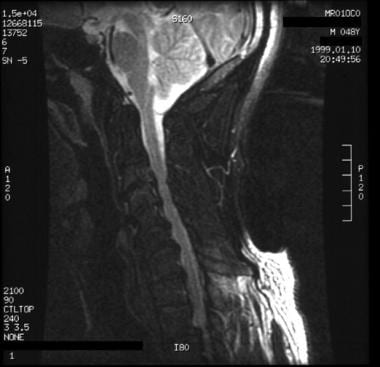
Media file 1:  A 48-year-old man presented with neck pain and predominantly left-sided radicular symptoms in the arm. The patient's symptoms resolved with conservative therapy. T2-weighted sagittal MRI shows ventral osteophytosis, most prominent between C4 and C7, with reduction of the ventral cerebrospinal fluid sleeve.
Click to see larger pictureClick to see detailView Full Size Image
Media type:  MRI

Media file 2:  A 48-year-old man presented with neck pain and predominantly left-sided radicular symptoms in the arm. The patient's symptoms resolved with conservative therapy. Axial gradient echo MRI shows moderate anteroposterior narrowing of the cord space due to a ventral osteophyte at the C4 level, with bilateral narrowing of the neural foramina (more prominently on the left side).
Click to see larger pictureClick to see detailView Full Size Image
Media type:  MRI

Media file 3:  A 48-year-old man presented with neck pain and predominantly left-sided radicular symptoms in the arm. The patient's symptoms resolved with conservative therapy. Axial CT scan at C5-6 demonstrates a large ventral osteophyte (see arrow). In addition, uncinate process hypertrophy is present bilaterally and the right neural foramen is narrowed.
Click to see larger pictureClick to see detailView Full Size Image
Media type:  CT

</
Media file 4:  T2-weighted sagittal MRI of a 59-year-old woman who presented with a spastic gait and weakness in her upper extremities showing cord compression from cervical spondylosis, which caused central spondylotic myelopathy. Note the signal changes in the cord at C4-C5, the ventral osteophytosis, buckling of the ligamentum flavum at C3-C4, and the prominent loss of disk height between C2 and C5.
Click to see larger pictureClick to see detailView Full Size Image
Media type:  MRI