| Patient Education |
|
Click here for patient education.
|
|
You are in: eMedicine Specialties >
Neurology > Pediatric Neurology
Tuberous Sclerosis
Article Last Updated: Feb 14, 2007
AUTHOR AND EDITOR INFORMATION
Section 1 of 11
Author: David Neal Franz, MD, Professor, Departments of Pediatrics and Neurology, University of Cincinnati College of Medicine; Director, Tuberous Sclerosis Clinic, Cincinnati Children's Hospital Medical Center
David Neal Franz is a member of the following medical societies: American Academy of Neurology, American Academy of Pediatrics, American Medical Association, Child Neurology Society, Children's Oncology Group, and Ohio State Medical Association
Coauthor(s):
Tracy A Glauser, MD, Professor, Departments of Pediatrics and Neurology, University of Cincinnati College of Medicine, Children's Comprehensive Epilepsy Program, Children's Hospital Medical Center of Cincinnati
Editors: Robert Baumann, MD, Program Director, Professor, Departments of Neurology and Pediatrics, University of Kentucky; Francisco Talavera, PharmD, PhD, Senior Pharmacy Editor, eMedicine; Kenneth J Mack, MD, PhD, Senior Associate Consultant, Department of Child and Adolescent Neurology, Mayo Clinic; Selim R Benbadis, MD, Professor, Director of Comprehensive Epilepsy Program, Departments of Neurology and Neurosurgery, University of South Florida School of Medicine, Tampa General Hospital; Nicholas Y Lorenzo, MD, Chief Editor, eMedicine Neurology; Consulting Staff, Neurology Specialists and Consultants
Author and Editor Disclosure
Synonyms and related keywords:
tuberous sclerosis complex, Bourneville disease. Bourneville's disease, epiloia, Vogt triad, Vogt's triad, angiomyolipoma, lymphangiomyomatosis, polycystic kidney disease, renal cell carcinoma, intractable epilepsy, medically refractory epilepsy, mental retardation, adenoma sebaceum, hamartoma, subependymal nodule, subependymal giant cell astrocytoma, SEGA
Background
In 1880, Bourneville first described the cerebral manifestations of this disorder, applying the term "sclerose tubereuse" to indicate the superficial resemblance of the lesions to a potato. In 1908 Vogt set forth the triad of intractable epilepsy, mental retardation, and adenoma sebaceum; this description (until relatively recently) represented the hallmark of tuberous sclerosis complex (TSC) to most clinicians. Unfortunately, this concept led many primary care physicians and even neurologists to conclude, incorrectly, that a diagnosis of TSC predestines a child to crippling, lifelong neurological and psychological morbidity.
TSC is now known to be a genetic disorder affecting cellular differentiation, proliferation, and migration early in development, resulting in a variety of hamartomatous lesions that may affect virtually every organ system of the body. Less than one third of affected persons fit the classic constellation of symptoms.
Pathophysiology
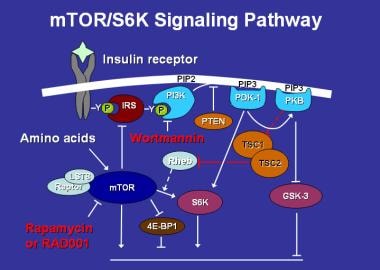
Clinically, TSC exhibits an autosomal dominant inheritance pattern, with a high spontaneous mutation rate. Two distinct genetic loci responsible for TSC have been identified: one on chromosome band 9q34 (also referred to as TSC1) and another on chromosome band 16p13 (TSC2). The TSC2 gene was identified in 1993, and its protein product has been named tuberin. Tuberin has GTPase-activating properties and seems to function as a tumor suppressor. The highest levels of tuberin are found in adult human brain, heart, and kidney; tuberin also has been localized to arterioles of kidney, skin, and heart, as well as to pyramidal neurons and cerebellar Purkinje cells. Its exact function, particularly during neurogenesis, remains unknown. Individual tubers are thought to arise developmentally when mutated neural progenitor cells in the subependymal germinal matrix give rise to abnormally migrating daughter cells that in turn produce tubers. The tubers may undergo cystic degeneration or calcification, or exhibit contrast enhancement on neuroimaging, but these features do not necessarily imply malignant transformation. Hamartin, the TSC1 product, was identified in 1997 and also may function as a tumor suppressor. Rather than having completely separate functions, both hamartin and tuberin have been shown to have "coiled-coil" domains that interact with each other. Hamartin and tuberin form a complex in this fashion that serves to inhibit the protein complex mTOR (mammalian target of rapamycin) via the GTPase-activating protein Rheb (see Image 21). mTOR was so named because of its ability to bind to the immunosuppressant drug rapamycin (sirolimus, Rapamune) before its function was known. mTOR functions, among other things, as a sort of master switch for cellular anabolism versus catabolism, and it has important regulatory functions for cell growth, cell volume, and protein synthesis. It is also regulated by a wide variety of other factors including insulin and amino acids, and mTOR is highly conserved among a wide range of species, from yeast, toDrosophila, to mammals. The function of the tuberous sclerosis gene products, hamartin and tuberin, has become increasingly evident over the past several years. Together, they form a tumor suppressor complex, which through the GTPase activating function of tuberin, drives the small GTPase termed Ras homolog enhanced in the brain (Rheb) into the inactive GDP-bound state. Rheb in the GTP bound, active state is a positive effector of the mammalian target of rapamycin (mTOR). mTOR is an evolutionarily conserved protein kinase, which is expressed from fungi to human. Results over the last 10 years have shown that mTOR serves as a major effector of cell growth as opposed to cell proliferation. Mutations in either hamartin or tuberin drive Rheb into the GTP-bound state, which results in constitutive mTOR signaling. mTOR appears to mediate many of its effects on cell growth through the phosphorylation of the ribosomal protein S6 kinases (S6Ks) and the repressors of protein synthesis initiation factor eIF4E, the 4EBPs. The S6Ks act to increase cell growth and protein synthesis, whereas the 4EBPs serve to inhibit these processes. mTOR interacts with the S6Ks and the 4EBPs through an associated protein, Raptor. When mTOR is constitutively activated through mutations in either hamartin or tuberin this results in the hamartomatous lesions of tuberous sclerosis in the brain, kidneys, heart, lungs, and other organs. Rapamycin is capable of inducing regression of renal angiomyolipomas in animal models of TSC, and this effect appears to be enhanced by interferon-gamma, whose receptors are up-regulated by overactivity of mTOR. This pathway may be excessively active in other human malignancies as well as in TSC. These observations raise the possibility of new therapeutic interventions for this disorder. Trials of rapamycin for renal angiomyolipomas in humans with TSC are nearing completion at the authors' center and in Munich, Germany. A multicenter trial of rapamycin for angiomyolipomas is to begin soon, as is a trial for lymphangioleiomyomatosis (LAM). The high incidence of sporadic TSC, coupled with a probable "second hit" phenomenon, seems a likely explanation for the marked phenotypic variability observed. In the second hit hypothesis, affected individuals inherit or acquire via mutation a flawed copy of one of the TSC genes. Clinical signs and/or symptoms do not emerge unless the other, normal allele also receives a "second hit," resulting in both copies being abnormal. This allows considerable potential for diversity, not only among various deletions and mutations between 2 genetic loci, but also with regard to possible interactions between protein products of varying functionality arising from different mutations on each allele. Further complicating the high spontaneous mutation rate is the observation that parents of an affected child, who themselves show no sign of TSC, nonetheless have an increased risk (approximately 2% overall) of having additional affected children. This is thought to result from parental mosaicism for one of the TSC genes limited to cells of their germ line (ie, gonadal tissues). True failure of penetrance of the TSC genes is believed to be rare. Recent research has identified phenotypic differences as they may relate to particular genotypes. Linkage studies initially suggested a roughly equal distribution of TSC1 and TSC2 mutations among affected individuals. However, subsequent mutational analysis has shown TSC2 mutations to be present in 80-90% of affected individuals, while TSC1 mutations are present in 10-20%. The TSC2 gene is contiguous with the gene producing polycystic kidney disease (PKD1). Individuals with features of both TSC and polycystic kidney disease (as opposed to simple renal cysts) likely have deletions spanning both genes. Jones et al found a higher incidence of "mental handicap" in persons with TSC2 mutations than in those with TSC1 mutations. They identified mental handicap retrospectively in relatively broad terms: developmental quotient less than 70, inability to attend regular school without supplementary assistance, institutionalization, requiring assistance with daily activities, etc. Dabora et al recently described genotypic and phenotypic features in 224 persons with TSC. A TSC2 genetic abnormality was found to be associated consistently with more severe clinical disease regardless of organ system. Although prominent phenotypic variability was still the rule, patients with TSC2 abnormalities were more apt to have higher tuber counts, refractory seizures, autism, larger angiomyolipomata (AML) and/or cardiac rhabdomyomata, and more severe cutaneous lesions. This suggests that, while tuberin and hamartin have similar functions, tuberin plays a more critical role in regulation of cellular differentiation. While TSC2 mutations are more apt to be associated with severe clinical phenotypes, they predominate in all forms of the disease, mild and severe, familial and sporadic. Spontaneous mutations are also much more likely to reflect TSC2 disease. Suggestions that TSC1 disease is more likely familial than sporadic appear to be incorrect.
Frequency
United States
Birth incidence is 1 case per 6,000 population, with a prevalence of 1 case per 10,000 population.
Factors that hamper accurate assessment of incidence and prevalence include underrecognition of less severe phenotypes, high spontaneous mutation rate (approximately two thirds), marked variability of symptoms (even within specific kindreds of affected individuals), and reluctance of asymptomatic parents and relatives to undergo diagnostic testing related to concerns of uninsurability and social stigma.
International
As in the United States
Mortality/Morbidity
- Complications of neurological involvement are the most common causes of mortality and morbidity. These are due chiefly to intractable epilepsy, status epilepticus, and subependymal giant cell astrocytoma (SEGA) with associated hydrocephalus.
- Renal complications are the next most frequent cause of morbidity and death. These usually arise from an enlarging AML, resulting in retroperitoneal hemorrhage. End-stage renal disease can occur, as a result of either destruction of normal renal parenchyma by an enlarging AML or polycystic kidney disease.
- Less common are cardiac arrhythmias (which can present with sudden, unexplained death), congestive heart failure, and end-stage lung disease. Cardiac involvement is maximal in infants and exhibits spontaneous regression as the child grows older. Pulmonary disease occurs predominantly in women in the third and fourth decades of life.
Race
TSC affects all races without a clear-cut predominance.
Sex
TSC affects both sexes equally. Some studies have suggested that males are more likely to suffer neurological morbidity, but this has not been demonstrated conclusively.
Age
TSC can present at any age.
- In infants and children, it usually is identified as a cause of epilepsy, autism, or cardiac failure.
- Older persons may present with renal failure or pulmonary or cutaneous manifestations in the absence of prominent, or any, neurological symptoms.
- Various organ systems are affected maximally at different points in life.
- Cardiac involvement occurs during the intrauterine or neonatal period.
- Rhabdomyomas tend to regress over time.
- Epilepsy, autism, and developmental delays manifest themselves from infancy to adolescence.
- Polycystic kidney disease usually is apparent in infancy or early childhood.
- AMLs may develop at any time from childhood into adult life.
- Lymphangiomyomatosis typically presents in the third or fourth decade of life.
History
- As with all of medical practice, recognizing a disease, let alone managing it appropriately, is impossible unless its diagnosis is first considered in a particular patient. While this may seem self-evident, in fact most physicians are only dimly, if at all, aware of TSC. This awareness usually extends only to the Vogt triad or to individuals with severe neurological morbidity. As many as 50% of people with TSC have normal intelligence, and increasingly the diagnosis is being newly made in adults with renal, cutaneous, or pulmonary manifestations.
- History should focus upon identification of specific signs and symptoms suggestive of or consistent with TSC. Particular symptoms occur at various points in the life span, and this serves as a framework for history taking.
- Cardiac involvement is maximal in prenatal life or infancy.
- Seizures, autism, and developmental delays present in infancy or childhood. Seizures are often not intractable, and many adult patients may no longer suffer from them or require anticonvulsants. Many will have been told that they had febrile convulsions or an age-related epilepsy syndrome.
- Cutaneous manifestations such as ash leaf macules are often present from birth but frequently are unrecognized. More obvious lesions such as angiofibromas or shagreen patches usually appear in childhood to early adolescence.
- Renal lesions can present as hypertension and renal failure in the case of polycystic kidney disease, usually in infancy or early childhood. AMLs manifest as flank pain, hematuria/retroperitoneal hemorrhage, or abdominal masses from childhood throughout adult life.
- Pulmonary involvement typically occurs in the second or third decade, with dyspnea, pneumothorax, or chylothorax. It often is misdiagnosed as emphysema, particularly in those with a history of smoking.
- Persons with dental involvement may have had their teeth sealed or bonded for pitting, or a gingival fibroma resected.
- Family history should center on identification of one or more of these manifestations in first- or second-degree relatives. Specific questioning is often necessary, as TSC lesions often are ascribed to other causes, eg, pulmonary involvement as emphysema, renal lesions as "atypical Wilms tumors," etc.
- Comprehensive diagnostic criteria were set out first by Dr. Manuel R. Gomez; they now exist in revised form as set forth in a consensus statement from the Diagnostic Criteria Committee of the National Tuberous Sclerosis Association (USA).
- Major features
- Facial angiofibromas or forehead plaque
- Nontraumatic ungual or periungual fibroma
- Hypomelanotic macules (>3)
- Shagreen patch (connective tissue nevus)
- Multiple retinal nodular hamartoma
- Cortical tuber: When cerebellar cortical dysplasia and cerebral white matter migration tracts occur together, they should be counted as one rather than two features of tuberous sclerosis.
- Subependymal nodule
- Subependymal giant cell astrocytoma
- Cardiac rhabdomyoma, single or multiple
- Lymphangioleiomyomatosis: When both lymphangioleiomyomatosis (LAM) and renal AMLs are present, other features of tuberous sclerosis should be present before a definite diagnosis is assigned. As many as 60% of women with sporadic LAM (and not TSC) may have a renal or other AMLs.
- Renal AML: When both LAM and renal AMLs are present, other features of tuberous sclerosis should be present before a definite diagnosis is assigned (see previous remarks).
- Minor features
- Multiple randomly distributed pits in dental enamel
- Hamartomatous rectal polyps: Histologic confirmation is suggested.
- Bone cysts: Radiographic confirmation is sufficient.
- Cerebral white matter radial migration lines: Radiographic confirmation is sufficient. One panel member felt strongly that 3 or more radial migration lines should constitute a major sign.
- Gingival fibromas
- Nonrenal hamartoma: Histologic confirmation is suggested.
- Retinal achromic patch
- "Confetti" skin lesions
- Multiple renal cysts:
- Diagnostic criteria
- Definite TSC - Either two major features or one major feature plus two minor features
- Probable TSC - One major plus one minor feature
- Possible TSC - Either one major feature or two or more minor features
- Molecular genetic testing is now commercially available in the United States through Athena Diagnositics and at other centers. Testing through Athena was recently extended to include screening for large deletions and other types of mutations, which will improve their diagnostic yield.
- Under optimal circumstances, genetic testing identifies mutations in up to 75-80% of affected individuals. Therefore, a negative genetic diagnostic test result does not exclude a diagnosis of tuberous sclerosis.
- Diagnosis should be possible in most cases using established clinical criteria. Molecular genetic testing is useful in uncertain or questionable cases, for prenatal diagnosis, and for screening family members of an affected individual. The utility of molecular diagnostic testing is limited by the cost (approximately $3100 for an index case and $300 for confirmatory testing in family members), which is often not covered by private insurance carriers. Patient assistance programs may be available through various laboratories.
Physical
- Physical findings can vary greatly since TSC can affect different organ systems in different ways at different times of the patient's life. Neurological and dermatological abnormalities are the most common physical findings, since brain and skin pathology occurs in as many as 90-95 % of affected individuals.
- Neurological findings
- Abnormal neurological findings result from the location, size, and growth of tubers and the presence of subependymal nodules (SENs) and SEGAs.
- Tubers are noted most commonly in the cerebrum, without clear predilection for any particular lobe. They occur in the cerebellum as well, where they may be apparent only on microscopic examination. Rarely, they have been noted in the brain stem and spinal cord.
- The number, size, and location of tubers can vary widely from patient to patient.
- Depending on the location of tubers, neurological findings can include abnormalities in cognition (either global delays or specific location-related deficits like language delays), cranial nerves, focal motor/sensory/reflexes abnormalities, cerebellar dysfunction, or gait abnormalities.
- SENs are noted about the wall of the lateral ventricles and may be either discrete or roughly confluent areas of firm, rounded hypertrophic tissue. SENs may occur anywhere along the ventricular surface, but most commonly occur at the caudothalamic groove in the vicinity of the foramen of Monro (see Image 1).
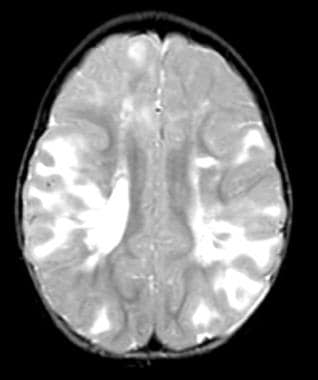
- The generally benign SENs can degenerate into SEGAs in 5-10 % of cases. SEGAs can grow, often in an extremely indolent fashion, resulting in ventricular obstruction and hydrocephalus. Since this process occurs very gradually, patients may have marked hydrocephalus when they finally become symptomatic (see Image 2). In this situation, blindness or other permanent neurological deficit commonly ensues despite prompt neurosurgical intervention.
- Skin findings
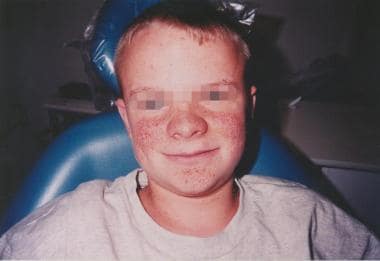
- The best-known cutaneous manifestation of TSC is adenoma sebaceum, which often does not appear until late childhood or early adolescence. This lesion is an angiofibroma (ie, cutaneous hamartoma) and is not related to excessive sebum or acne. Flat, reddish macular lesions develop first, which can be mistaken for freckles early on. They become increasingly erythematous and papulonodular over time, occasionally with a friable surface that may bleed easily. Facial angiofibromas typically are noted first in childhood and exhibit progression during puberty and adolescence (see Image 3). Adenoma sebaceum may be disfiguring.
- Other skin lesions consist of hypomelanotic (ie, ash leaf) macules, periungual or gingival fibromas (see Images 4-5, and thickened, firm areas of subcutaneous tissue, often at the lower back (shagreen patch) or forehead and face (fibrous plaques).
- Hypomelanotic macules are usually round or oval in shape and vary in size from a few mm to as much as 5 cm in length (see Image 6). Sometimes they have an irregular, reticulated appearance, as if white confetti paper had been strewn over the skin (confetti lesions). When the scalp is involved, an area of poliosis can result. They may be present at birth, or not show up until later in life. They vary widely in location and number from person to person. The number or size of the macules is not an essential feature of diagnosis. Hypomelanotic macules are a nonspecific finding and are not of themselves pathognomonic of TSC. Nonetheless finding more than 4 or 5 in a person who does not have the disease is common.
- Fibromas may occur in other locations. When present in the lumbar region they have been called a "shagreen patch." The overlying skin may have an orange hue. They occasionally itch or are associated with dysesthesia, leading patients to wonder if "it is pinching a nerve." Shagreen patches are confined, however, to the subcutaneous tissue and are associated with dysraphism, osseous lesions, or mass effects on neural structures.
- Fibromas can occur in the periungual regions, gingivae, or potentially anywhere in cutaneous or mucosal tissues. The underlying tissue may be hypertrophic/hamartomatous.
- Symptoms can result from local irritation, such as that created by shoes, dentures, shaving, and disruption of the nail bed.
- Cardiac findings
- Cardiac involvement is usually maximal at birth or early in life; it may be the presenting sign of TSC, particularly in early infancy. Fifty to sixty percent of individuals with TSC have evidence of cardiac disease, mostly rhabdomyomas. Conversely, anywhere from 50-85% of infants with isolated cardiac rhabdomyomas are said to later show definite evidence of TSC.
- Rhabdomyomas are benign tumors that may be focal or diffuse and infiltrating in character. They produce symptoms primarily through outflow tract obstruction or by interfering with valvular function (see Images 7-8). Diffuse rhabdomyomas also may result in decreased contractility and cardiomyopathy (see Image 9). In such cases surgical treatment, inotropic support, and related measures may be necessary.
- Rhabdomyomas develop during intrauterine life (usually between weeks 22 and 26 of gestation) and can result in non-immune hydrops fetalis and fetal death. The majority of cases, however, are clinically asymptomatic.
- The lesions typically undergo spontaneous regression in the first few years of life, although residual areas of histologically abnormal myocardium may persist. These lesions can involve the cardiac conducting system and thereby may predispose an affected individual to ventricular pre-excitation or other arrhythmias not only in infancy, but also later in life. Such residual areas can be inapparent on echocardiography, yet still produce arrhythmia. This may have an underappreciated significance, as persons with TSC often require antiepileptic or psychotropic drugs that also may affect cardiac conduction.
- Ophthalmic findings
- At least 50% of patients have ocular abnormalities; some studies have reported prevalence as high as 80%.
- These lesions are in fact retinal astrocytomas that tend to become calcified over time. They appear as rounded, nodular, or lobulated areas on funduscopic examination, becoming whitish in color as they calcify.
- They tend to be indolent and rarely produce symptoms or require intervention.
- Visual acuity generally is unaffected, unless the retinal fovea is involved.
- Hypopigmented areas of retina, iris, and even eyelashes have been reported. These are analogous to hypomelanotic macules of the skin.
- Lung findings
- Symptomatic pulmonary involvement occurs almost exclusively in adult women, generally aged 30 or older. It was long thought to be distinctly uncommon, affecting 1% or fewer of women with TSC. However, recent prospective and retrospective studies have found cystic pulmonary abnormalities in as many as 40% of women with TSC. Women with large AMLs (>4-6 cm in diameter) appear to be at higher risk.
- Symptomatic pulmonary disease in men, and even in children, with TSC has been reported anecdotally. The true incidence of pulmonary abnormalities in these populations is not known, although it is certainly less than in adult women.
- Three forms have been described: multifocal micronodular pneumocyte hyperplasia (MMPH), pulmonary cysts, and LAM.
- MMPH consists of hyperplasia of type II pneumocytes, seen as nodular densities on chest CT scan. This condition occurs with equal frequency in men and women with TSC and does not produce clinical symptoms.
- Pulmonary cysts may be single or multiple (see Image 10). Solitary lesions may remain clinically silent or rupture, with resultant pneumothorax producing acute dyspnea and hemoptysis. Multiple cystic lesions may result in respiratory insufficiency or even pulmonary hypertension with cor pulmonale (usually in the case of LAM).
- LAM is rather more insidious: interstitial fibrosing alveolitis develops with progressive restrictive lung disease. It also occurs, although less frequently, in women who do not have TSC (incidence of sporadic LAM, approximately 1 per 100,000). About 60% of women with sporadic LAM also have renal AMLs, but not other characteristics of TSC (see Image 11). Smooth muscle cells undergo abnormal proliferation with secondary compromise of bronchioles, venules, and lymphatic structures. Slowly, normal pulmonary elasticity is lost, with resultant decrease in vital capacity and increase in residual volume. Pulmonary hypertension, cor pulmonale, and worsening hypoxia/hypercapnia eventually supervene. When LAM is suspected clinically, high-resolution CT of the chest is the most sensitive diagnostic modality.
- Owing to the overwhelming predominance of LAM in women, some believe that estrogen accelerates the progression of the condition. Some patients have been treated with hormonal therapy (ie, progesterone) to counteract the estrogen effect, although this has not been proven conclusively to be of benefit. Bronchodilators are helpful in selected cases.
- LAM is inexorably progressive and ultimately results in death unless lung transplantation is undertaken. Interestingly, LAM occasionally has recurred in transplanted lungs. This raised the possibility that, rather than being a primary pulmonary disorder, LAM is caused by a circulating factor, or perhaps metastatic cells. Henske et al demonstrated that in fact metastatic cells from AMLs or leiomyomas are present in the lungs of women with LAM, regardless of whether they have TSC, and almost certainly cause the disorder (see Image 11). These cells frequently have abnormalities of either TSC1 or TSC2, which produce the characteristic smooth muscle hypertrophy and destruction of normal lung.
- Renal findings
- Renal manifestations of TSC are the second most common clinical feature. Four types of lesions can occur: autosomal dominant polycystic kidney disease, isolated renal cyst(s), AMLs, and renal cell carcinoma.
- Polycystic kidney disease occurs in 2-3% of persons with TSC, and usually presents early in life with hypertension, hematuria, or renal failure. As noted, this occurs as the result of a genetic abnormality affecting both the TSC2 gene and the PKD1 gene adjacent to it. Individuals with polycystic kidney disease have relatively little functional renal tissue, and ultimately require renal transplantation. They are highly susceptible to complications of urinary tract infection (UTI) or nephrolithiasis, which can produce acute renal failure. This should be borne in mind when using therapies that predispose to UTI or kidney stones, such as steroids, topiramate, zonisamide, or the ketogenic diet.
- Renal cysts (as opposed to polycystic kidney disease) are found in 20% of males and 10% of females with TSC. They are rarely if ever symptomatic. Simple renal cysts often occur with AMLs, and this combination should suggest the diagnosis of TSC. Sometimes multiple renal cysts can be confused with true polycystic kidney disease. The presence of significant symptoms such as hypertension or failure to thrive, as well as the absence of associated AMLs, strongly suggest the latter diagnosis.
- AMLs are noted in as many as 80% of persons with TSC. They also can occur as isolated lesions in persons without TSC.
- As suggested by their name, they consist of abnormal smooth muscle, fat, and blood vessels, each present in varying degrees.
- Patients tend to have either multiple small AMLs studding the surface of the kidney or one or more larger lesions. These larger lesions are more apt to be symptomatic, particularly when greater than 4-6 cm in their largest diameter. They often produce nonspecific complaints such as flank pain.
- Of rather more concern is potentially life-threatening retroperitoneal hemorrhage from rupture of dysplastic, aneurysmal blood vessels. These hemorrhages also can destroy adjacent normal renal parenchyma or produce abdominal distention and obstruction by mass effects.
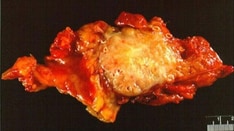
- Some studies suggest that as many as 75% of AMLs will increase in size over time (see Image 11). Exactly when intervention is warranted is somewhat controversial. Very large AMLs (>6-8 cm in diameter) are likely to progress and often result in hemorrhage, particularly if prominent abnormal vasculature is present. AMLs with fewer dysplastic vessels may have a smaller risk of catastrophic hemorrhage but can present problems from their sheer size.
- MRI and MR angiography are often helpful in planning therapy (see Images 12-13).
- Because of their often exuberant blood supply, standard surgical resection can result in excessive bleeding, with nephrectomy being the end result.
- When feasible, selective embolization is the preferred intervention. This procedure typically is able to spare functional renal tissue, directly addresses the chief risk of retroperitoneal hemorrhage, and has a substantially lower rate of morbidity than standard surgery. Some patients experience "postembolization syndrome" consisting of fever, flank pain, and malaise as the embolized lesion becomes necrotic. This usually can be prevented by pretreatment with steroids.
- Renal cell carcinoma appears to occur more frequently in persons with TSC than in the general population, although the exact nature of this is unclear. In one series, 5 of 403 patients with TSC were found to have histologic evidence of a renal cell carcinoma. Nonetheless, a large AML is much more common in this population. A rapidly expanding renal mass in the absence of hemorrhage is suggestive of the diagnosis. MRI of the abdomen can be useful in differentiating a large AML from a true malignancy.
- Dental findings
- Pitting of the dental enamel is invariably present in the permanent teeth of patients with TSC, particularly larger numbers of pits (>14). They are seen in the primary (deciduous) teeth of 30% of affected children.
- They rarely produce symptoms.
- This sign has led to interest in counting dental pits as an inexpensive bedside screening procedure. Smaller numbers ( <6) of dental pits may occur in as many as 10% of healthy controls. However, accurate assessment of dental pits may be possible only after staining the teeth, and by a dentist or person trained to look for them (see Image 5, Image 14). These factors have limited the utility of this feature of TSC for diagnosis.
- Gingival fibromas occur in 70% of adults with TSC, in 50% of children with mixed dentition (both primary and permanent teeth), and in only 3% of children with only primary teeth (see Image 5, Image 14).
- These may produce local irritation or interfere with dental alignment, and they require surgical resection in selected cases.
- Isolated gingival fibromas can occur in persons who do not have TSC. However, gingival fibroma(s) in association with large numbers (>10) of dental pits is highly suggestive of TSC and should prompt further diagnostic evaluation.
- Other organ systems
- Hamartomas and polyposis of stomach, intestine, and colon may occur. These almost never cause significant symptoms, although gastrointestinal hamartomas occasionally may bleed, leading to positive tests for fecal occult blood. Blood loss is almost always minimal, and rarely if ever results in anemia or clinical symptoms.
- Hepatic cysts and AMLs (hepatic, not renal), typically asymptomatic and nonprogressive, have been reported in as many as 24% of patients with TSC, with a marked female predominance (female-to-male ratio 5:1).
- Sclerotic and hypertrophic lesions of bone may be found incidentally on radiography performed for other indications. Occasionally they may be palpable, or associated with nonspecific, vague, aching pains. Osseous lesions rarely if ever produce serious difficulty, and they require only symptomatic treatment, if any at all. Some patients develop neurogenic scoliosis resulting from asymmetric weakness or intractable partial seizure activity. In these cases, typically a "dominant" tuber is present contralateral to the scoliosis or the supratentorial tuber burden is asymmetrical. These individuals may require standard orthopedic management if the curvature is severe.
- A small number of patients with TSC may develop arterial aneurysms. Aneurysms have been reported intracranially, as well as in the aorta and axillary arteries (see Image 15).
- Like lung disease, gastrointestinal and osseous abnormalities are seen primarily in adults, in whom they may be the presenting manifestations of TSC. Recognition of the true nature of these lesions is important, as adult-oriented practitioners are generally unaware of the broad spectrum of TSC. Pulmonary, renal, gastrointestinal, and bone findings may be mistaken for emphysema, neoplasia, or other disorders, and inappropriate measures undertaken.
Causes
See Pathophysiology.
Complex Partial Seizures
Epilepsy in Adults with Mental Retardation
Epilepsy in Children with Mental Retardation
Glioblastoma Multiforme
Hydrocephalus
Identification of Potential Epilepsy Surgery Candidates
Infantile Spasm (West Syndrome)
Lennox-Gastaut Syndrome
Other Problems to be Considered
Giant cell astrocytoma
Lymphangioleiomyomatosis
Angiomyolipoma
Polycystic kidney disease
Multifocal nodular pneumocyte hyperplasia
Rhabdomyoma
Angiofibromas
Hypomelanotic macules
Lab Studies
- Laboratory studies are performed as indicated clinically to identify genetic mutations associated with the disorder, monitor anticonvulsant treatment, identify idiosyncratic or dose-related adverse effects, and identify or monitor underlying renal or pulmonary disease.
- Molecular genetic testing is now commercially available in the United States through Athena Diagnositics and at other centers. Testing through Athena was recently extended to include screening for large deletions and other types of mutations, which will improve their diagnostic yield.
- Under optimal circumstances, genetic testing identifies mutations in up to 75-80% of affected individuals. Therefore, a negative genetic diagnostic test result does not exclude a diagnosis of tuberous sclerosis.
- Diagnosis should be possible in most cases using established clinical criteria. Molecular genetic testing is useful in uncertain or questionable cases, for prenatal diagnosis, and for screening family members of an affected individual. The utility of molecular diagnostic testing is limited by the cost (approximately $3100 for an index case and $300 for confirmatory testing in family members), which is often not covered by private insurance carriers. Patient assistance programs may be available through various laboratories.
Imaging Studies
- Three imaging procedures are usually undertaken: CT or MRI scans of the brain, renal ultrasounds, and echocardiograms. Some centers perform these evaluations annually, at least until adulthood. This is a topic of some controversy, as the natural history of TSC and the cost-effectiveness of these types of screening examinations are not known clearly. Some are concerned that routine screening can lull the clinician into a false sense of security, and thus into ignoring symptoms that arise between serial examinations.
- CT or MRI scans of the brain
- CT or MRI scans of the brain are performed to identify SEGAs before obstructive hydrocephalus occurs. They also identify the extent and number of cortical tubers present. On occasion, they may reveal vascular dysplastic lesions such as aneurysms.
- SEGAs are often large and difficult to resect by the time they produce clinical symptoms; even then, avoiding substantial complications such as blindness, hemiparesis, and shunt dependency may be impossible. Initially their manifestations may be quite subtle, such as a change in personality or behavior. They rarely exhibit significant growth after puberty, if they have not already shown evidence of this. These factors should be considered when planning serial neuroimaging examinations.
- The author's own practice has been to perform MRI, rather than CT, scans every 2 years in asymptomatic patients, at least until puberty. In children, sedation usually is required for CT scan, as it is for MRI. MRI is superior to CT scan for detection of tubers, migrational anomalies, and vascular lesions. MRI does not involve radiation exposure, as does CT.
- In addition to standard brain MRI protocols, fluid-attenuated inversion recovery sequences (FLAIR) should be obtained. FLAIR is superior for identification of tubers. Contrast can be administered; however, both SEGAs and SENs typically enhance. Contrast enhancement is not in itself an indication that an SEN is going to grow, or that surgical intervention is necessary. MR angiography is useful if an aneurysm or vascular dysplastic lesion is noted.
- Some authors have performed resections on SEGAs that exhibit an interval increase in size on serial imaging. Our own practice has been to obtain more frequent imaging studies when a lesion increases in size, provided no signs/symptoms of ventricular obstruction, new focal neurological deficit, or increased intracranial pressure are noted. Lesions may stabilize or stop growing spontaneously after increasing in size (see Image 1, Image 16).
- Renal ultrasounds
- Renal ultrasounds are performed to assess change in AMLs or cysts, in the hope that this will allow operative intervention prior to development of renal failure.
- Small renal cysts and AMLs usually do not grow significantly until after puberty, and often not until the third or fourth decade of life.
- In our practice, renal ultrasounds, after an initial study, are repeated every 5 years if no or small lesions are seen. In late adolescence through adulthood, ultrasounds are performed every 2-3 years.
- Echocardiograms
- Echocardiography is performed as part of the baseline evaluation in a patient with newly diagnosed or suspected TSC. Identification of cardiac rhabdomyomas can aid in diagnosis. Depending on their location and size, rhabdomyomas can result in valvular dysfunction, outflow tract obstruction, ventricular hypokinesis, or arrhythmias.
- In our practice, echocardiography is not repeated if no lesions are seen on baseline examination. If cardiac lesions are seen, echocardiography is repeated as indicated clinically.
- Positron emission tomography
- No current indication exists for routine positron emission tomography (PET) scanning in patients with TSC.
- PET scans may be useful when patients are undergoing evaluation as candidates for epilepsy surgery. PET scanning with the tracer alpha-methyltryptophan may have particular utility in identifying epileptogenic tubers as part of the evaluation for epilepsy surgery.
- Single-photon emission computed tomography
- No current indication exists for routine single-photon emission computed tomography (SPECT) scanning in patients with TSC.
- SPECT scans may be useful when patients are undergoing evaluation as candidates for epilepsy surgery.
Other Tests
- Electroencephalogram
- EEG should be performed in patients with TSC in whom seizures are suspected. Follow-up EEGs are performed as clinically indicated.
- Some patients with TSC have a coexisting recognizable epilepsy syndrome such as West syndrome (ie, infantile spasms) or Lennox-Gastaut syndrome. If so, prolonged video/EEG telemetry may be useful to help in the following:
- Detecting syndrome-specific EEG findings
- Capturing and classifying each of the patient's multiple seizure types
- Educating parents on which of the patient's "events" are seizures and which are nonepileptic behavioral events (especially atypical absences)
- Electrocardiogram
- Baseline ECG is recommended for all patients newly diagnosed with TSC, since cardiac arrhythmias, although rare, may have sudden death as their presenting symptom.
- In our practice, we perform ECGs at diagnosis and every 2-3 years thereafter until puberty.
Medical Care
Rapamycin ([Rapamune] or sirolimus) is a commercially available immunosuppressant, which forms a forming an inhibitory complex with the immunophilin FKBP12, which binds to and inhibits the ability of mTOR to phosphorylate downstream substrates, such as the S6Ks and 4EBPs. It is marketed as an immunosuppressant, owing to its propensity to inhibit T-cell proliferation, and has been approved for use in this therapeutic setting in the United States since 2001. Two derivatives of rapamycin, RAD001 (everolimus [Certican]) and a prodrug for rapamycin, CCI-779 or temsirolimus, are in clinical development in a number of therapeutic indications, including oncology. They act in a similar fashion to rapamycin, although their pharmacokinetics, bioavailability, and adverse effect profiles may differ. In oncology trials, common adverse effects include aphthous oral ulcers, hyperlipidemia, thrombocytopenia, acneiform rash, immunosuppression, and impaired wound healing. Animal studies have demonstrated the ability of rapamycin to inhibit the aberrant growth of TSC-deficient cells in vitro and to induce apoptosis of renal tumors in animal models of TSC. Clinical trials of rapamycin for renal angiomyolipomas associated with tuberous sclerosis are nearing completion or are underway at the authors' institution and elsewhere. Rapamycin is thought to cross the blood-brain barrier to a limited-but-unknown extent. A recent paper described regression of subependymal giant cell astrocytomas in association with oral rapamycin therapy (Franz, 2006). This observation, while encouraging, requires further study to confirm both the effect of mTOR inhibitors and their appropriate use in the treatment of giant cell astrocytomas.
- Otherwise, the goals of treatment for patients with TSC are the same as for all patients with a multisystem chronic disease: providing the best possible quality of life with the fewest complications from the underlying disease process, fewest adverse treatment effects, and fewest medications.
- TSC often has been undertreated, particularly from a neurologic standpoint, often based on the view that these individuals will have a poor outcome regardless of any therapy undertaken. This is clearly not the case. Even in individuals with TSC and infantile spasms, long-term outcome is not universally poor, as has been classically thought. In our clinic population, approximately 10% of individuals with TSC and infantile spasms have normal intelligence as adults or at long-term follow-up (see Image 17). Owing to their age, most of these persons did not receive treatment with vigabatrin.
- Appropriate and effective therapy is not only aggressive, but also relies upon recognition of the natural history of the various lesions of TSC. For example, large AMLs may be taken to be renal cell carcinomas, solely on the basis of their size. Unnecessary nephrectomy may result.
- The main complication of TSC requiring long-term medical therapy is epilepsy. Antiepileptic medications (AEDs) are the mainstay of therapy for patients with TSC. Unfortunately, no one medical treatment gives satisfactory relief for all or even most patients. A combination of medical treatment modalities frequently is required.
- The choice of specific AED(s) for treating seizures in patients with TSC is based on the patient's seizure type(s), epilepsy syndrome(s), other involved organ systems, age of the patient, and AED side effect profiles and formulations available.
- Vigabatrin is the drug of first choice for children with TSC and infantile spasms. Topiramate, lamotrigine, valproate, and adrenocorticotropic hormone (ACTH)/steroids are also useful.
- Long-term use of agents with prominent sedating properties, such as benzodiazepines or barbiturates, generally should be avoided. These drugs often aggravate underlying behavioral or cognitive problems and have many less toxic and often more effective alternatives.
- Carbamazepine, oxcarbazepine, and phenytoin may cause exacerbation of seizures, particularly in younger children and infants, and some authors believe that these AEDs can precipitate or aggravate infantile spasms. While often valuable in older children and adults, in whom partial seizures predominate, caution is warranted in their use in infants and young children. They should not be used in children with TSC who are experiencing infantile spasms.
Surgical Care
- Surgical care for seizures in a patient with TSC can involve focal cortical resection, corpus callosotomy, or vagus nerve stimulation.
- Focal cortical resection: In most patients with TSC, resection of a cortical tuber is considered palliative rather than curative. Many fear that, after one epileptic focus has been removed, another will take its place in producing seizures. The growing body of experience with epilepsy surgery in TSC indicates that, in selected cases, surgery can be extremely beneficial (see Image 18).
- Corpus callosotomy: Corpus callosotomy can be effective in reducing atonic and tonic seizures (ie, drop attacks) but typically is not helpful for other seizure types and is considered palliative rather than curative. Seizure freedom following corpus callosotomy is rare but can occur.
- Vagus nerve stimulation: In one report, 9 of 10 patients with TSC and treatment-resistant epilepsy experienced (without adverse events) at least a 50% reduction in seizure frequency; half had a 90% or greater reduction in seizure frequency following treatment with vagal nerve stimulation (VNS). More recent studies have confirmed the role of VNS in persons with TSC. Simple and complex partial seizures appear to respond better than partial seizures with secondary generalization.
- SEGAs require resection if they produce hydrocephalus or significant mass effect. If a gross total resection can be achieved, recurrence is unlikely. The authors have had good results with stereotactic placement of a modified angioplasty balloon catheter via a burr hole in proximity to the lesion. The balloon is then gradually inflated over several days to create a tract for removal of the SEGA. At final operation, the balloon is deflated, the catheter is removed, and the tumor is resected. An illustrative example is shown in Images 22-25.
Consultations
Epilepsy and other neurological problems are the most common causes of morbidity in TSC. Pediatric and/or adult neurologic consultation is recommended. Genetics evaluation is valuable to screen family members and provide genetic counseling. Prenatal diagnosis is generally not possible unless the parents' TSC genotype is already known, or stigmata such as a cardiac rhabdomyoma are seen on fetal ultrasound.
- Pediatric neuropsychologists can assess intellectual function and educational needs and advise on nonpharmacologic management of behavioral problems. Because children with TSC are at developmental risk, neuropsychologic assessment is recommended at diagnosis and prior to entering school. Neuropsychologic evaluation is useful for adults with specific cognitive and/or behavioral issues.
- Pediatric psychiatrists can advise on pharmacologic management of behavioral problems.
- Neurosurgeons can assist in the placement of a vagus nerve stimulator and assess the patient as a candidate for corpus callosotomy or focal resection.
- Nephrologic consultation is necessary for individuals with polycystic kidney disease, large (ie, > 4 cm) or symptomatic AMLs, or end-stage renal disease.
- Pulmonary medicine consultation is necessary for individuals with LAM, pneumothorax, or other types of lung involvement.
- Dietitians can assist in the institution and maintenance of the ketogenic diet.
Diet
- Ketogenic diet
- The ketogenic diet is composed of a 2:1, 3:1, 4:1, or higher ratio of fats (ketogenic foods) to proteins and carbohydrates (antiketogenic foods). In general, the benefits of the diet for people with epilepsy include fewer seizures, less drowsiness, better behavior, and need for fewer concomitant AEDs.
- No specific study has addressed the efficacy and safety of the ketogenic diet in patients with TSC. However, multiple open-label studies have examined the efficacy and safety of the ketogenic diet for patients with Lennox-Gastaut syndrome—a devastating epilepsy syndrome seen in children with TSC. Efficacy appears greatest for atonic, myoclonic, and atypical absence seizures, but other seizure types (tonic-clonic, secondarily generalized tonic-clonic) also seem to respond. Seizures often decrease in frequency shortly after initiation of the diet, but some patients may not respond for months. When the diet should be weaned in patients who are seizure free for extended periods is not clear.
- The diet is not always successful. The following 3 factors are associated with successful implementation of the diet:
- Dedicated, compliant family willing to alter the entire family's lifestyle
- Family able to follow (without wavering) the strict guidelines of the diet
- Team of professionals (centered around a dietitian) trained and experienced in the use of the diet
- Potential serious adverse effects include dehydration, clinically significant metabolic acidosis when the diet is initiated, renal stones, cardiac abnormalities, and abnormal lipid profile.
The goals of pharmacotherapy are to reduce morbidity and to prevent complications.
Drug Category: Anticonvulsants
These agents prevent seizure recurrence and terminate clinical and electrical seizure activity.
| Drug Name | Vigabatrin (Sabril) |
| Description | Not approved by US FDA but available in many countries. Considered to be DOC for infants with infantile spasms (West syndrome) due to TSC. |
| Adult Dose | 1-2 g/d PO in 2 divided doses initially; titrate in increments of 500 mg/d; maintenance dose 2-4 g/d |
| Pediatric Dose | 25-40 mg/kg/d PO initially in 1 or 2 divided doses; maintenance dose 40-100 mg/kg/d; maximum dose 150 mg/kg/d |
| Contraindications | Documented hypersensitivity |
| Interactions | None reported |
| Pregnancy | |
| Precautions | Dose-dependent adverse effects include hyperactivity, agitation, sedation, depression, psychosis, drowsiness, insomnia, facial edema, ataxia, nausea and/or vomiting, stupor, and somnolence; idiosyncratic reactions include visual field constriction; may exacerbate myoclonic and absence seizures in some patients; long-term reactions include weight gain; not approved by FDA in US but available in many countries worldwide; lower doses in patients with renal dysfunction |
| Drug Name | Valproic acid (Depakote, Depakene, Depacon) |
| Description | Considered effective first-line AED therapy against infantile spasms (West syndrome) and other seizure types seen in patients with TSC. |
| Adult Dose | 10-15 mg/kg/d PO divided bid/tid initially; titrate in 5-10 mg/kg/d increments every wk until therapeutic effect achieved or toxic effects occur; average maintenance dose 15-60 mg/kg/d |
| Pediatric Dose | Administer as in adults |
| Contraindications | Documented hypersensitivity; history of pancreatitis or hepatotoxicity; multiple concomitant AEDs (eg, phenobarbital); underlying metabolic disease (eg, defect in fatty acid oxidation); developmental delay |
| Interactions | Cimetidine, salicylates, felbamate, and erythromycin may increase toxicity; rifampin may reduce levels significantly in children; salicylates decrease protein binding and metabolism; may result in variable changes of carbamazepine concentrations with possible loss of seizure control; may increase diazepam and ethosuximide toxicity (monitor closely); may increase phenobarbital and phenytoin levels, while either may decrease valproate levels; may displace warfarin from protein-binding sites (monitor coagulation tests); may increase zidovudine levels in HIV-seropositive patients |
| Pregnancy | D - Unsafe in pregnancy
|
| Precautions | Dose-dependent adverse effects include asthenia, nausea, vomiting, somnolence, tremor, and dizziness; less common adverse effects include thrombocytopenia and parotid swelling; idiosyncratic reactions include hepatotoxicity and pancreatitis; long-term (cumulative) adverse effects include hair loss, polycystic ovary disease, and weight gain |
| Drug Name | Lamotrigine (Lamictal) |
| Description | Inhibits release of glutamate and inhibits voltage-sensitive sodium channels, leading to stabilization of neuronal membrane. Effectiveness in patients with TSC has been investigated in open-label study with promising results. Initial dose, maintenance dose, titration intervals, and titration increments depend on concomitant medications. |
| Adult Dose | Combination with AEDs that induce hepatic CYP-450 enzyme system without valproate: Initial dose: 50-100 mg/d PO bid Maintenance: 100-400 mg/d PO divided in 1-2 doses; not to exceed 500 mg/d Combination with valproate with or without other AEDs that induce hepatic CYP-450 enzyme system: Initial dose: 25 mg PO qod Maintenance: 50-200 mg/d PO in 1-2 divided doses; not to exceed 200 mg/d |
| Pediatric Dose | Combination with AEDs that induce hepatic CYP-450 enzyme system without valproate: Initial dose: 0.6 mg/kg/d PO for 2 wk; 1.2 mg/kg/d for wk 3-4 Maintenance: 5-15 mg/kg/d; after week 4, dosage increment not to exceed 1.2 mg/kg/d q1-2wk until maintenance dose achieved; maximum 400 mg/d Combination with valproate with or without other AEDs that induce hepatic CYP-450 enzyme system: Initial dose: 0.15 mg/kg/d PO for 2 wk; 0.3 mg/kg/d for weeks 3-4 Maintenance: 1-5 mg/kg/d PO; after week 4 may do maximum increments of 0.3 mg/kg/d q1-2wk until maintenance dose achieved; maximum 200 mg/d |
| Contraindications | Documented hypersensitivity; history of or current erythema multiforme, Stevens-Johnson syndrome, or toxic epidermal necrolysis |
| Interactions | Affected by concomitant AEDs; medications that induce hepatic CYP-450 microsomal enzymes (eg, phenobarbital, carbamazepine, phenytoin) enhance clearance, decreasing effects; conversely, medications that inhibit hepatic CYP-450 microsomal enzymes (eg, valproate) diminish clearance, increasing effects and, thus, lower starting doses, slow titration rate (ie, 2 or more wk intervals between dosage increases), and smaller increments needed |
| Pregnancy | C - Safety for use during pregnancy has not been established.
|
| Precautions | Dose-dependent adverse effects include ataxia, diplopia, dizziness, headache, nausea, and somnolence; idiosyncratic reactions include Stevens-Johnson syndrome and toxic epidermal necrolysis; no long-term (cumulative) adverse effects noted to date Risk factors for associated severe dermatological reactions seen with children more than adults (associated with co-medication with valproic acid, rapid rate of titration, and high starting dose--give careful attention to initial starting dose, titration rate, and co-medications); prompt evaluation of any rash is prudent and imperative; approximately 10-12% of patients develop non–life-threatening rash that usually resolves rapidly upon withdrawal and occasionally without changing dosage |
| Drug Name | Topiramate (Topamax) |
| Description | Sulfamate-substituted monosaccharide with broad spectrum of antiepileptic activity that may have state-dependent sodium channel blocking action, potentiates inhibitory activity of neurotransmitter GABA. May block glutamate activity. Effectiveness in TSC has been investigated in one open-label study with promising results. |
| Adult Dose | Initial dose: 25-50 mg/d PO, perform increments of 25-50 mg qwk Maintenance dose: 200-400 mg/d PO |
| Pediatric Dose | Depends on age and seizure type Infants with TSC with infantile spasms: Initial dose is 2-3 mg/kg/d PO; perform increments of 2-3 mg/kg PO q3-4d; target maintenance dose is 15-20 mg/kg/d PO Children with other seizure types: Initial dose is 0.5-1.0 mg/kg/d PO; perform increments of 0.5-1.0 mg/kg qwk; target maintenance dose is 6-10 mg/kg/d PO |
| Contraindications | Documented hypersensitivity |
| Interactions | Phenytoin, carbamazepine and valproic acid can significantly decrease levels; reduces digoxin and norethindrone levels; carbonic anhydrase inhibitors may increase risk of renal stone formation and should be avoided; CNS depressants since may have additive effect in CNS depression, as well as other cognitive or neuropsychiatric adverse events—use with extreme caution |
| Pregnancy | C - Safety for use during pregnancy has not been established.
|
| Precautions | Dose-dependent adverse effects include irritability, ataxia, dizziness, fatigue, nausea, somnolence, psychomotor slowing, constipation, concentration and speech problems; if adverse CNS effects occur, reduce concomitant AEDs, slow titration, or reduce dose; no idiosyncratic reactions noted; oligohidrosis and nephrolithiasis reported |
| Drug Name | Carbamazepine (Tegretol, Carbatrol, Epitol) |
| Description | DOC for partial onset seizures in children and adults. Some investigators believe carbamazepine can aggravate certain seizure types in young children with TSC. |
| Adult Dose | Initial dose: 100-200 mg PO bid with increments at weekly intervals of <200 mg/d tid (bid with extended release) until best response obtained; usually no need to exceed 1600 mg/d |
| Pediatric Dose | <6 years: Initial dose 5-10 mg/kg/d, increase weekly to achieve optimal clinical response; maintenance doses usually range from 10-20 mg/kg/d PO bid/tid, but some need dosages in excess of 30 mg/kg/d 6-12 years: Initial dose 100 mg PO bid, increase gradually each wk with increments of 100 mg/d PO divided tid (bid with extended release) until best response obtained; usually do not need to exceed 1000 mg/d >12 years: Administer as in adults |
| Contraindications | Documented hypersensitivity; history of bone marrow depression; MAOIs within last 14 d |
| Interactions | Serum levels may increase significantly within 30 days of danazol coadministration (avoid whenever possible); do not coadminister with MAOIs; cimetidine may increase toxicity, especially if taken in first 4 wk of therapy; may decrease primidone and phenobarbital levels (their coadministration may increase carbamazepine levels) |
| Pregnancy | D - Unsafe in pregnancy
|
| Precautions | Obtain CBC counts and serum iron levels at baseline, during first 2 mo of treatment, and on regular basis (eg, semiannually or annually) thereafter; caution with increased intraocular pressure; can cause drowsiness, dizziness, and blurred vision; caution while driving or performing other tasks requiring alertness; not to be used relieve minor aches or pains |
Drug Category: Adrenocorticotropic agents
These agents cause profound and varied metabolic effects. Corticosteroids modify the body's immune response to diverse stimuli.
| Drug Name | Corticotropin (Acthar, ACTH) |
| Description | Used in infants with infantile spasms (West syndrome) due to TSC. Estimated overall efficacy (percentage of infants with infantile spasms due to any cause reaching seizure freedom) is 50-67%. Associated with serious, potentially life-threatening adverse effects. Must be administered IM, which is painful to infant and unpleasant for parent to perform. Daily dosages expressed as U/d (most common), U/m2/d, or U/kg/d. Prospective single-blind study demonstrated no difference in effectiveness of high-dose, long-duration corticotropin (150 U/m2/d for 3 wk, tapering over 9 wk) versus low-dose, short-duration corticotropin (20-30 U/d for 2-6 wk, tapering over 1 wk) with respect to spasm cessation and improvement in patient's EEG. Hypertension was more common with larger doses. |
| Adult Dose | Information not available for adults |
| Pediatric Dose | Not established; 5-40 U/d IM for 1-6 wk to 40-160 U/d IM for 3-12 mo suggested; some authors recommend 150 U/m2/d IM for 6 wk or 5-8 U/kg/d IM in divided doses for 2-3 wk |
| Contraindications | Documented hypersensitivity; porcine protein hypersensitivity; scleroderma; recent surgery; congestive heart failure; primary adrenal insufficiency; hypercortisolism; active herpes infection; active tuberculosis; herpes simplex ocular infection; thromboembolic disease; active serious bacterial, viral, or fungal infection; avoid vaccines and immunizations during therapy |
| Interactions | Amphotericin B can decrease response; acetazolamide or other carbonic anhydrase inhibitors can cause hypernatremia, hypocalcemia, hypokalemia, and edema; diuretics can reduce natriuretic and diuretic effects; potassium-depleting diuretics can cause hypokalemia; phenytoin, barbiturates, and rifampin can decrease effects; estrogens can potentiate effects; salicylates or NSAIDs can cause GI ulceration; can reduce growth response to growth hormone (somatropin); warfarin can decrease anticoagulation response |
| Pregnancy | C - Safety for use during pregnancy has not been established.
|
| Precautions | Avoid vaccines and immunizations during therapy Because of increased risk of infection, hypertension, hypertrophic cardiomyopathy, and electrolyte disturbances, careful and frequent clinical and laboratory monitoring of patient essential Caution in Cushing disease, hypertension, hypokalemia, hypernatremia, diverticulitis, ulcerative colitis or intestinal anastomosis, renal disease, diabetes mellitus, hypothyroidism, hepatic disease |
| Drug Name | Prednisone (Deltasone, Orasone, Meticorten) |
| Description | Like ACTH, has been used for infants with infantile spasms (West syndrome) due to TSC. Few studies comparing ACTH and prednisone have been performed; one double-blind, placebo-controlled, crossover study demonstrated no difference between low-dose ACTH (20-30 U/d) and prednisone (2 mg/kg/d), while a second prospective, randomized, single-blinded study demonstrated high-dose ACTH at 150 U/m2/d was superior to prednisone (2 mg/kg/d) in suppressing clinical spasms and hypsarrhythmic EEG in infants with infantile spasms. |
| Adult Dose | Not established |
| Pediatric Dose | 2 mg/kg/d PO for 2-4 wk |
| Contraindications | Documented hypersensitivity; viral infection; peptic ulcer disease; hepatic dysfunction; connective tissue infections; fungal or tubercular skin infections; GI disease |
| Interactions | Barbiturates, phenytoin, rifabutin, and rifampin can increase metabolism; isoproterenol in patients with asthma can increase risk of cardiac toxicity, clinical deterioration, myocardial infarction, congestive heart failure, and death |
| Pregnancy | B - Usually safe but benefits must outweigh the risks.
|
| Precautions | Prolonged therapy can affect metabolic, GI, neurologic/behavioral, dermatologic, and endocrine systems; metabolic adverse events can include (but are not limited to) fluid retention and electrolyte disturbances (eg, hypernatremia, hypokalemia, hypokalemic metabolic alkalosis, hypocalcemia), edema, hypertension, and hyperglycemia; GI adverse events can include nausea, vomiting, abdominal pain, anorexia, diarrhea, constipation, gastritis, esophageal ulceration, weight loss, and delayed growth Neurological and behavioral adverse events reported during prolonged administration can include headache, insomnia, restlessness, mood lability, anxiety, personality changes, and psychosis; visual adverse events may include exophthalmos, retinopathy, posterior subcapsular cataracts, and ocular hypertension; dermatological adverse events reported during therapy can include skin atrophy, diaphoresis, impaired wound healing, facial erythema, hirsutism, ecchymosis, and easy bruising Endocrinologic adverse events from prolonged use include hypercorticoidism and physiologic dependence; idiosyncratic reactions include pancreatitis and dermatological hypersensitivity reactions (eg, allergic dermatitis, angioedema, urticaria); avoid vaccination with live-virus vaccines; avoid abrupt discontinuation if patient has been on long-term therapy Caution in congestive heart failure, hypertension, glaucoma, GI disease, diverticulitis, intestinal anastomosis, hepatic disease, hypoalbuminemia, peptic ulcer disease, renal disease, osteoporosis, diabetes mellitus, hypothyroidism, coagulopathy or thromboembolic disease, or potential impending GI perforation; hyperthyroidism can increase metabolism of prednisone; hypothyroidism can decrease metabolism of prednisone |
Drug Category: Benzodiazepines
By binding to specific receptor sites, these agents appear to potentiate the effects of GABA and facilitate inhibitory GABA neurotransmission and other inhibitory transmitters.
| Drug Name | Clonazepam (Klonopin) |
| Description | Considered first- or second-line AED therapy depending on seizure type. Adverse effects and development of tolerance limit usefulness over time. Nitrazepam and clobazam not approved by US FDA but available in many countries worldwide. |
| Adult Dose | Not established |
| Pediatric Dose | Maintenance dose: 0.01-0.2 mg/kg/d PO |
| Contraindications | Documented hypersensitivity; significant liver disease; acute narrow-angle glaucoma |
| Interactions | Decrease plasma levels of phenytoin, phenobarbital, and carbamazepine; potentiate CNS depression induced by other anticonvulsants and alcohol; may reduce renal clearance of digoxin; cimetidine and erythromycin decrease clearance |
| Pregnancy | D - Unsafe in pregnancy
|
| Precautions | Dose-dependent adverse effects include hyperactivity, sedation, drooling, incoordination, drowsiness, ataxia, fatigue, confusion, vertigo, dizziness, amnesic effect, and encephalopathy; clobazam considered least sedating benzodiazepine; long-term (cumulative) adverse effects include tolerance and dependence; clobazam considered to have longest time to development of tolerance; adjust dose or discontinue therapy in presence of renal or liver function impairment, since metabolism occurs in liver and metabolites excreted in urine |
Further Inpatient Care
- Patients with TSC may experience frequent exacerbations of their seizures that may require inpatient adjustment of AEDs.
- Patients with TSC may have retroperitoneal hemorrhage and/or hematuria from larger (>4-6 cm) AMLs. These sometimes can be catastrophic and require emergent supportive care. Once the patient's condition is stabilized, embolization rather than resection is the preferred method of treatment for AMLs that have bled. Patients with end-stage renal disease may require inpatient treatment for dialysis or management of hypertension or electrolyte disturbance.
- Patients with LAM may require acute inpatient treatment for pneumothorax, chylothorax, or dyspnea. Lung transplantation may be undertaken for end-stage pulmonary disease.
Complications
- Death - Usually either sudden unexplained death in epilepsy or related to an accident involving a seizure
- Injuries, especially facial - From seizures resulting in falls
- Dose-related, idiosyncratic, or long-term adverse effects of AEDs
- Renal, cardiac, or metabolic complications from the ketogenic diet
- Inappropriate surgery or therapies - Clinicians unfamiliar with TSC frequently make recommendations that are unwarranted given the unique nature of the hamartomas associated with the disorder. For example, nephrectomies (even bilateral) may be undertaken to rule out the extremely low possibility of a renal cell carcinoma rather than performing serial MRI and follow-up. Patients may not receive embolization to prevent potentially fatal hemorrhage from arterial aneurysms associated with large AMLs. Invariably benign hamartomas of the liver, spleen, or other viscera are needlessly biopsied or resected on the fear that they may reflect malignancies. Children with TSC and infantile spasms are treated with agents other than vigabatrin owing to misplaced anxiety on the part of their neurologists.
Prognosis
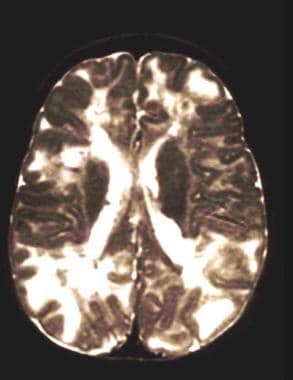
- The prognosis of patients with TSC is not as grim as has been typically thought. Higher numbers of tubers, earlier onset and intractability of seizures, and infantile spasms are associated with (but do not guarantee) worse cognitive and behavioral outcomes (see Images 19-20). Cardiac lesions almost always spontaneously regress, although supportive care may be necessary for a time. Pulmonary and renal lesions affect prognosis on the basis of their extent and severity.
Medical/Legal Pitfalls
- Failure to inform the patient's family of the risk for severe idiosyncratic reactions from 3 commonly used antiepileptic medications for seizure in patients with TSC
- Vigabatrin - Visual field constriction
- Valproate - Hepatotoxicity, pancreatitis
- Lamotrigine - Stevens-Johnson syndrome, toxic epidermal necrolysis
- Failure to inform the patient's family of the risk for severe adverse effects, including death, from the use of either ACTH or oral steroids
- Failure to identify and provide treatment for seizures, renal AMLs, or LAM. This could result in patients presenting later and with greater morbidity from these conditions.
- Failure to instruct the family on what to do if they notice signs and symptoms indicating severe adverse effects or idiosyncratic reactions
- Failure to recognize signs and symptoms of TSC, which could result in failure to select an appropriate AED with proven efficacy. This could increase the risk for uncontrolled seizures that in turn increase the risk for injury and death. It also could result in inappropriate management or surgery, or failure to screen for known complications of the condition.
- Failure to communicate the genetic basis of TSC to the patient and family, and to provide the option of genetic counseling. This could result in additional pregnancies that are affected with TSC, which the parents might not otherwise have undertaken.
| Media file 1:
Enhancing subependymal nodules, including a probable giant cell astrocytoma in the region of the foramen of Monro. Subependymal nodules may increase in size over time from one scan to the next, and then stabilize. This lesion had not changed with serial imaging over 2 years. The patient remains asymptomatic and is monitored closely for any deterioration. |
 | View Full Size Image | |
Media type: MRI
|
| Media file 2:
Hydrocephalus from a subependymal giant cell astrocytoma in a patient with tuberous sclerosis. The patient presented with acute blindness and ataxia. |

 | View Full Size Image | |
Media type: CT
|
| Media file 3:
Facial angiofibromas in a young man with tuberous sclerosis complex. | |