Continually Updated Clinical Reference
 
 
  All Sources     eMedicine     Medscape     Drug Reference     MEDLINE
 
eMedicine - Syringomyelia : Article by

Quick Find
Authors & Editors
Introduction
Clinical
Differentials
Workup
Treatment
Medication
Follow-up
Miscellaneous
Multimedia
References

Related Articles
Acute Inflammatory Demyelinating Polyradiculoneuropathy

Amyotrophic Lateral Sclerosis

Ankylosing Spondylitis

Arteriovenous Malformations

Atlantoaxial Instability in Individuals with Down Syndrome

Brainstem Gliomas

Central Pontine Myelinolysis

Cervical Spondylosis: Diagnosis and Management

Chronic Inflammatory Demyelinating Polyradiculoneuropathy

Diabetic Neuropathy

Ependymoma

Hydrocephalus

Limb-Girdle Muscular Dystrophy

Medulloblastoma

Meningioma

Metastatic Disease to the Spine and Related Structures

Motor Evoked Potentials

Multiple Sclerosis

Neural Tube Defects

Neurological History and Physical Examination

Spinal Cord Hemorrhage

Spinal Cord Infarction

Spinal Cord Trauma and Related Diseases

Spinal Epidural Abscess

Spinal Muscular Atrophy


Patient Education
Click here for patient education.


Author: Hassan Ahmad Hassan Al-Shatoury, MD, PhD, MHPE, Assistant Professor, Department of Neurosurgery, Suez Canal University; Co-Director, Center of Research and Development in Medical Education and Health Services Suez Canal University Hospital

Coauthor(s): Ayman Ali Galhom, MD, PhD, Fellow, Department of Neurosurgery, University of Mississippi Medical Center; Franklin C Wagner, Jr, MD, Former Chief, Division of Spine and Spinal Cord Surgery, Former Professor, Department of Neurosurgery, University of Illinois at Chicago College of Medicine

Editors: Christopher Luzzio, MD, Clinical Assistant Professor, Department of Neurology, University of Wisconsin at Madison; Francisco Talavera, PharmD, PhD, Senior Pharmacy Editor, eMedicine; Selim R Benbadis, MD, Professor, Director of Comprehensive Epilepsy Program, Departments of Neurology and Neurosurgery, University of South Florida School of Medicine, Tampa General Hospital; Matthew J Baker, MD, Consulting Staff, Collier Neurologic Specialists, Naples Community Hospital; Nicholas Y Lorenzo, MD, Chief Editor, eMedicine Neurology; Consulting Staff, Neurology Specialists and Consultants

Author and Editor Disclosure

Synonyms and related keywords: hydromyelia, syrinx, syringohydromyelia, syringocephalus, syringobulbia

Background

Syringomyelia is the development of a fluid-filled cavity or syrinx within the spinal cord. Hydromyelia is a dilatation of the central canal by cerebrospinal fluid (CSF) and may be included within the definition of syringomyelia. Types of syringomyelia include the following:

Syringomyelia with fourth ventricle communication

About 10% of syringomyelia cases are of this type. This communication can be observed on MRI. In some cases, a blockage of CSF circulation occurs. A shunt operation may be the best therapeutic option for these patients.

Syringomyelia due to blockage of CSF circulation (without fourth ventricular communication)

Representing at least 50% of all cases, this is the most common type of syringomyelia. Obstruction of CSF circulation from the basal posterior fossa to the caudal space may cause syringomyelia of this type. The most common example is Arnold-Chiari malformation, which also is associated with communicating syringomyelia. Other causes include the following:

  • Basal arachnoiditis (postinfectious, inflammatory, postirradiation, blood in subarachnoid space)
  • Basilar impression or invagination
  • Meningeal carcinomatosis
  • Pathological masses (arachnoid cysts, rheumatoid arthritis pannus, occipital encephalocele, tumors)

Syringomyelia due to spinal cord injury

Fewer than 10% of syringomyelia cases are of this type. Mechanisms of injury include (1) spinal trauma, (2) radiation necrosis, (3) hemorrhage from aneurysm rupture or arteriovenous malformation or in a tumor bed, (4) infection (spinal abscess, human immunodeficiency virus, transverse myelitis), and (5) cavitation following ischemic injury or degenerative disease.

Syringomyelia and spinal dysraphism

Spinal dysraphism may cause syringomyelia through a variety of mechanisms, including those mentioned under the previous 3 categories. Identification and treatment of associated dysraphism has the greatest impact on arresting progression of syringomyelia.

Syringomyelia due to intramedullary tumors

Fluid accumulation usually is caused by secretion from neoplastic cells or hemorrhage. The tumors most often associated with syringomyelia are ependymoma and hemangioblastoma. Extramedullary intradural and extradural tumors are considered separately under the second category because the mechanism of syrinx formation is blockage of the CSF pathway.

Idiopathic syringomyelia

Idiopathic syringomyelia has an unknown cause and cannot be classified under any of the previous categories. Surgical decompression can help in some patients with remarkable neurologic deficit.

Pathophysiology

Although many mechanisms for syrinx formation have been postulated, the exact pathogenesis is still unknown. Frequently cited theories are those of Gardner, William, and Oldfield.

Gardner's hydrodynamic theory

This theory proposes that syringomyelia results from a "water hammer"-like transmission of pulsatile CSF pressure via a communication between the fourth ventricle and the central canal of the spinal cord through the obex. A blockage of the foramen of Magendie initiates this process.

William's theory

This theory proposes that syrinx development, particularly in patients with Chiari malformation, follows a differential between intracranial pressure and spinal pressure caused by a valvelike action at the foramen magnum. The increase in subarachnoid fluid pressure from increased venous pressure during coughing or Valsalva maneuvers is localized to the intracranial compartment.

The hindbrain malformation prevents the increased CSF pressure from dissipating caudally. During Valsalva, a progressive increase in cisterna magna pressure occurs simultaneously with a decrease in spinal subarachnoid pressure. This craniospinal pressure gradient draws CSF caudally into the syrinx.

Oldfield's theory

Downward movement of the cerebellar tonsils during systole can be visualized with dynamic MRI. This oscillation creates a piston effect in the spinal subarachnoid space that acts on the surface of the spinal cord and forces CSF through the perivascular and interstitial spaces into the syrinx raising intramedullary pressure. Signs and symptoms of neurological dysfunction that appear with distension of the syrinx are due to compression of long tracts, neurons, and microcirculation. Symptoms referable to raised intramedullary pressure are potentially reversible by syrinx decompression.

The intramedullary pulse pressure theory

The here-proposed intramedullary pulse pressure theory instead suggests that syringomyelia is caused by increased pulse pressure in the spinal cord and that the syrinx consists of extracellular fluid. A new principle is introduced implying that the distending force in the production of syringomyelia is a relative increase in pulse pressure in the spinal cord compared to that in the nearby subarachnoid space. The formation of a syrinx then occurs by the accumulation of extracellular fluid in the distended cord.

Frequency

United States

Estimated prevalence of the disease is about 8.4 cases per 100,000 people.

International

No geographic difference in the prevalence of syringomyelia is known.

Mortality/Morbidity

Assessing treatment results is difficult because of the rarity of syringomyelia, variability of presentation and natural history, and the relatively short follow-up in most studies.

  • In one study, half of all patients with syringomyelia were in clinically stable condition for several years.
  • Although an older study had suggested that 20% of patients died at an average of 47 years, mortality rates are likely lower in today's patients as a result of surgical interventions and better treatment of complications associated with significant paresis, such as pulmonary embolism.

Race

  • Occurrence of syringomyelia in different races is unknown.
  • Familial cases have been described.

Sex

  • Syringomyelia occurs more frequently in men than in women.

Age

  • The disease usually appears in the third or fourth decade of life, with a mean age of onset of 30 years.
  • Rarely, syringomyelia may develop in childhood or late adulthood.


History

Syringomyelia usually progresses slowly; the course may extend over many years. The condition may have a more acute course, especially when the brain stem is affected (ie, syringobulbia). Syringomyelia usually involves the cervical area. Symptomatic presentation depends primarily on the location of the lesion within the neuraxis. Clinical manifestations include the following:

  • Sensory
    • Dissociated sensory loss: Syrinx interrupts the decussating spinothalamic fibers that mediate pain and temperature sensibility, resulting in loss of these sensations, while light touch, vibration, and position senses are preserved.
    • When the cavity enlarges to involve the posterior columns, position and vibration senses in the feet are lost; astereognosis may be noted in the hands.
    • Pain and temperature sensation may be impaired in either or both arms, or in a shawllike distribution across the shoulders and upper torso anteriorly and posteriorly.
    • Dysesthetic pain, a common complaint in syringomyelia, usually involves the neck and shoulders, but may follow a radicular distribution in the arms or trunk. The discomfort, which is sometimes experienced early in the course of the disease, generally is deep and aching and can be severe.
  • Motor
    • Syrinx extension into the anterior horns of the spinal cord damages motor neurons (lower motor neuron) and causes diffuse muscle atrophy that begins in the hands and progresses proximally to include the forearms and shoulder girdles. Clawhand may develop.
    • Respiratory insufficiency, which usually is related to changes in position, may occur.
  • Autonomic
    • Impaired bowel and bladder functions usually occur as a late manifestation.
    • Sexual dysfunction may develop in long-standing cases.
    • Horner syndrome may appear, reflecting damage to the sympathetic neurons in the intermediolateral cell column.
  • Extension of the syrinx
    • A syrinx may extend into the medulla, producing a syringobulbia. This syndrome is characterized by dysphagia, nystagmus, pharyngeal and palatal weakness, asymmetric weakness and atrophy of the tongue, and sensory loss involving primarily pain and temperature senses in the distribution of the trigeminal nerve.
    • Rarely, the syrinx cavity can extend beyond the medulla in the brain stem into the centrum semiovale (syringocephalus).
    • Lumbar syringomyelia can occur and is characterized by atrophy of the proximal and distal leg muscles with dissociated sensory loss in the lumbar and sacral dermatomes. Lower limb reflexes are reduced or absent. Impairment of sphincter function is common.
  • Other manifestations
    • Painless ulcers of the hands are frequent. Edema and hyperhydrosis can be due to interruption of central autonomic pathways.
    • Neurogenic arthropathies (Charcot joints) may affect the shoulder, elbow, or wrist. Scoliosis is seen sometimes.
    • Acute painful enlargement of the shoulder is associated with destruction of the head of the humerus.

Physical

  • Arm reflexes are diminished early in the clinical course.
  • Lower limb spasticity, which may be asymmetrical, appears with other long-tract signs such as paraparesis, hyperreflexia, and extensor plantar responses.
  • Rectal examination includes an evaluation of volitional sphincter control and sensory assessment of sacral dermatomes.
  • Dissociated sensory impairment may be noted.
  • The syrinx may extend into the brain stem, affecting cranial nerves or cerebellar function.
  • Brainstem signs are common in syringomyelia associated with Chiari malformations.

Causes

Etiology of syringomyelia often is associated with craniovertebral junction abnormalities.

  • Bony abnormalities
    • Small posterior fossa
    • Platybasia and basilar invagination
    • Assimilation of the atlas
  • Soft-tissue masses of abnormal nature
    • Tumors (eg, meningioma at foramen magnum)
    • Inflammatory masses
  • Neural tissue
    • Cerebellar tonsils and vermis herniation
    • Chiari malformation
  • Membranous abnormalities
    • Arachnoid cysts, rhombic roof, or vascularized membranes
    • Posthemorrhagic or postinflammatory membranes
  • Other etiologies not associated with craniovertebral abnormalities
    • Arachnoid scarring related to spinal trauma
    • Arachnoid scarring related to meningeal inflammation
    • Arachnoid scarring related to surgical trauma
    • Subarachnoid space stenosis due to spinal neoplasm or vascular malformation
    • Subarachnoid space stenosis, with possible scarring, related to disk and osteophytic disease
    • Idiopathic


Acute Inflammatory Demyelinating Polyradiculoneuropathy
Amyotrophic Lateral Sclerosis
Ankylosing Spondylitis
Arteriovenous Malformations
Atlantoaxial Instability in Individuals with Down Syndrome
Brainstem Gliomas
Central Pontine Myelinolysis
Cervical Spondylosis: Diagnosis and Management
Chronic Inflammatory Demyelinating Polyradiculoneuropathy
Diabetic Neuropathy
Ependymoma
Hydrocephalus
Limb-Girdle Muscular Dystrophy
Medulloblastoma
Meningioma
Metastatic Disease to the Spine and Related Structures
Motor Evoked Potentials
Multiple Sclerosis
Neural Tube Defects
Neurological History and Physical Examination
Spinal Cord Hemorrhage
Spinal Cord Infarction
Spinal Cord Trauma and Related Diseases
Spinal Epidural Abscess
Spinal Muscular Atrophy

Other Problems to be Considered

Arnold-Chiari malformations
Cervical rib
Craniovertebral junction anomalies
Increased intracranial pressure
Intrinsic tumors of the spinal cord
Brainstem syndromes
Cervical disk syndromes


Lab Studies

  • Cerebrospinal fluid analysis (not performed because of the risk of herniation)
    • CSF pressure sometimes is elevated. A complete subarachnoid block may be noted.
    • Cell count is rarely more than 10/mm3.
    • Mild elevation of the CSF protein content occurs in half of these cases.
    • In cases of subarachnoid block, CSF protein may exceed 100 mg/dL.

Imaging Studies

  • Plain x-ray
    • Plain films cannot detect the syrinx directly.
    • Cervical canal commonly is widened, and the pedicles may be eroded.
    • Flexion and extension films exclude bony instability.
    • Basilar impression or craniovertebral anomalies may be demonstrated.
  • Computerized tomography scan - Assists in detailed assessment and is especially useful in evaluation of bony spinal canal components
  • Myelography
    • Myelography is performed in special situations when MRI cannot be used.
    • Widening of the cord and complete subarachnoid block may be observed.
  • CT myelography
    • Myelogram combined with immediate and delayed high-resolution CT scan also can be performed.
    • Delayed CT scans are obtained 4-24 hours after the initial testing and can demonstrate cyst filling.
  • Magnetic resonance imaging
    • Imaging of the entire rostrocaudal extension of the cyst or cysts is important. Gadolinium-enhanced images are indicated if a tumor is suspected. Gadolinium-enhanced images are helpful in differentiating between scar or disk material associated with a syrinx, especially in postoperative or posttraumatic cases.
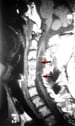
    • MRI examination should include sagittal and transverse views in T1 and T2 images (see Image 1). Proton density scans also can be helpful.
  • Magnetic resonance angiography - Can be especially helpful in cases of syringomyelia associated with vascular lesions
  • Cine phase-contrast MRI - Used to analyze CSF flow dynamics near the spinal cord cyst
  • Real-time ultrasonography - Rarely utilized for imaging syringomyelia since the development of MRI; ultrasonography for this purpose is technically more feasible in young children or in thin patients.

Other Tests

  • In neurophysiological assessment by somatosensory evoked potentials (SSEPs), low-amplitude or delayed responses are present in myelopathy.
  • Neurophysiological assessment by motor evoked response may be more sensitive than SSEPs in the evaluation of spinal cord dysfunction.

Procedures

  • The initial evaluation of patients suspected of having a spinal cord syrinx includes a comprehensive history and physical examination.
  • Information obtained from examinations guides the imaging studies. Essential tests include plain radiographic series with dynamic views and high-resolution CT scan to assess the bony spinal canal.
  • The most sensitive imaging test for soft tissue is an MRI scan. Gadolinium-enhanced images are also helpful in differentiating between tumor, scar, and disk material, especially in postoperative or posttraumatic cases.

Histologic Findings

The syringomyelic cavity, or syrinx, forms most commonly in the lower cervical region, particularly at the base of the posterior horn and extending into the central gray matter and anterior commissure of the cord.

Histopathologic findings include (1) cavitation of spinal cord gray matter, (2) syrinx continuous with or adjacent to the central canal, and (3) an inner layer of gliotic tissue.

In association with the syrinx, other pathological conditions such as tumors, vascular anomalies, or infective processes also may be evident.


Medical Care

  • No medical treatment is known for patients with syringomyelia. However, a chronic, stable clinical course is common. Identifying the underlying cause of syrinx formation is very important. Surgical treatment most likely will be necessary.
  • Neurorehabilitative care facilitates preservation of remaining neurological functions and prevents complications of quadriparesis such as infection and decubitus ulcers.

Surgical Care

A variety of surgical treatments have been proposed for syringomyelia.

  • Suboccipital and cervical decompression
    • This operation includes suboccipital craniectomy; laminectomy of C1, C2, and sometimes C3; and duraplasty.
    • Some authors report microsurgical lysis of any adhesions, opening of the fourth ventricular outlet, and plugging of the obex (later steps are based on Gardner's hydrodynamic theory).
  • Laminectomy and syringotomy (dorsolateral myelotomy)
    • After decompression, the syrinx is drained into the subarachnoid space through a longitudinal incision in the dorsal root entry zone (between the lateral and posterior columns), usually at the level of C2-C3.
    • Incision in the dorsal root entry area has the minimum risk of increasing neurological deficit.
  • Shunts
    • Ventriculoperitoneal shunt - Indicated if ventriculomegaly and increased intracranial pressure are present
    • Lumboperitoneal shunt - Placed infrequently because of increased risk of herniation through the foramen magnum
    • Syringosubarachnoid dorsal root entry zone shunt
    • Syringoperitoneal shunt
  • Fourth ventriculostomy
  • Percutaneous needling: This technique is advocated as a possible mode of therapy; however, rapid refilling of the hydromyelic cavity from the ventricular system follows aspiration of fluid at the time of surgery. Moreover, a needle track seems unlikely to remain open.
  • Terminal ventriculostomy
    • The terminal ventricle is the dilated portion of the central canal that extends below the tip of the conus medullaris into the filum terminale. A laminectomy is performed over the caudal limit of the fluid sac, and the filum is opened.
    • This procedure is suitable only in patients with symptoms of syrinx without Chiari malformation. It is inappropriate in cases in which the hydromyelic cavity does not extend into the lumbar portion of the spinal cord or into the filum terminale.
  • Neuroendoscopic surgery
    • A fibroscope inserted through a small myelotomy allows inspection of the intramedullary cavity.
    • This technique is particularly useful in evaluating and treating multiple septate syrinxes.
    • Septa are fenestrated, either mechanically or by laser. Fluid from the cavity is then shunted into the subarachnoid space.

Consultations

  • Neurosurgeon
  • Psychiatrist
  • Urologist
  • Physical therapist
  • Occupational therapist
  • Recreational therapist

Diet

No specific diet is recommended for syringomyelia; however, normalizing weight is encouraged, especially in patients with neurological deficits.


No specific medication is indicated for treatment of syringomyelia. However, analgesics and muscle relaxants may be given for symptomatic treatment.

Drug Category: Nonsteroidal anti-inflammatory drugs (NSAIDs)

NSAIDs commonly are used as analgesics in patients with syringomyelia. If one class seems to be ineffective after a 2-week trial, a formulation from another class may be tried. The most commonly used drugs are ibuprofen, acetylsalicylic acid, naproxen, indomethacin, mefenamic acid, and piroxicam.

Drug NameIbuprofen (Ibuprin, Advil, Motrin)
DescriptionOne of propionic acid derivatives group. Effective inhibitor of cyclooxygenase, which is responsible for biosynthesis of prostaglandins; rapidly absorbed after PO administration; half-life in plasma is about 2 h; passes slowly into synovial spaces and may remain there in higher concentration as concentrations in plasma decline; excretion is rapid and complete, mainly in urine as metabolites or their conjugates.
Adult DoseMaintenance dose: 1200-1800 mg PO q4-6h; not to exceed 3200 mg in divided doses
Pediatric DoseNot established
ContraindicationsDocumented hypersensitivity; avoid in peptic ulcer disease, recent GI bleeding or perforation, renal insufficiency, and high risk of bleeding
InteractionsAspirin increases risk of inducing serious NSAID-related adverse effects; probenecid may increase concentrations and, possibly, toxicity; may decrease effects of hydralazine, captopril, and beta-blockers; may decrease diuretic effects of furosemide and thiazides; monitor PT closely in patients taking anticoagulants (instruct patients to watch for signs of bleeding); may increase risk of methotrexate toxicity; may increase phenytoin levels
PregnancyC - Fetal risk revealed in studies in animals but not established or not studies in humans; may use if benefits outweigh risk to fetus
D - Fetal risk shown in humans; use only if benefits outweigh risk to fetus
PrecautionsCaution in congestive heart failure, hypertension, and decreased renal or hepatic function; caution in coagulation abnormalities or during anticoagulant therapy

Drug NameAspirin (Anacin, Ascriptin, Bayer Aspirin)
DescriptionTreats mild to moderately severe pain and headache. Inhibits prostaglandin synthesis, which prevents formation of platelet-aggregating thromboxane A2; acts on heat-regulating center of hypothalamus and vasodilates peripheral vessels to reduce fever.
Adult Dose325-650 mg PO q4-6h; not to exceed 4 g/d
Pediatric Dose10-15 mg/kg/dose PO q4-6h; not to exceed 60-80 mg/kg/d
ContraindicationsDocumented hypersensitivity; liver damage; hypoprothrombinemia; vitamin K deficiency; bleeding disorders; asthma
Because of association with Reye syndrome, do not use in children ( <16 y) with flu
InteractionsAntacids and urinary alkalinizers may decrease effects; corticosteroids decrease serum levels; additive hypoprothrombinemic effects and increased bleeding time may occur in patients taking anticoagulants; may antagonize uricosuric effects of probenecid and increase toxicity of phenytoin and valproic acid; doses > 2 g/d may potentiate glucose-lowering effect of sulfonylurea drugs
PregnancyC - Fetal risk revealed in studies in animals but not established or not studies in humans; may use if benefits outweigh risk to fetus
D - Fetal risk shown in humans; use only if benefits outweigh risk to fetus
PrecautionsMay cause transient decrease in renal function and aggravate chronic kidney disease; avoid using in patients with severe anemia, history of blood coagulation defects, or taking anticoagulants

Drug NameNaproxen (Naprelan, Naprosyn, Aleve, Anaprox)
DescriptionFor relief of mild to moderately severe pain; inhibits inflammatory reactions and pain by decreasing activity of cyclooxygenase, which is responsible for prostaglandin synthesis.
Adult Dose500 mg PO initial dose, followed by 250 mg q6-8h; not to exceed 1.25 g/d
Pediatric Dose<2 years: Not established
>2 years: 2.5 mg/kg/dose PO; not to exceed 10 mg/kg/d
ContraindicationsDocumented hypersensitivity; peptic ulcer disease; recent GI bleeding or perforation; renal insufficiency
InteractionsAspirin increases risk of inducing serious NSAID-related adverse effects; probenecid may increase concentrations and, possibly, toxicity; may decrease effects of hydralazine, captopril, and beta-blockers; may decrease diuretic effects of furosemide and thiazides; monitor PT closely in patients taking anticoagulants (instruct patients to watch for signs of bleeding); may increase risk of methotrexate toxicity; may increase phenytoin levels
PregnancyB - Fetal risk not confirmed in studies in humans but has been shown in some studies in animals
D - Fetal risk shown in humans; use only if benefits outweigh risk to fetus
PrecautionsAcute renal insufficiency, interstitial nephritis, hyperkalemia, hyponatremia, and renal papillary necrosis may occur; patients with preexisting renal disease or compromised renal perfusion risk acute renal failure; leukopenia occurs rarely, is transient, and usually returns to normal during therapy; persistent leukopenia, granulocytopenia, or thrombocytopenia warrants further evaluation and may require discontinuation of drug

Drug NameIndomethacin (Indocin, Indochron E-R)
DescriptionRapidly absorbed. Metabolism occurs in liver by demethylation, deacetylation, and glucuronide conjugation. Inhibits prostaglandin synthesis.
Adult Dose25-50 mg IR PO bid/tid
75 mg PO SR PO bid; not to exceed 200 mg/d
Pediatric Dose1-2 mg/kg/d PO divided bid/qid; not to exceed 4 mg/kg/d or 150-200 mg/d
ContraindicationsDocumented hypersensitivity; GI bleeding; renal insufficiency
InteractionsAspirin increases risk of inducing serious NSAID-related adverse effects; probenecid may increase concentrations and, possibly, toxicity; may decrease effects of hydralazine, captopril, and beta-blockers; may decrease diuretic effects of furosemide and thiazides; monitor PT closely in patients taking anticoagulants (instruct patients to watch for signs of bleeding); may increase risk of methotrexate toxicity; may increase phenytoin levels
PregnancyB - Fetal risk not confirmed in studies in humans but has been shown in some studies in animals
D - Fetal risk shown in humans; use only if benefits outweigh risk to fetus
PrecautionsAcute renal insufficiency, hyperkalemia, hyponatremia, interstitial nephritis, and renal papillary necrosis may occur; increases risk of acute renal failure in patients with preexisting renal disease or compromised renal perfusion; reversible leukopenia may occur, (discontinue if persistent leukopenia, granulocytopenia, or thrombocytopenia)

Drug NamePiroxicam (Feldene)
DescriptionDecreases activity of cyclooxygenase, which in turn inhibits prostaglandin synthesis. These effects decrease formation of inflammatory mediators.
Adult Dose10-20 mg/d PO qd
Pediatric Dose0.2-0.3 mg/kg/d PO qd; not to exceed 15 mg/d
ContraindicationsDocumented hypersensitivity; active GI bleeding
InteractionsAspirin increases risk of inducing serious NSAID-related adverse effects; probenecid may increase concentrations and, possibly, toxicity; may decrease effects of hydralazine, captopril, and beta-blockers; may decrease diuretic effects of furosemide and thiazides; monitor PT closely in patients taking anticoagulants (instruct patients to watch for signs of bleeding); may increase risk of methotrexate toxicity; may increase phenytoin levels
PregnancyB - Fetal risk not confirmed in studies in humans but has been shown in some studies in animals
D - Fetal risk shown in humans; use only if benefits outweigh risk to fetus
PrecautionsAcute renal insufficiency, hyperkalemia, hyponatremia, interstitial nephritis, and renal papillary necrosis may occur; increases risk of acute renal failure in patients with preexisting renal disease or compromised renal perfusion; reversible leukopenia may occur, (discontinue if persistent leukopenia, granulocytopenia, or thrombocytopenia)

Drug NameMefenamic acid (Ponstel)
DescriptionInhibits inflammatory reactions and pain by decreasing prostaglandin synthesis.
Adult Dose500 mg PO initially followed by 250 mg q4h prn
Pediatric Dose<12 years: Not established
>12 years: Administer as in adults
ContraindicationsDocumented hypersensitivity; peptic ulcer disease; recent GI bleeding or perforation; renal insufficiency; high risk of bleeding
InteractionsAspirin increases risk of inducing serious NSAID-related adverse effects; probenecid may increase concentrations and, possibly, toxicity; may decrease effects of hydralazine, captopril, and beta-blockers; may decrease diuretic effects of furosemide and thiazides; monitor PT closely in patients taking anticoagulants (instruct patients to watch for signs of bleeding); may increase risk of methotrexate toxicity; may increase phenytoin levels
PregnancyC - Fetal risk revealed in studies in animals but not established or not studies in humans; may use if benefits outweigh risk to fetus
D - Fetal risk shown in humans; use only if benefits outweigh risk to fetus
PrecautionsMay have adverse effects in fetus; caution in congestive heart failure, hypertension, and decreased renal or hepatic function; caution in coagulation abnormalities or during anticoagulant therapy

Drug Category: Muscle relaxants

These agents treat muscle spasms to decrease the patient's level of discomfort.

Drug NameMethocarbamol (Robaxin)
DescriptionSkeletal muscle relaxant used in conjunction with other therapeutic efforts to treat pain and discomfort associated with musculoskeletal conditions. Acts on CNS to relax certain reflexes.
Adult Dose<60 years: 1.5 g PO qid for first 48-72 h; usual maintenance dose is 750 mg to 1 g PO qid or 1.5 g tid, not to exceed 6 g/d for first 2-3 d or 8 g/d in severe conditions
>60 years: 6 g/d PO initially (8 g in severe cases); reduce dose prn
Pediatric Dose<12 years: Not established
>12 years: 800 mg (2 tab) PO qid
ContraindicationsDocumented hypersensitivity; renal impairment
InteractionsIncreases toxicity of CNS depressants
PregnancyC - Safety for use during pregnancy has not been established.
PrecautionsObserve extreme caution in patients with impaired liver or kidney function; caution in patients with history of seizures; prolonged use requires regular monitoring
Because of risk of potential harm to newborn, avoid using while breastfeeding
Adverse effects include light-headedness, blurred vision, dizziness, drowsiness, itching, conjunctivitis, fever, headache, hives, nasal congestion, nausea and vomiting, rash, urticaria (itching attack, may be due to drug sensitivity), anaphylaxis (severe allergic reaction), extreme weakness, temporary vision loss, transient paralysis
Overdosage symptoms include convulsions, vomiting, diarrhea, headache, nausea, difficult breathing, sensation of paralysis, coma, severe weakness
Drug may cause color interference in certain screening tests for 5-hydroxyindoleacetic acid (5-HIAA) and vanillylmandelic acid (VMA)
To prevent additive CNS depression (eg, excessive sleepiness, slurred speech, decreased awareness), avoid drinking alcoholic beverages or taking other CNS depressants
Patients >60 years are more likely to experience adverse reactions


Further Inpatient Care

  • Generally, patients with uncomplicated syringomyelia who have mild, relatively stable disability may be monitored on an outpatient basis. Patients with severe disability are better served in the hospital.
  • Postoperative care
    • Provide appropriate care of the surgical wound.
    • Check for CSF leakage from tubes exiting the dura.
    • Provide neck collar as needed for patient comfort.
  • Reported postoperative complications include the following:
    • Worsening of neurological deficit
    • Low-pressure headache
    • Shunt infection or obstruction
  • MRI is recommended during the early postoperative period as a baseline for further studies.

Further Outpatient Care

  • Document the following at each return visit:
    • Healing of the surgical incision
    • New neurological deficits
    • Status of the integument, genitourinary, gastrointestinal, vascular, and respiratory systems
    • Nutrition, affect/mood, activities of daily living, overall disability, and employment potential
  • Laboratory studies
    • Appropriate blood work
    • Urinalysis and assessment of renal function
  • Specialty referrals
    • Physical therapy
    • Occupational therapy: An occupational therapist can assist with specific home or work station modifications. Early referral is indicated to minimize further immobility or inactivity.
    • Other referrals: The patient's care should be reviewed by social services, psychologist, recreational therapist, orthopedist, neurologist or neurosurgeon, urologist, or internist, as appropriate.

In/Out Patient Meds

  • NSAIDs (eg, acetylsalicylic acid, naproxen, ibuprofen, indomethacin, mefenamic acid, piroxicam)
  • Muscle relaxants (eg, cyclobenzaprine, methocarbamol, baclofen)

Complications

  • Myelopathy is the most serious consequence of syringomyelia. The following are 6 grades of disability from myelopathy:
    • Grade 0 - Root signs and symptoms; no evidence of cord involvement
    • Grade I - Signs of cord involvement; normal gait
    • Grade II - Mild gait involvement; employable
    • Grade III - Gait abnormality prevents employment
    • Grade IV - Ambulates only with assistance
    • Grade V - Chairbound or bedridden
  • Complications due to myelopathy include the following:
    • Recurrent pneumonia
    • Paraplegia or quadriplegia
    • Decubitus ulcers
    • Bowel and urinary dysfunction

Prognosis

  • Prognosis depends on the underlying cause, the magnitude of neurological dysfunction, and the location and extension of the syrinx.
  • Patients presenting with moderate or severe neurological deficits fare much worse than those patients with mild deficits. Patients with central cord syndrome have poor response to treatment.
  • Natural history of syringomyelia still is not well understood. Although older studies had suggested that 20% of patients died at an average of 47 years, mortality rates are likely lower in today's patients as a result of surgical interventions and better treatment of complications associated with significant paresis, such as pulmonary embolism.

Patient Education

  • Avoid high-impact exercise, such as running and jumping in cases associated with cervical instability.
  • Avoid activities involving Valsalva maneuvers.


Medical/Legal Pitfalls

  • Overuse of muscle relaxants
  • Overuse of pain medication
  • Prolonged rest or inactivity
  • Vigorous exercise
  • Failure to recognize chronic pain syndrome
  • Surgical complication of infection and spinal cord trauma


Media file 1:  Sagittal T1-weighted image showing a thoracic syrinx
Click to see larger pictureClick to see detailView Full Size Image
Media type:  MRI


  • Attal N, Parker F, Tadié M, et al. Effects of surgery on the sensory deficits of syringomyelia and predictors of outcome: a long term prospective study. J Neurol Neurosurg Psychiatry. Jul 2004;75(7):1025-30. [Medline].
  • Boman K, Iivanainen M. Prognosis of syringomyelia. Acta Neurol Scand. 1967;43(1):61-8. [Medline].
  • Carroll AM, Brackenridge P. Post-traumatic syringomyelia: a review of the cases presenting in a regional spinal injuries unit in the north east of England over a 5-year period. Spine. May 15 2005;30(10):1206-10. [Medline].
  • Chang HS, Nakagawa H. Hypothesis on the pathophysiology of syringomyelia based on simulation of cerebrospinal fluid dynamics. J Neurol Neurosurg Psychiatry. Mar 2003;74(3):344-7. [Medline].
  • Colombo A, Cislaghi MG. Familial syringomyelia: case report and review of the literature. Ital J Neurol Sci. Dec 1993;14(9):637-9. [Medline].
  • Gardner WJ. Hydrodynamic mechanism of syringomyelia: its relationship to myelocele. J Neurol Neurosurg Psychiatry. Jun 1965;28:247-59. [Medline].
  • Greitz D. Unraveling the riddle of syringomyelia. Neurosurg Rev. Oct 2006;29(4):251-63; discussion 264. [Medline].
  • Gruber DP, Crone KR. Neuroendoscopy. In: Grossman RG, Loftus CM, eds. Principles of Neurosurgery. 2nd ed. Philadelphia: Lippincott-Raven; 1998:757-62.
  • Hopkins A. Clinical Neurology: A Modern Approach. 1993. New York: Oxford University Press; 342-4.
  • Huewel N, Perneczky A, Urban V, Fries G. Neuroendoscopic technique for the operative treatment of septated syringomyelia. Acta Neurochir Suppl (Wien). 1992;54:59-62. [Medline].
  • Koyanagi I, Iwasaki Y, Hida K, Houkin K. Clinical features and pathomechanisms of syringomyelia associated with spinal arachnoiditis. Surg Neurol. Apr 2005;63(4):350-5; discussion 355-6. [Medline].
  • Lin JW, Lin MS, Lin CM, Tseng CH, Tsai SH, Kan IH. Idiopathic syringomyelia: case report and review of the literature. Acta Neurochir Suppl. 2006;99:117-20. [Medline].
  • Madsen III PW, Green BA, Bowen BC. Syringomyelia. In: Herkowitz HN, Garfin SR, Balderston RA, et al, eds. The Spine. 2. 4th ed. Philadelphia: WB Saunders Company; 1999:1431-59.
  • Mancall EL. Syringomyelia. In: Rowland LP, ed. Merritt's Textbook of Neurology. 1989. 8th ed. Philadelphia: Lea & Febiger; 687-91.
  • Milhorat TH, Capocelli AL Jr, Kotzen RM. Intramedullary pressure in syringomyelia: clinical and pathophysiological correlates of syrinx distension. Neurosurgery. Nov 1997;41(5):1102-10. [Medline].
  • Milhorat TH, Kotzen RM, Mu HT, et al. Dysesthetic pain in patients with syringomyelia. Neurosurgery. May 1996;38(5):940-6; discussion 946-7. [Medline].
  • Mueller D, Oro' JJ. Prospective analysis of self-perceived quality of life before and after posterior fossa decompression in 112 patients with Chiari malformation with or without syringomyelia. Neurosurg Focus. Feb 15 2005;18(2):ECP2. [Medline].
  • Oakes WJ. Chiari malformation and syringomyelia. In: Rengachary SS, Wilkins RA, eds. Principles of Neurosurgery. St. Louis, Mo: Wolfe; 1994:9.1-9.17.
  • Oldfield EH, Muraszko K, Shawker TH, Patronas NJ. Pathophysiology of syringomyelia associated with Chiari I malformation of the cerebellar tonsils. Implications for diagnosis and treatment. J Neurosurg. Jan 1994;80(1):3-15. [Medline].
  • Ono A, Suetsuna F, Ueyama K, Yokoyama T, Aburakawa S, Numasawa T. Surgical outcomes in adult patients with syringomyelia associated with Chiari malformation type I: the relationship between scoliosis and neurological findings. J Neurosurg Spine. Mar 2007;6(3):216-21. [Medline].
  • Peñagarícano JA, Linskey ME, Ratanatharathorn V. Accelerated cerebral vasculopathy after radiation therapy to the brain. Neurol India. Dec 2004;52(4):482-6. [Medline].
  • Rhoton AL, Hamilton AJ. Chiari malformation and syringomyelia. In: Benzel EC, ed. Spine Surgery: Techniques, Complication Avoidance, and Management. 2. Boston: Churchill-Livingstone; 1999:793-812.
  • Rusbridge C, Greitz D, Iskandar BJ. Syringomyelia: current concepts in pathogenesis, diagnosis, and treatment. J Vet Intern Med. May-Jun 2006;20(3):469-79. [Medline].
  • Simon RP, Aminoff MJ, Greenberg DA. Clinical Neurology. 4th ed. Norwalk, Conn: Appleton-Lange; 1999:220-1.
  • Sudo K, Miyazaki Y, Tajima Y. Spontaneous resolution of idiopathic syringomyelia. Neurology. May 28 2002;58(10):1576-7; author reply 1577. [Medline].
  • Williams B. Progress in syringomyelia. Neurol Res. Sep 1986;8(3):130-45. [Medline].
  • Wisoff JH. Chiari Malformations and Hydromyelia. In: Tindall GT, Cooper PR, Barrow D, eds. The Practice of Neurosurgery. 3. Baltimore: Williams & Wilkins; 1995:2743-53.
  • Wisoff JH, Epstein F. Management of hydromyelia. Neurosurgery. Oct 1989;25(4):562-71. [Medline].

Syringomyelia excerpt

Article Last Updated: Nov 28, 2007