| Patient Education |
|
Click here for patient education.
|
|
You are in: eMedicine Specialties >
Neurology > Pediatric Neurology
Lennox-Gastaut Syndrome
Article Last Updated: Apr 10, 2006
AUTHOR AND EDITOR INFORMATION
Section 1 of 11
Author: Tracy A Glauser, MD, Professor, Departments of Pediatrics and Neurology, University of Cincinnati College of Medicine, Children's Comprehensive Epilepsy Program, Children's Hospital Medical Center of Cincinnati
Tracy A Glauser is a member of the following medical societies: American Academy of Neurology, American Academy of Pediatrics, American Epilepsy Society, and Child Neurology Society
Coauthor(s):
Diego A Morita, MD, Assistant Professor of Pediatrics and Neurology, Department of Pediatrics, Division of Neurology, Cincinnati Children's Hospital Medical Center, University of Cincinnati
Editors: David A Griesemer, MD, Professor, Departments of Neurology and Pediatrics, Medical University of South Carolina; Francisco Talavera, PharmD, PhD, Senior Pharmacy Editor, eMedicine; Kenneth J Mack, MD, PhD, Senior Associate Consultant, Department of Child and Adolescent Neurology, Mayo Clinic; Selim R Benbadis, MD, Professor, Director of Comprehensive Epilepsy Program, Departments of Neurology and Neurosurgery, University of South Florida School of Medicine, Tampa General Hospital; Nicholas Y Lorenzo, MD, Chief Editor, eMedicine Neurology; Consulting Staff, Neurology Specialists and Consultants
Author and Editor Disclosure
Synonyms and related keywords:
childhood epileptic encephalopathy with diffuse slow spike waves, Lennox-Gastaut syndrome, LGS, pediatric epilepsy syndrome, childhood epilepsy, seizures, mental retardation
Background
Childhood epileptic encephalopathy (Lennox-Gastaut syndrome [LGS]) is a devastating pediatric epilepsy syndrome constituting 1-4% of childhood epilepsies. The syndrome is characterized by multiple types of seizures, mental retardation or regression, and abnormal EEG with generalized slow spike-and-wave discharges (1.5-2 Hz). The most common seizure types are tonic-axial, atonic, and absence seizures, but myoclonic, generalized tonic-clonic, and partial seizures can be observed. Seizures often are resistant to therapy.
Pathophysiology
The pathophysiology of LGS is not known. No animal models exist. A variety of possible pathophysiologies have been proposed. One hypothesis states that excessive permeability in the excitatory interhemispheric pathways in the frontal areas is present when the anterior parts of the brain mature. Involvement of immunogenetic mechanisms in triggering or maintaining some cases of LGS is hypothesized. Although one study found a strong association between LGS and the human lymphocyte antigen class I antigen B7, a second study did not. No clear-cut or homogeneous metabolic pattern was noted in 2 separate reports of positron emission tomography (PET) studies in children with LGS.
Frequency
United States
Overall, LGS accounts for 1-4% of patients with childhood epilepsy but 10% of patients with onset of epilepsy when younger than 5 years. The prevalence of LGS in Atlanta, Georgia, was reported as 0.26 per 1000 live births.
International
Epidemiologic studies in the western or industrialized world (Israel, Spain, Estonia, Italy, Finland) demonstrated that the proportion of patients with LGS seems relatively consistent across the populations studied and similar to that in the United States. The prevalence of LGS is 0.1-0.28 per 1000 in Europe. The annual incidence of LGS in childhood is approximately 2 per 100,000 children.
Among children with intellectual disability, 7% have LGS, while 16.3% of institutionalized patients with intellectual disability have LGS.
Mortality/Morbidity
- Mortality rate is reported at 3% (mean follow-up period of 8.5 y) to 7% (mean follow-up period of 9.7 y). Death often is related to accidents.
- A high rate of injuries is associated with atonic and/or tonic seizures. Some patients with LGS wear protective helmets with face guards to maximize protection of the forehead, nose, and teeth (see Image 1). Unfortunately, some patients with LGS do not tolerate the helmet with face guards, and even if tolerated, helmets often are uncomfortable and rarely are "cosmetically acceptable."
- The severity of the seizures, frequent injuries, developmental delays, and behavior problems take a large toll on even the strongest parents and family structures. Pay attention to the psychosocial needs of the family (especially siblings). The proper educational setting also is important to help the patient with LGS reach his or her maximal potential.
Race
No racial differences exist in the occurrence of LGS.
Sex
Males are affected more often than females. The relative risk of occurrence of LGS is significantly higher in boys than in girls (prevalence 0.1 per 1000 for boys, 0.02 per 1000 for girls; relative risk 5.31; 95% confidence interval, 1.16-49.35).
Age
The mean age at epilepsy onset is 26-28 months (range, 1 d to 14 y). The peak age at epilepsy onset is older in patients with LGS of an identifiable etiology than in those whose LGS has no identifiable etiology. The difference in age of onset between the group of patients with LGS and a history of West syndrome and those with LGS without West syndrome is not significant. The average age at diagnosis of LGS in Japan was 6 years (range, 2-15 y).
History
- Interictal clinical manifestations
- Although approximately 20-30% of children with LGS are free from neurologic and neuropsychologic deficits prior to onset of symptoms (idiopathic group), these problems inevitably appear during the evolution of LGS. Factors associated with more common or more severe mental retardation are an identifiable etiology (ie, symptomatic) LGS, history of West syndrome, onset of symptoms before age 12-24 months, and more frequent seizures.
- Average intelligence quotient (IQ) score is significantly lower in patients with symptomatic LGS than in those with cryptogenic LGS, which includes patients for whom no cause of LGS can be identified but a cause is suspected. In one study, IQ testing showed variable degrees of mental retardation in 66% of the cryptogenic group and in 76% of the symptomatic group at first examination. At the last examination, mental retardation was found in 95% of the cryptogenic group and in 100% of the symptomatic group.
- A significant correlation exists between age of onset of seizures and mental deterioration. In one study, almost 98% of the patients who had an onset of seizures before age 2 years had definite cognitive impairment, compared with 63% of those with onset after age 2 years.
- Young children with LGS may exhibit mood instability, personality disturbances, or slowing and/or arrest of psychomotor development and educational progress. In contrast, older children with LGS experience character problems, acute psychotic episodes, or chronic forms of psychosis with aggressiveness, irritability, or social isolation. The most impaired of the cognitive functions are reaction time and information processing, which are prolonged. The main characteristics of mental deterioration are reported as apathy, memory disorders, impaired visuomotor speed, and perseverance.
- Ictal clinical manifestations
- Tonic seizures have a frequency of 17-95%. These seizures can occur during wakefulness or sleep but are more frequent during non–rapid eye movement (REM) sleep. Duration is from a few seconds to a minute. Tonic seizures can be (1) axial tonic, involving the head and trunk with head and neck flexion, contraction of masticatory muscles, and eventual vocalizations; (2) axorhizomelic tonic, in which tonic involvement of the proximal upper limbs with elevation of the shoulders and abduction of the arm occurs; or (3) global tonic, with contraction of the distal part of the extremities, occasionally leading to a sudden fall and at other times mimicking infantile spasms. Tonic seizures can be asymmetric. Some patients may show gestural automatisms after the tonic phase. The tonic seizure may end in a vibratory component if prolonged.
- Atypical absences range in frequency from 17-100%. This wide range results from parental inability to correctly recognize and identify atypical absences. In one study using video/EEG monitoring in a cohort of children with LGS, parental recognition was 27% for atypical absences, while the sensitivity was as high as 80% for myoclonic seizures and 100% for tonic, atonic, tonic-clonic, clonic, and complex partial seizures. Atypical absences may be difficult to diagnose since their onset may be gradual and loss of consciousness may be incomplete, allowing the patient to continue activities to some degree. Patients may have associated eyelid myoclonias, which are not as rhythmic as in typical absences but often are associated with perioral myoclonias or progressive flexion of the head secondary to a loss of tone. Automatisms may be observed. The seizure end may be gradual in some patients and abrupt in others.
- Atonic seizures, massive myoclonic seizures, and myoclonic-atonic seizures are noted in patients with LGS with a frequency of 10-56%. These seizures are difficult to differentiate by clinical observation only. Considerable discrepancies exist in the use of these terms. All 3 types can produce a sudden fall, producing injuries ("drop attacks,Sturzanfälle"), sometimes limited to the head, resulting in the head falling on the chest ("head drop,head nod,nictatio capitis"). Pure atonic seizures are exceptional; most have a tonic or myoclonic component.
- Other types of seizures are noted. Generalized tonic-clonic seizures are reported in 15% of patients, while complex partial seizures occur in 5%. Absence status epilepticus, tonic status epilepticus, and nonconvulsive status epilepticus all can occur, can have a long duration, and can be resistant to therapy.
Physical
- General physical examination
- Physical examination can be important in helping to identify specific etiologies that may have both systemic and neurologic symptoms (eg, tuberous sclerosis). Often findings on general physical examination are normal in a patient with LGS. No pathognomonic physical findings are present in patients with LGS.
- Abnormal findings on the general physical examination (eg, adenoma sebaceum, ash leaf macules) may suggest specific etiologies. Use a Wood lamp to examine the skin. Patients may exhibit moderately severe to severe growth delay, a nonspecific finding that is more a reflection of the underlying brain injury than of a specific epilepsy syndrome.
- Neurologic examination
- Neurologic examination in patients with LGS demonstrates abnormalities in mental status function, specifically deficits in higher cognitive function consistent with intellectual disability.
- Abnormalities in level of consciousness, cranial nerve function, motor/sensory/reflex examination, cerebellar testing, or gait are nonspecific findings and more a reflection of the underlying brain injury or effect of anticonvulsant medications.
- No pathognomonic findings are present on neurologic examination in patients with LGS.
Causes
LGS can be classified, according to its suspected etiology, as either idiopathic or symptomatic. Patients may be considered to have idiopathic LGS if normal psychomotor development occurs prior to the onset of symptoms, no underlying disorders or definite presumptive causes are present, and no neurologic or neuroradiologic abnormalities are found. In contrast, patients have symptomatic LGS if an identifiable factor is responsible for the syndrome. Some investigators add cryptogenic as a different etiologic category, in which no identified cause exists but a cause is suspected and the epilepsy is presumed to be symptomatic.
- Idiopathic: Population-based studies found that 22-30% of patients with LGS have idiopathic LGS.
- Symptomatic
- Population-based studies found that 70-78% of patients with LGS have symptomatic LGS.
- Examples of underlying pathologies responsible for symptomatic LGS include encephalitis and/or meningitis, tuberous sclerosis, brain malformations (eg, cortical dysplasias), birth injury, hypoxia-ischemia injury, frontal lobe lesions, and trauma.
- Infantile spasms precede the development of LGS in 9-39% of patients.
- Cryptogenic: In an epidemiologic study in Atlanta, Georgia, 44% of patients with LGS were in the cryptogenic group.
- Family history: In a series of 23 patients with cryptogenic LGS, 2.5-47.8% had a family history of epilepsy and febrile seizures.
Epilepsy in Adults with Mental Retardation
Epilepsy in Children with Mental Retardation
Epilepsy, Juvenile Myoclonic
Epileptic and Epileptiform Encephalopathies
Other Problems to be Considered
Myoclonic-astatic epilepsy (Doose syndrome)
Imaging Studies
- Computed axial tomography scan or magnetic resonance imaging
- In general, an MRI is the preferred neuroimaging study for a patient with LGS, rather than a CT scan. CT scans may be preferred in selected situations (eg, evaluation of suspected intracranial injury and/or hematoma in a patient with head trauma resulting from an atonic and/or tonic seizure).
- Neuroimaging is an important part of the search for an underlying etiology in a patient with LGS. Abnormalities revealed by neuroimaging associated with LGS include tuberous sclerosis, brain malformations (eg, cortical dysplasias), hypoxia-ischemia injury, or frontal lobe lesions.
- Positron emission tomography
- No current indication exists for routine PET scanning in patients with LGS.
- PET scans may be useful when patients are undergoing evaluation as candidates for epilepsy surgery.
- Single-photon emission computed tomography
- No current indication exists for routine single-photon emission computed tomography (SPECT) scanning in patients with LGS.
- SPECT scans may be useful when patients are undergoing evaluation as candidates for epilepsy surgery.
Other Tests
- Electroencephalogram: Always perform an EEG in patients with suspected LGS, since the diagnosis depends on the presence of specific EEG findings. If possible, obtain prolonged video/EEG telemetry to perform the following:
- Record both waking and sleep EEG to assist in confirming a suspected diagnosis. A routine 20-minute EEG may not capture the patient both awake and asleep and thus may miss specific important EEG findings.
- Capture and classify each of the patient's multiple seizure types.
- Educate the parents on which of the patient's "events" are seizures and which are nonepileptic behavioral events. Parental ability to correctly recognize and identify atypical absences is poor. In one study using video/EEG monitoring in a cohort of children with LGS, parental recognition was 27% for atypical absences, while the sensitivity was as high as 80% for myoclonic seizures and 100% for tonic, atonic, tonic-clonic, clonic, and complex partial seizures.
- Interictal EEG
- Interictal EEG is characterized by a slow background that can be constant or transient. Permanent slowing of the background is associated with poor cognitive prognosis.
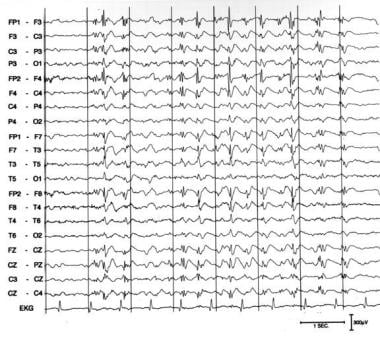
- The hallmark of the awake interictal EEG in patients with LGS is the diffuse slow spike wave (see Image 2). This pattern consists of bursts of irregular and generalized spikes or sharp waves followed by a sinusoidal 35- to 400-millisecond slow wave with an amplitude of 200-800 microvolts, which can be symmetric or asymmetric. The amplitude often is higher in the anterior region or in the frontal or frontocentral areas, but in some patients the activity may dominate in the posterior head regions. The frequency of the slow spike wave activity commonly is found at 1.5-2.5 Hz.
- Slow spike waves usually are not activated by photic stimulation. Hyperventilation rarely induces slow spike waves, although mental retardation prevents adequate cooperation in many patients. During non-REM sleep, discharges are more generalized, more frequent, and consist of polyspikes and slow waves. In REM sleep, spike waves decrease. During periods of frequent seizures, the total duration of REM sleep is reduced.
- Ictal EEG
- During a tonic seizure, the EEG is characterized by a diffuse, rapid (10-13 Hz), low-amplitude activity pattern, mainly in the anterior and vertex areas ("recruiting rhythm") that progressively decreases in frequency and increases in amplitude. A brief generalized discharge of slow spike waves or flattening of the recording may precede this pattern. Diffuse slow waves and slow spike waves may follow it. These fast discharges are common during non-REM sleep. Unlike tonic-clonic seizures, no postictal flattening occurs. Clinical manifestations appear 0.5-1 second after the onset of EEG manifestations and last several seconds longer than the discharge.
- During an atypical absence seizure, the EEG is characterized by diffuse, slow (2-2.5 Hz), and irregular spike waves, which may be difficult to differentiate from interictal bursts. Occasionally, discharges of rapid rhythms may be observed preceded by flattening of the record for 1-2 seconds, followed by progressive development of irregular fast rhythm in the anterior and central regions, and ending with brief spike waves.
- During atonic, massive myoclonic, and myoclonic-atonic seizures, the EEG is characterized by slow spike waves, polyspike waves, or rapid diffuse rhythms. Simultaneous video/EEG recording can help differentiate these seizure types. In most patients, these 3 types of seizures coexist.
- The EEG during absence status epilepticus reveals continuous spike wave discharges, usually at a lower frequency than at baseline, and rapid rhythms during tonic status epilepticus.
Medical Care
- The goals of treatment for patients with LGS are the same as for all patients with epilepsy: the best quality of life with the fewest seizures (hopefully none), the fewest adverse treatment effects, and the least number of medications.
- Antiepileptic medications (AEDs) are the mainstay of therapy for patients with LGS. Unfortunately, no one medical treatment gives satisfactory relief for all or even most patients with LGS. A combination of medical treatment modalities frequently is required.
- The various medical treatment options for patients with LGS can be divided into the following 3 major groups:
- First-line treatments based on clinical experience or conventional wisdom (eg, valproic acid, benzodiazepines [specifically clonazepam, nitrazepam, clobazam])
- Treatments suspected to be effective on the basis of open-label uncontrolled studies (eg, vigabatrin, zonisamide)
- Treatments proven effective by double-blind placebo-controlled studies (eg, lamotrigine, topiramate, felbamate)
Surgical Care
- Corpus callosotomy: Corpus callosotomy is effective in reducing drop attacks but typically is not helpful for other seizure types and is considered palliative rather than curative. Seizure freedom following corpus callosotomy is rare but can occur.
- Vagus nerve stimulation: In 3 published small studies, approximately three fourths of patients with LGS experienced greater than 50% reduction in seizure frequency with a follow-up period as long as 5 years.
- Focal cortical resection: In rare cases, resection of a localized lesion (eg, vascular lesion, tumor) can improve seizure control.
Consultations
- Pediatric neuropsychologists can assess intellectual function and educational needs and advise on nonpharmacologic management of behavioral problems.
- Pediatric psychiatrists can advise on pharmacologic management of behavioral problems.
- Neurosurgeons can assist in the placement of a vagus nerve stimulator and assess the patient as a candidate for corpus callosotomy or focal resection.
- Dietitians can assist in the institution and maintenance of the ketogenic diet.
Diet
- Ketogenic diet
- The ketogenic diet is composed of a 2:1, 3:1, 4:1, or higher ratio of fats (ketogenic foods) to proteins and carbohydrates (antiketogenic foods). In general, the benefits of the diet for people with epilepsy include fewer seizures, less drowsiness, better behavior, and fewer concomitant AEDs.
- On the basis of multiple open-label studies, the ketogenic diet appears useful for patients with LGS. A double-blind trial of the ketogenic diet's efficacy and safety in LGS is underway. Efficacy appears greatest for atonic, myoclonic, and atypical absence seizures, but other seizure types (tonic-clonic, secondarily generalized tonic-clonic) also seem to respond. Seizures often decrease shortly after initiation of the diet, but some patients may not respond for months. When the diet should be weaned in patients who are seizure free for extended periods of time is not clear.
- The diet is not always successful. The following 3 factors are associated with successful implementation of the diet:
- Dedicated, compliant family willing to alter the entire family's lifestyle
- Family able to follow (without wavering) the strict guidelines of the diet
- Team of professionals (centered around a dietitian) trained and experienced in the use of the diet
- Potential serious adverse effects include dehydration, clinically significant metabolic acidosis when the diet is initiated, renal stones, cardiac abnormalities, and abnormal lipid profile.
The goals of pharmacotherapy are to reduce morbidity and prevent complications.
Drug Category: Anticonvulsants
These agents prevent seizure recurrence and terminate clinical and electrical seizure activity.
| Drug Name | Valproate (Depakote, Depakene, Depacon) |
| Description | Considered first-line treatment option for children with LGS for 2 decades; reported to be more effective in patients with cryptogenic LGS than in those with symptomatic LGS. |
| Adult Dose | 10-15 mg/kg/d PO divided bid/tid initially; titrate at 5-10 mg/kg/d increments weekly until therapeutic effect achieved or toxic effect occurs; average maintenance dose 15-60 mg/kg/d |
| Pediatric Dose | Administer as in adults |
| Contraindications | Documented hypersensitivity; history of pancreatitis or hepatotoxicity; multiple concomitant antiepileptic medications (eg, phenobarbital); underlying metabolic disease (eg, defect in fatty acid oxidation); developmental delay |
| Interactions | Cimetidine, salicylates, felbamate, and erythromycin may increase toxicity; rifampin may reduce levels significantly; in children, salicylates may decrease protein binding and metabolism; may result in variable changes of carbamazepine concentrations with possible loss of seizure control; may increase diazepam and ethosuximide toxicity (monitor closely); may increase phenobarbital and phenytoin levels while either may decrease valproate levels; may displace warfarin from protein-binding sites (monitor coagulation tests); may increase zidovudine levels in HIV-seropositive patients |
| Pregnancy | D - Unsafe in pregnancy
|
| Precautions | Dose-dependent adverse effects include asthenia, nausea, vomiting, somnolence, tremor, and dizziness; less common adverse effects include thrombocytopenia and parotid swelling; idiosyncratic reactions include hepatotoxicity and pancreatitis; long-term (cumulative) adverse effects include hair loss, polycystic ovary disease, and weight gain |
| Drug Name | Lamotrigine (Lamictal) |
| Description | Efficacy as adjunctive therapy against seizures associated with LGS was demonstrated in 2 controlled trials and multiple open-label studies. Valuable for patients with LGS despite risk of idiosyncratic dermatologic reactions. Consider for use as soon as diagnosis of LGS made. Proper attention to concomitant medications, low starting dose, and very slow titration can minimize risk of dermatologic reactions. Initial dose, maintenance dose, titration intervals, and titration increments depend on concomitant medications. |
| Adult Dose | In combination with AEDs that induce hepatic CYP-450 enzyme system without valproate Starting dose: 50 mg/d PO for 2 wk; 100 mg/d in wk 3-4; increase by 100 mg/d q1-2 wk until maintenance dosage achieved Maintenance dose: 300-500 mg/d PO given divided bid In combination with valproate (with or without other AEDs that induce hepatic CYP-450 enzyme system) Starting dose: 25 mg PO qod for 2 wk; 25 mg PO qd in wk 3-4; increase by 25-50 mg/d PO q1-2wk until maintenance dosage achieved Maintenance dose: 100-400 mg/d PO; if added to valproic acid alone, usual maintenance dose 100-200 mg/d |
| Pediatric Dose | In combination with AEDs that induce hepatic CYP-450 enzyme system without valproate Starting dose: 0.6 mg/kg/d PO for 2 wk; 1.2 mg/kg/d in wk 3-4; 5-15 mg/kg/d thereafter; after wk 4, dosage increment not to exceed 1.2 mg/kg/d PO q1-2wk until maintenance dose achieved; daily dose not to exceed 400 mg/d In combination with valproate (with or without other AEDs that induce hepatic CYP-450 enzyme system) Starting dose: 0.15 mg/kg/d PO for 2 wk; 0.3 mg/kg/d in wk 3-4; 1-5 mg/kg/d thereafter; after wk 4, dosage increment not to exceed 0.3 mg/kg/d q1-2wk until maintenance dose achieved; daily dose not to exceed 200 mg/d |
| Contraindications | Documented hypersensitivity; history of erythema multiforme, Stevens-Johnson syndrome, or toxic epidermal necrolysis; risk of potentially life-threatening rash (eg, erythema multiforme, Stevens-Johnson syndrome, toxic epidermal necrolysis) is 0.3% in adults and approximately 1% in children <16 y; risk factors for severe dermatologic reactions include younger age (children more than adults), co-medication with valproic acid, rapid rate of titration, and high starting dose; give careful attention to initial starting dose, titration rate, and co-medications; prompt evaluation of any rash is prudent and imperative; approximately 10-12% of patients develop a non-life-threatening rash that usually resolves rapidly upon withdrawal and sometimes without changing dosage |
| Interactions | Affected by concomitant AEDs; medications that induce hepatic CYP-450 microsomal enzymes (eg, phenobarbital, carbamazepine, phenytoin) enhance clearance; conversely, medications that inhibit hepatic CYP-450 microsomal enzymes (eg, valproate) diminish clearance; lower starting doses, very slow titration rate (ie, every 2 or more wk), and smaller increments are needed |
| Pregnancy | C - Safety for use during pregnancy has not been established.
|
| Precautions | Dose-dependent adverse effects include ataxia, diplopia, dizziness, headache, nausea, and somnolence; idiosyncratic reactions include Stevens-Johnson syndrome and toxic epidermal necrolysis; no long-term (cumulative) adverse effects are noted to date |
| Drug Name | Topiramate (Topamax) |
| Description | Found to be safe and effective as adjunctive therapy (target dose 6 mg/kg/d) for patients with LGS in multicenter, double-blind, placebo-controlled trial. In long-term open-label extension portion of this trial (mean dosage 10 mg/kg/d), drop attacks were reduced by >1/2 in 55% of patients, and 15% of patients were free of drop attacks for > 6 mo at last visit. |
| Adult Dose | 25-50 mg/d PO initially; titrate at increments of 25-50 mg/d PO q1-2wk; maintenance dose 250-500 mg/d |
| Pediatric Dose | 0.5-1 mg/kg/d PO initially followed by increments of 0.5-1 mg/kg q1-2wk; maintenance dose 6-10 mg/kg/d |
| Contraindications | Documented hypersensitivity |
| Interactions | May increase phenytoin plasma levels; may decrease valproate plasma levels; may decrease digoxin levels; phenytoin, phenobarbital, and carbamazepine decrease levels; may compromise efficacy of oral contraceptives |
| Pregnancy | C - Safety for use during pregnancy has not been established.
|
| Precautions | Dose-dependent adverse effects include ataxia, dizziness, fatigue, nausea, somnolence, psychomotor slowing, and concentration and speech problems; if adverse CNS effects occur, reduce concomitant AEDs, slow titration, or reduce topiramate dose; no idiosyncratic reactions are noted; caution in patients with history of renal stones, since nephrolithiasis occurred in 1.5% of patients in controlled trials; oligohidrosis is reported |
| Drug Name | Felbamate (Felbatol) |
| Description | Found to be safe and effective in patients with LGS in randomized, double-blind, placebo-controlled adjunctive therapy trial; 12-month follow-up study in patients who completed controlled part of study confirmed long-term efficacy; although effective, significant risk of idiosyncratic reactions associated with use make it third-line or fourth-line drug for LGS. |
| Adult Dose | 1200 mg/d PO in 3-4 divided doses initially; reduce dosage of concomitant AEDs by 20-30%; titrate with increments of 1200 mg/d qwk to 3600 mg/d; not to exceed 3600-4800 mg/d |
| Pediatric Dose | 15 mg/kg/d PO in 3-4 divided doses initially; reduce dosage of concomitant AEDs by 20-30% Titration: Increase by 15 mg/kg/d increments at weekly intervals to 45 mg/kg/d PO; not to exceed 3600-4800 mg/d |
| Contraindications | Documented hypersensitivity; history of aplastic anemia or hepatotoxicity |
| Interactions | Phenytoin may double clearance, resulting in more than 45% decrease in steady-state levels; may increase steady-state phenytoin levels; 40% dose-reduction of phenytoin may be necessary in some patients May increase phenobarbital plasma concentrations; phenobarbital may reduce plasma levels; may decrease steady-state carbamazepine levels and increase steady-state carbamazepine metabolite levels; may increase steady-state valproic acid levels |
| Pregnancy | C - Safety for use during pregnancy has not been established.
|
| Precautions | Dose-dependent adverse effects include anorexia, vomiting, insomnia, nausea, and headache; idiosyncratic reactions include aplastic anemia (approximately 1 per 4000-5000 patients) and hepatotoxicity (1 per 10,000-12,000 patients) |
| Drug Name | Zonisamide (Zonegran) |
| Description | Effectiveness in LGS has been investigated in 3 small open-label studies with promising results. |
| Adult Dose | 100 mg/d PO initially; titrate at increments of 100 mg q2wk; maintenance dose 400-600 mg/d |
| Pediatric Dose | 1-2 mg/kg/d PO initially; titrate at increments of 1-2 mg/kg/d q2wk; maintenance dose 8-12 mg/kg/d |
| Contraindications | Documented hypersensitivity |
| Interactions | Phenytoin, phenobarbital, carbamazepine, and valproate decrease half-life; does not affect steady-state plasma concentrations of other AEDs |
| Pregnancy | C - Safety for use during pregnancy has not been established.
|
| Precautions | Dose-dependent adverse effects include headache, anorexia, nausea, dizziness, ataxia, paresthesia, difficulty concentrating, irritability, and somnolence; idiosyncratic reactions include severe rash (Stevens-Johnson syndrome, toxic epidermal necrolysis) with reporting rate of 46 per million patient-years of exposure; oligohidrosis is reported |
| Drug Name | Vigabatrin (Sabril) |
| Description | Not approved by US FDA but is available in many countries; in 6 open-label studies involving 78 patients with LGS, 15% became completely seizure free and 44% had >50% reduction in seizure frequency. |
| Adult Dose | 1-2 g/d PO in 2 divided doses initially; titrate in increments of 500 mg/d; maintenance dose 2-4 g/d |
| Pediatric Dose | 40 mg/kg/d PO initially in 2 divided doses; maintenance dose 40-100 mg/kg/d |
| Contraindications | Documented hypersensitivity |
| Interactions | None reported |
| Pregnancy | C - Safety for use during pregnancy has not been established.
|
| Precautions | Dose-dependent adverse effects include hyperactivity, agitation, sedation, depression, psychosis, drowsiness, insomnia, facial edema, ataxia, nausea and/or vomiting, stupor, and somnolence; idiosyncratic reactions include visual field constriction; may exacerbate myoclonic and absence seizures in some patients; long-term reactions include weight gain; lower doses in patients with renal dysfunction |
| Drug Name | Levetiracetam (Keppra) |
| Description | Approved by US FDA for partial seizures. One open-label study in 6 children with LGS suggested levetiracetam has efficacy against a range of seizure types. |
| Adult Dose | Starting dose: 1000 mg/d PO divided bid; may increase 1000 mg/d q1-2wk to 3000 mg/d; long-term experience at doses >3000 mg/d is relatively minimal, and there is no evidence that doses >4000 mg/d offer additional benefit |
| Pediatric Dose | Starting dose: 20 mg/kg/d PO divided bid; may increase 20 mg/kg/d PO q1-2wk to 60-80 mg/kg/d; long-term experience at doses >100 mg/kg/d is relatively minimal, and there is no evidence that doses >100 mg/kg/d offer additional benefit |
| Contraindications | Documented hypersensitivity |
| Interactions | None reported |
| Pregnancy | C - Safety for use during pregnancy has not been established.
|
| Precautions | Caution in renal impairment; major side effects include somnolence, asthenia, incoordination, mild leukopenia (3%), and behavioral changes such as anxiety, hostility, emotional lability, depression and psychosis (1-2%), and depersonalization |
Drug Category: Benzodiazepines
By binding to specific receptor-sites, these agents appear to potentiate the effects of gamma-aminobutyrate (GABA) and facilitate inhibitory GABA neurotransmission and other inhibitory transmitters.
| Drug Name | Clonazepam (Klonopin) |
| Description | Considered effective first-line AED therapy against seizures associated with LGS; adverse effects and development of tolerance limit usefulness over time; nitrazepam (Mogadon) and clobazam (Frisium) are not approved by US FDA but are available in many countries; combination of valproic acid and benzodiazepine may be better than either drug alone; dosing on every-other-day schedule or alternating 2 benzodiazepines daily may slow development of tolerance. |
| Adult Dose | 1.5 mg/d PO divided tid; titrate in 0.5- to 1-mg increments q3d; maintenance dose is <20 mg/d |
| Pediatric Dose | Maintenance dose: 0.01-0.2 mg/kg/d PO |
| Contraindications | Documented hypersensitivity; significant liver disease; acute narrow-angle glaucoma |
| Interactions | Decreases plasma levels of phenytoin, phenobarbital, and carbamazepine; potentiates CNS depression induced by other anticonvulsants and alcohol; may reduce renal clearance of digoxin; may decrease control of parkinsonian symptoms by levodopa; disulfiram, cimetidine, and erythromycin decrease clearance |
| Pregnancy | D - Unsafe in pregnancy
|
| Precautions | Dose-dependent adverse effects include hyperactivity, sedation, drooling, incoordination, drowsiness, ataxia, fatigue, confusion, vertigo, dizziness, amnesic effect, and encephalopathy; clobazam considered least sedating benzodiazepine Long-term (cumulative) adverse effects include tolerance, dependence; clobazam considered to have longest time to development of tolerance Adjust dose or discontinue if renal or liver function impaired, since metabolism occurs in liver and metabolites excreted in urine; caution in history of previous substance dependence; associated with development of tolerance and psychologic and physical dependence |
Further Inpatient Care
- Patients with LGS experience frequent exacerbations of their seizures that may require inpatient adjustment of AEDs.
Complications
- Death (either sudden unexplained death in epilepsy or related to an accident involving a seizure)
- Injuries (especially facial) from seizures resulting in falls
- Dose-related, idiosyncratic, or long-term adverse effects from AEDs
- Renal, cardiac, or metabolic complications from the ketogenic diet
Prognosis
- Long-term prognosis overall is unfavorable but variable.
- Longitudinal studies of children with LGS found a minority of patients eventually could work normally, but 47-76% still had typical characteristics (mental retardation, treatment resistant seizures) many years after onset and required significant help (eg, home care, institutionalization).
- Patients with symptomatic LGS, particularly those with an early onset of seizures, prior history of West syndrome, higher frequency of seizures, or constant slow EEG background activity, have a worse prognosis than those with idiopathic seizures.
- Tonic seizures may persist and be more difficult to control over time, while myoclonic and atypical absences appear easier to control.
- The characteristic diffuse slow spike wave pattern of LGS gradually disappears with age and is replaced by focal epileptic discharges, especially multiple independent spikes.
Medical/Legal Pitfalls
- Failure to inform the patient and his or her family of the risk for severe idiosyncratic reactions from 3 commonly used AEDs for LGS constitutes a medical/legal risk.
- Valproate - Hepatotoxicity, pancreatitis
- Lamotrigine - Stevens-Johnson syndrome, toxic epidermal necrolysis
- Felbamate - Aplastic anemia, hepatotoxicity
- Failure to recognize the signs and symptoms of LGS, which could result in failure to select an appropriate AED with proven efficacy, presents a medical/legal risk. This may increase the risk of uncontrolled seizures, increasing the risk for injury and death.
- Failure to prescribe a medication for emergency intervention (eg, rectal diazepam) may pose a medical/legal risk. Patients with LGS have a recognized high risk for status epilepticus.
| Media file 1:
Patient with Lennox-Gastaut syndrome wearing a helmet with face guard to protect against facial injury from atonic seizures |
 | View Full Size Image | |
Media type: Photo
|
| Media file 2:
Slow spike wave pattern in a 24-year-old awake male with Lennox-Gastaut syndrome. The slow posterior background rhythm has frequent periods of 2- to 2.5-Hz discharges, maximal in the bifrontocentral areas, occurring in trains as long as 8 seconds without any clinical accompaniment. |

 | View Full Size Image | |
Media type: Photo
|
- Alvarez N, Besag F, Iivanainen M. Use of antiepileptic drugs in the treatment of epilepsy in people with intellectual disability. J Intellect Disabil Res. Dec 1998;42 Suppl 1:1-15. [Medline].
- Bare MA, Glauser TA, Strawsburg RH. Need for electroencephalogram video confirmation of atypical absence seizures in children with Lennox-Gastaut syndrome. J Child Neurol. Oct 1998;13(10):498-500. [Medline].
- Beaumanoir A. The Lennox-Gastaut syndrome: a personal study. Electroencephalogr Clin Neurophysiol Suppl. 1982;(35):85-99. [Medline].
- Ben-Menachem E, Hellstrom K, Waldton C. Evaluation of refractory epilepsy treated with vagus nerve stimulation for up to 5 years. Neurology. Apr 12 1999;52(6):1265-7. [Medline].
- Conry JA. Pharmacologic treatment of the catastrophic epilepsies. Epilepsia. 2004;45 Suppl 5:12-6. [Medline].
- Crumrine PK. Lennox-Gastaut syndrome. J Child Neurol. Jan 2002;17 Suppl 1:S70-5. [Medline].
- De Los Reyes EC, Sharp GB, Williams JP. Levetiracetam in the treatment of Lennox-Gastaut syndrome. Pediatr Neurol. Apr 2004;30(4):254-6. [Medline].
- Dulac O, N''Guyen T. The Lennox-Gastaut syndrome. Epilepsia. 1993;34 Suppl 7:S7-17. [Medline].
- Feucht M, Brantner-Inthaler S. Gamma-vinyl-GABA (vigabatrin) in the therapy of Lennox-Gastaut syndrome: an open study. Epilepsia. Sep-Oct 1994;35(5):993-8. [Medline].
- Freeman JM, Vining EP. Seizures decrease rapidly after fasting: preliminary studies of the ketogenic diet. Arch Pediatr Adolesc Med. Sep 1999;153(9):946-9. [Medline].
- Gastaut H. The Lennox-Gastaut syndrome: comments on the syndrome''s terminology and nosological position amongst the secondary generalized epilepsies of childhood. Electroencephalogr Clin Neurophysiol Suppl. 1982;(35):71-84. [Medline].
- Glauser TA, Levisohn PM, Ritter F. Topiramate in Lennox-Gastaut syndrome: open-label treatment of patients completing a randomized controlled trial. Topiramate YL Study Group. Epilepsia. 2000;41 Suppl 1:S86-90. [Medline].
- Glauser TA. Topiramate. Epilepsia. 1999;40 Suppl 5:S71-80. [Medline].
- Glauser TA. Pediatric epilepsy syndromes. Curr Opin Pediatr. Dec 1995;7(6):640-9. [Medline].
- Glauser TA. Following catastrophic epilepsy patients from childhood to adulthood. Epilepsia. 2004;45 Suppl 5:23-6. [Medline].
- Hancock E, Cross H. Treatment of Lennox-Gastaut syndrome. Cochrane Database Syst Rev. 2003;CD003277. [Medline].
- Heiskala H. Community-based study of Lennox-Gastaut syndrome. Epilepsia. May 1997;38(5):526-31. [Medline].
- Livingston JH. The Lennox-Gastaut syndrome. Dev Med Child Neurol. Aug 1988;30(4):536-40. [Medline].
- Lynch BJ, Glauser TA, Canter C. Neurologic complications of pediatric heart transplantation. Arch Pediatr Adolesc Med. Sep 1994;148(9):973-9. [Medline].
- Motte J, Trevathan E, Arvidsson JF. Lamotrigine for generalized seizures associated with the Lennox-Gastaut syndrome. Lamictal Lennox-Gastaut Study Group [published erratum appears in N Engl J Med 1998 Sep 17;339(12):851-2]. N Engl J Med. Dec 18 1997;337(25):1807-12. [Medline].
- Oguni H, Hayashi K, Osawa M. Long-term prognosis of Lennox-Gastaut syndrome. Epilepsia. 1996;37 Suppl 3:44-7. [Medline].
- Ohtahara S. Lennox-Gastaut syndrome. Considerations in its concept and categorization. Jpn J Psychiatry Neurol. Sep 1988;42(3):535-42. [Medline].
- Ohtsuka Y, Amano R, Mizukawa M. Long-term prognosis of the Lennox-Gastaut syndrome. Jpn J Psychiatry Neurol. Jun 1990;44(2):257-64. [Medline].
- Pellock JM. Managing pediatric epilepsy syndromes with new antiepileptic drugs. Pediatrics. Nov 1999;104(5 Pt 1):1106-16. [Medline].
- Pellock JM. Felbamate. Epilepsia. 1999;40 Suppl 5:S57-62. [Medline].
- Roger J, Dravet C, Bureau M. The Lennox-Gastaut syndrome. Cleve Clin J Med. 1989;56 Suppl Pt 2:S172-80. [Medline].
- Sachdeo RC, Glauser TA, Ritter F. A double-blind, randomized trial of topiramate in Lennox-Gastaut syndrome. Topiramate YL Study Group. Neurology. Jun 10 1999;52(9):1882-7. [Medline].
- Shields WD, Sankar R. Vigabatrin. Semin Pediatr Neurol. Mar 1997;4(1):43-50. [Medline].
- Shields WD. Diagnosis of infantile spasms, Lennox-Gastaut syndrome, and progressive myoclonic epilepsy. Epilepsia. 2004;45 Suppl 5:2-4. [Medline].
- Trevathan E, Murphy CC, Yeargin-Allsopp M. Prevalence and descriptive epidemiology of Lennox-Gastaut syndrome among Atlanta children. Epilepsia. Dec 1997;38(12):1283-8. [Medline].
- Wheless JW, Constantinou JE. Lennox-Gastaut syndrome. Pediatr Neurol. Oct 1997;17(3):203-11. [Medline].
- Wheless JW. The ketogenic diet: Fa(c)t or fiction [editorial]. J Child Neurol. Nov 1995;10(6):419-23. [Medline].
Lennox-Gastaut Syndrome excerpt Article Last Updated: Apr 10, 2006
|