Continually Updated Clinical Reference
 
 
  All Sources     eMedicine     Medscape     Drug Reference     MEDLINE
 
eMedicine - Pasteurella Multocida Infection : Article by

Quick Find
Authors & Editors
Introduction
Clinical
Differentials
Workup
Treatment
Medication
Follow-up
Miscellaneous
References

Related Articles
Abdominal Abscess

Amebic Hepatic Abscesses

Brain Abscess

Catscratch Disease

Cellulitis

HACEK Group Infections

Haemophilus Influenzae Infections

Intra-abdominal Sepsis

Liver Abscess

Lung Abscess

Meningitis

Meningococcal Infections

Perinephric Abscess

Pneumonia, Bacterial

Pneumonia, Community-Acquired

Pyelonephritis, Acute


Patient Education
Infections Center

Tetanus Overview

Tetanus Causes

Tetanus Symptoms

Tetanus Treatment


Author: Thomas Lafeber, MD, Consulting Staff, Wellstar Infectious Disease LLC

Thomas Lafeber is a member of the following medical societies: American Medical Association, American Society of Transplantation, and Infectious Diseases Society of America

Coauthor(s): J Robert Cantey, MD, Chief of Infectious Disease, Veterans Affairs Medical Center, Director, Professor, Department of Medicine, Division of Infectious Diseases, Medical University of South Carolina

Editors: Larry I Lutwick, MD, Professor of Medicine, State University of New York, Downstate Medical School; Director, Infectious Diseases, Veterans Affairs New York Harbor Health Care System, Brooklyn Campus; Francisco Talavera, PharmD, PhD, Senior Pharmacy Editor, eMedicine; Aaron Glatt, MD, Professor of Clinical Medicine, New York Medical College; Chief Medical Officer, Departments of Medicine and Infectious Diseases, New Island Hospital; Eleftherios Mylonakis, MD, Clinical and Research Fellow, Department of Internal Medicine, Division of Infectious Diseases, Massachusetts General Hospital; Burke A Cunha, MD, Professor of Medicine, State University of New York School of Medicine at Stony Brook; Chief, Infectious Disease Division, Winthrop-University Hospital

Author and Editor Disclosure

Synonyms and related keywords: P multocida, coccobacillus, coccobacilli, bacterial infection, dog bite, cat bite, cat scratch, bite wound, animal bite wound, cat lick, pet wound, pet bite, meningitis, tetanus, rabies

Background

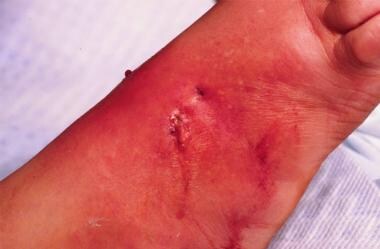
Pasteurella multocida is a small, gram-negative, non–spore-forming coccobacillus with bipolar staining, often existing as a commensal in the upper respiratory tract of many livestock, poultry, and domestic pet species. Infection in humans is often associated with an animal bite, scratch, or lick, but infection without epidemiologic evidence of animal contact may occur. Local wound infections from animal bites are the most common human infections caused by P multocida, although a vast array of infectious syndromes may be observed (see Pathophysiology).

Co-infection with multiple aerobic and anaerobic organisms is common in animal bite wound infections, and P multocida is one of the most common organisms found in culture.

Physicians must determine the risk of polymicrobial infection, which sometimes mandates the use of broad-spectrum antibiotics.

Rare cases of P multocida meningitis in young children may mimic Haemophilus influenzae or Neisseria meningitidis on cerebrospinal fluid Gram stain results. A history of pet exposure should alert the physician to this possibility.

Pathophysiology

  • Local: P multocida infection most commonly presents as an infection complicating an animal bite or injury. Complications include rapidly progressive cellulitis, abscesses, tenosynovitis, osteomyelitis, and septic arthritis. The latter two are particularly likely in cat bites because of the small, sharp, penetrative characteristics of feline teeth.
  • Respiratory: P multocida causes upper respiratory tract infections, including sinusitis, otitis media, mastoiditis, epiglottitis, and pharyngitis. It also rarely causes lower respiratory tract infections (primarily in patients with underlying pulmonary disease), including pneumonia, lung abscess, and empyema.
  • Cardiovascular: P multocida may cause endocarditis, mycotic aneurysms, vascular graft infections, central venous catheter infections, and pericarditis.
  • Central nervous system: P multocida is an uncommon cause of meningitis, subdural empyema, and brain abscess. P multocida meningitis has been related to cat licks or bites. These diseases typically occur in persons at the extremes of age.
  • Gastrointestinal: P multocida rarely causes gastrointestinal problems. Such problems may include appendicitis, hepatosplenic abscesses, renal abscesses, and peritonitis. Patients with peritoneal dialysis-catheter–related peritonitis have been reported.
  • Ocular: Periocular abscess, conjunctivitis, corneal ulcers, and endophthalmitis have been reported.
  • Genitourinary tract: Pyelonephritis, renal abscess, epididymitis, and cervicitis are reported rarely.

Frequency

United States

More than 100 million dogs and cats live in the United States. According to estimates, half of all Americans will be bitten in their lifetime—most by provoked dogs. Other injuries, such as cat scratches, are documented less often in emergency department statistics. Approximately 5% of dog bites and 30% of cat bites become infected.

International

P multocida infections occur worldwide.

Mortality/Morbidity

See Pathophysiology.

Age

CNS diseases caused by P multocida infection typically occur in persons at the extremes of age.


History

  • A history of animal exposure, whether occupational or recreational, should alert the physician to the possibility of a zoonosis.
  • A detailed pet history, including exposure to pets owned by friends or strangers, should reveal the possibility of Pasteurella infection. However, cases of Pasteurella infection occur in the total absence of an epidemiological link.

Physical

Physical findings relate to the site of infection, as follows:

  • Local - Erythema, warmth, pain and tenderness, purulent discharge, joint swelling, decreased range of motion, lymphangitis
  • Respiratory - Sinus tenderness, hoarseness, pharyngeal erythema, rales and rhonchi upon chest auscultation, dullness to percussion, changes in vocal fremitus
  • CNS - Focal neurologic deficits, signs of meningeal irritation (eg, nuchal rigidity, Brudzinski sign, Kernig sign)
  • Abdominal - Abdominal tenderness, guarding and rebound, hepatosplenomegaly, costovertebral angle tenderness
  • Ocular - Corneal ulcer, conjunctival injection, decreased visual acuity
  • Cardiovascular - Hypotension, tachycardia, new cardiac murmur, embolic phenomenon
  • Lymph nodes - Possible regional adenopathy


Abdominal Abscess
Amebic Hepatic Abscesses
Brain Abscess
Catscratch Disease
Cellulitis
HACEK Group Infections
Haemophilus Influenzae Infections
Intra-abdominal Sepsis
Liver Abscess
Lung Abscess
Meningitis
Meningococcal Infections
Perinephric Abscess
Pneumonia, Bacterial
Pneumonia, Community-Acquired
Pyelonephritis, Acute

Other Problems to be Considered

Infective endocarditis
Osteomyelitis
Septic joint


Lab Studies

  • Gram stain of pus or other fluid specimens may show small, gram-negative, non–spore-forming pleomorphic coccobacilli that resemble Haemophilus species or N meningitidis. Wright, Giemsa, or Wayson stains enhance bipolar staining. Some strains exhibit a mucous capsule.


Medical Care

Medical management of animal bite wounds includes tetanus prophylaxis, rabies prophylaxis, and treatment focused at the local wound.

  • Tetanus and rabies prophylaxis are by standard protocol and are discussed in Tetanus and Rabies.
  • Local care of bite wounds includes cleansing and removal of nonviable tissue.
    • Gently cleanse the skin surrounding the bite wound with an antiseptic such as povidone-iodine solution. To prevent further tissue injury, do not scrub the wound directly.
    • Soaking is of no benefit, but copious irrigation with a small-gauge catheter on a syringe helps remove debris and decreases the concentration of bacteria in contaminated wounds. Debridement and closure are discussed in Surgical Care.

Surgical Care

The initial assessment of an animal bite includes an estimation of the risk of infection. Bites to the head and neck, distal extremities, and near joints have the highest risk of infection. In general, persons with animals bite wounds have a high risk for infection, especially those who present to medical attention more than 8-10 hours after the injury occurred.

Persons with underlying medical diseases, such as diabetes mellitus, chronic liver disease, asplenia, alcoholism, HIV infection, or other immunodeficiency conditions (including chronic steroid exposure), are at increased risk of infection.

  • After irrigation and cleansing, sharply debride nonviable tissue to reduce the risk of infection and to allow easier suturing by providing a more even edge.
  • Primary suturing of bite wounds is reserved for minor injuries, those at low risk of infection, and those that have been treated within 8-10 hours of injury.
  • Leave all other wounds open until the risk of infection is reduced by cleansing, debridement, and prophylactic antibiotics.

Activity

Elevation is of great importance in the management of limb injuries. Lack of elevation may result in excessive edema, which may produce compartment syndrome and compromise local circulation, to the extent of threatening the viability of the limb. Wounds on extremities should be immobilized and elevated with a sling to reduce edema, which may hamper normal activities.


The risk of polymicrobial infection must be considered in patients with animal bite injuries.

In most cases, a beta-lactam antibiotic such as amoxicillin combined with a beta-lactam inhibitor is the appropriate choice for treating P multocida infections. P multocida is sensitive to penicillin, ampicillin, amoxicillin-clavulanic acid, ticarcillin, piperacillin, cefuroxime, doxycycline, and the fluoroquinolones. P multocida is sensitive to most antibiotics but is resistant to macrolides.

Some patients may require hospitalization and parenteral antibiotics (eg, ampicillin and sulbactam, ticarcillin and clavulanate). If a pure culture of P multocida is obtained, therapy may be changed to penicillin G IV or penicillin VK PO.

Drug Category: Antibiotics

Therapy must be comprehensive and cover all likely pathogens in the context of the clinical setting. Antibiotic selection should be guided by blood culture and Gram culture sensitivity results whenever feasible. Empiric antibiotic choices include amoxicillin and clavulanate, cefuroxime, and doxycycline.

Drug NameAmoxicillin and clavulanate (Augmentin)
DescriptionDrug combination treats bacteria resistant to beta-lactam antibiotics. For children > 3 mo, base dosing protocol on amoxicillin content. Because of different ratios of amoxicillin to clavulanic acid in 250-mg tab (250:125) vs 250-mg chewable tab (250:62.5), do not use 250-mg tab until child weighs >40 kg.
Adult Dose500-875 mg PO q12h or 250-500 mg PO q8h
Pediatric Dose<40 kg: 20-40 mg/kg/d PO divided bid
>40 kg: Administer as in adults
ContraindicationsDocumented hypersensitivity
InteractionsCoadministration with warfarin or heparin increases risk of bleeding
PregnancyB - Usually safe but benefits must outweigh the risks.
PrecautionsAdjust dose in renal impairment; may increase risk of candidiasis

Drug NameCefuroxime (Ceftin, Zinacef)
DescriptionSecond-generation cephalosporin that maintains gram-positive activity of first-generation cephalosporins; adds activity against Proteus mirabilis, H influenzae, Escherichia coli, Klebsiella pneumoniae, and Moraxella catarrhalis. Condition of patient, severity of infection, and susceptibility of microorganism determine proper dose and route of administration.
Adult Dose500 mg PO bid; alternatively, 750-1500 mg IV/IM q8h; not to exceed 6 g/d
Pediatric DoseChildren: 250 mg PO bid
Adolescents: Administer as in adults
ContraindicationsDocumented hypersensitivity
InteractionsDisulfiramlike reactions may occur when alcohol is consumed within 72 h after administration; may increase hypoprothrombinemic effects of anticoagulants; may increase nephrotoxicity in patients receiving potent diuretics (eg, loop diuretics); coadministration with aminoglycosides increase nephrotoxic potential
PregnancyC - Safety for use during pregnancy has not been established.
PrecautionsReduce dosage by half if CrCl is 10-30 mL/min and by three quarters if <10 mL/min (high doses may cause CNS toxicity); bacterial or fungal overgrowth of nonsusceptible organisms may occur with prolonged or repeated therapy

Drug NameDoxycycline (Vibra-Tabs, Bio-Tab, Doryx, Vibramycin)
DescriptionInhibits protein synthesis and, thus, bacterial growth by binding to 30S and possibly 50S ribosomal subunits of susceptible bacteria.
Adult Dose200 mg PO/IV immediately, followed by 100-200 mg PO q12h
Pediatric Dose<8 years: Not recommended
>8 years: 2-5 mg/kg/d PO/IV qd or divided bid; not to exceed 200 mg/d
ContraindicationsDocumented hypersensitivity; severe hepatic dysfunction
InteractionsBioavailability decreases with antacids containing aluminum, calcium, magnesium, iron, or bismuth subsalicylate; tetracyclines can increase hypoprothrombinemic effects of anticoagulants; tetracyclines can decrease effects of oral contraceptives, causing breakthrough bleeding and increased risk of pregnancy
PregnancyD - Unsafe in pregnancy
PrecautionsPhotosensitivity may occur with prolonged exposure to sunlight or tanning equipment; reduce dose in renal impairment; consider drug serum level determinations in prolonged therapy; tetracycline use during tooth development (last half of pregnancy through 8 y) can cause permanent discoloration of teeth; Fanconilike syndrome may occur with outdated tetracyclines

Drug NamePenicillin G (Pfizerpen)
DescriptionInhibits biosynthesis of cell wall mucopeptide. Bactericidal against sensitive organisms when adequate concentrations are reached. Most effective during the stage of active multiplication. Inadequate concentrations may produce only bacteriostatic effects. Use penicillin VK for PO or penicillin G for IV.
Adult Dose2.4 million U IM (single dose) in 2 injection sites
Pediatric Dose50,000 U/kg IM; not to exceed 2.4 million U
ContraindicationsDocumented hypersensitivity
InteractionsProbenecid may increase effectiveness by decreasing clearance; tetracyclines are bacteriostatic, causing a decrease in the effectiveness of penicillins when administered concurrently
PregnancyB - Usually safe but benefits must outweigh the risks.
PrecautionsCaution in renal impairment

Drug NameAmpicillin and sulbactam (Unasyn)
DescriptionDrug combination of beta-lactamase inhibitor with ampicillin. Covers skin, enteric flora, and anaerobes. Not ideal for nosocomial pathogens.
Adult Dose1.5 (1 g ampicillin + 0.5 g sulbactam) to 3 g (2 g ampicillin + 1 g sulbactam) IV/IM q6h; not to exceed 4 g/d sulbactam or 8 g/d ampicillin
Pediatric Dose3 months to 12 years: 100-200 mg ampicillin/kg/d (150-300 mg Unasyn) IV divided q6h
>12 years: Administer as in adults; not to exceed 4 g/d sulbactam or 8 g/d ampicillin
ContraindicationsDocumented hypersensitivity
InteractionsProbenecid and disulfiram elevate ampicillin levels; allopurinol decreases ampicillin effects and has additive effects on ampicillin rash; may decrease effects of oral contraceptives
PregnancyB - Usually safe but benefits must outweigh the risks.
PrecautionsAdjust dose in renal failure; evaluate rash and differentiate from hypersensitivity reaction

Drug NameTicarcillin and clavulanate (Timentin)
DescriptionInhibits biosynthesis of cell wall mucopeptide and is effective during stage of active growth. Antipseudomonal penicillin plus beta-lactamase inhibitor that provides coverage against most gram-positive organisms, most gram-negative organisms, and most anaerobes.
Adult Dose3.1 g (3 g ticarcillin and 0.1 g clavulanate) IV q6h
Pediatric Dose75 mg/kg IV q6h
ContraindicationsDocumented hypersensitivity; severe pneumonia, bacteremia, pericarditis, emphysema, meningitis, and purulent or septic arthritis should not be treated with oral penicillin during acute stage
InteractionsTetracyclines may decrease effects of ticarcillin; high concentrations of ticarcillin may physically inactivate aminoglycosides if administered in same IV line; effects are synergistic when administered concurrently with aminoglycosides; probenecid may increase penicillin levels
PregnancyB - Usually safe but benefits must outweigh the risks.
PrecautionsPerform CBC count prior to initiation of therapy and at least weekly during therapy; monitor for liver function abnormalities by measuring AST and ALT during therapy; exercise caution in patients with hepatic insufficiencies; perform urinalysis and BUN and creatinine determinations during therapy and adjust dose if values become elevated; monitor blood levels to avoid possible neurotoxic reactions

Drug NameCiprofloxacin (Cipro)
DescriptionMode of action of all quinolones involves inhibition of bacterial DNA synthesis by blocking the enzyme DNA gyrase
Adult Dose250-500 mg PO bid
Pediatric Dose<18 years: Not recommended
>18 years: Administer as in adults
ContraindicationsDocumented hypersensitivity
InteractionsAntacids, iron salts, and zinc salts may reduce serum levels; administer antacids 2-4 h before or after taking fluoroquinolones; cimetidine may interfere with metabolism of fluoroquinolones; reduces therapeutic effects of phenytoin; probenecid may increase serum concentrations; may increase toxicity of theophylline, caffeine, cyclosporine, and digoxin (monitor digoxin levels); may increase effects of anticoagulants (monitor PT)
PregnancyC - Safety for use during pregnancy has not been established.
PrecautionsIn prolonged therapy, perform periodic evaluations of organ system functions (eg, renal, hepatic, hematopoietic); adjust dose in renal function impairment; superinfections may occur with prolonged or repeated antibiotic therapy

Drug NameAmoxicillin (Trimox, Amoxil)
DescriptionInterferes with synthesis of cell wall mucopeptides during active multiplication, resulting in bactericidal activity against susceptible bacteria.
Adult Dose1 g PO q8h; not to exceed 3 g/d
Pediatric Dose20-50 mg/kg/d PO divided q8h; not to exceed 2 g/dose
ContraindicationsDocumented hypersensitivity
InteractionsReduces efficacy of oral contraceptives
PregnancyB - Usually safe but benefits must outweigh the risks.
PrecautionsAdjust dose in renal impairment; may increase risk of candidiasis

Drug NameLevofloxacin (Levaquin)
DescriptionFor pseudomonal infections and infections due to multidrug-resistant gram-negative organisms.
Adult Dose500 mg PO qd
Pediatric Dose<18 years: Not recommended
>18 years: Administer as in adults
ContraindicationsDocumented hypersensitivity
InteractionsAntacids, iron salts, and zinc salts may reduce serum levels; administer antacids 2-4 h before or after taking fluoroquinolones; cimetidine may interfere with metabolism of fluoroquinolones; reduces therapeutic effects of phenytoin; probenecid may increase serum concentrations; may increase toxicity of theophylline, caffeine, cyclosporine, and digoxin (monitor digoxin levels); may increase effects of anticoagulants (monitor PT)
PregnancyC - Safety for use during pregnancy has not been established.
PrecautionsIn prolonged therapy, perform periodic evaluations of organ system functions (eg, renal, hepatic, hematopoietic); adjust dose in renal function impairment; superinfections may occur with prolonged or repeated antibiotic therapy

Drug NameAmpicillin (Principen, Omnipen)
DescriptionBactericidal activity against susceptible organisms. Alternative to amoxicillin when unable to take medication PO.
Adult Dose250-500 mg PO q6h
2 g IV/IM q4h
Not to exceed 12 g/d
Pediatric Dose50-100 mg/kg/d PO divided q4-6h
100-400 mg/kg/d IV/IM divided q4-6h
ContraindicationsDocumented hypersensitivity
InteractionsProbenecid and disulfiram elevate levels; allopurinol decreases effects and has additive effects on ampicillin rash; may decrease effects of oral contraceptives
PregnancyB - Usually safe but benefits must outweigh the risks.
PrecautionsAdjust dose in renal failure; evaluate rash and differentiate from hypersensitivity reaction


Further Outpatient Care

  • Careful follow-up evaluations of extensive bites or deep puncture wounds from cat teeth are mandatory for early diagnosis of osteomyelitis.

Complications

  • Abscesses and tenosynovitis are the most frequent complications of P multocida soft tissue infection. Septic arthritis and osteomyelitis are less common.

Patient Education

  • For excellent patient education resources, visit eMedicine's Infections Center. Also, see eMedicine's patient education article Tetanus.


Medical/Legal Pitfalls

  • Failure to treat P multocida infections with appropriate antibiotics (not an infrequent occurrence)

Special Concerns

  • P multocida should be considered a potential etiologic agent of any local infection following cat or dog bites or cat scratches.


  • American Academy of Pediatrics. Bite Wounds. In: Red Book 2000 - Report of the Committee on Infectious Diseases. 25th ed. Oak Grove, Ill: American Academy of Pediatrics; 2000:. 156-9.
  • Champlin FR, Shryock TR, Patterson CE, et al. Prevalence of a novel capsule-associated lipoprotein among pasteurellaceae pathogenic in animals. Curr Microbiol. Apr 2002;44(4):297-301. [Medline].
  • Goldstein EJ, Citron DM, Merriam CV. Activity of gatifloxacin compared to those of five other quinolones versus aerobic and anaerobic isolates from skin and soft tissue samples of human and animal bite wound infections. Antimicrob Agents Chemother. Jun 1999;43(6):1475-9. [Medline].
  • Goldstein EJ, Citron DM. Comparative activities of cefuroxime, amoxicillin-clavulanic acid, ciprofloxacin, enoxacin, and ofloxacin against aerobic and anaerobic bacteria isolated from bite wounds. Antimicrob Agents Chemother. Aug 1988;32(8):1143-8. [Medline].
  • Goldstein EJ, Citron DM, Richwald GA. Lack of in vitro efficacy of oral forms of certain cephalosporins, erythromycin, and oxacillin against Pasteurella multocida. Antimicrob Agents Chemother. Feb 1988;32(2):213-5. [Medline].
  • Green BT, Ramsey KM, Nolan PE. Pasteurella multocida meningitis: case report and review of the last 11 y. Scand J Infect Dis. 2002;34(3):213-7. [Medline].
  • Griego RD, Rosen T, Orengo IF, Wolf JE. Dog, cat, and human bites: a review. J Am Acad Dermatol. Dec 1995;33(6):1019-29. [Medline].
  • Koch CA, Mabee CL, Robyn JA, et al. Exposure to domestic cats: risk factor for Pasteurella multocida peritonitis in liver cirrhosis?. Am J Gastroenterol. Jul 1996;91(7):1447-9. [Medline].
  • Kravetz JD, Federman DG. Cat-associated zoonoses. Arch Intern Med. Sep 23 2002;162(17):1945-52. [Medline].
  • Layton CT. Pasteurella multocida meningitis and septic arthritis secondary to a cat bite. J Emerg Med. May-Jun 1999;17(3):445-8. [Medline].
  • Mandell GL, Bennett JE, Dolin R, eds. Mandell, Douglas, and Bennett's Principles and Practice of Infectious Diseases. 5th ed. Philadelphia, Pa: Churchill Livingstone; 2000. 2404-7.
  • Wade T, Booy R, Teare EL, Kroll S. Pasteurella multocida meningitis in infancy - (a lick may be as bad as a bite). Eur J Pediatr. Nov 1999;158(11):875-8. [Medline].
  • Weber DJ, Wolfson JS, Swartz MN, Hooper DC. Pasteurella multocida infections. Report of 34 cases and review of the literature. Medicine (Baltimore). May 1984;63(3):133-54. [Medline].

Pasteurella Multocida Infection excerpt

Article Last Updated: Apr 5, 2006