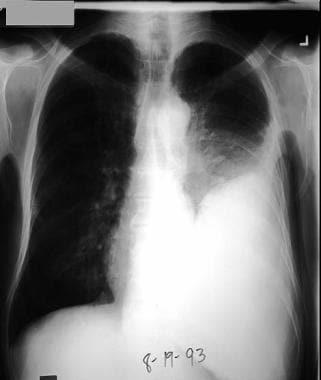
You are in: eMedicine Specialties > Pulmonology > Pleural Disorders Empyema, PleuropulmonaryArticle Last Updated: Jun 23, 2006AUTHOR AND EDITOR INFORMATIONAuthor: Sat Sharma, MD, FRCPC, Professor and Head, Division of Pulmonary Medicine, Department of Internal Medicine, University of Manitoba; Site Director, Respiratory Medicine, St. Boniface General Hospital Sat Sharma is a member of the following medical societies: American Academy of Sleep Medicine, American College of Chest Physicians, American College of Physicians-American Society of Internal Medicine, American Thoracic Society, Canadian Medical Association, Royal College of Physicians and Surgeons of Canada, Royal Society of Medicine, Society of Critical Care Medicine, and World Medical Association Editors: Michael Peterson, MD, Chief of Medicine, Vice-Chair of Medicine, University of California at San Francisco; Endowed Professor of Medicine, University of California at San Francisco-Fresno; Francisco Talavera, PharmD, PhD, Senior Pharmacy Editor, eMedicine; Om Prakash Sharma, MD, FRCP, FCCP, DTM&H, Professor, Department of Medicine, Division of Pulmonary and Critical Care Medicine, University of Southern California Keck School of Medicine; Timothy D Rice, MD, Associate Professor, Departments of Internal Medicine and Pediatrics and Adolescent Medicine, Saint Louis University School of Medicine; Zab Mosenifar, MD, Director, Division of Pulmonary and Critical Care Medicine, Director, Women's Guild Pulmonary Disease Institute, Executive Vice Chair, Department of Medicine, Cedars Sinai Medical Center; Professor of Medicine, David Geffen School of Medicine at UCLA Author and Editor Disclosure Synonyms and related keywords: pleuropulmonary empyema, complicated parapneumonic pleural effusion, Staphylococcus aureus, S aureus, Streptococcus pneumoniae, S pneumoniae, Klebsiella, Pseudomonas, Haemophilus, Bacteroides, Peptostreptococcus, uncomplicated parapneumonic effusion, thoracic empyema, thoracoplasty, decortication, pneumonia, parapneumonic effusion, esophageal perforation, trauma, surgical procedure on pleural space, septicemia INTRODUCTIONBackgroundFor centuries, empyema has been recognized as a serious problem. Around 500 BC, Hippocrates recommended treating empyema with open drainage. Since then, the treatment of empyema remained essentially unchanged until the middle of the 19th century. In 1876, Hewitt described a method of closed drainage of the chest in which a rubber tube was placed into the empyema cavity and drained via the water seal drainage. In the early 20th century, surgical therapies for empyema (eg, thoracoplasty, decortication) were introduced. Parapneumonic pleural effusions are divided into 3 groups or stages based on pathogenesis: uncomplicated parapneumonic effusion, complicated parapneumonic effusion, and thoracic empyema. Uncomplicated parapneumonic effusion is an exudative predominantly neutrophilic effusion that occurs as the lung interstitial fluid increases during pneumonia. These effusions are resolved with appropriate antibiotic treatment of pneumonia. Complicated parapneumonic effusion is a bacterial invasion of the pleural space that leads to an increased number of neutrophils, pleural fluid acidosis, and elevated lactic dehydrogenase (LDH) concentration. These effusions often are sterile because bacteria are usually cleared rapidly from the pleural space. Thoracic empyema is characterized by either aspiration of pus on thoracentesis or the presence of bacterial organisms on Gram stain. A positive culture is not required for diagnosis. PathophysiologyThe evolution of a parapneumonic pleural effusion (see Image 1) can be divided into 3 stages, including exudative, fibropurulent, and organization stages. During the exudative stage, sterile pleural fluid rapidly accumulates in the pleural space. The pleural fluid originates in the interstitial spaces of the lung and in the capillaries of the visceral pleura because of increased permeability. The pleural fluid has a low WBC and LDH level, and the glucose and pH levels are within the reference range. These effusions resolve with antibiotic therapy, and chest tube insertion is not required. During the fibropurulent stage, bacterial invasion of the pleural space occurs, with accumulation of polymorphonuclear leucocytes, bacteria, and cellular debris. A tendency toward loculation exists, pleural fluid pH and glucose levels are lower, and the LDH level increases. During the organization stage, fibroblasts grow into the exudates from both the visceral and parietal pleural surfaces, and they produce an inelastic membrane called pleural peel. Pleural fluid is thick. In an untreated patient, pleural fluid may drain spontaneously through the chest wall (ie, empyema necessitatis). Empyema may arise without an associated pneumonic process. The most common causes are esophageal perforation, trauma, surgical procedure on pleural space, and septicemia. Bacteriologic features of culture-positive parapneumonic effusions have changed over time. Prior to the antibiotic era, Streptococcus pneumoniae and hemolytic streptococci were common. Presently, aerobic organisms are isolated slightly more frequently than anaerobic organisms. Staphylococcus aureus and S pneumoniae account for approximately 70% of aerobic gram-positive cultures. Bacteriology of parapneumonic effusions is closely related to the bacteriology of a pneumonic process. Gram-positive aerobic organisms are isolated twice as frequently as gram-negative aerobic organisms. Klebsiella, Pseudomonas, and Haemophilus species are the 3 most commonly isolated aerobic gram-negative organisms. Bacteroides and Peptostreptococcus species are the 2 most commonly isolated anaerobic organisms. A mixed bacterial flora containing aerobes and anaerobes is more likely to produce an empyema than a single-organism infection. Anaerobic bacteria have been cultured in 36-76% of empyemas. FrequencyUnited StatesIncidence of pleural effusion with various pneumonias depends on the infecting organism. The pleural space is commonly infected in patients with anaerobic pneumonia. In one series of patients with anaerobic infections of the lung, 35% had pleural effusions, and 94% of these were positive for organisms. Aerobic organisms were cultured from the pleural fluid in 40% of patients. Generally speaking, pleural effusions occur in 40% of bacterial pneumonias. Mortality/MorbidityMortality rates associated with empyema depend upon severity of the underlying disease and prompt therapy. A mortality rate of 11-50% has been reported. In patients who are older and debilitated, mortality is high. CLINICALHistoryClinical manifestations of parapneumonic effusion and empyema largely depend on whether the patient has an aerobic or anaerobic infection. If fever persists for more than 48 hours after initiation of antibiotic treatment, a complicating parapneumonic effusion or empyema likely exists.
Physical
CausesIn the preantibiotic era, as many as 11% of incidents of pneumococcal pneumonia were associated with empyema, and 64% of empyemas were caused by S pneumoniae. Beta-hemolytic streptococci caused 15% of empyemas, and staphylococci caused 8% of empyemas.
DIFFERENTIALSBoerhaave Syndrome Hemothorax Intra-abdominal Sepsis Lung Abscess Lung Cancer, Non-Small Cell Lung Cancer, Oat Cell (Small Cell) Pleural Effusion Pleurodynia Pneumococcal Infections Pneumonia, Aspiration Pneumonia, Bacterial Pneumonia, Community-Acquired Pneumonia, Fungal Secondary Lung Tumors Tuberculosis
| ||||||||||||||||||||||||||||||||||||||||||||||||||||||||||||||||||||||||||||||||||||||||||||||||||||||||||||||||||||||||||||||||||||||||||||||||||||||||||||||||||||||||||||||||||||||||||||||||||||||||||||||||||||||||||||||||||||||||||||||||||||||||||||||||||||||||||||
| Drug Name | Clindamycin (Cleocin) |
|---|---|
| Description | Lincosamide effective against aerobic and anaerobic streptococci (except enterococci). Inhibits bacterial growth, possibly by blocking dissociation of peptidyl tRNA from ribosomes, causing RNA-dependent protein synthesis to arrest. |
| Adult Dose | 600 mg IV q6-8h |
| Pediatric Dose | 25-40 mg/kg/d IV divided tid/qid |
| Contraindications | Documented hypersensitivity; regional enteritis; ulcerative colitis; hepatic impairment; antibiotic-associated colitis |
| Interactions | Increases duration of neuromuscular blockade induced by tubocurarine and pancuronium; erythromycin may antagonize effects of clindamycin; antidiarrheals may delay absorption of clindamycin |
| Pregnancy | B - Usually safe but benefits must outweigh the risks. |
| Precautions | Adjust dose in severe hepatic dysfunction; no adjustment necessary in renal insufficiency; associated with severe and possibly fatal colitis |
| Drug Name | Cefoxitin (Mefoxin) |
|---|---|
| Description | Second-generation cephalosporin indicated for gram-positive cocci and gram-negative rod infections. Infections caused by cephalosporin-resistant or penicillin-resistant gram-negative bacteria may respond to cefoxitin. |
| Adult Dose | 2 g IV q6-8h |
| Pediatric Dose | 80-160 mg/kg/d IV in 4-6 divided doses |
| Contraindications | Documented hypersensitivity |
| Interactions | Probenecid may increase effects of cefoxitin; coadministration with aminoglycosides or furosemide may increase nephrotoxicity (closely monitor renal function) |
| Pregnancy | B - Usually safe but benefits must outweigh the risks. |
| Precautions | Bacterial or fungal overgrowth of nonsusceptible organisms may occur with prolonged use or repeated treatment; caution in patients with previously diagnosed colitis |
| Drug Name | Penicillin G (Pfizerpen) |
|---|---|
| Description | Interferes with synthesis of cell wall mucopeptide during active multiplication, resulting in bactericidal activity against susceptible microorganisms. |
| Adult Dose | 2 million U IV q4h |
| Pediatric Dose | 150,000 U/kg/d IV q4h |
| Contraindications | Documented hypersensitivity |
| Interactions | Probenecid can increase penicillin effectiveness by decreasing its clearance; tetracyclines can decrease penicillin effectiveness |
| Pregnancy | B - Usually safe but benefits must outweigh the risks. |
| Precautions | Traditional drug for treatment of lung abscess, but spectrum of activity is narrow; use with caution in patients with impaired renal function |
| Drug Name | Azithromycin (Zithromax) |
|---|---|
| Description | These agents are replacing erythromycin as therapy for community-acquired pneumonia. They cover most potential etiologic agents, including Mycoplasma species. The newer macrolides offer decreased GI upset and the potential for improved compliance through reduced dosing frequency. They also afford more improved action against Haemophilus influenzae than erythromycin. |
| Adult Dose | Day 1: 500 mg PO Days 2-5: 250 mg/d PO; alternatively, 500 mg/d IV |
| Pediatric Dose | Day 1: 10 mg/kg PO Days 2-5: 5 mg/kg PO |
| Contraindications | Documented hypersensitivity; hepatic impairment; coadministration with pimozide |
| Interactions | May increase toxicity of theophylline, warfarin, and digoxin; effects are reduced with coadministration of aluminum and/or magnesium antacids; nephrotoxicity and neurotoxicity may occur when coadministered with cyclosporine |
| Pregnancy | B - Usually safe but benefits must outweigh the risks. |
| Precautions | Site reactions can occur with IV route; bacterial or fungal overgrowth may result with prolonged antibiotic use; may increase hepatic enzymes and cholestatic jaundice; caution in patients with impaired hepatic function, prolonged QT intervals, or pneumonia; caution in patients who are hospitalized, geriatric, or debilitated |
| Drug Name | Clarithromycin (Biaxin) |
|---|---|
| Description | Another antibiotic used during initial therapy in otherwise uncomplicated pneumonia. More GI symptoms appear to occur than with azithromycin (eg, gastric upset, metallic taste). Inhibits bacterial growth, possibly by blocking dissociation of peptidyl tRNA from ribosomes, causing RNA-dependent protein synthesis to arrest. |
| Adult Dose | 500 mg PO bid for 10 d |
| Pediatric Dose | <6 months: Not recommended >6 months: 7.5 mg/kg PO bid for 10 d; not to exceed 1 g/d |
| Contraindications | Documented hypersensitivity; coadministration with pimozide |
| Interactions | Toxicity increases with coadministration of fluconazole, astemizole, and pimozide; clarithromycin effects decrease and GI adverse effects may increase with coadministration of rifabutin or rifampin; may increase toxicity of anticoagulants, cyclosporine, tacrolimus, digoxin, omeprazole, carbamazepine, ergot alkaloids, triazolam, and HMG CoA-reductase inhibitors; serious cardiac arrhythmias may occur with coadministration of cisapride; plasma levels of certain benzodiazepines may increase, prolonging CNS depression; arrhythmias and increase in QTc intervals occur with disopyramide; coadministration with omeprazole may increase plasma levels of both agents |
| Pregnancy | B - Usually safe but benefits must outweigh the risks. |
| Precautions | Coadministration with ranitidine or bismuth citrate is not recommended with CrCl <25 mL/min; administer one-half dose or increase dosing interval if CrCl <30 mL/min; diarrhea may be a sign of pseudomembranous colitis; superinfections may occur with prolonged or repeated antibiotic therapies |
| Drug Name | Erythromycin (E.E.S., Erythrocin, Ery-Tab) |
|---|---|
| Description | Recommended dosing schedule of erythromycin may result in GI upset; prescribe an alternative macrolide or change to tid dosing. Covers most potential etiologic agents, including Mycoplasma species. PO dosing regimen may be insufficient to adequately treat Legionella species. Erythromycin is less active against H influenzae. Although 10 d seems to be a standard course of treatment, treating until the patient has been afebrile for 3-5 d seems a more rational approach. Inhibits bacterial growth, possibly by blocking dissociation of peptidyl tRNA from ribosomes, causing RNA-dependent protein synthesis to arrest. For treatment of staphylococcal and streptococcal infections. |
| Adult Dose | 250 mg stearate/base (or 400 mg ethylsuccinate) PO q6h 1 h ac or 500 mg q12h; alternatively, use 333 mg PO q8h and increase up to 4 g/d depending on severity of infection Hospitalized with severe pneumonia: 1 g IV q6h; alternatively, administer 15-20 mg/kg/d IV in divided doses q6h |
| Pediatric Dose | In children, age, weight, and severity of infection determine proper dosage; when bid dosing is desired, one-half total daily dose may be taken q12h; for more severe infections, double the dose 7.5 mg/kg/d PO divided bid; alternatively, 20-40 mg/kg/d IV divided q6h or by constant infusion; not to exceed 4 g/d |
| Contraindications | Documented hypersensitivity; hepatic impairment |
| Interactions | Coadministration may increase toxicity of theophylline, digoxin, carbamazepine, and cyclosporine; may potentiate anticoagulant effects of warfarin; coadministration with lovastatin and simvastatin increases risk of rhabdomyolysis |
| Pregnancy | B - Usually safe but benefits must outweigh the risks. |
| Precautions | Caution in liver disease; estolate formulation may cause cholestatic jaundice; GI adverse effects are common (administer doses pc); discontinue use if nausea, vomiting, malaise, abdominal colic, or fever occurs |
| Drug Name | Amoxicillin-clavulanate (Augmentin) |
|---|---|
| Description | An alternative antibiotic for patients allergic or intolerant to the macrolide class. Usually is well tolerated and provides good coverage to most infectious agents. Not effective against Mycoplasma and Legionella species. Cost is a major problem. Drug combination treats bacteria resistant to beta-lactam antibiotics. |
| Adult Dose | 500 mg PO bid or 875 mg PO bid for 10 d or until afebrile for 3-5 d |
| Pediatric Dose | <3 months: Base dosing protocol on amoxicillin content <40 kilograms: 20-40 mg/kg/d (based on amoxicillin content) divided bid; do not use 250-mg tab until child weighs >40 kg >40 kilograms: Administer as in adults |
| Contraindications | Documented hypersensitivity |
| Interactions | Coadministration with warfarin or heparin increases risk of bleeding |
| Pregnancy | B - Usually safe but benefits must outweigh the risks. |
| Precautions | Administer for a minimum of 10 d to eliminate organism and prevent sequelae (eg, endocarditis, rheumatic fever); following treatment, perform cultures to confirm eradication of streptococci |
| Drug Name | Levofloxacin (Levaquin) |
|---|---|
| Description | Rapidly becoming a popular choice in pneumonia. A good monotherapy for pseudomonal infections and infections due to multidrug-resistant gram-negative organisms. |
| Adult Dose | 500 mg/d PO/IV for 7-14 d |
| Pediatric Dose | <18 years: Not recommended >18 years: Administer as in adults |
| Contraindications | Documented hypersensitivity |
| Interactions | Antacids, iron salts, and zinc salts may reduce serum levels; administer antacids 2-4 h before or after taking fluoroquinolones; cimetidine may interfere with metabolism of fluoroquinolones; levofloxacin reduces therapeutic effects of phenytoin; probenecid may increase levofloxacin serum concentrations; may increase toxicity of theophylline, caffeine, cyclosporine, and digoxin (monitor digoxin levels); may increase effects of anticoagulants (monitor PT) |
| Pregnancy | C - Safety for use during pregnancy has not been established. |
| Precautions | In prolonged therapy, perform periodic evaluations of organ system functions (eg, renal, hepatic, hematopoietic); adjust dose in renal function impairment; superinfections may occur with prolonged or repeated antibiotic therapy |
| Drug Name | Cefaclor (Ceclor) |
|---|---|
| Description | Second-generation cephalosporin that binds to one or more of the penicillin-binding proteins, which in turn inhibits cell wall synthesis and results in bactericidal activity. Has gram-positive activity that first-generation cephalosporins have and adds activity against Proteus mirabilis, H influenzae, Escherichia coli, Klebsiella pneumoniae, and Moraxella catarrhalis. The condition of the patient, severity of the infection, and susceptibility of the microorganism should determine the proper dose and route of administration. |
| Adult Dose | 500 mg PO q8h for 10 d |
| Pediatric Dose | 20-40 mg/kg/d PO divided q8-12h; not to exceed 2 g/d |
| Contraindications | Documented hypersensitivity |
| Interactions | Alcoholic beverages consumed <72 h after taking cefaclor may produce disulfiramlike reactions; may increase hypoprothrombinemic effects of anticoagulants; coadministration with potent diuretics and aminoglycosides (eg, loop diuretics) may increase nephrotoxicity |
| Pregnancy | B - Usually safe but benefits must outweigh the risks. |
| Precautions | Reduce dosage by one half if CrCl is 10-30 mL/min and by one fourth if <10 mL/min; bacterial or fungal overgrowth of nonsusceptible organisms may occur with prolonged or repeated therapy |
| Drug Name | Cefprozil (Cefzil) |
|---|---|
| Description | Second-generation cephalosporin that binds to one or more of the penicillin-binding proteins, which in turn inhibits cell wall synthesis and results in bactericidal activity. Has gram-positive activity that first-generation cephalosporins have and adds activity against P mirabilis, H influenzae, E coli, K pneumoniae, and M catarrhalis. The condition of the patient, severity of the infection, and susceptibility of the microorganism should determine the proper dose and route of administration. |
| Adult Dose | 500 mg/d PO for 10 d |
| Pediatric Dose | <12 years: 30 mg/kg/d PO divided q12h for 10 d >12 years: Administer as in adults |
| Contraindications | Documented hypersensitivity |
| Interactions | Probenecid increases effect of cefprozil; coadministration with furosemide and aminoglycosides increases nephrotoxic effects of cefprozil |
| Pregnancy | B - Usually safe but benefits must outweigh the risks. |
| Precautions | Adjust dosage in renal impairment |
| Drug Name | Cefuroxime (Ceftin) |
|---|---|
| Description | Second-generation cephalosporin that binds to one or more of the penicillin-binding proteins, which in turn inhibits cell wall synthesis and results in bactericidal activity. Has gram-positive activity that first-generation cephalosporins have and adds activity against P mirabilis, H influenzae, E coli, K pneumoniae, and M catarrhalis. The condition of the patient, severity of the infection, and susceptibility of the microorganism should determine the proper dose and route of administration. |
| Adult Dose | 250 mg PO bid for 10 d |
| Pediatric Dose | Neonates: 20-50 mg/kg/d IV divided q12h Infants and children: 75-150 mg/kg/d IV divided q8h; not to exceed 6 g/d <13 years: 250 mg PO bid for 20 d >13 years: Administer as in adults |
| Contraindications | Documented hypersensitivity |
| Interactions | Disulfiramlike reactions may occur when alcohol is consumed within 72 h after taking cefuroxime; may increase hypoprothrombinemic effects of anticoagulants; may increase nephrotoxicity in patients receiving potent diuretics such as loop diuretics; coadministration with aminoglycosides increases nephrotoxic potential |
| Pregnancy | C - Safety for use during pregnancy has not been established. |
| Precautions | Administer one-half dose if CrCl is 10-30 mL/min and one-fourth dose if <10 mL/min; fungal and microorganism overgrowth may occur with prolonged therapy |
| Drug Name | Ceftriaxone (Rocephin) |
|---|---|
| Description | Third-generation cephalosporin with broad-spectrum, gram-negative activity; lower efficacy against gram-positive organisms; higher efficacy against resistant organisms. Arrests bacterial growth by binding to one or more penicillin-binding proteins. The condition of the patient, severity of the infection, and susceptibility of the microorganism should determine the proper dose and route of administration. |
| Adult Dose | 500-1000 mg IV q12h; not to exceed 4 g/d |
| Pediatric Dose | Neonates > 7 days: 25-50 mg/kg/d IV/IM; not to exceed 125 mg/d Infants and children: 50-75 mg/kg/d IV/IM divided q12h; not to exceed 2 g/d |
| Contraindications | Documented hypersensitivity |
| Interactions | Probenecid may increase ceftriaxone levels; coadministration with ethacrynic acid, furosemide, and aminoglycosides may increase nephrotoxicity |
| Pregnancy | B - Usually safe but benefits must outweigh the risks. |
| Precautions | Adjust dose in renal impairment; caution in women who are breastfeeding and persons with allergy to penicillin |
| Drug Name | Ceftazidime (Fortaz) |
|---|---|
| Description | Third-generation cephalosporin with broad-spectrum, gram-negative activity; lower efficacy against gram-positive organisms; higher efficacy against resistant organisms. Arrests bacterial growth by binding to one or more penicillin-binding proteins. The condition of the patient, severity of the infection, and susceptibility of the microorganism should determine the proper dose and route of administration. |
| Adult Dose | 1-2 g IV/IM q8-12h |
| Pediatric Dose | Neonates: 30 mg/kg IV q12h Infants and children: 30-50 mg/kg/dose IV q8h; not to exceed 6 g/d Adolescents: Administer as in adults |
| Contraindications | Documented hypersensitivity |
| Interactions | Nephrotoxicity may increase with aminoglycosides, furosemide, and ethacrynic acid; probenecid may increase ceftazidime levels |
| Pregnancy | B - Usually safe but benefits must outweigh the risks. |
| Precautions | Adjust dose in renal impairment |
Restore circulation through a previously occluded vessel by the rapid and complete removal of a pathologic intraluminal thrombus or embolus that has not been dissolved by the endogenous fibrinolytic system.
| Drug Name | Streptokinase (Kabikinase, Streptase) |
|---|---|
| Description | Acts with plasminogen to convert plasminogen to plasmin. Plasmin degrades fibrin clots as well as fibrinogen and other plasma proteins. Increase in fibrinolytic activity that degrades fibrinogen levels for 24-36 h takes place with IV infusion of streptokinase. Absorbed from the pleural space. |
| Adult Dose | 250,000 IU IV in 100 mL of isotonic sodium chloride solution qd or bid is instilled into pleural space for 3-5 d |
| Pediatric Dose | Not established |
| Contraindications | Documented hypersensitivity; active internal bleeding; intracranial neoplasm; aneurysm; diathesis; severe uncontrolled arterial hypertension |
| Interactions | Antifibrinolytic agents may decrease effects of streptokinase; heparin, warfarin, and aspirin may increase risk of bleeding |
| Pregnancy | B - Usually safe but benefits must outweigh the risks. |
| Precautions | Caution in severe hypertension, IM administration of medications, trauma, or surgery in the previous 10 d; measure hematocrit, platelet count, aPTT, TT, PT, or fibrinogen levels before therapy is implemented; either TT or aPTT should be less than twice the reference range value following infusion of streptokinase and before instituting or reinstituting heparin; do not take blood pressure in the lower extremities because it may dislodge a possible deep vein thrombus; PT, aPTT, TT, or fibrinogen should be monitored 4 h after the initiation of therapy |
| Drug Name | Urokinase (Abbokinase) |
|---|---|
| Description | Direct plasminogen activator that acts on the endogenous fibrinolytic system and converts plasminogen to the enzyme plasmin, which in turn degrades fibrin clots, fibrinogen, and other plasma proteins. Most often used for local fibrinolysis of thrombosed catheters and superficial vessels. Advantage is that agent is nonantigenic; however, more expensive than streptokinase, limiting use. When used for local fibrinolysis, urokinase is administered as local infusion directly into area of thrombus and with no bolus administered. Dose of medication should be adjusted to achieve clot lysis or patency of affected vessel. |
| Adult Dose | 100,000 IU IV in 100 mL of isotonic sodium chloride solution qd or bid is instilled into pleural space for 3-5 d |
| Pediatric Dose | Not established |
| Contraindications | Documented hypersensitivity; internal bleeding; recent trauma; history of intracranial or intraspinal surgery or trauma; stroke; intracranial neoplasm |
| Interactions | Thrombolytic enzymes, alone or in combination with anticoagulants and antiplatelets, may increase risk of bleeding complications |
| Pregnancy | B - Usually safe but benefits must outweigh the risks. |
| Precautions | Caution in patients receiving IM administration of medications, severe hypertension, trauma, or surgery in previous 10 d; to avoid dislodging a possible deep vein thrombus do not measure blood pressure in lower extremities; monitor therapy by measuring PT, aPTT, TT, or fibrinogen approximately 4 h after initiation of therapy |
| Media file 1: Empyema, pleuropulmonary. Left pleural effusion developed 4 days after antibiotic treatment for pneumococcal pneumonia. Patient developed fever, left-sided chest pain, and increasing dyspnea. During thoracentesis, purulent pleural fluid was removed, and the Gram stain showed gram-positive diplococci. The culture confirmed this to be Streptococcus pneumoniae. | |
![]() | View Full Size Image | Media type: X-RAY |
| Media file 2: Empyema, pleuropulmonary. Left lateral chest radiograph shows a large, left pleural effusion. | |
![]() | View Full Size Image | Media type: X-RAY |
| Media file 3: Empyema, pleuropulmonary. A right lateral decubitus chest radiograph shows a free-flowing pleural effusion, which should be sampled with thoracentesis for pH determination, Gram stain, and culture. | |
![]() | View Full Size Image | Media type: X-RAY |
| Media file 4: Empyema, pleuropulmonary. CT scan of thorax shows loculated pleural effusion on left and contrast enhancement of visceral pleura, indicating the etiology is likely an empyema. | |
![]() | View Full Size Image | Media type: CT |
Empyema, Pleuropulmonary excerpt
Article Last Updated: Jun 23, 2006