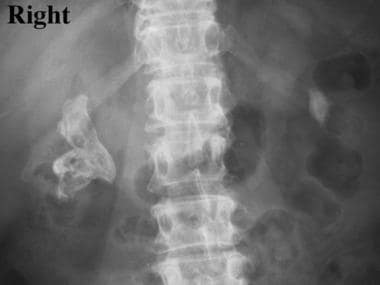
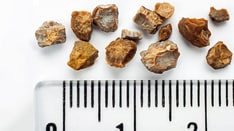
You are in: eMedicine Specialties > Urology > Stones Struvite and Staghorn CalculiArticle Last Updated: Feb 11, 2008AUTHOR AND EDITOR INFORMATIONAuthor: Maxwell Meng, MD, Assistant Professor in Residence, Department of Urology, University of California at San Francisco Maxwell Meng is a member of the following medical societies: American College of Surgeons and American Urological Association Coauthor(s): Marshall L Stoller, MD, Medical Director of Urinary Stone Center, Professor, Department of Urology, University of California at San Francisco; Thomas Minor, MD, Resident, Department of Urology, University of California San Francisco Editors: Martha K Terris, MD, FACS, Professor, Department of Surgery, Medical College of Georgia; Francisco Talavera, PharmD, PhD, Senior Pharmacy Editor, eMedicine; J Stuart Wolf, Jr, MD, FACS, David A Bloom Professor of Urology, Director, Division of Minimally Invasive Urology, Department of Urology, University of Michigan Medical Center; Stephen W Leslie, MD, FACS, Founder and Medical Director of the Lorain Kidney Stone Research Center, Clinical Assistant Professor, Department of Urology, Medical College of Ohio Author and Editor Disclosure Synonyms and related keywords: struvite calculi, staghorn calculi, triple-phosphate stones, triple phosphate stones, infection stones, urease stones, magnesium-ammonium-phosphate stones, MAP stones, extracorporeal shock-wave lithotripsy, ESWL, percutaneous nephrolithotomy, PNL, kidney stones, infection stones, infection-induced stones, phosphatic stones, urea-splitting bacteria, urease-producing organisms, Ureaplasma urealyticum, U urealyticum, Proteus, Staphylococcus, Klebsiella, Providencia, Pseudomonas, staphylococci, urinary tract stones, urinary tract infection, UTI, staghorn stones, struvite stones, struvite calculus, staghorn calculus, lithogenesis, lithotripsy, nephrolithiasis INTRODUCTIONUpper urinary tract stones that involve the renal pelvis and extend into at least 2 calyces are classified as staghorn calculi (see Image 1). Although all types of urinary stones can potentially form staghorn calculi, approximately 75% are composed of a struvite-carbonate-apatite matrix. These so-called struvite stones, named after the 19th-century Russian diplomat Baron von Struve (friend and mentor to 19th-century discoverer Ulex), are also known as triple-phosphate (3 cations associated with 1 anion), infection (or infection-induced), phosphatic, and urease stones. Other, less common, staghorn calculi can be composed of mixtures of calcium oxalate and calcium phosphate. History of the ProcedureThe concept that urinary tract infections play a role in lithogenesis is not new. Hippocrates noted the relationship between renal calculi and loin abscesses. In 1817, Marcet recognized the association of phosphate calculi with infection, alkaline urine, and ammoniacal urine. Not until the early 20th century did Brown propose that urea-splitting bacteria were responsible for urinary ammonia, alkalinity, and stone formation.1 The isolation of urease, the first enzyme ever purified, earned Sumner2 the Nobel Prize for Chemistry in 1946. Urease-producing organisms are listed in Etiology. ProblemStruvite stones are invariably associated with urinary tract infections. Specifically, the presence of urease-producing bacteria, including Ureaplasma urealyticum and Proteus species (most common), Staphylococcus species, Klebsiella species, Providencia species, and Pseudomonas species, leads to the hydrolysis of urea into ammonium and hydroxyl ions. Escherichia coli does not produce urease and is not associated with struvite stone formation. Other common bacteria that have not been shown to produce urea include Citrobacter freundii, enterococci, and streptococci. The resulting increase in ammonium and phosphate concentrations combined with the alkalotic urine (pH >7.2) is necessary for struvite and carbonate apatite crystallization. Magnesium ammonium phosphate crystals (MgNH4PO4•6H2O) are admixed with carbonate apatite (Ca10 (PO4) 6•CO3) in varying proportions along with matrix. The proportion of matrix, typically low molecular weight mucoproteins, is greater than in other types of calcium-based stones and is thought to protect the bacteria from antimicrobials. FrequencyAlthough calcium oxalate stones are most prevalent in the Western world, struvite calculi account for up to 30% of urinary tract stones worldwide. In the United States, 10-15% of all stones are composed of struvite. They are found more frequently in women and in persons older than 50 years, likely reflecting the population at increased risk of recurrent or persistent urinary tract infections. Accordingly, treatment of struvite stones must also address the source of these infections. The natural history of struvite calculi mandates the complete removal of stones. First, infection stones generally grow rapidly, and any remaining stone material may serve as a nidus for future stone formation. Second, even after complete stone removal, struvite stones recur in approximately 10% of patients; if residual stones or fragments are left after treatment, recurrence rates approach 85%. Third, struvite stones are a potential source of significant morbidity. Previously, it was believed that asymptomatic struvite stones could be managed expectantly; however, studies have demonstrated that 30% of patients treated conservatively (ie, no surgery to remove stones) died of renal failure or of pyelonephritis and sepsis. Priestley and Dunn reported a 41% 5-year survival rate in patients with untreated unilateral struvite stones.3 These data underscore the importance of approaches, primarily surgical, to completely remove the stone material. EtiologyOrganisms causing struvite stones are as follows:
PathophysiologyTwo conditions must coexist for the formation of struvite calculi. These are (1) alkaline urine (pH >7.2) and (2) the presence of ammonia in the urine. This leads to magnesium ammonium phosphate and carbonate apatite crystallization. The conversions of urea to ammonia, ammonia to ammonium, and acidification from carbon dioxide are as follows:
ClinicalThe clinical presentation of patients with struvite stones can be variable. Consider struvite stones in patients with risk factors for developing urinary tract infections (eg, prior urinary diversion or urologic surgery, presence of indwelling catheters, neurogenic bladder, vesicoureteral reflux, other anatomic abnormalities). Infections may result in pyelonephritis, pyonephrosis, or perinephric abscess. Symptoms may include flank pain classic for renal colic, fever, urinary symptoms (eg, frequency, dysuria), and hematuria (either gross or microscopic). However, struvite stones rarely manifest as a solitary ureteral stone with acute renal colic in the absence of prior intervention. Concomitant urinary obstruction and hydronephrosis may be present and can result in nausea or vomiting. In institutionalized patients susceptible to infection stones, the ability to elicit symptoms may be limited; sepsis may be the only evidence of an underlying struvite staghorn calculus. Note that patients with struvite calculi can be asymptomatic, even when calculi occupy the entire renal collecting system. Even with progression to xanthogranulomatous pyelonephritis, 25% of patients may remain completely free of symptoms. Systemic manifestations of large struvite stones and associated chronic infection include generalized fatigue, malaise, and weight loss. INDICATIONSStaghorn calculi represent a less-common nephrolithiasis subgroup so named because the significant stone burden that fills the renal pelvis and calyces forms a shape on radiographs that resembles a deer's horns. Most staghorn stones in Western society are composed of struvite and can cause significant morbidity and mortality if left untreated; therefore, large struvite stones must typically be removed. Interestingly, an article investigating the structural analysis of renal calculi in northern Unlike other urinary stones that commonly produce symptoms (eg, renal colic) that necessitate intervention, treatment of struvite stones often occurs in patients without classic signs of nephrolithiasis; this is because large staghorn calculi may not cause acute renal or ureteral dilatation and resultant pain. RELEVANT ANATOMYA comprehensive discussion of renal anatomy is beyond the scope of this article; however, several points relevant to endourologic techniques are discussed. First, the kidneys are retroperitoneal organs enclosed within several layers, including the adjacent adherent renal capsule and the renal Gerota fascia surrounding the perinephric fat. Severe renal infections associated with struvite stones may lead to abscess formation, both within the kidney and within the Gerota fascia (ie, perinephric abscess). Second, the kidneys are intimately associated with many nearby organs. On the right side, the liver may be posterolateral to the kidney at the level of the superior pole; on the left side, the spleen resides in an analogous position. These organs may be injured during percutaneous renal access. On both sides, the colon has retroperitoneal portions that can be located posterior to the kidneys. Studies have demonstrated that retrorenal colon positions are present in up to 10% of patients. A single kidney contains 5-14 calyces, each of which drains a renal papilla. These minor calyces may coalesce to form major calyces, all of which subsequently drain into an infundibulum. In placing percutaneous tubes into the kidney, several principles should be followed: (1) Access should not be placed through an infundibulum because of greater risks of vascular injury; (2) in all areas of the kidney (both superior and inferior), access should be gained near the fornix of the calyx; and (3) entry into a posterior calyx allows the greatest ability to examine and remove stones in the renal pelvis and in additional infundibula and calyces. CONTRAINDICATIONSThe presence of an active, untreated urinary tract infection is a contraindication to stone removal. Patients with struvite stones have chronic bacteriuria, and their urine is never sterilized by antibiotics alone; however, appropriate antibiotics should be administered prior to surgical intervention in an attempt to minimize the potential for sepsis during treatment. Similarly, if concomitant urinary obstruction and purulent infection exist (ie, pyonephrosis), percutaneous drainage and antibiotics are necessary before further manipulation of the stone and urinary tract. WORKUPLab Studies
Imaging Studies
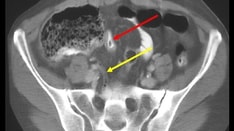
TREATMENTMedical therapyStaghorn calculi resulting from urease-producing bacteria are best managed with complete surgical removal of the stones. Medical therapy alone cannot rid the patient of struvite calculi and is typically adjunctive in nature. Nevertheless, nonsurgical measures may control life-threatening sequelae of untreated stones and may represent the best option in patients with significant comorbidities.
Drug Category: Urine acidification agents - These agents reduce urine pH level.
Drug Category: Urease inhibitors - These agents inhibit the hydrolysis of urea and the production of ammonia.
Surgical therapyIn the past, removal of large complex renal calculi required either anatrophic nephrolithotomy (bivalving the kidney on the lateral aspect) or pyelolithotomy (opening the renal pelvis). These are both major open operations with attendant morbidity. Moreover, these procedures did not always ensure complete stone removal, with the incidence rate of residual fragments ranging from 12-36%. The advent of minimally invasive modalities to treat renal stones revolutionized the approach to staghorn calculi. MethodsExtracorporeal shockwave lithotripsy ESWL was introduced in 1982 and is used to fragment urinary stones in a variety of locations without requiring an incision or instrumentation of the urinary tract. Struvite calculi are effectively broken by ESWL because of the multiple laminations within the stones. However, even with excellent stone fragmentation by primary ESWL, repeat therapy via ESWL must be performed in 50% of patients because of a large stone burden. If multiple sessions are anticipated, the renal pelvis should be treated first. Real-time monitoring of stone fragmentation using fluoroscopy is important to target and shock all areas of the stone. In addition, the potential for urinary obstruction during spontaneous stone passage usually requires the placement of an indwelling ureteral stent. In up to 40% of patients, a PCN tube is subsequently required to allow adequate renal drainage. If the renal infundibula are narrow, stone fragments that stem from ESWL are unlikely to pass and remain in the calyces. Percutaneous nephrolithotomy (PNL) is the preferred surgical therapy in these cases. Large, wide infundibula that permit easy passage of fragments increase the stone-free rate and overall success of ESWL treatment for staghorn calculi. Percutaneous nephrolithotomy PNL refers to the creation of a tract from the skin to the renal collecting system, thus permitting use of a nephroscope and instruments via this tract to fragment and remove stones. More recently, flexible ureteroscopes combined with small holmium laser fibers have allowed retrograde access to the kidney for stone destruction. PNL was developed and popularized in the 1980s with the proliferation of miniaturized instruments. Access to the kidney is obtained under ultrasound or fluoroscopic guidance, and the tract is typically dilated to 24-30F. Through this tract, a rigid nephroscope is introduced to visualize the stone and collecting system and to guide fragmentation. Energy sources for this purpose include ultrasonic, electrohydraulic, and pneumatic lithotrites and laser. The use of a flexible nephroscope allows examination of the entire kidney and helps ensure complete stone removal. Multiple PCN tracts may be used in cases of branched, complex staghorn calculi. After PNL, a PCN tube is placed to optimize urinary and fragment drainage. Image 2 illustrates the results of the patient shown in Image 1. Right PNL was performed via a single lower-pole access during a single session, rendering the patient stone free. The left stone was later treated using ESWL. Other advancements Technologic advances have resulted in instruments that can reach the kidney from the urethral meatus. Both laser and electrohydraulic ureteroscopic lithotripsy are possible and can significantly fragment staghorn calculi. Existing case reports describe a synchronous bidirectional technique that combines percutaneous nephroscopy and retrograde intrarenal surgery to successfully treat complex, branched staghorn calculi, lessening the need for multiple flank punctures. Similar to ESWL, the passage of a large stone burden requires an indwelling ureteral stent, and multiple treatments may be required. For both monotherapy ESWL and retrograde ureteroscopic lithotripsy, rendering the patient stone free is difficult, especially in the setting of dilated collecting systems and dependent lower pole calyces. Surgical principlesAlthough multiple surgical approaches to staghorn calculi are available, several principles must be kept in mind. First, complete removal of all stone material is the goal of any procedure. Simple debulking does not prevent future infections, stone formation, or impairment of renal function. Second, the patient should be counseled that multiple interventions may be required. If ureteroscopy or ESWL is the primary treatment modality, the need for subsequent ESWL, ureteroscopy, or PNL must be discussed. Use of combination therapy is a reasonable approach to ensure removal of all residual fragments. An example of this is the so-called sandwich technique, with initial PNL followed by ESWL and then second-look PNL. Patient outcomes have been demonstrated to improve with increasing PNL experience. Third, the immediate use of adjunctive measures can be considered. Postoperative oral AHA and antibiotics may delay the regrowth of struvite stones. In addition, direct irrigation of the collecting system is possible through the nephrostomy tube after PNL. Lavage chemolysis for residual fragments consists of acidification of the urine with solutions such as Suby G or hemiacidrin (Renacidin). Although in vitro and in vivo data support some efficacy of direct acidification and ion exchange of stone calcium for magnesium, caution must be used when performing irrigation to ensure sterile urine, low intrarenal pressure, and normal serum magnesium levels. Hypermagnesemia (and associated toxicity) is more common in patients with compromised renal function RecommendationsThe 1994 American Urological Association Nephrolithiasis Clinical Guidelines Panel outlined general recommendations regarding the treatment of staghorn calculi that are still followed today. The report reviewed the advantages and disadvantages of all treatment modalities and presented evidence-based guidelines and options but did not represent absolute standards or unanimous opinions. In essence, the procedure or combination of surgical techniques that presents the lowest morbidity to the patient but yields the highest stone-free rates should be chosen. However, the report did not address retrograde approaches to staghorn calculi. For large struvite staghorn calculi, initial PNL should be used in most cases, followed by ESWL or repeat PNL as necessary. ESWL monotherapy should be reserved for patients with smaller staghorn stones (<500 mm2 surface area). Although once the criterion standard, initial open surgery is typically not necessary unless the kidney requires complete removal or the intrarenal anatomy is not amenable to other approaches. Although the treatment plan for each patient should be individualized, recent prospective, randomized studies are confirming and solidifying the PNL-based recommendations outlined above. Al-Kohlany and colleagues evaluated PNL versus open stone surgery in 79 patients with 88 complete staghorn calculi, which is defined as a stone burden filling at least 80% of the entire collecting system.7 Patients undergoing PNL suffered fewer intraoperative and postoperative complications and benefited additionally from shorter operative times, shorter hospital stays, and an earlier return to work, all while reaching comparable stone-free rates without worsening renal function. Meretyk et al compared ESWL monotherapy to PNL combined with ESWL for the treatment of complete staghorn calculi and highlighted the concern of ESWL alone in cases of significant stone disease.8 Patients undergoing ESWL monotherapy displayed diminished stone-free rates yet experienced an increase in overall treatment time, unplanned ancillary procedures, and complications (sepsis, in particular). Preoperative detailsPatients rarely require additional procedures prior to removal of the stones; however, if the patient is uroseptic and has evidence of urinary obstruction (eg, hydronephrosis) or pyonephrosis, placement of a PCN tube or ureteral stent may be necessary. Only when the patient is clinically stable after adequate urinary drainage and administration of intravenous antibiotics should definitive surgical intervention for stone removal be performed. Intraoperative detailsIn performing PNL and open stone removal, be aware of the potential for an underlying anatomic abnormality such as ureteropelvic junction obstruction or ureteral stricture. Their role in staghorn stone formation should be considered, but the abnormality may not be best addressed at the same setting. After the stone has been removed, subsequent treatment can correct the defect. Postoperative detailsIn analyzing outcomes of the treatment modalities, important considerations are (1) the probability of being stone free and (2) the probability of undergoing secondary unplanned procedures. Thus, careful assessment of the postoperative stone status is important. Plain abdominal radiography may help visualize large stone fragments after open surgery, PNL, and ESWL. An advantage of PNL includes the ability to fill the collecting system with contrast and to perform antegrade nephrostography, typically 1-2 days after surgery if the patient remains afebrile. Evidence of significant residual stones or urinary obstruction may lead to second-look nephroscopy or maintenance of the nephrostomy tube, respectively. Most patients are discharged in 3 days after PNL, without the need for percutaneous renal drainage. Secondary ESWL is usually indicated if a stone (or multiple stones >1 cm) remains in peripheral calyces. This can be performed during the same hospitalization 1-2 days after the initial PNL. Follow-upAfter all treatment modalities, the patient should be closely monitored for signs of infection, renal dysfunction, and bleeding. Postoperative serum electrolyte evaluations, CBC counts, and creatinine studies should be performed. The patient should continue on the appropriate parenterally administered antibiotic. If an indwelling ureteral stent was placed prior to ESWL, the patient should return for stent removal in 3-4 weeks. Patients should be evaluated in an outpatient setting in 3 weeks after any surgery for staghorn stones. Renal ultrasonography, abdominal radiography, and serum creatinine studies are usually performed. In addition, if a preoperative metabolic evaluation of stone disease (24-h urine collection) was not performed, conduct one postoperatively once the patient is no longer hospitalized and on a controlled diet. Patients should be exhibiting no symptoms, eating their regular diet, and following their usual lifestyle activities when such a study is performed. For excellent patient education resources, visit eMedicine's Kidneys and Urinary System Center. Also, see eMedicine's patient education article Kidney Stones. COMPLICATIONSInfectious complications, including pyelonephritis and sepsis, may occur after either open or noninvasive (ie, ESWL) treatment. Typically, infections occur early after PNL, but they may be delayed after ESWL, when stone passage and obstruction occur. The incidence of significant blood loss and the need for transfusion after ESWL is low, probably well below 0.1%. The authors' recent experience demonstrates a PNL-associated transfusion rate of less than 5%. Early recognition of bleeding after PNL is paramount. Venous bleeding can usually be managed by balloon tamponade or clamping of the PCN tube; arterial bleeding may necessitate renal arteriography and embolization (or rarely nephrectomy). However, kidney loss after percutaneous stone removal, although more common than after ESWL, is rare (0.1%). Overall, the mortality rate associated with staghorn stone treatment is extremely low (ESWL, 0.06%; PNL, 0.1%; PNL and ESWL, 0.2%) and is typically related to cardiac dysfunction. Although significant morbidity is encountered more often with open surgery and PNL, ESWL is associated with both planned and unplanned secondary interventions. Injury to adjacent organs, including the spleen, liver, colon, and lungs, has been reported with PNL. Knowledge of perirenal anatomy, prompt recognition, and appropriate intraoperative and perioperative management usually minimize associated morbidity. For example, placement of a chest tube effectively drains air and/or fluid from the pleural cavity. Supracostal renal access during PNL is associated with a greater likelihood of pulmonary complications. Perforation of the renal pelvis may occur during PNL. Adequate visualization, careful intracorporeal lithotripsy, and sufficient irrigation drainage help reduce this complication. Typically, it is identified immediately, with evidence of urothelial disruption or perinephric fat. Recognition of this complication is important so that the surgery can be terminated, minimizing extravasation of irrigation fluid and the potential for significant fluid absorption and spread of infection. Placement of the PCN tube is sufficient to ensure urinary drainage and healing of the urothelium. The nephrostomy tube is kept in place for 3-4 weeks to ensure healing, at which time nephrostography is performed and repeat nephroscopy can be considered for residual stone fragments. During PNL, irrigating fluid may also be absorbed through open venous sinuses; dilutional hyponatremia and hypothermia may result. Long-term complications of both open surgery and PNL include intrarenal stricture or stenosis of the collecting system. Infundibular stenosis was recently reported as a rare complication, typically within the first year after surgery, and was associated with more complex stones and PNL. Treatment complications for staghorn stones
OUTCOME AND PROGNOSISMultiple measures of treatment outcomes are available for evaluation. At best, monotherapy ESWL for struvite staghorn stones yields stone-free rates of 60%. Residual fragments remain in 22-70% of patients, and re-treatment is necessary in 32-88% of patients. In patients with a smaller stone burden (>500 mm2 surface area), stone-free rates may approach 90%. After monotherapy PNL, reported stone-free status is achieved in approximately 80% of patients. These outcomes are further improved in correlation to surgeon experience. Combining PNL with subsequent ESWL yields stone-free rates comparable to those of PNL alone; this likely reflects the aggressiveness of the initial PNL and attempts to remove residual stones via flexible nephroscopy. While the goal of the physician is to ensure stone-free status, patients are interested in direct outcomes. Prevention of patient symptoms and associated stone-related morbidity, such as infection, are important means of assessing treatment success. Studies have demonstrated that, even in the presence of small stone fragments after ESWL monotherapy and perioperative antibiotics for 2 weeks, 86% of patients were cured of persistent infection. Conversely, achieving stone-free status does not ensure resolution of persistent urinary infections. Important considerations in these patients include anatomic abnormalities, neurogenic bladder, indwelling catheters, or urinary diversion. Long-term freedom from bacteriuria is probably not possible in these situations. Potential deleterious effects of staghorn calculi and treatments for the stone have been a source of concern. However, studies have demonstrated the general safety of both ESWL and PNL in the management of large stones, even with a solitary kidney and chronic renal insufficiency. Effects of ESWL and PNL are minimal, with only slight decreases in renal function after intervention. Patients who progress to severe renal insufficiency associated with staghorn stones usually present initially with compromised renal function (serum creatinine level >3 mg/dL). FUTURE AND CONTROVERSIESMany aspects of struvite staghorn calculi require further study. Standardized classification of renal anatomy and staghorn calculi may improve staging of the stones. This will allow more accurate comparison of treatment modalities. Also, uniform methods of reporting treatment outcomes are needed. Determining which endpoints (eg, stone free, clearance of infection, preservation of renal function, resolution of symptoms) are most important is necessary. Elucidating some of these factors will help in selecting the appropriate surgical approach and goals of intervention. Continued technological advancements in minimally invasive instruments and increasing worldwide surgical PNL experience will continue to lessen the morbidity associated with staghorn calculi therapy. A better understanding of the etiology of infection staghorn stones may direct rational treatment. The potential role of microorganisms, such as nanobacteria, must be defined. In addition, development of more effective medical treatments may significantly alter management strategies. Urease inhibitors with less toxicity may have increased general utility. Also, drugs effective in acidification of the urine could halt stone formation and growth even in the presence of persistent infection. FURTHER READINGFor further information, visit Medscape’s Stone Disease Resource Center. MULTIMEDIA
REFERENCES
Struvite and Staghorn Calculi excerpt Article Last Updated: Feb 11, 2008 | ||||||||||||||||||||||||||||||||||||||||||||||||||||||||||||||||||||