Continually Updated Clinical Reference
 
 
  All Sources     eMedicine     Medscape     Drug Reference     MEDLINE
 
You are in: eMedicine Specialties > Medicine, Ob/Gyn, Psychiatry, and Surgery > Infectious Diseases

Typhoid Fever

Last Updated: July 24, 2006
Email to a Colleague
Synonyms and related keywords: typhoid fever, enteric fever, Eberth disease, Salmonella typhi, S typhi, Salmonella choleraesuis, S choleraesuis, Salmonella enterica, S enterica, Enterobacteriaceae, prolonged fever, toxemia, paratyphoid fever, rose spots, typhoid state, Widal test

  AUTHOR INFORMATION Section 1 of 9    Click here to go to the next section in this topic
Author Information Introduction Clinical Differentials Workup Treatment Medication Follow-up Bibliography

Author: John L Brusch, MD, FACP, Assistant Professor of Medicine, Harvard Medical School; Consulting Staff, Department of Medicine and Infectious Disease Service, Cambridge Health Alliance

Coauthor(s): Thomas Garvey, MD, Clinical Fellow of Infectious Diseases, Department of Geographic Medicine and Infectious Diseases, Tufts-New England Medical Center; Roberto Corales, DO, Staff Physician, Infectious Disease, Community Health Network; Steven K Schmitt, MD, Co-director of Infectious Disease Fellowship Program, Department of Infectious Disease, The Cleveland Clinic Foundation

John L Brusch, MD, FACP, is a member of the following medical societies: American College of Physicians, and Infectious Diseases Society of America

Editor(s): Martin J Wood, MD †, Former Consulting Staff, Department of Infection and Tropical Medicine, Birmingham Heartlands Hospital, UK; Francisco Talavera, PharmD, PhD, Senior Pharmacy Editor, eMedicine; Richard B Brown, MD, FACP, Chief, Division of Infectious Diseases, Baystate Medical Center; Professor, Department of Internal Medicine, Tufts University School of Medicine; Eleftherios Mylonakis, MD, PhD, Assistant Professor of Medicine, Harvard Medical School, Assistant in Medicine, Division of Infectious Disease, Massachusetts General Hospital; and Burke A Cunha, MD, MACP, Professor of Medicine, State University of New York School of Medicine at Stony Brook; Chief, Infectious Disease Division, Winthrop-University Hospital

Disclosure


  INTRODUCTION Section 2 of 9   Click here to go to the previous section in this topic Click here to go to the top of this page Click here to go to the next section in this topic
Author Information Introduction Clinical Differentials Workup Treatment Medication Follow-up Bibliography

Background: Typhoid fever, also known as enteric fever, is a systemic infection by Salmonella typhi or by the related but less virulent Salmonella paratyphi. Since ancient times, these bacteria have thrived during wartime and during the breakdown of basic sanitation. Archeologists have found S typhi in Athenian mass graves from the era of the Peloponnesian Wars, implicating it as the cause of the Great Plague of Athens. S typhi persists mostly in developing nations where sanitation is generally poor. Although sporadic outbreaks occur in developed nations, most individuals with typhoid fever in such areas have recently returned from travel to an endemic region.

Of all Salmonella serotypes, only S typhi and S paratyphi are pathogenic exclusively in humans. Typhoid fever is a severe multisystemic illness characterized by the classic prolonged fever, sustained bacteremia without endothelial or endocardial involvement, and bacterial invasion of and multiplication within the mononuclear phagocytic cells of the liver, spleen, lymph nodes, and Peyer patches. Typhoid fever is potentially fatal if untreated.

People are typically infected with S typhi and S paratyphi through food and beverages contaminated by a chronic stool carrier. Less commonly, carriers may shed the bacteria in urine. Individuals may also be infected by drinking sewage-contaminated water or by eating contaminated shellfish or faultily canned meat.

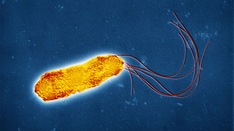
Salmonella is a genus in the family Enterobacteriaceae that has more than 2300 serotypes previously described in the Kauffman-White schema. Salmonellae are gram-negative, flagellate, nonsporulating, facultative anaerobic bacilli that ferment glucose, reduce nitrate to nitrite, and synthesize peritrichous flagella when motile. All but S typhi produce gas upon sugar fermentation.

Salmonellae are grouped based on the somatic O antigen and further divided into serotypes based on flagellar H and surface virulence (Vi) antigens. In particular, S typhi, the cause of typhoid fever, has O and H antigens, an envelope (K) antigen, and a lipopolysaccharide macromolecular complex called endotoxin that forms the outer portion of the cell wall. S typhi, S paratyphi C, and Salmonella Dublinare the only Salmonella serotypes that carry Vi antigen. Based on DNA studies, all salmonellae are now considered one of two species: Salmonella enterica (formerly called Salmonella choleraesuis) and Salmonella bongori. S enterica has 6 subspecies (I, II, IIIa, IIIb, IV, VI); S bongori has one (V). S typhi and S paratyphi are S enterica I subspecies, serotypes typhi and paratyphi.

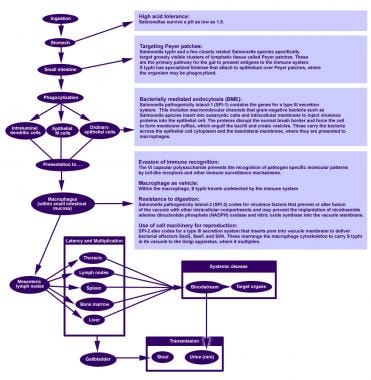
Pathophysiology: After ingestion by the host, S typhi invades through the gut and multiplies within the mononuclear phagocytic cells in the liver, spleen, lymph nodes, and Peyer patches of the ileum.

In studies of healthy, previously unvaccinated men, ingestion of 107 S typhi bacilli caused disease in 50% of volunteers. Investigations of outbreaks seem to indicate that an inoculum of as few as 200 organisms may lead to the disease. Perhaps such a discrepancy exists because many who ingest S typhi are not healthy men and have any one of a number of risk factors (see below). As the number of organisms increases, the incubation period decreases. The number of bacilli ingested does not change the subsequent clinical syndrome.

After successfully passing through the stomach, any Salmonella subspecies may be phagocytized by the gut's intraluminal dendritic cells, causing inflammation that leads to diarrhea. Only the subspecies S enterica causes severe disease in the rest of the body. Its specialized fimbriae adhere to the epithelium that overlies Peyer patches. Peyer patches are grossly visible aggregates of 5-100 lymphoid follicles in the small bowel submucosa; these patches are larger and more numerous distally. They are the primary mechanism for sampling antigens in the gut and initiating response. S enterica enters them via 1 of 3 pathways.

Intraluminal dendritic cells may infiltrate through the gut epithelium while carrying the bacterium. M cells may transport it as well. Immobile and interspersed among regular enterocytes in Peyer patches, M cells are epithelial cells that mature into professional phagocytes. They phagocytize bacteria such as S enterica and present them to macrophages and T cells in the lamina propria. Most interestingly, S enterica may convert normally nonphagocytic epithelial cells into bacterially-mediated endocytosis (BME).

In BME, Salmonella uses a type III secretion system—macromolecular channels that gram-negative bacteria such as Salmonella insert into eukaryotic cells and intracellular membranes to inject virulence proteins—to inject proteins SipA and SipC into the epithelial cell. These disrupt the normal brush border and force the cell to form membrane ruffles. The ruffles engulf the bacilli and create vesicles that carry them across the epithelial cell cytoplasm and the basolateral membrane. Salmonella pathogenicity island 1 (SPI-1) in the genome encodes the elements of BME.

In the submucosa, Salmonella enters macrophages via bacteria-triggered pinocytosis or via macrophage receptor–mediated phagocytosis. The intravacuolar environment activates the PhoP/PhoQ regulon, leading to modification of protein and lipopolysaccharide elements of the bacterial inner and outer membranes. Thus, Salmonella resists lysis and decreases host proinflammatory signaling. The bacterium also produces homocysteine to inactivate nitric oxide and enzymes against other microbicides. Finally, with the Vi antigen, a polysaccharide capsule, S typhi and S paratyphi further protect themselves from lysis within the macrophage and from neutrophils and complement without.

The newly described Salmonella pathogenicity island 2 (SPI-2) encodes a type III secretion system that carries bacterial proteins across the vacuole membrane and into the cytosol. Other virulence factors from SPI-2 prevent or alter fusion of the Salmonella-containing vacuole with other intracellular compartments, rearrange the actin cytoskeleton around the vacuole, and may prevent the implantation of nicotinamide adenine dinucleotide phosphate (NADPH) oxidase and nitric oxide synthase into the vacuole membrane.

The infected macrophage provides Salmonella a vehicle safe from other elements of the immune system and in which it can multiply and travel. It passes through the mesenteric lymph nodes into the thoracic duct and the lymphatics beyond to seed the reticuloendothelial tissues—liver, spleen, bone marrow, and lymph nodes. In these havens, it multiplies until some critical density is reached. It causes the apoptosis in the macrophages and enters the bloodstream to attack the rest of the body. At this stage, the Vi antigen comes into play. It forms a capsule to protect the bacterium from complement and from phagocytic immune cells.

From blood or from the liver via bile ducts, it infects the gallbladder and reenters the gastrointestinal tract in the bile, spreading to other hosts via stool. In addition, it occasionally invades the urinary tract and spreads via urine.

After primary intestinal infection, further seeding of the Peyer patches occurs through infected bile. They may become hyperplastic and necrotic with infiltration of mononuclear cells and neutrophils, forming ulcers that may hemorrhage through eroded blood vessels or perforate the bowel wall, causing peritonitis.

The host recognizes the invader with toll-like receptors 2, 4, and 5. These induce cytokines such as interferon alpha, interleukin (IL)–12, and tumor necrosis factor-alpha, which recruit macrophages and cause the high fevers of the disease. Macrophages and neutrophils suppress the active infection. Later, humoral and CD4 T-cell–mediated immunity clears it.

Risk factors

Salmonella has mechanisms against acidic environments, but a pH level of 1.5 or less kills most of the bacilli. People who continually ingest antacids, histamine-2 receptor antagonists (H2 blockers), or proton pump inhibitors; who have undergone gastrectomy; or who have achlorhydria due to aging or other factors require fewer bacilli to produce clinical disease. Acquired immune deficiencies or hereditary deficiencies in immune modulars such as IL-12 and IL-23 increase risk for infection, complications, and death.

Frequency:

  • In the US: From 1900-1960, the incidence of typhoid fever declined steadily and has remained low in the United States. Improved sanitation and successful antibiotic treatment led to this decline. An average of 245 cases have been reported annually, with an incidence of 0.2 per 100,000 population since 1985 compared with 35,994 reported cases in 1920. More than 70% of cases occurred within 30 days of returning from international travel, mostly to the Indian subcontinent and Latin America. The rare outbreaks of typhoid fever due to transmission within the United States are generally traceable to imported food or a food handler from an endemic region.
  • Internationally: S typhi and S paratyphi infections occur worldwide but primarily in developing nations where sanitary conditions are poor. Typhoid and paratyphoid fevers are endemic in Asia, Africa, Latin America, the Caribbean, and Oceania. Typhoid fever affects 13-17 million people yearly and kills an estimated 600,000.

Mortality/Morbidity: Early antibiotic therapy has transformed a previously life-threatening illness of several weeks' duration with an overall mortality rate approaching 20% into a short-term febrile illness with negligible mortality. Case fatality rates of 10-50% have been reported from endemic countries when diagnosis is delayed.

Race: No racial predilection exists.

Sex: No sex-related predilection exists.

Age: In endemic areas, children aged 1-5 years are at the highest risk of infection, morbidity, and mortality because of waning passively acquired maternal antibody and a lack of acquired immunity. In young children, the clinical syndrome is often a nonspecific febrile illness that is not recognized as typhoid fever. In more recent years, prospective studies have shown that, although the incidence of classic typhoid fever in patients is highest in adolescents and young adults, the overall incidence of blood culture–confirmed disease is generally highest in children aged 3-9 years and declines significantly in late adolescence.


  CLINICAL Section 3 of 9   Click here to go to the previous section in this topic Click here to go to the top of this page Click here to go to the next section in this topic
Author Information Introduction Clinical Differentials Workup Treatment Medication Follow-up Bibliography

History: Untreated typhoid fever lasts at least 4 weeks. Most of the classic signs and symptoms of typhoid fever are prevented with prompt treatment. Clinical response begins about 2 days after starting antibiotics, and the patient's condition markedly improves within 4-5 days.

The incubation period of typhoid fever varies with the size of the infecting dose and averages 7-14 (range, 3-60) days. In paratyphoid infection, the incubation period ranges from 1-10 days. During the incubation period, 10-20% of patients have transient diarrhea (enterocolitis) that usually resolves before the onset of the full-fledged disease.

As bacteremia develops, the incubation period ends. Patients often experience chills, diaphoresis, anorexia, dry cough, a dull frontal headache, and myalgias before the onset of a high fever. About 20-40% of patients present with abdominal pain. In immunocompetent adults, constipation is common and is most likely due to hypertrophy of Peyer patches. Young children and individuals with AIDS are more likely to have diarrhea that is probably due to blunted secondary immunity. The incidence of constipation versus diarrhea varies geographically, perhaps because of local differences in diet or S typhi strains or genetic variation.

Unusual modes of onset include isolated severe headaches that may mimic meningitis. S typhi infection may cause an acute lobar pneumonia. In the early stages of the disease, rigors are rare unless the person also has malaria. This is not an unusual pairing of diseases. Patients may present with arthritis only, urinary symptoms, severe jaundice, or fever. Some patients, especially in India and Africa, may present with confusion and delirium or report parkinsonian symptoms or spastic rigidity. This regional variety in neuropsychiatric presentation may be due to the same factors that cause the variation in gastrointestinal symptoms.

Physical: The classic signs of enteric fever include fever, toxemia, delirium, abdominal pain, constipation, and hepatosplenomegaly.

Fever occurs in 75-85% of patients in the first week and is often initially remittent but becomes steady. The individual's temperature often rises to as high as 103-104°F (39-40°C) by the beginning of week 2. Constipation often develops early and is likely due to obstruction at the ileocecal valve by swollen Peyer patches. It may last for the entire duration of illness.

At approximately the end of the first week of illness, about a third of patients develop bacterial emboli to the skin known as rose spots. These are considered a classic symptom in typhoid fever, but they occasionally appear in shigellosis and nontyphoidal salmonellosis. Rose spots constitute a subtle, extremely sparse (often <5 spots), salmon-colored, blanching, truncal, maculopapular rash with 1- to 4-cm lesions that generally resolve within 2-5 days. Relative bradycardia and a dicrotic pulse are also common during this stage of illness.

During the second week of illness, the patient is toxic-appearing and apathetic with sustained fever. The abdomen is slightly distended, and soft splenomegaly is common.

In the third week, the patient grows more toxic and anorexic with significant weight loss. The patient may have a thready pulse, tachypnea, conjunctivitis, and crackles over the lung bases. Pyrexia persists. The patient may enter into a typhoid state of apathy, confusion, and even psychosis. Patients may develop polyneuropathy. Abnormal cerebrospinal fluid should prompt a search for a different cause.

Meanwhile, the patient commonly has pronounced abdominal distension. Some individuals may produce liquid, foul, green-yellow diarrhea (pea soup diarrhea). At this stage, the patient may die from overwhelming toxemia, myocarditis, intestinal hemorrhage, or perforation due to necrotic Peyer patches. Rare complications of enteric fever include pancreatitis, meningitis, orchitis, and osteomyelitis.

During the fourth week, the fever, mental state, and abdominal distension slowly improve over a few days, but intestinal complications may still occur in surviving untreated individuals. Weight loss and debilitating weakness last months. Relapses occur in 10% of patients, mostly during the first 2-3 weeks of convalescence.

Chronic carrier state

One to four percent of untreated patients become chronic carriers, defined as individuals who excrete Salmonella for more than 1 year. Some individuals may continue to excrete the bacterium for decades. Bladder infection with Schistosoma haematobium predisposes to urinary carriage. The parasite itself becomes a carrier. Stool carriage is more frequent in people with preexisting biliary abnormalities, perhaps because S enterica survives in gallstones, and these people have a greater incidence of cholecystitis. Chronic carriers have a greater risk for carcinoma of the gallbladder and other gastrointestinal malignancies; chronic carriers had a 6-fold increase in the risk of death due to hepatobiliary cancer. This may be due to chronic inflammation caused by the bacterium.

Causes: S typhi and S paratyphi cause typhoid fever.
  DIFFERENTIALS Section 4 of 9   Click here to go to the previous section in this topic Click here to go to the top of this page Click here to go to the next section in this topic
Author Information Introduction Clinical Differentials Workup Treatment Medication Follow-up Bibliography

Abdominal Abscess
Amebic Hepatic Abscesses
Brucellosis
Dengue Fever
Influenza
Leishmaniasis
Malaria
Toxoplasmosis
Tuberculosis
Tularemia
Typhus


Other Problems to be Considered:

Endocarditis
Connective tissue disease
Lymphoproliferative disorders

Quick Find
Author Information
Introduction
Clinical
Differentials
Workup
Treatment
Medication
Follow-up
Bibliography

Click for related images.

Related Articles
Abdominal Abscess

Amebic Hepatic Abscesses

Brucellosis

Dengue Fever

Influenza

Leishmaniasis

Malaria

Toxoplasmosis

Tuberculosis

Tularemia

Typhus


Patient Education


  WORKUP Section 5 of 9   Click here to go to the previous section in this topic Click here to go to the top of this page Click here to go to the next section in this topic
Author Information Introduction Clinical Differentials Workup Treatment Medication Follow-up Bibliography

Lab Studies:

  • Typhoid fever causes various abnormalities in standard laboratory tests. Serological tests and cultures are the mainstay of diagnosis. DNA probes are used by researchers and are available to patients in well-funded facilities. The diagnosis is suggested by assays that identify Salmonella antibodies and antigens and is then confirmed by isolation of the organism.
  • Standard laboratory tests: Most patients are moderately anemic, have an elevated erythrocyte sedimentation rate, thrombocytopenia, and relative lymphopenia. Most also have a slightly elevated prothrombin time (PT) and activated partial thromboplastin time, decreased fibrinogen levels, and levels of circulating fibrin degradation products that commonly rise to subclinical disseminated intravascular coagulation levels. Liver transaminase values and serum bilirubin levels are usually elevated to twice the reference range. Mild hyponatremia and hypokalemia are common.
  • Specific serological tests

    • Assays that identify Salmonella antibodies or antigens support the diagnosis but should be confirmed with cultures or DNA evidence.

    • The Widal test is more than a century old and was the standard serologic test for typhoid fever diagnosis for decades. Now, it is mostly of historical interest. It produces false-negative results in a significant proportion of patients who do not mount a detectable antibody response. It is highly nonspecific, especially in endemic areas where cross-reacting antigens from similar organisms are common. The Widal test measures agglutinating antibodies against H and O antigens of S typhi.

    • In acute infection, O antibody appears first, rising progressively, later falling, and often disappearing within a few months. H antibody appears slightly later but persists longer and can be used to distinguish between various types of enteric fever.

    • Indirect hemagglutination, indirect fluorescent Vi antibody, and indirect enzyme-linked immunosorbent assay for immunoglobulin M (IgM) and IgG antibodies to S typhi polysaccharide are available. Monoclonal antibodies against S typhi flagellin are promising developments.
  • Culture

    • Definitive diagnosis of typhoid fever generally requires isolation of the organism from blood, bone marrow, vomitus, fresh stool, or urine. A bone marrow aspirate (BMA) culture is the most sensitive method of isolating S typhi. The sensitivity is 90% at any point in the disease course for as long as 5 days after the initiation of antibiotics. The test is extremely painful. Clinicians should try to establish the diagnosis with less traumatic means.

    • If patients present within the first week of the disease, blood, intestinal secretions, and stool culture results are usually positive in approximately 85-90% of patients with typhoid fever. They decline to 20-30% later in the course of the disease. In particular, stool culture results may be positive for several days after S typhi ingestion. This is because of inflammation from the intraluminal dendritic cells. Later in the illness, bacteria shed through the gallbladder again cause positive stool culture results.

    • Multiple positive blood culture results are 73-97% specific for typhoid fever. Large-volume blood culture and clot culture after serum removal increase sensitivity.

    • Stool culture alone is less than 50% sensitive, and urine even less so. Cultures of punch biopsy samples of rose spots reportedly have a sensitivity of 63% and may show positive results even after antibiotics. A single rectal swab culture at hospital admission can be expected to detect S typhi in 30-40% of patients. S typhi has also been isolated from the cerebrospinal fluid, peritoneal fluid, mesenteric lymph nodes, resected intestine, pharynx, tonsils, abscess, bone, and urine, among others.

    • After disease resolution, 3 stool cultures one month apart should be taken to rule out carrier state.

    • BMA and blood are cultured in a selective medium, such as 10% aqueous oxgall, or a nutritious medium, such as tryptic soy broth, and are incubated at 37°C for at least 7 days. Subcultures are made daily to one selective medium, such as MacConkey agar, and one inhibitory medium, such as Salmonella-Shigella agar. These conventional culture techniques usually take 48-72 hours from acquisition until the organism is identified.
  • DNA testing: Polymerase chain reaction assays for identifying S typhi are available in some areas. However, this is used mostly for research since the test is generally too expensive for patients in developing countries.

Imaging Studies:

  • Radiography of the kidneys, ureters, and bladder (KUB) are useful if the clinician suspects bowel perforation. CT scanning or MRI may be warranted to investigate abscesses that may occur in, among other sites, the liver or bones.

Procedures:

Histologic Findings: The hallmark histologic finding in typhoid fever is infiltration of tissues by macrophages (typhoid cells) that contain bacteria, erythrocytes, and degenerated lymphocytes. Aggregates of these macrophages are called typhoid nodules, which are found most commonly in the intestine, mesenteric lymph nodes, spleen, liver, and bone marrow but may be found in the kidneys, testes, and parotid glands. In the intestines, 4 classic pathologic stages occur in the course of infection: (1) hyperplastic changes, (2) necrosis of the intestinal mucosa, (3) sloughing of the mucosa, and (4) the development of ulcers. The ulcers may perforate into the peritoneal cavity.

In the mesenteric lymph nodes, the sinusoids are enlarged and distended by large collections of macrophages and reticuloendothelial cells. The spleen is enlarged, red, soft, and congested; its serosal surface may have a fibrinous exudate. Microscopically, the red pulp is congested and contains typhoid nodules. The gallbladder is hyperemic and may show evidence of cholecystitis. A liver biopsy specimen from a person with typhoid often shows cloudy swelling, balloon degeneration with vacuolation of hepatocytes, moderate fatty change, and focal typhoid nodules. Intact typhoid bacilli can be observed at these sites.

  TREATMENT Section 6 of 9   Click here to go to the previous section in this topic Click here to go to the top of this page Click here to go to the next section in this topic
Author Information Introduction Clinical Differentials Workup Treatment Medication Follow-up Bibliography

Medical Care: Health care workers caring for patients with typhoid fever should pay strict attention to adequate hand washing and safe disposal of feces and urine. Antibiotic therapy is essential and should begin empirically if the clinical evidence is strong. Patients must receive adequate fluids, electrolytes, and nutrition. Antimicrobials shorten the course, reduce the rate of complications if begun early, and drastically reduce the case-fatality rate.

Surgical Care: Surgery is usually indicated in cases of intestinal perforation. Most surgeons prefer simple closure of the perforation with drainage of the peritoneum. Small bowel resection is indicated for patients with multiple perforations.

If antibiotic treatment fails to eradicate the hepatobiliary carriage, the gallbladder should be resected. Cholecystectomy is not always successful in eradicating the carrier state because of persisting hepatic infection.

Consultations: Physicians should consult an infectious disease specialist. Consultation with a surgeon is indicated upon suspected gastrointestinal perforation, serious gastrointestinal hemorrhage, cholecystitis, or extraintestinal complications (arteritis, endocarditis, organ abscesses).
  MEDICATION Section 7 of 9   Click here to go to the previous section in this topic Click here to go to the top of this page Click here to go to the next section in this topic
Author Information Introduction Clinical Differentials Workup Treatment Medication Follow-up Bibliography

Antibiotics should be started empirically while the results of confirmatory tests are pending. The literature describes varying medication recommendations. The regional sensitivity profiles in the antibiotic sensitivity of typhoid vary; thus, the authors' opinion is that these should be taken into account in the initial choice of treatment. Final sensitivity results should be used to determine the definitive treatment.

In absolute numbers, most patients in the United States with typhoid fever were infected in Latin America. However, the greatest risk of infection is travel to India and Pakistan.

Because S typhi and S paratyphi rarely develop antibiotic resistance during treatment, patients who relapse may be given the same drug. However, relapse should dictate a search for anatomical, pathological, or genetic predispositions.

Drug Category: Antibiotics -- Chloramphenicol was introduced in 1948 and was once the mainstay of treatment. By the 1970s, widespread resistance to the drug developed. Ampicillin and co-trimoxazole became treatments of choice. However, in the late 1980s, some S typhi strains developed simultaneous plasmid-mediated resistance to all 3 drugs. Fluoroquinolones and third-generation cephalosporins have filled the breach, but some resistance exists to both.

Resistance to ciprofloxacin is increasing. Up to 50% of the isolates from Finns with typhoid fever returning from Southeast Asia had reduced susceptibility to ciprofloxacin, with a minimum inhibitory concentration (MIC) of 0.125-0.250—a 9-fold increase. For therapeutic purposes, intermediate susceptibility should be regarded as full resistance. Ciprofloxacin is no longer a good first-line treatment for S typhi infection that arises in Southeast Asia. When last evaluated, the rate of intermediate sensitivity in strains was 3.7% in the Americas (P=.132), 4.7% (P=0.144) in Sub-Saharan Africa, and 10.8% (P=.706) in the Middle East.

Uncomplicated typhoid fever from the western hemisphere should be treated empirically with ciprofloxacin for 7 days. The treatment for cases from Southeast Asia is controversial. Some authorities recommend high-dose ciprofloxacin in patients from areas with typhoid fever that is resistant to nalidixic acid. (Nalidixic acid is not used clinically but as an in vitro stand-in for measuring fluoroquinolone resistance.) The authors consider this inadequate, as reports of treatment failure under those conditions have increased. The authors recommend empiric first-line therapy with trimethoprim/sulfamethoxazole and second-line therapy with ampicillin or chloramphenicol. Resistance to these agents in Southeast Asia has declined to 5-10%.

Resistance to ceftriaxone is only sporadic in Southeast Asia and elsewhere. Ceftriaxone should be the first-line empiric treatment for severe typhoid fever, and the course should last 10-14 days.

Clinicians should consider a 48-hour course of dexamethasone if the patient has shock or altered mental status. This may reduce the mortality risk from 56% to 10%. Corticosteroids are reserved for the only the most ill patients because they may increase the risk of relapse.
Drug Name
Chloramphenicol (Chloromycetin) -- Binds to 50S bacterial-ribosomal subunits and inhibits bacterial growth by inhibiting protein synthesis. Effective against gram-negative and gram-positive bacteria. Since its introduction in 1948, has proven to be remarkably effective for enteric fever worldwide. For sensitive strains, still most widely used antibiotic to treat typhoid fever. In the 1960s, S typhi strains with plasmid-mediated resistance to chloramphenicol began to appear and later became widespread in many endemic countries of the Americas and Southeast Asia, highlighting need for alternative agents.
Produces rapid improvement in patient's general condition, followed by defervescence in 3-5 d. Reduced preantibiotic-era case-fatality rates from 10-15% to 1-4%. Cures approximately 90% of patients. Administered PO unless patient is nauseous or experiencing diarrhea, then IV route should be used initially. IM route should be avoided because it may result in unsatisfactory blood levels, delaying defervescence.
Adult Dose500 mg PO/IV q4h until defervescence, then q6h for a total course of 14 d
Pediatric Dose50-75 mg/kg/d PO/IV divided q6h
ContraindicationsDocumented hypersensitivity
InteractionsConcurrently with barbiturates, chloramphenicol serum levels may decrease while barbiturate levels may increase, causing toxicity; manifestations of hypoglycemia may occur with sulfonylureas; rifampin may reduce serum levels, presumably through hepatic enzyme induction; may increase effects of anticoagulants; may increase serum hydantoin levels, possibly resulting in toxicity (chloramphenicol levels may be increased or decreased)
Pregnancy C - Safety for use during pregnancy has not been established.
PrecautionsUse only for indicated infections or as prophylaxis for bacterial infections; serious and fatal blood dyscrasias (eg, aplastic anemia, hypoplastic anemia, thrombocytopenia, granulocytopenia) can occur; evaluate baseline and perform periodic blood studies approximately every 2 d during therapy; discontinue upon appearance of reticulocytopenia, leukopenia, thrombocytopenia, anemia, or findings attributable to chloramphenicol; adjust dose in liver or kidney dysfunction; caution in pregnancy at term or during labor because of potential toxic effects on fetus (gray syndrome); higher relapse rate following use because of the emergence of resistant strains
Drug Name
Amoxicillin (Trimox, Amoxil, Biomox) -- Interferes with synthesis of cell wall mucopeptides during active multiplication, resulting in bactericidal activity against susceptible bacteria. At least as effective as chloramphenicol in rapidity of defervescence and relapse rate. Convalescence carriage occurs less commonly than with other agents when organisms are fully susceptible. Usually given PO with a daily dose of 75-100 mg/kg tid for 14 d.
Adult Dose1 g PO q8h
Pediatric Dose20-50 mg/kg/d PO divided q8h for 14 d
ContraindicationsDocumented hypersensitivity
InteractionsReduces the efficacy of oral contraceptives
Pregnancy B - Usually safe but benefits must outweigh the risks.
PrecautionsAdjust dose in renal impairment; may enhance chance of candidiasis
Drug Name
Trimethoprim and sulfamethoxazole (Bactrim DS, Septra) -- Inhibits bacterial growth by inhibiting synthesis of dihydrofolic acid. Antibacterial activity of TMP-SMZ includes common urinary tract pathogens, except Pseudomonas aeruginosa. As effective as chloramphenicol in defervescence and relapse rate. Trimethoprim alone has been effective in small groups of patients.
Adult Dose6.5-10 mg/kg/d PO bid/tid; can be given IV if necessary; 160 mg TMP/800 mg SMZ PO q12h for 10-14 d
Pediatric Dose<2 months: Do not administer
>2 months: 15-20 mg/kg/d PO, based on TMP, tid/qid for 14 d
ContraindicationsDocumented hypersensitivity; megaloblastic anemia due to folate deficiency
InteractionsMay increase PT when used with warfarin (perform coagulation tests and adjust dose accordingly); coadministration with dapsone may increase blood levels of both drugs; coadministration of diuretics increases incidence of thrombocytopenia purpura in elderly persons; phenytoin levels may increase with coadministration; may potentiate effects of methotrexate in bone marrow depression; hypoglycemic response to sulfonylureas may increase with coadministration; may increase levels of zidovudine
Pregnancy C - Safety for use during pregnancy has not been established.
PrecautionsDiscontinue at first appearance of skin rash or sign of adverse reaction; obtain CBC counts frequently; discontinue therapy if significant hematologic changes occur; goiter, diuresis, and hypoglycemia may occur with sulfonamides; prolonged IV infusions or high doses may cause bone marrow depression (if signs occur, give 5-15 mg/d leucovorin); caution in folate deficiency (eg, patients with long-term alcoholism, elderly persons, those receiving anticonvulsant therapy, or those with malabsorption syndrome); hemolysis may occur in patients with G-6-PD deficiency; patients with AIDS may not tolerate or respond to TMP-SMZ; caution in renal or hepatic impairment (perform urinalyses and renal function tests during therapy); administer fluids to prevent crystalluria and stone formation
Drug Name
Ciprofloxacin (Cipro) -- Fluoroquinolone with activity against pseudomonads, streptococci, MRSA, Staphylococcus epidermidis, and most gram-negative organisms but no activity against anaerobes. Inhibits bacterial DNA synthesis and, consequently, growth. Continue treatment for at least 2 d (7-14 d typical) after signs and symptoms have disappeared. Proven to be highly effective for typhoid and paratyphoid fevers. Defervescence occurs in 3-5 d, and convalescent carriage and relapses are rare. Other quinolones (eg, ofloxacin, norfloxacin, pefloxacin) usually are effective. If vomiting or diarrhea is present, should be given IV. Fluoroquinolones are highly effective against multiresistant strains and have intracellular antibacterial activity.
Not currently recommended for use in children and pregnant women because of observed potential for causing cartilage damage in growing animals. However, arthropathy has not been reported in children following use of nalidixic acid (an earlier quinolone known to produce similar joint damage in young animals) or in children with cystic fibrosis, despite high-dose treatment.
Adult Dose20-30 mg/kg/d PO bid for 14 d, but shorter courses may be adequate; 250-500 mg PO bid for 7-14 d
Pediatric Dose<18 years: Not recommended
>18 years: Administer as in adults
ContraindicationsDocumented hypersensitivity
InteractionsAntacids, iron salts, and zinc salts may reduce serum levels; administer antacids 2-4 h before or after taking fluoroquinolones; cimetidine may interfere with metabolism of fluoroquinolones; reduces therapeutic effects of phenytoin; probenecid may increase serum concentrations; may increase toxicity of theophylline, caffeine, cyclosporine, and digoxin (monitor digoxin levels); may increase effects of anticoagulants (monitor PT)
Pregnancy C - Safety for use during pregnancy has not been established.
PrecautionsIn prolonged therapy, perform periodic evaluations of organ system functions (eg, renal, hepatic, hematopoietic); adjust dose in renal function impairment; superinfections may occur with prolonged or repeated antibiotic therapy
Drug Name
Cefotaxime (Claforan) -- Arrests bacterial cell wall synthesis, which inhibits bacterial growth. Third-generation cephalosporin with gram-negative spectrum. Lower efficacy against gram-positive organisms. Excellent in vitro activity against S typhi and other salmonellae and has acceptable efficacy in typhoid fever. Only IV formulations are available. Recently, emergence of domestically acquired ceftriaxone-resistant Salmonella infections has been described.
Adult Dose2 g IV q6h
Pediatric Dose200 mg/kg/d IV in divided doses for 14 d
Infants and children: 50-180 mg/kg/d IV/IM divided q4-6h
>12 years: Administer as in adults
ContraindicationsDocumented hypersensitivity
InteractionsProbenecid may increase levels; coadministration with furosemide and aminoglycosides may increase nephrotoxicity
Pregnancy B - Usually safe but benefits must outweigh the risks.
PrecautionsAdjust dose in severe renal impairment; associated with severe colitis
Drug Name
Azithromycin (Zithromax) -- Treats mild to moderate microbial infections. Administered PO at 10 mg/kg/d (not exceeding 500 mg), appears to be effective to treat uncomplicated typhoid fever in children 4-17 y. Confirmation of these results could provide an alternative for treatment of typhoid fever in children in developing countries, where medical resources are scarce.
Adult Dose1 g PO once
Day 1: 500 mg PO
Days 2-5: 250 mg PO qd
Pediatric Dose<6 months: Not established
>6 months
Day 1: 10 mg/kg PO once; not to exceed 500 mg/d
Days 2-5: 5 mg/kg PO qd; not to exceed 250 mg/d
ContraindicationsDocumented hypersensitivity; hepatic impairment; administration with pimozide
InteractionsMay increase toxicity of theophylline, warfarin, and digoxin; effects are reduced with coadministration of aluminum and/or magnesium antacids; nephrotoxicity and neurotoxicity may occur when coadministered with cyclosporine
Pregnancy B - Usually safe but benefits must outweigh the risks.
PrecautionsSite reactions can occur with IV route; bacterial or fungal overgrowth may result with prolonged antibiotic use; may increase hepatic enzymes and cholestatic jaundice; caution in patients with impaired hepatic function, prolonged QT intervals, or pneumonia; caution in hospitalized, geriatric, or debilitated patients
Drug Name
Ceftriaxone (Rocephin) -- Third-generation cephalosporin with broad-spectrum gram-negative activity against gram-positive organisms; Excellent in vitro activity against S typhi and other salmonellae.
Adult Dose1-2 g IV q12h
Pediatric Dose>7 days: 25-50 mg/kg/d IV/IM; not to exceed 125 mg/d
Infants and children: 50-75 mg/kg/d IV/IM divided q12h; not to exceed 2 g/d
ContraindicationsDocumented hypersensitivity
InteractionsProbenecid may increase levels; coadministration with ethacrynic acid, furosemide, and aminoglycosides may increase nephrotoxicity
Pregnancy B - Usually safe but benefits must outweigh the risks.
PrecautionsAdjust dose in renal impairment; caution predelivery and in breastfeeding; pseudobiliary lithiasis; non–Clostridium difficile diarrhea
Drug Name
Cefoperazone (Cefobid) -- Third-generation cephalosporin with gram-negative spectrum. Lower efficacy against gram-positive organisms.
Adult Dose2-4 g/d IV/IM divided bid; not to exceed 12 g/d
Pediatric DoseNot established; 100-150 mg/kg/d IV/IM divided q8-12h; not to exceed 12 g/d (suggested)
ContraindicationsDocumented hypersensitivity
InteractionsProbenecid may increase levels; coadministration with furosemide and aminoglycosides may increase nephrotoxicity
Pregnancy B - Usually safe but benefits must outweigh the risks.
PrecautionsAdjust dose in severe renal impairment; has been associated with severe colitis
Drug Name
Ofloxacin (Floxin) -- A pyridine carboxylic acid derivative with broad-spectrum bactericidal effect.
Adult Dose200-400 mg PO q12h
Pediatric Dose<18 years: Not recommended
>18 years: Administer as in adults
ContraindicationsDocumented hypersensitivity
InteractionsAntacids, iron salts, and zinc salts may reduce serum levels; administer antacids 2-4 h before or after taking fluoroquinolones; cimetidine may interfere with metabolism of fluoroquinolones; reduces therapeutic effects of phenytoin; probenecid may increase serum concentrations; may increase toxicity of theophylline, caffeine, cyclosporine, and digoxin (monitor digoxin levels); may increase effects of anticoagulants (monitor PT)
Pregnancy C - Safety for use during pregnancy has not been established.
PrecautionsIn prolonged therapy, perform periodic evaluations of organ system functions (eg, renal, hepatic, hematopoietic); adjust dose in renal function impairment; superinfections may occur with prolonged or repeated antibiotic therapy
Drug Name
Levofloxacin (Levaquin) -- For pseudomonal infections and infections due to multidrug-resistant gram-negative organisms.
Adult Dose500 mg PO qd for 7-14 d
Pediatric Dose<18 years: Not recommended
>18 years: Administer as in adults
ContraindicationsDocumented hypersensitivity
InteractionsAntacids, iron salts, and zinc salts may reduce serum levels; administer antacids 2-4 h before or after taking fluoroquinolones; cimetidine may interfere with metabolism of fluoroquinolones; reduces therapeutic effects of phenytoin; probenecid may increase serum concentrations; may increase toxicity of theophylline, caffeine, cyclosporine, and digoxin (monitor digoxin levels); may increase effects of anticoagulants (monitor PT)
Pregnancy C - Safety for use during pregnancy has not been established.
PrecautionsIn prolonged therapy, perform periodic evaluations of organ system functions (eg, renal, hepatic, hematopoietic); adjust dose in renal function impairment; superinfections may occur with prolonged or repeated antibiotic therapy
Drug Category: Corticosteroids -- These agents reduce mortality in severely ill patients with depressed levels of consciousness or shock.
Drug Name
Dexamethasone (Decadron) -- Prompt administration of high-dose dexamethasone reduces mortality in patients with severe typhoid fever without increasing incidence of complications, carrier states, or relapse among survivors.
Adult Dose3 mg/kg PO/IM/IV initially, followed by 8 doses of 1 mg/kg q6h
Pediatric DoseNot established
ContraindicationsDocumented hypersensitivity; active bacterial or fungal infection
InteractionsEffects decrease with coadministration of barbiturates, phenytoin, and rifampin; decreases effect of salicylates and vaccines used for immunization
Pregnancy C - Safety for use during pregnancy has not been established.
PrecautionsIncreases risk of multiple complications, including severe infections; monitor adrenal insufficiency when tapering drug; abrupt discontinuation of glucocorticoids may cause adrenal crisis; hyperglycemia, edema, osteonecrosis, myopathy, peptic ulcer disease, hypokalemia, osteoporosis, euphoria, psychosis, myasthenia gravis, growth suppression, and infections are possible complications of glucocorticoid use
  FOLLOW-UP Section 8 of 9   Click here to go to the previous section in this topic Click here to go to the top of this page Click here to go to the next section in this topic
Author Information Introduction Clinical Differentials Workup Treatment Medication Follow-up Bibliography

Further Outpatient Care:

Deterrence/Prevention:

Complications:

Prognosis:

Patient Education:

  • Case study

    • A wealthy middle-aged man presented to his physician a few days after the onset of flulike symptoms, including fever, myalgias, chills, severe abdominal pain, and a cough, in addition to severe abdominal pain. Over the next 2 weeks, he lost a great deal of weight. He had intermittent but ever-increasing fevers. About 3 weeks after the onset of symptoms, he developed a few pale, salmon-colored macules on his trunk. His cough became much more frequent and severe. He became delirious, listlessly wandering around the house fiddling with doorknobs. During the fourth week of his illness, he rapidly declined with increasing somnolence. After nearly 4 weeks of illness, he died surrounded by his loving family.

    • The patient was Prince Albert, the Consort to Queen Victoria. He was diagnosed with typhoid fever. His personal physician, Sir William Jenner, a leading expert on the disease, made the diagnosis of typhoid fever. Prince Albert received the best therapy of the day.
  BIBLIOGRAPHY Section 9 of 9   Click here to go to the previous section in this topic Click here to go to the top of this page
Author Information Introduction Clinical Differentials Workup Treatment Medication Follow-up Bibliography

  • Acharya IL, Lowe CU, Thapa R, et al: Prevention of typhoid fever in Nepal with the Vi capsular polysaccharide of Salmonella typhi. A preliminary report. N Engl J Med 1987 Oct 29; 317(18): 1101-4[Medline].
  • Ackers ML, Puhr ND, Tauxe RV: Laboratory-based surveillance of Salmonella serotype Typhi infections in the United States: antimicrobial resistance on the rise. JAMA 2000 May 24-31; 283(20): 2668-73[Medline][Full Text].
  • Adams D: Use of quinolones in paediatric patients. Rev Infect Dis 1989; 2(supplement 5): S1113-6.
  • Akalin HE: Quinolones in the treatment of typhoid fever. Drugs 1999; 58 Suppl 2: 52-4[Medline].
  • Ambrosch F, Fritzell B, Gregor J, et al: Combined vaccination against yellow fever and typhoid fever: a comparative trial. Vaccine 1994 May; 12(7): 625-8[Medline].
  • Anand AC, Kataria VK, Singh W, Chatterjee SK: Epidemic multiresistant enteric fever in eastern India. Lancet 1990 Feb 10; 335(8685): 352[Medline].
  • Angorn IB, Pillay SP, Hegarty M, Baker LW: Typhoid perforation of the ileum: A therapeutic dilemma. S Afr Med J 1975 May 3; 49(19): 781-4[Medline].
  • Archampong EQ: Operative treatment of typhoid perforation of the bowel. Br Med J 1969 Aug 2; 3(665): 273-6[Medline].
  • Ashcroft MT, Singh B, Nicholson CC, et al: A seven-year field trial of two typhoid vaccines in Guyana. Lancet 1967 Nov 18; 2(7525): 1056-9[Medline].
  • Baker NM, Mills AE, Rachman I, Thomas JE: Haemolytic-uraemic syndrome in typhoid fever. Br Med J 1974 Apr 13; 2(910): 84-7[Medline].
  • Bitar R, Tarpley J: Intestinal perforation in typhoid fever: a historical and state-of-the- art review. Rev Infect Dis 1985 Mar-Apr; 7(2): 257-71[Medline].
  • Blaser MJ, Newman LS: A review of human salmonellosis: I. Infective dose. Rev Infect Dis 1982 Nov-Dec; 4(6): 1096-106[Medline].
  • Blaser MJ, Hickman FW, Farmer JJ 3rd, et al: Salmonella typhi: the laboratory as a reservoir of infection. J Infect Dis 1980 Dec; 142(6): 934-8[Medline].
  • Bodhidatta L, Taylor DN, Thisyakorn U, Echeverria P: Control of typhoid fever in Bangkok, Thailand, by annual immunization of schoolchildren with parenteral typhoid vaccine. Rev Infect Dis 1987 Jul-Aug; 9(4): 841-5[Medline].
  • Breakey WR, Kala AK: Typhoid catatonia responsive to ECT. Br Med J 1977 Aug 6; 2(6083): 357-9[Medline].
  • Brumell JH, Grinstein S: Salmonella redirects phagosomal maturation. Curr Opin Microbiol 2004 Feb; 7(1): 78-84[Medline][Full Text].
  • Butler T, Islam A, Kabir I, Jones PK: Patterns of morbidity and mortality in typhoid fever dependent on age and gender: review of 552 hospitalized patients with diarrhea. Rev Infect Dis 1991 Jan-Feb; 13(1): 85-90[Medline].
  • Butler T, Rumans L, Arnold K: Response of typhoid fever caused by chloramphenicol-susceptible and chloramphenicol-resistant strains of Salmonella typhi to treatment with trimethoprim-sulfamethoxazole. Rev Infect Dis 1982 Mar-Apr; 4(2): 551-61[Medline].
  • Butler T, Knight J, Nath SK, et al: Typhoid fever complicated by intestinal perforation: a persisting fatal disease requiring surgical management. Rev Infect Dis 1985 Mar-Apr; 7(2): 244-56[Medline].
  • Calva JJ, Ruiz-Palacios GM: Salmonella hepatitis: detection of salmonella antigens in the liver of patients with typhoid fever. J Infect Dis 1986 Aug; 154(2): 373-4[Medline].
  • Cancellieri V, Fara GM: Demonstration of specific IgA in human feces after immunization with live Ty21a Salmonella typhi vaccine. J Infect Dis 1985 Mar; 151(3): 482-4[Medline].
  • Carcelen A, Chirinos J, Yi A: Furazolidone and chloramphenicol for treatment of typhoid fever. Scand J Gastroenterol Suppl 1989; 169: 19-23[Medline].
  • Centers for Disease Control and Prevention: CDC Typhoid Immunization Recommendations of the Advisory Committee on Immunization Practices (ACIP). MMWR 1994; 43(RR-14): 1-7.
  • Christie AB: Infectious Diseases: Epidemiology and Clinical Practice. 4rd ed. Edinburgh, Scotland: Churchill Livingstone. 1987.
  • Coovadia YM, Gathiram V, Bhamjee A, et al: An outbreak of multiresistant Salmonella typhi in South Africa. Q J Med 1992 Feb; 82(298): 91-100[Medline].
  • Crosa JH, Brenner DJ, Ewing WH, Falkow S: Molecular relationships among the Salmonelleae. J Bacteriol 1973 Jul; 115(1): 307-15[Medline].
  • Crum NF: Current trends in typhoid Fever. Curr Gastroenterol Rep 2003 Aug; 5(4): 279-86[Medline][Full Text].
  • Cryz SJ: Post-marketing experience with live oral Ty21a vaccine. Lancet 1993 Jan 2; 341(8836): 49-50[Medline].
  • Cumberland NS, St Clair Roberts J, Arnold WS, et al: Typhoid Vi: a less reactogenic vaccine. J Int Med Res 1992 Jun; 20(3): 247-53[Medline].
  • Duggan MB, Beyer L: Enteric fever in young Yoruba children. Arch Dis Child 1975 Jan; 50(1): 67-71[Medline].
  • Dunne EF, Fey PD, Kludt P, et al: Emergence of domestically acquired ceftriaxone-resistant Salmonella infections associated with AmpC beta-lactamase. JAMA 2000 Dec 27; 284(24): 3151-6[Medline].
  • Earampamoorthy S, Koff RS: Health hazards of bivalve-mollusk ingestion. Ann Intern Med 1975 Jul; 83(1): 107-10[Medline].
  • Edelman R, Levine MM: Summary of an international workshop on typhoid fever. Rev Infect Dis 1986 May-Jun; 8(3): 329-49[Medline].
  • Farid Z, Higashi GI, Bassily S, Miner WF: Letter: Immune-complex disease in typhoid and paratyphoid fevers. Ann Intern Med 1975 Sep; 83(3): 432[Medline].
  • Farmer JJ: Enterobacteriaceae: introduction and identification. In: Murray PR, Baron EF, Pfaller MA, eds. Manual of Clinical Microbiology. 6th ed. Washington, DC: American Society for Microbiology; 1995: 438-49.
  • Ferreccio C, Morris JG, Valdivieso C, et al: Efficacy of ciprofloxacin in the treatment of chronic typhoid carriers. J Infect Dis 1988 Jun; 157(6): 1235-9[Medline].
  • Ferreccio C, Levine MM, Rodriguez H, Contreras R: Comparative efficacy of two, three, or four doses of TY21a live oral typhoid vaccine in enteric-coated capsules: a field trial in an endemic area. J Infect Dis 1989 Apr; 159(4): 766-9[Medline].
  • Frenck RW, Nakhla I, Sultan Y, et al: Azithromycin versus ceftriaxone for the treatment of uncomplicated typhoid fever in children. Clin Infect Dis 2000; 31: 134-1138[Medline].
  • Ghosh SK: Typhoid fever in present-day Britain. Public Health 1974 Jan; 88(2): 71-8[Medline].
  • Gilman RH, Terminel M, Levine MM, et al: Relative efficacy of blood, urine, rectal swab, bone-marrow, and rose- spot cultures for recovery of Salmonella typhi in typhoid fever. Lancet 1975 May 31; 1(7918): 1211-3[Medline].
  • Gilman RH, Hornick RB, Woodard WE, et al: Evaluation of a UDP-glucose-4-epimeraseless mutant of Salmonella typhi as a liver oral vaccine. J Infect Dis 1977 Dec; 136(6): 717-23[Medline].
  • Gorden J, Small PL: Acid resistance in enteric bacteria. Infect Immun 1993 Jan; 61(1): 364-7[Medline].
  • Gotuzzo E, Guerra JG, Benavente L, et al: Use of norfloxacin to treat chronic typhoid carriers. J Infect Dis 1988 Jun; 157(6): 1221-5[Medline].
  • Gray LD: Escherichia, Salmonella, Shigella, and Yersinia. In: Murray PR, Baron EJ, Pfaller MA, eds. Manual of Clinical Microbiology. 6th ed. Washington, DC: American Society for Microbiology; 1995: 450-6.
  • Gulati S, Marwaha RK, Prakash D, et al: Multi-drug-resistant Salmonella typhi--a need for therapeutic reappraisal. Ann Trop Paediatr 1992; 12(2): 137-41[Medline].
  • Gupta A: Multidrug-resistant typhoid fever in children: epidemiology and therapeutic approach. Pediatr Infect Dis J 1994 Feb; 13(2): 134-40[Medline].
  • Gupta SP, Gupta MS, Bhardwaj S, Chugh TD: Current clinical patterns of typhoid fever: a prospective study. J Trop Med Hyg 1985 Dec; 88(6): 377-81[Medline].
  • Hanel RA, Araujo JC, Antoniuk A, et al: Multiple brain abscesses caused by Salmonella typhi: case report. Surg Neurol 2000 Jan; 53(1): 86-90[Medline].
  • Hensel M: Salmonella pathogenicity island 2. Mol Microbiol 2000 Jun; 36(5): 1015-23[Medline].
  • Hermans P, Gerard M, van Laethem Y, et al: Pancreatic disturbances and typhoid fever. Scand J Infect Dis 1991; 23(2): 201-5[Medline].
  • Herzog C: Chemotherapy of typhoid fever: a review of literature. Infection 1976; 4(3): 166-73[Medline].
  • Herzog C: New trends in the chemotherapy of typhoid fever. Acta Trop 1980 Sep; 37(3): 275-80[Medline].
  • Hoffman SL, Punjabi NH, Kumala S, et al: Reduction of mortality in chloramphenicol-treated severe typhoid fever by high-dose dexamethasone. N Engl J Med 1984 Jan 12; 310(2): 82-8[Medline].
  • Hoffman SL, Punjabi NH, Rockhill RC, et al: Duodenal string-capsule culture compared with bone-marrow, blood, and rectal-swab cultures for diagnosing typhoid and paratyphoid fever. J Infect Dis 1984 Feb; 149(2): 157-61[Medline].
  • Hoffman SL, Edman DC, Punjabi NH, et al: Bone marrow aspirate culture superior to streptokinase clot culture and 8 ml 1:10 blood-to-broth ratio blood culture for diagnosis of typhoid fever. Am J Trop Med Hyg 1986 Jul; 35(4): 836-9[Medline].
  • Hoffman SL, Flanigan TP, Klaucke D, et al: The Widal slide agglutination test, a valuable rapid diagnostic test in typhoid fever patients at the Infectious Diseases Hospital of Jakarta. Am J Epidemiol 1986 May; 123(5): 869-75[Medline].
  • Hornick RB, Greisman SE, Woodward TE, et al: Typhoid fever: pathogenesis and immunologic control. 2. N Engl J Med 1970 Oct 1; 283(14): 739-46[Medline].
  • Hornick RB, Greisman SE, Woodward TE, et al: Typhoid fever: pathogenesis and immunologic control. N Engl J Med 1970 Sep 24; 283(13): 686-91[Medline].
  • Hornick RB, Griesman S: On the pathogenesis of typhoid fever. Arch Intern Med 1978 Mar; 138(3): 357-9[Medline].
  • Hornick RB, DuPont HL, Levine MM, et al: Efficacy of a live oral typhoid vaccine in human volunteers. Dev Biol Stand 1976; 33: 89-92[Medline].
  • Huckstep RL: Typhoid Fever and Other Salmonella Infections. Edinburgh, Scotland: Churchill Livingstone; 1962.
  • Huckstep RL: Recent advances in the surgery of typhoid fever. Ann R Coll Surg Engl 1960; 26: 207-30.
  • Keitel WA, Bond NL, Zahradnik JM, et al: Clinical and serological responses following primary and booster immunization with Salmonella typhi Vi capsular polysaccharide vaccines. Vaccine 1994; 12(3): 195-9[Medline].
  • Keusch GT: Antimicrobial therapy for enteric infections and typhoid fever: state of the art. Rev Infect Dis 1988 Jan-Feb; 10 Suppl 1: S199-205[Medline].
  • Khan M, Coovadia Y, Sturm AW: Typhoid fever complicated by acute renal failure and hepatitis: case reports and review. Am J Gastroenterol 1998 Jun; 93(6): 1001-3[Medline].
  • Khosla SN: Typhoid hepatitis. Postgrad Med J 1990 Nov; 66(781): 923-5[Medline].
  • Khosla SN: Changing patterns of typhoid (a reappraisal). Asian Med J 1982; 25: 185-98.
  • Kim JP, Oh SK, Jarrett F: Management of ileal perforation due to typhoid fever. Ann Surg 1975 Jan; 181(1): 88-91[Medline].
  • Klotz SA, Jorgensen JH, Buckwold FJ, Craven PC: Typhoid fever. An epidemic with remarkably few clinical signs and symptoms. Arch Intern Med 1984 Mar; 144(3): 533-7[Medline].
  • Klugman KP, Gilbertson IT, Koornhof HJ, et al: Protective activity of Vi capsular polysaccharide vaccine against typhoid fever. Lancet 1987 Nov 21; 2(8569): 1165-9[Medline].
  • Klugman KP, Koornhof HJ, Robbins JB: Immunogenicity and protective efficacy of Vi vaccine against typhoid fever three years after immunization (abstract). Second Asia-Pacific Symposium on Typhoid Fever and Other Salmonellosis. Bangkok, Thailand: 1994.
  • Kohbata S, Yokoyama H, Yabuuchi E: Cytopathogenic effect of Salmonella typhi GIFU 10007 on M cells of murine ileal Peyer's patches in ligated ileal loops: an ultrastructural study. Microbiol Immunol 1986; 30(12): 1225-37[Medline].
  • Koul PA, Wani JI, Wahid A, Shah P: Pulmonary manifestations of multidrug-resistant typhoid fever. Chest 1993 Jul; 104(1): 324-5[Medline].
  • Lesser, CF, Miller, SI: Salmonellosis. Harrison's Principles of Internal Medicine, 16th Ed. 2005; 1: 898-902.
  • Levine MM, Ferreccio C, Black RE, Germanier R: Large-scale field trial of Ty21a live oral typhoid vaccine in enteric- coated capsule formulation. Lancet 1987 May 9; 1(8541): 1049-52[Medline].
  • Levine MM, Taylor DN, Ferreccio C: Typhoid vaccines come of age. Pediatr Infect Dis J 1989 Jun; 8(6): 374-81[Medline].
  • Luby, S, Mintz, E: Typhoid Fever. Health Information for International Travel (CDC) 2005-2006; Web link:[Full Text].
  • Mandal BK: Modern treatment of typhoid fever. J Infect 1991 Jan; 22(1): 1-4[Medline].
  • Mandal BK: Salmonella infections. In: Manson-Bahr, PEC, Bell DR, Manson P, eds. Manson's Tropical Medicine. 20th ed. London, UK: Saunders; 1996: 849-63.
  • Mani V, Brennand J, Mandal BK: Invasive illness with Salmonella virchow infection. Br Med J 1974 Apr 20; 2(911): 143-4[Medline].
  • Meier DE, Imediegwu OO, Tarpley JL: Perforated typhoid enteritis: operative experience with 108 cases. Am J Surg 1989 Apr; 157(4): 423-7[Medline].
  • Murphy JR, Baqar S, Munoz C, et al: Characteristics of humoral and cellular immunity to Salmonella typhi in residents of typhoid-endemic and typhoid-free regions. J Infect Dis 1987 Dec; 156(6): 1005-9[Medline].
  • Naidoo PM, Yan CC: Typhoid polymyositis. S Afr Med J 1975 Nov 8; 49(47): 1975-6[Medline].
  • Nardiello S, Pizzella T, Russo M, Galanti B: Serodiagnosis of typhoid fever by enzyme-linke