You are in: eMedicine Specialties >
Nephrology > Hypertension and the Kidney
Renal Artery Stenosis
Article Last Updated: Feb 1, 2007
AUTHOR AND EDITOR INFORMATION
Section 1 of 10
Author: Bruce S Spinowitz, MD, FACP, Clinical Professor of Medicine, Weill Medical College of Cornell University; School of Medicine; Associate Chairman, Associate Director and Attending Physician, Department of Medicine, Division of Nephrology, New York Hospital Medical Center Queens; Associate, Nephrology Associates, PC
Bruce S Spinowitz is a member of the following medical societies: American College of Physicians, American Society of Nephrology, International Society for Peritoneal Dialysis, International Society of Nephrology, and Renal Physicians Association
Coauthor(s):
Joanna Rodriguez, MD, Fellow, Department of Internal Medicine, Division of Nephrology, New York Hospital-Queens
Editors: Donald A Feinfeld, MD, FACP, FASN, Consulting Staff, Division of Nephrology & Hypertension, Beth Israel Medical Center; Francisco Talavera, PharmD, PhD, Senior Pharmacy Editor, eMedicine; Eleanor Lederer, MD, Consulting Staff, Louisville VA Hospital; Professor of Medicine, Director of Nephrology Training Program, Kidney Disease Program, University of Louisville School of Medicine; Director, Metabolic Stone Clinic; Rebecca J Schmidt, DO, FACP, FASN, Professor of Medicine, Section Chief, Department of Medicine, Section of Nephrology, West Virginia University School of Medicine; Vecihi Batuman, MD, FACP, FASN, Professor of Medicine, Section of Nephrology-Hypertension, Tulane University School of Medicine; Chief, Medicine Service, Southeast Louisiana Veterans Health Care System
Author and Editor Disclosure
Synonyms and related keywords:
RAS, renovascular disease, ischemic nephropathy, atherosclerotic renovascular disease, renovascular hypertension, chronic renal insufficiency, end-stage renal disease, ESRD, atherosclerosis, ATH, RVD, renal artery occlusion, renal disease, kidney disease, ischemic renal disease, renal artery lesions
Background
Specialists have known for a long time that renal artery stenosis (RAS) is the major cause of renovascular hypertension and that it may account for 1-10% of the 50 million people in the United States who have hypertension. Apart from its role in the pathogenesis of hypertension, RAS is also being increasingly recognized as an important cause of chronic renal insufficiency and end-stage renal disease. In older individuals, atherosclerosis (ATH) is by far the most common etiology of RAS. As the renal artery lumen progressively narrows, renal blood flow decreases and eventually compromises renal function and structure.
With the increase in the elderly population and the possible increase in prevalence of RAS and ischemic nephropathy, clinicians dealing with renovascular disease (RVD) need noninvasive diagnostic tools and effective therapeutic measures to resolve the problem successfully. This review explores the natural history of this disorder, the value of a variety of invasive and noninvasive diagnostic procedures, and the consequence of allowing the artery to remain obstructed versus reversing renal artery occlusion.
Pathophysiology
In patients with ATH, the initiator of endothelial injury is not clear; however, dyslipidemia, hypertension, cigarette smoking, diabetes mellitus, viral infection, immune injury, and increased homocysteine levels may contribute to endothelial injury. In the atherosclerotic lesion site, endothelium permeability to plasma macromolecules (eg, low-density lipoprotein [LDL]) increases, turnover of endothelial cells and smooth muscle cells increases, and intimal macrophages increase. When atherogenic lipoproteins exceed certain critical levels, the mechanical forces may enhance lipoprotein insudation in these regions, leading to early atheromatous lesions.
Renal blood flow is 3- to 5-fold greater than the perfusion to other organs because it drives glomerular capillary filtration. Both glomerular capillary hydrostatic pressure and renal blood flow are important determinants of the glomerular filtration rate (GFR).
In patients with RAS, the chronic ischemia produced by the obstruction of renal blood flow produces adaptive changes in the kidney that are more pronounced in the tubular tissue. These changes include atrophy with decreased tubular cell size, patchy inflammation and fibrosis, tubulosclerosis, atrophy of the glomerular capillary tuft, thickening and duplication of the Bowman capsule, and intrarenal arterial medial thickening. In patients with RAS, the GFR is dependent on angiotensin II and other modulators that maintain the autoregulation system between the afferent and efferent arteries and can fail to maintain the GFR when renal perfusion pressure drops below 70-85 mm Hg. Significant functional impairment of autoregulation, leading to a decrease in the GFR, is not likely to be observed until arterial luminal narrowing exceeds 50%.
Frequency
United States
Studies suggest that ischemic nephropathy may be responsible for 5-22% of advanced renal disease in all patients older than 50 years.
Mortality/Morbidity
- The consequences of RAS are hypertension, which may be particularly difficult to control or may require multiple antihypertensive agents (with increased adverse effects), and progressive loss of renal function (Ischemic Nephropathy).
- In addition, the discovery of atherosclerotic RVD frequently occurs in the setting of generalized vascular disease (ie, cerebral, cardiac, peripheral), with the co-morbidity associated with disease in those vascular beds. Thus, any therapeutic intervention for RAS should logically take into account the underlying prognosis associated with these co-morbidities.
Race
- RVD is less common in African American patients. The incidence rate in 2 studies of patients with severe hypertension was 27-45% in white persons compared to 8-19% in African American persons.
Sex
- While the incidence of atherosclerotic RVD is independent of sex, Crowley et al showed that female sex (as well as older age, elevated serum creatinine level, coronary artery disease, peripheral vascular disease, hypertension, and cerebrovascular disease) is an independent predictor of RVD progression.
Age
- In 1964, Holley et al reported data from 295 consecutive autopsies performed in their institution during a 10-month period. The mean age at death was 61 years. The prevalence rate of RAS was 27% of 256 cases identified as having history of hypertension, while 56% showed significant stenosis (>50% luminal narrowing), and, among normotensive patients, 17% had severe RAS (>80% luminal narrowing). Among those older than 70 years, 62% had severe RAS.
- Another similar autopsy study reported similar results, with 5% of patients older than 64 years showing severe stenosis; this figure increased to 18% for patients aged 65-74 years and 42% for patients older than 75 years.
History
Patients with documented or possible renovascular hypertension may experience progressive azotemia as a consequence of the renal ischemia and/or the persistence of significant hypertension. Refractory hypertension (ie, poor control of blood pressure despite treatment with 3 or more antihypertensive agents) may occur.
Physical
The strong association of RVD with generalized ATH indicates that any typical findings associated with cerebrovascular (eg, carotid bruits, old cerebrovascular accident, transient ischemic attack), cardiovascular, or peripheral vascular disease occur frequently in patients with RVD. Abdominal bruits are highly specific for RVD when heard over the flank and are back-and-forth in nature (ie, present during both systole and diastole).
Patients with ischemic RVD present with one or more of the following clinical, historical, or diagnostic scenarios:
- Azotemia occurs in patients with peripheral vascular occlusive disease, carotid or coronary artery disease, and other signs of ATH.
- Sudden worsening of hypertension or renal function may occur.
- Acute renal failure or decreased renal function after antihypertensive therapy, especially with ACE inhibitors or angiotensin receptor blockers, may occur; an increase in serum creatinine levels of more than 15% in this setting is strongly suggestive of a high incidence of RVD.
- Unexplained renal insufficiency may develop in elderly patients.
- Congestive heart failure may occur with poor control of hypertension and renal insufficiency in the absence of a significant decrease in ejection fraction (the so-called flash pulmonary edema).
Causes
Risk factors associated with ischemic renal disease (IRD) are as follows:
- Hypertension: Of patients with IRD, 35% can be normotensive.
- Advanced age: Numerous cases occur in persons aged 60-69 years. Incidence increases in persons older than 70 years.
- Renal insufficiency
- Extrarenal ATH
- Diabetes mellitus
- Smoking
Acute Renal Failure
Atherosclerosis
Azotemia
Glomerulonephritis, Chronic
Hypertension
Hypertension, Malignant
Nephropathy, Hypersensitivity
Nephrosclerosis
Renovascular Hypertension
Uremia
Other Problems to be Considered
Atherogenesis
Lab Studies
- Obtain serum creatinine levels to assess the level of renal dysfunction. Serum creatinine levels can be used to calculate an estimated clearance based on Cockcroft-Gault equations or the MDRD formula developed by Levey and colleagues.
- Perform a 24-hour urine collection to more accurately assess the level of renal dysfunction and to measure the degree of proteinuria. Vascular renal disease is more often associated with minimal-to-moderate degrees of proteinuria, which are rarely in the nephrotic range.
- Perform urinalysis to ensure that red blood cells or red blood cell casts (a hallmark of glomerulonephritis) are absent.
- Perform serologic tests for systemic lupus erythematosus or vasculitis if these conditions are suggested (eg, antinuclear antibodies, C3, C4, antinuclear cytoplasmic antibodies).
- Studies designed to assess the renin-angiotensin system are of little diagnostic utility in patients with atherosclerotic RVD.
- Peripheral renin activity reflects volume status in healthy individuals. It may be elevated in patients with renovascular causes of hypertension and in those with essential hypertension. It is equally nondiscriminatory in patients with atherosclerotic RVD with ischemic nephropathy.
Imaging Studies
- Ultrasound
- Renal ultrasound is performed frequently in patients with renal dysfunction.
- Ultrasound is an anatomic, not a functional test. The only contribution to the entity of RAS is a suggestion of the diagnosis when examination results indicate significant asymmetry of kidney size (ie, size discrepancy of >1.5 cm).
- Additionally, ultrasound may be useful in detecting the presence of a solitary kidney, in which case, RAS of that solitary kidney takes on more significant prognostic and therapeutic importance.
- Radionuclide scanning
- Use of radionuclide scanning, particularly following a single dose of captopril, is more useful in patients with normal renal function, in whom fibromuscular disease is suspected.
- Patients with possible ischemic nephropathy (ie, serum creatinine values > 2 mg/dL) frequently have associated parenchymal disease or bilateral vascular disease, in which case, the results obtained with scanning are unable to distinguish between parenchymal renal disease and RAS/ischemic nephropathy.
- Duplex ultrasound scanning
- This is a noninvasive diagnostic technique that combines a B-mode ultrasound image with a pulse Doppler unit to obtain flow velocity data.
- The technique is noninvasive, relatively inexpensive, and can be used in patients with any level of renal function.
- The test is very sensitive and specific (98%); however, it is very labor intensive and technician-dependent. Thus, duplex ultrasound scanning may not be available in many medical centers.
- In a study reported in the New England Journal of Medicine, Radermacher et al were able to use the renal resistance index value to predict the outcome of therapy in patients aggressively treated for RAS. Specifically, an index of greater than 80, indicating small vessel and large vessel disease, was indicative of a poor response to either angioplasty or surgery with respect to improvement in hypertension, renal function, or kidney survival.
- Spiral CT angiography
- This technique involves the use of an intravenous injection of a relatively large dose of iodinated contrast material and allows 3-dimensional reconstruction images of the renal arteries.
- In 1995, Olbricht et al compared renal CT angiography with arterial digital subtraction angiography for detecting renal artery narrowing of more than 50%. The CT technique showed positive and negative predictive values of 91%.
- Spiral CT angiography is a useful technique that avoids arterial catheterization and produces accurate images of renal artery anatomy. This technique requires iodinated contrast material and significant time to perform the computer-based reconstruction. This technique avoids arterial puncture and, thus, the risk of atheroemboli, but it can be associated with contrast associated nephropathy, particularly in patients with preexisting CKD.
- Magnetic resonance angiography
- Magnetic resonance angiography (MRA) is a noninvasive technique capable of demonstrating the renal vascular anatomy and revealing physiological information about kidney function. This technique is capable of direct visualization of renal artery lesions without iodinated contrast material and provides a measurement of the absolute blood flow rate, GFR, and renal perfusion rate. Furthermore, MRA can provide accurate serial renal size and volume measurement. The limitations of MRA are its expense and its contraindication in patients with metallic clips, pacemakers, intraocular metallic devices, or other implants.
- The technique has been validated only for the stenosis situated in the proximal 3-3.5 cm of renal arteries. Distal RAS and segmental RAS were generally not analyzed. The sensitivity of MRA was 90% for proximal RAS, 82% for main RAS, and 0% for segmental stenosis. In a follow-up study, Loubeyre and colleagues examined 46 patients with clinical RAS. Using a combination of techniques, they determined a sensitivity of 100%, a specificity of 90%, a positive predictive value of 58%, and a negative predictive value of 100% for detecting stenosis of the main, but not accessory or distal, renal artery. These data were obtained with fast-scanning machines using gadolinium enhancement and a breath-holding technique.
- Conventional arteriography
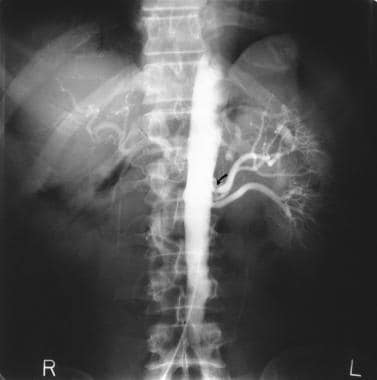
- This technique remains the criterion standard for the confirmation and identification of renal artery occlusion in persons with IRD. Specialists can perform renal arteriography by conventional aortography, intravenous subtraction angiography, intra-arterial subtraction angiography, or carbon dioxide angiography.
- Conventional aortography produces excellent radiographic images of the renal artery, requires an arterial puncture, carries the risk of cholesterol emboli, and uses a moderate amount of contrast material with the risk of contrast-induced acute tubular necrosis (ATN). Low osmolar contrast material can limit the risk of this complication. Complication rates for renal angiography are 6-10% in most series.
- Intravenous subtraction angiography is sensitive for identifying stenosis of the main renal artery but does not demonstrate accessory or branch renal arteries sufficiently; however, this technique avoids the use of a high volume of contrast and the risk of artery puncture and arterial atherosclerotic emboli.
- Intra-arterial digital subtraction angiography has a high diagnostic accuracy compared to conventional angiography and is associated with fewer complications, lower doses of contrast, and smaller catheter size.
- Carbon dioxide angiography is an alternative angiographic contrast agent used in combination with digital subtraction angiography to avoid the risk of conventional nephrotoxic contrast agents in patients with severe renal insufficiency. The images obtained are similar in quality to intra-arterial digital subtraction angiography; however, the technique requires an experienced investigator and a dedicated person to inject the carbon dioxide. Discomfort and inadequate images are potential complications of the procedure.
- Contrast nephrotoxicity
- Patients with progressive ischemic nephropathy (ie, underlying chronic renal failure) are at risk for contrast nephrotoxicity and should be informed of this risk prior to any contrast procedure.
- Contrast nephropathy typically manifests as a brief rise in the serum creatinine level 3-6 days after exposure to radiocontrast and is reported in up to 40% of patients with underlying renal failure.
- Most patients with contrast nephropathy ultimately recover renal function. Porter reviewed results from nearly 300 patients with contrast nephropathy and concluded that fewer than 10% of these patients required dialysis permanently.
- Selection of diagnostic tests
- Once patients are identified as being at high risk for RAS, the choice of the best test for diagnosis is controversial.
- Accurate identification of patients with correctable renovascular hypertension can be difficult with use of standard noninvasive techniques (eg, sonography) because they provide only indirect evidence of the presence of renal artery lesions.
- On the other hand, invasive techniques with more accurate diagnostic potential can produce a worsening of renal function because of contrast toxicity and complications related to the procedures themselves (eg, arterial puncture, catheter-induced atheroembolism).
- Gilfeather et al performed a study evaluating conventional angiography versus gadolinium-enhanced MRA in 54 patients and 107 kidneys. The study showed that in 70 kidneys (65%), the average degree of stenosis reported by readers of both modalities differed by 10% or less. In 22 cases (21%), MRA overestimated the degree of stenosis by more than 10% relative to the results of conventional angiography; in 15 cases (14%), MRA underestimated the stenosis by more than 10%.
- The obvious advantages of conventional angiography are its ability to determine the clinical importance of suggestive lesions and the ability to concurrently perform endovascular therapy. In addition, the determination of the pressure gradient across a stenotic lesion may be helpful in determining the clinical significance of a lesion (Gross et al, 2001). However, specialists should weigh these advantages against the higher cost and greater morbidity of conventional angiography. The slightly inferior variability of MRA in diagnostic interpretation further supports the use of this technique as potentially the most appropriate tool for screening patients strongly suggested to have atherosclerotic RVD.
Medical Care
All patients with significant (>80%) bilateral stenosis and stenosis in a solitary functioning kidney are candidates for revascularization, regardless of whether they have renal insufficiency. When renal insufficiency is present, patients with unilateral stenosis are also possible candidates for revascularization. The criteria are slightly different depending on the presence or absence of renal insufficiency.
- When renal function is normal or nearly normal (prevention of renal insufficiency), specialists recommend revascularization if the patient meets the following criteria:
- The degree of stenosis is more than 80-85%.
- The degree of stenosis is 50-80%, and captopril-enhanced scintigraphy findings demonstrate an activation of intrarenal RAS.
- Conversely, physicians can choose observation instead of revascularization (serial control every 6 mo with duplex scanning, accurate correction of dyslipidemia, use of drugs that block platelet aggregation) when the patient meets the following criteria:
- Stenosis is 50-80%, and scintigraphy findings are negative.
- The degree of stenosis is less than 50%.
- When renal insufficiency is present and the objective is recovery of renal function together with prevention of further renal function impairment, the prerequisites for revascularization are as follows:
- The serum creatinine level is lower than 4 mg/dL.
- The serum creatinine level is higher than 4 mg/dL but with a possible recent renal artery thrombosis.
- When these conditions are satisfied, the authors propose revascularization if the following apply:
- The degree of stenosis is more than 80%.
- The serum creatinine level is increased after administration of ACE inhibitors.
- The degree of stenosis is 50-80%, and the scintigraphy findings are positive.
- Restrict conservative treatment in patients with an established diagnosis of IRD to those with absolute contraindications to surgery or angioplasty or to patients who are likely to succumb due to other comorbid conditions before advancing to end-stage renal disease because of IRD. Clinicians must rely on pharmacologic agents (eg, combination of calcium channels blockers to control blood pressure and optimize renal perfusion), accepting the high probability of deterioration in renal function and shortened survival.
Surgical Care
In 1962, Morris et al compiled the first report on a surgical treatment for occlusion of the renal arteries. They described 8 patients with renal failure who underwent revascularization. Six of these patients returned to essentially normal renal function.
Reports from retrospective studies clearly document that surgical revascularization can improve renal function in patients with ischemic nephropathy. In 1993, Rimmer and Genneari reported postoperative improvement (ie, 20% decrease in serum creatinine concentration) in more than half the patients in 9 studies.
Bypass procedures include aortorenal, hepatorenal, splenorenal, and ileorenal conduits constructed with autologous saphenous veins, autologous arteries, or prosthetic material. For atherosclerotic disease, surgeons can also perform atherectomy to improve renal blood flow. In persons with nonatheromatous renal artery disease, surgeons can reconstruct the renal arteries ex vivo and then can reimplant the revascularized kidney. Reilly and coworkers reported an operative mortality rate of only 6% and immediate improvement in the serum creatinine level of 32% of surgical bypass procedures in 35 patients with solitary kidneys. In the last few years, researchers report that the results are more consistent. The largest series suggests that the GFR improved postoperatively in 49-80% of patients with underlying renal failure.
- Revascularization
- One unresolved issue is how to determine whether revascularization will salvage renal function from a kidney in which the artery is totally occluded.
- Features that may predict successful restoration of renal function include the following:
- Collateral circulation and nephrogram on angiography findings
- Renal length longer than 9 cm
- Lateralization of renin secretion
- Differential concentration of urine on split-function study results
- Spontaneous back-bleeding findings after arteriotomy during surgery
- Viable nephrons after biopsy tissue examination
- Specialists suggest nephrectomy as a modality of treatment in persons with unilateral RVD; one study compared nephrectomy versus revascularization in 95 patients and 190 kidneys, and revascularization showed a greater response, better management in blood pressure, and a significant improvement in the GFR.
- Angioplasty
- Angioplasty is effective for treating renovascular hypertension associated with atheromatous lesions. Indicative of this is the decreased rate of referrals for surgical renovascularization of atheromatous renovascular hypertensive nephropathy by the early 1980s (from 41% to 26%). In practical terms, angioplasty can usually limit hospitalization, avoid general anesthesia, and minimize tissue trauma.
- In 1987, Ziegelbaum et al compared the outcomes of angioplasty and surgical bypass. The researchers studied 70 elderly patients with atheromatous disease and found that angioplasty caused major complications, including 2 deaths. Renal function improved (ie, >20% decrease in serum creatinine level) in 57.5% of surgery patients but in only 15.8% of angioplasty patients. After 48 months of follow-up, the unassisted patency rate was only 69% in the angioplasty group compared to 100% in the surgical group.
- Erdoes et al examined the results of 58 surgical and 18 percutaneous revascularizations in nonrandomized patients. These 2 approaches showed similar operation risk (mortality rate 4.8-5.3%); however, functional improvement (ie, blood pressure, serum creatinine level) and patency of the renal artery were dramatically better in the surgical group compared to the revascularization group after nearly 4 years of follow-up.
- van Jaarsveld et al reported the results of a multicenter trial designed to evaluate the relative benefit of angioplasty versus medical therapy for hypertension associated with RVD. They found that both groups had similar decreases in blood pressure, although the patients who underwent angioplasty used one fewer hypertensive medication. While renal function was improved at 3 months in those undergoing angioplasty, the function at 12 months was similar. They concluded that restricting angioplasty to those with atherosclerotic renovascular hypertension persisting despite use of 3 or more antihypertensive medications was prudent. Note that the patients in this trial did not undergo angioplasty with stent placement. In addition, 9% of patients in the medical therapy–only group experienced total occlusion of the affected renal artery on 12-month follow-up angiography.
- A randomized study by van de Ven et al that compared percutaneous transluminal angioplasty (PTA) for ostial ATH with PTA with stent (PTAS) showed that PTAS is a better technique compared to PTA to achieve vessel patency in ostial atherosclerotic RAS. The primary success rate was 57% for PTA compared with 88% for PTAS. The restenosis rate after a successful primary procedure was 48% for PTA compared to 14% for PTAS. In the last 6 years, the use of PTAS in patients with ostial stenosis or early restenosis has led to a considerable reduction in the restenosis rate. Controversy still surrounds the best approach to patients with atherosclerotic renovascular disease, as reviewed by Ives et al (2003), Textor (2004), and Plouin (2003).
- In some institutions, PTAS is the first-step approach in patients with IRD, and practitioners reserve surgery for the technical failure of percutaneous maneuvers. However, surgery remains the first choice of treatment under certain conditions, including the following:
- Simultaneous abdominal aorta aneurysm
- Renal artery aneurysm
- Renal artery occlusion (with unsuccessful thrombolysis)
- Renal artery rupture
- RAS secondary to kinking
- Peripheral multifocal stenosis
- Unsuccessful angioplasty
- A small, retrospective review of 20 patients (Dejani et al, 2000) who underwent a revascularization procedure (ie, surgery, PTA, PTAS) revealed a high complication rate (increased serum creatinine level in 25%, eosinophilia in 5%, atheroemboli in 15%, renal artery dissection in 5%) despite achieving improved serum creatine values in only 25%. Fifty percent of patients had stable azotemia. The authors and others conclude that a prospective, randomized trial of medical management with or without PTAS is warranted for this complex clinical problem.
Consultations
The optimal approach to therapeutic interventions should be developed in consultation with an interventional radiologist and vascular surgeon to determine the relative expertise of these subspecialists at the individual medical center.
The general approach to therapy of ischemic nephropathy involves control of hypertension, preferably with ACE inhibitors or angiotensin II antagonists. Unfortunately, these 2 classes of drugs may lead to increased serum creatine levels and hyperkalemia, limiting their utility. In this case, calcium channel blockers are likely the most useful and best-tolerated agents. Initiate strict control of serum cholesterol, which usually requires the use of HMG-CoA reductase inhibitors, as with all conditions associated with ATH. A study by Bianchi et al (2003) suggests that statins, in addition to ACE inhibitors and angiotensin receptor blockers (ARBs), may reduce proteinuria and slow the progression of kidney disease.
Drug Category: Angiotensin-converting enzyme inhibitors
These agents decrease aldosterone secretion.
| Drug Name | Captopril (Capoten) |
| Description | Parent compound of this class of medications. Sulfhydryl group associated with proteinuria and neutropenia when used at high doses. Prevents conversion of angiotensin I to angiotensin II, a potent vasoconstrictor, resulting in lower aldosterone secretion. |
| Adult Dose | 12.5-25 mg PO bid/tid; may increase by 12.5-25 mg/dose at 1- to 2-wk intervals, not to exceed 50 mg tid CrCl 10-50 mL/min: 75% of starting dose CrCl <10 mL/min: 50% of starting dose |
| Pediatric Dose | 6.25-12.5 mg PO q12-24h; not to exceed 6 mg/kg/d |
| Contraindications | Documented hypersensitivity; renal impairment |
| Interactions | NSAIDs may reduce hypotensive effects; may increase digoxin, lithium, and allopurinol levels; rifampin decreases levels; probenecid may increase levels; hypotensive effects may be enhanced when given concurrently with diuretics |
| Pregnancy | C - Safety for use during pregnancy has not been established.
|
| Precautions | Category D for pregnancy in second and third trimesters; caution in renal impairment, valvular stenosis, or severe congestive heart failure |
| Drug Name | Enalapril (Vasotec) |
| Description | One example of this class of compounds. Similar precautions to captopril with respect to potential increase in potassium and creatinine. Major adverse effect is dry cough. Newer and, occasionally, better tolerated than parent compound. Many variations that allow for once-daily dosing and better tissue ACE inhibition. |
| Adult Dose | 2.5-5 mg/d PO (increase prn) Dosing range: 10-40 mg/d PO in 1-2 divided doses Alternatively: 1.25 mg/dose IV over 5 min q6h |
| Pediatric Dose | Not established |
| Contraindications | Documented hypersensitivity |
| Interactions | NSAIDs may reduce hypotensive effects; may increase digoxin, lithium, and allopurinol levels; rifampin decreases levels; probenecid may increase levels; hypotensive effects may be enhanced when given concurrently with diuretics |
| Pregnancy | C - Safety for use during pregnancy has not been established.
|
| Precautions | Caution in renal impairment, valvular stenosis, or severe congestive heart failure |
Drug Category: Angiotensin II receptor antagonists
Useful for hypertension and heart failure in patients who are intolerant of ACE inhibitors. Many alternative compounds exist with few significant clinical differences.
| Drug Name | Losartan (Cozaar) |
| Description | Initial compound in class to gain approval. Useful for treatment of hypertension and heart failure in patients who are intolerant of ACE inhibitors. Many alternative compounds exist with few significant clinical differences. Nonpeptide angiotensin II receptor antagonist that blocks the vasoconstricting and aldosterone-secreting effects of angiotensin II. May induce a more complete inhibition of the renin-angiotensin system than ACE inhibitors, does not affect the response to bradykinin, and is less likely to be associated with cough and angioedema. For patients unable to tolerate ACE inhibitors. |
| Adult Dose | 25-100 mg PO qd divided in 1-2 doses |
| Pediatric Dose | Not established |
| Contraindications | Documented hypersensitivity |
| Interactions | Ketoconazole, sulfaphenazole, and phenobarbital may decrease effects; cimetidine and monoxidine may increase effects |
| Pregnancy | B - Usually safe but benefits must outweigh the risks.
|
| Precautions | Follow-up serum potassium and creatinine levels in 1-2 wk; caution in patients with unilateral or bilateral RAS |
Drug Category: HMG-CoA reductase inhibitors
Adjunct to diet to reduce total and LDL cholesterol in patients with hypercholesterolemia. Also lower triglycerides.
| Drug Name | Atorvastatin (Lipitor) |
| Description | One of many compounds with comparable efficacy and adverse effect profiles. Inhibits HMG-CoA reductase, which, in turn, inhibits cholesterol synthesis and increases cholesterol metabolism. |
| Adult Dose | 10 mg PO qd; titrate to a maximum 80 mg/d prn |
| Pediatric Dose | Not established |
| Contraindications | Documented hypersensitivity; significant hepatic impairment; pregnancy, breastfeeding |
| Interactions | Toxicity increases when coadministered with triazole antifungals, CNS depressants, macrolide antibiotics, mibefradil, fibric acid derivatives |
| Pregnancy | X - Contraindicated in pregnancy
|
| Precautions | Liver toxicity and rhabdomyolysis; monitor lipid levels, LFTs, and CK 4-6 wk after initiation of therapy; do not exceed daily dose; caution in patients receiving drugs that prolong QRS or Q-T interval |
Further Outpatient Care
- In view of the natural history of RVD, patients require serial determinations of serum creatinine levels, adequate blood pressure control, and serum potassium levels. Duplex ultrasound, if available, allows regular radiologic progression follow-up.
Prognosis
- Researchers have studied the natural history of atherosclerotic RAS by obtaining images from sequential abdominal aortographs or duplex ultrasound scans in patients with documented renal artery lesions who have been treated medically. Most studies show that progressive arterial obstruction occurs in 42-53% of patients with atherosclerotic RAS, often within the first 2 years of radiographic follow-up. The incidence rate of progression to complete renal artery occlusion in these studies ranges from 9-16%; this often occurs in patients with a high-degree stenosis. In a study of 85 patients at the Cleveland Clinic who were followed for 3-172 months, patients with mild-to-moderate stenosis remained unchanged upon follow-up, and 39% of patients with greater than 75% lesions progressed to total occlusion (Schreiber, 1984).
Patient Education
Medical/Legal Pitfalls
- In many instances, patients have moderate-to-severe azotemia and the risks of contrast-induced ATN and atheroembolic renal failure are significant and could result in the need for permanent or temporary dialysis. These unfortunate outcomes must be discussed with the patient and put into perspective prior to any invasive procedures such as surgery, angiography, or angioplasty.
- Bianchi S, Bigazzi R, Caiazza A, Campese VM. A controlled, prospective study of the effects of atorvastatin on proteinuria and progression of kidney disease. Am J Kidney Dis. Mar 2003;41(3):565-70. [Medline].
- Crowley JJ, Santos RM, Peter RH, et al. Progression of renal artery stenosis in patients undergoing cardiac catheterization. Am Heart J. Nov 1998;136(5):913-8. [Medline].
- Dejani H, Eisen TD, Finkelstein FO. Revascularization of renal artery stenosis in patients with renal insufficiency. Am J Kidney Dis. Oct 2000;36(4):752-8. [Medline].
- Erdoes LS, Berman SS, Hunter GC, Mills JL. Comparative analysis of percutaneous transluminal angioplasty and operation for renal revascularization. Am J Kidney Dis. Apr 1996;27(4):496-503. [Medline].
- Gilfeather M, Yoon HC, Siegelman ES, et al. Renal artery stenosis: evaluation with conventional angiography versus gadolinium-enhanced MR angiography. Radiology. Feb 1999;210(2):367-72. [Medline].
- Greco BA, Breyer JA. Atherosclerotic ischemic renal disease. Am J Kidney Dis. Feb 1997;29(2):167-87. [Medline].
- Gross CM, Kramer J, Weingartner O, et al. Determination of renal arterial stenosis severity: comparison of pressure gradient and vessel diameter. Radiology. Sep 2001;220(3):751-6.
- Holley KE, Hunt JC, Brown AL Jr, et al. Renal artery stenosis. A clinical-pathologic study in normotensive and hypertensive patients. Am J Med. Jul 1964;37:14-22.
- Ives NJ, Wheatley K, Stowe RL, et al. Continuing uncertainty about the value of percutaneous revascularization in atherosclerotic renovascular disease: a meta-analysis of randomized trials. Nephrol Dial Transplant. Feb 2003;18(2):298-304. [Medline].
- Jacobson HR. Ischemic renal disease: an overlooked clinical entity?. Kidney Int. Nov 1988;34(5):729-43. [Medline].
- Krijnen P, Van Jaarsveld BC, Deinum J, et al. Which patients with hypertension and atherosclerotic renal artery stenosis benefit from immediate intervention?. J Hum Hypertens. Feb 2004;18(2):91-6. [Medline].
- Levey AS, Bosch JP, Lewis JB, et al. A more accurate method to estimate glomerular filtration rate from serum creatinine: a new prediction equation. Modification of Diet in Renal Disease Study Group. Ann Intern Med. Mar 16 1999;130(6):461-70. [Medline].
- Loubeyre P, Trolliet P, Cahen R, et al. MR angiography of renal artery stenosis: value of the combination of three-dimensional time-of-flight and three-dimensional phase-contrast MR angiography sequences. AJR Am J Roentgenol. Aug 1996;167(2):489-94. [Medline].
- Mailloux LU, Napolitano B, Bellucci AG, et al. Renal vascular disease causing end-stage renal disease, incidence, clinical correlates, and outcomes: a 20-year clinical experience. Am J Kidney Dis. Oct 1994;24(4):622-9. [Medline].
- Main J. When should atheromatous renal artery stenosis be considered? A guide for the general physician. Clin Med. Nov-Dec 2003;3(6):520-5. [Medline].
- Middleton JP. Ischemic disease of the kidney: how and why to consider revascularization. J Nephrol. May-Jun 1998;11(3):123-36. [Medline].
- Morris GC, DeBakey ME, Cooley DA. Surgical Treatment of renal failure of renovascular origin. JAMA. 1962;182:609-12.
- Novick AC. Options for therapy of ischemic nephropathy: role of angioplasty and surgery. Semin Nephrol. Jan 1996;16(1):53-60. [Medline].
- Olbricht CJ, Paul K, Prokop M, et al. Minimally invasive diagnosis of renal artery stenosis by spiral computed tomography angiography. Kidney Int. Oct 1995;48(4):1332-7. [Medline].
- Pedersen EB. New tools in diagnosing renal artery stenosis. Kidney Int. Jun 2000;57(6):2657-77. [Medline].
- Plouin PF. Stable patients with atherosclerotic renal artery stenosis should be treated first with medical management. Am J Kidney Dis. Nov 2003;42(5):851-7. [Medline].
- Porter GA. Experimental contrast-associated nephropathy and its clinical implications. Am J Cardiol. Oct 26 1990;66(14):18F-22F. [Medline].
- Radermacher J, Chavan A, Bleck J, et al. Use of Doppler ultrasonography to predict the outcome of therapy for renal-artery stenosis. N Engl J Med. Feb 8 2001;344(6):410-7. [Medline].
- Reilly JM, Rubin BG, Thompson RW, et al. Revascularization of the solitary kidney: a challenging problem in a high risk population. Surgery. Oct 1996;120(4):732-6; discussion 736-7. [Medline].
- Reilly LM, Cunningham CG, Maggisano R, et al. The role of arterial reconstruction in spontaneous renal artery dissection. J Vasc Surg. Oct 1991;14(4):468-77; discussion 477-9. [Medline].
- Rimmer JM, Gennari FJ. Atherosclerotic renovascular disease and progressive renal failure. Ann Intern Med. May 1 1993;118(9):712-9. [Medline].
- Safian RD, Textor SC. Renal-artery stenosis. N Engl J Med. Feb 8 2001;344(6):431-42. [Medline].
- Schreiber MJ, Pohl MA, Novick AC. The natural history of atherosclerotic and fibrous renal artery disease. Urol Clin North Am. Aug 1984;11(3):383-92. [Medline].
- Textor SC. Ischemic nephropathy: where are we now?. J Am Soc Nephrol. Aug 2004;15(8):1974-82. [Medline].
- Wilcox CS. Ischemic nephropathy: noninvasive testing. Semin Nephrol. Jan 1996;16(1):43-52. [Medline].
- Ziegelbaum M, Novick AC, Hayes J, et al. Management of renal arterial disease in the elderly patient. Surg Gynecol Obstet. Aug 1987;165(2):130-4. [Medline].
- Zuccala A, Zucchelli P. Ischemic nephropathy: diagnosis and treatment. J Nephrol. Nov-Dec 1998;11(6):318-24. [Medline].
- Zucchelli PC. Hypertension and atherosclerotic renal artery stenosis: diagnostic approach. J Am Soc Nephrol. Nov 2002;13 Suppl 3:S184-6. [Medline].
- van Jaarsveld BC, Krijnen P, Pieterman H, et al. The effect of balloon angioplasty on hypertension in atherosclerotic renal-artery stenosis. Dutch Renal Artery Stenosis Intervention Cooperative Study Group. N Engl J Med. Apr 6 2000;342(14):1007-14. [Medline].
- van de Ven PJ, Kaatee R, Beutler JJ, et al. Arterial stenting and balloon angioplasty in ostial atherosclerotic renovascular disease: a randomised trial. Lancet. Jan 23 1999;353(9149):282-6. [Medline].
Renal Artery Stenosis excerpt Article Last Updated: Feb 1, 2007
|