Continually Updated Clinical Reference
 
 
  All Sources     eMedicine     Medscape     Drug Reference     MEDLINE
 
eMedicine - Pericardial Effusion : Article by

Quick Find
Authors & Editors
Introduction
Clinical
Differentials
Workup
Treatment
Medication
Follow-up
Miscellaneous
Acknowledgments
Multimedia
References

Related Articles
Cardiac Tamponade

Cardiomyopathy, Dilated

Myocardial Infarction

Myocardial Ischemia

Pericarditis, Acute

Pericarditis, Constrictive

Pericarditis, Constrictive-Effusive

Pericarditis, Uremic

Pulmonary Edema, Cardiogenic

Pulmonary Embolism


Patient Education
Click here for patient education.


Author: William J Strimel, DO, Hospitalist Service, Department of Internal Medicine, Washington Regional Medical Center

William J Strimel is a member of the following medical societies: American College of Physicians and American Medical Association

Coauthor(s): Ramin Assadi, MD, Staff Physician, Department of Internal Medicine, Loma Linda University; Ali A Sovari, MD, Staff Physician, Department of Internal Medicine, University of Illinois at Urbana-Champaign College of Medicine; Abraham G Kocheril, MD, FACC, FACP, Professor of Medicine, Director of Clinical Electrophysiology, University of Illinois at Chicago

Editors: Justin D Pearlman, MD, PhD, ME, MA, Director of Dartmouth Advanced Imaging Center, Professor of Medicine, Professor of Radiology, Adjunct Professor, Thayer Bioengineering and Computer Science, Dartmouth-Hitchcock Medical Center; Francisco Talavera, PharmD, PhD, Senior Pharmacy Editor, eMedicine; Ronald J Oudiz, MD, Director of Pulmonary Hypertension, Associate Professor, Department of Medicine, Division of Cardiology, Harbor-UCLA Medical Center, David Geffen School of Medicine at UCLA; Amer Suleman, MD, Consultant in Electrophysiology and Cardiovascular Medicine, Department of Internal Medicine, Division of Cardiology, Medical City Dallas Hospital; Michael E Zevitz, MD, Assistant Professor of Medicine, Finch University of the Health Sciences, The Chicago Medical School; Consulting Staff, Private Practice

Author and Editor Disclosure

Synonyms and related keywords: pericardial effusion, pericardial sac, dropsy of pericardium, pericarditis, pericardial tamponade, pericardiocentesis, pericardioscopy, malignant pericardial effusion, leukemia, lymphoma, idiopathic effusions, Beck triad of pericardial tamponade, hypotension, muffled heart sounds, jugular venous distension, pulsusparadoxus, pericardial friction rub, hepatojugular reflux, Ewart sign, hepatosplenomegaly, cyanosis, hydropericardium, congestive heart failure, valvular disease, mediastinal lymphoma, Hodgkin disease, metastatic breast cancer, bacterial pericardial effusion, viral pericardial effusion, tuberculous pericardial effusion, parasitic pericardial effusion, HIV-related pericardial effusion, fungal pericardial effusion, systemic lupus erythematosus, rheumatoid arthritis, systemic sclerosis, vasculitides, uremia, post pericardiotomy syndrome, chylopericardium, myxedema,radiation-induced pericardial effusion

Background

Pericardial effusion defines the presence of an abnormal amount and/or character of fluid in the pericardial space. It can be caused by a variety of local and systemic disorders, or it may be idiopathic. Pericardial effusions can be acute or chronic, and the time course of development has a great impact on the patient's symptoms. Treatment varies, and is directed at both removal of the pericardial fluid and alleviation of the underlying cause, which usually is determined by a combination of fluid analysis and correlation with comorbid illnesses.

Pathophysiology

The pericardial space normally contains 15-50 mL of fluid, which serves as lubrication for the visceral and parietal layers of the pericardium. This fluid is thought to originate from the visceral pericardium and is essentially an ultrafiltrate of plasma. Total protein levels are generally low; however, the concentration of albumin is increased in pericardial fluids owing to its low molecular weight.

The cause of abnormal fluid production depends on the underlying etiology, but usually it is secondary to injury or insult to the pericardium (ie, pericarditis). Transudative fluids result from obstruction of fluid drainage, which occurs through lymphatic channels. Exudative fluids occur secondary to inflammatory, infectious, malignant, or autoimmune processes within the pericardium.

Clinical manifestations of pericardial effusion are highly dependent upon the rate of accumulation of fluid in the pericardial sac. Rapid accumulation of pericardial fluid may cause elevated intrapericardial pressures with as little as 80 mL of fluid, while slowly progressing effusions can grow to 2 liters without symptoms.

Frequency

United States

Few large studies have characterized the epidemiology of pericardial effusion. Pericardial effusion has been found in 3.4% of subjects in general autopsy studies. Small pericardial effusions often are asymptomatic.

A higher incidence of pericardial effusion is associated with certain diseases. Twenty-one percent of cancer patients have metastases to the pericardium. The most common are lung (37% of malignant effusions), breast (22%), and leukemia/lymphoma (17%). Patients with HIV, with or without AIDS, are found to have increased prevalence, with 41-87% having asymptomatic effusion and 13% having moderate-to-severe effusion.

Mortality/Morbidity

Dependent upon etiology and comorbid conditions

  • Idiopathic effusions are well tolerated in most patients. As many as 50% of patients with large, chronic effusions were asymptomatic during long-term follow-up.
  • Pericardial effusion is the primary or contributory cause of death in 86% of cancer patients with symptomatic effusions.
  • Survival rate for patients with HIV and symptomatic pericardial effusion is 36% at 6 months, 19% at 1 year.

Race

  • No consistent difference among races is reported in the literature.
  • AIDS patients with pericardial effusion are more likely to be white.

Sex

  • No sexual predilection exists.

Age

  • Observed in all age groups
  • Mean occurrence in fourth or fifth decades; earlier in patients with HIV


History

  • Cardiovascular
    • Chest pain, pressure, discomfort: Characteristically, pericardial pain may be relieved by sitting up and leaning forward and is intensified by lying supine.
    • Light-headedness, syncope
    • Palpitations
  • Respiratory - Cough, dyspnea, hoarseness
  • Gastrointestinal - Hiccoughs
  • Neurologic - Anxiety, confusion

Physical

  • Cardiovascular
    • Classic Beck triad of pericardial tamponade (hypotension, muffled heart sounds, jugular venous distension)
    • Pulsus paradoxus: Exaggeration of physiologic respiratory variation in systemic blood pressure, defined as a decrease in systolic blood pressure of more than 10 mm Hg with inspiration, signaling falling cardiac output during inspiration.
    • Pericardial friction rub: The most important physical sign of acute pericarditis may have up to 3 components per cardiac cycle and is high-pitched, scratching, and grating. It can sometimes be elicited only when firm pressure with the diaphragm of the stethoscope is applied to the chest wall at the left lower sternal border. The pericardial friction rub is heard most frequently during expiration with the patient upright and leaning forward.
    • Tachycardia
    • Hepatojugular reflux: This can be observed by applying pressure to the periumbilical region. A rise in the jugular venous pressure (JVP) of greater than 3 cm H2O for more than 30 seconds suggests elevated central venous pressure. Transient elevation in JVP may be normal.
  • Respiratory
    • Tachypnea
    • Decreased breath sounds (secondary to pleural effusions)
    • Ewart sign - Dullness to percussion beneath the angle of left scapula from compression of the left lung by pericardial fluid
  • Gastrointestinal - Hepatosplenomegaly
  • Extremities
    • Weakened peripheral pulses
    • Edema
  • Cyanosis

Causes

  • Infectious
    • Viral (coxsackievirus A and B, hepatitis, HIV)
    • Pyogenic (pneumococci, streptococci, staphylococci, Neisseria, Legionella species)
    • Tuberculous
    • Fungal (histoplasmosis, coccidioidomycosis, Candida)
    • Other infections (syphilitic, protozoal, parasitic)
  • Noninfectious
    • Acute idiopathic
    • Uremia
    • Neoplasia
      • Primary tumors (benign or malignant, mesothelioma)
      • Tumors metastatic to pericardium (lung and breast cancer, lymphoma, leukemia)
    • Myxedema
    • Acute myocardial infarction
    • Postirradiation
    • Aortic dissection (with leakage into pericardial sac)
    • Trauma
    • Cholesterol
    • Chylopericardium
    • Familial Mediterranean fever
    • Whipple disease
    • Sarcoidosis
  • Hypersensitivity or autoimmunity related
    • Rheumatic fever
    • Collagen vascular disease (systemic lupus erythematosus, rheumatoid arthritis, ankylosing spondylitis, scleroderma, acute rheumatic fever, Wegener granulomatosis)
    • Drug-induced (eg, procainamide, hydralazine, isoniazid, minoxidil, phenytoin, anticoagulants, methysergide)
    • Postcardiac injury


Cardiac Tamponade
Cardiomyopathy, Dilated
Myocardial Infarction
Myocardial Ischemia
Pericarditis, Acute
Pericarditis, Constrictive
Pericarditis, Constrictive-Effusive
Pericarditis, Uremic
Pulmonary Edema, Cardiogenic
Pulmonary Embolism


Lab Studies

  • Electrolytes - Metabolic abnormalities (eg, renal failure)
  • CBC count with differential - Leukocytosis for evidence of infection, as well as cytopenias, as signs of underlying chronic disease (eg, cancer, HIV)
  • Cardiac enzymes: Troponin level is frequently minimally elevated in acute pericarditis, usually in the absence of an elevated total creatine kinase level. Presumably, this is due to some involvement of the epicardium by the inflammatory process. Although the elevated troponin may lead to the misdiagnosis of acute pericarditis as a myocardial infarction, most patients with an elevated troponin and acute pericarditis have normal coronary angiograms. An elevated troponin level in acute pericarditis typically returns to normal within 1-2 weeks and is not associated with a worse prognosis.
  • Thyroid-stimulating hormone - Thyroid-stimulating hormone screen for hypothyroidism
  • Rickettsial antibodies - If high index of suspicion of tick-borne disease
  • Rheumatoid factor, immunoglobulin complexes, antinuclear antibody test (ANA), and complement levels (which would be diminished) - In suspected rheumatologic causes
  • Pericardial fluid analysis - Routine tests
    • Lactic (acid) dehydrogenase (LDH), total protein - The Light criteria (for exudative pleural effusion) found to be as reliable in distinguishing between exudative and transudative effusions
      • Total protein fluid-to-serum ratio >0.5
      • LDH fluid-to-serum ratio >0.6
      • LDH fluid level exceeds two thirds of upper-limit of normal serum level
    • Other indicators suggestive of exudate - Specific gravity >1.015, total protein >3.0 mg/dL, LDH >300 U/dL, glucose fluid-to-serum ratio <1
    • Cell count - Elevated leukocytes (ie, >10,000) with neutrophil predominance suggests bacterial or rheumatic cause, although unreliable
    • Gram stain - Specific but insensitive indicator of bacterial infection
    • Cultures - Signals and identifies infectious etiology
    • Fluid hematocrit for bloody aspirates - Hemorrhagic fluid hematocrits usually significantly less than simultaneous peripheral blood hematocrits
  • Pericardial fluid - Special tests
    • Viral cultures
    • Adenosine deaminase; polymerase chain reaction (PCR); culture for tuberculosis; smear for acid-fast bacilli in suspected tuberculosis infection, especially in patients with HIV
    • A definite diagnosis of tuberculous pericarditis is based on the demonstration of tubercle bacilli in pericardial fluid or on a histological section of the pericardium. Probable tuberculous pericarditis is based on the proof of tuberculosis elsewhere in a patient with otherwise unexplained pericarditis, a lymphocytic pericardial exudate with elevated adenosine deaminase levels, and/or appropriate response to a trial of antituberculosis chemotherapy.

Imaging Studies

  • Chest radiography
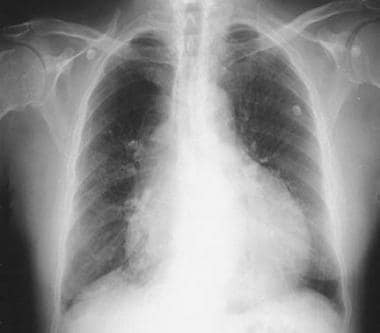
    • Findings include enlarged cardiac silhouette (so-called water-bottle heart), pericardial fat stripe (see Image 1).
    • A third of patients have a coexisting pleural effusion.
    • Radiography is unreliable in establishing or refuting diagnosis of pericardial effusion.
  • Echocardiogram
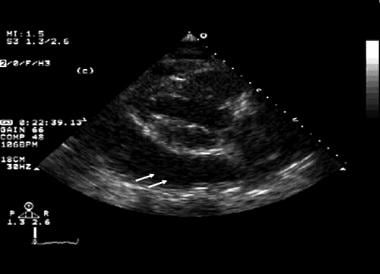
    • This is the criterion standard for noninvasive diagnosis (see Image 2).
    • Pericardial effusion appears as an "echo-free" space between the visceral and parietal pericardium (see Image 3). Early effusions tend to accumulate posteriorly owing to expandable posterior/lateral pericardium. Large effusions are characterized by excessive motion within the pericardial sac. Severe cases may be accompanied by diastolic collapse of the right atrium and right ventricle (and in hypovolemic patients the left atrium and left ventricle), signaling the onset of pericardial tamponade (see Cardiac Tamponade).
    • Large pericardial effusions are defined as greater than 1 cm thick on echocardiography, completely surrounding the heart. Small effusions are less than 1 cm and often localized, usually posteriorly.
    • False-positive echocardiograms can occur in pleural effusions, pericardial thickening, increased pericardial fat (especially the anterior epicardial fat pad), atelectasis, and mediastinal lesions.
    • In patients with pericardial effusion, imaging from low to midposterior thorax can provide additional diagnostic echocardiographic images and should be used in patients in whom conventional images are technically difficult or require additional information.
  • Transesophageal echocardiography: Transesophageal echocardiography (TEE) is useful in characterizing loculated effusions.
  • CT scan
    • Potentially can determine composition of fluid and may detect as little as 50 mL of fluid
    • Fewer false-positive results than with echocardiography
    • Problem: Patients must be transported to the CT scanner, which may not be possible if the patient's condition is unstable.
  • MRI
    • Can detect as little as 30 mL of pericardial fluid
    • May be able to distinguish hemorrhagic and nonhemorrhagic effusions
    • More difficult to perform than CT scan acutely, given the length of time the patient must remain in the scanner
  • Both MRI and CT scan may be superior to echocardiography in detecting loculated pericardial effusions and pericardial thickening

Other Tests

  • ECG
    • Early in the course of acute pericarditis, the ECG typically displays diffuse ST elevation in association with PR depression. The ST elevation is usually present in all leads except for aVR, but post–myocardial infarction pericarditis, the changes may be more localized. Classically, the ECG changes of acute pericarditis evolve through 4 progressive stages: stage I, diffuse ST-segment elevation and PR-segment depression; stage II, normalization of the ST and PR segments; stage III, widespread T-wave inversions; and stage IV, normalization of the T waves (see Image 4).
    • Patients with uremic pericarditis frequently do not have the typical ECG abnormalities.

Procedures

  • Pericardiocentesis
    • This procedure is used for diagnostic as well as therapeutic purposes. Support for the use of echocardiographic guidance is increasing, unless emergent treatment is required.
    • Indications include impending hemodynamic compromise (ie, pericardial tamponade), suspected infectious etiology, and uncertain etiology.
    • Use of a needle that is at least 5 cm long, 16-gauge in diameter, and has a short bevel can minimize the risk of complications and should allow for adequate pericardial drainage. A system allowing placement of a catheter over the needle is preferred.
    • Contrast echocardiography using agitated saline is useful in cases when bloody fluid is aspirated to determine if the needle is in the ventricular cavity.
    • Attaching an ECG electrode to the pericardiocentesis needle is also useful for avoiding myocardial puncture. Electrical activity will be seen on the monitor when the needle comes into contact with atrial or ventricular myocardium. These changes may be delayed, however, and instill a false sense of security in needle placement; sense of touch and the findings on aspiration should guide the procedure, with the clinician ultimately relying on good clinical sense.
    • Complications of pericardiocentesis include ventricular rupture, dysrhythmias, pneumothorax, myocardial and/or coronary artery laceration, and infection.
    • Recurrence rates within 90 days may be as high as 90% in patients with cancer.
  • Balloon pericardotomy
    • A catheter is placed in the pericardial space under fluoroscopy, which, after inflation of the balloon, creates a channel for passage of fluid into the pleural space, where reabsorption occurs more readily.
    • This may be useful for recurrent effusions.
  • Pericardial sclerosis
    • Several pericardial sclerosing agents have been used with varying success rates (eg, tetracycline, doxycycline, cisplatin, 5-fluorouracil).
    • The pericardial catheter may be left in place for repeat instillation if necessary until the effusion resolves.
    • Complications include intense pain, atrial dysrhythmias, fever, and infection.
    • Success rates are reported as high as 91% at 30 days.
  • Pericardioscopy
    • This procedure is not universally available.
    • It may increase diagnostic sensitivity in cases of unexplained pericardial effusions. It allows for visualization of pericardium and for pericardial biopsies.


Medical Care

Initially, medical care is focused on determination of the underlying etiology.

  • Aspirin/nonsteroidal anti-inflammatory agents (NSAIDs)
    • Most acute idiopathic or viral pericarditis occurrences are self-limited and respond to treatment with aspirin (650 mg q6h) or another NSAID.
    • Aspirin may be the preferred nonsteroidal agent to treat pericarditis after myocardial infarction because other NSAIDs may interfere with myocardial healing.
    • Indomethacin should be avoided in patients who may have coronary artery disease.
  • Colchicine: The routine use of colchicine is supported by recently reported results of the COlchicine for acute PEricarditis (COPE) trial. In this trial, 120 patients with a first episode of acute pericarditis (idiopathic, acute, postpericardiotomy syndrome, and connective tissue disease) entered a randomized, open-label trial comparing aspirin treatment alone with aspirin plus colchicine (1-2 mg for the first day followed by 0.5-1 mg/d for 3 mo). Colchicine reduced symptoms at 72 hours (11.7% vs 36.7%; P=0.03) and reduced recurrence at 18 months (10.7% vs 36.7%; P=0.004; 5 needed treatment). Colchicine was discontinued in 5 patients because of diarrhea. No other adverse events were noted. Importantly, none of the 120 patients developed cardiac tamponade or progressed to pericardial constriction.
  • Steroids
    • Steroid administration early in the course of acute pericarditis appears to be associated with an increased incidence of relapse after tapering the steroids.
    • In the COPE trial, steroid use was an independent risk factor for recurrence (odds ratio=4.3). Also, an observational study strongly suggests that the use of steroids increases the probability of relapse in patients treated with colchicine.
    • Systemic steroids should be considered only in patients with recurrent pericarditis unresponsive to NSAIDs and colchicine or as needed for treatment of an underlying inflammatory disease. If steroids are to be used, an effective dose (1-1.5 mg/kg of prednisone) should be given, and it should be continued for at least 1 month before slow tapering.
    • The intrapericardial administration of steroids has been reported to be effective in acute pericarditis without producing the frequent reoccurrence of pericarditis that complicates the use of systemic steroids, but the invasive nature of this procedure limits its use.
  • Hemodynamic support
    • Patients who have effusions with actual or threatened tamponade should be considered to have a true or potential emergency. Most patients require pericardiocentesis to treat or prevent tamponade. However, treatment should be carefully individualized.
    • Hemodynamic monitoring with a balloon flotation pulmonary artery catheter is useful, especially in those with threatened or mild tamponade in whom a decision is made to defer pericardiocentesis. Hemodynamic monitoring is also helpful after pericardiocentesis to assess both reaccumulation and the presence of underlying constrictive disease. However, insertion of a pulmonary artery catheter should not be allowed to delay definitive therapy in critically ill patients.
    • Intravenous fluid resuscitation may be helpful in cases of hemodynamic compromise.
    • In patients with tamponade who are critically ill, intravenous positive inotropes (dobutamine, dopamine) can be used but are of limited measures and should not be allowed to substitute for or delay pericardiocentesis.
  • Antibiotics
    • In patients with purulent pericarditis, urgent pericardial drainage combined with intravenous antibacterial therapy (eg, vancomycin 1 g bid, ceftriaxone 1-2 g bid, and ciprofloxacin 400 mg/d) is mandatory. Irrigation with urokinase or streptokinase, using large catheters, may liquify the purulent exudate, but open surgical drainage is preferable.
    • The initial treatment of tuberculous pericarditis should include isoniazid 300 mg/day, rifampin 600 mg/day, pyrazinamide 15-30 mg/kg/day, and ethambutol 15-25 mg/kg/day. Prednisone 1-2 mg/kg/day is given for 5-7 days and progressively reduced to discontinuation in 6-8 weeks. Drug sensitivity testing is essential. Uncertainty remains whether adjunctive corticosteroids are effective in reducing mortality or progression to constriction. Surgical resection of the pericardium remains the appropriate treatment for constrictive pericarditis. The timing of surgical intervention is controversial, but many experts recommend a trial of medical therapy for noncalcific pericardial constriction and pericardiectomy in nonresponders after 4-8 weeks of antituberculosis chemotherapy.
  • Antineoplastic therapy (eg, systemic chemotherapy, radiation) in conjunction with pericardiocentesis has been shown to be effective in reducing recurrences of malignant effusions.
  • Corticosteroids and NSAIDs are helpful in patients with autoimmune conditions.

Surgical Care

  • Subxiphoid pericardial window with pericardiostomy
    • This procedure is associated with low morbidity, mortality, and recurrence rates.
    • It can be performed under local anesthesia.
    • It may be less effective when effusion is loculated.
    • It may replace pericardiocentesis as initial treatment for stable pericardial effusions.
    • A recent study suggests that this may be safer and more effective at reducing recurrence rates than pericardiocentesis. However, only patients who were hemodynamically unstable underwent pericardiocentesis, and no change in overall survival rate was observed.
  • Thoracotomy
    • This should be reserved for patients in whom conservative approaches have failed.
    • Thoracotomy allows for creation of a pleuropericardial window, which provides greater visualization of pericardium.
    • Thoracotomy requires general anesthesia and thus has higher morbidity and mortality rates than the subxiphoid approach.
  • Video-assisted thoracic surgery
    • Video-assisted thoracic surgery (VATS) enables resection of a wider area of pericardium than the subxiphoid approach without the morbidity of thoracotomy.
    • The surgeon is able to create a pleuropericardial window and address concomitant pleural pathology, which is especially common in patients with malignant effusions.
    • One disadvantage of VATS is that it requires general anesthesia with single lung ventilation, which may be difficult in otherwise seriously ill patients.
  • Median sternotomy
    • This procedure is reserved for patients with constrictive pericarditis.
    • Operative mortality rate is high (5-15%).

Consultations

  • A cardiologist should be involved in the care of patients with pericardial effusion.
  • Cardiothoracic surgery may be required for recurrent or complicated cases (see Surgical Care).


Autoimmune pericardial effusions may respond to treatment with anti-inflammatory medications. In general, selection of an agent depends on the severity of the patient's symptoms and the tolerability and adverse effect profiles of the medications.

Drug Category: Nonsteroidal anti-inflammatory drugs

Are used mostly for patients with active, nonhemorrhagic pericarditis with or without pericardial effusion. NSAIDS have analgesic, anti-inflammatory, and antipyretic activities. The mechanism of action in pericarditis is not known, but NSAIDS may inhibit cyclooxygenase activity and prostaglandin synthesis. Other mechanisms may exist as well, such as inhibition of leukotriene synthesis, lysosomal enzyme release, lipoxygenase activity, neutrophil aggregation, and various cell-membrane functions.

Drug NameIndomethacin (Indocin, Indometh)
DescriptionDrug of choice in this class, although other NSAIDs (ie, ibuprofen, naproxen, aspirin) possess some efficacy. Used as initial therapy for mild-to–moderately severe inflammatory pericardial effusions.
Adult Dose25-50 mg PO bid/tid
75 mg SR PO bid; titrate to effectiveness; not to exceed 200 mg/d
Pediatric Dose1-2 mg/kg/d PO divided bid/qid; not to exceed 4 mg/kg/d or 150-200 mg/d
ContraindicationsDocumented hypersensitivity; GI bleeding; renal insufficiency
InteractionsAspirin increases risk of inducing serious NSAID-related adverse effects; probenecid may increase concentrations and, possibly, toxicity; may decrease effects of hydralazine, captopril, and beta-blockers; may decrease diuretic effects of furosemide and thiazides; monitor PT closely (instruct patients to watch for signs of bleeding); may increase risk of methotrexate toxicity; may increase phenytoin levels
PregnancyC - Safety for use during pregnancy has not been established.
PrecautionsCategory D in third trimester of pregnancy; acute renal insufficiency, hyperkalemia, hyponatremia, interstitial nephritis, and renal papillary necrosis may occur; increases risk of acute renal failure in patients with preexisting renal disease or compromised renal perfusion; reversible leukopenia may occur (discontinue if persistent leukopenia, granulocytopenia, or thrombocytopenia)
May mask signs and symptoms of infection

Drug Category: Corticosteroids

Have anti-inflammatory properties and cause profound and varied metabolic effects. Corticosteroids modify the body's immune response to diverse stimuli.

Drug NamePrednisone (Deltasone, Orasone, Sterapred)
DescriptionUsed for patients with severe inflammatory pericardial effusions or for those in whom initial treatment with NSAIDs has failed. Other agents may be used if adverse effect profile warrants; dosages should be determined by prednisone equivalents.
Adult Dose5-60 mg/d PO qd or divided bid/qid; taper over 2 wk, as symptoms resolve, to 5-10 mg PO qd
Pediatric Dose4-5 mg/m2/d PO; alternatively, 0.05-2 mg/kg PO divided bid/qid; taper over 2 wk, as symptoms resolve
ContraindicationsDocumented hypersensitivity; viral infection; peptic ulcer disease; hepatic dysfunction; connective tissue infections; fungal or tubercular skin infections; GI disease
InteractionsEstrogens may decrease clearance; may cause digitalis toxicity secondary to hypokalemia; phenobarbital, phenytoin, and rifampin may increase metabolism (consider increasing maintenance dose); diuretics require monitoring for hypokalemia
PregnancyC - Safety for use during pregnancy has not been established.
PrecautionsAbrupt discontinuation may cause adrenal crisis; adverse effects may include hyperglycemia, edema, osteonecrosis, myopathy, peptic ulcer disease, hypokalemia, osteoporosis, euphoria, psychosis, myasthenia gravis, growth suppression, and infections


Further Inpatient Care

  • Patients who present with significant symptoms or cardiac tamponade require emergent treatment and admission to ICU.
  • The pericardial catheter (if placed) should be removed within 24-48 hours to avoid infection.
  • Symptomatic patients should remain hospitalized until definitive treatment is accomplished and/or symptoms have resolved.

Further Outpatient Care

  • Patients should be educated on symptoms of increasing pericardial effusion and should be evaluated whenever these symptoms begin to occur.
  • Indications for echocardiography after diagnosis include the following:
    • A follow-up imaging study to evaluate for recurrence/constriction: Repeat studies may be performed to answer specific clinical questions.
    • The presence of large or rapidly accumulating effusions (to detect early signs of tamponade)

Transfer

  • Symptomatic patients requiring treatment (who are surgical candidates) should receive care at an institution with cardiothoracic surgery capabilities.

Complications

  • Pericardial tamponade
    • Can lead to severe hemodynamic compromise and death
    • Heralded by equalization of diastolic filling pressures
    • Treat with expansion of intravascular volume (small amounts of crystalloids or colloids may lead to improvement, especially in hypovolemic patients) and urgent pericardial drainage. Avoid positive-pressure ventilation if possible, as this decreases venous return and cardiac output. Vasopressor agents are of little clinical benefit.
  • Chronic pericardial effusion
    • Effusions lasting longer than 6 months
    • Usually well tolerated

Prognosis

  • Most patients with acute pericarditis recover without sequelae. Predictors of a worse outcome include the following: fever greater than 38°C, symptoms developing over several weeks in association with immunosuppressed state, traumatic pericarditis, pericarditis in a patient receiving oral anticoagulants, a large pericardial effusion (>20 mm echo-free space or evidence of tamponade), or failure to respond to NSAIDs. In a recent series of 300 patients with acute pericarditis, 254 (85%) did not have any of the high-risk characteristics and had no serious complications. Of these low-risk patients, 221 (87%) were managed as outpatients and the other 13% were hospitalized when they did not respond to aspirin.
  • Patients with symptomatic pericardial effusions from HIV/AIDS or cancer have high short-term mortality rates.


Medical/Legal Pitfalls

  • Failure to consider pericardial effusion as a principal or secondary diagnosis may lead to rapid deterioration and death secondary to cardiac tamponade.
  • Patients with viral cardiomyopathy, especially in the acute setting, may have a similar presentation, with an enlarged heart on chest radiographs. Echocardiography readily distinguishes the difference between enlarged cardiac chambers and a pericardial effusion.


The authors and editors of eMedicine gratefully acknowledge the contributions of previous author, Susan Noe, MD, to the development and writing of this article.


Media file 1:  Image is from a patient with malignant pericardial effusion. Note the "water-bottle" appearance of the cardiac silhouette in the anteroposterior (AP) chest film.
Click to see larger pictureClick to see detailView Full Size Image
Media type:  X-RAY

Media file 2:  Echocardiogram (parasternal, long axis) of a patient with a moderate pericardial effusion.
Click to see larger pictureClick to see detailView Full Size Image
Media type:  Image

Media file 3:  This image is from the same patient with malignant pericardial effusion shown in Images 1 and 4. The effusion is seen as an echo-free region to the right of the left ventricle (LV).
Click to see larger pictureClick to see detailView Full Size Image
Media type:  Image

Media file 4:  This ECG is from the same patient with malignant pericardial effusion shown in Images 1 and 3. The ECG shows diffuse low voltage, with a suggestion of electrical alternans in the precordial leads.
Click to see larger pictureClick to see detailView Full Size Image
Media type:  ECG


  • Allen KB, Faber LP, Warren WH. Pericardial effusion: subxiphoid pericardiostomy versus percutaneous catheter drainage. Ann Thorac Surg. Feb 1999;67(2):437-40. [Medline].
  • Artom G, Koren-Morag N, Spodick DH, et al. Pretreatment with corticosteroids attenuates the efficacy of colchicine in preventing recurrent pericarditis: a multi-centre all-case analysis. Eur Heart J. Apr 2005;26(7):723-7.
  • Bonnefoy E, Godon P, Kirkorian G, et al. Serum cardiac troponin I and ST-segment elevation in patients with acute pericarditis. Eur Heart J. May 2000;21(10):832-6.
  • Braunwald E. Cardiology: how did we get here, where are we today and where are we going?. Can J Cardiol. Oct 2005;21(12):1015-7.
  • Braunwald E, ed. Heart Disease: A Textbook of Cardiovascular Medicine. Philadelphia: WB Saunders Company;1997:1478-96.
  • Cheitlin MD, Alpert JS, Armstrong WF. ACC/AHA Guidelines for the Clinical Application of Echocardiography. A report of the American College of Cardiology/American Heart Association Task Force on Practice Guidelines (Committee on Clinical Application of Echocardiography). Developed in coll. Circulation. Mar 18 1997;95(6):1686-744. [Medline].
  • Chen Y, Brennessel D, Walters J. Human immunodeficiency virus-associated pericardial effusion: report of 40 cases and review of the literature. Am Heart J. Mar 1999;137(3):516-21. [Medline].
  • Chong HH, Plotnick GD. Pericardial effusion and tamponade: evaluation, imaging modalities, and management. Compr Ther. Jul 1995;21(7):378-85. [Medline].
  • Eisenberg MJ, de Romeral LM, Heidenreich PA. The diagnosis of pericardial effusion and cardiac tamponade by 12-lead ECG. A technology assessment. Chest. Aug 1996;110(2):318-24. [Medline].
  • Fagan SM, Chan KL. Pericardiocentesis: blind no more! [editorial; comment]. Chest. Aug 1999;116(2):275-6. [Medline].
  • Feigenbaum, H. Echocardiography. 5th ed. Philadelphia: Lea & Febiger;1994:556-74.
  • Flores RM, Jaklitsch MT, DeCamp MM Jr. Video-assisted thoracic surgery pericardial resection for effusive disease. Chest Surg Clin N Am. Nov 1998;8(4):835-51. [Medline].
  • Guberman BA, Fowler NO, Engel PJ. Cardiac tamponade in medical patients. Circulation. Sep 1981;64(3):633-40. [Medline].
  • Heidenreich PA, Eisenberg MJ, Kee LL. Pericardial effusion in AIDS. Incidence and survival. Circulation. Dec 1 1995;92(11):3229-34. [Medline].
  • Ilan Y, Oren R, Ben-Chetrit E. Etiology, treatment, and prognosis of large pericardial effusions. A study of 34 patients. Chest. Oct 1991;100(4):985-7. [Medline].
  • Imazio M, Bobbio M, Cecchi E, et al. Colchicine in addition to conventional therapy for acute pericarditis: results of the COlchicine for acute PEricarditis (COPE) trial. Circulation. Sep 27 2005;112(13):2012-6.
  • Imazio M, Demichelis B, Cecchi E, et al. Cardiac troponin I in acute pericarditis. J Am Coll Cardiol. Dec 17 2003;42(12):2144-8. [Medline].
  • Imazio M, Demichelis B, Parrini I, et al. Day-hospital treatment of acute pericarditis: a management program for outpatient therapy. J Am Coll Cardiol. Mar 17 2004;43(6):1042-6. [Medline].
  • Kasper D, Branunwald E, Fauci A, et al. Harrison's Principles of Internal Medicine. 16th ed. McGraw-Hill Professional;2005:1414-1420.
  • Kimberly RP. Treatment. Corticosteroids and anti-inflammatory drugs. Rheum Dis Clin North Am. Apr 1988;14(1):203-21. [Medline].
  • Kocheril AG, Luttmann C, Sadaniantz A. Pneumococcal pericarditis successfully treated with catheter drainage and intravenous antibiotics. Cathet Cardiovasc Diagn. Dec 1991;24(4):286-7. [Medline].
  • Lange RA, Hillis LD. Clinical practice. Acute pericarditis. N Engl J Med. Nov 18 2004;351(21):2195-202. [Medline].
  • Little WC, Freeman GL. Pericardial disease. Circulation. Mar 28 2006;113(12):1622-32.
  • Maher EA, Shepherd FA, Todd TJ. Pericardial sclerosis as the primary management of malignant pericardial effusion and cardiac tamponade. J Thorac Cardiovasc Surg. Sep 1996;112(3):637-43. [Medline].
  • Maisch B. Pericardial diseases, with a focus on etiology, pathogenesis, pathophysiology, new diagnostic imaging methods, and treatment. Curr Opin Cardiol. May 1994;9(3):379-88. [Medline].
  • Maisch B, Ristic AD, Pankuweit S. Intrapericardial treatment of autoreactive pericardial effusion with triamcinolone; the way to avoid side effects of systemic corticosteroid therapy. Eur Heart J. Oct 2002;23(19):1503-8.
  • Mangan CM. Malignant pericardial effusions: pathophysiology and clinical correlates. Oncol Nurs Forum. Sep 1992;19(8):1215-21. [Medline].
  • Mayosi BM, Burgess LJ, Doubell AF. Tuberculous pericarditis. Circulation. Dec 6 2005;112(23):3608-16.
  • Meyers DG, Bagin RG, Levene JF. Electrocardiographic changes in pericardial effusion. Chest. Nov 1993;104(5):1422-6. [Medline].
  • Meyers DG, Meyers RE, Prendergast TW. The usefulness of diagnostic tests on pericardial fluid. Chest. May 1997;111(5):1213-21. [Medline].
  • Naqvi TZ, Huynh HK. A new window of opportunity in echocardiography. J Am Soc Echocardiogr. May 2006;19(5):569-77.
  • Nugue O, Millaire A, Porte H. Pericardioscopy in the etiologic diagnosis of pericardial effusion in 141 consecutive patients. Circulation. Oct 1 1996;94(7):1635-41. [Medline].
  • Pankuweit S, Risti AD, Seferovic PM. Bacterial pericarditis: diagnosis and management. Am J Cardiovasc Drugs. 2005;5(2):103-12.
  • Press OW, Livingston R. Management of malignant pericardial effusion and tamponade. JAMA. Feb 27 1987;257(8):1088-92. [Medline].
  • Sagrista-Sauleda J, Angel J, Permanyer-Miralda G. Long-term follow-up of idiopathic chronic pericardial effusion. N Engl J Med. Dec 30 1999;341(27):2054-9. [Medline].
  • Shabetai R. Recurrent pericarditis: recent advances and remaining questions. Circulation. Sep 27 2005;112(13):1921-3.
  • Silva-Cardoso J, Moura B, Martins L. Pericardial involvement in human immunodeficiency virus infection. Chest. Feb 1999;115(2):418-22. [Medline].
  • Spodick DH. Acute pericarditis: current concepts and practice. JAMA. Mar 5 2003;289(9):1150-3.
  • Spodick DH. Intrapericardial treatment of persistent autoreactive pericarditis/myopericarditis and pericardial effusion. Eur Heart J. Oct 2002;23(19):1481-2.
  • Spodick DH. The technique of pericardiocentesis. When to perform it and how to minimize complications. J Crit Illn. Nov 1995;10(11):807-12. [Medline].
  • Vaitkus PT, Herrmann HC, LeWinter MM. Treatment of malignant pericardial effusion. JAMA. Jul 6 1994;272(1):59-64. [Medline].
  • Weisse AB, Desai RR, Rajihah G. Contrast echocardiography as an adjunct in hemorrhagic or complicated pericardiocentesis. Am Heart J. Apr 1996;131(4):822-5. [Medline].
  • Zhang P, Liegeois NJ, Wong C, et al. Altered cell differentiation and proliferation in mice lacking p57KIP2 indicates a role in Beckwith-Wiedemann syndrome. Nature. May 8 1997;387(6629):151-8. [Medline].

Pericardial Effusion excerpt

Article Last Updated: Sep 7, 2006