|
Related Articles | [Snake Envenomations, Mojave Rattle]
Abdominal Pain in Elderly Persons
Anaphylaxis
Bee and Hymenoptera Stings
Bites, Insects
Caterpillar Envenomations
Cellulitis
Snake Envenomations, Brown
Snake Envenomations, Cobra
Snake Envenomations, Coral
Snake Envenomations, Moccasins
Snake Envenomations, Rattle
Snake Envenomations, Sea
Spider Envenomations, Brown Recluse
Spider Envenomations, Funnel Web
Spider Envenomations, Redback
Spider Envenomations, Tarantula
Spider Envenomations, Widow
|
| Patient Education |
|
Click here for patient education.
|
|
You are in: eMedicine Specialties >
Emergency Medicine > ENVIRONMENTAL
Centipede Envenomation
Article Last Updated: Feb 8, 2007
AUTHOR AND EDITOR INFORMATION
Section 1 of 11
Author: Robert Norris, MD, Chief, Associate Professor, Department of Surgery, Division of Emergency Medicine, Stanford University Medical Center
Robert Norris is a member of the following medical societies: American College of Emergency Physicians, American Medical Association, California Medical Association, and Wilderness Medical Society
Editors: Debra Slapper, MD, Consulting Staff, Department of Emergency Medicine, St Anthony's Hospital; John T VanDeVoort, PharmD, ABAT, Director of Pharmacy, Sacred Heart Hospital; Gino A Farina, MD, Program Director, Associate Professor of Clinical Emergency Medicine, Department of Emergency Medicine, Long Island Jewish Medical Center, Albert Einstein College of Medicine; John D Halamka, MD, MS, Associate Professor of Medicine, Harvard Medical School, Beth Israel Deaconess Medical Center; Chief Information Officer, CareGroup Healthcare System and Harvard Medical School; Attending Physician, Division of Emergency Medicine, Beth Israel Deaconess Medical Center; Scott H Plantz, MD, FAAEM, Associate Professor, Research Director, Department of Emergency Medicine, Mount Sinai School of Medicine
Author and Editor Disclosure
Synonyms and related keywords:
centipede envenomations, centipede sting, Scolopendra species, Scolopendra, Scolopendra gigantea, Scolopendra heros, Scolopendra subspinipes, Otostigmus species, Otostigmus, Chilopoda, Arthropoda, centipede venom
Background
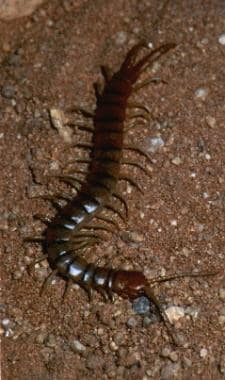
Approximately 3000 species of centipedes are found in the class Chilopoda, phylum Arthropoda. They are among the less well-studied arthropods. Centipedes are elongated multisegmented arthropods with a single pair of legs on each body segment. They are distributed widely, especially in warm, temperate, and tropical regions. Centipedes spend much of their time underground or in rock piles and usually come out at night to actively hunt their prey. They are capable of very fast movement when exposed. The most dangerous species belong to the genus Scolopendra, with the largest members (Scolopendra gigantea) reaching lengths of 26 cm.
Pathophysiology
The venom delivery apparatus consists of a modified pair of front legs (ie, forcipules) just behind the mandibles. Venom is produced in a gland at the base of the forcipules and is injected through ducts when the forcipules are driven into the victim's tissues. The venoms have not been studied extensively but, at least in some species, contain 5-hydroxytryptamine, hemolytic phospholipase A, and a cardiotoxic protein. The venom of the North American giant desert centipede, Scolopendra heros, contains a cytolysin. Most likely, other important components are present in these venoms, which require further study. In addition to venom, some species exude defensive substances from glands found along the body segments. These secretions are usually nontoxic to humans, although at least one species of the genus Otostigmus secretes a vesicating substance.
Mortality/Morbidity
Most species are relatively innocuous.
- Fatalities are extremely rare following scorpion stings. A death was reported in a 7-year-old Filipino girl who was stung on the head by a centipede of the large species Scolopendra subspinipes, which may reach 23 cm in length.
- A case of electrocardiographic (ECG) changes suggestive of ischemia has been reported in a 60-year-old man after a sting by a 12-cm centipede in Turkey. While there was a slight associated elevation in serum CK-MB and myoglobin, troponin I, troponin T, and delayed exercise stress testing were all normal, and the ECG returned to normal a few hours later. Another 20-year-old man in Turkey presented to an ED with chest pain approximately 24 hours after a reported centipede sting. His ECG revealed inferior ST segment elevation, and he had a positive rise in his CK-MB and troponin T levels. His echocardiogram was normal, and he did well after conservative therapy (without thrombolysis or angioplasty). Delayed coronary angiography revealed normal coronary arteries. The patient was noted to be "completely symptom free" at 17 months. He was felt to have suffered a myocardial infarction, possibly related to coronary vasospasm, inflammatory changes, or multifactorial effects.
- A case of rhabdomyolysis complicated by compartment syndrome and acute renal failure requiring temporary hemodialysis has been reported following the sting of the giant desert centipede, Scolopendra heros. Prolonged, isolated proteinuria without any other evidence of renal dysfunction has also been reported in a young female following Scolopendra sting.
History
- The history of a centipede sting is usually straightforward. The victim (frequently a gardener) typically sees the creature. Patients may note the following:
- Severe pain (worse with larger specimens)
- Local tissue swelling
- Redness
- Swollen painful lymph nodes
- Headache
- Palpitations
- Nausea and/or vomiting
- Anxiety
- Local pruritus
Physical
- Local edema
- Small puncture wounds
- Erythema
- Lymphangitis and/or lymphadenopathy
- Possibility of local necrosis
- The patient may be noticeably uncomfortable or anxious
[Snake Envenomations, Mojave Rattle]
Abdominal Pain in Elderly Persons
Anaphylaxis
Bee and Hymenoptera Stings
Bites, Insects
Caterpillar Envenomations
Cellulitis
Snake Envenomations, Brown
Snake Envenomations, Cobra
Snake Envenomations, Coral
Snake Envenomations, Moccasins
Snake Envenomations, Rattle
Snake Envenomations, Sea
Spider Envenomations, Brown Recluse
Spider Envenomations, Funnel Web
Spider Envenomations, Redback
Spider Envenomations, Tarantula
Spider Envenomations, Widow
Lab Studies
- A bedside urine test for proteinuria is reasonable. The same test can detect myoglobinuria secondary to rhabdomyolysis in patients with significant swelling and pain of the affected extremity.
- If evidence of rhabdomyolysis is present, serum electrolytes, CPK, and renal function studies should be obtained.
Other Tests
- An ECG should be obtained if the patient has a history of cardiac disease, chest pain, or if there is any evidence of hemodynamic instability following centipede sting.
Procedures
- If swelling of the affected extremity is severe and a compartment syndrome is suspected, intracompartmental pressures should be objectively assessed.
- If a compartment syndrome is diagnosed, the limb should be elevated and plans should be made for fasciotomy. A brief trial of intravenous mannitol can be instituted in an effort to reduce pressures before surgery.
Prehospital Care
No specific first aid measures are available for centipede stings. Seek medical care if pain persists or systemic symptoms occur. Local application of ice may reduce some of the discomfort; however, others have anecdotally found that local heat application or immersion in hot (nonscalding) water is more comforting.
Emergency Department Care
- Management of centipede stings is entirely supportive.
- Pain may be managed with systemic analgesics, as necessary.
- Pain may be managed with local injectable anesthetics (eg, lidocaine, bupivacaine). These can be injected locally or used in performing a regional nerve block. A standard text should be consulted regarding techniques of regional anesthesia.
- Tetanus status should be updated.
- Prophylactic antibiotics are not necessary, but secondary infections should be cultured and treated with appropriate antibiotics (to cover gram-positive bacteria).
- Following initial care, examine the wound for any signs of secondary infection or necrosis.
- Patients should be observed for approximately 4 hours for evidence of systemic toxicity.
Consultations
In the rare case of severe swelling of a stung extremity where a possible developing compartment syndrome is a concern, surgical consultation for compartmental pressure testing should be obtained.
Analgesics and local anesthetics are used to ameliorate the pain associated with these stings. No antivenoms exist for centipede stings.
Drug Category: Analgesics
Pain control is essential to quality patient care. Analgesics ensure patient comfort and have sedating properties, which are beneficial for patients who have sustained centipede envenomations.
| Drug Name | Acetaminophen (Tylenol, Panadol, Aspirin Free Anacin) |
| Description | DOC to treat pain in patients with documented hypersensitivity to aspirin or NSAIDs, with upper GI disease, or who are taking oral anticoagulants. |
| Adult Dose | 325-650 mg PO q4-6h or 1000 mg tid/qid; not to exceed 4 g/d |
| Pediatric Dose | <12 years: 10-15 mg/kg/dose PO q4-6h prn; not to exceed 2.6 g/d >12 years: 325-650 mg PO q4h; not to exceed 5 doses in 24 h |
| Contraindications | Documented hypersensitivity, known G-6-PD deficiency |
| Interactions | Rifampin can reduce analgesic effects; coadministration of barbiturates, carbamazepine, hydantoins, or isoniazid may increase acetaminophen hepatotoxicity |
| Pregnancy | B - Usually safe but benefits must outweigh the risks.
|
| Precautions | Hepatotoxicity possible in chronic alcoholism following various dose levels of acetaminophen; severe or recurrent pain or high or continued fever may indicate serious illness |
| Drug Name | Acetaminophen with codeine (Tylenol #3) |
| Description | Indicated for treatment of mild to moderate pain. |
| Adult Dose | 30-60 mg/dose PO (based on codeine content) q4-6h or 1-2 tab PO q4h; not to exceed 12 tab/d |
| Pediatric Dose | 0.5-1 mg/kg/dose PO based on codeine content q4-6h; 0-15 mg/kg/dose PO based on acetaminophen content; not to exceed 2.6 g/d acetaminophen |
| Contraindications | Documented hypersensitivity |
| Interactions | Increased toxicity when coadministered with CNS depressants or TCAs |
| Pregnancy | C - Safety for use during pregnancy has not been established.
|
| Precautions | May result in acute opiate withdrawal symptoms in patients dependent on opiates; caution in severe renal or hepatic dysfunction |
| Drug Name | Acetaminophen with hydrocodone (Vicodin) |
| Description | Indicated for relief of moderate to severe pain. |
| Adult Dose | 1-2 tab or cap PO q4-6h prn pain |
| Pediatric Dose | <12 years: 10-15 mg/kg/dose PO acetaminophen q4-6h prn; not to exceed 2.6 g/d acetaminophen >12 years: 750 mg acetaminophen PO q4h; not to exceed 10 mg hydrocodone bitartrate per dose; not to exceed 5 doses in 24 h |
| Contraindications | Documented hypersensitivity, patients with high altitude cerebral edema or elevated intracranial pressure |
| Interactions | Toxicity increases when administered concurrently with CNS depressants or TCAs |
| Pregnancy | B - Usually safe but benefits must outweigh the risks.
|
| Precautions | Tabs contain metabisulfite, which may cause allergic reactions; upon discontinuation, may result in acute opiate-withdrawal symptoms in patients dependent on opiates; caution in severe renal or hepatic dysfunction |
Drug Category: Immunizations
Tetanus immunization should be instituted following a centipede envenomation.
| Drug Name | Diphtheria-tetanus toxoid (dT) |
| Description | Used for passive immunization of any person with a wound that may be contaminated with tetanus spores. |
| Adult Dose | Prophylaxis: 250-500 U IM in opposite extremity to tetanus toxoid Clinical tetanus: 3000-10,000 U IM |
| Pediatric Dose | Prophylaxis: 250 U IM in opposite extremity as tetanus toxoid Clinical tetanus: Administer as in adults |
| Contraindications | Documented hypersensitivity; history of any type of neurologic symptoms or signs following administration of this product; FDA recommends that elective tetanus immunization be deferred during any outbreak of poliomyelitis because tetanus toxoid injections are an important cause of provocative poliomyelitis |
| Interactions | Patients receiving immunosuppressants, including corticosteroids or radiation therapy, may remain susceptible despite immunization because of poor immune response; cimetidine may enhance or augment delayed-hypersensitivity responses to skin-test antigens; avoid concurrent use of medication with systemic chloramphenicol because it may impair amnestic response to tetanus toxoid; concurrent use of tetanus immune globulin may delay development of active immunity by several days (interaction is nevertheless clinically insignificant and does not preclude concurrent use) |
| Pregnancy | C - Safety for use during pregnancy has not been established.
|
| Precautions | Do not use to treat actual tetanus infections or for immediate prophylaxis of unimmunized individuals (instead, use tetanus antitoxin, preferably human tetanus immune globulin); diminished antibody response to active immunization may be observed in patients receiving immunosuppressive therapy; better to defer primary diphtheria immunization until immunosuppressive therapy discontinued; routine immunization of symptomatic and asymptomatic HIV-infected persons is recommended Persons with isolated IgA deficiency have potential for developing antibodies to IgA and could have anaphylactic reactions to subsequent administration of blood products that contain IgA Do not perform skin testing because intradermal injection of concentrated gamma globulin may cause localized area of inflammation that can be misinterpreted as a positive allergic reaction when it is actually a localized chemical tissue irritation; true allergic responses to human gamma globulin given in the prescribed IM manner are extremely rare; do not admix with other medications (usually incompatible) |
Drug Category: Anesthetics
Indicated for pain relief. Stabilize the neuronal membrane and prevent initiation and transmission of nerve impulses, thereby producing local anesthetic action.
| Drug Name | Lidocaine (Xylocaine) |
| Description | Inhibits depolarization of type C sensory neurons by blocking sodium channels. Epinephrine prolongs effect and enhances hemostasis (maximum epinephrine dose 4.5-7 mg/kg). |
| Adult Dose | Plain: 4.5 mg/kg injected locally With epinephrine: 7 mg/kg injected locally |
| Pediatric Dose | Not established |
| Contraindications | Documented hypersensitivity; avoid in Adams-Stokes syndrome and Wolff-Parkinson-White syndrome; avoid in severe sinoatrial, AV, or intraventricular block if artificial pacemaker not in place |
| Interactions | Coadministration with cimetidine or beta-blockers increases toxicity of lidocaine; coadministration with procainamide and tocainide may result in additive cardiodepressant action; may increase effects of succinylcholine |
| Pregnancy | B - Usually safe but benefits must outweigh the risks.
|
| Precautions | Use solution without preservatives; caution in heart failure, hepatic disease, hypoxia, hypovolemia or shock, respiratory depression, and bradycardia; may increase risk of CNS and cardiac adverse effects in elderly patients; high plasma concentrations can cause seizures, heart block, and AV conduction abnormalities |
| Drug Name | Bupivacaine (Marcaine, Sensorcaine) |
| Description | May reduce pain by slowing nerve impulse propagation and reducing action potential, which in turn prevents initiation and conduction of nerve impulses. Epinephrine prolongs effect and enhances hemostasis (maximum epinephrine dose 4.5-7 mg/kg). |
| Adult Dose | Plain: 2 mg/kg injected locally With epinephrine: 3 mg/kg injected locally |
| Pediatric Dose | Not established |
| Contraindications | Documented hypersensitivity; septicemia; spinal deformities; severe hypertension; existing neurologic disease |
| Interactions | May enhance effects of CNS depressants; coadministration may increase toxicity of MAOIs, TCAs, beta-blockers, vasopressors, and phenothiazines |
| Pregnancy | C - Safety for use during pregnancy has not been established.
|
| Precautions | Test a dose and monitor for CNS toxicity and cardiovascular toxicity; caution with inflammation or sepsis in region of proposed injection; monitor patient's state of consciousness after each injection; caution in hypertension, cerebral vascular insufficiency, peripheral vascular disease or heart block, and arteriosclerotic heart disease |
Drug Category: Nonsteroidal anti-inflammatory drugs (NSAIDs)
NSAIDs are most commonly used to relieve mild to moderate pain. Although effects of NSAIDs in the treatment of pain tend to be patient specific, ibuprofen is usually the DOC for initial therapy. Other options include fenoprofen, flurbiprofen, mefenamic acid, ketoprofen, indomethacin, and piroxicam.
| Drug Name | Ibuprofen (Ibuprin, Advil, Motrin) |
| Description | Usually DOC for treatment of mild to moderate pain if no contraindications exist. Inhibits inflammatory reactions and pain, probably by decreasing prostaglandin synthesis. |
| Adult Dose | 200-400 mg PO q4-6h while symptoms persist; not to exceed 3.2 g/d |
| Pediatric Dose | <6 months: Not established 6 months to 12 years: 20-40 mg/kg/d PO divided tid/qid >12 years: Administer as in adults |
| Contraindications | Documented hypersensitivity; avoid in patients with peptic ulcer disease, recent GI bleeding or perforation, renal insufficiency, or high risk of bleeding |
| Interactions | May decrease effects of loop diuretics when coadministered; concurrent administration with anticoagulants may increase PT (monitor and watch for signs of bleeding); may increase serum lithium levels and risk of methotrexate toxicity; probenecid may increase toxicity of NSAIDs |
| Pregnancy | B - Usually safe but benefits must outweigh the risks.
|
| Precautions | Category D in third trimester of pregnancy; caution with congestive heart failure, hypertension, and decreased renal and hepatic function |
| Drug Name | Ketoprofen (Oruvail, Orudis, Actron) |
| Description | For relief of mild to moderate pain and inflammation. Small dosages are initially indicated in small or elderly patients and in those with renal or liver disease. Doses >75 mg do not increase therapeutic effects. Administer high doses with caution and closely observe patient for response. |
| Adult Dose | 25-50 mg PO q6-8h prn; not to exceed 300 mg/d |
| Pediatric Dose | <3 months: Not established 3 months to 12 years: 0.1-1 mg/kg PO q6-8h >12 years: Administer as in adults |
| Contraindications | Documented hypersensitivity |
| Interactions | May decrease effects of loop diuretics when coadministered; concurrent administration with anticoagulants may increase PT (monitor and watch for signs of bleeding); may increase serum lithium levels and risk of methotrexate and phenytoin toxicity; probenecid may increase toxicity of NSAIDs |
| Pregnancy | B - Usually safe but benefits must outweigh the risks.
|
| Precautions | Category D in third trimester of pregnancy; caution in patients with GI disease, cardiovascular disease, renal or hepatic impairment, and in those taking anticoagulants |
| Drug Name | Flurbiprofen (Ansaid) |
| Description | May inhibit cyclooxygenase, causing inhibition of prostaglandin biosynthesis. These effects may result in analgesic, antipyretic, and anti-inflammatory activities. |
| Adult Dose | 200-300 mg/d PO divided bid/qid |
| Pediatric Dose | Not established |
| Contraindications | Documented hypersensitivity |
| Interactions | May decrease effects of loop diuretics when coadministered; concurrent administration with anticoagulants may increase PT (monitor and watch for signs of bleeding); may increase serum lithium levels and risk of methotrexate and phenytoin toxicity; probenecid may increase toxicity of NSAIDs |
| Pregnancy | C - Safety for use during pregnancy has not been established.
|
| Precautions | Category D in third trimester of pregnancy; acute renal insufficiency, interstitial nephritis, hyperkalemia, hyponatremia, and renal papillary necrosis may occur; patients with preexisting renal disease or compromised renal perfusion risk acute renal failure; leukopenia occurs rarely, is transient, and usually returns to normal during therapy; persistent leukopenia, granulocytopenia, or thrombocytopenia warrants further evaluation and may require discontinuation of drug |
| Drug Name | Naproxen (Anaprox, Naprelan, Naprosyn) |
| Description | For relief of mild to moderate pain; inhibits inflammatory reactions and pain by decreasing activity of cyclooxygenase, which results in decrease of prostaglandin synthesis. |
| Adult Dose | 500 mg PO; follow with 250 mg q6-8h; not to exceed 1.25 g/d |
| Pediatric Dose | <2 years: Not established >2 years: 2.5 mg/kg/dose PO; not to exceed 10 mg/kg/d |
| Contraindications | Documented hypersensitivity; avoid in peptic ulcer disease, recent GI bleeding or perforation, renal insufficiency, or high risk of bleeding |
| Interactions | May decrease effects of loop diuretics when coadministered; concurrent administration with anticoagulants may increase PT (monitor and watch for signs of bleeding); may increase serum lithium levels and risk of methotrexate and phenytoin toxicity; probenecid may increase toxicity of NSAIDs |
| Pregnancy | B - Usually safe but benefits must outweigh the risks.
|
| Precautions | Category D in third trimester of pregnancy; acute renal insufficiency, interstitial nephritis, hyperkalemia, hyponatremia, and renal papillary necrosis may occur; patients with preexisting renal disease or compromised renal perfusion risk acute renal failure; leukopenia occurs rarely, is transient, and usually returns to normal during therapy; persistent leukopenia, granulocytopenia, or thrombocytopenia warrants further evaluation and may require discontinuation of drug |
| Drug Name | Mefenamic acid (Ponstel) |
| Description | Inhibits inflammatory reactions and pain by decreasing prostaglandin synthesis. |
| Adult Dose | 500 mg PO initially; follow with 250 mg PO q4h prn |
| Pediatric Dose | <12 years: Not established >12 years: Administer as in adults |
| Contraindications | Documented hypersensitivity; peptic ulcer disease, recent GI bleeding or perforation, renal insufficiency, and high risk of bleeding |
| Interactions | Coadministration with aspirin increases risk of inducing serious NSAID-related adverse effects; probenecid may increase concentrations and possibly toxicity of NSAIDs; may decrease effect of hydralazine, captopril, and beta-blockers; may decrease diuretic effects of furosemide and thiazides; may increase PT when taking anticoagulants (instruct patients to watch for signs of bleeding); may increase risk of methotrexate toxicity; phenytoin levels may be increased when administered concurrently |
| Pregnancy | C - Safety for use during pregnancy has not been established.
|
| Precautions | Category D in third trimester of pregnancy; may have adverse effects in fetus; caution in congestive heart failure, hypertension, and decreased renal and hepatic function; caution in anticoagulation abnormalities or during anticoagulant therapy |
| Drug Name | Indomethacin (Indocin) |
| Description | Rapidly absorbed. Metabolism occurs in liver by demethylation, deacetylation, and glucuronide conjugation. Inhibits prostaglandin synthesis. |
| Adult Dose | 25-50 mg PO bid/tid 75 mg SR PO bid; not to exceed 200 mg/d |
| Pediatric Dose | 1-2 mg/kg/d divided PO bid/qid; not to exceed 4 mg/kg/d or 150-200 mg/d |
| Contraindications | Documented hypersensitivity; GI bleeding or renal insufficiency |
| Interactions | Coadministration with aspirin increases risk of inducing serious NSAID-related adverse effects; probenecid may increase concentrations and possibly toxicity of NSAIDs; may decrease effect of hydralazine, captopril, and beta-blockers; may decrease diuretic effects of furosemide and thiazides; may increase PT when taking anticoagulants (instruct patients to watch for signs of bleeding); may increase risk of methotrexate toxicity; phenytoin levels may be increased when administered concurrently |
| Pregnancy | B - Usually safe but benefits must outweigh the risks.
|
| Precautions | Category D in third trimester of pregnancy; acute renal insufficiency, hyperkalemia, hyponatremia, interstitial nephritis, and renal papillary necrosis may occur; increases risk of acute renal failure in patients with preexisting renal disease or compromised renal perfusion; reversible leukopenia may occur (discontinue if persistent leukopenia, granulocytopenia, or thrombocytopenia) |
| Drug Name | Piroxicam (Feldene) |
| Description | Decreases activity of cyclooxygenase, which, in turn, inhibits prostaglandin synthesis. These effects decrease formation of inflammatory mediators. |
| Adult Dose | 10-20 mg/d PO qd |
| Pediatric Dose | 0.2-0.3 mg/kg/d PO qd; not to exceed 15 mg/d |
| Contraindications | Documented hypersensitivity; active GI bleeding |
| Interactions | Coadministration with aspirin increases risk of inducing serious NSAID-related adverse effects; probenecid may increase concentrations and, possibly, toxicity of NSAIDs; may decrease effect of hydralazine, captopril, and beta-blockers; may decrease diuretic effects of furosemide and thiazides; may increase PT when taking anticoagulants (instruct patients to watch for signs of bleeding); may increase risk of methotrexate toxicity; phenytoin levels may be increased when administered concurrently |
| Pregnancy | B - Usually safe but benefits must outweigh the risks.
|
| Precautions | Category D in third trimester of pregnancy; acute renal insufficiency, hyperkalemia, hyponatremia, interstitial nephritis, and renal papillary necrosis may occur; increases risk of acute renal failure in patients with preexisting renal disease or compromised renal perfusion; reversible leukopenia may occur (discontinue if persistent leukopenia, granulocytopenia, or thrombocytopenia) |
Drug Category: Osmotic diuretics
In the setting of documented compartment syndrome, osmotic diuretics such as mannitol may, when combined with elevation of the extremity, obviate the need for fasciotomy if pressures respond rapidly.
| Drug Name | Mannitol (Osmitrol, Resectisol) |
| Description | An osmotic diuretic. Inhibits tubular reabsorption of electrolytes by increasing osmotic pressure of glomerular filtrate. Increases urinary output. |
| Adult Dose | 0.25-0.5 g/kg/dose IV; limit to bid for no more than 2 d to avoid resistance |
| Pediatric Dose | Administer as in adults |
| Contraindications | Documented hypersensitivity; anuria, severe pulmonary congestion, progressive renal damage, severe dehydration, active intracranial bleeding, and progressive heart failure; hypotension |
| Interactions | May decrease serum lithium levels |
| Pregnancy | C - Safety for use during pregnancy has not been established.
|
| Precautions | Carefully evaluate cardiovascular status before rapid administration of mannitol since a sudden increase in extracellular fluid may lead to fulminating CHF; avoid pseudoagglutination, when blood given simultaneously, add at least 20 mEq of sodium chloride to each liter of mannitol solution; do not give electrolyte-free mannitol solutions with blood |
Further Inpatient Care
- If soft tissue swelling is severe or rhabdomyolysis is evident, the patient should be admitted and observed for development of compartment syndrome and management of myoglobinuria as needed.
Further Outpatient Care
- Observe patients for evidence of infection or necrosis.
- Manage local necrosis by sound conservative wound care.
Deterrence/Prevention
- Never touch or handle centipedes.
- Use caution when gardening, turning soil, or picking up rocks.
- Work gloves are very helpful in preventing stings.
Complications
- Secondary infection
- Wound necrosis (uncommon)
- Rare rhabdomyolysis, myoglobinuria, and acute renal failure
- Possible coronary vasospasm
Prognosis
- Prognosis is excellent in the vast majority of cases.
Medical/Legal Pitfalls
- Failure to update the patient's tetanus status when indicated
- Failure to provide appropriate instructions concerning wound management
- Failure to arrange follow-up care in the event of a secondary infection
- Failure to diagnose rhabdomyolysis or compartment syndrome in a victim of severe centipede sting
- Failure to obtain an ECG in the rare patient with chest pain or hemodynamic instability following centipede sting
| Media file 1:
Giant desert centipede. Photo by Michael Cardwell. |

 | View Full Size Image | |
Media type: Photo
|
- Balit CR, Harvey MS, Waldock JM, Isbister GK. Prospective study of centipede bites in Australia. J Toxicol Clin Toxicol. 2004;42(1):41-8. [Medline].
- Bush SP, King BO, Norris RL, Stockwell SA. Centipede envenomation. Wilderness Environ Med. 2001;12(2):93-9. [Medline].
- Hare T. Poisonous Dwellers of the Desert. Southwest Parks & Monuments Association;1995:1-32.
- Hasan S, Hassan K. Proteinuria associated with centipede bite. Pediatr Nephrol. Apr 2005;20(4):550-1. [Medline].
- Logan JL, Ogden DA. Rhabdomyolysis and acute renal failure following the bite of the giant desert centipede Scolopendra heros. West J Med. Apr 1985;142(4):549-50. [Medline].
- McFee RB, Caraccio TR, Mofenson HC, McGuigan MA. Envenomation by the Vietnamese centipede in a Long Island pet store. J Toxicol Clin Toxicol. 2002;40(5):573-4. [Medline].
- Ozsarac M, Karcioglu O, Ayrik C, et al. Acute coronary ischemia following centipede envenomation: case report and review of the literature. Wilderness Environ Med. 2004;15(2):109-12. [Medline].
- Peters S. A Colour Atlas of Arthropods in Clinical Medicine. Wolfe Pub Ltd;1992:1-304.
- Yildiz A, Biceroglu S, Yakut N, et al. Acute myocardial infarction in a young man caused by centipede sting. Emerg Med J. Apr 2006;23(4):e30. [Medline].
Centipede Envenomation excerpt Article Last Updated: Feb 8, 2007
|