You are in: eMedicine Specialties > Emergency Medicine > Hematology And Oncology
|
Thrombocytopenic Purpura Last Updated: January 18, 2007 |
|
| Synonyms and related keywords: Moschcowitz disease,
thrombotic thrombocytopenic purpura, TTP, multisystem disorder, plasma exchange, fresh-frozen plasma, FFP,
microangiopathic hemolytic anemia,
hemolytic uremic syndrome,
HUS, familial thrombotic thrombocytopenic purpura, familial TTP,
acquired idiopathic thrombotic thrombocytopenic purpura, acquired idiopathic TTP,
von Willebrand factor multimers, vWF, vWF multimers, vWF-cleaving protease,
anemia,
petechiae, microscopic hematuria,
disseminated microvascular thrombi,
thrombocytopenia,
renal dysfunction,
Escherichia coli,
E coli O157:H7, Shigalike toxin,
microangiopathic hemolysis, platelet microthrombi, ultralarge von Willebrand factor multimers, ULVWF multimers, ADAMTS-13 gene mutations, ULVWF multimer–induced platelet thrombosis, ULVWF-cleaving protease,
flu-like illness, arthralgias, fatigue, malaise, petechial hemorrhages, focal deficits,
seizures, visual disturbances, coma, CNS bleeding,
hemiplegia, paresthesias,
heart failure, arrhythmias,
abdominal pain, gross hematuria, purpuric spots,
jaundice,
splenomegaly, plasmapheresis,
plasma transfusion,
thrombotic microangiopathic, disorder, splenectomy, cancer chemotherapeutic agents,
spider venom,
bee venom
|
|   |
AUTHOR INFORMATION
| Section 1 of 10  |
|
| Author: D Symonette, MD, MPH, FACEP, Healthcare Consultant, DSKSD, Inc Coauthor(s): Eric Hoffman, DO, Staff Physician, Department of Emergency Medicine, Hartford Hospital |
| D Symonette, MD, MPH, FACEP, is a member of the following medical societies:
American College of Emergency Physicians |
| Editor(s): Miguel C Fernandez, MD, FACEP, FAAEM, FACMT, Associate Clinical Professor; Medical and Managing Director, South Texas Poison Center, Department of Surgery/Emergency Medicine and Toxicology, University of Texas Health Science Center at San Antonio; Francisco Talavera, PharmD, PhD, Senior Pharmacy Editor, eMedicine;
Jeffrey L Arnold, MD, FACEP, Chairman, Department of Emergency Medicine, Santa Clara Valley Medical Center;
John Halamka, MD, Chief Information Officer, CareGroup Healthcare System, Assistant Professor of Medicine, Department of Emergency Medicine, Beth Israel Deaconess Medical Center; Assistant Professor of Medicine, Harvard Medical School;
and Charles V Pollack, Jr, MD, MA, FACEP, Chairman, Professor of Emergency Medicine, Department of Emergency Medicine, Pennsylvania Hospital, University of Pennsylvania |
Disclosure
|   |
INTRODUCTION
| Section 2 of 10  |
|
Background: Thrombotic thrombocytopenic purpura (TTP) is a life-threatening multisystem disorder that is considered a true medical emergency. Moschcowitz first described TTP in 1924 when he noted that his 16 year-old patient had anemia; petechiae; microscopic hematuria; and at autopsy, disseminated microvascular thrombi. Since that time, the pathophysiology, etiology, and medical management of TTP have expanded. This life-threatening condition may have positive outcomes if recognized early and if medical intervention is initiated early.
Thrombocytopenic purpura is a syndrome characterized by microangiopathic hemolytic anemia, thrombocytopenia, neurologic abnormalities, fever, and renal dysfunction. With the introduction of plasma exchange, the survival rate has improved from approximately 3% prior to the 1960s to 82%. Early plasma exchange initiation has beneficial outcomes. With early recognition of the clinical features, this life-threatening illness can be treated, with effective patient clinical responses in many cases.
Thrombotic microangiopathies TTP and hemolytic uremic syndrome (HUS) were once thought to have shared the same pathophysiological etiology; however, more recent findings suggest that TTP is a different entity than HUS. They are closely related disorders and are characterized by microvascular lesions with platelet aggregation. HUS is more common in children and is caused by strains of enterohemorrhagic Escherichia coli, especially E coli O157:H7 carrying the Shigalike toxin. HUS is characterized by prominent renal involvement. TTP is associated with pregnancy; diseases such as HIV, cancer, bacterial infection, and vasculitis; bone marrow transplantation; stem cell transplantation; and drugs.
Pathophysiology: The TTP syndrome is characterized by microangiopathic hemolysis and platelet aggregation/hyaline thrombi whose formation is unrelated to coagulation system activity. Platelet microthrombi predominate; they form in the microcirculation (ie, arterioles, capillaries) throughout the body causing partial occlusion of vessels. Organ ischemia, thrombocytopenia, and erythrocyte fragmentation (ie, schistocytes) occur. The thrombi partially occlude the vascular lumina with overlying proliferative endothelial cells. The endothelia of the kidneys, brain, heart, pancreas, spleen, and adrenal glands are particularly vulnerable to TTP. The liver, lungs, gastrointestinal tract, gallbladder, skeletal muscles, retina, pituitary gland, ovaries, uterus, and testes are also affected to a lesser extent. No inflammatory changes occur.
Mechanism
In most cases of familial TTP and acquired idiopathic TTP, the endothelial cells secrete and release the ultralarge (UL) von Willebrand factor (ULVWF) multimers. The sheer stress of fluid and platelet thrombi in the microcirculation should enhance proteolysis of ULVWF. The agitated endothelial cells are the main source of ULVWF multimers in the bloodstream where they bind to specific surface platelet receptors. In 1982, Moake et al showed that the ULVWF multimers were unusually large in patients with chronic relapsing TTP. ULVWF multimers entangle with platelets adhering to the subendothelium. Two independent research groups reported a lack of ULVWF-cleaving protease activity in the blood of patients with TTP. The lack of ULVWF-cleaving protease activity was suggested to be due to the presence of antibodies or a severe deficiency of ULVWF-cleaving protease.
The ULVWF multimers are cleaved by ADAMTS-13 as they are secreted from endothelial cells. Failure to degrade the ULVWF multimers is believed to cause the familial and acquired idiopathic types of TTP. The ULVWF-cleaving protease, ADAMTS-13, is inhibited by the production of autoantibodies in acquired idiopathic TTP and ADAMTS-13 gene mutations in familial TTP causing inactivity or decreased activity of ADAMTS-13. Furlan et al found in their investigation, including retrospective analysis of plasma samples, that an autoimmune mechanism may be responsible in patients with acquired deficiency of the ULVWF-cleaving protease, whereas patients with the familial form have complete protease deficiency. In TTP, insufficiency of ADAMTS-13 may be the key component in the pathogenesis of ULVWF multimer–induced platelet thrombosis.
TTP differs from HUS by having a deficiency in ULVWF-cleaving protease ADAMTS-13 activity not found in HUS, and HUS has sufficient uninhibited protease. The intervention of plasma exchange is ineffective because its role is to remove antibodies and replace VWF-cleaving protease. Differentiating TTP from HUS benefits the patient because plasma exchange is not a benign intervention. This differentiation also saves costs and time. Research is ongoing, but, presently, TTP is suggested to be a different entity than HUS.
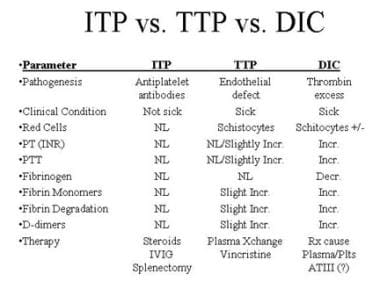
ULVWF multimers are abundant and fibrinogen/fibrin is minimal in TTP, whereas fibrinogen/fibrin is abundant in disseminated intravascular coagulation (DIC). The ULVWF multimer is a marker found in the plasma of patients most likely to have a recurrence of TTP.

Other interactions, both transcellular and intercellular, are suggested in TTP, including various combinations of platelets, leukocytes, erythrocytes, and endothelium. These interactions may be the key stimuli in the initiation of cell activity and morphological changes that occur in TTP. Frequency:
- In the US: More than 75 years ago, the occurrence rate of this uncommon disorder was 1 case per 1 million patients; however, the incidence rate is increasing, with the incidence rate a decade ago being 3.7 cases per 1 million patients. The incidence today is higher, with greater awareness of this disorder and increasing reports of TTP secondary to other illnesses and drugs.
Mortality/Morbidity: The mortality rate associated with TTP approached 100% until the 1980s; the drop in mortality rate since that time is attributed to earlier diagnosis and improvement in therapy with plasma exchange.
- Presently, the mortality rate is approximately 95% for untreated cases.
-
The survival rate is 80-90% with early diagnosis and treatment with plasma infusion and plasma exchange.
- One third of patients who survive the initial episode experience a relapse within the following 10 years.
Race: No significant racial difference exists.
Sex: This condition is more common in women than in men, with a female-to-male ratio of 3:2.
Age: TTP is most common in adults, although it can occur in neonates to persons as old as 90 years. The peak occurs in the fourth decade of life, with a median age at diagnosis of 35 years.
|   |
CLINICAL
| Section 3 of 10  |
|
History: Patients with thrombotic thrombocytopenic purpura (TTP) present with nonspecific complaints. - Prodrome resembling a viral, flu-like illness
- Fatigue/generalized malaise
- Arthralgias
- Thrombocytopenia, with petechial hemorrhages in the lower extremities and a lack of bleeding
- Anemia - Hemoglobin levels less than 10 g/dL
- Altered mental status (36%) - Patients can present with confusion, generalized headaches, altered mental status, focal deficits, seizures, visual disturbances, and coma. Symptoms may wax and wane secondary to the microhemorrhagic and microocclusive vascular changes in the brain. CNS bleeding is an ominous sign.
- Seizures (16%)
- Hemiplegia (12%)
- Paresthesias (4%)
- Heart failure
- Arrhythmias
- Abdominal pain (24%) - May be related to gastrointestinal ischemia
- A patient can present with some or all of the characteristics of the classic pentad, which includes the following:
- Renal changes (88%) with gross hematuria (15%)
- Microangiopathic hemolytic anemia (MAHA)
Physical: - Physical examination findings may be normal.
- Typical signs include the following:
- Purpura: Nonpalpable small purpuric spots or petechiae occur with thrombocytopenia (ie, platelet count <50 x 109/L).
- Severe hypertension (ie, renal failure)
- Neurologic deficits (eg, altered mental status, seizure)
Causes: - Pregnancy and the postpartum state account for 10-25% of cases of TTP.
- TTP usually presents before 24 weeks gestation and can be distinguished from other thrombotic microangiopathic disorders in that thrombocytopenia occurs without DIC.
- Central nervous system (CNS) findings occur early and are disproportionate to alterations in blood pressure, renal dysfunction, or hepatic compromise.
- The course of the syndrome is not altered by termination of pregnancy.
- Improvement in survival rate is due to aggressive treatment with plasmapheresis or plasma transfusion.
- Thrombotic microangiopathic disorder is uncommon but occurs in greater frequency in patients with HIV-1 infection; it may be the initial presenting syndrome.
- The usual presentation is thrombocytopenia, MAHA, renal abnormalities, and neurologic dysfunction.
- Serum lactate dehydrogenase (LDH) is extremely elevated (ie, >1000 U/L); LDH also is elevated with Pneumocystis carinii infection, high-grade B-cell lymphoma, and sulfa drug reactions.
- Management consists of plasma exchange, antiplatelet agents (eg, dipyridamole, sulfinpyrazone, aspirin, dextran), and splenectomy for refractory cases. Survival rate and prognosis are poor.
- TTP often is associated with cancer.
- Anemia and thrombocytopenia occurring with TTP may be out of proportion to that expected from cancer and chemotherapy reactions.
- LDH is elevated and Coombs test result is negative.
- In the cancer patient, coagulation factor consumption is often low.
- Both TTP and DIC can be present in the same patient and may be difficult to distinguish.
- Cancer chemotherapeutic agents associated with TTP include mitomycin C, tamoxifen, bleomycin, cytosine arabinoside, and daunomycin.
- Noncancer chemotherapeutic and other drugs suspected of causing TTP include immunosuppressive agents (eg, cyclosporine A), crack cocaine, ticlopidine, oral contraceptives, penicillin, and rifampin.
- Toxins associated with TTP include the following:
- Escherichia coli
- E coli O157:H7 is a toxin-producing bacteria.
- E coli toxin is found in undercooked foods.
- E coli toxin is associated with diarrhea and outbreaks of HUS in children and to a lesser degree associated with TTP.
- E coli toxin is concentrated in the renal and brain endothelium.
|   |
DIFFERENTIALS
| Section 4 of 10  |
|
Disseminated Intravascular Coagulation Hemolytic Uremic Syndrome Idiopathic Thrombocytopenic Purpura Pregnancy, Eclampsia Stroke, Hemorrhagic Stroke, Ischemic
Other Problems to be Considered:
Autoimmune disorders
Cancer-associated TTP
Drug-induced TTP
HIV-related TTP
Infectious process and sepsis
Splenic sequestration
Transplant-associated TTP
Vasculitis |
|
Patient Education
|
|
Click here for patient education.
|
|
|
|
|
|   |
WORKUP
| Section 5 of 10  |
|
Lab Studies:
- Thrombotic thrombocytopenic purpura (TTP) is a clinical diagnosis with no pathognomonic laboratory test findings. In the past, a pentad of signs and symptoms was associated with TTP: thrombocytopenia, microangiopathic hemolytic anemia, neurologic abnormalities, renal failure, and fever. Current clinical practice diagnostic criteria include thrombocytopenia, schistocytosis, and significant elevations in serum LDH levels to suggest the diagnosis of TTP. Measuring protease activity as a single test to distinguish TTP from HUS is not practical at this time. The absence of in vitro tests capable of detecting abnormalities in all the molecular interactions required for the cleavage of ULVWF multimers by ADAMTS-13 in vivo is a limitation.
Laboratory tests helpful in making the diagnosis include the following:
- Complete blood count (CBC)
- Thrombocytopenia and anemia are noted.
- Evidence of thrombocytopenia may precede the appearance of fragmented RBCs and LDH elevation by several days.
- Peripheral blood smear - Fragmented RBCs (ie, schistocytes) are consistent with hemolysis. Schistocytes on a blood smear is the morphologic hallmark of the disease, but no guidelines exist as to the number of schistocytes required to differentiate TTP from other thrombotic microangiopathies.
- LDH level - Extremely elevated, mostly as a consequence of LDH from ischemic or necrotic tissue cells rather than hemolysis
- Indirect bilirubin level - Elevated
- Reticulocyte count - Elevated
- Prothrombin time (PT) and activated partial thromboplastin time (aPTT) - Normal
- DIC panel (eg, fibrinogen, D-dimer) - The results are usually normal. Increasing D-dimer levels are the most specific DIC parameter and reflect fibrinolysis of cross-linked fibrin.
- Pregnancy test - Helps identify the 10-25% of patients with TTP who are pregnant or postpartum
- Creatinine level - Mildly elevated (46%)
- HIV testing - Helps identify patients with HIV in whom TTP is the presenting symptom
- Urinalysis - Proteinuria and microscopic hematuria
Imaging Studies:
- CT scan of the head to assess for intracranial bleeding and infarcts
Other Tests:
- Bone marrow or gingival biopsy samples yield diagnostic lesions (hyaline thrombi) in 30-50% of cases.
|   |
TREATMENT
| Section 6 of 10  |
|
Emergency Department Care: The classic pentad is rarely complete at presentation. Current clinical criteria for initiating therapy are (1) thrombocytopenia, (2) schistocytosis, (3) elevated serum LDH levels, and (4) absence of other disease entities that could explain the thrombocytopenia and microcytic hemolytic anemia. Early recognition and management are essential for patient survival.
Understanding the pathophysiology of thrombotic thrombocytopenic purpura (TTP) is ongoing and too early to have clearly defined evidence-based standard procedures that may be applicable for all patients. Intravenous (IV) plasma exchange, also called plasmapheresis, is the present standard of treatment for TTP. During the plasma exchange, the inhibitory antibodies are removed and the plasma is replenished with the deficient protease. Delay in starting the plasma exchange is correlated with treatment failure. If a delay is unavoidable, begin plasma infusion until the plasma exchange is available. - Use a device with a wide-bore, 2-lumen catheter at the femoral site. Use blood-cell separators so that the patient's plasma is removed and replaced by fresh-frozen plasma (FFP). Start with a single plasma volume and exchange FFP at a rate of 40 mL/kg of body mass. A plasma exchange twice a day may be necessary for resolution of thrombocytopenia and neurologic complications if the response to the initial daily exchange is poor.
- Infusion of FFP (30 mL/kg) is used as a temporizing measure until the patient can be transferred to a facility where plasma exchange is available.
- The standard replacement fluid is FFP. However, success with cryosupernatant has been reported. Cryosupernatant is the residual plasma fraction after the separation of cryoprecipitate.
- Glucocorticoid-steroid and antiplatelet agents are used. Steroids often are administered prior to plasma exchange. Steroids have no proven added benefit over plasmapheresis alone, but some patients respond to high-dose prednisone (200 mg/d) alone, without plasma therapy.
- Antiplatelet agents are used, but hemorrhage is a concern and these agents' benefit has not been proven. Aspirin and dipyridamole are recommended by some, but their use is controversial. Other antiplatelet agents (eg, ticlopidine, prostacyclin) have variable outcomes.
- Splenectomy is performed occasionally to treat patients who do not respond to plasma exchange or that relapse chronically. Some patients benefit from splenectomy. The response may be due to the removal of the site of sequestration of the RBCs and platelets. Another possibility is that the spleen is a major site of microvascular occlusive lesions in severe TTP.
- Treatment of refractory or relapsing TTP includes vincristine, a second-line therapy with an unknown mechanism of action. Vincristine is occasionally given to treat resistant cases, but it has no proven benefit. Dosing is 1 mg/m2, with a maximum dose of 2 mg, given weekly.
- Supportive care for end-organ damage may be required. Hemodialysis is required occasionally for renal failure. Angiotensin-converting enzyme (ACE) inhibitors, nitroprusside, or esmolol may be required to control severe hypertension.
- Anticonvulsants, such as phenytoin, may be required to control seizures.
- Platelet-depleted packed RBCs may be necessary for severe hemolytic anemia.
- Platelet transfusion is contraindicated because it is associated with rapid deterioration. The platelet aggregation worsens with platelet transfusions. In some studies, extensive platelet aggregates were found throughout the CNS on postmortem examination
- Desmopressin (DDAVP) is contraindicated because it acts by releasing ULVWF from the endothelium into the circulating blood.
Consultations: - Early consultation with a hematologist is beneficial because of the diagnostic and management complexity of TTP.
- The differential diagnosis is extensive for thrombocytopenia, but early recognition of TTP is essential for the patient's survival.
|   |
MEDICATION
| Section 7 of 10  |
|
The goal of therapy is to reduce destruction of platelets.
Drug Category: Glucocorticoids -- These agents have immunosuppressant activity. Drug Name
| Prednisone (Deltasone) -- Glucocorticoids inhibit phagocytosis of antibody-covered platelets. Treatment of hemolytic anemia during pregnancy is conservative unless disease is severe (use lowest dose of glucocorticoids). In neonates, if platelet count drops below 50-75 X 109/L, consider prednisone and exchange transfusions of immune globulin. | | Adult Dose | 0.05-2 mg/kg/d PO divided bid/qid; taper over 1-2 wk as symptoms resolve |
|---|
| Pediatric Dose | 4-5 mg/m2/d PO; alternatively, 1-2 mg/kg PO divided bid/qid; taper over 2 wk as symptoms resolve |
|---|
| Contraindications | Documented hypersensitivity; viral, fungal, connective tissue, or tubercular skin infections; peptic ulcer disease; hepatic dysfunction; GI disease |
|---|
| Interactions | Estrogens may decrease clearance; concurrent use with digoxin may cause digitalis toxicity secondary to hypokalemia; phenobarbital, phenytoin, and rifampin may increase metabolism (consider increasing maintenance dose); monitor for hypokalemia with coadministration of diuretics |
|---|
| Pregnancy |
B - Usually safe but benefits must outweigh the risks.
|
|---|
| Precautions | Abrupt discontinuation of glucocorticoids may cause adrenal crisis; hyperglycemia, edema, osteonecrosis, myopathy, peptic ulcer disease, hypokalemia, osteoporosis, euphoria, psychosis, myasthenia gravis, growth suppression, and infections may occur |
|---|
|   |
FOLLOW-UP
| Section 8 of 10  |
|
Further Inpatient Care:
- Emergency medicine is the acute treatment. Follow-up is referred to internal medicine.
|   |
MISCELLANEOUS
| Section 9 of 10  |
|
Medical/Legal Pitfalls:
- Thrombotic thrombocytopenic purpura (TTP) is a hematologic emergency. It is a multisystem disease that can cause rapid deterioration of the patient's neurologic, renal, and hematologic status. TTP is an uncommon disease with a high fatality rate if untreated or misdiagnosed. Rapid diagnosis and aggressive treatment by therapeutic plasma exchange are necessary to reduce the risk of a fatal outcome.
- TTP is difficult to diagnose because the patient's presentation can be nonspecific and the characteristic pentad of symptoms may not occur together. Other disease entities can have some of the same symptoms.
- To avoid the devastating pitfall of misdiagnosing a patient, include TTP in the differential diagnosis of diseases in a patient with new-onset thrombocytopenia, schistocytosis and marked elevation of their LDH value. Treatment with platelet infusion can be fatal in patients with TTP but beneficial in DIC; therefore, including TTP in the differential diagnosis is imperative.
|   |
BIBLIOGRAPHY
| Section 10 of 10 |
|
-
Bell WR: Thrombotic thrombocytopenic purpura/hemolytic uremic syndrome relapse: frequency, pathogenesis, and meaning. Semin Hematol 1997 Apr; 34(2): 134-9[Medline].
-
Bell WR, Braine HG, Ness PM, Kickler TS: Improved survival in thrombotic thrombocytopenic purpura-hemolytic uremic syndrome. Clinical experience in 108 patients. N Engl J Med 1991 Aug 8; 325(6): 398-403[Medline].
-
Bridgman J, Witting M: Thrombotic thrombocytopenic purpura presenting as a sudden headache with focal neurologic findings. Ann Emerg Med 1996 Jan; 27(1): 95-7[Medline].
-
Elkins SL, Wilson PP Jr, Files JC, Morrison FS: Thrombotic thrombocytopenic purpura: evolution across 15 years. J Clin Apheresis 1996; 11(4): 173-5[Medline].
-
Fontana S, Hovinga JA, Studt JD, et al: Plasma therapy in thrombotic thrombocytopenic purpura: review of the literature and the Bern experience in a subgroup of patients with severe acquired ADAMTS-13 deficiency. Semin Hematol 2004 Jan; 41(1): 48-59[Medline].
-
Furlan M, Robles R, Galbusera M, et al: von Willebrand factor-cleaving protease in thrombotic thrombocytopenic purpura and the hemolytic-uremic syndrome. N Engl J Med 1998 Nov 26; 339(22): 1578-84[Medline].
-
George JN, Vesely SK, Terrell DR: The Oklahoma Thrombotic Thrombocytopenic Purpura-Hemolytic Uremic Syndrome (TTP-HUS) Registry: a community perspective of patients with clinically diagnosed TTP-HUS. Semin Hematol 2004 Jan; 41(1): 60-7[Medline].
-
Gordon LI, Kwaan HC: Cancer- and drug-associated thrombotic thrombocytopenic purpura and hemolytic uremic syndrome. Semin Hematol 1997 Apr; 34(2): 140-7[Medline].
-
Hymes KB, Karpatkin S: Human immunodeficiency virus infection and thrombotic microangiopathy. Semin Hematol 1997 Apr; 34(2): 117-25[Medline].
-
Kaplan RN, Bussel JB: Differential diagnosis and management of thrombocytopenia in childhood. Pediatr Clin North Am 2004 Aug; 51(4): 1109-40, xi[Medline].
-
Keusch GT, Acheson DW: Thrombotic thrombocytopenic purpura associated with Shiga toxins. Semin Hematol 1997 Apr; 34(2): 106-16[Medline].
-
Kwaan HC, Ganguly P: Introduction: Thrombolytic thrombocytopenia purpura and the hemolytic uremic syndrome. Semin Hematol 1997; 81-82.
-
Kwaan HC, Soff GA: Management of thrombotic thrombocytopenic purpura and hemolytic uremic syndrome. Semin Hematol 1997 Apr; 34(2): 159-66[Medline].
-
Lammle B, George JN: Thrombotic thrombocytopenic purpura: advances in pathophysiology, diagnosis, and treatment--introduction. Semin Hematol 2004 Jan; 41(1): 1-3[Medline].
-
Laurence J, Mitra D: Apoptosis of microvascular endothelial cells in the pathophysiology of thrombotic thrombocytopenic purpura/sporadic hemolytic uremic syndrome. Semin Hematol 1997 Apr; 34(2): 98-105[Medline].
-
Lee GR, Paraskevas F, Lukens J, et al: Wintrobe's Clinical Hematology. 10th ed. Lippincott Williams & Wilkins; 1999.
-
Lopez JA, Dong JF: Cleavage of von Willebrand factor by ADAMTS-13 on endothelial cells. Semin Hematol 2004 Jan; 41(1): 15-23[Medline].
-
Matsumoto M, Yagi H, Ishizashi H, et al: The Japanese experience with thrombotic thrombocytopenic purpura-hemolytic uremic syndrome. Semin Hematol 2004 Jan; 41(1): 68-74[Medline].
-
McCrae KR, Cines DB: Thrombotic microangiopathy during pregnancy. Semin Hematol 1997 Apr; 34(2): 148-58[Medline].
-
Moake JL: Studies on the pathophysiology of thrombotic thrombocytopenic purpura. Semin Hematol 1997 Apr; 34(2): 83-9[Medline].
-
Moake JL: von Willebrand factor, ADAMTS-13, and thrombotic thrombocytopenic purpura. Semin Hematol 2004 Jan; 41(1): 4-14[Medline].
-
Moake JL, Rudy CK, Troll JH, et al: Unusually large plasma factor VIII:von Willebrand factor multimers in chronic relapsing thrombotic thrombocytopenic purpura. N Engl J Med 1982 Dec 2; 307(23): 1432-5[Medline].
-
Nabhan C, Kwaan HC: Current concepts in the diagnosis and management of thrombotic thrombocytopenic purpura. Hematol Oncol Clin North Am 2003 Feb; 17(1): 177-99[Medline].
-
Plaimauer B, Scheiflinger F: Expression and characterization of recombinant human ADAMTS-13. Semin Hematol 2004 Jan; 41(1): 24-33[Medline].
-
Rock GA, Shumak KH, Buskard NA, et al: Comparison of plasma exchange with plasma infusion in the treatment of thrombotic thrombocytopenic purpura. Canadian Apheresis Study Group. N Engl J Med 1991 Aug 8; 325(6): 393-7[Medline].
-
Rutherford CJ, Frenkel EP: Thrombocytopenia. Issues in diagnosis and therapy. Med Clin North Am 1994 May; 78(3): 555-75[Medline].
-
Schneppenheim R, Budde U, Hassenpflug W, Obser T: Severe ADAMTS-13 deficiency in childhood. Semin Hematol 2004 Jan; 41(1): 83-9[Medline].
-
Schriber JR, Herzig GP: Transplantation-associated thrombotic thrombocytopenic purpura and hemolytic uremic syndrome. Semin Hematol 1997 Apr; 34(2): 126-33[Medline].
-
Smith BR, Rinder HM: Interactions of platelets and endothelial cells with erythrocytes and leukocytes in thrombotic thrombocytopenic purpura. Semin Hematol 1997 Apr; 34(2): 90-7[Medline].
-
Tsai HM, Lian EC: Antibodies to von Willebrand factor-cleaving protease in acute thrombotic thrombocytopenic purpura. N Engl J Med 1998 Nov 26; 339(22): 1585-94[Medline].
-
Tsai HM: Advances in the pathogenesis, diagnosis, and treatment of thrombotic thrombocytopenic purpura. J Am Soc Nephrol 2003 Apr; 14(4): 1072-81[Medline].
-
Veyradier A, Girma JP: Assays of ADAMTS-13 activity. Semin Hematol 2004 Jan; 41(1): 41-7[Medline].
Thrombocytopenic Purpura excerpt |