Practice Essentials
Arsenic toxicity can occur through industrial exposure (see the image below); from contaminated wine, moonshine, or drinking water; or due to malicious intent. It may also occur through heavy metal contamination of herbal preparations and so-called nutritional supplements. A resurgence of interest in arsenic as a medicinal agent for the treatment of acute promyelocytic leukemias, multiple myeloma, myelodysplastic syndromes, and assorted resistant solid tumors may potentially contribute to increases in arsenic exposure. [1, 2]
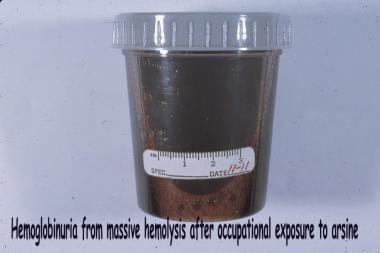 "Blackwater" urine due to massive hemolysis, from a patient exposed to arsine at a gas tank cleaning operation.
See Clues on the Skin: Acute Poisonings, a Critical Images slideshow, to help diagnose patients based on their dermatologic presentations.
Signs and symptoms
Arsenic exposure is usually associated with suicide, malicious intent, homicide, or occupational exposure. A detailed history to determine the exposure includes the following:
-
Careful work history on individuals with a painful peripheral neuropathy
-
Careful history regarding dietary and nutritional habits (eg, use of nutritional supplements and ayurvedic medicines, alcohol abuse) and hobbies
Clinical effects of arsenic toxicity depend on the chronicity of exposure (eg, acute, chronic) and the chemical form involved, which may be inorganic arsenic (pentavalent arsenic and trivalent arsenic), organic arsenicals, or arsine gas. Sometimes, patients exposed to arsenic have a garlic odor to their breath and tissue fluids.
Acute severe inorganic arsenic poisoning manifests with the following signs and symptoms:
-
Prominent gastrointestinal (GI) signs – Vomiting (often bloody) and severe cholera-like diarrhea (may be "rice-water", often bloody); these patients may experience dehydration and hypovolemic shock
-
Cardiovascular effects – Myocardial dysfunction, capillary leakage, diminished systemic vascular resistance, ventricular dysrhythmias
-
Central nervous system (CNS) manifestations – Seizures, coma, encephalopathy, and cerebral edema
-
Alopecia and Mees lines may occur subacutely after an acute poisoning
Chronic inorganic arsenic poisoning has an insidious presentation, as follows:
-
May manifest as a classic dermatitis (hyperkeratosis with a "dew drops on a dusty road" appearance) or peripheral neuropathy (usually a painful, symmetrical paresthesia with stocking-glove distribution);
-
Hepatic and renal damage are commonly present (multiorgan involvement)
-
Obliterative arterial disease of the lower extremities (blackfoot disease)
Chronic inorganic arsenic poisoning is also associated with a number of chronic medical conditions (hypertension, diabetes mellitus, and peripheral vascular disease) as well as lung, bladder, and hepatic malignancies. Skin malignancies include squamous and basal cell carcinomas and Bowen disease.
Arsine gas exposure manifestations are as follows:
-
Headache
-
Malaise
-
Abdominal pain
-
Nausea
-
Vomiting
-
Acute hemolysis
-
Hemoglobinuric renal injury
-
Death
See Presentation for more detail.
Diagnosis
Laboratory testing
-
Complete blood count: Microcytic hypochromic anemia is common; with arsine exposure, acute hemolytic anemia is common
-
Serum electrolyte levels, including calcium and magnesium
-
Type and screen or cross-match blood for possible transfusion in patients exposed to arsine gas
-
Plasma arsenic concentrations are potentially helpful, but results are usually not available until hours to days after treatment decisions have been made
-
Urinalysis: Urine spot test for arsenic and 24-hour urine collection for total arsenic excretion; patient must not have consumed seafood for at least 3 days prior to urine collection; laboratory must “speciate” the arsenic into organic and inorganic moieties, because the inorganic form is responsible for symptoms and signs of arsenic toxicity
-
Urine pregnancy test
-
Serum acetaminophen levels
Other studies
-
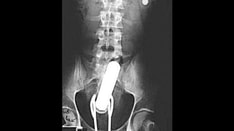
Abdominal x-ray: May reveal radio-opaque densities; may resemble an upper GI series
-
Nerve conduction studies: May confirm peripheral neuropathy
-
Electrocardiography: May reveal cardiac arrhythmias/failure from arsenic toxicity
See Workup for more detail.
Management
Treatment of acute arsenic toxicity is supportive. Chelation therapy may be necessary in patients with inorganic arsenic poisoning. It has no role in arsine gas exposure.
-
Support airway, breathing, and circulation
-
Hemodynamic stabilization: May include infusing large amounts of crystalloid solutions and the use of blood products
-
Acute arsenic ingestions: Orogastric lavage if the patient presents rapidly or plain radiography indicates that arsenic is present in the stomach; whole bowel irrigation with polyethylene glycol may be effective to prevent GI tract absorption of arsenic
-
Definitive chelation therapy
-
Hemodialysis
Pharmacotherapy
The following chelating agents are used in the management of arsenic toxicity:
-
Dimercaprol
-
Succimer
-
Dimerval
See Treatment and Medication for more detail.
For patient education resources, see the First Aid and Injuries Center. Also see the patient education article Chemical Warfare.

Background
Arsenic, element 33, has a long and nefarious history; its very name has become synonymous with poison. In the 15th and 16th centuries, the Italian family of Borgias used arsenic as their favorite poison for political assassinations. Some even have suggested that Napoleon was poisoned by arsenic-tainted wine served to him while in exile.
The metal was reported as the causative agent in an outbreak of food-borne illness after a church gathering in which the coffee urn was apparently criminally contaminated with arsenic. This highlights the need for an index of suspicion when multiple individuals present to an emergency department temporally related and with similar symptoms and circumstances. [3]
Arsenic is typically considered a heavy metal and shares many toxic characteristics with the other heavy metals (eg, lead, mercury). Arsenic is ubiquitous in the environment. It ranks 20th in abundance in the earth's crust, 14th in seawater, and 12th in the human body. [4] In nature, arsenic exists in the metallic state in 3 allotropic forms (alpha or yellow, beta or black, gamma or grey) and several ionic forms.
Arsenic has been used as a medicinal agent, a pigment, a pesticide, and an agent of criminal intent. In the form of chromated copper arsenate (CCA), it was once used as part of the treatment to render architectural wood immune to pest infestation.
CCA was banned for use in the United States by the Environmental Protection Agency (EPA) in 2003, but a great deal of the treated wood continues to exist in the form of decks and other structures exposed to the elements. Data suggest that a significant quantity of arsenic may leach out from such wood into landfills and into the interiors of homes with existing CCA-treated decks. [5, 6, 7] Given the durability of the CCA-treated wood, such exposures may continue for decades. In the rodent model, exposure to CCA may produce significant renal pathology.
Arsenic may be found as a water or food contaminant, particularly in shellfish and other seafood, and often contaminates fruits and vegetables, particularly rice.
Currently, arsenic poisoning occurs through industrial exposure, from contaminated wine or moonshine, or because of malicious intent. In industry, arsenic is primarily used in the production of glass and semiconductors. The possibility of heavy metal contamination of herbal preparations, Ayurvedic medications, and so-called nutritional supplements must also be considered. There has been a resurgence of interest in arsenic as a medicinal agent for treatment of acute promyelocytic leukemias, multiple myeloma, myelodysplastic syndromes, and assorted resistant solid tumors. [1, 2]
Aresenic can contaminate well water or ground water. Contamination may occur from natural sources, or from hazardous waste (eg, mine tailings).
Pathophysiology
Inorganic forms of arsenic are more toxic than organic forms. The trivalent forms are more toxic and react with thiol groups, while the pentavalent forms are less toxic but uncouple oxidative phosphorylation. Very few organ systems escape the toxic effects of arsenic.
Trivalent inorganic arsenic inhibits pyruvate dehydrogenase by binding to the sulfhydryl groups of dihydrolipoamide. Consequently, conversion of pyruvate to acetyl coenzyme A (CoA) is decreased, citric acid cycle activity is decreased, and production of cellular ATP is decreased. Trivalent arsenic inhibits numerous other cellular enzymes through sulfhydryl group binding. Trivalent arsenic inhibits cellular glucose uptake, gluconeogenesis, fatty acid oxidation, and further production of acetyl CoA; it also blocks the production of glutathione, which prevents cellular oxidative damage.
Effects of pentavalent inorganic arsenic occur partially because of its transformation to trivalent arsenic; toxicity proceeds as outlined above. More importantly, pentavalent arsenic resembles inorganic phosphate and substitutes for phosphate in glycolytic and cellular respiration pathways. Consequently, high-energy phosphate bonds are not made, and uncoupling of oxidative phosphorylation occurs. For example, in the presence of pentavalent arsenic, adenosine diphosphate (ADP) forms ADP-arsenate instead of ATP; the high-energy phosphate bonds of ATP are lost.
Arsenic has been shown to produce oxidative stress. In a small pilot study of environmentally exposed children, arsenic altered monocyte superoxide anion production and inhibited nitric oxide production. [8]
Arsenic trioxide has been shown to cause a significant prolongation of cardiac action potential duration at many levels of repolarization producing conduction delay and increased triangulation. Electrolyte imbalance appears to enhance this toxicity. [9]
Arsenic appears to inactivate endothelial nitric oxide synthase, leading to a reduction in production and bioavailability of nitric oxide. Chronic arsenic exposure also has been associated with inducing/accelerating atherosclerosis, increasing platelet aggregation and reducing fibrinolysis. [10] Long-term exposure to low to moderate arsenic levels has been associated with increased cardiovascular disease incidence and mortality. [11] Arsenic exposure has also been associated with incident type 2 diabetes. [12]
In the Strong Heart Family Study, arsenic exposure was measured in urine samples from 1,337 American Indian adults (average age 30.7 years, 61% female) and echocardiographic assessment was performed. With a two-fold increase in urinary arsenic, the researchers found a 47% greater chance of left ventricular hypertrophy in the group as a whole, and a 58% greater chance in participants with increased or high blood pressure (blood pressure at least 120/80 mm Hg or using pressure-lowering medication). The participants drank water from private wells in areas where groundwater is contaminated with arsenic. None of the participants had diabetes or heart disease at the start of the 5-year study. [13]
Arsenic is listed as a presumed carcinogenic substance based on the increased prevalence of lung and skin cancer observed in human populations with multiple exposures (primarily through industrial inhalation).
Epidemiology
According to the American Association of Poison Control Centers' (AAPCC) National Poisoning Data System (NPDS), in 2020, there were 528 single exposures related to arsenic (excluding pesticides) and 14 exposures related to arsenic-containing pesticides. [14]
Ayotte et al mapped out the probability of high (> 10 μg/L) arsenic levels in domestic wells in the coterminous United States. These authors estimated that of the approximately 44.1 million people in the US who use water from domestic wells, 2.1 million are exposed to water with high arsenic levels. [15]
Worldwide, up to 100 million people are at risk of exposure to unacceptable arsenic levels in either well water or ground water. Numerous "outbreaks" of excessive arsenic in water and food from an assortment of natural and anthropological causes have occurred.
In Bangladesh, more than 95% of the water supply to over 138 million people is potentially arsenic contaminated at levels exceeding the US EPA and WHO action limits. [16, 17] If international efforts at elimination of the risk are unsuccessful, it is estimated that a substantial proportion of the Bangladesh population will develop arsenic-related diseases such as pulmonary and skin cancers as well as cardiovascular and renal disease.
In addition to the concentration of arsenic in the water, the prevailing diet existing in the affected areas may place the citizens at increased risk for toxicity from the arsenic. A population survey found that individuals who had diets deficient in certain B vitamins and antioxidants appeared to have greater risk of arsenic dermatoses. An inverse correlation was found between consumption of vitamins A, C, and E, riboflavin and folic acid, and the existence of dermatological manifestations or chronic arsenic exposure. [18]
Men are more likely to experience industrial arsenic exposure than women.
Prognosis
According to the American Association of Poison Control Centers' (AAPCC) National Poisoning Data System (NPDS), two patients suffered major effects but no deaths were reported from exposure to nonpesticide arsenic exposure in 2020. [14]
An association between exposure to arsenic and the development of Alzheimer disease has been proposed. [19] In addition, an apparent link exists between arsenic exposure and gestational diabetes and potential long-term effects on the infants born to mothers consuming arsenic-contaminated water (among other sources) during pregnancy. [20, 21]
-
"Blackwater" urine due to massive hemolysis, from a patient exposed to arsine at a gas tank cleaning operation.
-
Mees lines, or leukonychia, are transverse white bands with no palpable ridges that appear on the fingernails as a result of arsenic poisoning, certain cancers, and treatment with certain chemotherapy agents. Courtesy of Wikimedia Commons (Author Yannick Trottier) (https://commons.wikimedia.org/wiki/File:Mees%27_lines.jpg).