Continually Updated Clinical Reference
 
 
  All Sources     eMedicine     Medscape     Drug Reference     MEDLINE
 
eMedicine - Pediatrics, Pyloric Stenosis : Article by

Quick Find
Authors & Editors
Introduction
Clinical
Differentials
Workup
Treatment
Medication
Follow-up
Miscellaneous
References

Related Articles
Adrenal Insufficiency and Adrenal Crisis

Gastroenteritis

Pediatrics, Dehydration

Pediatrics, Gastroenteritis

Pediatrics, Inborn Errors of Metabolism

Pediatrics, Urinary Tract Infections and Pyelonephritis

Renal Failure, Acute


Patient Education
Click here for patient education.


Author: Jagvir Singh, MD, Director, Division of Pediatric Emergency Medicine, Lutheran General Hospital of Park Ridge

Jagvir Singh is a member of the following medical societies: American Academy of Pediatrics

Coauthor(s): Dara A Kass, MD, Clinical Assistant Instructor, Department of Emergency Medicine, State University of New York Downstate Medical Center, Kings County Hospital; Richard Sinert, DO, Associate Professor of Emergency Medicine, Clinical Assistant Professor of Medicine, State University of New York College of Medicine; Consulting Staff, Department of Emergency Medicine, Kings County Hospital Center

Editors: Garry Wilkes, MBBS, FACEM, Director of Emergency Medicine, Bunbury Health Service, Western Australia Country Health Service; Adjunct Associate Professor, School of Exercise, Biomedical and Health Sciences, Faculty of Computing, Health and Science, Edith Cowan University; Medical Director, St John Ambulance Service; Mary L Windle, PharmD, Adjunct Assistant Professor, University of Nebraska Medical Center College of Pharmacy, Pharmacy Editor, eMedicine.com, Inc; Grace M Young, MD, Associate Professor, Department of Pediatrics, University of Maryland Medical Center; John D Halamka, MD, MS, Associate Professor of Medicine, Harvard Medical School, Beth Israel Deaconess Medical Center; Chief Information Officer, CareGroup Healthcare System and Harvard Medical School; Attending Physician, Division of Emergency Medicine, Beth Israel Deaconess Medical Center; Richard G Bachur, MD, Assistant Professor of Pediatrics, Harvard Medical School; Associate Chief and Fellowship Director, Attending Physician, Division of Emergency Medicine, Children's Hospital of Boston

Author and Editor Disclosure

Synonyms and related keywords: pyloric stenosis in children, pyloric stenosis in infants, pyloric stenosis, intestinal obstruction in infancy, intestinal obstruction in infants, gastric outlet obstruction, infantile hypertrophic pyloric stenosis, IHPS

Background

Pyloric stenosis, also known as infantile hypertrophic pyloric stenosis (IHPS), is the most common cause of intestinal obstruction in infancy. IHPS occurs secondary to hypertrophy and hyperplasia of the muscular layers of the pylorus, causing a functional gastric outlet obstruction.

In 1717, Blair first reported autopsy findings of pyloric stenosis. Although the description of the signs and symptoms of IHPS can be found in the 17th century, the clinical picture and pathology were not accurately described until 1887 by the Danish pediatrician, Hirschsprung. Prior to 1912, early successful surgical procedures included gastroenterostomy, pyloroplasty, and forcible dilatation via gastrostomy. In 1912, Ramstedt observed an uneventful recovery in a patient following pyloroplasty, where sutures used in reapproximating the seromuscular layer had disrupted. Following this observation, he began leaving the split muscle layer unsutured in all subsequent repairs. The Ramstedt pyloromyotomy remains the standard procedure for pyloric stenosis today.

Pathophysiology

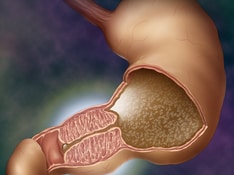
Marked hypertrophy and hyperplasia of the 2 (circular and longitudinal) muscular layers of the pylorus occurs, leading to narrowing of the gastric antrum. The pyloric canal becomes lengthened, and the whole pylorus becomes thickened. The mucosa usually is edematous and thickened. In advanced cases, the stomach becomes markedly dilated in response to near-complete obstruction.

The causes of IHPS are multifactorial. Both environmental factors and hereditary factors are believed to be contributory. Possible etiologic factors include deficiency of nitric oxide synthase containing neurons, abnormal myenteric plexus innervation, infantile hypergastrinemia, and exposure to macrolide antibiotics.

Nitric oxide has been demonstrated as a major inhibitory nonadrenergic, noncholinergic neurotransmitter in the GI tract, causing relaxation of smooth muscle of the myenteric plexus upon its release. Impairment of this neuronal nitric oxide synthase (nNOS) synthesis has been implicated in IHPS, in addition to achalasia, diabetic gastroparesis, and Hirschsprung disease.

Rogers has suggested, that persisting duodenal hyperacidity, secondary due to a high parietal cell mass (PCM) and loss of gastrin control, produces pyloric stenosis from repeated pyloric contraction in response to hyperacidity.1  

No specific pattern of inheritance exists. It is more common in first-born white males of northern European ancestry and more concordant in monozygotic than dizygotic twins. It also has predominance in children of affected parents (up to 7%).

Frequency

United States

The incidence of IHPS is 2-4 per 1000 live births.

Mortality/Morbidity

Death from IHPS is rare and unexpected. The reported mortality rate is very low and usually results from delays in diagnosis with eventual dehydration and shock.

Race

IHPS is more common in whites than Hispanics, African Americans, or Asians. The incidence is 2.4 per 1000 live births in whites, 1.8 in Hispanics, 0.7 in African Americans, and 0.6 in Asians. It is also less common amongst children of mixed race parents.

Sex

IHPS has a male-to-female predominance of 4:1, with 30% of patients with IHPS being first-born males.

Age

The usual age of presentation is approximately 3 weeks of life (1-18 wk).

  • Approximately 95% of IHPS cases are diagnosed in those aged 3-12 weeks.
  • IHPS is rare in premature infants. In addition, premature infants have a delayed diagnosis secondary to low birth weight and atypical presentation.


History

  • Classically, the infant will have nonbilious vomiting or regurgitation, which may become projectile (up to 70%), after which the infant is still hungry.
  • Emesis may be intermittent or occur after each feeding.
  • The emesis may become brown or coffee color due to blood secondary to gastritis or a Mallory-Weiss tear at the gastroesophageal junction.
  • The infant will begin to show signs of dehydration and malnutrition such as poor weight gain, weight loss, marasmus, decreased urinary output, lethargy, and shock.
  • The infant may develop jaundice, which is corrected upon correction of the disease.

Physical

  • In up to 60-80% of the infants with infantile hypertrophic pyloric stenosis, a firm, nontender, and mobile hard pylorus that is 1-2 cm in diameter, described as an "olive," may be present in the right upper quadrant at the lateral edge of the rectus abdominus muscle. This is best palpated after the infant has vomited and when calm, or when the gastric contents have been removed via nasogastric tube.
  • Clinicians may also observe gastric peristalsis just prior to emesis as the peristaltic waves try to overcome the obstruction.
  • Signs of dehydration include depressed fontanelles, dry mucous membranes, decreased tearing, poor skin turgor, and lethargy.
  • The classic signs of IHPS are becoming less common. The mean age of presentation is getting significantly younger, and infants are not developing the physical signs or electrolyte abnormalities they were 20 years ago. Additionally, the availability of diagnostic imaging is allowing clinicians to make this diagnosis before other clinical manifestations appear.

Causes

  • The etiology of IHPS is unknown and is probably multifactorial.


Adrenal Insufficiency and Adrenal Crisis
Gastroenteritis
Pediatrics, Dehydration
Pediatrics, Gastroenteritis
Pediatrics, Inborn Errors of Metabolism
Pediatrics, Urinary Tract Infections and Pyelonephritis
Renal Failure, Acute

Other Problems to be Considered

Malrotation
Gastroesophageal reflux
Pyloric atresia
Pyloric antral web
Pyloric diaphragm
Poor feeding practices
Hiatal hernia
Congenital adrenal hyperplasia (CAH)


Lab Studies

  • Electrolytes, pH, BUN, and creatinine levels should be drawn at the time of obtaining intravenous access.
    • Hypochloremic, hypokalemic metabolic alkalosis is the classic electrolyte and acid-base imbalance of pyloric stenosis. Persistent emesis causes progressive loss of fluids rich in hydrochloric acid, which causes the kidneys to retain hydrogen ions in favor of potassium. Electrolyte abnormalities are dependent on the duration of symptoms in the affected infant.
    • The dehydration may result in hypernatremia or hyponatremia and may result in prerenal renal failure.
  • Elevated unconjugated bilirubin level may be present.

Imaging Studies

  • If the clinical presentation is typical and an olive is felt, the diagnosis is confirmed and further imaging is not warranted.
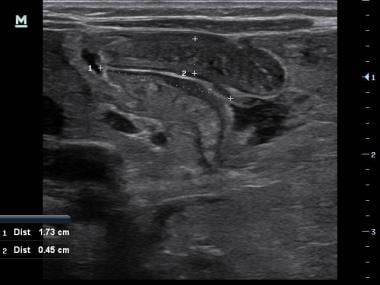
  • Ultrasonography is the imaging modality of choice when evaluating a child for IHPS. It is both highly sensitive (90-99%) and specific (97-100%) in the hands of a qualified sonographer. The pylorus is viewed in longitudinal and transverse planes. The sonographic hallmark of IHPS is the thickened pyloric muscle.
  • Criteria for making the diagnosis include pyloric muscle thickness greater than 4 mm. The length of the pyloric canal is variable and may range from 14 mm to 20 mm. The pyloric diameter may range from 10-14 mm.
    • IHPS may be falsely diagnosed in infants who have pylorospasm. Ultrasonography also allows for observation of peristaltic activity, differentiating between pylorospasm and true IHPS.
    • Upper gastrointestinal imaging (UGI) can help to confirm the diagnosis of IHPS, but it is not routinely performed unless ultrasonography is nondiagnostic.
  • The "shoulder" sign is a collection of barium in the dilated prepyloric antrum and may be seen in the infant with IHPS. The "double track" sign, two thin tracks of barium compressed between thickened pyloric mucosa, once thought to be pathognomonic of IHPS, has recently been identified in multiple cases of sonographically confirmed pylorospasm.

Procedures

  • Upper GI endoscopy has been used as an adjunct diagnostic tool in select cases of IHPS when other imaging tests are inconclusive or when the infant presents with atypical clinical features.


Prehospital Care

  • As with all pediatric resuscitations, prehospital care should be consistent with pediatric advanced life support (PALS) recommendations for infants who are dehydrated or in shock.
  • Immediate treatment requires correction of fluid loss, electrolytes, and acid-base imbalance. Once intravenous access is obtained, the dehydrated infant should receive an initial bolus (20 mL/kg) of crystalloid fluid. The infant should remain nothing by mouth (NPO).

Emergency Department Care

  • Infantile hypertrophic pyloric stenosis (IHPS) is a medical emergency.
  • Immediate treatment requires correction of fluid loss, electrolytes, and acid-base imbalance. Once intravenous access is obtained, an initial fluid bolus (20 mL/kg) of crystalloids should be infused immediately if the infant is dehydrated.
  • More than 60% of infants present to the ED with normal electrolyte values or are not in clinical shock. These infants should receive 1.5-2 times maintenance intravenous fluid: 5% dextrose in 0.25% or 0.33% sodium chloride with 2-4 mEq KCl per 100 mL replacement. The infant's fluid status should be continuously reassessed with special attention to acid-base status and urine output.
  • The definitive treatment for IHPS is corrective surgery.
  • The Ramstedt pyloromyotomy is the procedure of choice, during which underlying antro-pyloric mass is split leaving the mucosal layer intact.
    • Traditionally, the pyloromyotomy was performed through a right upper quadrant transverse incision. Recent studies have compared the operative time, cost, and hospital stay associated with the traditional incision, a circumbilical incision (believed to have improved cosmesis), and a laparoscopic procedure. The laparoscopic pyloromyotomy has been found to be safe and effective, with shorter operative times and hospital stay.
    • A study from the United Kingdom observed less time to full feedings, less analgesia, less emesis, and faster discharge in the laparoscopic group compared with the traditional approach.2
    • A study from France showed that laparoscopic pyloromyotomy does not decrease the incidence of postoperative vomiting and may lead to a risk of inadequate pyloromyotomy.3
    • Pyloromyotomy performed in specialized centers in pediatric surgery and a general surgery teaching hospital had similar complication rates in a study from the Netherlands.4
    • Recently, various surgical approaches, such as the supraumbilical skin-fold incision and umbilical incision, have been used with easy access, and these approaches have better cosmetic results. Also, a study from Montreal showed superior cosmesis with the supraumbilical (SU) approach than with the right upper quadrant (RUQ) approach.5
  • Nonsurgical treatment for IHPS with atropine sulfate, both intravenous and oral, has shown encouraging results. In one study, infants were given 21 days of atropine via nasogastric tube and regression of pyloric hypertrophy was monitored sonographically. One patient needed intravenous atropine, as nasogastric tube feedings were not tolerated for the first 2 days, but the patient did well subsequently. In this study, all 12 patients were successfully treated nonsurgically without complication.
  • Surgical correction is considered the standard of care for all patients with IHPS; therefore, medical management should be reserved for patients who are poor surgical candidates or whose parents are opposed to surgery.

Consultations

A surgeon comfortable with neonatal care should be consulted as soon as the diagnosis of IHPS is entertained.


Surgical correction is considered the standard of care for IHPS. Limited data exist for nonsurgical treatment (see Treatment).


Further Inpatient Care

  • The infant should continue to receive intravenous fluid until feeding is resumed. Feeding can be initiated 4-8 hours after recovery from anesthesia, although earlier feeding has been studied. Infants who are fed earlier than 4 hours do not have a worse total clinical outcome; however, they do vomit more frequently and more severely, leading to significant discomfort for the patient and anxiety for the parents.
    • Up to 80% of patients continue to regurgitate after surgery; however, patients who continue to vomit 5 days after surgery may warrant further radiologic investigation.
    • Patients should be observed for surgical complications (eg, incomplete pyloromyotomy, mucosal perforation, bleeding) and may be discharged home when adequately hydrated and tolerating feedings well.
    • A study from the Children's Hospital of Philadelphia showed that infants fed ad libitum were able to tolerate full feedings sooner after laparoscopic pyloromyotomy, and the standardized feeding regimen had no advantage over ad libitum feedings.6

Prognosis

  • Surgery is curative with minimal mortality.
  • The prognosis is very good, with complete recovery and catch-up growth if detected in a timely fashion.


Medical/Legal Pitfalls

  • For infants presenting with the classic picture, the diagnosis should be considered early.
  • Overreliance on imaging tools, rather than the clinical presentation, should be avoided.
  • The infant may present with severe fluid and electrolyte imbalance and may succumb if the diagnosis is not considered for a prolonged period.


  1. Rogers IM. The true cause of pyloric stenosis is hyperacidity. Acta Paediatr. Feb 2006;95(2):132-6. [Medline].
  2. Aldridge RD, MacKinlay GA, Aldridge RB. Choice of incision: the experience and evolution of surgical management of infantile hypertrophic pyloric stenosis. J Laparoendosc Adv Surg Tech A. Feb 2007;17(1):131-6. [Medline].
  3. Leclair MD, Plattner V, Mirallie E, Lejus C, Nguyen JM, Podevin G. Laparoscopic pyloromyotomy for hypertrophic pyloric stenosis: a prospective, randomized controlled trial. J Pediatr Surg. Apr 2007;42(4):692-8. [Medline].
  4. van den Ende ED, Allema JH, Hazebroek FW, Breslau PJ. Can pyloromyotomy for infantile hypertrophic pyloric stenosis be performed in any hospital? Results from two teaching hospitals. Eur J Pediatr. Jun 2007;166(6):553-7. [Medline].
  5. Taqi E, Boutros J, Emil S, Dubé S, Puligandla P, Flageole H. Evaluation of surgical approaches to pyloromyotomy: a single-center experience. J Pediatr Surg. May 2007;42(5):865-8. [Medline].
  6. Adibe OO, Nichol PF, Lim FY, Mattei P. Ad libitum feeds after laparoscopic pyloromyotomy: a retrospective comparison with a standardized feeding regimen in 227 infants. J Laparoendosc Adv Surg Tech A. Apr 2007;17(2):235-7. [Medline].
  7. Cohen HL, Blumer SL, Zucconi WB. The sonographic double-track sign: not pathognomonic for hypertrophic pyloric stenosis; can be seen in pylorospasm. J Ultrasound Med. May 2004;23(5):641-6. [Medline].
  8. Garcia VF, Randolph JG. Pyloric stenosis: diagnosis and management. Pediatr Rev. Apr 1990;11(10):292-6. [Medline].
  9. Godbole P, Sprigg A, Dickson JA. Ultrasound compared with clinical examination in infantile hypertrophic pyloric stenosis. Arch Dis Child. Oct 1996;75(4):335-7. [Medline].
  10. Hernanz-Schulman M. Infantile hypertrophic pyloric stenosis. Radiology. May 2003;227(2):319-31. [Medline].
  11. Hernanz-Schulman M, Sells LL, Ambrosino MM. Hypertrophic pyloric stenosis in the infant without a palpable olive: accuracy of sonographic diagnosis. Radiology. Dec 1994;193(3):771-6. [Medline].
  12. Huang YC, Su BH. Medical treatment with atropine sulfate for hypertrophic pyloric stenosis. Acta Paediatr Taiwan. May-Jun 2004;45(3):136-40. [Medline].
  13. Irish MS, Pearl RH, Caty MG, Glick PL. The approach to common abdominal diagnosis in infants and children. Pediatr Clin North Am. Aug 1998;45(4):729-72. [Medline].
  14. Kim SS, Lau ST, Lee SL. Pyloromyotomy: a comparison of laparoscopic, circumumbilical, and right upper quadrant operative techniques. J Am Coll Surg. Jul 2005;201(1):66-70. [Medline].
  15. Liacouras CA, Cook-Sather SD, Schreiner MS, Bellah RD. Endoscopic findings in hypertrophic pyloric stenosis: appearance in classic and evolving disease. Gastrointest Endosc. May 1997;45(5):371-4. [Medline].
  16. Nagita A, Yamaguchi J, Amemoto K, et al. Management and ultrasonographic appearance of infantile hypertrophic pyloric stenosis with intravenous atropine sulfate. J Pediatr Gastroenterol Nutr. Aug 1996;23(2):172-7. [Medline].
  17. Schechter R, Torfs CP, Bateson TF. The epidemiology of infantile hypertrophic pyloric stenosis. Paediatr Perinat Epidemiol. Oct 1997;11(4):407-27. [Medline].
  18. Sorensen HT, Skriver MV, Pedersen L. Risk of infantile hypertrophic pyloric stenosis after maternal postnatal use of macrolides. Scand J Infect Dis. 2003;35(2):104-6. [Medline].
  19. Spinelli C, Bertocchini A, Massimetti M. Muscle thickness in infants hypertrophic pyloric stenosis. Pediatr Med Chir. Mar-Apr 2003;25(2):148-50. [Medline].
  20. Sretenovic A, Smoljanic Z, Korac G. [Conservative treatment of hypertrophic pyloric stenosis in children]. Srp Arh Celok Lek. Oct 2004;132 Suppl 1:93-6. [Medline].
  21. Takahashi T. Pathophysiological significance of neuronal nitric oxide synthase in the gastrointestinal tract. J Gastroenterol. 2003;38(5):421-30. [Medline].
  22. van der Bilt JD, Kramer WL, van der Zee DC. Early feeding after laparoscopic pyloromyotomy: the pros and cons. Surg Endosc. May 2004;18(5):746-8. [Medline].
  23. Vasavada P. Ultrasound evaluation of acute abdominal emergencies in infants and children. Radiol Clin North Am. Mar 2004;42(2):445-56. [Medline].

Pediatrics, Pyloric Stenosis excerpt

Article Last Updated: Jan 22, 2008