Practice Essentials
Hyperthyroidism, thyroid storm, and Graves disease are conditions of excess thyroid hormone. The elevated level of thyroid hormones can result in clinical manifestations ranging from mild to severely toxic with resultant morbidity and mortality for affected patients. [1]
Hyperthyroidism
Hyperthyroidism presents as a constellation of symptoms due to elevated levels of circulating thyroid hormones. Because of the many actions of thyroid hormone on various organ systems in the body, the spectrum of clinical signs produced by the condition is broad. The presenting symptoms can be subtle and nonspecific, making hyperthyroidism difficult to diagnose in its early stages without the aid of laboratory data.
The term hyperthyroidism refers to inappropriately elevated thyroid function. Though often used interchangeably, the term thyrotoxicosis, which refers to an excessive amount of circulating thyroid hormone, is not synonymous with hyperthyroidism. Increased levels of hormone can occur despite otherwise normal thyroid function, such as in instances of inappropriate exogenous thyroid hormone or excessive release of stored hormone from an inflamed thyroid gland.
Graves disease
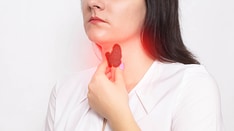
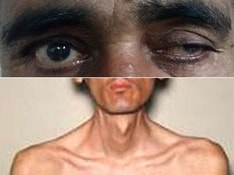
Graves disease (diffuse toxic goiter), the most common form of overt hyperthyroidism, is an autoimmune condition in which autoantibodies are directed against the thyroid-stimulating hormone (TSH) receptor. As a result, the thyroid gland is inappropriately stimulated with ensuing gland enlargement and increase of thyroid hormone production. Risk factors for Graves disease include family history of hyperthyroidism or various other autoimmune disorders, high iodine intake, stress, use of sex steroids, and smoking. The disease is classically characterized by the triad of goiter, exophthalmos, and pretibial myxedema.
Thyroid storm
Thyroid storm is a rare and potentially fatal complication of hyperthyroidism. [2] It typically occurs in patients with untreated or partially treated thyrotoxicosis who experience a precipitating event such as surgery, infection, or trauma. Thyroid storm must be recognized and treated on clinical grounds alone, as laboratory confirmation often cannot be obtained in a timely manner. Patients typically appear markedly hypermetabolic with high fevers, tachycardia, nausea and vomiting, tremulousness, agitation, and psychosis. Late in the progression of disease, patients may become stuporous or comatose with hypotension.
Signs and symptoms of hyperthyroidism
Signs and symptoms of hyperthyroidism include the following:
-
Weight loss
-
Palpitations
-
Chest pain - Often occurs in the absence of cardiovascular disease
-
Psychosis
-
Menstrual irregularity
-
Disorientation
-
Tremor
-
Nervousness, anxiety, or emotional lability
-
Heat intolerance
-
Increased perspiration
-
Fatigue
-
Weakness - Typically affects proximal muscle groups
-
Edema
-
Dyspnea
-
Frequent bowel movements
Workup in hyperthyroidism
Elevation of free thyroxine (T4) and low to undetectable thyroid-stimulating hormone (TSH) levels are diagnostic of thyrotoxicosis; in earlier stages, triiodothyronine (T3) rise precedes T4 rise.
Excessive TSH levels in the setting of elevated free T4 indicate hyperthyroidism of pituitary origin.
The following laboratory results are also indicative of hyperthyroidism:
-
Hyperglycemia
-
Hypercalcemia
-
Hepatic function abnormalities
-
Low serum cortisol
-
Leukocytosis
-
Hypokalemia (in thyrotoxic periodic paralysis)
Chest radiography may identify congestive heart failure or pulmonary infections, often associated with progression to thyroid storm.
A nuclear thyroid scan can demonstrate diffuse uptake in Graves disease and focal uptake in toxic nodular thyroiditis.
Emergency management
Intravenous glucocorticoids are indicated if adrenal insufficiency is suspected. Large doses of dexamethasone (2 mg q6h) inhibit hormone production and decrease peripheral conversion from T4 to T3.
Antithyroid medications such as propylthiouracil (PTU) and methimazole (MMI) oppose synthesis of T4 by inhibiting the organification of tyrosine residues. However, the US Food and Drug Administration (FDA) added a boxed warning, the strongest warning issued by the FDA, to the prescribing information for propylthiouracil. The warning emphasizes the risk for severe liver injury and acute liver failure, some episodes of which have been fatal. The warning also states that propylthiouracil should be reserved for use in those who cannot tolerate other treatments, such as methimazole, radioactive iodine, or surgery.
Beta-adrenergic blocking agents are the mainstays of symptomatic therapy for thyrotoxicosis, while plasmapheresis has been used successfully in medication-induced thyroid storm [3] and in conditions in which oral/conventional therapy is not possible. [4]
For more information, see Medscape's Thyroid Disease Resource Center.

Pathophysiology
In healthy patients, the hypothalamus produces thyrotropin-releasing hormone (TRH), which stimulates the anterior pituitary gland to secrete thyroid-stimulating hormone (TSH); this in turn triggers the thyroid gland to synthesize thyroid hormone.
Thyroid hormone concentration is regulated by negative feedback by circulating free hormone primarily on the anterior pituitary gland and to a lesser extent on the hypothalamus. The secretion of TRH is also partially regulated by higher cortical centers.
The thyroid gland produces the prohormone thyroxine (T4), which is deiodinated primarily by the liver and kidneys to its active form, triiodothyronine (T3). The thyroid gland also produces a small amount of T3 directly. T4 and T3 exist in 2 forms: a free, unbound portion that is biologically active and a portion that is protein bound to thyroid-binding globulin (TBG). Despite consisting of less than 0.5% of total circulating hormone, free or unbound T4 and T3 levels best correlate with the patient's clinical status.
Epidemiology
Frequency
The overall incidence of hyperthyroidism is estimated between 0.05% and 1.3%, with the majority consisting of subclinical disease. A population-based study in the United Kingdom and Ireland found an incidence of 0.9 cases per 100,000 children younger than 15 years, showing that the disease incidence increases with age. [5] The prevalence of hyperthyroidism is approximately 5-10 times less than hypothyroidism.
Thyroid storm is a rare disorder. Approximately 1-2% of patients with hyperthyroidism progress to thyroid storm. In Japan, the estimated incidence of thyroid storm in hospitalized patients is 0.20 per 100,000 annually, according to a study by Akamizu, with the rate being 0.22% of all thyrotoxic patients. [6]
Mortality/Morbidity
Thyroid storm, if unrecognized and untreated, is often fatal. Adult mortality rate from thyroid storm is approximately 10-20%, but it has been reported to be as high as 75% in hospitalized populations. Underlying precipitating illness may contribute to high mortality.
A study by Ono et al of 1324 patients indicated that the following factors are associated with increased mortality risk in thyroid storm [7] :
-
Age 60 years or older
-
Central nervous system (CNS) dysfunction at admission
-
Lack of antithyroid drug and beta-blockade use
-
Need for mechanical ventilation and plasma exchange along with hemodialysis
In addition, a study by Swee et al of 28 patients with thyroid storm reported that CNS dysfunction of greater than mild severity appeared to be a risk factor for mortality. [8]
Using the National (Nationwide) Inpatient Sample database, a study by Waqar et al indicated that in hospitalized patients with thyroid storm, the inhospital mortality rate is higher in those with cardiovascular events than in persons without (3.5% vs 0.2%, respectively). The cardiovascular events that were most frequently associated with thyroid storm in hospitalized patients were arrhythmia (96.8%), acute heart failure (14.2%), and ischemic events (3.9%). Of patients with an ischemic event, 16.7% suffered inhospital mortality, compared with 3.6% and 3.2% of those with acute heart failure or arrhythmia, respectively. [9]
A study by Mohananey et al found that among patients hospitalized in the United States with thyroid storm, the incidence of cardiogenic shock increased from 0.5% in 2003 to 3% in 2011. However, the mortality rate among the cardiogenic shock patients fell from 60.5% in 2003 to 20.9% in 2011. The investigators also reported that a history of atrial fibrillation, alcohol abuse, preexisting congestive heart failure, coagulopathy, drug use, liver disease, pulmonary circulatory disease, valvular disease, weight loss, renal failure, and fluid and electrolyte disease was more likely in thyroid storm patients with cardiogenic shock than in other thyroid storm patients. [10]
A study by Kim et al reported hyperthyroidism to be a risk factor for myocardial infarction and ischemic stroke in females, persons aged 50 years or older, and nonobese individuals, independent of cardiovascular risk factors. However, hyperthyroidism was not found to significantly impact mortality secondary to cardiovascular events. [11]
A literature review by Varadharajan and Choudhury indicated that the rate of thyroid cancer associated with hyperthyroidism is not insignificant. In patients who underwent surgery for Graves disease, toxic adenoma, or toxic multinodular goiter, the mean overall rate of thyroid cancer was found to be 8.5%. The mean rates, specifically, for malignancy in Graves disease, toxic adenoma, and toxic multinodular goiter were 5.9%, 6.5%, and 12%, respectively. Regarding cancer subtype, the mean rates for papillary thyroid cancer, micropapillary carcinoma, and follicular thyroid cancer were 3.1%, 5.1%, and 0.8%, respectively. [12]
Race
See the list below:
-
White and Hispanic populations in the United States have a slightly higher prevalence of hyperthyroidism in comparison with black populations.
Sex
See the list below:
-
A slight predominance of hyperthyroidism exists among females.
Age
See the list below:
-
Thyroid storm may occur at any age but is most common in those in their third through sixth decades of life.
-
Graves disease predominantly affects those aged 20-40 years.
-
The prevalence of toxic multinodular goiter increases with age and becomes the primary cause of hyperthyroidism in elderly persons.